
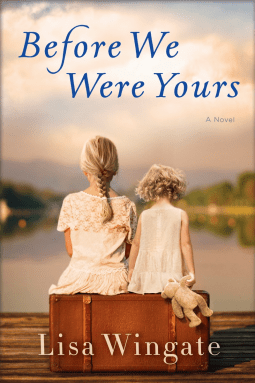
 Lisa Wingate is an established author, but she is new to me. I received this DRC free and early, thanks to Net Galley and Random House Ballantine; it is available to the public Tuesday, June 6, 2017. And although I would love to tell you to run out and buy it right now, in all honesty I have never felt quite so ambivalent about a novel, at least not in recent years. There’s so much that’s good here, but there’s also some terrible material—albeit brief—that any sensible editor would have to question, and that every reviewer that’s paying attention has to notice.
We have two protagonists, both female. Our first is Rill Foss, the member of a large, poor family that lives on a riverboat. She and her siblings are scooped up by the authorities when they are left without an adult present while their mother is rushed to the hospital after complications in childbirth. After a harrowing sojourn at the Tennessee Children’s Home, she and a sister are adopted into a well-to-do, politically connected family, and she becomes May Weathers; yet Rill is still determined to return home to the Arcadia, the boat on which she was raised, where she knows her true parents will be waiting.
Our second protagonist is Avery Stafford, the beloved daughter of a senator that is grooming her to succeed him. All of her life, Avery has known she must consider every decision she makes with the assumption that the public will learn of it. But when she learns of a mystery that might affect the final years of her beloved Grandma Judy, who is in the early stages of dementia and living in assisted care, she follows the threads—carefully, discreetly—in order to learn more about her grandmother and in the process, about herself.
“Am I my father’s daughter, or am I just me?”
The prose is woven in a way that is fresh and delightful in most regards, and I admire the organization of the story as a whole, which is masterfully done. Ultimately, we see where May’s story and Avery’s meet, and although we are given a glimpse of how some aspects of the story will resolve, others are a wonderful surprise. The dialogue between Avery and Trent, a man that assists her in her inquiries, absolutely crackles. The characterization of Trent’s three-year-old son, Jonah, gets my vote as the most adorable tot to ever grace fiction.
There are two areas that hold this story back from a five-star rave here. The first and smaller concern is the depiction of the orphanage to which Rill and her siblings are taken. Wingate tells us in her end notes—which I read first, and you should, too—that the Tennessee Children’s Home Society was real, and that poor children were in fact routinely kidnapped and adopted, for high fees, to affluent families almost as if they were livestock; “Christmas babies” were publicly advertised, especially blond ones. The point is well taken, and Riggs is a well-drawn villain. However, the passages set in this place are so horrible and so harsh that in some ways, it’s almost a caricature. I found myself skimming passages here because I just couldn’t stand it. If I had my way, there would either be a wee bit more ambiguity here, or the section would be shorter. Sometimes less is more.
The other, larger concern here is the cultural deafness in the terms used. Even if racist terms were common among Caucasians of the time in question, finding them gratuitously tossed into this novel, not because they are key to the plot but merely as set dressing, is like finding a rattlesnake in my lunchbox. Why would anyone do this? I refer to the slur on a Chinese man that appears briefly and is not important to the plot; the mammy-like dialect written in for the African-American servant, which appears numerous times; the reference to American Indians of the north as ‘Eskimos’, the offhand references to slave cabins and ‘Confederate’ roses, and most particularly the place in which one of the children threatens a Black woman they think may steal from them by telling her:
“They’ll hang you up in a tree, they will.”
My god. A threat of lynching, just tossed in for flavor!
By the end of the galley, I was in love with the story and its main characters, and I initially rated this book four stars, but in going back over my notes, I realized that as long as the lynching reference remains in the text, I can’t go there, and I can’t do that. And I wonder—why in the world is it used at all? All it does is demonstrate how tough the children are, that they can chase away an adult that might mean them harm. Wingate could have done this dozens of other ways, and yet she chose this one.
So there you have it; it’s a brilliantly crafted story with significant social miscues that threaten to derail all that is done well here. Take your pick; read it or don’t. My own advice is that if you want to go there, get it free or at a discount. I cannot see rewarding a work that contains overt racism that is tossed in to no good purpose, and it’s a crying shame, because otherwise it’s a compelling tale by a master word-smith.
 Those looking for a sweet, light romance will find it here and come away happy. It was just published, and you can get it now. Thanks go to Net Galley and Lake Union Publishing for the DRC, which I received free of charge in exchange for an honest review.
 Alice has found a good looking man on the beach, and she’s brought him home. See what I’ve found! With just this much information, I am immediately engaged, wanting to have a conversation with this woman about risks, about dangers. For heaven’s sake, what about your kids? Friends, this is only the tip of the iceberg. Lisa Jewell’s hot new novel goes on sale April 25, 2017. I read mine free and early, thanks to Net Galley and Atria Books in exchange for an honest review.
 “Fate, people liked to call it. But Violet pictured it as dominoes. Somehow, they’d been positioned perfectly. And at the end of the line was Finn.”
 Maggie Sparkes, heir to a fortune, is called to New York City when her closest friend, Celine Gonzalez, is found dead. Did Celine really commit suicide? Maggie doesn’t believe it for a minute, and when she finds Celine’s personal effects hidden away with a note, she believes it even less. Thanks go to Net Galley and Atria for the DRC and invitation to read and review this title. It was released February 2, 2017 and you can get a copy now.
 Camille Pagan is the author Life and Other Near Death Experiences. Thank you Net Galley and Lake Union Publishing for the DRC, which I received in exchange for an honest review. This title is for sale February 7, 2017.
 Always, Sarah Jio’s much anticipated new release, takes on the homelessness epidemic using the powerful medium of fiction. I received my copy in advance in exchange for an honest review; thank you Net Galley and Random House Ballantine for the DRC. This title is available to the public today, and if you have enjoyed Jio’s other novels, I am confident you’ll like this one too.
 There are good writers, excellent writers, and of course, indifferent writers, but once in a rare while there’s a writer that makes me sit up straight and take notice, someone with that special spark of genius that no money can buy nor school can teach. Krivak’s work is exquisite, the product of both power and restraint. If you love historical fiction, you have to read this book, which comes out January 24, 2107.
 Camille Pagan is the author Life and Other Near Death Experiences. Thank you Net Galley and Lake Union Publishing for the DRC, which I received in exchange for an honest review. This title is for sale February 7, 2017.
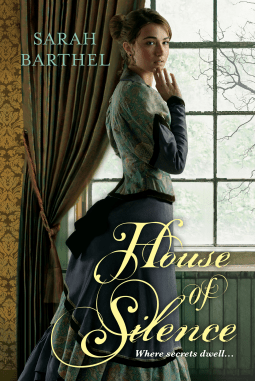 The premise of this historical romance had me at the get-go: Isabelle Larkin is engaged to marry wealthy, powerful Gregory Gallagher, but she calls it off after she sees him commit murder. Her family doesn’t believe her, and embarrassed, they have her trucked off to a sanitarium, where she meets Mary Todd Lincoln. I thank Net Galley and Kensington Publishing for the invitation to read and review. This book becomes available for purchase December 27, 2016.
