
 Martin Cruz Smith is the best-selling author of Gorky Park and the Arkady Renko series. His new stand alone novel, The Girl from Venice, shows he hasn’t lost his magic, and it quickly became my favorite DRC once I began reading it. Thanks go to Simon and Schuster and Net Galley, from whom I received an advance copy in exchange for an honest review. You can get this book today.
Cenzo Vianello is a fisherman from the tiny village of Pellestrina, an ancient place steeped in tradition. He once had two brothers, but now has only one; Hugo died in Mussolini’s Africa campaign, and his remaining brother Giorgio is a movie star as well as an influential member of the Fascist government. Cenzo detests him for his politics, but even more for having stolen his wife Gina, who died when a bomb fell on the movie set to which Giorgio had escorted her.
All of this is background, complex and deliciously ambiguous in many aspects. It is within this context that Cenzo finds the girl, Giulia, floating like a corpse in the lagoon. To his surprise, he finds she is alive. She is Jewish, from a wealthy family and on the run. She figures that if the poet Byron could cross that lagoon, then so can she. Cenzo hates to spoil her dream, but he tells her this is a dangerous plan, and for many reasons. He develops a plan for her rescue, but later finds he is ambivalent about having turned her over to someone else. Is she safe? Does she remember him? Who can he trust, and who not?
One must, after all, be careful who one embraces.
“The trouble was the war. It should be over. Instead, the Americans were taking forever while Mussolini ruled a puppet state and the Germans, like decapitated ants, went on fighting.”
When one fears defeat, one may become desperate; in some ways, the Fascists now have little to lose, and so their behavior becomes more extreme. There are partisans that oppose the Fascists, but it’s difficult to be sure who is sincere, and who is a double agent.
Part of the suspense inherent in successful spy novels is the feeling of looking over your shoulder, wary of everyone all the time. The relationship between Cenzo and Giorgio is particularly well developed and is intertwined with this aspect of the story; we never know whether one of them is going to kill the other, and when Giorgio says he will help Cenzo, we wonder whether he is helping lead him into a trap.
Although Giulia provides us with a premise and a scaffold for the story, not to mention a really beautiful book jacket, hers is not the character we see developed. The characters that are meaty and interesting are the brothers.
That being said, Smith should get credit for including an interesting female side character in Maria, the wife of the consul of Argentina, a woman with shadowy business and motive. Maria isn’t there to seduce anyone, not really; she’s also not a victim. In a field riddled with endemic sexism, I was happy to see this progressive element, and was fascinated by the brief, spectral appearance of her husband from his sickbed.
This story is a page-turner, an unmissable tale that will keep your light burning late and distract you from your daily pursuits until it’s over. Don’t miss this one.
 Gwendolyn is 19 years old when she marries Laurence Hooper, the owner of a tea plantation in Ceylon, an island nation south of India now named Sri Lanka. Jeffries provides a compelling, sometimes painful glimpse of the mores and assumptions of the heirs of the UK Empire at the outset of the peasants’ rebellion led by Ghandi. Though a few small glitches occasionally distract, this is a strong piece of fiction that fulfilled the writer’s mission admirably. Thank you to Net Galley and Random House-Crown Publishing for the DRC, which I received free in return for an honest review. The book is on sale today.
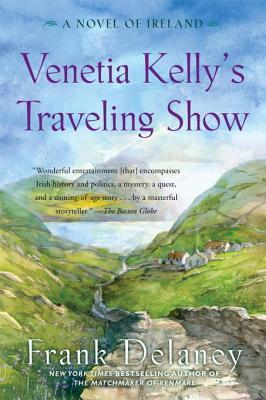 Frank Delaney was well known in the UK before those of us in the United States had heard of him; NPR has called him “the most eloquent man in the world”, and after I had read Ireland, an epic novel that has to do with a storyteller and so much more, I was sold. I wasn’t blogging or reviewing back then, and after I had turned the last page, I told my family that I wanted to read everything else Delaney had written. Then I received this novel as a Christmas present, and was underwhelmed. I set it aside and figured I would give it away, but later I realized that it was the first in a trilogy for which I had also received the other two books. In February of this year, I took a deep breath and plunged in for another try.
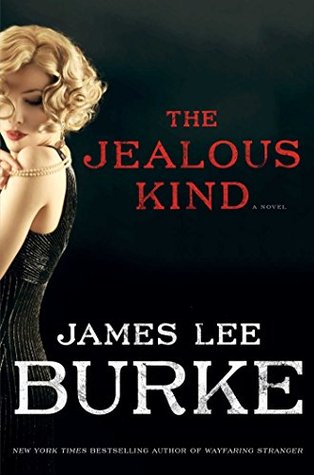 James Lee Burke is a legend, a venerable and highly respected writer known for his luminous prose and quirky characters. In this, his second work of historical fiction in a planned trilogy, he demonstrates that he can still work magic better than ever. I received this DRC from Net Galley and Simon and Schuster in exchange for an honest review, but I would have paid full freight if I had to, and I rarely say that about any book anymore.
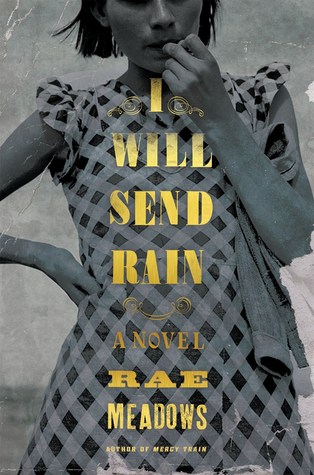 Annie Bell could have chosen to marry a well-to-do member of the gentry in her home town, a man with fine china and a full time kitchen servant. Young and buoyant, she chooses love instead, and moves to Oklahoma with Samuel Bell to start a brand new life on the free land that’s been provided. What could go wrong when two young people are strong and dedicated to one another? Oh, it’s an old, old story in so many ways, but Meadows makes it brand new. Thanks to Net Galley and Henry Holt Publishers, I read it free and in advance in exchange for this honest review. It will be available to the public August 9, 2016.
 And you thought Fifty Shades of Gray was controversial. Just remember that you heard it here first: if this novel has legs and gets around, it’s going to create a lot of noise. I could almost smell the book-burning bonfires as I read the last half. And lucky me, I read it free thanks to Net Galley and St. Martin’s Press, from whom I received a DRC in exchange for this honest review.
 Annie Bell could have chosen to marry a well-to-do member of the gentry in her home town, a man with fine china and a full time kitchen servant. Young and buoyant, she chooses love instead, and moves to Oklahoma with Samuel Bell to start a brand new life on the free land that’s been provided. What could go wrong when two young people are strong and dedicated to one another? Oh, it’s an old, old story in so many ways, but Meadows makes it brand new. Thanks to Net Galley and Henry Holt Publishers, I read it free and in advance in exchange for this honest review. It will be available to the public August 9, 2016.
 The Last Road Home, bold and impressive new fiction by Pushcart Prize nominee Danny Johnson, came to me free thanks to Net Galley and Kensington Books in exchange for an honest review. It tells the story of Raeford “Junebug” Hurley and his friendship with neighboring twins, Fancy and Lightning Stroud. Junebug is Caucasian; the twins are African-American, politely referred to during that time as ‘colored’ or ‘Negro’. The story is set during the Civil Rights movement of the early 1960’s, but in rural North Carolina, the Klan stands tall and strong and absolutely nothing has changed in terms of race relations. Junebug finds himself riding on the fence rail from hell. This fascinating tale will be available to the public in late July. Those that love good historical fiction should read it.
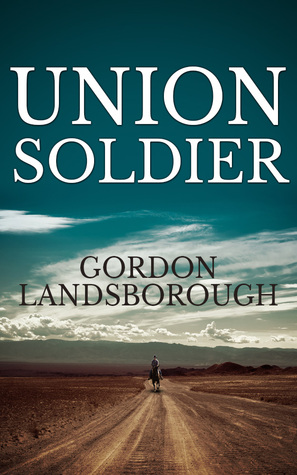 I received this title courtesy of Endeavor Press, who invited me to read and review their material directly; I thank them for the invitation to read and review this Digital Review Copy free in exchange for an honest review.
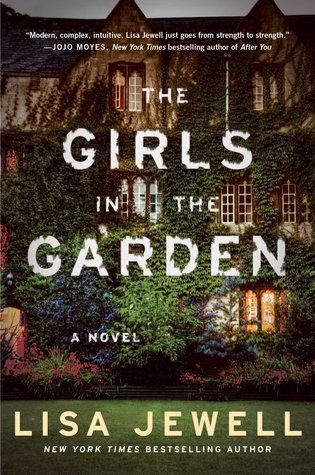 Lisa Jewell is an experienced author, but she is new to me. The Girls in the Garden, published in the UK last summer and soon to be in bookstores in the USA, is good strong fiction, and you should read it. I was fortunate and obtained an advance copy thanks to Net Galley and Atria Books for the purpose of a review. One night I stayed up late, unable to put it down until it was done.
