
Taylor Brown has become one of my favorite authors. He creates believable characters and memorable plots, and his recurring themes have to do with championing the poor and dispossessed, and an urgent sense of environmentalism. My great thanks go to NetGalley, RB Media, and St. Martin’s Press for the review copies. This book is for sale now.
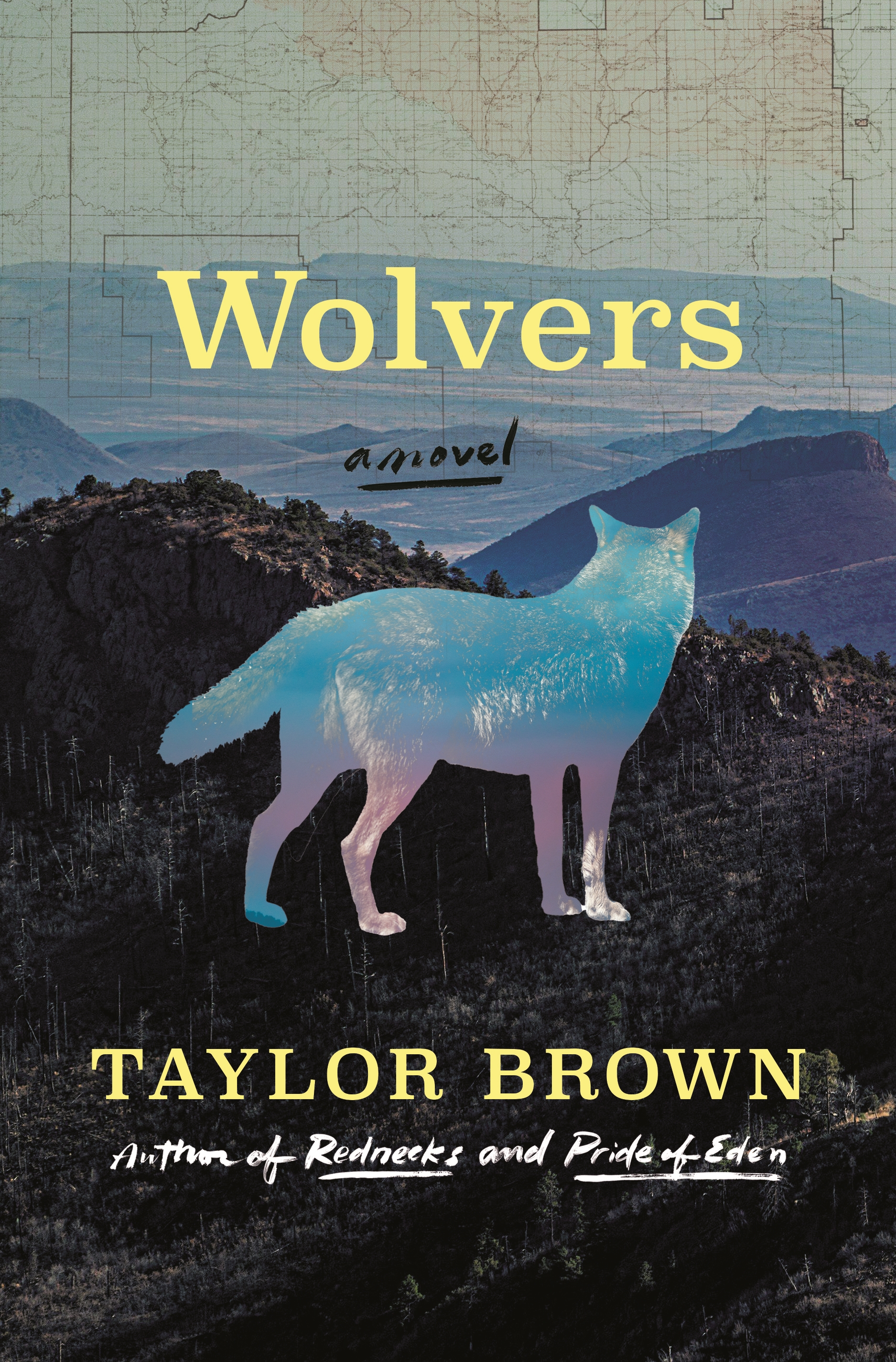
Trace Temple hates wolves. His family has spiraled downward since losing its New Mexico ranch, a ranch that was in the family for generations, because of a massive legal penalty incurred by shooting an endangered wolf. It’s legal to kill a wolf that has preyed on one’s livestock, but the circumstances under which that can be done are very specific ones. Trace’s father thought he was shooting the wolf that had eaten his sheep, but he accidentally shot the wrong wolf, and it cost him and his family everything. The patriarch went to prison, and Trace’s mother developed an addiction that has become all consuming. So when some sketchy characters approach Trace and propose to hire him to shoot One-Eleven, the legendary alpha of a wolf pack that ranchers have long hated, he’s all in. But an experience that occurs while he’s on the hunt causes him to change his mind.
Once Trace is out of the running, the organization hires someone else, a man called Murdoch. Murdoch wants to kill the wolf, and he wouldn’t mind killing Trace, too.
The story starts a bit slow, then gathers steam as it goes. The Gila wilderness where all of this takes place is resonantly depicted, and given that nearly everything that Brown has written to this point is set in the Appalachians or some other part of the American South, this is all the more impressive. The dialogue pops! There aren’t many characters in this story, and the two-legged characters that get the most ink are males; it’s all the more amazing, then, that Brown’s respect for women shines through, and it does so naturally. By the last quarter of this story, nobody could have kept me from finishing it.
There’s some gore here; the story could not have been told authentically without it. Humans get hurt, and some get dead, and so do wolves; but none of the damage is superfluous or titillating. And I loved the ending.
Brown explains what’s real and what’s fictional at the end of the book, and he even includes a two page bibliography for those interested in the subject matter.
I was lucky enough to have both the digital and audio versions of this story, and it’s the first time I’ve listened to one of Brown’s books. Ramiz Monsef does an outstanding job as narrator, and for that reason, I recommend this format for those that like audio books. But whatever your preference is, this novel is highly recommended.

 Seattle Book Mama