A Fever in the Heartland, by Timothy Egan*****

Timothy Egan, winner of the Pulitzer Prize, is one of my favorite historians to read. His most recent book, A Fever in the Heartland occupied the bestseller lists for months, and rightly so. I took my time with it because it is a very uncomfortable read most of the way through, with the first half being much rougher than the last. I learned a lot from it, and this is clearly a case of truth being stranger than fiction.

The Klan was originally formed by former Confederate officers after the Union’s victory in the American Civil War. However, it was stamped out during Reconstruction, and was gone for fifty years. It was revived on Stone Mountain, Georgia, and the horrifically racist film by D.W. Griffin, The Birth of a Nation, which depicts African-American men as crazed rapists that drink to excess and lose their minds when a Caucasian woman is anywhere nearby, not only aided its reincarnation, but contributed one of its most feared symbols. No crosses were burned until it showed up on movie screens around the United States; the pointy hoods were shaped that way to make the men underneath them appear taller. Later, the women’s organization had robes with cardboard forms in their own pointy hats, because a night of terrorism is no excuse for a woman to let her hair get out of control.

At one point, one Caucasian man in three belonged to the Klan. There was even a children’s organization, with activities similar to boy and girl scouts.

The woman that is at the center of this story, Madge Oberholzer, was the secretary in the office of D.C. Stephenson, the Grand Dragon of the newly revived Klan. Despite the hugely moral speeches he gave around the country extolling traditional values (for the time) including the avoidance of alcohol; women that remain virgins until marriage and then live their lives in service to their husbands and young children; Protestantism, with regular church attendance; Caucasian separation from other races and ethnicities; and unquestioning patriotism, Stephenson himself was a drunk, as well as a serial rapist and sexual sadist, fond of using his teeth to mutilate the women that he savaged. Madge was the one victim that would not crawl into the shadows, and she literally used her last dying breaths to expose him.

I was given a hardcover copy of this book when it was at its height of popularity, but it took me a long time to get through it, because I could only stand to read a few pages at a time. The end was enormously satisfying, however, and even in the worst parts, there are occasional moments that made me want to stand up and cheer. For example: the Klan plot to go the University of Notre Dame—a Catholic university– and burn the golden dome there was foiled by its football team, and the melee that ensued when they physically attacked the Klan is the origin of their nickname, The Fighting Irish. (The dome survived.)

Often when I read nonfiction history, I can’t help imagining how much more interesting it would be if it were written as historical fiction. That was never the case here. Firstly, if this were a fictional account, reviewers everywhere would have been brutal, because nobody would ever believe a story like this one. But the fact is, it’s entirely true, and Egan is second to none when it comes to research. Also, his conversational narrative style is as interesting as the best historical fiction; the pace here is slowed in places, not by any lack of authorial fluency, but by the horrifying nature of this true story.

For those that have the capacity to read something like this without becoming morbidly depressed or coming unstuck, this book is highly recommended. For everyone else, I recommend finding something lighter and more uplifting to alternate with it, and to never read this at bedtime. You won’t want it in your dreams.

The Mystery Guest, by Nita Prose****-*****

“The maid is always to blame.”

4.5 stars, rounded upward.

Author Nita Prose introduced Molly the Maid to us in 2022. Now Molly is back. She’s the head maid now, and considerably more confident than when we first met her. Her boyfriend Juan Manuel has moved in with her, but he is conveniently out of town for most of this novel, and it’s just as well, because there’s another murder about to occur at The Regency Grand Hotel, and once more, Molly will be instrumental in identifying the killer.

My thanks go to Net Galley and Random House Ballantine for the review copy. This book will be available to the public November 28, 2023, so you can plan your gift lists accordingly.

The hotel is in high gear, planning for the big gathering that will introduce the large, new, lovely tearoom. Business has been down at TRG since the murder last year, and this special occasion should bring new life into the hotel. In fact, Molly has given up her vacation with Juan so that she can see to the set-up; everything must be cleaned, shined, and buffed to perfection. You see, famous author J.D. Grimthorpe has an important announcement to make, and he’s chosen the tearoom as the venue from which to do so.

The stage is set, and the fans arrive. Molly’s protégé, Lily, has arranged the tea cart perfectly. Grimthorpe takes the podium, and is presented with his tea. After doctoring it to his own tastes, he takes a sip and ascends the stage once more, but before he can get to the surprise announcement, he keels over dead, right on top of Lily!

Lily is terrified. She’s always been a quiet one, but now she is virtually mute. When the police come in to question her, Lily is nearly undone.

“Molly, I’m afraid.” Her eyes are round pools of trepidation.

“I know,” I say. “But why?”

“Because a famous man is dead. Because they always blame the maid. You of all people should know that.”

“You’re not in any trouble, Lily.”

“Bit soon to tell,” the detective replies.

With that, we’re off and running. The book is one hell of a page turner, and it’s over before I know it. There’s lots of spunky dialog that jumps off the page. I seldom regret putting away my book because I spend so much time reading each day, but for this one, I stayed up late.

My only quibble—a small one—is that a key part of the solution is a bit of a reach. But this is a fun story, and so I make a quick note and move on.

For those that enjoy a sparkling mystery interspersed with wry humor, this book is for you. The profound respect for the working class is icing on the teacake.

Highly recommended.

Flags on the Bayou, by James Lee Burke****

James Lee Burke is one of the finest prose stylists the U.S. has to offer. His brilliant, lush descriptions, quirky, resonant characters with interesting names, and his passion for the rights of the working class are the stuff of legends. My thanks go to Net Galley and Simon and Schuster for the invitation to read and review his latest novel, Flags on the Bayou. This book is for sale now.

Our protagonist is Hannah Laveau, a former slave who’s on the run from the law. With her is Florence Milton, an abolitionist from Massachusetts. Hannah is determined not to be caught, but also to retrieve her little boy, Samuel, a preschooler from whom she was separated at the battle of Shiloh. Her determination is singular. Along the way we have officers from both sides of the Civil War, corrupt rich guys, and bushwhackers. The story is complex, as are all of Burke’s novels, and the setting atmospheric.

All of these things being said—and I’ve said them many times before, since I began reading his work about a decade ago—there are some things that I would like to see done differently. Burke has always intertwined social and political messages within his novels, and so it’s the subtext in this book that jars me. In fact, it bothers me enough that I abandoned this story twice before I finally dug in, determined to finish it.

The first category here is the American Civil War, and the fallout we still deal with today. In past novels, Burke has told us that the slaveocracy was wrong, and that the war was indefensible. I feel as if he has retreated from that here. We have some ugly Confederate characters, to be sure, but we also have ugly Union officers, and General Sherman—one of this reviewer’s most beloved heroes—gets run through the mud multiple times. It’s as if Burke wants us to know that actually, both sides were bad, and that war itself is just plain awful. This is weak tea indeed.

The second is one I’ve been eyeing for the last few of Burke’s novels, and I have soft-pedaled it because of my great admiration for the body of his work, and for his ageing dignity, but I do have to say something here. His development of female characters needs work. Lots of it. All of his females are either Madonnas or whores (and sometimes, Madonnas that are forced to be whores, through no real fault of their own.) I would dearly love to see a female character in his books who is not there for her sexuality, and who is not either a victim or a potential victim. With Burke’s Dave Robicheaux detective novels, progress was made with a lesbian cop character, and I was thrilled. But she came and then went, and his experience creating her hasn’t overflowed into his other work.

More than any one thing, I want to see Mr. Burke write a book—just one, seriously—where there is no sexual assault, no threat of sexual assault, and no memory of sexual assault. It’s getting old, sir. You surely have the ability to provide female characters with other motivations. I want to see it.

I was nearly annoyed enough to rate this book three stars, but I liked the ending a lot, and so the fourth star remains.

So that’s my two cents, because as much as I love his work in general, this is getting in the way. There will doubtless be some blowback from his other devoted fans once I publish this review; bring it.

A final note: because I was struggling with this book, I checked out the audio version from Seattle Bibliocommons. The voice actors that perform it are world class. However, because the story is so complex, bouncing back and forth in point of view and setting, it is hard to follow in audio alone. The best way to read this is with both the printed word, whether on paper or digitally, accompanied by the audio.

The Winners, by Fredrik Backman*****

“Do you want to understand people? Really understand them? Then you need to know all the best that we are capable of.”

The Winners is the third book in the Beartown trilogy by the iconic philosopher-novelist, Fredrik Backman. In the afterward, he tells us, “To you who have read this whole of the saga, I’d just like to say that I hope it gave you something, because I gave it absolutely everything I had.” I am one of them, and I believe him, and yes, it did. My thanks go to Net Galley and Atria Books for the invitation to read and review. It’s been an honor.

I began reading with a certain amount of trepidation, because everything I’d heard and read, some of it by the author himself, suggested that this wasn’t going to be gentle reading. Here’s how he opens it:

“August ends with sultry, ominous heat before autumn kicks the door in at the end of the month and the temperature tumbles in free fall. The natural world around us becomes erratic and aggressive, the dogs and hunters feel it first, but soon everyone else does too. We notice the warnings, yet still the storm arrives with such force that it knocks the breath out of us. It devastates the forest and blocks out the sky, it attacks our homes and our towns like a grown man beating a child.”

Woof.

The characters we’ve met in the first two books, Beartown and Us Against You, are all present and accounted for, and now that his faithful readers already know most of the central characters, Backman gives us a few more. The new hockey coach is Elizabeth Zackell, a quirky individual if ever there was one, and smart as hell. We are introduced to a family from Hed, the nearby town whose club is Beartown’s archrival; we become attached to these people, too. But ultimately, we see the way that great love and passionate loyalty can go hand in glove with violence and even evil.

It’s a story that can take your breath away.

I won’t try to address the whole story or individual characters; that’s Backman’s job, and he does it quite nicely. I had a quibble with the way the first book ended; I said in my review that it was over-the-top, bordering on glib. I see now that this was deliberate, and he wants us to see that not every family responds to a crisis as well as the Andersons have, and not every victim of a violent crime is able to see justice done; not everyone has the heroic instincts of Amet, the player that runs toward the fire rather than away from it.

The hallmarks that make Backman’s work so special are all here. I can count on one hand the number of male authors that genuinely respect women and are willing to go to the mat for women’s rights, and he is one of them. He is a vocal champion of the rights of gays and lesbians, and his prose shows keen understanding of the struggle they face, even now that their legal rights are protected in much of the world. His capacity to juggle a large cast of dynamic characters, developing nearly every one of them in a way that is consistent, along with their relationships with each other, makes me feel as if I could recognize them on the street; I don’t mean one character, or two. I mean at least a dozen of them. There are a number of characters that do bad things or make bad choices, but only a couple are genuinely bad people, and though we see little of them, they cast long shadows on these two communities.

He got the ending exactly right.

Can you read this book without reading the other two first? Don’t be a dick. Of course not. Without familiarizing yourself with the characters in the first book before the second, and the second before the third, you won’t be able to keep everyone straight; also, this third volume is about the same length as the first and second combined. Start with the first one.

Highly recommended.

Mecca, by Susan Straight*****

Susan Straight is a force to be reckoned with. I knew this after I finished reading I Been in Sorrow’s Kitchen and Licked Out All the Pots after it came out in 1992, and after I sought out, bought, and read everything else she’d written that was available. When I discovered that her new novel, Mecca, was available on Net Galley, I leapt on it. My thanks go to Net Galley and to Farrar, Strauss, and Giroux for the review copy. This book is for sale now.

Mecca, an ironic title if ever there was one, is a story of race, class, and gender, and the way that they play into the “Justice” system in California. Add a generous seasoning of climate change and its horrific effects in dry, dry Southern California, and a fistful of opioid addiction, and you have a heady mix indeed. But these are all well worn ground at this point, and this book is exceptional, not because it examines complex current events, but because of Straight’s facility in building visceral characters we care about, and launching them into this maelstrom in a way that makes it impossible to forget.

We begin with Johnny Frias, an American citizen of Latino heritage. As a rookie and while off duty, he kills a man that is raping and about to murder a woman named Bunny. He panics and gets rid of the body without reporting what’s happened. Frias is on the highway patrol, and he takes all sorts of racist crap all day every day. But his family relies on him, and when push comes to shove, he loves his home and takes pride in keeping it safe.

Ximena works as a maid at a hotel for women that have had plastic surgery. One day she is cleaning a room and finds a baby! What to do? She can’t call the authorities; she’d be blamed, jailed, deported, or who knows what. She does the best thing she can think of, and of course, there’s blowback anyway.

And when a young Black man, a good student with loads of promise that has never been in any trouble at school, or with the law, is killed because the cops see his phone fall out of the car and decide it’s a gun…?

I find this story interesting from the beginning, but it really kicks into gear in a big way at roughly the forty percent mark. From that point forward, it owns me.

As should be evident from what I’ve said so far, this story is loaded with triggers. You know what you can read, and what you can’t. For those of us that can: Straight’s gift is in her ability to tell these stories naturally, and to develop these characters so completely that they almost feel like family. It is through caring about her characters that we are drawn into the events that take place around them, and the things that happen to them.

This is a complex novel with many moving parts and connections. I read part of this using the audio version, which I checked out from Seattle Bibliocommons. But whereas the narrators do a fine job, I find it easier to keep track of the characters and threads when I can see it in print. If you are someone that can’t understand a story well until you’ve heard it, go for the audio, or best of all, get both.

Highly recommended.

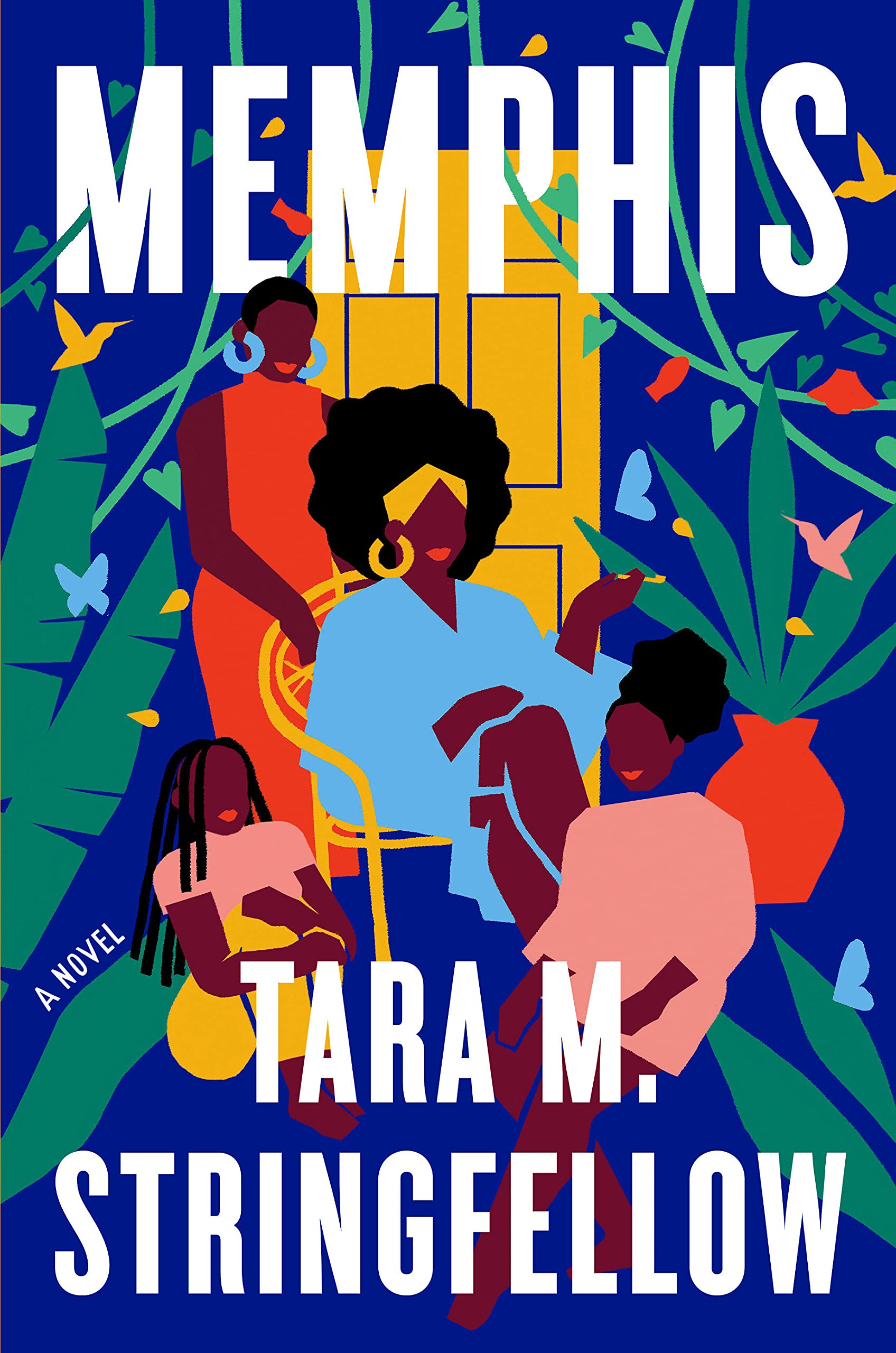
Memphis, by Tara M. Stringfellow****

Stringfellow’s debut novel, Memphis, has drawn accolades far and near. This is a family saga that features three generations of women, a story told with warmth and subtlety. My thanks go to Net Galley and Random House for the review copy. This book is for sale now.

The story commences with Miriam planning to leave her abusive husband. She gets a few things and herds her daughters, Joan and Mya, out of the house. They’re headed to live with Miriam’s sister, August, in Memphis.

The family’s story follows them across time and points of view, but always from the point of view of one of the women. About a third of the way through we find an additional point of view from a character we haven’t met yet, and since we’ve heard from Miriam and August as well as Miriam’s girls, I’m expecting Hazel to be the daughter of either Joan or Mya, granddaughter to Miriam, but that’s not the case. Hazel is Miriam and August’s mother, and the time is the 1930s, a dark time indeed for African-Americans. I like this little surprise. I also love that the narrative embraces only women, across three generations.

As with all good historical fiction, there’s a hidden history lesson here as we follow the Norths across time. On the one hand, I didn’t learn anything new, but I am a history teacher. What I appreciate is the lack of reliance on cheap pop cultural references, and also the lack of revisionism. Stringfellow writes about the past as it was, rather than as she wishes it was. The characters are resonant and believable; my favorite is August. I love the ending.

The story arc is a mighty shallow one, and I’d be hard-pressed to identify the climax. This is my only real criticism.

Because I was a bit behind, I checked out the audio version from Seattle Bibliocommons, and the narrators, Karen Murray and Adenrele Ojo, do a superb job.

Recommended to those that love historical fiction—especially surrounding Civil Rights—and to those that enjoy stories about multiple generations of families.

Two Nights in Lisbon, by Chris Pavone*****

“Once first blood is drawn, sharks make quick work.”

Chris Pavone (Puh-vo-KNEE) writes the best thrillers around. I read his second novel, The Accident, in 2015, thanks to the First Reads program on Goodreads, and I liked it so well that I ferreted out a copy of his debut thriller, The Expats at my favorite used bookstore. I’ve read and reviewed everything he’s published since then, and I’ll tell you right now, Two Nights in Lisbon is his best.

My thanks go to Net Galley; Farrar, Strauss, and Giroux; and Macmillan Audio for the review copies. This book will be available to the public May 24, 2022.

The beginning doesn’t impress me much; a couple is in Portugal and he leaves before she gets up; says he’ll be right back; and he disappears. In real life this would be a big deal, but in a thriller, it feels almost generic (though it actually isn’t.)  Ariel—the stranded wife—is beside herself with worry, and she goes to the police and to the U.S. Embassy, but they all blow her off. It hasn’t been 24 hours yet, there’s no sign of foul play, and face it honey, sometimes husbands wander. She carries on until we’re a quarter of the way into the book, and this part of it could probably stand to be tightened up some. But this story draws the full five stars from me, because after this, Pavone makes up for it, and more.

Next comes the ransom demand. Nameless, faceless baddies contact her. They have her husband; they want three million dollars, and they want it fast.

I won’t spoil the plot for you, but I’ll say this much: this plot is original, and as thrillers go, also plausible. There’s never a moment where I stop believing. And there’s a wonderfully satisfying measure of Karma attached at the end.

The thing that makes me love this author so hard, and that is particularly strong this time around, is his deep, consistent respect for women. In this era of MeToo and mansplaining, it takes a lot of chutzpah for a man to write a female protagonist, and what’s more, he includes a rape scene, which I trust no man for EVER, except for Pavone right here right now. He tells it the way a woman would tell it, and—all you other male authors out there, listen up—there’s not one moment where the assault feels even a tiny bit sexy. And so, at the beginning of this particular scene I tensed, waited to be outraged, or disappointed, or whatever—and then relaxed, because he gets it. This guy gets it.

Ariel makes the occasional small mistake, but no large ones. She is intelligent, organized, and capable of looking out for herself, even in a foreign country where she doesn’t speak the language. The reveal at the end makes me do a fist pump. Yesss.

The pace never flags after the first quarter, and there are occasional moments that make me guffaw. This is a story that brooks no tolerance of the wealthy, the elite, the entitled.

I received both the audio and digital review copies, and so I alternated the two, although I listened the majority of the time, backtracking for quotes and other salient details for the purpose of this review. January LaVoy is our narrator, and she does an outstanding job. You can’t go wrong with either version, but I would give the edge to the audio version, which is immensely entertaining.

Highly recommended.

Ten Steps to Nanette, by Hannah Gadsby*****

Hannah Gadsby appeared from seemingly out of nowhere—to those of us in the States—with a searing personal story about her own trauma that was built into her standup comedy routine. Nanette singed our eyebrows and made a great many of us absolutely love her. When I saw this memoir, I knew I had to read it. My thanks go to Net Galley and Random House Ballantine for the review copy; that said, I would have paid an exorbitant price for a personal copy had it been necessary, and I would not have been disappointed in what I bought.

This book is for sale now.

In some ways it seems useless to review this memoir, because those that are interested in reading it are already fans; those that recoiled in horror from her blunt revelations and assessments of the world around us won’t read it, no matter what I say. But for the few that haven’t seen her standup routine, I counsel you first to watch Nanette on Netflix, and then watch Douglas, too. Of course, you can go into this memoir green, but you’ll appreciate it more if you understand her references to the show.

For those that are fans but are wondering whether the memoir is going to be her standup material, recycled—and surely, plenty of other people have done that sort of thing—I can reassure you that it is not. There are references to Nanette, and there are also references to her newer release, Douglas, the show she named after her dog. But there’s a good deal of information here that you won’t get anywhere else, and that’s what makes it worth it.

After discovering that Gadsby made it in the entertainment business despite coming from no money whatsoever, with no connections to anyone in show business in her native Australia or elsewhere, and having a host of disabilities, foremost among them autism, I wondered whether her success was a piece of rare good luck, or the result of hard work and perseverance unseen by most of her viewers. It’s the latter. And not only has she worked long and hard to make it as a comic, she is also one hell of a fine writer. The depth of analysis and critical thinking in this memoir took my breath away.

Since I’ve been reviewing, I have built myself a bit of a reading routine. There are particular times of day when I read, and also times when I put my books down to get other things done. Gadsby destroyed my orderly timetable. It’s been a long time since any book, however enjoyable to read, has caused me to say, Nope. Not stopping. This one did.

I highlighted a lot of passages, but I’ve decided not to use any direct quotes here, because all of them are so much better in context. But I will say that I am truly ashamed at the way that teachers let her down. As a child she was disciplined, bullied, and received everything at school except the help she desperately needed. I am devastated that my profession failed this brilliant woman. I’d love to believe that things have improved significantly since she was a child, but in my heart, I know there are still little Hannahs out there. Some are falling through the cracks, whereas others are pushed. The horror!

Most of her story is not horrifying, however; it is immensely entertaining. Nobody could safely walk through the room while I was reading without having to listen to a passage or two. On the other hand, nobody minded much, either, because Gatsby.

The most engaging aspect of this memoir—and its author—is authenticity. She never pulls punches, whether describing her own poor choices, or those made by others. One or two very popular American performers have taken passive aggressive swipes at her, and she uses this opportunity to swipe back, right at the start of the book, no less! I wanted to stand up and cheer, but instead, I did it sitting down so as not to lose my place.

The only question remaining is whether you should read this brilliant, darkly funny and disarmingly frank memoir in print or audio. I haven’t heard the audio, but since she reads it herself, you know it’s good. On the other hand, there are several passages that are so well written that I went back over them before moving on; you might miss those with an audio book. True fans that can do so should get both versions.

Highly, hugely recommended.

The Porpoise, by Mark Haddon***-****

My thanks go to Net Galley and Doubleday for this much-buzzed-about novel, and I am sorry it took me so long to plow through it. Haddon is a gifted writer and it shows, yet for me, this one was more pain than gain; I read part of my galley and then, after publication, received an audio version via Seattle Bibliocommons. It’s for sale now.

Our protagonist is Angelica, the only child of the extremely wealthy Phillipe.  Her mother, Maya, dies in a plane crash and her father, wild with grief, withdraws from the world. He substitutes Angelica for Maya, sexually molesting her from a very young age; he is magnanimous enough not to “penetrate” her until she is fourteen. What a champ. When she is an adolescent, a handsome young visitor tries to liberate her, but Phillipe makes short work of him.

The story is modeled upon a Greek myth, and a second story is told alternately with Angelica’s, rendering a complex story more so. The prose is beautifully rendered, and I think if I were a student tasked with writing an essay involving allegory in a novel written in the twenty-first century, I might have enjoyed using this one. However, as a popular read it is both largely unpleasant and a great deal of work. The one passage that I found deeply satisfying was around the halfway mark, and it involved the revenge of rape victims.

Those looking for skillfully written literary fiction will likely appreciate the artistry Haddon unspools, but I didn’t find a lot of pleasure in reading it.

Ohio, by Stephen Markley*****

OhioMarkley’s thunderous debut is not to be missed. My thanks go to Simon and Schuster and Net Galley for the review copy, which I read free and early, but this is one of the rare times I can say that if I’d paid full hardcover price, it would have been worth it. This is the summer’s best fiction, and it’s available to the public August 21, 2018.

Our story is broken into a prelude and four additional parts, each assigned to a different protagonist, all of whom knew one another, traveling separately from four different directions; they were born during the great recession of the 1980s and graduated from New Canaan High in 2002, the first class to graduate after 9/11. We open with the funeral parade held for Rick Brinklan, the former football star killed in Iraq. His coffin is rented from Walmart and he isn’t in it; wind tears the flag off it and sends it out of reach to snag in the trees. The mood is set: each has returned to their tiny, depressed home town, New Canaan, Ohio, for a different purpose. The town and its population has been devastated economically by the failure of the auto industry:

“New Canaan had this look, like a magazine after it’s tossed on the fire, the way the pages blacken and curl as they begin to burn, but just before the flames take over.”

At the mention of football, I groan inwardly, fearing stereotypes of jocks and cheerleaders, but that’s not what happens here. Every character is developed so completely that I feel I would know them on the street; despite the similarity in age and ethnicity among nearly all of them, there is never a moment when I mix them up. And the characters that are remembered by all but are not present are as central to the story as those that are. As in life, there is no character that is completely lovable or benign; yet almost everyone is capable of some goodness and has worthwhile goals.

Families recall the closure of an industrial plant with the same gravity with which one would remember the death of a beloved family member; the loss has been life changing. Residents are reduced to jobs in retail sales and fast food, welfare, the drug trade, and military service due not to legal compulsion, but economic necessity. Everyone has suffered; Walmart alone has grown fatter and richer.

This is an epic story that has it all. We see the slide experienced by many of New Canaan’s own since their idealistic, spirited teenaged selves emerged from high school to a world less welcoming than they anticipated. One of the most poignant moments is an understated one in which Kaylyn dreams of going away to school in Toledo. This reviewer lived in Toledo during the time when these youngsters would have been born, and I am nearly undone by the notion that this place is the focus of one girl’s hopes and dreams, the goal she longs for so achingly that she is almost afraid to think of it lest it be snatched away.

Because much of each character’s internal monologue reaches back to adolescence, we revisit their high school years, but some of one person’s fondest recollections are later brought back in another character’s reminiscence as disappointing, even nightmarish. The tale is haunting in places, hilarious in others, but there is never a moment where the teen angst of the past is permitted to become a soap opera.

Side characters add to the book’s appeal. I love the way academics and teachers are depicted here. There’s also a bizarre yet strangely satisfying bar scene unlike any other.

Those in search of feel-good stories are out of luck here, but those that treasure sterling literary fiction need look no further. Markley has created a masterpiece, and I look forward to seeing what else he has in store for us.