Coffin Moon, by Keith Rosson*****

“One thing you can be certain of, boy. Things change. Even for those such as us.”

In 2018, I read a book by a promising local author titled Smoke City. It was complex and kept me on my toes, and all told, it was a good novel. Since I enjoyed it, the small publisher he was working with sent me another of his books, The Mercy of the Tide. I liked it, too.

Fast forward. I received a galley this year by the same author, but he was no longer working with the itty-bitty press. No, he was published by Random House. This made me sit up and take notice! My thanks go to NetGalley and Random House for the invitation to read and review Coffin Moon, the scariest straight-up horror novel you’re likely to find on the shelves this year. It will be available to the public September 9, 2025.

The premise is this: our protagonist, Duane Minor, is back from Vietnam. The year is 1975; the place, Portland, Oregon. His wife Heidi is living in an apartment over the bar her parents own, and Duane goes to work for them. Heidi’s 13-year-old niece, Julia, comes to join them as well after her mother is sent to prison. Duane is a bit shaky, following his tour of duty, but he’s sober, has pulled himself together, and things are going pretty well. That is, until the vampire takes over the bar.

That’s all you need to know of the plot to get started. In fact, I don’t even recommend reading the promotional blurb, because it’s better if you come to it on your own. What I will say is that this is not just any horror novel. There is more depth to it than you typically see, philosophical questions inextricably wound into the decisions that Duane and his niece must make. There’s also far more character development than I generally see in this genre. Finally, the word smithery Rosson brings to it makes this book grittier, more heart-rending, and far more thought provoking than other books of its ilk. Mr. Rosson was a good author before, but the brilliance of his prose has surged since his early work.

As I get older, I find I only have enough fortitude to read one or two horror novels each year; the rest of the time, I reach for other genres. If you are also an infrequent reader of horror, I strongly urge you to make this story a priority. It’s the sort of novel that stays with you long after the last page is turned.

But the sun is coming up; I must leave you.

Happiness Falls, by Angie Kim*****

Angie Kim’s barnstorming best seller in 2019, Miracle Falls, showed us that she is a force to be reckoned with. Now she’s written something even better. My thanks to go Net Galley and Random House for the review copy. This book is for sale now.

I admired Kim’s debut novel, but because of its complex nature, it was a fair amount of work to read. Happiness Falls is every bit as brainy, but it’s streamlined, with just five important characters and a handful of secondary ones, so the reader can spend more time enjoying it and trying to puzzle out the solution, and less time trying to keep up with the plot and recall the intermittently appearing characters as it progresses.

As with her debut, this story features a main character with special needs. Eugene Parson has Angelman syndrome, a rare disorder that has rendered him incapable of speaking. This is a problem, because one day, Dad and Eugene go to the park for their daily walk, but Eugene comes home alone, bloody, disheveled, and tremendously upset. What happened? The family’s concern intensifies when Dad’s backpack is found floating downstream, but Eugene cannot speak. And so, the mystery that is interwoven into this family drama is established.

The story is told in the first person by Mia, Eugene’s older sister. Mia’s twin, John, rounds out the siblings, and their mother is the fifth family member. It’s set in Virginia during the pandemic; however, plot and character are much more important here than setting.

The mystery—what has happened to Dad—is wholly original because of the critical role played by Eugene’s communication challenges. Originality becomes more important to me every time I pick up a mystery; once you’ve read several hundred of these things, sameness can produce tedium. But this novel has much more going for it than that. The characters are absolutely believable. The teenagers are all convincing; they are age appropriate, bright but occasionally impulsive. Best of all is that there is no abuse story tucked in here. Their dad is or was a loving one, and the same is true of their mother. The parents have navigated bumps in their marriage, but by the time we hear of them, they’re fine. There’s no horrific baggage waiting to ambush us. These are nice people whose lives are complicated solely by the need to assist Eugene, whom everyone also loves. I make a point of telling you this, because I am sick to death of stories about terrible mothers. I’ve had enough of them, and am delighted Kim doesn’t go there.

Our narrator, Mia, is cleverly drawn; she is the family cynic, and she’s the family motormouth, and so if we occasionally wonder why Mia is telling us everything in such detail, it’s because Mia is a talker.

There are twists and turns all over the place. Just when I begin to think I might have a handle on this mystery, Kim throws in something else that leaves me gaping like a guppy. What? Huh? Oh. Well, there goes my theory. What now?

Because I came to this post-publication, I checked out the audio version at Seattle Bibliocommons to help me catch up. The audio is very well done. Initially I didn’t find Mia’s narrative voice appropriate because she seemed mighty chirpy for a girl that may have just lost her father; however, once Mia’s character is further developed, which doesn’t take long, I realize that the chirpiness is part of Mia’s denial. She’s very close to her dad, and she can’t bear to think that he is in danger, or worse.

I have rarely felt any interest toward any profound learning disability, but Kim made me care about Eugene and Angelman’s.

This novel is brilliant, a standout for 2023. I highly recommend it to all that love a good mystery or family story.

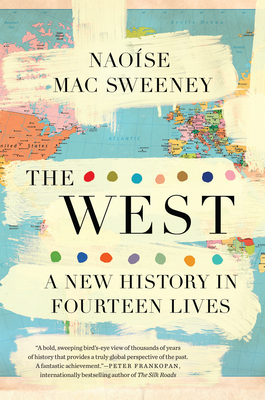
The West, by Naoise Mac Sweeney****-*****

4.5 stars, rounded up.

Those that have taken a course on Western Civilization—as college freshmen or otherwise—are familiar with its framework, that the modern world can attribute its earliest, most progressive, democratic, and technically superior attributes to the dead White European men that came before us. Archeologist and award-winning historian Naoise Mac Sweeney has taken a sledgehammer to this construct, proving that many of the smartest scientists, inventors, and social, military, and political leaders were not White, not European, and not male.

My thanks go to Net Galley and Random House for the review copy. This book is for sale now.

Mac Sweeney demonstrates her thesis by discussing fourteen key figures from the past that don’t fit into the standard framework. She begins with Herodotus and ends with Carrie Lam. Some chapters read like a college text or lecture, one where I know that this information is important, but my mind keeps wandering, and I check to see how much longer the chapter will be. Others woke me up. In chapter seven, she features Safiye Sultan of the Ottoman Empire. She was not legally able to become sultan following her husband’s death, so she saw her son installed, and then “summarily executed” his nineteen younger brothers to prevent anyone from contesting his right to rule. Another that made me sit up and take notice is Njinga of Angola. I was riveted by this one, to the extent that I actually shouted at one point. (It’s all right; I was at home.)  If we judge her work by whether she has proven her thesis, then unquestionably she has done so. 

There are two aspects that I didn’t care for here. The first is a mannerism. The use of the Victorian “we” is grating. “As we shall see…” “We have discussed…” No. She has already seen, and the only one doing the discussing within the pages of this book is the author.  Also, since the title itself identifies this tome as a history book, Carrie Lam of Hong Kong, whose quotes date from 2021 and 2017, has no business being included here. History is defined as what has occurred fifty years or more prior to publication. Mac Sweeney knows this.

In a fit of pique over these two flaws, in addition to the snoozy parts of the narrative, I initially rated this book with four stars, but this is a groundbreaking body of work, and after reflection, I changed my rating to 4.5 stars, rounded up.

Highly recommended to students and to anyone interested in world history.

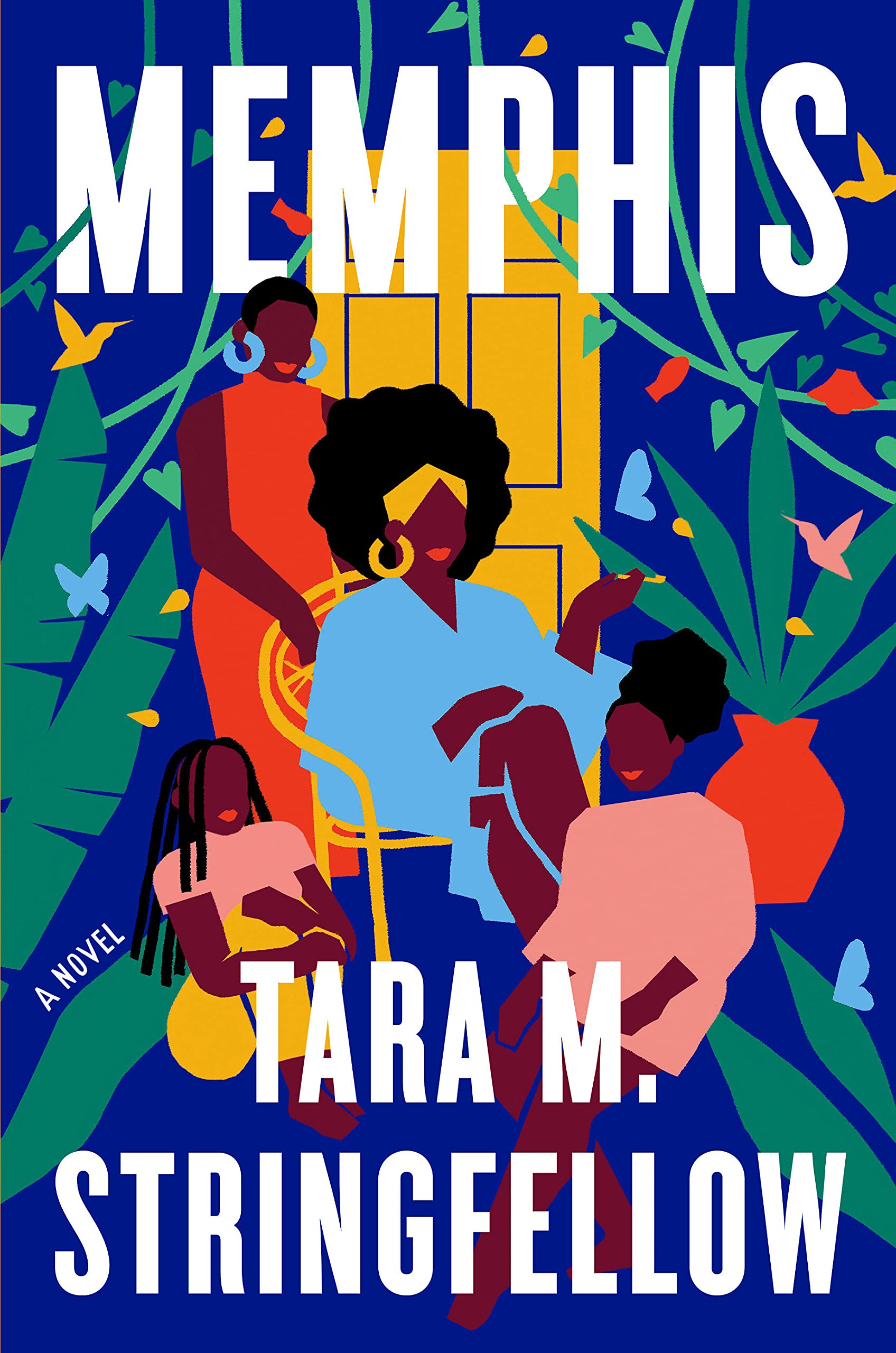
Memphis, by Tara M. Stringfellow****

Stringfellow’s debut novel, Memphis, has drawn accolades far and near. This is a family saga that features three generations of women, a story told with warmth and subtlety. My thanks go to Net Galley and Random House for the review copy. This book is for sale now.

The story commences with Miriam planning to leave her abusive husband. She gets a few things and herds her daughters, Joan and Mya, out of the house. They’re headed to live with Miriam’s sister, August, in Memphis.

The family’s story follows them across time and points of view, but always from the point of view of one of the women. About a third of the way through we find an additional point of view from a character we haven’t met yet, and since we’ve heard from Miriam and August as well as Miriam’s girls, I’m expecting Hazel to be the daughter of either Joan or Mya, granddaughter to Miriam, but that’s not the case. Hazel is Miriam and August’s mother, and the time is the 1930s, a dark time indeed for African-Americans. I like this little surprise. I also love that the narrative embraces only women, across three generations.

As with all good historical fiction, there’s a hidden history lesson here as we follow the Norths across time. On the one hand, I didn’t learn anything new, but I am a history teacher. What I appreciate is the lack of reliance on cheap pop cultural references, and also the lack of revisionism. Stringfellow writes about the past as it was, rather than as she wishes it was. The characters are resonant and believable; my favorite is August. I love the ending.

The story arc is a mighty shallow one, and I’d be hard-pressed to identify the climax. This is my only real criticism.

Because I was a bit behind, I checked out the audio version from Seattle Bibliocommons, and the narrators, Karen Murray and Adenrele Ojo, do a superb job.

Recommended to those that love historical fiction—especially surrounding Civil Rights—and to those that enjoy stories about multiple generations of families.

I’ll Be You, by Janelle Brown***

Janelle Brown has written several successful novels, among them Watch Me Disappear and Pretty Things, both of which I read and reviewed; I rated both five stars. So I was greatly looking forward to I’ll Be You, anticipating the same sort of page turner I associate with this writer. Sadly, that’s not what I found. Though it has some nice moments, the pacing doesn’t measure up, and the whole thing is burdened with trite story elements and devices.

Nevertheless, my thanks go to Random House and Net Galley for the review copy. This book will be available to the public April 26, 2022.

The premise: Samantha and Elli are twins, and they grow up in Southern California as child actors, with the sort of rabid fan base that makes it hard to go out in public. Sam loves acting, but Elli doesn’t, and as they grow up, Elli leaves it all behind, attends college, then marries a successful career man and buys a home in the ‘burbs. They can’t have children of their own, but adopt Charlotte, who is now two.

Samantha discovers the horrible truth, that her skills were good enough when she was a child actor; twins are popular in the industry, because child labor laws prohibit any child from working more than half a day. Identical twins can each work a half day, and so filming can take place all day. Once she is grown and looking for a single, adult career, however, she finds roles hard to come by. The drug habit she’s developed as an adolescent burgeons into something larger, more horrible, and she’s been in and out of clinics ever since, sometimes on her sister’s dime.

Now Elli has taken off and left Charlotte with their mother, who is having trouble keeping up. Mom calls Sam, figuring that helping care for Charlotte is the very least that Sam owes their family. And Sam comes. Soon it becomes clear to Sam that Elli isn’t just off on a weekend retreat, but has been absorbed into a cult; in order to save her sister, she has to (yeah, this again) pretend to be her. Meanwhile, Mom is no help whatsoever, caught in a combination of denial and family roles, in which Elli is the good daughter, and Sam isn’t.

So we have here just about every overused element I’ve seen in the last ten years. We have the alcoholic addict that wants to drink but mustn’t, needs to use, but must resist. Over. And over. And then we have Bad Mama, a very popular mechanism of late. Mothers can rarely be good guys in today’s novels, and they’re (we’re,) such low-hanging fruit. As if that isn’t sufficient, we also have the twins-changing-roles trope, slightly modified. Even the name—Elli—can anybody out there write a novel, oh please, in which the protagonist is not Allie, or Alex, or Ellie, or some other variant on this same, eternal name?

I made it through the first forty percent or so withholding judgment, because I figured this author is one that can pull it out of the water and make it shine. But I realize this book is not up to snuff when I see how frequently I am setting it aside to read my other galleys. When I read the other two of Brown’s novels mentioned above, I started them, stuck with them to the exclusion of other books, finished them fast, and reviewed them. This time I would often consider opening it, and then decide on another book instead. Finally, I resolved to finish it, and so I did, but as you can see, I wasn’t impressed.

Brown is a capable novelist, and I’m not giving up on her. Anybody can have a dud someplace in their career. But as for this book, I advise you to read it cheap or free, if you read it at all.

Best Historical Fiction of 2019: Finding Dorothy, by Elizabeth Letts

Honorable Mentions:

The Last Act, by Brad Parks***-****

Tommy Jump needs money.  His acting gig is about to end and his girlfriend Amanda is pregnant. Then an old childhood friend contacts him about an unusual acting role—that of criminal. Tommy and Danny go back a long way; Danny invites Tommy to sit down and asks him to do a job for the FBI that involves infiltrating a prison. It’s risky and involves being locked up for a goodly while, but the money is enough to live off of for years, and the upfront payment will provide for Amanda and the baby while he is away. It doesn’t take long for Tommy to agree.

I was invited by Random House Dutton to read and review this psychological thriller, the first of a new series.  Author Brad Parks has won the Shamus, Nero, and Lefty awards, so it’s fun to get in on the ground floor here. This book is for sale now. (Another title by this author, “Closer Than You Know,” was released the same day but isn’t from this series.)

While Tommy—who now poses as Pete Goodrich, a high school teacher locked up for his one and only felony—is away, Amanda, who’s an artist, gets an invitation to meet with a prominent gallery owner. Turns out the gallery owner wants Amanda to share something more personal than paintings, and here I have to wonder why this thread is even included.  Jodie Foster, an actor, producer, and director, once remarked that men all tend to go down the same path when determining motivation for a female character.  Almost reflexively, they say it was rape. She must’ve been raped. She is traumatized by rape. And so when the gallery owner reaches into Amanda’s shirt, I roll my eyes and say, here we go again.

Fortunately, this event has little to do with the rest of the story, and once we are past it and back in jail with Tommy Pete, the pace quickens and tightens. Our protagonist is charged with getting close to a big player in a Columbian cartel, a man in possession of important documents that Danny says can crack this whole case. Tommy takes risk after risk in ways that were never planned and that could, if things go amiss, either buy him an extended sentence he’ll probably have to serve, or worse, could get him dead. The prose is taut, and the pages turn themselves. Who’s lying, and who’s telling the truth?

The story is almost entirely Tommy’s, but we briefly meet Tommy’s mother. Amanda and Tommy go visit her before he pleads guilty, and initially I bristle when they agree on the drive over to tell Tommy’s mother to ‘behave herself.’  Perhaps it’s because I am the mother of three grown sons, but I felt a snarl forming when I read this. Don’t talk to your mother that way! But that disappears completely when we meet this woman, whose nickname is “the BBC” because of her propensity to share personal information widely. I love this character! I. LOVE. THIS. CHARACTER. Our time spent with her is way too fleeting, but since we are on book one of the series, I suspect she is introduced to us for future reference. I hope Park will develop her with care and skill. I want to see Park develop a female character, but in particular, I want to see him develop this one. Because I really, truly, very muchly looove—wait. Did I already say this?

Ahem. I may have gotten carried away. Now where were we? Ah yes, this is the place where I ruin the ending by telling you how it all shakes out. No, of course not! Go get it and see for yourself.

Recommended to Parks’s readers, and to those that enjoy a good series.