
My thanks go to Net Galley and Algonquin for the review copy. This book becomes available to the public tomorrow, February 9, 2021.

From the beginning, it was plain to me that this would not just be another anthology. Every school library has books that include children from many places around the world, but this one is more diverse than most, and it conveys more of the girls’ own words. Included are girls from 31 countries, and most of them are people of color. The United States does not dominate the collection; there are two girls from the U.S. included, but they are not given anchor positions, and neither is from New York or California.
Each entry contains writing done by the girl herself, more extensive than anything else I have seen; I cannot tell whether some of them have been translated, or if all of them wrote in English originally. There are multiple photographs of each girl, her home, and the things that are important to her. Most are students; one is a mother herself. There are a variety of social classes, though none appears to be from a wealthy family. The girls that live at or near what we in the developed world would call the poverty level, do not speak about being poor, but about everyday life. My favorites are the Cambodian, Syrian, and Irish girls, but they’re all interesting. I am pleased to see several Black girls in the mix.
Though the collection is inclusive, none of the girls appears to be, or says she is, disabled in any way. I would like to see at least one such girl. But more concerning to me is that, although twenty percent of girls worldwide is obese, all of these girls in the anthology are either near the ideal weight, or on the thin side. Ahuja does not say how the girls were selected, but I can just about guarantee that the big girls that view this book will not see themselves. I hope future endeavors along these lines will correct this omission. Right now, the message large girls will have is that nobody wants to look at someone like themselves.
Nonetheless, this is one of the best such collections available today. It would be wonderful if there were a way to offer it in different languages and sell it in other countries, too. I recommend this book for middle and high school girls, and in particular to school libraries and humanities teachers.

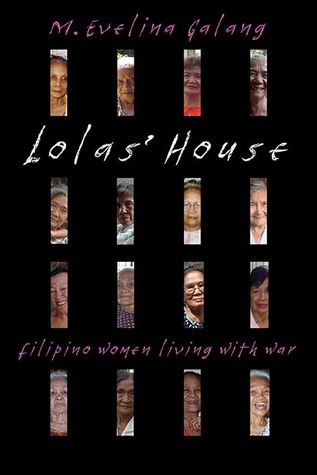 During World War II, the Japanese Imperial Army forced over 400,000 women into sexual slavery; though the Korean comfort women have been recognized for a long time, the survivors in the Philippines lived with the trauma and appalling social stigmatization for decades, unheard. Recently 173 of them, now very elderly, filed suit against the Japanese government. This collection includes interviews with 16 Filipina women whose lives were ruined by this atrocity. Thanks go to Net Galley and Northwestern University Press for the DRC, which I received early and free in exchange for this honest review. The collection is for sale now.
 Tail Gunner is the memoir of a member of the Royal Air Force during World War II. I was fortunate to receive a copy free in advance from Net Galley and Endeavor Press in exchange for an honest review. It’s both compelling and informative.
 Seattle Book Mama