The Animators, by Kayla Rae Whitaker*****

 “I always heered that art was for ugly girls and queers.”

theanimators

The Animators is the right story at the right time, outstanding fiction that is too impossibly good to be debut fiction, and yet here it is. I nearly let the DRC pass me by, because apart from its female main characters, there is nothing here that would ordinarily hook me. I am too old, too straight, and too un-artistic to be part of the target demographic. But I had been in a rut lately, reading too many mysteries, and so I decided to step out of my comfort zone; in doing so, I hit the jackpot. Sometimes rewards come when we aren’t expecting them, and it would be a sad thing to let a golden moment pass by unmet. Thanks go to Net Galley and Random House for the advance copy, which I received free in exchange for this honest review.

Our story revolves around the lives of two women that meet at art school. Sharon Kisses is a shy kid from Kentucky, self-conscious but ambitious. Mel Vaught is hilarious, outrageous, and riotously extroverted, a noncomforming thrill-seeker from Florida.  Mel appreciates Sharon’s art in a way that no one else does, and Sharon is grateful to finally have someone understand her. Together they form a team that will become famous.

The entire story hinges on development of our two characters and the relationship that unfolds between them. The plot is original and interesting, but it wouldn’t go anywhere if I didn’t believe Sharon and Mel. I buy both of them immediately, and before we’re even halfway through the story I am making predictions—mostly unsuccessful ones, and it’s the chewy ambiguity that makes the whole thing so fascinating—about what one or the other of them will do. I made one accurate prediction midway through, but nothing else went where I expected it to. That being said, however, everything here made complete sense, and these are two such viscerally relatable characters that I carry them in my head still, though I’ve read at least half a dozen other books since I finished this one. In fact, a hallmark of the very best fiction is that I have to let what I have read cook in my head for awhile before I am ready to describe it. I take notes, but they aren’t enough.

Mel is gay, but Sharon isn’t. On the other hand, Mel is also about ninety percent of everything that Sharon has in this world, once the partnership develops. Sharon always introduces Mel as “my business partner,” and this is both true and safe, but here I wrestle with my own thoughts. Is there anyone else alive that Sharon can love the way she loves Mel, whether she recognizes it or not?

How many women of days gone by—let’s say the early twentieth century—lived with another woman their entire adult lives, never even considered touching one another sexually for fear of their mortal souls, and maybe propagated a myth to the neighbors that they were related? I think there were a lot of them. Being a lesbian was on a par, back then, with having barnyard sex with Old Bessie. No decent person was; no decent person did. So instead, they labeled themselves ‘spinsters’ and invented a story, and just lived together, decade after decade. And when I look at the community from which Sharon has sprung, I can understand how this mindset carries over to some people even today.

Yet there’s another reality, too. Sharon really likes having sex with men. When she isn’t doing it, it’s on her mind.  How many women have pledged their lives to someone that does not physically attract them, because they find the person good company and don’t want to break their heart? And so when I think of Sharon, I remind myself that perhaps Sharon really isn’t gay. Maybe she will never want Mel sexually, and maybe that’s a fair thing to recognize.

The story contains so much life, so much sorrow, and it’s so damn funny at times.  And the rage! Both women carry a tremendous amount of anger, and it provides fuel for their creativity. Hearing their stories is like peeling an artichoke, one layer after another to get to the best part, which is way deep inside.

As the story progresses, we come face to face with the pasts both women carry with them. Mel’s tortured upbringing is the subject of their first animated film, and it’s clearly therapeutic; yet good therapy can only do so much. And as we see the world through Mel’s eyes, the depth of analysis is both brainy as hell and absolutely riveting.

Sharon is the introvert, and so it makes sense that her own story comes out more slowly, and it may never have done so without Mel’s assertive nature insisting that they stop by Sharon’s home town on the way back to New York.

The critical thinking here is deep and dark. Those that have regarded art as a soft discipline will have to sit up and take notice.

This story is for geeks, artists, and anybody burdened by at least one dark secret. It’s a story for strong, unapologetic women and those that love them.  And it’s for sale Tuesday, January 31, 2017. Get a copy. You can’t miss this one!

Little Heaven, by Nick Cutter***

littleheavenLittle Heaven is pure hellfire and horror, the sort of novel that makes a person check the closet at bedtime and leave a light burning in the hallway. I received my copy in advance from Net Galley and Gallery Books in exchange for an honest review. The title is available for purchase now.

This story is set in the present, alternating with events from the past that help us understand what’s happening now. In this sense the story is a bit like All the Missing Girls by Megan Miranda, in that part of it takes place in the past and moves its way toward the present. The method is a powerful way to build suspense, but it’s not the only tool in Cutter’s tool chest by a long shot.

Our premise is that Petty, child of Micah and Ellen, has been kidnapped by the Long Walker. Micah has foreseen this event and dreaded it, but he’s been unable to prevent it:


“And he’d felt it coming, hadn’t he? Something gathering toward his family—a feeling not unlike the thunder of hooves as a stampede of horses approaches. He might as well have tried to outrun his own skin. You cannot outfox the devil. You may be able to stay his approach if you’re lucky and a little crazy, but in the end, his black eye will ferret you out.”


He calls upon two other gun slingers, Ebenezer and Minerva, both of whom shared the same horrific past event as Micah. Each owes him a favor, and he’s calling it in. He wants his daughter back.

There are a lot of twists and turns in the plotting of this story, and you’ll need to bring your full attention to keep track of it.  Ultimately the three find themselves at a cult in the mountains of New Mexico named Little Heaven.

I have never been so conflicted about a book so far into the narrative. On the plus side we have some outstanding word smithery, interesting characters, and some of the best monsters I’ve read in any horror novel. The narrative is fresh, confident and at times jaunty, dropping moments of drollery into unexpected places to help lighten an otherwise dark, dark, dark story. For these factors, I wanted this to be a five star read.

Unfortunately, there’s no denying that there are problems here. There are plot details that are too obvious, to me at least, to just read past, and when these occur, it’s like Toto pulling the curtain away from the wizard’s booth; the Great and Powerful Oz is just human, and at such moments, this is just another book. Examples that occur fairly early on include a character with a full load of morphine successfully racing out of town on the back of a horse; soon after this, another character who’s bleeding profusely decides to tell her life’s story.

Then there’s what is fast becoming a disturbing issue not limited to this author, but which I find unacceptable wherever I find it, and that’s when a character’s bad nature is demonstrated by the writer using ugly racist, sexist, anti-gay, and xenophobic language. When it happens once or twice in a novel, I grimace and move on, but this author finds such a variety of anti-Black slurs to fling at the Afro-British character named Eb and distributes them through so much of the text that an overall sour taste is left behind, and it’s not the sort that comes of reading good fiction. Cutter is skilled enough to use other methods to demonstrate the presence of evil, and he should do so.

Likewise, we don’t need sexist terms or a rape to show us that a character is sexist or that a woman has a traumatic past. Here I point, as I’ve done before, to director Jodie Foster, who said in an interview that she is dumbfounded by the way that so many male directors, when searching for a female character’s motivation, come over and over to the same conclusion: well, she was raped, and that’s why she behaves this way. It was rape, it was rape; she must have been raped! To Cutter and to others I say, stop it.  It’s trite, it’s ugly, and it’s obnoxious. For the same reason that most horror and suspense writers don’t deliver us into a warehouse full of kiddy snuff films and describe them in fine detail, authors should find other ways than hate speech and sexual assault to develop a character or display his or her malevolence.  Let’s not wear this one out any worse than has been done.

In other regards the story shines. The plot overall is complex and woven in a way that neatly brings us back to the problem at hand at the end.  Teenagers that enjoy horror as a genre may especially like this book, given its plethora of gore and the host of skittering critters. In fact, I found myself wondering whether there could be a Little Heaven video game. I’ve never wondered this about a book before, but the monsters are splendid, and so I could see it.

This book was released January 10 and is for sale now. Recommended with the caveats mentioned above.

Forever is the Worst Long Time, by Camille Pagan****

 “Each story is different. Every story ends with loss.”

foreveristheworstCamille Pagan is the author Life and Other Near Death Experiences. Thank you Net Galley and Lake Union Publishing for the DRC, which I received in exchange for an honest review. This title is for sale February 7, 2017.

The story starts in the second person, with the narrator speaking to us intimately; he is James Hernandez, and soon we realize that he is speaking to a child about her mother and his memories of her. The narrative is therefore intimate in tone, but also carefully measured and paced, beginning in 1998 when James meets Lou and unspooling toward the present.  I have read oh so many novels in which alternating viewpoints are used to keep the reader’s attention from wandering, and this fresh approach had me at hello.

James is Rob’s best friend; James’s own childhood home was dysfunctional and bleak, and so Rob’s family included him on family vacations and other family-only events. They weren’t just close friends growing up; they were almost brothers. And so when James falls head over heels in love and decides to marry, the first thing he does is send for his BFF. They are introduced and James is asked to be best man at the wedding.  But in one of those blind random moments of fate, James himself falls madly in love with Lou the minute he sees her.

What would you do in a similar circumstance? Get over it and do it fast, of course. It’s just not possible. But years later, when the marriage founders and Lou walks, James can’t help himself.

There is foreshadowing in plenitude here, and the voice at the outset and at the end are what keeps those pages turning. Of course, there’s also mystery, because the speaker is telling us some things, but clearly withholding others.

If you have to like a protagonist in order to enjoy a novel, then this may not be your book. James isn’t merely flawed; in the book’s middle, he’s whiny.  I check my notes and find that in one place I wonder if Woody Allen will option the rights, and in another, I curse and request a violin. Seriously, I want to smack James upside the head and say sure, you shouldn’t have, but you did and it’s done, so man up and get over it already. But around the three-quarters mark, the whole thing takes another turn, one entirely consistent with what has gone before, and once again, it is a book I don’t want to put down till the last page is turned.

Those that enjoy fresh new fiction should consider this book even if romance is not generally a favorite genre. Pagan is an interesting writer, and now that I’ve read this, I want to go back and read the other things she’s written.  She’s already gained a lot of buzz—and a movie deal—with her first title, and I suspect she will be someone to watch in the future.

Don’t get left out.

The Prisoner, by Alex Berenson****

theprisoner Berenson has written a whole series of espionage thrillers featuring John Wells, a CIA operative fighting al Qaeda. I was unaware of this when I requested a DRC from Net Galley and Putnam Penguin, but I find it stands up quite nicely as a stand-alone novel. Would I have enjoyed it even more if I’d read the others first? We will never know.  However, if you’d like to read this tightly woven thriller either in sequence or singly, it will be available January 31, 2017.

To enjoy an espionage thriller, one has to buy the premise, namely that the CIA is a heroic organization, or at least has a segment of good guys that are fighting terrorism to keep innocent civilians safe. This is a premise I buy cheerfully for the sake of a good yarn; I do it when I read crime fiction in which the cops are morally righteous, or at least more good than bad, so why not here. In exchange, I got to enjoy an intense, interesting thriller that is different from a lot of the other fiction I read, and novelty is a meaningful selling point when one spends several hours daily with one’s nose in a book.

This is a literate read. In a world of dumbed-down fiction that plays to the lowest common denominator, I have come to value writers that have a strong vocabulary and aren’t afraid to use it. I also learned some things about the Middle East and how the USA operates there, including a few new specialized terms and some information about the cultures featured in that part of the world. Of course, this is fiction and it could also be true that Berenson made it all up, but his past includes work as a war correspondent in Iraq, and so perhaps this is what gives the setting its authenticity.

Our premise is that there is a mole at a high level inside of the CIA. John Wells has been feeling the itch to travel, impatient with his wife’s demand for more family time and suffocated by the dull sameness of everyday life in the States. He volunteers to return to the Mid-East and pose as an al Qaeda recruit so that he can be tossed into a Bulgarian prison and cozy up to the high-up operative that is interned there.

I blanched slightly at this; I have read a couple of former CIA employees’ memoirs, and I had to swallow hard to pretend that this guy would actually do this thing. But when we read thrillers, whether it’s crime, mystery, or a spy story, we don’t really want to read about tedium and paper pushing; we want excitement. Once I bought the premise, I was wedded to the narrative.

The other key characters here are Shafer, the CIA officer Wells reports to and who is also hunting for the mole; and the mole, whose name I can’t tell you without ruining the book.At first I thought I was seeing shallow characterization, but Wells’ character is developed in a way that is so subtle that the reader may not realize it’s occurred. Gradually we come to know who Wells is, how he thinks, how he will respond. On the other hand, our mole is a loser and remains a caricature throughout.

Every significant character here is male, but from what little I know, that’s consistent with the CIA, especially among the highest officers, a glass ceiling that’s hard to crack, so Berenson is merely reflecting US intelligence as it actually is.

The plot’s arc is a little different than one might usually expect.  The hook at the start is arresting, and I expected it to perhaps ratchet up, up, up from there. Instead, the pace flagged once we were about 15 percent of the way in, and then gradually began to ascend again. By the time I was 70 percent of the way in, I understood that the next time I picked it up, I would have to finish it.

When we hit the climax, set in France, I threw off the quilt and sat up. The pulse-pounding denouement was inconsistent with lying supine and I read the last 15 percent of the book sitting up and leaning forward.

This story is guaranteed to spike your adrenaline and chase away the winter blahs. Recommended to those that enjoy espionage thrillers.

The Famished Road, by Ben Okri**

thefamishedroadI surrender! Thanks go to Net Galley and Open Road Media, from whom I received a DRC in exchange for an honest review; however, try though I have, I cannot push past the molasses-like allegory and other figurative language to locate a plot. After painfully forcing my way through the first 20% of the book, I went to Goodreads to see what other reviewers had to say about it. Some felt as I did, but others swore that if the reader could endure the first two-thirds of the story, the last third would not only be so amazing, it would also enlighten us as to why the earlier part was necessary. Seeing this, I vowed to persevere. By the 25% mark, I found I was avoiding this DRC, because just about every other galley in my possession was either more enjoyable to read, or more rewarding, or both.

Tonight I decided it was time to put up or shut up. Maybe this is one of those rare occasions when one should read a book out of sequence. I skipped to the 70% mark and found it was pretty much more of the same. The allegory pointed toward the horrific debt load that cripples African nations, but I already knew that, and if that is actually where this story is supposed to lead me–because really, I am still not sure–then it’s a disappointment. I already knew about the impact of colonial overlords on African nations, and this did nothing to improve either my knowledge or my appreciation for that, or for literature.

I will add, however, that I have also never liked magical realism. Either write fiction or nonfiction, don’t try to do both at once. Even the work of literary goddess Isabel Allende makes me crazy this way: we are in the midst of what feels like a genuine memoir, and then someone turns bottle-green and levitates. No, no, and no.

Those that have a great love of magical realism and thirst for African fiction may find joy here. This book has won prestigious awards, and I had anticipated that reading it would be rewarding. Just because it didn’t happen for me doesn’t mean it won’t happen for you; but if you come to feast at Okri’s table, bring a high literacy level with you, or you’ll find yourself leaving it still hungry.

This title is available for purchase now.

The Bear and the Nightingale, by Katherine Arden*****

“Blood is one thing. The sight is another. But courage—that is rarest of all, Vasilisa Petrovna.”
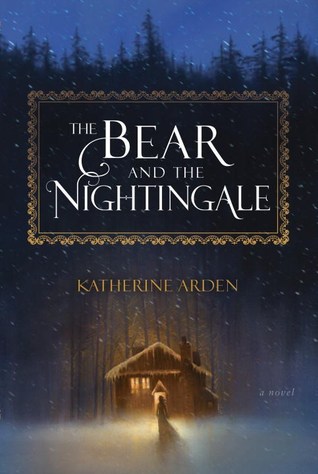
 thebearandthenigh

The Bear and the Nightingale is the most brilliant fantasy novel I’ve seen since Tolkien wrote, and I want you to understand how different, how special it is. I received my copy free in exchange for an honest review—and those of you that read my last two reviews know that this privilege has never made me obsequious. Thank you Net Galley and Random House Ballantine for the advance copy. It’s worth its weight in spun golden magic, and it will be available to the public this Tuesday, January 10, 2017.


“The brave live…The cowards die in the snow.”


Our protagonist is Vasilisa, affectionately known as Vasya; she’s an adolescent with many talents, some of which are supernatural. She generally keeps these abilities to herself, lest she be called a witch. Her father, Pyotr, is a minor prince in the frozen Northern hinterlands of Russia during the 14th century.  The setting here is mesmerizing, and from the first page I understood that this particular story is one I would save for late nights when my family is asleep. Let my other reading be interrupted by the minutiae of running a household, but not this one. This is a juicy tale, perfect for a cold winter night burrowed beneath the quilts. I open this magical tale and am lost inside it.

Our setting is ancient Northern Russia, then known as ‘Rus’, since no central government had formed yet. This is a time when women carry about as much social worth as a poker chip or livestock, and yet as the story progresses, I realize that this is a stand-up-tall feminist folk tale of the highest order; in fact, it’s a lot of things. This is the sort of debut that most likely causes writers like Harper Lee to go back in the house and never publish anything else, lest the second novel be considered a let-down after the first.  I hope, however, that we’ll see a lot more of Arden.

Our story commences in the house of Pyotr, a minor prince whose wife has died in childbirth. He loved Marina dearly, but as his daughters grow closer to marriageable age, he knows he must go to Moscow to seek a new bride to run his home, and marry his elder daughter Olga to a man of wealth and power. And though Olga’s match is a good one, it’s in Pyotr’s remarriage that things go badly wrong.

A brief note about the setting and other details involved with time and place. First know that this story does require a relatively high literacy level; for those that struggle with a high vocabulary level, it may prove to be more work than fun. However—for those reading digitally especially—please note that there’s a glossary at the back of the book. And those that are able to read this digitally on a device with a touch screen will be happiest of all, because it’s so easy to touch a word and get a definition immediately. I also ran a few searches due to curiosity, since I was not at all eager for this book to end. I took my time with it, and while I was buried in this magical world, I was nevertheless learning details of history and geography that I hadn’t known before.

Because I taught teenagers how to write for a number of years, it’s my natural inclination, even in an absorbing story such as Arden’s, to go back and look again to see what specifically produced this alchemy.  Undoubtedly, the development of multiple characters in a deft, expert manner is essential. There’s not one character in this story that I don’t believe. Every last one of them is real to me, a feat in and of itself when writing fantasy. It takes confidence and authority to tell the reader that although the story contains all manner of supernatural elements, it’s all true, and so are its characters.

But also, there are real life details true to the time and place that Arden weaves in seamlessly. As I reread some key passages, I note that when the men come indoors from the snowy woods, they aren’t merely cold, dirty and tired; they’re covered in scratches, they’re voracious, and their boots steam and stink up the room once they remove them. In another scene, when Pyotr travels far from home, he can afford fine guest lodging, but although he gets a big, soft, fluffy bed, he also has to put up with vermin, because they were a part of everyone’s life.  Such details contribute to the immediacy of the story.

It’s Arden’s outstanding word smithery that makes this story a standout. When Arden writes, the mists clear and we are transported, quivering in the snowy forest of the 14th century Russia, tearing pell mell across frozen ground on the back of a noble stallion, facing down death as demons scream and shadows dance.

I won’t spoil any of the subsequent plot points for you, but please know that this is a multifaceted story with a lot of secondary threads that contribute to the main story rather than distracting us from it.  To do so in a debut novel is stunning. A particularly interesting side character is Dunya, the nurse that has raised Vasya and has held onto a talisman intended for Vasya at great personal cost.

Messages and possible themes come out of the woodwork once one looks for them. A story such as this one, in which Vasya defends the old pagan deities against the religion of Kostantin, would once upon a time have caused conservative Christian parents to come screaming to the school with their lawyers on their cell phones in one hand and a flaming torch in the other. It could happen still, but what greater honor could Arden ask than to find her way into the ten most frequently banned books?

Meanwhile, in this trying time for independent women, we need strong female characters like Vasya and Dunya to remind girls and women that we are powerful, and that together, we can conquer those that would strip us of our autonomy and march us barefoot back to our kitchens. I have no idea whether any such direct political purpose is intended by Arden, but it certainly serves as a potent message: we will be oppressed only if we let that happen. Those that have even a fraction of Vasya’s independence, confidence and courage can not only prevent the door opportunity from slamming shut;  we can knock that door off its fucking hinges, for ourselves, our daughters, and theirs as well.


’All my life,’ she said, ‘ I have been told ‘go’ and ‘come.’ I am told how I will live, and how I must die. I must be a man’s servant and a mare for his pleasure, or I must hide myself behind walls and surrender my flesh to a cold, silent god. I would walk into the jaws of hell itself, if it were a path of my own choosing. I would rather die tomorrow in the forest than live a hundred years of the life appointed me.’”


Those looking for themes here have a banquet of opportunities. Though I would say the story is one of solidarity among women, or of woman’s independence, there are so many other possibilities. One could make a case that this story is about loyalty; one could claim it’s about family. One could say it’s about the victory of the collective good over the pride, greed, and ambition of the individual.

One thing I can say for certain is that The Bear and the Nightingale is impressive any way you approach it. It holds the potential to become a favorite of the genre, handed down lovingly from one generation to the next.  Buy it for yourself, for your daughter, your mother, or for any woman that you love, or for someone that loves women and good fiction. A book like this doesn’t come along every day.

Don’t even think of missing this book. You can get it Tuesday, or better still, you can pre-order it now.

Small Admissions, by Amy Poeppel*****

Happy release day! The holidays are over and your humor may be running dry and a little snarky by now. If so, this book is just what the doctor ordered…and it’s for sale right now.

seattlebookmama's avatarSeattle Book Mama

smalladmissionsI received an advance reader’s copy of this darkly amusing novel from Net Galley and Atria Books. It’s funny as hell, and even more amusing to teachers, school counselors, and others that have dealt with high maintenance parents and the aura of entitlement they carry with them. I rate this title 4.5 stars and round upward.  It comes out December 27, 2016, just in time to chase away your post-holiday depression.

I sat on this book for more than three months, which is a rare thing for me.  I kept starting it, not liking it, and deciding to set it aside and look again with fresh eyes later. Finally November came, and I realized the book was not going to change; I’d given my word to the publisher I’d review it; it was time to suck it up and get the job done. And this is a little ironic all…

View original post 408 more words

And Every Morning the Way Home Gets Longer and Longer, by Fredrik Backman****

 “When a star fades, it takes a long time for us to realize, as long as it takes for the last of its light to reach Earth…When a brain fades it takes a long time for the body to realize.”

andeverymorningthewayhome

Frederik Backman’s new novella provides us with a philosophical yet poignant glimpse of an elderly man trying to hang onto his memories, and the love of those that must say goodbye to him inch by inch. I received my DRC from Net Galley and Random House Alibi in exchange for this honest review.  This novella will be published November 1, 2016.

They say that each generation corrects for the one before it, rendering us more like our grandparents sometimes than our parents themselves. So it is with Noah and Grandpa. Grandpa calls his grandson “Noahnoah”, because he likes his grandson’s name twice as much as anyone else’s. Sometimes Noah’s father Ted comes to see Grandpa, and when he mentions Noah, Grandpa doesn’t know who that is. Sometimes Grandpa knows everyone; sometimes he doesn’t. Sometimes he mistakes one of them for the other.

But Grandpa—who has no other name in this book, having taken on the generic persona that Western society tends to give us as we grow very old—shares a special bond with his grandson, and it is his grandson that comes to him, still, with questions about life and the universe.

Grandma is no longer living, but theirs was a happy marriage despite their dispute about God and the afterlife.  Noah says to his grandfather, “’Grandma believed in God, but you don’t. Do you still get to go to Heaven if you die?’”

Grandpa tells him, “’Only if I’m wrong.’”

The years pass. As usual, Grandpa wants to know about school, but he has forgotten that Noahnoah isn’t a student anymore; he’s become the teacher. On the other hand, school is better than ever now. And so it goes.

This story is brief, and I read it in just a couple of sittings. Despite the cover art, it isn’t necessarily a book for children.  It’s a wonderful story in that it shows us a gentle way of dealing with aging—which can be so hard to do, particularly if Alzheimer’s makes the elderly sufferer angry with no reason—and it also helps us learn to let go. For some, this might be a good grief story. For others that had to let go without being able to be with the beloved family member much in their final years, it might be painful, because the grandson and father both spend time with this man as he declines.

I can see ways in which this story might help a YA reader with not only a strong literacy level, but the ability to think abstractly, cope with Alzheimer’s or another form of dementia in an elderly relative that means a lot to them, but I would advise the parent or guardian to read it first, and then decide. There’s no sex, no profanity; just pleasure, love, joy, and aching sorrow.

Fidelity, by Jan Fedarcyk***-****

fidelityRetired FBI agent Jan Fedarcyk makes her debut with this intense spy novel, and it is bound to keep the reader guessing and turning pages deep into the night. Thanks go to Simon and Schuster and Net Galley for the DRC, which I received for review purposes. I rate this story with 3.5 stars and round it upward.

The selling point for the new reader of what is destined to become the Kay Malloy series, is that the author has spent 25 years in the FBI and knows what she’s talking about. Though she reminds the reader that a lot of the FBI agent’s job is done at a desk sifting through endless forms to fill out and reports to write and not much of what we see on TV, we also know that she can spot an implausible situation a mile away and not go there or do that.

So the initial question that came to me was whether someone that’s worked for the Feds for a quarter century still has enough imagination left to write interesting fiction, and now I can tell you straight up that Fedarcyk does, and she can, and she did. I like the level of complexity, which is literate without being impossible to follow. The reader will want to give her story full attention; nobody can watch television and read this book during the ads. It’s well paced and the suspense is built in a masterful manner.

Characterization comes up a little short, and I can imagine that this will be her key focus in writing future books in the series. Kay is so darn perfect, and I never feel I know her deeply, despite the discussion of her past and how she is motivated by it. We see her tempted to use her position for a very small, somewhat justifiable personal reason briefly, but she is nonetheless something of a cardboard hero all the way through. Likewise, the Russian spies are big, blocky bad guys, thugs that drink Vodka. The spy novel tradition has been honored, but I would like to see more layers to these characters as we move forward. The ending, while it surprises me to some extent, is not one that the reader had a reasonable chance of guessing, but to some extent that’s true of a lot of espionage thrillers.  What might be really cool would be to see an espionage version of Kay’s own Moriarty come into play.

As is always the case for me when I read espionage thrillers, police procedurals, and other novels that involve heroic cops, I have to construct a mental barricade between what I see in real life and what I am willing to believe when I read fiction. One of Fedarcyk’s characters snorts in derision about the time when people were willing to die for Marxism, and I have news: some of us still would. But for a fun ride, I am delighted to suspend reality and buy the premise until the book is done.

One area where I struggled—and to be honest, I don’t know whether anyone else will or not—was with two characters, first Luis, whose last name isn’t used very much, and then Torres, whose first name doesn’t get used much either. This reviewer has taught more than one student named Luis Torres, so this may factor into my confusion about 75% of the way through the story when I realize that these have to be two separate people, but for awhile I am convinced that Uncle Luis Torres has mentored her into the field, and so when the story arc is near its peak, I have to go back and reread some of the novel to be certain I knew who is who. Luis is the uncle; Torres is the agent and mentor; they’re two separate guys.

All told, this is a promising start to what is sure to be an engaging series. The world needs to see more strong women in fiction, and so I welcome Kay Malloy and look forward to seeing future installments. A fine debut, and it’s for sale now.

The Girl from Venice, by Martin Cruz Smith*****

thegirlfromvMartin Cruz Smith is the best-selling author of Gorky Park and the Arkady Renko series. His new stand alone novel, The Girl from Venice, shows he hasn’t lost his magic, and it quickly became my favorite DRC once I began reading it. Thanks go to Simon and Schuster and Net Galley, from whom I received an advance copy in exchange for an honest review. You can get this book today.

Cenzo Vianello is a fisherman from the tiny village of Pellestrina, an ancient place steeped in tradition. He once had two brothers, but now has only one; Hugo died in Mussolini’s Africa campaign, and his remaining brother Giorgio is a movie star as well as an influential member of the Fascist government. Cenzo detests him for his politics, but even more for having stolen his wife Gina, who died when a bomb fell on the movie set to which Giorgio had escorted her.

All of this is background, complex and deliciously ambiguous in many aspects. It is within this context that Cenzo finds the girl, Giulia, floating like a corpse in the lagoon. To his surprise, he finds she is alive. She is Jewish, from a wealthy family and on the run. She figures that if the poet Byron could cross that lagoon, then so can she. Cenzo hates to spoil her dream, but he tells her this is a dangerous plan, and for many reasons. He develops a plan for her rescue, but later finds he is ambivalent about having turned her over to someone else. Is she safe? Does she remember him? Who can he trust, and who not?

One must, after all, be careful who one embraces.

“The trouble was the war. It should be over. Instead, the Americans were taking forever while Mussolini ruled a puppet state and the Germans, like decapitated ants, went on fighting.”

 When one fears defeat, one may become desperate; in some ways, the Fascists now have little to lose, and so their behavior becomes more extreme. There are partisans that oppose the Fascists, but it’s difficult to be sure who is sincere, and who is a double agent.

Part of the suspense inherent in successful spy novels is the feeling of looking over your shoulder, wary of everyone all the time. The relationship between Cenzo and Giorgio is particularly well developed and is intertwined with this aspect of the story; we never know whether one of them is going to kill the other, and when Giorgio says he will help Cenzo, we wonder whether he is helping lead him into a trap.

Although Giulia provides us with a premise and a scaffold for the story, not to mention a really beautiful book jacket, hers is not the character we see developed. The characters that are meaty and interesting are the brothers.

That being said, Smith should get credit for including an interesting female side character in Maria, the wife of the consul of Argentina, a woman with shadowy business and motive. Maria isn’t there to seduce anyone, not really; she’s also not a victim. In a field riddled with endemic sexism, I was happy to see this progressive element, and was fascinated by the brief, spectral appearance of her husband from his sickbed.

This story is a page-turner, an unmissable tale that will keep your light burning late and distract you from your daily pursuits until it’s over.  Don’t miss this one.