Ohio, by Stephen Markley*****

OhioMarkley’s thunderous debut is not to be missed. My thanks go to Simon and Schuster and Net Galley for the review copy, which I read free and early, but this is one of the rare times I can say that if I’d paid full hardcover price, it would have been worth it. This is the summer’s best fiction, and it’s available to the public August 21, 2018.

Our story is broken into a prelude and four additional parts, each assigned to a different protagonist, all of whom knew one another, traveling separately from four different directions; they were born during the great recession of the 1980s and graduated from New Canaan High in 2002, the first class to graduate after 9/11. We open with the funeral parade held for Rick Brinklan, the former football star killed in Iraq. His coffin is rented from Walmart and he isn’t in it; wind tears the flag off it and sends it out of reach to snag in the trees. The mood is set: each has returned to their tiny, depressed home town, New Canaan, Ohio, for a different purpose. The town and its population has been devastated economically by the failure of the auto industry:

“New Canaan had this look, like a magazine after it’s tossed on the fire, the way the pages blacken and curl as they begin to burn, but just before the flames take over.”

At the mention of football, I groan inwardly, fearing stereotypes of jocks and cheerleaders, but that’s not what happens here. Every character is developed so completely that I feel I would know them on the street; despite the similarity in age and ethnicity among nearly all of them, there is never a moment when I mix them up. And the characters that are remembered by all but are not present are as central to the story as those that are. As in life, there is no character that is completely lovable or benign; yet almost everyone is capable of some goodness and has worthwhile goals.

Families recall the closure of an industrial plant with the same gravity with which one would remember the death of a beloved family member; the loss has been life changing. Residents are reduced to jobs in retail sales and fast food, welfare, the drug trade, and military service due not to legal compulsion, but economic necessity. Everyone has suffered; Walmart alone has grown fatter and richer.

This is an epic story that has it all. We see the slide experienced by many of New Canaan’s own since their idealistic, spirited teenaged selves emerged from high school to a world less welcoming than they anticipated. One of the most poignant moments is an understated one in which Kaylyn dreams of going away to school in Toledo. This reviewer lived in Toledo during the time when these youngsters would have been born, and I am nearly undone by the notion that this place is the focus of one girl’s hopes and dreams, the goal she longs for so achingly that she is almost afraid to think of it lest it be snatched away.

Because much of each character’s internal monologue reaches back to adolescence, we revisit their high school years, but some of one person’s fondest recollections are later brought back in another character’s reminiscence as disappointing, even nightmarish. The tale is haunting in places, hilarious in others, but there is never a moment where the teen angst of the past is permitted to become a soap opera.

Side characters add to the book’s appeal. I love the way academics and teachers are depicted here. There’s also a bizarre yet strangely satisfying bar scene unlike any other.

Those in search of feel-good stories are out of luck here, but those that treasure sterling literary fiction need look no further. Markley has created a masterpiece, and I look forward to seeing what else he has in store for us.

How to Walk Away, by Katherine Center***-****

howtowalkaway3.5 stars, rounded upward.

Maggie swallows her misgivings and agrees to let her boyfriend, Chip, give her a ride in a small plane. He’s taken lessons, but doesn’t have a license yet. Naturally, he crashes. And naturally, he walks away without a scratch, but Maggie is paralyzed and burnt to a crackling crisp.

My thanks go to Net Galley and St. Martin’s Press for the DRC. This title is now for sale. I missed the release date and am sorry about that; I struggled with how to rate this title and how to review it. More on that in a minute.

Most of the story is set at a hospital, where Maggie is treated for burns and receives physical therapy to help her learn to move again. It’s painful and it’s horrible, and on top of that, nobody will let her have a mirror. Once she has one, she wishes she hadn’t looked.

“I would forever be a person that other people tried not to stare at in the grocery store. I would forever be someone who made other people uncomfortable.”

Maggie develops a crush on her physical therapist, a handsome, abrupt, unfriendly Scotsman whose poor bedside manner is surpassed only by his outstanding skill at helping Maggie learn to maneuver her body. At the same time, Chip—who for no reason I can understand, has not been arrested or cited for flying unlicensed or for stealing an airplane—goes all to pieces, turning his few hospital visits into a pity party for himself.

The story is quixotic in its combination of romance, medical information that is sometimes more detailed and gruesome than I want to read, and a beginning that is more an adventure or disaster tale than romance. 14% of the way in I flipped back to the cover, the tiny, almost unnoticeable plane flanked by giant floral bouquets, and I didn’t get how this story went with that jacket. I think the beginning scene with the plane, the toxic boyfriend turned fiancée, and the crash should have been edited down and presented as a prologue.

When Maggie is astonished to see a “lady firefighter”, I roll my eyes and check the copyright to make certain this isn’t a re-release of a title from the 1960s.

I originally designated this galley as my lunch and midnight snack companion, but soon it became obvious that there were too many detailed descriptions of bodily functions, particularly related to the bowel and the bladder, that I didn’t want to dine with.

The parts I like best here have to do with Maggie’s sister Kitty, who left suddenly many years ago and has been estranged due to a mysterious conflict with her mother. Kitty’s character is developed wonderfully and injects light and humor into the narrative.

The other characters at times seemed overdrawn. Chip is too obnoxious; I already hated him when he patted Maggie’s fanny and told her to get onto the plane. As ugliness is added to more ugliness, I find myself rolling my eyes and saying, yes, he’s a dick, I get it already. Maggie’s mother (is there a novelist out there that is comfortable with a protagonist and her mother having a solid relationship?) is too shallow, too obviously obsessed with surface beauty, and although there is some small redemption for her in the end, I want to see more than one attribute given this character, and I want it sooner.

And there’s the wealth, the privilege, and the wealth wealth wealth. When Maggie’s father brings a printer to her hospital room so he can crank out articles for her to read; when her mother hauls in curtains and lamps and redecorates the hospital room; a thousand times I find myself highlighting passages and arching my eyebrows. The hell?

The romance itself, however, is a winner. As I watch the electricity pop between Maggie and Ian, I can’t help smiling. The romance is what most readers are here for, and I find it heartwarming and satisfying. It’s a quick read, and although I had no trouble putting it down, I also had no trouble picking it back up again, which is not always true of the galleys I review.

Recommended to Center’s faithful readers, and to those that like a light romance.

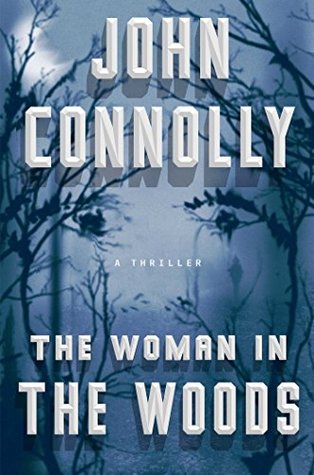
The Woman in the Woods, by John Connolly****

thewomaninthewoodsConnolly is one of a handful of writers whose names I search when I go to Net Galley. He’s consistently brilliant, and so I am grateful to Atria Books and Net Galley for the review copy. This book is for sale now.

This is number sixteen in the popular Charlie Parker series, which began as detective fiction with mystic overtones reminiscent of James Lee Burke, and in the last volume moved into the horror genre outright. Either way it’s a compelling series. One of my favorite aspects of this series is the author’s incorporation of social justice themes. Here we find a sadistic butcher hot on the trail of the shelter volunteers that assisted Karis Lamb in escaping the father of her child, and a magical book she took with her.  Karis died in childbirth and is buried in the woods, and there are nightmarish individuals—human and not—trying to find her child so they can get the book. His adoptive mother and grandfather are determined to protect Daniel at all costs.

“Tell me the special story,” Daniel said. “The story of the woman in the woods.” 

Karis’s body is dead, but her spirit is not at rest. She is looking for her boy, and a particularly chilling detail is the repeated use of Daniel’s toy phone to call him from beyond the grave. 

At the same time, Angel, one of Parker’s two assistants who is also his close friend, is lying in a hospital bed following cancer treatment, and his partner, Louis, whose impulse control is never tiptop and is now strained to the breaking point, becomes enraged when he sees a vehicle bearing a Confederate flag parked near the hospital, and so he blows up the truck. As events unfold, our supernatural villains and the Backers—sinister characters whose lives hold no joy, and whose fate is eternal damnation—are joined in their pursuit of the Atlas, the child, and now also Parker by some local white supremacists seeking vengeance on behalf of the van’s owner.

As always, Connolly juggles a large number of characters and a complex plot without ever permitting the pace to flag, and he keeps the chapters short and the details distinct so that the reader isn’t lost in the shuffle.

This will be a five star read for most of Connolly’s readers.  Rating horror stories is immensely subjective, because some readers may find this book too horrible to be fun, whereas others will appreciate the way Connolly continues to turn up the creepiness and the gore. As for me, I had a rough time getting through the first half. I didn’t want it in my head at bedtime, and the graphic torture scenes prevented me from reading while I was eating. The result is that I had to read much more slowly than I usually would do; there were too many times I just couldn’t face it, and there were other times when I could read a short amount, then had to put it down for awhile. I suspect I am a more sensitive horror reader than most, but there will be some besides me that began reading when this was a detective series, and that may find it too grisly now.

None of this will prevent me from jumping forward when the next in the series comes around.

Highly recommended to those that love excellent fiction, and that can withstand a lot of horror and a lot of gore.

The Melody, by Jim Crace****

“We are the animals that dream.”

TheMelodyJim Crace is an award-winning author with an established readership, but he is new to me. Thanks go to Net Galley and Doubleday for the review copy. This book will be available to the public Tuesday, June 19, 2018. Those that love literary fiction should take note.

Alfred Busi is a singer, and he was famous during his prime, but now he’s old, living alone in his villa with just his piano to keep him company. At the story’s outset he hears a noise below late at night and goes down to run the animals or the whoever out of his garbage bins, but instead he is attacked. Something or someone flies out and bites him a good one; he thinks it was a boy, a half-feral child:

“Busi could not say what it was, something fierce and dangerous, for sure…before the creature’s teeth sank into right side of his hand, and, flesh on flesh, the grip of something wet and warm began its pressure on his throat, Busi knew enough to be quite sure that this creature was a child. A snarling, vicious one, which wanted only to disable him and then escape.”

The problem—beyond the injury itself—is that Busi is elderly, forgetful, and occasionally confused. His wife is dead, and he’s grieving hard. The only people remaining in his life are his sister-in-law and her son, his nephew, and they aren’t sure he isn’t delusional. Medical staff question his reliability as well; soon, a truly nasty journalist writes a smear piece making fun of him, and it comes out just as he is scheduled to perform for the last time at a concert where he’s to receive a prestigious award. It’s all downhill from there.

Concurrently there’s discussion among the locals about the homeless people living in the Mendicant Gardens—a place entirely devoid of foliage, where makeshift shacks are erected from cardboard, scrap lumber and whatever else is on hand—as well as the fate of the bosc. I find myself searching Google here because I am confused. I have never heard of a bosc, which turns out to be a wooded area of sorts, and my disorientation is compounded by not knowing where in the world this whole thing is unfolding. If our protagonist lives in a villa, and if we’re not in Mexico, then are we in Southern Europe somewhere? I am following language cues; the names of things and places sound like they could be Italian, or maybe French. Or in Spain. The heck? I go to the author bio, but that’s no help, since Crace lives in the U.S. I try to brush this off and live with the ambiguity, but I continue wishing that I could orient myself. It’s distracting. There’s a social justice angle here involving society’s obligation to its poorest members, but I am busy enough trying to establish setting that the effect is diluted.

Nevertheless, the prose here is sumptuous and inviting. Adding to the appeal is the clever second person narrative; we don’t know who is talking to us about Mr. Busi, and we don’t know whether the narrator is speaking to a readership or to someone specific. For long stretches we are caught up in the plight of our protagonist and forget about the narrator, and then he pops back in later to remind us and pique our curiosity.

I am surprised to see this title receive such negative reviews on Goodreads. To be sure, GR reviewers are a tough lot, but there are some angry-sounding readers out there. What they seem to share in common is that they are Crace’s faithful fans, and if this title is a letdown for them, I can only imagine what his best work looks like; after a brief search I added one of his most successful titles to my to-read list, because I want to see what this author could do in his prime.

And there it is. Many people won’t want to read this, because we don’t like thinking about old age and death. Busi’s whole story is about the slow spiral that occurs for most people that live long enough to be truly old. It’s depressing. Those of us that are of retirement age don’t want to think about it because it’s too near; those that are far from it are likely to wrinkle their noses and move on to merrier things. It’s a hard sell, reading about aging, physical decay, and dementia. And there are specific passages that talk about Busi’s injuries and physical maladies that caused me to close the book and read something else when I was eating. It’s not a good mealtime companion.

Crace is known as a word smith, and rightly so. If you seek a page-turner, this is not your book, but for those that admire well-turned phrases and descriptions as art, this book is recommended.

Social Creature, by Tara Isabella Burton*****

socialcreature“Chop chop, Cinderella.”

Here it is, a story of our time.  Lavinia is spoiled and wealthy; Louise is newly arrived in New York City, and apart from her rent-stabilized apartment and a handful of part time jobs, she has nothing. Wealth and want collide and as Louise is swept up into Lavinia’s world—not to mention her Facebook and Instagram pages—the tension mounts. We know that Lavinia is going to die soon, but we don’t know how or why, and of course we wonder what will become of Louise once that happens. Burton’s story unfolds with sass and swagger, and you want to read this book, which is for sale today.  Get it. My thanks go to Net Galley and Doubleday for the review copy, which I read free in exchange for this honest review.

More than anything, Louise wants to become a writer. She has tremendous talent, but between three part time jobs and Lavinia’s endless and unreasonable demands, she has no time for it. Lavinia wants to party, and she’s generous at times, furnishing Louise with expensive dresses, high-end trips to the beauty salon, and eventually, housing. In exchange, she more or less owns Louise.

Louise moves in with Lavinia, but Lavinia has the only key.

Perhaps even more alluring to Louise are Lavinia’s seemingly endless connections to the literary movers and shakers in New York.  Lavinia, you see, has had time to write a book, and she’s done it. It’s terrible, but Louise cannot say as much. She has too damn much to lose.

Burton’s voice is like no one I have ever read, and in some ways the comparisons that have been made to well known writers are unfortunate, because her work is wholly original. The thing I love best about this story is that nothing is overstated. The narrative takes off hell-bent-for-leather, and the reader has to follow closely to find out the basic ground-level information about both both women. It’s as if we have landed as invisible companions in the middle of a party, and we have to hit the ground running, exactly as Louise has had to do.

This is risky writing. The first half has very little plot and little action; its success hinges entirely upon its characters. Burton carries it off brilliantly, with genius pacing and the disciplined use of repetition as a literary device.  This is a novel that should take all of us by storm, but failing that, it has all the makings of an amazing cult classic.

This is cutting edge fiction, written by the most unlikely of theologians. I highly recommend it, even if you have to pay full jacket price.

39 Winks, by Kathleen Valenti****

39winksValenti’s droll new series continues, with Maggie O’Malley and her hunky boyfriend, Constantine riding in to rescue his beloved Aunt Polly. Those that read Protocol, the series opener, know that Valenti writes with swagger, often with tongue in cheek. Thanks go to Net Galley and Henery Press for the DRC, which I received free and early in exchange for this honest review. This title is now for sale.
What would induce a woman to walk away from her job in order to play amateur sleuth? Maggie wouldn’t know. She is currently unemployed. Her career with Big Pharma tanked after she turned whistle-blower, and now she’s been sacked from her position as a retail sales clerk. Damn. But it’s just as well in a way, because Constantine’s Aunt Polly served as “the woman who fit the mother-shaped hole in her life,” and she needs Maggie’s help. She’s in declining health—Parkinson’s? Alzheimer’s? Bad air, bad water, poisoned food, poison gas? And following the murder of her husband, Howard, who even Polly acknowledges “was a bit of an ass”, Polly is under investigation, a favorite suspect since she is the surviving spouse of an unhappy marriage.

Valenti’s feminist spirit could not be more welcome than it is today, and her dialogue crackles. This is a fast read, part satire, part suspense, and I love the banter that unfolds between Polly and Constantine, reminiscent of the snappy patter of Cybill Shepherd and Bruce Willis in the 1980s TV show “Moonlighting” (which actually draws a mention toward the story’s conclusion).

Take Maggie O’Malley on vacation with you. It will be better with her than without her. Try not to wake the passenger snoozing next to you on the plane with your snickering, though—unless you’re bringing a second copy to share.

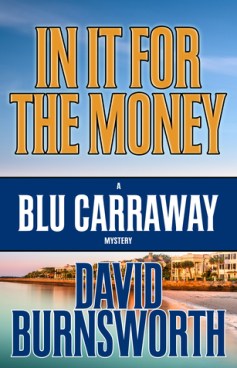
In It for the Money, by David Burnsworth***

InItfortheMoneyHere’s the thing that makes this title so difficult to review. It has tremendous strengths–strong concept, engaging protagonist, fearless prose. I like his animal sidekicks, Dink and Doofus. Crome is one of the finest sidekick characters I’ve seen in a mystery.

Thanks go to Henery Press and Net Galley for the DRC, which I received free and early in exchange for this honest review.

On the other hand, there are some serious issues with pacing, which is clearly uneven, and also some of the worst grammar disasters I have ever come across in prose written by an adult. “Had brang” comes to mind, but they are legion. I wanted to ignore this aspect, given that it’s a galley, but I’ve seen hundreds of them, and yet nothing that isn’t self-published has grammar this awful. The result is a deeply frustrating read.

What I suspect is that this could be a terrific series given the services of a high profile editor.

Mr. Flood’s Last Resort, by Jess Kidd*****

MrFloodsLastWho do I enjoy reading more than Jess Kidd? Nobody.

Thanks go to Net Galley and Atria for the DRC, which I received in exchange for this honest review. The book, which was also published in UK as The Hoarder, is available today in the US.  And I have to tell you also that although her work is billed as similar to Fredrik Backman, I find it to be better—and that’s saying a good deal.

Maud Drennan is a caregiver, which in the USA would translate as a combination social worker and home health provider. She’s been sent to the large, rambling home of Cathal Flood, a tall, fierce old man who has driven his previous caregiver to a nervous breakdown. Speculation abounds: is he an innocuous old fellow in need of some organization, treatment, and TLC, or is he dangerous—perhaps a murderer, even? What about the missing girl that was last seen at this address?  It’s enough to make even Maud’s staunch heart tremble:

“In the musty depths of Cathal’s lair, one eye flicks open. Noise has pulled on the strings of his web, setting his long limbs twitching. He’ll be slinking out of his trapdoor and threading through the rubbish. Crawling up the staircase with a knife clampled between his dentures and a lasso of fuse wire in his hand, ready to garrot me and hack me to pieces.”

The suspense builds as Kidd moves our point of view from Maud’s by day, to her frightening, confused dreams at night, to those of the missing and the dead. Because Maud is gifted in her ability to see those that have gone before, particularly saints, she receives their cautions and advice in ways that are often truly hilarious. The result is a story so enjoyable that it became the dessert book that I held out to myself as a reward for having finished less enjoyable galleys. Had I no other obligations, I would have gobbled this deliciously dark tale up in a weekend.

As it is, I found myself going back and rereading passages twice, partly for fun and partly to try to pick apart what makes this writing so effective. But although I can point to several components—brilliant development of Maud, Cathal, and friend Renata; some of the finest figurative language in contemporary fiction; a hugely original voice and concept; a soaring climax in which the weight of Western society’s failure to care adequately for its elders comes crashing down before us—ultimately the book is much more than the sum of its parts, an alchemy that is spun magic with a few naughty bits of raunchy humor sprinkled in, and a social justice issue nailed to the wall where we cannot help seeing it.

Should you purchase this title for your magnificent, outrageous mother on her special day, for which there are just 12 remaining days to shop? Should you order a copy for your own fabulous, fierce father, whose day is about a month later? Well of course you can, and you should, assuming you aren’t going to try to force them into a home. But it isn’t nice to break the binding open, and so they’ll be able to tell if you have fudged a free read before gifting it. Better to get a copy for yourself as well, fair and square. You’ll want to read it more than once anyway.

Warm and clever, Mr. Flood’s Last Resort is the most entertaining novel of 2018 to date, hands down.

This I Know, by Eldonna Edwards*****

“Sometimes I wish I could catch Mama’s voice in a jar and keep it beside my bed at night, let each note light the darkness like a captured firefly.”

ThisIKnow Eldonna Edwards makes her debut with the best written child protagonist since Scout Finch appeared in To Kill a Mockingbird. Many thanks go to Net Galley and Kensington Books for the digital review copy.

Grace Carter is eleven years old, one of several daughters of a strict evangelical preacher.  Her mother has come undone, slowly unraveling from grief that began with the death of Grace’s twin brother, Isaac. Grace misses Isaac, too, but she has the comfort of his counsel; she hears and knows things that most other people do not. Her mother and Aunt Pearl call it “the knowing”, but her father calls it the work of the devil. Grace grows up understanding that she must keep her head down and avoid getting into trouble. It’s a treacherous path, and now and then things pop out, as they will with adolescents.

Edwards is a gifted writer, and she’s tackled an ambitious project in writing a first person narrative. It’s hard to voice a child in a way that is developmentally appropriate and consistent, and she’s nailed it spot on. Many writers would try to dodge this literary obligation by creating a precocious, academically gifted character, which is so common that it’s clichéd, and as I read this story and see that Grace is just an average kid, apart from her supernatural talent, I hold my breath to see if she can carry it off all the way through, and she does it masterfully. The way Edwards develops Grace, adding layers to her personality and melding it with the dead-accurate setting—the Midwest during the 1960s—makes her one of the most exciting new voices to emerge this generation.  The plot never slows, but with a character and setting this resonant, Edwards could send Grace to sit in her closet for the whole book and her readers would be captivated regardless.

I would have preferred a more nuanced ending, but it’s a small concern. Everyone that loves strong fiction will want this book. Order yours while you can get it on the first printing.

Raising the Dad, by Tom Matthews***

RaisingtheDad2.5 stars rounded up.  I was invited to read free and early by Net Galley and St. Martin’s Press, which is one of my favorite publishers.  It looked promising; original and, the teaser said, “brutally funny” in places.  I wanted to like it, but yet.

The title is a play on words (raising the dead, raising the dad, get it?)  I didn’t realize it at the outset or I might have dodged it. “Dad” was declared dead many years ago. He was not going to make it, and everyone agreed to turn off the machines and let him go in peace. The widow believes she is a widow, but the fact is, he’s still alive.

What happens when a patient is brain-dead and you turn off the machinery and the patient continues to live? What if he lives a long, long time?

The question provides a great premise—though the particulars here are far-fetched– but if it had been my choice, the pitch and the cover would have been different. This is a gritty, dramatic topic, and the cover shouts that this is going to be a light, fun read. Oh reader, it really isn’t. There are some funny moments, mostly involving the protagonist’s badly behaved brother, Mike, but they aren’t enough to keep the story from being a grim, miserable grind.

When my confidence in a galley flags, I go to Goodreads to see what other early reviewers have to say. At least one other reviewer argued convincingly that although most of the story is slow and unpleasant, the last 100 pages are brilliant and illuminate the reason for the rest of the story being as it is. Because of this, I soldiered my way through to the 70% mark, waiting for genius to reveal itself. But for me, that train never arrived at the station though I was well into the denouement, and with a mixture of relief and disappointment, I gave myself permission to abandon the journey.

This book is for sale now, but it is not a good choice for a Father’s Day gift. Trust me.