The Spies of Shilling Lane, by Jennifer Ryan****

Sometimes what I really need is a feel-good story. Had I ascertained that this was that sort of book, I would have had it read by the publication date. I read the beginning twice, decided it was going to fall into the grim duty category since I had accepted a review copy, and I set it aside. My apologies go to Net Galley, Crown Books, and the author for my lateness; my heartfelt thanks go to Jayne Entwistle, the reader for the audio version of this lovely tale, for rekindling my interest. I procured the audio version from Seattle Bibliocommons and listened to it while I rode my stationary bike and prepared dinner in the evenings. I began listening to it because I owed a review, but soon I found that I preferred this novel to the other good book I had been listening to just for pleasure.

Our story begins with Mrs. Braithwaite feeling injured and put upon. Her husband is divorcing her, and the women in the local charity club have banded together and ousted her from her treasured position of leadership. She is miserable. Betty, her only child, has run off to London, intent upon aiding her country now that the second World War is upon them, and she isn’t answering her calls. Mrs. Braithwaite decides to visit her, but upon arrival, she discovers that Betty is missing. The story flows from her effort to find her daughter and also herself.

Those seeking an espionage thriller won’t find it here; the story is character based, and in this Ryan succeeds richly. Mrs. Braithwaite enlists the reluctant assistance of Mr. Norris, Betty’s milquetoast landlord, and it is these two characters that are wonderfully developed. None of this would have been achieved without the spot-on cultural insights regarding the World War II generation. The shallower pop-cultural references to music are well and good, but Ryan goes deeper. The fact that the character is known only by her formal title, with the salutary “Mrs.” in place of a first name, speaks not only to the protagonist’s dignified, somewhat cold façade, but also to the practices of the time. Use of first names was considered an intimacy among the elders of this time period; women addressed their peers by it unless they were close friends or family members. Even the way that the plot develops is reminiscent of the fiction and movies of that generation. As in most good historical fiction, the setting mingles with the characters to move the plot forward.

I am not much of a cozy mystery fan, but I think this story would please cozy readers. At the same time, I appreciate the careful balance the author uses; the touching moments are deftly handled, never becoming cloying or maudlin. At other times there’s a playful, spoofing quality to it, as Mrs. Braithwaite and Betty search for each other, each fearing the other is in danger and thus placing herself in it.

I recommend this book to cozy readers, fans of historical fiction, and anyone in need of a boost in morale. It’s for sale now.

The Janes, by Louisa Luna****+

 4 stars plus. Louisa Luna debuted in 2018 with the first book in this series, Two Girls Down. When I learned that Alice Vega was returning, I jumped on the galley without a moment’s hesitation. Thanks go to Doubleday and Net Galley for the review copy. This book becomes available to the public tomorrow, January 21, 2020.

Alice Vega is back home in Southern California, and she is hired as a consultant on a case for the local cops. Two dead girls have turned up, both recent immigrants with IUDs in their too-young bodies. All signs point to their having been victims of trafficking for purposes of sexual exploitation, yet there is no evidence of rape. What happened here, and where did the IUDs, which aren’t available in stores, come from? She is offered an astonishing amount of money for her services, and she decides to use some of it to hire her old partner, Max Caplan, who’s back on the Eastern seaboard entertaining job offers. When Vega crooks her little finger, Cap comes running.

Luna has a voice and style not like anyone else’s. One of the things that I love is the way she swaps the stereotypic gender roles of these two main characters. Cap is nurturing, and he loves kids. Vega isn’t a nurturer, and when huge stressors come down on her, she becomes angry and violent, but as a reader I love this because her rage is always spot on. Cap has sex when he’s in love, but Vega has sex to fulfill a biological need, and then wonders why the guy is still hanging around. Clean yourself up and get out of here, dude, I have things to do today. Run along. And while Vega’s vigilante justice would be a terrible thing in real life, in fiction it feels deeply satisfying.

In other words, Alice Vega makes my feminist heart sing.

Luna is better than most authors of the genre in that no matter how off the chain her protagonist is, I never disengage because of an unlikely plot element. We have corrupt cops; we have bureaucrats; we have secrets that would become public if Vega and Cap were prosecuted for crimes committed in the line of duty. My single twinge of regret comes when Cap sustains a head injury that renders him unconscious; wakes up dazed and confused, with some memory loss; and then shakes it off without tests or treatment of any kind. Vega reminds him to get an MRI when everything is over, but it doesn’t feel like enough. I wonder at times whether she meant to do more with it and then edited it back out.

Given that both stories, this one and the last, feature two female victims, I wonder if this will be her signature element throughout the series.

This story differs from the first in that it is darker, less funny, and ramps up to the high octane, pulse-pounding excitement of a true thriller at around 80%. The plot and characters are credible, but they lack the bounce and the zip that made the first book so memorable. Nevertheless, I love Alice Vega and eagerly await the next in the series.

Heartily recommended to those that love the genre and respect women.

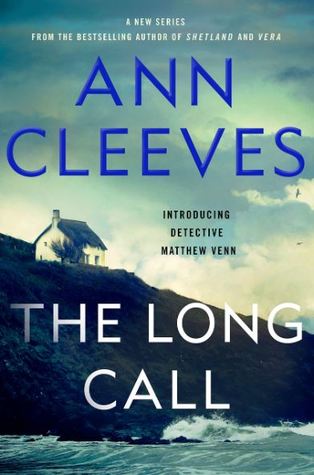
The Long Call, by Ann Cleeves***-****

This mystery opens a brand new series by Ann Cleeves. I haven’t read this author before, but when Net Galley and St. Martin’s Press invited me to read and review, I hopped on board. This book is for sale now.

Detective Matthew Venn is called upon to investigate the murder of a man found on the beach. His queries force him to return to the strict evangelical Christian community in which he was raised. The Brethren cast him out because he is gay, and so returning in a professional capacity brings back all sorts of memories and feelings.

The last person to see the victim prior to his death may have been 30-year-old Lucy, a woman with Downs Syndrome. This character is engaging as is her adoring father. Lucy rode the bus to The Woodshop each day with this man, and this produces some consternation when her father learns of it. As a mother, I can appreciate his concern.

This is a solidly constructed mystery fashioned by a pro, and yet for some reason I had difficulty engaging with the protagonist. I’m rounding my rating up to 4 stars because I have a hunch that if I had read the printed galley provided me, I might have understood it better and therefore might have found it more interesting. I fell behind in my reading and reviewing over the summer and obtained audio books of a few titles whose publication dates had passed, figuring to catch up. It took me a long time to figure out that The Woodyard was actually not a lumberyard or hardware store, and so some of the plot left me scratching my head. If I’d read with my eyes instead of my ears, I might have caught on sooner. Once I figured out all the pieces, I could follow what was happening and recognized the red herrings as they passed by. The ending was reasonable and the whodunit surprised me.

This is a decent work of crime fiction and I recommend it to the author’s faithful readers.

Potions Are for Pushovers, by Tamara Berry*****

I loved Berry’s first Eleanor Wilde mystery, Seances Are for Suckers, and so I looked forward to this one. Ellie, our protagonist, makes a living as a sham medium and pusher of herbal potions. She arrived in this tiny English town in the last book, hired by the wealthy Nicholas Hartford to scam his family, but they fell in love and so she stayed here. Business is on hold, however, until the murder of the local battle ax has been solved; until Ellie can sell her potions again, she can’t make a living, and the heat is on.

My thanks go to Net Galley and Kensington Books for the review copy. This book is for sale now.

The glory of satire is that the most tired, trite elements of a mystery can be trotted out and placed on full display, the more overdone the better. Add into it an overflowing supply of snark, swift pacing, a hint of confusion and the very teensiest, briefest moment of sentimentality and the result is, well, magical.

At the same time that Sarah is murdered, pets begin to disappear. A grisly surprise is left in Ellie’s herb garden, and her cat Beast, a menace if ever there was one, is nowhere to be seen. Cats, pigs…what’s next?  Her sometimes-friend the local constable is irritated that Ellie doesn’t pass along the finer details of what she learns, but she points out to him that witches and law enforcement have a problematic history. Crackle crackle, she says. Burn burn.

The best new element is Lenore, a pesky but gifted adolescent that wants to job shadow Ellie. Together with partner Rachel, she embarks upon local werewolf research, and this thread makes me guffaw out loud multiple times. (At one point Lenore decides she’d rather be called Lenny because it sounds more like a gumshoe; my reading notes suggest that Rachel should then become Squiggy. Boomers will understand this reference if nobody else does.)

My affection for Ellie increases when she eats an entire chocolate cake. I’d been watching that cake since she received it, waiting for the typical cozy plot point to play out. Most authors would either have Ellie serve or gift the cake to another recipient, or have it smashed in some sort of hilarious accident before she got a single bite. Berry, however, is not your typical cozy mystery writer. It’s the slightly edgy bits that make this series so successful.

The series is written for adults, but teachers and parents looking for engaging reading for their own gifted adolescent should be fine here. There are no torrid sex scenes, no use of vivid profanity.

Sadly, my own review copy disappeared with no trace from my kindle, so I can’t access juicy quotes; happily. I did use the Goodreads update system, which provided me with the particulars listed above.

There are few authors that can make me laugh out loud every single time I read their work, and that alone makes this writer more valuable to me than most. I await the next Eleanor Wilde book with gleeful anticipation, and whether you have read the first book in this series or not, I recommend this one to you wholeheartedly.

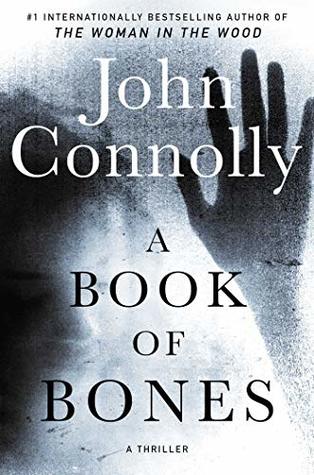
A Book of Bones, by John Connolly*****

   ‘Do you mind if I ask what it is you do?’

   The correct reply should have been ‘yes’ for a second time, but he didn’t want to appear rude. It would make her feel bad, and he wouldn’t feel much better.

   ‘I hunt,’ said Parker. He was surprised to hear the words emerge, as though spoken by another in his stead.

‘Oh.’ Her disapproval was obvious.

‘But not animals,’ he added, as the voice decided to make the situation yet more complicated.

‘Oh,’ she said again.

He could almost hear the cogs turning.

‘So, you hunt…people?’

‘Sometimes.’

‘The wheels came down, and the plane hit the ground with a jolt that caused someone at the back to yelp in the manner of a wounded dog.

‘Like a bounty hunter?’ asked the woman.

‘Like a bounty hunter.’

‘So that’s what you are?’

‘No.’

‘Oh,’ she said for the third time.

I love Charlie Parker books, and it’s unusual for me to miss a pub date, which I did and I’m sorry. I was distracted and curious about another horror novel that came out at the same time, which was my mistake because that one wasn’t as good as this one. My thanks go to Net Galley and Atria Books for the galley, and I have learned my lesson: life is short. Read Charlie Parker first.

A body has been found in a junkyard in the American Southwest. Could it belong to Parker’s evil nemesis, Rebecca Mors? Sadly, it does not. Mors and her top stooge, Quayle are across the water, and as usual they’re up to no good. Soon Parker and his massively engaging assistants, Angel and Louis will be there too, and yes: they’re hunting. They are being paid to assist the FBI, but since their work takes them overseas, it must be unofficial. This aspect, together with the story’s supernatural elements and Connolly’s expert plotting, pacing, word smithery and character development combine to make a story so spellbinding that I never once found myself questioning whether one aspect or another is credible. Whilst reading it I was engrossed, and what’s more I was cranky when interrupted.

Key elements of our tale are Parker’s daughters—one living, one dead—and a sentient book, a living malign entity that has appeared in previous Parker stories but is at its hellish worst here. The complex plot surrounding it is so full of twists and turns, shifting alliances and above all, dead bodies that at one point Parker reflects that it looks like “the plot of a very violent soap opera.”

The author’s note at the end tells us that his editors tried to get him to edit the book down, and he balked. Whereas there are some historical tidbits that could probably be eliminated or made briefer, I like it the way it is. Why would I want a Connolly book to end sooner? However, the reader will as usual need a hefty vocabulary and greater than average stamina to enjoy this work. It may not be a good choice for those whose mother tongue is not English.

Can you appreciate this story, seventeenth in the series, without reading any of the previous entries? You will find yourself at a distinct disadvantage, but it’s not necessary to go all the way back to #1, either. I began at the fourteenth and have no regrets.

Highly recommended.

The Water Dancer, by Ta-Nehisi Coates****

By now, nearly everyone that loves reading has heard of this debut novel by one of the century’s most celebrated writers. Not every strong journalist can also write fiction, but Coates can. I read it free and early thanks to Net Galley and Random House. It’s for sale now.

The concept is a strong one. Why have we seen so little historical fiction set during the period just before the American Civil War and from the point of view of a slave? In an earlier essay Coates has pointed out that African-Americans need to reclaim this time period, that shrinking back from studying it is in a way a concession that shouldn’t be given. That’s the perspective on which this novel is built. It isn’t an easy read by any means; readers need strong literacy skills and a cast iron gut. The level of pain and violence—especially at the outset—is wrenching, and it should be. I took a long time to read this book because I could only swallow it in small portions. You may not want it for mealtime or bedtime reading.

Our protagonist is Hiram Walker, and he is the progeny of an enslaved mother and the plantation’s owner. Hiram is strong, capable, and attractive. When his father pulls him from the “tasked” and brings him home, other slaves warn him to be on his guard; he will never be considered a full member of this family, and he’ll never be considered an equal with Maynard, his Caucasian half-brother whose work ethic, talent, and intelligence could fit together in a thimble with room to spare. Hiram is assigned to prevent Maynard from going off the rails; however, since the authority runs in the opposite direction, Hiram is ultimately unable to save Maynard, who drowns after overindulging.

Hiram has an unusual gift, a supernatural talent that lends interest to the story without becoming its central focus.

Ultimately our protagonist is going to have to run for his freedom. During the years just before the Civil War, owners of large plantations in Virginia and the Carolinas find themselves in desperate straits. The land has been badly over farmed, and both cotton and tobacco are demanding crops. The soil is used up; farmland that once produced bountifully is no longer productive. The solution that most of the large owners seize is to expand their holdings westward. Vast numbers of slaves are either sold and sent to the deep South “Natchez Way” or moved there to work for the same owner on different land. Those that go are treated severely, and their families are fragmented without a moment’s hesitation. While some slaves were able to negotiate for their own manumission in earlier years, this option is no longer on the table. Coates does a stellar job keeping this aspect of his story consistent with historical fact.

Hiram’s escape is ultimately successful after a number of nightmarish experiences, but he is persuaded to return and to assist in the Underground Railroad, and he does so partly with the goal of freeing those that mean the most to him. Along the way he meets Harriet Tubman, and the way Coates depicts her is credible and fascinating. But the thing I love most, apart from the story’s basis and the eloquent word-smithery that shines here and there, is the way Coates condemns the hypocrisy, the culture of the slaveowner that makes the most horrible men able to look at themselves in the mirror and like what they see:

For it is not simply that you are captured by slavery, but by a kind of fraud, which paints its executors as guardians at the gate, staving off African savagery, when it is they themselves who are savages, who are Mordred, who are the Dragon, in Camelot’s clothes. And at that moment of revelation, of understanding, running is not a thought, not even as a dream, but a need, no different than the need to flee a burning house.

My one concern is with the dialogue. This historical tale will spin along beautifully, but then one person will tell another, “Trust me on that,” or “Sounds like a piece of work to me,” and the effect this has on me as a reader is that the spell is broken, and I am no longer transported to the time and place of the story.  And to be sure, everyone that writes historical fiction has to decide how much language of the period to use, and when to use current grammar and sentence composition so that the modern reader can follow it. But this is something that jumps out at me at the beginning, in the middle, and even at the end. I tell myself to forget about it and I immerse myself in the story once more, but then there it is again. No other reviewers seem to have noted this, but a part of me thinks that the braver course would have been for Coates to write this story under a pseudonym, because I suspect that without the famous name attached to it, more genuine criticism about this single, pervasive glitch would have been forthcoming.

Be that as it may, this is one hell of a fine story, and it’s told just when readers need to see it most. I recommend it to you without reservation.

Best Overall Fiction 2019: The Reckless Oath We Made, by Bryn Greenwood

Best Horror 2019: A Book of Bones, by John Connolly

I haven’t reviewed this one yet; watch this site, because it will be up before the new year.

ALSO EXCELLENT:

Review is in progress.

Good Girl, Bad Girl, by Michael Robotham****

I had never read this author’s work before, but went looking for it after reading raves about it from online friends. Thanks go to Net Galley and Scribner for the review copy, and to Seattle Bibliocommons for the audiobook that helped catch me up when I found I’d fallen behind. This book is for sale.

Evie Cormac–whose real name is unknown–is a patient in a children’s psych ward. She was found emaciated and filthy at the scene of a violent crime; it’s believed she was kept hostage, though she won’t deny it or confirm, or talk to anyone about it. Cyrus Haven, a psychologist that looks to become a recurring series protagonist, has his own tragic past. When Evie applies for emancipation, Cyrus offers to bring her home as a foster child until she can live alone. Everyone tells him it’s a crazy thing to do.

Meanwhile, a very different girl has been murdered. Jodie Sheehan had a golden future; a championship figure skater, she was locally famous and appeared destined for great things. Instead she was found murdered not far from home. Who the heck would do such a thing? Jodie had no enemies. Police are baffled.

Throughout this tautly written novel I found myself waiting for big reveals. What connection can there be between Evie and Jodie? Who is Evie really?

The thing I admire about this story is the restraint Robotham shows. A more formulaic writer would twist things around and then hit us with all sorts of deep though wildly unlikely ties between the two cases. He doesn’t do that. I expected the big dramatic scene in which Evie spills everything; he doesn’t write that scene. I’ve probably read a few too many novels of mystery and suspense lately, and I was in the mood to roll my eyes. That eye-roll had to wait for a different book and author, because I believed most of this story, and Robotham had shown excellent taste in keeping the reveals minimal.

Here’s the one thing that makes my eyebrows twitch; it’s the same issue I sometimes have with Jonathan Kellerman’s Alex Delaware books, which I  like a lot. Psychologists don’t race around conducting independent investigations, confronting possible perpetrators, and interviewing people t hat don’t want to talk to them. And sure as hell, psychologists don’t wear bulletproof vests.

But those of us that like these stories agree to suspend disbelief given half an excuse, because a psychologist’s ordinary job—interviewing truculent teens in an office, perhaps, or making hospital rounds—is not nearly as much fun to read about as is a psychologist-as-detective protagonist.  There were a couple of times toward the end where I made little frowny notes in my copy, but for the most part I was on board. Robotham takes us deep inside Cyrus’s head, and the more I felt I knew the character, the more I was able to believe the narrative.

Should you read this book? Sure, why not? It held my attention quite nicely, including during my loathsome hours on my exercise bike.  I would happily read this author’s work again.  Recommended to those that enjoy the genre.

The Last Resort, by Marissa Stapley***-****

3.5 rounded upward. The Last Resort is a novel about a marriage retreat where nothing is as it seems.

Thanks go to Net Galley and Simon and Schuster for the review copy. This book is for sale now.

Readers should know that this novel holds triggers for just about everything, left, right, and center.

Miles and Grace Markell run an intensive marriage therapy camp in Mexico. The affluent couples that come here are desperate to save their crumbling marriages. Everyone is supposed to give up their cell phones and internet privileges, and once they do that, they are more or less helpless, which is part of the proprietor’s plan.

Between the punny title and the teaser that suggests that the couple that runs the retreat has the worst marriage of anybody, I was anticipating that this would be hilarious, and that’s not so. There are a couple of moments of dark humor, but mostly this is a straight-up suspense story. That said, it’s a good book, but nothing special. It took me a good long time to distinguish the couples from each other. The climax is fast approaching, and I’m still trying to remember which person Shell is, and who her husband is, and what problem has brought them here. I would probably have had greater success if I hadn’t read this book at the same time as a handful of others, but if I had been forced to read just one book, I would have chosen most of the others I was reading over this one.

This doesn’t mean you won’t enjoy this book. I had recently read another story about a retreat where everyone’s phones were seized and internet forbidden, and so in some ways my lack of interest here was a fluke. Read the synopsis; if you are interested, I recommend you get this one free or at a deep discount.