Thief of Souls, by Brian Klingborg**-***

I was invited to read this mystery, and my thanks go to Net Galley and St. Martin’s Press for the review copy. I am always looking for something a bit different, and this sounded like it would be. And it is, but it’s not.

Here’s what I mean. A woman has been murdered in a particularly ugly, grisly manner. A hot shot cop who’s been buried in a backwater where nothing ever happens gets the case. Because he is clever and ambitious, he digs more than most cops might, and voila! Turns out this could be the work of a serial killer! But there are higher-ups in the force that would rather have a quick solve than an accurate one. Obstacles! And next thing you know, the cop is in danger too.

Yawn.

Okay. Now, take this same tired thread and drop it in China. With resonant characters, compelling use of setting, and some word smithery, it might come alive, and in the hands of a master storyteller, we might not even notice that the story’s bones are nothing new. Instead, I came away disaffected and mildly depressed. I quit at the sixty percent mark and didn’t even go back to look at the ending, which for me is unheard of, particularly in this genre.

I am no fan of the Chinese government, but the steady flow of negativity wore me down, not to mention the lack of strong character development. We know right away that Lu is a rebel, and as the story progresses, we also know that Lu is a rebel. At the start, we sense that the government, both local and national, is corrupt; as we near the climax, we also know that the government is corrupt.

What, in this story, is worth saving?

I thought it would be fun to see how an investigation works in China, and what sort of rights—or lack thereof—form the contours of the legal system. I came away sensing that the author doesn’t know all that much, either. There’s no Bill of Rights there, surely, but I knew that much going in.

I don’t have to have lovable characters to enjoy a mystery, but there does, at least, have to be someone interesting. Give me a complex, well-developed villain, for example, and I’m a happy camper. But there’s none, and I’m not.

So there you have it. Thief of Souls is one more sad case of an intriguing book cover and title promising more than it can deliver. If you want this book now, it’s for sale, but I would advise you to get it cheap or free unless you have a big stack of money sitting around that you were thinking of burning in the backyard. Otherwise, maybe not.

The Kitchen Front, by Jennifer Ryan****

I enjoyed Ryan’s historical novel, The Spies of Shilling Lane, and so I was thrilled when Ballantine Books and Net Galley offered me a review copy for this one. It’s for sale now.

The story is set in rural England during World War II. We have four protagonists, all of them women. Audrey Landon is a widow; her husband died in the war, leaving her with two boys to raise on her own. The old family home, which she inherited from her parents, is falling apart, and she has no means to repair it. In some places, the roof has caved in.

The second is Audrey’s sister, “Lady” Gwendoline. Gwen puts herself first at all times, since nobody else ever has. She married for wealth and convenience, and she lords her affluence over her sister and everyone else. But her husband is a cruel man, and her existence is a lonely one despite its material comfort.

Zelda was a top chef in London, but once her pregnancy became visible, she had to get gone. Her landlord calls her a “trollop,” and she knows she can’t stay there now, so she applies for wartime housing. The volunteer in charge of placing her is Lady Gwendoline, who snickers with amusement as she assigns her to live in Audrey’s house.

Nell is a chef’s assistant at Fenley Hall, the prestigious old pile where Lady Gwendoline and Sir Strickland hold court. The chef, Mrs. Quince, has taught her nearly everything she knows, and it’s a good thing, too; the old lady isn’t getting any younger.

All four women enter a cooking contest held by the Ministry of Food, a “wartime cooking challenge” to showcase recipes that use ordinary ingredients and work around rationing.  The winner will be the new announcer for The Kitchen Front, a wartime radio program—and this program existed in real life.

As in the last story, Ryan develops her four characters in a way I believe; the most benevolent have flaws, and the most unsympathetic, Lady Gwendoline, is complex and capable of change. It is Gwendoline that is most developed at the end, but all four are dynamic characters.

For a brief while, I use the audio version of this book, which I obtain from my local library. Jasmine Blackborow does a fine job as reader in most regards, but there is a side character that turns up in a couple of emotionally charged scenes, an Italian prisoner of war, and when she voices him, he sounds like Dracula, which ruins the magic. For this reason, I recommend sticking to the printed version.

The first half of this story is almost unputdownable, and for a time I nearly forget my other books. But as the climax approaches, things become predictable, almost formulaic, and the ending is a bit too tidy for my tastes. The scenes toward the end with Mrs. Quince are overwrought.  It’s not terrible, but because I am so far in love with the first half, I am disappointed by the denouement. Also, if recipes must be included, as apparently they must, the author should give them character by using the substituted ingredients in the instructions; the more desirable ingredients can be footnoted.

Ultimately I rate The Kitchen Front four stars; five for the first half, three for the second.

The Power Couple, by Alex Berenson****

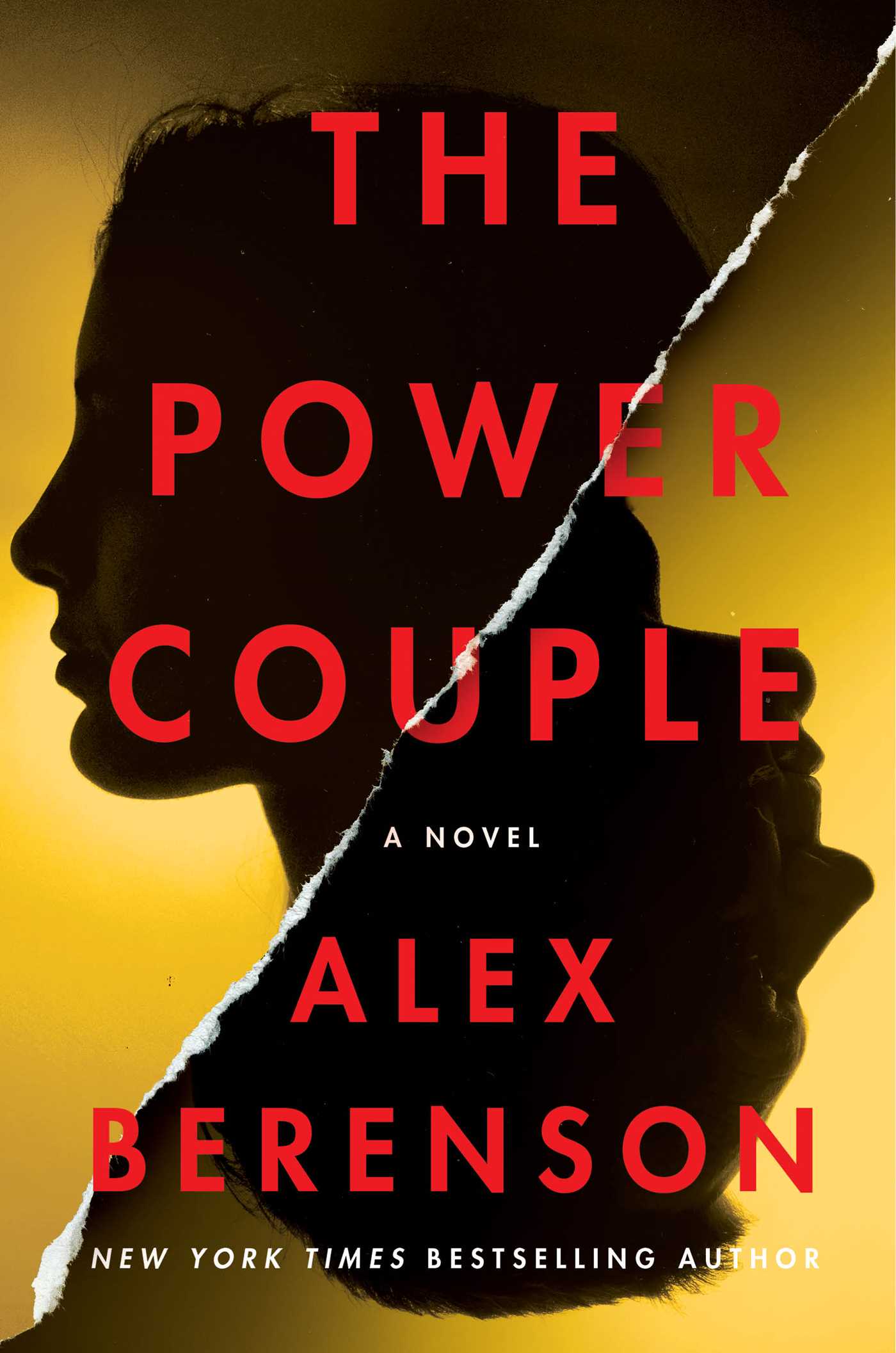
Alex Berenson has done it again! I first read his work when I found a galley for The Prisoner, the eleventh in his John Wells series. When I saw that this stand alone thriller was available, I jumped on it. My thanks go to Net Galley and Simon and Schuster for the review copy.  The Power Couple is a fast read and a fun one, and I recommend it to you.

Rebecca (call her Becks) and Brian Unsworth are type A achievers, and both work for the federal government; she is a spy, and he is a hacker. But like so many couples, the similarities that brought them together are getting in their way now. With their children, Kira, who is nineteen, and Tony, who is younger, they take off for Europe to let off steam and spend quality time together. Maybe.

Early in the story, Kira is abducted, and from there forward, the pacing is perfect. Now and then Berenson pulls us back a bit as he shares sketches from their pasts that lead up to this event, but each reminiscence is brief, and the shift between points of view and time periods adds to the suspense. We see their lives through the perspectives of all except Tony, who is a minor character. In the end, Kira is the one we like best. (Trust me.) There’s not a lot of character development, but this isn’t that kind of novel.

I don’t want to give more away, because if I kill any surprises, you won’t enjoy the story as much; what I will say is that even if your own marriage is less than perfect, it is a shining beacon of integrity and affection when contrasted with that of the Unsworths.

This book is for sale now, and just right to take on vacation with you.

The Vanishing Half, by Brit Bennett***-****

This book wasn’t on my radar until it hit the best seller lists. The premise is a provocative one, and so I hopped online and ordered a copy of the audio book from Seattle Bibliocommons. It held my attention all the way through, but when it concluded, I felt a little cheated.

The chief protagonists are two girls, twins, raised in a tiny (fictional) town deep in the American South. The whole town is Black, and everyone—everyone—is light skinned. Sisters Stella and Desiree become restless as they come of age, and they conspire to run away to the big city. They pack a few things, gather what money they can, and head for New Orleans. The time is the mid-1900s. They arrive, find a place to stay, and get jobs. One day Desiree comes home from work, but Stella doesn’t. She’s gone. Enough of her things are missing to suggest that she hasn’t met with foul play, yet Desiree is her twin, and she is undone by Stella’s unexpected departure. Not even a note!

Stella is in the North; Stella is passing for Caucasian. But to do so, she has to cut all family ties. Her new husband has no idea.

The story progresses, and Desiree does the opposite, marrying a man who is very dark. Their daughter is what might be called blue-black. Now neither twin can comfortably return to Mallard, with one too Black, and one not Black at all, as far as anyone can tell.

The story progresses through various life changes, and eventually the focus is on the twins’ daughters, one each. Of course, the reader must wonder whether the sisters will ever be reunited, and if so, what will happen then.

When the book is over, I feel as if I am leaving the table before I’m full. There were so many opportunities here, and the author squandered all of them. The protagonists never develop to the point where I bond with any of them, and I cannot tell what the author’s purpose is here.

This book is for sale, but don’t break the bank to get it. Read it free or cheap, or give it a miss.

The Book of Two Ways, by Jodi Picoult***

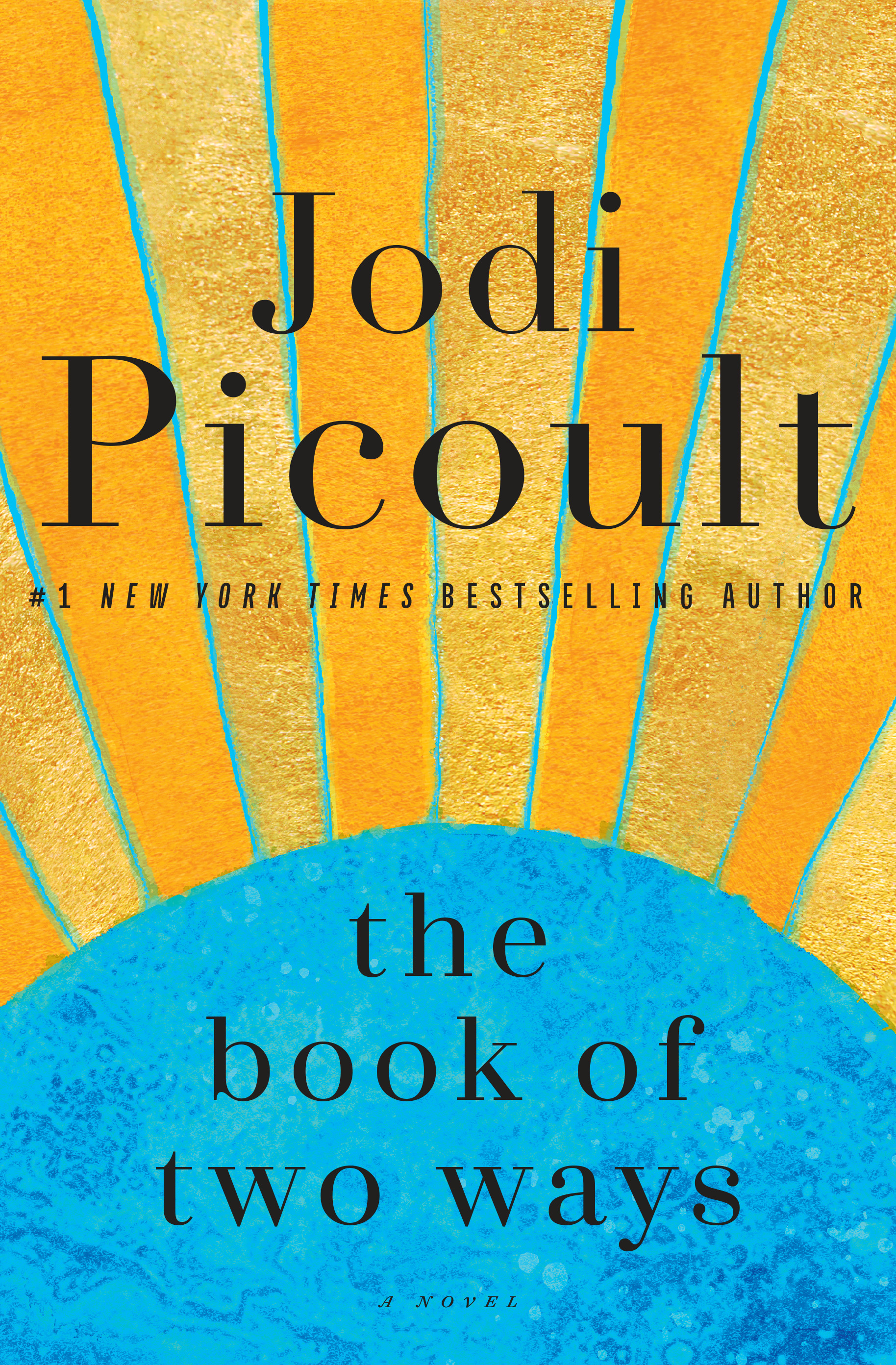
I am generally a fan of Picoult’s writing, but my favorite part of this book is when I got to close it and put it away.  My thanks go, nevertheless, to Net Galley and Ballantine Books for the review copy.

Dawn is the sole survivor of a plane wreck, and as it goes down, she is assaulted by regret about the road not taken.  (My apologies to Frost.) On land once again, she decides to go back to the life she abandoned when she married and had her daughter, to see what might have been; the life she was preparing for was that of an Egyptologist.

There have been times when a novel features some area of history or science that I’ve never studied, and I find it so mesmerizing that it becomes my new favorite area to explore. This was not one of those times. In fact, it took me four tries to get through this thing, and even then, I skimmed much of the story from the fifty to seventy percentiles.  I tried the audio version; no joy there, either. I grew bored and my mind wandered; then I didn’t understand what I was reading, so I had to go back over it to pick up the part I’d daydreamed through.

In my defense, however, I have to say that the organization and frequently shifting points of view and time periods is enough to confuse the best of us, or at least give us whiplash.

Picoult’s strength is creating strong, resonant female protagonists that are easy to bond with, but I didn’t ever warm up to Dawn. Let’s take, for example, the notion of simply walking away, not only from your husband that loves you and with whom, till now, you’ve had a loving and solid relationship; there’s the matter of walking away from a child, or considering doing so. No, no, no. No. NO.

But mostly, this story just bored the living snot out of me.

I have provided three stars, because some readers will enjoy the lessons in Egyptology; if you’ve always wanted to know more within this realm, perhaps this book will work for you. If you go there, though, get it free or cheap; don’t sink full cover price into this turkey.

The Recent East, by Thomas Grattan*****

The Recent East introduces novelist Thomas Grattan, and it’s an impressive debut. It follows a family of German-Americans from 1965, when the eldest emigrates from East Germany with her parents, to the present. I initially decide to read it because of the setting; it’s the first fiction I’ve read set in the former Soviet satellite country. However, it is the characters that keep me engaged to the last page.

My thanks go to Net Galley and McMillan for the review copy; this book is for sale now.

The story opens in 1965 as Beate and her parents are defecting:

Everyone talked about the West as if it were a secret. They leaned in to share stories of its grocery stores that carried fresh oranges, its cars with bult-in radios. Covered their mouths to mention a Dusseldorf boulevard that catered to movie stars and dictators, whole Eastern month’s salaries spent on face cream. There were entire, whispered conversations about its large houses and overstuffed stores, its borders crossed with a smile and a flick of one’s passport. Some talked about it as if it were the most boring thing. Others like it was an uppity friend. But everyone talked about it…

The first chapter makes me laugh out loud. Teenage Beate is mocked when she enrolls in school in Cologne, because her clothing is nowhere near as nice as what the kids in West Germany wear. Since her parents cannot afford to upgrade her wardrobe just yet, Beate comes up with the genius idea to alter the clothes she owns to make them look as Soviet as possible, and she “put on her Moscow face, worked on her Leningrad walk.” Sure enough, the kids at school are terrified of her now. She still doesn’t have friends, but she isn’t bullied anymore.

Morph forward in time. Beate is a mother now, living in upstate New York with her two adolescent children and unhappy husband. When the Berlin Wall falls, so does her marriage. Soon afterward, she is notified that her late parents’ house now belongs to her. She packs up her belongings and her children, then buys tickets to Germany.

Adela and Michael have always been close, but the move shakes their relationship. Their usual routines are shattered, and their mother, reeling from the divorce, becomes withdrawn and uncommunicative. What a terrible time to disengage from parenting! Both Michael and Adela roam the city of Kritzhagen at will, at all hours of the night. Michael is just 13 years old and gay; sometimes he doesn’t come home at all at night. I read these passages, written without obvious judgment or commentary, with horror. A new house, new city, new country, new continent, and it’s now that their mother forgets to set boundaries? I want to find this woman and slap her upside the head (though I guess that’s a different sort of boundary violation.) Half the houses in town stand empty, and since they have no furniture of their own and their mother is doing nothing to acquire it, Michael breaks into houses and steals furnishings. Look, Ma, I found us some chairs.

My jaw drops.

Adela goes in the other direction, becoming a conscientious student and social justice advocate. But their mother pays her no attention, either.

For the first half of this story, it seems like a four star novel to me; well written, competent, but nothing to merit great accolades. This changes in the second half, because all three of these characters are dynamic, and the changes in them are absolutely believable and deeply absorbing.

I have friends that do social work, and what they have told me is this: children that are forced to become the adults in the family, taking on responsibilities they’re too young for when a parent abdicates them, often appear to miraculously mature, competent beyond their years. Everything is organized. They may do the jobs as well as any adult, and sometimes better than most. How wonderful!

But because they aren’t developmentally ready for these things yet, what happens is that later, when they are grown, they fall apart and become breathtakingly immature, because they have to go back and live their adolescent years that were stolen from them. (As a teacher, I saw this in action a couple of times.)  And so I am awestruck by how consistently our Grattan’s characters follow this pattern.

As the second half progresses, I make a couple of predictions, one of which is sort of formulaic, but Grattan does other things, and they’re far better than what I’d guessed. We follow these characters for several decades, and at the end, we see the relationship that blooms between Beate and her grandson. When it’s over, I miss them.

Because Michael is gay and is one of our three protagonists, this novel is easily slotted into the LGTB genre, but it is much more than this. Instead, one should regard it as a well-written story in which one character is gay.

But whatever you choose to call this book, you should get it and read it if you love excellent fiction.

The Children’s Blizzard, by Melanie Benjamin****

My thanks go to Net Galley and Random House Ballantine for the review copy, and to Seattle Bibliocommons for the audio version when I realized I was running behind. This book is for sale now.

I wanted to read this novel because it is different from everything else in my queue. I have a history degree and have taught American history, but I’d never heard of the Children’s Blizzard, which was real. The story is set mostly in and around “Godforsaken Omaha,” and I seldom see fiction set in Nebraska, so that is also interesting.

But once I had the book, I had second thoughts. Here we were, in the midst of this miserable, frightening pandemic, and for the first time ever, I wasn’t able to host my family for Christmas; I couldn’t see my grown children or tiny grandchildren in person…and I was going to read a book where small children froze to death in the snow? What exactly had I been thinking of, to request such a book? And so I shuffled it onto the back burner.

Then I saw that my online friends had liked it, and so with a deep breath, I pulled out my review copy, turned on the audio copy and began. And my friends were right; this is a good story.

The thing that makes the difference is that the blizzard is done before the story is even halfway over! I had envisioned slow, agonizing deaths that would take up the whole novel, and that isn’t what Benjamin does at all. While the deaths are indeed sad, she doesn’t draw them out gratuitously—and not everybody dies. Instead, the story is primarily about the aftermath, the way that these Scandinavian settlers respond to what has occurred, and the role of the ambitious reporter that covers the tragedy.

Benjamin does a fine job developing the characters, primarily the women involved, and I especially appreciate her unsentimental approach. Friends, if you ever find yourself feeling starry-eyed about the distant past, wishing things were simpler and done as they were long ago, this book will snap you out of it quickly. Believe it.

I recommend The Children’s Blizzard to those that enjoy historical fiction, and I especially recommend the audio book to you. The reader does a nice job of incorporating a Scandinavian accent without overdoing it, and it makes it easier to relate to the characters. I enjoyed it, and would happily read Benjamin’s work in the future.

Sin Eater, by Megan Campisi**-***

Sin Eater is a one-of-a-kind work of historical fiction, and I was invited to read and review it by Atria Books and Net Galley. Though other reviewers seem to appreciate it, I have a difficult time bonding with any part of it, and so eventually abandon it. I check out a copy of the audio version from Seattle Bibliocommons, but sadly, I find I don’t want to listen to it, either.

When I read historical fiction, I expect to learn something. The best of the genre are those that convey an event that actually occurred, and that are presented as fiction so that the author can add dialogue and an inner narrative. Historical fiction that is a bit looser, perhaps telling a story of an actual place, person, and time but adding elements that are fictional, perhaps because of gaps in what is documented, or even because the author just plain feels like it, are sometimes excellent if the characters are compelling and immediate, and the writing particularly strong.

When I accept the review copy of this novel, I do so partly because of this cover (though others have also been used,) but mostly because I am intrigued by the notion of a sin eater, and I want to learn more. However, the author’s notes tell me that there’s no information available about it, save for the phrase that popped up somewhere; what a disappointment.

Then there’s the plot, one that starts grim, then becomes grimmer, followed by a brief (very brief) flicker of hope, followed by persecution, death, and misery, misery, misery.

Campisi is a competent wordsmith, but the characters never gel for me, and maybe that’s just as well, since they are doomed. I am a passionate feminist, and the promise of that element is an additional lure, but in the end, I see no message that hasn’t been done elsewhere better.

If you consider yourself to be the sort of reader that might like this story, based on the promotional description, you may be right; but as a reviewer, all I can offer is my own take on it, and I cannot tell anyone that I am impressed, because I am not.

The Drowning Kind, by Jennifer McMahon****

“’There was someone there, in the water.’ Her hand trembled as she held her teacup. ‘Ethel, if I tell you what I saw, you mustn’t think me mad.’”

You bring the hot dogs and marshmallows; I’ll bring the matches and a real good story. It’s time to head for the campfire, and—hey, look! It’s getting dark already. Do you scare easily?

My thanks go to Net Galley and Gallery Press for the invitation to read and review. This is a fun one! I was able to access both the print and audio versions, and I moved back and forth between them.  I would give a slight edge to the print version here, but the audio isn’t bad, either.

Our story takes place in Vermont, mostly, and the time period and point of view alternate. We begin and end with the present day; our protagonist is Lexie, a social worker. Jax grew up very close to her older sister, Lexie. As they grew older, however, bipolar disorder gripped her elder sister, and Jax has been forced to set boundaries with regard to her sister’s obsessions, lest she be pulled under herself. And so, when she finds nine missed calls on her voice mail, all from Lexie, Jax figures she’s off her meds again, and she chooses not to respond. She has work to do. But the next call comes to tell her that Jax is dead. She drowned in her backyard pool.

Our alternate protagonist is Ethel Monroe, and the year is 1929. Ethel is nearly too old to conceive; she and her husband desperately want a baby. The doctors are stumped; then she hears of a resort whose springs are said to have healing powers. With nothing to lose, she and her spouse hop in the car and make their way to the magic waters. In time, they are told that the water should be avoided. Whenever it grants a wish, it takes something else back for itself, often something that devastates those it has aided. But Ethel is pregnant now, and there is nothing, nothing, nothing more important than her baby.

Of course, there are all kinds of connections between Lexie and Ethel; after all, they are using the same waters, nearly 100 years apart from one another.

McMahon has a well established writing career, but the first time I read her work was when the last book, The Invited, was published. Both stories have certain elements in common, and perhaps because of this, I enjoyed the last one a wee bit more than this one, because it was completely new to me then. Both stories take a sensible, modern-day female character that doesn’t believe in spooks at the outset, and then spin them around every which way until they do. And in both, I see classic elements that include urban legends, but the story McMahon tells is fleshier, updated, and original.

In listening to the audio version, I was at first taken aback, because when the reader shifts from Jax’s story to Ethel’s, no mention is made that we are changing protagonists. The print version captions the new chapter, and since I had both versions, I grabbed the print version once I became confused and saw what had happened. However, it would have taken me longer if I had simply purchased the audio book and been forced to figure it out. The two characters are voiced (in the first person), and Ethel is given a very distinctive speaking style; I found the style to be annoying at first, a bit contrived, but once I got used to it, I was all in. Ethel’s odd speaking style does make it easier to tell when we have switched characters, and perhaps that’s why the reader chose to do it this way.

The pacing never flags. I believe Jax from the first page, and eventually I believe Ethel as well. I successfully predicted the ending, but we are eighty percent of the way in by the time I make my prediction, so I am not disappointed.

For those looking for a deliciously creepy tale, look no farther. This book becomes available to the public Tuesday, April 6, 2021.

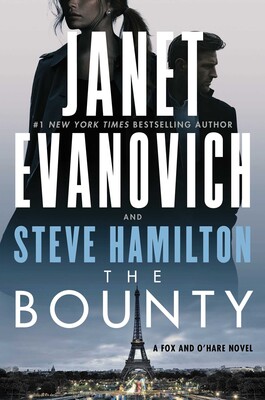
The Bounty, by Janet Evanovich and Steve Hamilton**

This book is the seventh in the Fox and O’Hare series. Our protagonists are Kate O’Hare, who is an FBI agent, and Nick Fox, a conman. My thanks go to Atria Books and Net Galley for the invitation to read and review. While this book isn’t my cuppa, there will be readers that enjoy it. One way or the other, it goes up for sale on Tuesday, March 23.

The first six books of this series were cowritten by Evanovich and Lee Goldberg. There’s no explanation for why Goldberg is out and Hamilton is in, but the switch may account for some of the inconsistencies between the earlier books and this one. An example: Kate and Nick were tight in the earlier stories, and yet somehow, they can’t stand each other now. There’s no reason given for the change, so I have to assume it’s an authorial quirk; I have to say, not an original one.

The premise is that the pair are hot on the trail of a massive cache of Nazi gold; also pursuing this treasure is criminal organization known as The Brotherhood. Kate and Nick are charged with finding the gold and bringing The Brotherhood to its knees.

Before they are even off the plane, I have questions. For example, since when does the FBI have authority to do this sort of thing abroad? In cases of terrorist attacks on American citizens, sure. But treasure hunting on foreign soil? And since when does any law enforcement body send two officers to bring down an entire organization? You can see my point.

But this is the sort of story that one can only appreciate by suspending disbelief and buying the premise. The whole thing has something of a James Bondian flavor to it, consisting of large amounts of chasing, hiding, climbing, leaping, and in between, dialogue, dialogue, dialogue. There’s a fair amount of derring- do; there’s a parachute, a grappling hook, lock picks; you name it. The element that distinguishes it from other such books is that both Fox’s and O’Hare’s fathers get involved.

For me to enjoy a novel from this genre, I need either a well-crafted story with literary merit, including character development, (i.e., James Lee Burke, Sue Grafton, John Connolly,) or else some form of well-executed humor. There are a fair number of wonderful satires out there, and of course, there’s the series that made Evanovich famous, the Stephanie Plum numbered series, which have hit more than they’ve missed and almost always make me laugh out loud more than once. In reading The Bounty, I don’t find these things.

However, not every reader has the same preferences that I do. This is a fast read with accessible vocabulary—my inner snark popped out at one point, and my galley has a note when the word “independence” is used: “Wow, four syllables!”—a linear story line, and an easily followed plot. I could see hauling something like this to the hospital when you’re going to have surgery and your attention span won’t be up to par. And then there’s the consideration of interest. Some want to read action, action, action, and if the story were more realistic, we’d probably be reading about paperwork, reports, and endless months cultivating a contact that proves to be useless. Not entertaining.

Even so, I can’t recommend this book for general audiences, or even for those that like the series.