Martha Waters spans three genres here: historical romance, rom-com, and satire. I like satire, and the other two, not so much. I am rounding my rating up to three stars, because I stepped out of my comfort zone with this novel, hoping for light entertainment; those that enjoy rom-com books may be more enthusiastic than I. My thanks go to Net Galley and Simon and Schuster for the review copy. This book is for sale now.
Lady Violet and Lord James found instant chemistry at a grand ball. Almost as instantly, they were married; then they quarreled and have been estranged ever since. Yet even the stupidest and most imperceptive reader will see that they are still crazy for one another. If one is in doubt, turn the page so the author can hit you over the head with it again. Again. And again.
I enjoy smart satire that leaves something to the imagination. This book tries too hard to be funny. I tried reading the DRC, and when I couldn’t get through it, I checked out the audio version from Seattle Bibliocommons. This made it, if possible, even worse. Overdone prose is made worse by an over-the-top voice actor.
I had been reading too much that was dark and serious, and then the pandemic broke out and I went looking for relief. I found it, but I didn’t find it here.
But again, I have never liked rom-com. If that’s your wheelhouse, you may appreciate this thing more than I do. I pushed through to the forty percent mark; my usual due diligence requires me, if skipping, to then proceed to the eighty percent mark and see if there are joyful surprises that might change my mind. But no.
Fans of the genre may feel differently, but I have to call them as I see them. Not recommended.
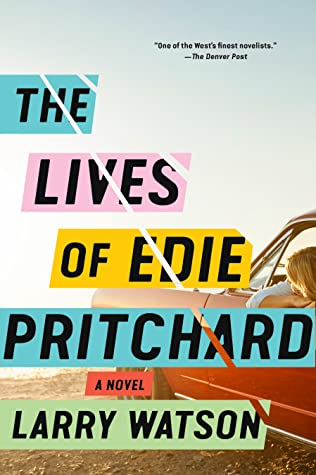
It’s not often that a male writer gets it the way that Larry Watson does. My thanks go to Net Galley and Algonquin for the invitation to read and review, as well as the gorgeous hardcover copy. This book will be available to the public tomorrow, July 21, 2020.
Edie’s story is divided into three periods. When we first meet her, she is a young adult, married to Dean. Twenty years later, we find her in a different marriage. The last third finds her a senior citizen. When I saw how the first and second parts were structured, I thought I spotted a formula and that I knew more or less what the last third would look like. I’m delighted to say I was incorrect.
The style in which it’s written is unusual. There’s almost no inner monologue; everything is either action or dialogue. There’s no shifting point of view, either. It’s straight forward and linear. The author takes his time establishing character and setting, and so for a long time, there’s no noticeable plot curve. At about the point where I begin to be nervous, that perhaps I’ve agreed to read and review a book that isn’t very good, it wakes up. I’m not generally a fan of spare prose writing, but this is different.
Edie has married Dean Linderman, whom she dated in high school. He’s a nice guy, but his twin brother Roy is a player. Where Dean is introverted and reflective, Roy is extroverted and aggressive; and one of the ways Roy shows aggression is in trying to seduce his brother’s wife. It never stops. Every single time they are alone together, even for a few minutes, he starts in on her. And every stinking time, she tells him no. Stop it, Roy, I am married to your brother. I love Dean, not you. But getting the guy out of her hair is like trying to herd mosquitoes. And yet, a couple of times I see Edie do or say something that, while not openly encouraging, sends mixed signals, and I think, Aha. Maybe that’s why Roy keeps trying.
Watson uses nuance and subtlety in a way not many authors do. It makes Edie come alive, because I don’t know what she’s thinking, and Watson isn’t going to take it apart in front of me. I am left to wonder…now why the heck would Edie do such a thing? And while I read, I wonder. And when I am no longer reading, I’m still wondering.
Twenty years later, we find Edie Dunn. She’s married to someone else, and she has a teenaged daughter. Like Dean before him, Gary doesn’t spend a lot of time worrying about what Edie wants. Edie is his wife, and she should do what he wants her to do. And I won’t give any more of this bit away, but once more, Edie surprises me.
Within the last section, Edie’s teenage granddaughter is going to move in with her. Edie’s companion who’s in the car with her asks if she isn’t out of practice with teenagers. Edie says, “It’s like riding a bicycle. Once you’ve fucked up as a parent, you never forget how to fuck up again.” I love this.
When I am sent a physical book to review, as opposed to digital or audio, the book goes into the bathroom. I know that I am hooked if the book comes back out of the bathroom with me at some point. Edie came out at about the sixty percent mark, and after that she didn’t get left alone unless I had to sleep.
The thing about this story that may get in the way of good reviews here is exactly the thing that makes it so good. The way that Roy—and later, other men—follow Edie around and pester her, trying to control her and later, her granddaughter, is repetitious and maddening, and that. Is. The. Point. Though it’s conveyed subtly, we know that Edie is very attractive. And again—I love that we don’t hear constantly about her clothes, her figure, and so on; rather, we know she’s gorgeous by what others say about her, and how they respond to her. And not one living male takes her seriously. They see her, and then they want her, not because they care about her or even know her, but because it would stoke the fires of their self-esteem. And all along, Edie tries, initially, to explain what she wants instead, and not a damn one of them will listen to her. But she does what she has to do, and by the end of the book, I like Edie a great deal.
Those that enjoy strong feminist fiction should get this book and read it.
Becky Mandelbaum is the real deal. In 2016 she published a short story collection, Bad Kansas, which I read and loved. ( You can find my review of it here: https://seattlebookmamablog.org/2017/09/15/bad-kansas-by-becky-mandelbaum/) And so when I found this debut novel on Net Galley, I leapt at the chance to read and review it. Big thanks to Net Galley, and to Simon and Schuster. This book will be available to the public August 4, 2020.
Ariel and her mother, Mona have been estranged for six years. But when she finds a news item about her mother’s sanctuary having been torched, Ariel knows it’s time to go home, to see what has been lost and what can be saved.
The story is told from the third person omniscient, and we hear from three characters mostly. We start with Mona, whose stress levels have become nearly unbearable. She’s getting too old to do so much work, and she never has enough money. She has just one employee, working on site primarily for room and board. Perhaps this is part of what possesses her when she leaps in her truck in the dead of night to steal the neighbor’s Make America Great Again sign. She wrestles the great big thing into the bed of her pickup, and by now we can see that she is a tightly wound person whose impulse control is just a tiny fraction of what it should be.
Meanwhile, Ariel is concerned, not only about the fire, the sanctuary, and her mother, but also about her relationship. Her boyfriend, Dex—the third of the characters we hear from most– proposes just as she has begun to fantasize about ending the relationship. As the story progresses, we can see that Ariel is the sort of person that runs from her problems, sometimes literally. She accepts the ring and then says she has to go home for the weekend, and no, he shouldn’t come with her. After all, she’ll be right back. Probably.
Mandelbaum does a brilliant job of building believable, nuanced characters and complicated relationships. Five percent of the way into my galley, my notes say, “This one is going to be a thinker.” And it is, in the best sense of the word. It isn’t a pretentious piece of writing by a long shot, and it isn’t full of florid descriptions or challenging vocabulary. Instead, we have characters that are dealing with thorny personal issues that have no obvious solutions. And my favorite aspect of it is the way the mother-daughter relationship, which is the heart of the novel, is framed. Mona has made a lot of mistakes in parenting Ariel, but she loves her daughter and is a good person. Ariel is still learning how to solve problems herself. There’s a trend in fiction writing right now to draw villainous mothers as the sources of protagonists’ problems. It’s close to becoming a cliché. Mandelbaum has steered clear of this canard and created something much deeper and more interesting. In fact, there are at least half a dozen stereotypes that she has dodged expertly. The fact that she has done this in her debut novel suggests that a great career is ahead of her.
I love the way she ends this story.
Don’t deprive yourself of this glorious novel. Highly recommended.
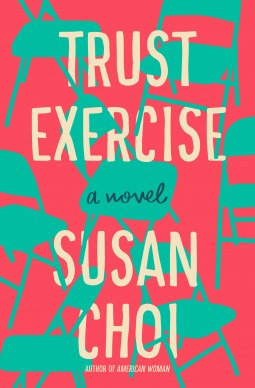
Ah geez. I had such hopes for this one, but in the end I was relieved when I finished it. Thanks go to Net Galley and Henry Holt for the review copy, and to Seattle Bibliocommons for the audio book that helped me push through to the end.
Conceptually, it sounds like a winner. (And to be fair, it did win the National Book Award.) Students enrolled in a citywide magnet school live in a cloistered bubble, isolated from the city—and the world—around them. The time is the 1980s. The drama teacher, Mr. Kingsley, has an oversized role and influence in their lives, not only academically but emotionally. Boundaries, not so much. And when Sarah and David fall for each other, and then un-fall, Mr. Kingsley serves as a sort of puppet master, telling them what to do. The same applies to friendships turned sour.
The premise is believable. This reviewer recalls a respected public school with a strong performing arts program that operated in real life in the late 1970s. Some of the teachers didn’t seem to know about boundaries, and the students—of which I was one—never complained, because it made us feel like respected adults. A student and teacher had an affair while I was there, and they married after she graduated. They remain so. And so when I saw the teaser for this book, I was ready to jump right in, because it spoke to me.
Sadly, it stopped speaking to me by the twenty-five percent mark. I tried restarting a couple of times, but I hit a wall. Finally, determined not to miss out on an award-winning novel, I ordered the audio version from the library and listened to it while I sewed my family’s first set of COVID masks. Both were grim tasks.
While there must be art present here for Choi to win such a prestigious award, the plot is convoluted and difficult to follow, and the characters, which are the heart and soul of this novel, never come alive. In the last half it becomes clear that we’ve had an unreliable narrator all along, but if anything, it makes the story muddier.
This might be a one star read for me, but I still say the premise is meaty, and for that I tack on the second star.
Jance is a prolific novelist, with three long-running series to her name. Credible Threat is the fifteenth in the Ali Reynolds series. Thanks go to Net Galley and Gallery Books for the review copy; this book is for sale now.
The star rating is a tricky thing sometimes. In this case, I wonder whether, had I never read anything by this author, I might tack on that fifth star. It’s the curse of the brilliant, being measured against oneself, but ultimately, I couldn’t help comparing this mystery to The A List, which came before it.
What I like—a good deal, in fact—is the trajectory Jance has taken with this series, making all of the important characters women. In addition to protagonist Reynolds, we have the villain, Rachel Higgins; a third long-running character is the AI named Frigg, who identifies as female. Two key assistants are female, and Sister Anselm, a nun friend of Reynolds, also plays a key role. There are men here, of course. There’s the victim, Father Andrew, who doesn’t last long, and the intended victim, Father Gillespie, who has the meatiest male role in this installment. Ali’s spouse is the co-owner of High Noon, the security firm through which Ali is drawn into one mystery after another, but he is conveniently called out of the country early in the game.
The story begins with a call from Archbishop Gillespie, a friend of B, Ali’s husband. He’s been getting a whole string of threatening notes placed in offertory collections all over the Phoenix area. The police have brushed him off already, and he’d like the matter handled discreetly. He is concerned about his would-be killer’s soul.
Our killer, meanwhile—whom we know right up front, so I’m not giving anything away here—is grieving, embittered, and unhinged. She has recently discovered clues in her late son’s memorabilia collection that suggest his addiction and suicide were the outcome of his molestation at the hands of the swimming coach at the Catholic high school he attended. The coach has died of AIDS, and Higgins still wants somebody to pay for her son’s death; an eye for an eye. Since it’s clear to everyone that the Roman Catholic Church stonewalled and swept abuses under the rug for generations, it makes sense, she decides, to go right to the top. But clearly, even if she were up for international travel, it would be absurd to attempt killing the Pope. Who’s in charge locally, then? Archbishop Gillespie. And so Rachel commences to plan Gillespie’s murder, sending the missives in advance so everyone will know why he had to go. She finds a fall guy to frame for her crime and is off and running.
My first impression is that this story is substantially similar to the last Reynolds mystery, in which a mother planned to commit murders to avenge her son. I’m surprised a pro like Jance would slip like this. But that’s my sole complaint.
I love the way Jance battles stereotypes, and in this case, it’s the Catholic clergy—the good ones—that benefit. Though the layers of abusers, sexual and otherwise, are deep and wide, I bristle at the cracks that are made by comics and the general public almost reflexively about all priests. I have known some wonderful men that abused nothing and nobody, who gave up marriage and family in order to spend their entire lives in the service of others, via the Church. Not all nuns are frustrated savages looking to beat children with rulers; not all priests are pedophiles. The way Jance takes that apart makes me want to stand up and cheer.
The clever loophole that Ali finds and that Gillespie widens with regard to Frigg’s extralegal snooping is terrific.
Whether we call it four stars or five, this is a solid mystery and a good deal of fun. I recommend it to you wholeheartedly.
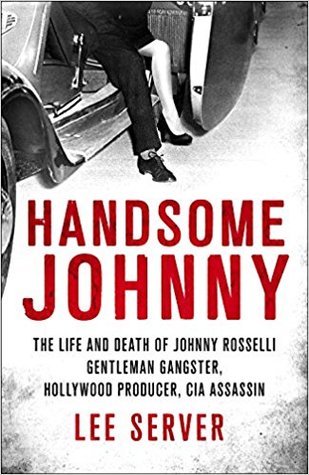
I was invited to read and review this biography by Net Galley and St. Martin’s Press; it’s the story of Johnny Rosselli, known as “the gentleman gangster.” Sometimes I enjoy a good gangster story; my great-uncle (whom I didn’t really know) was Sherman Billingsley, the thuggish owner of the New York Stork Club, and so when I read about others, it sparks my imagination. Usually.
I didn’t engage with the book’s beginning when I sat down the with digital review copy, and eventually I got bored and set it aside for something more compelling. But often, the galleys that land on the back burner become more interesting once I can get an audio copy. After avoiding this book till publication, I found an audiobook at Seattle Bibliocommons, and I began listening to it in the evenings when I prepared dinner. In this way I found it more interesting. There’s a fair amount of background provided, because the writer (perhaps wisely) doesn’t assume his audience is proficient in American history, Prohibition and so on. I didn’t hear anything I didn’t know already, but it was okay. Gradually it took on the flavor of a documentary, not riveting but not bad. I listened to the first 25% and thought I would probably finish it this way.
Unfortunately, a deal breaker came up somewhere in the next ten percent. Rosselli has gone to Los Angeles because there was no mob out there yet. He figured he’d pioneer vice and leg-breaking on the West Coast. Fine, fine. He meets Al Capone, who is being harassed by cops and told he can’t stay in L.A., and Rosselli does Capone a favor and thereby comes into the Capone orbit. Okay, fine. But then we get into the women.
Now, I understand that mobsters were about as far as anyone can get from feminism, and of course in the 1940s and 50s, there wasn’t any women’s movement to speak of. The problem is that Server doesn’t differentiate Rosselli’s point of view from his own. I get the distinct impression that the two aren’t very different. There’s only one quality worth reporting in women, and that’s their physical appearance. So Rosselli falls for Jean Harlow, who is perfect. Completely perfect. What makes her perfect? Well, she’s got great legs. They are described. Breasts too; we hear about that. And she is a virgin! Every middle-aged mobster loves to get a virgin in the sack, right? At age seventeen she’s barely legal, but nobody worries about that. Oh, and also she’s very, very white. Porcelain skin. Just wonderful.
By the time Server is done explaining all of Harlow’s best qualities, and the misery that that bastard put her through (though he doesn’t describe it this way; in fact, the reader has a kind of bemused smirk to his voice throughout,) and oh how sad about her suicide at age 27, I am seeing red.
I’m not chopping bell peppers now. I’m standing stock still in my kitchen, glaring at my tablet. Dinner may be a little late.
I try to continue with the book, but I am pissed. Finally, I decide life is too short. I’ve tried this book twice, but I don’t finish it. In fact, I consider that second star in the rating to be generous.
This book is recommended to misogynistic assholes. Everyone else should give it a miss.
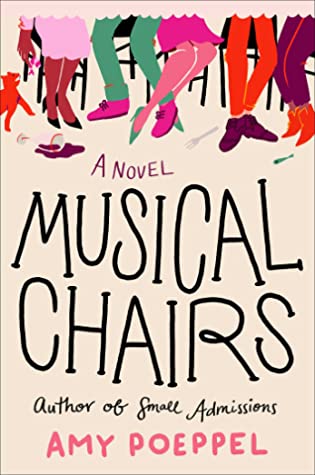
We need more writers like Amy Poeppel. Her previous novels, Admissions and Limelight, are whip-smart and hilarious; both involve well-developed characters stuck in odd but credible situations. Her new novel, Musical Chairs, shares these attributes, but it’s even funnier, and even more insightful. Lucky me, I read it free and early thanks to Atria Books and Net Galley. It’s available to the public August 1, 2020.
Our protagonists are Bridget and Will; they are family to one another in the modern sense, the sense that sometimes we adopt our most important friends and declare them to be kin. They’ve been together as performers in the Forsyth Trio since college. Bridget has never married; Will is divorced. They have seen one another through thick and thin, and well meaning outsiders think they must surely harbor romantic feelings for one another. Will has no children, but has served as a father figure to Bridget’s twins, both grown.
Summer is here, and Bridget is preparing to spend it in her summer house in Connecticut. Her boyfriend, Sterling, will be joining her; she thinks that he may be the one. But you know what they say about the best laid plans. Sterling dumps her on her ass without a moment’s hesitation, and both of her children descend on her unannounced. Her octogenarian father lands in the hospital. Nothing that happens is the way she had planned it.
At the same time, Will has been looking forward to some time on his own in the city, but Bridget is in distress and so he drops his other plans for her. Not one thing goes as planned.
I don’t usually enjoy books about rich people, and Bridget’s family is wealthy indeed. This one works for me because the disparity in wealth between Bridget and Will, who is an ordinary starving artist, is addressed in a natural, organic way throughout the narrative; but beyond that, I feel I know Bridget, and so she is not the rich woman, not the heiress, but instead she is Bridget, and she feels like a friend. We always forgive our dearest friends for things that are generally deal breakers with others. Finally, Poeppel has no tolerance for pretension, and more than anything, her honesty turns a good story into a terrific one.
The pacing here never slackens; one crisis is nearing resolution when another one pops loose. At one point I am convinced that Poeppel is driving home a message about the destructive nature of secrecy, but by the ending I can see she’s done no such thing. Sometimes secrets are great. Sometimes they work out well. And sometimes they are only secrets for a while as their owner waits for an appropriate time to reveal them.
The side characters here are brilliant as their perspective contrasts with that of the protagonists. The internal monologue involving Bridget and Will is personal, even intimate, and so we see everything as they do; but then Jackie, the ambitious young assistant that Edward has hired for the summer, looks these folks over and weighs in, and her observations make me laugh out loud. In fact, this book marks the first time since the pandemic began (at the beginning of March, here in Seattle) that anything I’ve read has made me laugh. It felt great! Then later, another side character’s pet parrot Ronaldo pipes up and it happens again. (My laughter woke my husband, and I was a little bit sorry, but also not.)
The dialogue between Edward and Will near the end makes me shake my head in awe.
At the outset, I am puzzling over the title. Musical Chairs turns out to be a website for job-searching musicians, but later I see a broader reason that this title was chosen. Throughout the chaos that unfolds for Bridget and Will this summer, the characters are constantly changing places, rotating, and assuming new positions, and it’s fine, because—and here’s our real message—change is not failure.
The references to the musical “My Fair Lady” are icing on the cake.
Highly recommended, and likely to be one of this year’s best books.
I’m late to the party, so by now this book has a pile of accolades; every one of them is earned. I received a review copy courtesy of Net Galley and HarperCollins. I am fond of short stories, all the more so when the stories are as riveting and suspenseful as these. How else could the reader get any sleep at all, if there wasn’t a natural stopping point at the end of each story? If you like this author’s work, or if you like horror stories—not all of them, strictly speaking, fit into the genre, but we can consider the collection horror, nevertheless—or if you just like a good short story collection, reach for this one.
Hill begins with the title story, “Full Throttle,” a gritty tale of parenting gone wrong. I couldn’t put it down, and friends, I can always put a book down. I read too much to obsess over my fiction, but this story owned me till it was over. The next story, “Darkened Carousel,” a story of slightly thuggish teens encountering carousel horses with unusual powers was every bit as strong. Another favorite is the one about wolves on a train, and I especially appreciated the line, “You smell like privilege and entitlement…this is first class, after all.”
In fact, all of these are excellent. I had read “In the Tall Grass,” and to be honest it isn’t my favorite, so I skipped it this time. That’s the only story I don’t wholeheartedly recommend, and the collection gets all five stars from me because I consider the book to be worth every red cent it costs, even without it.
The only downside of a collection like this—and this only applies for reviewers and others with a finish date in mind—is that it’s easy to set the book aside whenever a story ends. I sidelined this collection after the first two stories in order to conquer a pair of 700 page tomes that were on the brink of publication, and eventually this book became the one that made me feel guilty every time I looked at it. Recently I checked out the audio book from Seattle Bibliocommons, and since I had enjoyed the first two stories so much, I decided to begin again from the start. There’s a string of excellent readers, some of them famous, and those that like listening should consider this version.
As is generally true of the genre, there are triggers all over the place, and there’s some R rated material. If in doubt, read it yourself before handing it off to the middle schooler you are trying to home school during this pandemic.
To those that love the genre, this book is highly recommended.
Caroline lives with her father, Samuel, a writer and educator whose career and reputation have been sullied by a younger man that Samuel mentored many years ago. But Samuel is determined to revive his career by starting a school for girls. Girls can think. Girls can learn. They needn’t be limited to the traditional lessons that make young ladies into gracious hostesses. They can rise in this world, as long as he is there to guide them.
I read this book free and early thanks to Doubleday and Net Galley. It’s for sale now.
As the story opens, just a few ladies are signed up for the boarding school that will be run by Samuel and Caroline from their home. A former protegee, David, comes to join them also, and will teach the sciences. Running errands in town, however, Caroline and David run into Eliza, the daughter of the man that ruined Samuel’s career. Her father is now deceased; Eliza wants to attend the school. In a moment of mischievous rebellion that she will come to regret, Caroline accepts her.
At the outset, The Illness Lesson seems to be feminist fiction, and as school begins and I see Samuel mansplaining to his female charges about the things that women can and cannot do, should learn to do, should want to do, I lean in, ready for a rapier-sharp tale in which—I hope—the father and teacher that believes himself to be an educational gift to womankind will learn a powerful lesson.
Alas, not so much.
Before the halfway mark is reached, the story has wandered in various directions and has lost its cohesion and focus. I check my notes and change the genre for it over and over again; feminist fiction becomes historical fiction becomes romance becomes magical realism becomes horror and what the heck is this author trying to achieve? If the plan is to keep the reader guessing, I can honestly say that I am genuinely surprised (in the second half) by what Caroline finds in the woods. However, I am not a fan of surprise elements that fragment the plot. It almost feels as if it was written by a half dozen writers drunkenly passing a story around late at night. “Okay, now YOU write a chapter! Surprise me.”
I might not have been so disappointed if I hadn’t expected such great things. The premise is a wonderful one. Beams could have done so much with it, and I can’t figure out why she didn’t.
Perhaps if you read it, you’ll come away with a more charitable viewpoint. My advice, however, is to get it free or cheap, or else give it a miss entirely.
“It’s the admirals, sir, playing with us like this is their own big-assed bathtub and we’re just toys.”
Jeff Shaara has written some of the best war stories ever published, and he’s done so for almost 25 years. I have read every last one of them. When I was invited to read and review his new novel about the Japanese attack on Pearl Harbor by Random House Ballantine and Net Galley, I was delighted, but also slightly apprehensive, because even after all these years, the subject remains an incendiary one; I needn’t have worried. This may be Shaara’s best book, and that’s saying a lot.
I’ll share a brief note about my own biases going in. My father was among the last men called to serve during World War II; he never left the U.S., however, where he was tasked with training new recruits to the still-new U.S. Air Force. But I grew up hearing about Japanese atrocities, and many of the bizarre stereotypes and misconceptions based on pseudoscience were told to me as fact. When as an adult I announced that I was about to marry a Japanese citizen, I sounded the waters with my family to see if there was resistance. I was told that my parents “still remember Pearl Harbor.” Meanwhile, my husband’s father also served during World War II—in the Japanese army. The topic was never raised by his parents around me, or at all as far as I know; but I asked my spouse a few questions to help me understand the Japanese perspective about this horrific conflict, and then I understood exactly how erroneous most of what I’d been raised to believe actually was.
So I was primed to read this book, and also a little afraid of what I might find. My internal map of Pearl Harbor was studded with emotional landmines, and at the book’s conclusion, none of them had been tripped.
Shaara tells this story primarily through the eyes of three people: Cordell Hull, U.S. Secretary of State under President Franklin Delano Roosevelt; Admiral Yamamoto, the Japanese architect of the invasion; and Tommy Biggs, a 19-year-old naval recruit from an impoverished Caucasian family in rural Florida.
Shaara faithfully incorporates a character from the rank and file in every story; he does this even if there is nobody on record that he can report on, and so often, he is forced to create a fictional character based on experiences and characteristics from several people. When I saw no such disclaimer in any of his notes, I grew curious and wrote and asked him whether this is the case with Biggs. He replied that this time there is a Tommy Biggs (though the name is not the same), but that he did add the experiences of others in order to flesh him out. So this time, each of the three chief characters is based on an historical figure.
I learned a great deal. Though it’s well known that this attack profoundly crippled the U.S. Navy, sinking or badly damaging most of the fleet, I had never considered it from the Japanese perspective. Looked at in that way, it was not only audacious, it was immaculately planned and wildly successful. I also had never considered what a blunder it was on the part of the U.S. military to leave its equipment, ships, planes, and more so unguarded. In the fallout after the attack, we learn that the Navy considered security to be the job of the U.S. Army and vice-versa. What a colossal bungle.
Japan had emerged victorious from the Russo-Japanese War, and its leadership was suffused with overwhelming confidence. Japanese racial superiority would lead to Japanese dominance throughout the China, Indochina, and across all of Asia, they claimed, because they were meant to dominate their portion of the globe. Japanese leaders were convinced that the U.S. would not seek retribution following an attack on its soil because American isolationist sentiment was so strong. They genuinely hoped that this attack would result in an end of the U.S. embargo that crippled Japan, and which existed in order to halt Japanese expansion and force Japan to withdraw from its alliance with the Axis powers. Americans, the Japanese brass told one another, were too big, too slow, too lazy to retaliate. There were voices of dissent, however:
“For any of you who believe the Americans are not worthy of a fight, that they do not have the stomach for blood, perhaps you are familiar with the American Civil War? In the 1860s, they divided and fought each other in the bloodiest war in their history. They did not require any enemy to inspire them. They fought each other. Are you familiar with football?”
Meanwhile the U.S. military, press and popular culture treated the Japanese as a bad joke. One myth dressed up as science suggested that Japan would never be able to build an air force because of an inherent defect in the inner ear of all Japanese. It was physically impossible for them to become pilots! The condescension was rife, everywhere one turned. Hollywood depicted the Japanese as ridiculous, rodent-like creatures with minds that didn’t function properly. The Chicago Tribune stated that for Japan to attack the U.S. was “a military impossibility.” Japanese were said to be too myopic to be effective against a military target. And it goes on.
There’s all sorts of blame to spread around. Nobody in Washington, D.C. had told the top brass at Pearl Harbor, Admiral Kimmel and Lieutenant General Short, about the project named Magic, which intercepted and broke Japanese code. They had no idea that Japan was rattling its sabers to such a degree. And these two men appear to have been lazy, bureaucratic fools that ignored what little intelligence came their way. For example, shortly before the attack, the man on watch sees a Japanese sub in the water. Kimmel immediately assumes that the guard has seen a whale, and he goes back to bed.
There are three aspects of this novel that keep the pages turning for me. The first, of course, is my interest in military history. Shaara’s research is meticulous. The book is historical fiction at its best, which is when the contours of the story, even fairly detailed aspects of it, are correct, but the fictional genre is chosen so that dialogue and inner monologue can be added. Second is Shaara’s perceptive nature, and it’s this that permits him to choose the best details to include and cut what is inessential so that pacing never flags. And finally, his capacity to develop a character so that we feel we know him is matchless; in particular I bond to poor Tommy Biggs, a guy that can’t catch a break, until he can.
Nothing I can say will serve as well as what Shaara says himself. Get this book, even if you have to pony up full cover price. This is hands down the best fictional representation of Pearl Harbor on sale today. Believe it.