Scattershot, by Bernie Taupin*****

I was a teenager when Elton John’s music exploded onto the radio, and to this day, there are certain songs that I play in celebration, or when I need my mood lifted. For decades it lay in the back of my mind, wondering what was behind these lyrics or those. Never one to delve into the lives of celebrities all that often—a few shallow attempts convinced me that usually the most interesting thing about them is their work, which I’ve seen or heard already—I nevertheless filed it away, to find out about those lyrics one day.

Retirement came, and so with extra time to spare, I finally learned that Elton didn’t write those words. None of them! It was his writing partner, Bernie Taupin. I found this out only after reading an Elton John bio. I searched for one of Bernie’s and found empty air instead. When I saw this galley, I had to read it, and I am so glad that I did. Big thanks go to Net Galley and Hachette Books for the review copy; this book is for sale now.

Sometimes a public figure will publish a memoir, but either openly or secretly, they require a ghost writer, and in the cases of some others, we may wish that they had. Taupin, however, is a writer, and boy does it show! His eloquence is undeniable, hilarious in some places, moving in others. His judgment is unerring, knowing when to be brief and when to use detail, and his candor is refreshing as well. The result, for me, is that when I’ve finished reading, instead of the usual five or six quotes that I’ve highlighted so that I can select one or two to use later, I instead find that I’ve highlighted eighty-eight, and some of these are multiple pages in length! I’ve spent an hour trying to choose which one to share, and it’s hard because they’re all brilliant. Since choosing just one is impossible, let’s just go with the first, which is near the beginning of the book, the beginning of the Bernie and Reg (Elton, later) show. The chapter begins:

“Sheila hated my coat. I can’t say I blame her. It hung on a hook on the back of our bedroom door like a Neanderthal artifact from the Natural History Museum…when it rained, which was often, it smelled like an uncured yak hide. Afghan coats were in style, as were kaftan jackets, three button tees, and velvet pants. I’m positive we didn’t succumb to the latter, but as for everything else, my new best friend and I did our very utmost to look the part…Sheila was Reg’s mother.”

Born in a tiny, isolated hamlet into the very bottommost scrapings of the working class, Bernie knew from an early age that he wanted out. He loved his family, and later, when money came his way, he took good care of his parents, but he never wanted to live in that place again, and became Californian down to the marrow of his bones the instant he landed in Los Angeles.

Taupin doesn’t hold much back, that’s for sure. The most essential ingredients of a top notch autobiography are that the person has lived an interesting life; knows how to write about it; and is willing to talk about just about every aspect of it. Taupin gets top marks in all three areas. Early on, I became concerned about his attitude toward women, given that the first we learn of his having married is when he makes a side reference to his first marriage dissolving, and I thought, Seriously? You tell us all of the everything, but don’t even mention your marriage? Small wonder it didn’t take. I maintain that concern through two more marriages that get little ink; but then we reach his current, and most likely permanent union, and everything changes and I feel much better.

Taupin has stories about just about every celebrity on the planet, and he does talk about the inspirations for his lyrics. I would have finished this book much sooner, but the greatest joy of reading a rock and roll musician’s memoir is reaching back to listen to the songs whose lyrics he scribed, as well as the many musical influences that shaped him. (Country western, I kid you not!) This book became such a prominent part of my day that my family was leery of turning up during the lunch hour, because I had passages to read aloud. And yet they had to admit that many of them were pretty damn good.

This book is highly recommended to all that love rock music, Elton John, and also to those that just love a resonant, well written memoir.

In the Pacific Northwest, October evenings are a great time to stay home. Of course, some people put on their hunting jackets, grab their gear, and head out into the woods; some are party animals seeking a good Halloween bash; and some are charitable souls that organize haunted houses and other seasonal attractions, with the proceeds going to good causes. But a fun fact is that a majority of us do exactly what I plan to do: curl up at home with my beagle, my book, a cup of hot apple cider and a bunch of Halloween candy that trick or treaters never show up to claim. Can’t let all that chocolate go to waste, now can we. If my plan looks good to you, check out these scary reads that I’ve collected over the years. A note of apology: ten years with Word Press isn’t enough, apparently, for me to adequately intuit all of the layout options. I have tried mightily to post each of these choices in a reasonable arrangement with links, but there are gremlins involved. Once again, then, I must ask that if you wish to read my review of one or more of these goosebump-worthy selections, please enter the title in the search bar. All of them are waiting for you!

Liberation Day, by George Saunders*****

Liberation Day is a collection of the best short stories you will ever encounter. I had never read George Saunders before, but when I received an invitation from Random House and Net Galley to read and review this book, I remembered him by reputation and jumped at the chance. This book is for sale now.

Sometimes I feel conflicted when I see words like “Booker prize winner” and “exquisite” I feel torn. The book may be brilliant, but it also may be a whole lot of work to read. I am happy to report that is not the case here. Every one of these nine stories could serve as the cornerstone of a collection; the title selection is first, but I suspect that is more about length than anything, as it approaches novella length. It’s science fiction but also vaguely political; a group of people have had their brains scrubbed to near emptiness, and they are mounted on a “speaking wall.” Their sole purpose is to provide entertainment as a sort of scripted Greek chorus. They may only speak upon command; they assume this is a good arrangement, because they have no memories of their prior lives. But then the home (and Speaking Wall) owners are visited by their adult son, who concocts a scheme to liberate the speakers.

Many of these stories have stylized prose and invented words that might be difficult for a reader whose first language isn’t English.  “Mother’s Day,” which is one of my favorites, begins:

“This distinguished-looking gentleman would appear at your door somewhat sloshed and ask, Were your trees slaggard? Were they gublagging behind the other trees? Did they need to be prodderated? And hold up the little device. In this way they had nearly lost the house.”

Happily, for underconfident readers, there is an audio version available. I used it part of the time because I was running behind. There’s a different narrator for each story; actor Tina Fey does one of them! My notes are full of praise for these performers, who make a brilliant book even more so.

I especially enjoyed “The Mom of Bold Action,” which features the ultimate unreliable narrator, and my absolute favorite, “Ghoul”. Imagine, if you will, landing in Hell, or its amusement park equivalent, but there are still rules of etiquette to be observed; in particular, you are expected to be positive, and constantly encourage the other ghouls as they commit the ultimate misdeeds assigned to them. I laughed so hard at this one that it made my family a little cranky, and I had to go off by myself to hear the rest. Worth it.

The stories are a mixed bag in terms of genre, and all are outstanding.

Highly recommended in whatever format makes your heart happy.

The Making of Another Major Motion Picture Masterpiece, by Tom Hanks*****

Tom Hanks has more than one talent, that’s for sure; or perhaps he is an artist that’s ridiculously talented at telling stories, whether they be on the page or screen. One thing I’ll tell you now: I am completely convinced that he did indeed write this book himself, and it’s damn good, too.

My thanks go to Net Galley and Alfred A. Knopf Publishing for the review copy. This book is for sale now.

The story begins with a child prodigy, an artist living in Lone Butte, California, who as he matures, becomes a comic book illustrator. Fast forward about thirty years, and that comic becomes a movie.

Our story doesn’t have just one protagonist, and it is intentional, or so it appears to this reviewer. We have the big boss, Bill Johnson, his assistant, Candace, and the assistant she recruits in Georgia, Allicia. We learn something of their backgrounds and their personalities, but mostly, we see how important they are to the success of the movie. When the movie is finished with Atlanta, Allicia, who now goes by Al, comes along and is eventually promoted; she then finds someone to take her place. We learn more about other people that are working the production, and I am amazed by the sheer number of people involved, and how much must be done to keep everyone on an even keel. Eventually we meet the two big stars of this action movie; one is hardworking, cooperative, and comes up with a host of useful ideas; the other is an egotist, a Do-You-Know-Who-I-Am type, and everybody walks on eggshells in an effort to make him happy, and to make him want to show up and do his job.

In the hands of a less talented writer, this whole thing might feel list-like, but Hanks sculpts these characters so that I feel I know them, and I care about what happens to them.

There’s more than a little wry humor in this tale, and the copious footnotes at the end of each chapter are a part of that. I read them all, because some of them are hilarious, but readers that lack the patience for it can breeze right on by them without missing anything critically important. And here’s a nugget that cracked me up:

“Of late, Bill had been using military-style call words rather than expletives. Fuck was Foxtrot. Asshole was Alpha Hotel. Cocksucker? Charlie Oscar Charlie Kilo Sierra.”

As a bonus, artist Robert Sikoryak has written the comics themselves, and they are included in the book. Those that love comics should probably get this book in hard cover, because a lot of the detail is hard to see in the digital version that I read. As for me, I don’t give one single poo about comics, and I skipped them.

Movie buffs will be fascinated with the vast amount of movie making minutiae here. I am not a big movie viewer, but I eat it all up, anyway, because I had no idea of the amount of time, personnel, and materials necessary to creating a major movie, masterpiece or otherwise.

Although he doesn’t beat the drum hard enough to distract from the overall story, Hanks’s message is crystal clear: everyone involved in creating a movie is important. If the crew doesn’t have enough restrooms, it affects the movie. If nobody brings lunch to the set, some people will be miserable and perform below par, whereas others will slip away in search of food and not be available when needed. And if just one person is a horse’s ass and drags his feet, or if he blabs things to the press that aren’t supposed to be released yet, he can add millions of dollars to the cost of the production. Here’s a perfect quote:

“What advice can you give us to make it in Hollywood?” She talked about the great divide between solving problems and causing them, and the importance of being on time.”

Through all of this, I keep wondering when we will see the young artist that made the comic again. If we started with him, it makes sense we will see him again at some point, right? Yes. This detail—along with every other—is done beautifully.

There’s not one thing about this book that I don’t love, and the feel-good ending is icing on the cake. Highly recommended to those that love movies as well as excellent fiction.

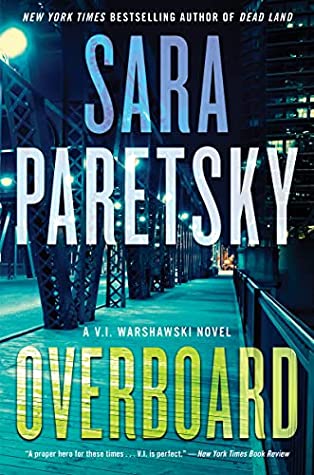
Overboard, by Sara Paretsky*****

Sara Paretsky is one of my all-time favorite writers; I’ve been reading her Victoria Warshawski detective novels for most of my adult life. Paretsky is one of four living authors to have received both the Grand Masters Award from the Mystery Writers of America and Cartier Diamond Dagger Award from the Crime Writers’ Association of Great Britain. She, together with the late Sue Grafton and Marcia Muller, have pioneered the image of women detectives in fiction, departing from the femme fatale of yesteryear who could only reveal the truth by using her sexuality to coax disclosures from men, instead creating capable women professionals that can ferret out the truth using their brains and bulldog persistence. A sympathetic cop friend tells Vic, “You’re a pit bull, Warshawski. You’ll go into the ring with anyone, as long as they’re at least three times your size.”

My thanks go to Net Galley and William Morrow for the review copy. This book is for sale now.

If I knew nothing of this author and her scrappy detective, the first line in the book would have reeled me in: “It was Mitch who found the girl.” As it is, I already know that Mitch is one of the two dogs she shares with her elderly neighbor friend, Mr. Contreras, and I feel as if I am greeting an old comrade.

The girl in question is in bad shape, and she doesn’t speak. For a while her identity is a mystery. Vic would be happy to offload her to medical professionals and get back to her own life; she’s got a lot of clients, and Lotty, her doctor friend that serves as a mother-figure in Vic’s life, is urging her to investigate the rash of attacks on the local synagogue. She doesn’t need more work.

But the cops—generally not friends of Vic’s at the best of times—are ready to haul Vic in. In fact, given their track record, Vic is amazed at the attention the girl is getting. All manner of monied movers and shakers show intense interest in the girl, and it makes Vic suspicious.

She’s right.

A sixteen year old boy comes to her office, asking her to look into a dicey situation involving his father. He believes his dad is in danger, and his parents won’t tell him anything. And so, there’s this kiddo, and there’s the girl: “Two teens, two life-threatening secrets—I have to assume they’re connected somewhere, somehow.”

She’s right again.

Before we know it, her apartment and office have been searched and bugs are left; her phone is being tracked; and Vic has to resolve the case in order to get her life back. She’s jumping in the cold river to elude capture, hiding in the least likely places, and keeping the kids safe from the forces that would harm them. Her attorney chuckles that “You get in over your head faster than Houdini in a water tank.”

He’s right, too.

When I opened this galley, I was already reading a handful of others that I liked, and figured I’d put this one into the rotation, but as often happens when I read Paretsky, everything else sat untouched until I’d torn through this book feverishly, as if the lives of Vic, her clients, and Chicago’s working class depended upon it.

Highly recommended to those that love strong detective fiction; feminists; and champions of the working class.

The Sentence, by Louise Erdrich*****

I wasn’t able to get a galley this time, and so I checked out the audio version from Seattle Bibliocommons. This turned out to be the best possible way to read it, because Erdrich narrates it herself.

The Sentence is set in Minneapolis during the pandemic, from November 2019 to November 2020. It starts with the world’s most hilarious crime, one which sends our protagonist, Tookie, to prison; however, most of the meat of the story takes place once she’s out again. Tookie develops a love of writing (“with murderous intent,”) while she’s incarcerated, and so, once she is released, what more natural place is there for her to look for work, than a bookstore? But this bookstore is special. It’s haunted.

Tookie’s story is wrapped around a number of social issues and current events; most prominently, of course, is that of American Indians’ rights; this is the time and place of the murder of George Floyd by Minneapolis cop Derek Chauvin, and so the demonstrations of outraged citizens are folded into the novel as well. And of course, this is not one bit funny.

I came to read Erdrich late in the game, when The Night Watchman, which won the Pulitzer, came out in 2020. That one novel persuaded me that from now on, I would read every blessed thing Erdrich writes. The Sentence strengthens this resolution.

Highly recommended.

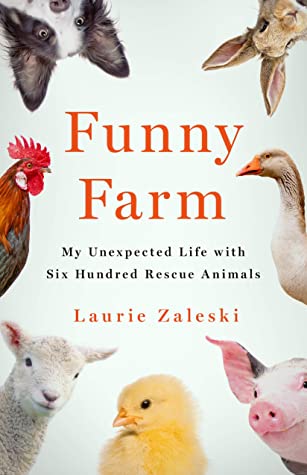
Funny Farm, by Laurie Zaleski*****

“You never know what you are capable of until the day comes wen you have to go places you hadn’t planned on going.”

Laurie Zaleski knows how to make a debut. Funny Farm: My Unexpected Life With 600 Rescue Animals has created a tremendous buzz, and all of it is deserved. My thanks go to Net Galley and St. Martin’s Press for the review copy. This book will be available to the public Tuesday, February 22, 2022.

Laurie’s early childhood was in many ways an enviable one; her mother stayed home to raise Laurie, her brother, and her sister, and her father made enough money to hire household help and buy a couple of vacation homes, too. There was nothing they lacked for, other than physical safety. Because while her father could be warm, and loving, and generous, and funny, he could also be a monster. His reign of terror was worsened by alcohol consumption. As the beatings became uglier and more frequent, Annie, their mother, chose poverty for the children and herself over the constant terror and danger of living with their dad.

“’I almost became a nun,’ Mom would joke years later. ‘Then I met the devil…’ Annie McNulty and Richard Zaleski fell in love like tripping into an open manhole: one wrong move followed by a long dark plunge.”

There’s one searing episode Zaleski recounts, toward the end of their life with Dad, in which they are all hidden in a bedroom with the door blocked shut, and their father is sneaking up on them, commando crawling up the hallway toward them so they won’t see his shadow approaching, and he has a large knife between his teeth. It sounds like something from a Stephen King novel, doesn’t it?

And so, when Annie’s efforts to build a modest nest egg to finance their flight is uncovered, she has no other option but to leave without the money. She finds a dumpy cabin in the woods, half fallen down and in no way legally rentable, and strikes a bargain with the owner. To say that their standard of living decreases is the understatement of the year, but they make it work.

Once she has made her escape, apart from the creepy forays from an unseen enemy that occur from time to time, Annie can’t turn away anyone else, human or otherwise, that is in a dark and vulnerable place. The woods surrounding their little shack begin sprouting makeshift outbuildings; there’s a little lean-to here, and a sort-of paddock there. And it keeps growing.

Zaleski is a gifted storyteller, and she alternates her narrative from the present to the past, breaking up the nightmarish episodes of her childhood with hilarious stories, most of which are about the critters. Her writing is so nimble that I find myself repeatedly checking to see what else she’s published, because there’s just no way this can be her debut. But then, that’s what they said about Harper Lee, right?

Perhaps the most glorious aspect of this book is seeing how Annie McNulty’s can-do attitude, sterling work ethic, and positivity transformed her life and lit a path for her children. She provided them with an outstanding role model, and in return, they did everything possible for her when cancer forced her to slow down.

This book will inevitably be compared to Educated and The Glass Castle because it is a memoir of someone that has overcome horrifying challenges in childhood and emerged triumphant. But make no mistake, Zaleski’s story is in no way derivative, and likely will be held up as an example for future writers. It makes my feminist heart sing!

Highly recommended.

Band of Sisters, by Lauren Willig*****

Lauren Willig is an established author, but she is new to me. Band of Sisters, her newest release, has made me a fan. I read it free and early, and my thanks go to Net Galley, William Morrow, and Harper Audio for the review copies. It will be available to the public March 2, 2021.

A group of Smith College alumni sail to France on a mission to help civilians suffering extreme deprivation during World War I.  “They carry money, supplies, and good intentions—all of which immediately go astray,” says the promotional blurb, and that’s what happens. It’s hard to make plans when you don’t know which way the battle may turn or where bombs may fall, but these are plucky women, two doctors among them, and several of them are members of wealthy, influential American families as well. The story is based on actual women and events, and the teacher in me wishes I were still in the classroom and able to order sets of this excellent novel to share with honors students, girls especially, who need to see more of themselves in the study of American history.

Our two protagonists are Kate and Emmie, best friends and roommates a decade ago, united in this adventure. Kate is the only woman among the “Smithies” that doesn’t come from money and that doesn’t pay her own way; she is led to believe no one else paid their own way, either, but it isn’t true. And this is a chewy, inviting historical truth that we don’t see often in fiction. Though social class divisions are every bit as present and sharp today, assumptions made by most Americans have become more generous. During the early years of the twentieth century, there was a widely held belief that rich people were better in other ways as well, whether they had earned their fortunes or inherited them. They considered themselves to be God’s own chosen ones, and their wealth was one more sign that the Almighty loved them a bit more than others. Poverty was considered shameful, a thing to be concealed; there were no government funds of any kind to help the poor, and if there had been, women like Kate would have just about died before accepting them. Taking charitable contributions was a sign of personal failure and possibly dishonesty to most people back then. And the truth is, Kate isn’t impoverished, and she surely hasn’t failed at anything, but she has to work to earn her living, a thing most Caucasian women in the U.S. didn’t do in 1917. She is horrified when, midway through our narrative, she learns the truth about her travel expenses, and this creates one of the crises within the story.

Willig is a fine novelist. The pace never flags, and there’s never a moment of revisionism that makes me blink. She is true to the time period and the characters. Emmie’s character is a harder sell, to my way of thinking, because she comes from tremendous wealth, but her family has made her feel unworthy because of her physical appearance, and by the end of the book, I love Emmie as much as I do Kate.

I’ve plucked a sample for you, a scene in which Kate and Emmie are evacuating an area which is being overrun by the Germans:

[Kate] wanted Mrs. Barrett; she wanted Dr. Stringfellow; she wanted anyone who could tell them what to do and where to go. Grecourt looked different already, the anemones churned up by the tread of two hundred soldiers, tents dotted around the lawn, Maybe, if she closed her eyes and wished hard enough, she could make it a week ago; the ground bright with flowers; slipping into story time and holding Zelie on her lap while Nell read to the basse-cour children in French about little Red Riding Hood and the Big Bad Wolf, joking with the unit around the supper table about their amazing ability differentiate between types of guns.

But it wasn’t a week ago. The Big Bad Wolf was here, he was on the march, with his big, big teeth and big, big guns, and maybe she wasn’t the best the Unit could have, but she was what they had right now.

By the time we reach this part of the story, I could not stop reading if I wanted to. It would have been impossible.  

The hardest characters for many writers are the children, and although we have no child protagonists, there are numerous scenes in which children play a part. How does a child act when he is traumatized by war? Willig is in perfect form here as well.

I received both the digital review copy and the audio, and I used them both. At the beginning there are so many women introduced to us at once that I felt lost with just the audio, and so I listened and read along to keep track. The narrator, Julia Whelan, does a superb job with a challenging manuscript, changing her tone and point of view to let us know which woman’s point of view we are hearing. My only concern regarding the audio version—which is much easier to follow once you have learned the most important characters—is that the story begins with a lengthy list of the women that participated, and it’s not great to listen to. I recommend you fast forward the audio to somewhere between five and seven percent, and then dive in.

I requested this galley because a number of Goodreads friends whose opinions I respect recommended it to me, and all of them were absolutely right. This book is a gem, and I highly recommend it.

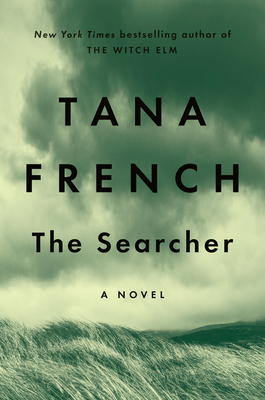
The Searcher, by Tana French*****

I was bewildered at first why my fellow reviewers are so stingy with their ratings for this novel, which I fucking LOVE, but then I realized, it’s because of expectations. Those that are looking for a seat-of-your-pants thriller or heavy, heart-thudding suspense won’t find a lot of it here. However, if you love strong contemporary fiction and/or literary fiction, here it is.

I was turned down for the galley, and so I checked out the audio version from Seattle Bibliocommons as soon as it became available. (Serious wait list; no surprise there.) I finished it this evening, and although I have other books on board, this is the one I keep thinking about. I’m particularly taken with the character named Trey, who is at least as important here as the protagonist.

That said, once again, this is not from the Dublin Street series, which I also love; it’s a stand alone novel, and an excellent one at that. I don’t want to give spoilers, but I will say this: thank you, Ms. French, for not hurting the beagles.

The narrator does a splendid job.

Highly recommended.

The Dirty South, by John Connolly*****

A few years ago I read and reviewed my first book in Connolly’s Charlie Parker detective series, and I became immediately addicted. Since then I’ve never missed an installment, and after the 17th in the series, A Book of Bones, I more or less stalked the internet to find out when I could find the next in the series. It doesn’t disappoint. My thanks go to Net Galley and Atria Books for this, the 18th in the series. It’s for sale now.

Here, Connolly steps away from the crossed-genre, pants-on-fire entries he’s written recently to scribe a prequel. A couple of new readers have inquired whether to read this before all of the other Charlie Parker books, or treat it as the 18th.  The fact is, you can take it in either direction. On the one hand, I have reached back and read a couple of the first in the series and whereas they are perfectly respectable detective novels, they don’t hold a candle to those he’s written more recently. Once I had read the 14th, which is where I began, I was spoiled and a wee bit disappointed by the earliest books in the series. So whereas it makes sense to start reading with this prequel, I fear some readers will notice a dip in quality if they read this masterful literary mystery Connolly has just published, and then dive into his earliest Charlie Parker books. Again, they aren’t badly written. But they aren’t brilliant, and the most recent five in the series, including this prequel, are. So take that and do as you like with it.

Parker is reeling, as the book unfolds, from the vicious murders of his wife and daughter by a killer that intended to slay him, but found them instead. He is convinced that their murderer is a serial killer, and so he has taken a leave of absence from the police force back home and is touring the country by car, chasing down every murder anywhere that bears a resemblance to theirs. He is a dangerous man, because he has no sense of self-preservation. He sees himself as a man that has lost everything, and such men will take risks that more happily situated investigators would consider unthinkable. He also has a source none of the others can access: his wife, his daughter appear to him now and then, and they tell him things that relate to the case at hand, things that nobody else knows.

Those familiar with the series know that Connolly’s most recent Parker books have veered more in the direction of horror, and they include a number of supernatural events that his earlier work does not. Here he steps away from it, and once again his only information from the great beyond is what the spirits of his loved ones share. His adversaries are purely mortal ones. And as to which is better, it’s hard for me to say. His last book prior to this one is a monster, and it includes a tremendous amount of historical research that I find appealing, along with some hugely original, sinister characters that surely must come straight from the bowels of hell. It’s amazing work.

But there’s something to be said for books like this one, too. Most of Connolly’s work is so edgy and so full of violence that I have had to take it in small bites, lest it affect my overall mood. I didn’t have to do that here. I can crawl under a quilt and read for hours without needing to come up for air. I always make sure I read something less malign for a few minutes before turning out the light, but at the same time, this is a much more comfortable read.

Which is not to say that it’s tame. It isn’t. Someone has murdered Black girls in this tiny Arkansas burg, and Parker pulls into town right on the heels of the most recent one. Right away, it becomes obvious that there’s shifty business going on. The town is miserably depressed economically, and the local robber barons, the Cade family, have a deal in the works to bring a large manufacturer to town.  The Cades stand to make a great deal of money, and the locals, poverty-stricken and jobless or badly underemployed, are convinced that better times are just around the corner.

And so it seems that nearly everyone has a stake in keeping the waters calm. The dead girls had to go and get themselves murdered, just when the deal’s about to go through? How inconsiderate. Yes, their killer should be found and brought to justice; but that can wait until the big dogs have signed on the dotted line.  Prosperity is just around the corner. A scandal might ruin everything, and Parker refuses to cooperate, insisting on justice for the murdered children. The nerve of him.

Connolly’s signature elements—the malign, solipsistic, endlessly greedy local bourgeoisie; the poignance of Parker’s grief and his communication with his dead family; and the fast paced, complex plot with a zillion characters and some snappy banter are all here in spades. As usual, his writing style is literary, and so this may not be the best choice for someone whose mother tongue is not English.

As always, highly recommended. This is indisputably one of the year’s best. As for me, I’ll be keeping an eagle eye out for the 19th Parker book, because nobody else writes like this.