
 Devlin write this, her autobiography, when she was all of 23 years old. Had it been anyone else I would have considered it ridiculous, a juvenile pretention, but Bernadette Devlin was one of the primary fighters for Irish freedom during the tumultuous 1960s, ‘70s, and ‘80s, and given how events played out, it is likely that she wrote this while fully anticipating that she’d be killed in the struggle fairly early on. Goodness knows, the British cops tried. Here’s a bit of background information from Wikipedia:
On 16 January 1981 she and her husband were shot by members of the Ulster Freedom Fighters, who broke into their home near Coalisland, County Tyrone. The gunmen shot Devlin fourteen times in front of her children. British soldiers were watching the McAliskey home at the time, but failed to prevent the assassination attempt, indeed it has been claimed that Devlin’s assassination was ordered by British authorities and that collusion was a factor. An army patrol of the 3rd Battalion, The Parachute Regiment, entered the house and waited for half an hour. Bernadette Devlin McAliskey has claimed they were waiting for the couple to die. Another group of soldiers then arrived and transported her by helicopter to a nearby hospital. The paramilitaries had torn out the telephone and while the wounded couple were being given first aid by the newly arrived troops, a soldier ran to a neighbour’s house, commandeered a car, and drove to the home of a councillor to telephone for help. The couple were taken by helicopter to hospital in nearby Dungannon for emergency treatment and then to the Musgrave Park Hospital, Military Wing, in Belfast, under intensive care.
Soon after her recovery, the author-activist went on a speaking tour, and this reviewer was able to hear her talk when she came to the University of Toledo in Toledo, Ohio. Her intelligence, eloquence, and fierce, courageous nationalism left me spellbound. And yet, it was only recently that I learned she’d written a memoir over a decade earlier. I was even more amazed to find that it was available for sale, albeit used and fairly banged up; all praise to the internet. And so this time, instead of heaping praise upon the publishers, I will thank my youngest son for securing a copy for me at Christmas. It was worth the wait.
Devlin was orphaned, along with her sisters and brothers, when she was still a teenager. She and her siblings had a conversation and decided that they would raise themselves, rather than be parceled out to relatives and neighbors, broken up like pieces of a candy bar to be distributed willy-nilly by the church. But her parents left her a legacy, one that said not to let anyone shove a Devlin around. One of my favorite moments in her engaging narrative is early on, when her mother is being attended by a physician for a fallen arch in one foot. The doctor’s solution is to tightly bind it in hopes it will grow back to its proper configuration, but instead it becomes desperately deformed. One day when the doctor is rebandaging it, her mother complains of pain, and the doctor replies that there is no real pain; he says her mother is merely neurotic. In response, her mother raises her good foot and kicks the man across the room.
A woman after my own heart.
But the best passages, as the reader might expect, are those detailing the struggle for civil rights in Northern Ireland, and in particular the struggle based on social class regardless of religion. She tells of the horrific events of Bloody Sunday, when a peaceful parade including small children and babies in their strollers is gunned down by cops. Devlin speaks of the “evil delight” she sees on the faces of violent cops as they beat people down at an earlier demonstration.
There are lessons to be learned here, and now is the time to learn them.
Remarkably enough, there are still copies of this historical treasure for sale, used. Anyone that is interested in the Irish freedom struggle; cop violence; or Irish history should find a copy now, while you can still get them cheaply.
 I confess I was miffed when I wasn’t granted a DRC for this title, and after reading a couple of reviews, I decided I could live without it. I began to wonder about my choice when I saw it hover on the best seller lists where it remains as of this writing nearly a year after its publication, But the clincher came when my younger daughter came to me and said that she had read it digitally and believed I would enjoy it. She said it had to do with the culture of mining families, and that the dedication was to the writer’s “Mamaw and Papaw”.
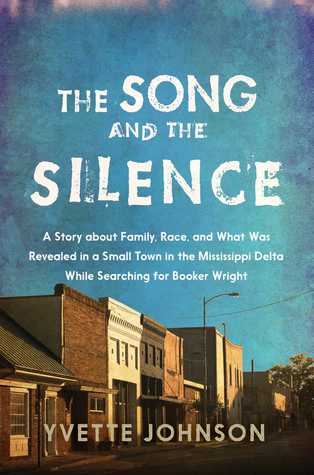 I was browsing the pages of Net Galley and ran across this gem of a memoir. Often when someone that isn’t famous gets an autobiography published by a major publisher, it’s a hint to the reader that the story will be riveting. Such is the case here; my many thanks go to Net Galley and Atria for the DRC, which I read free in exchange for this honest review. You can order it now’ it comes out Tuesday, May 9.
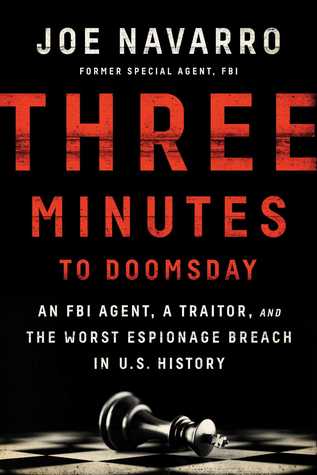 “Nothing’s ever over till the fat lady sings.”
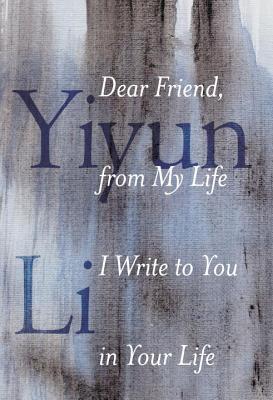 It’s an honor to be invited to review any book by Random House and Net Galley, and so when the email came, I accepted without hesitation; I thank them for thinking of me and wish I could honestly recommend this one. Others have referred to this memoir, whose title is taken from a quote by Katharine Mansfield, as “exquisite, intimate, and lyrical”, and the author has won awards for her novels. I looked carefully to see if I could locate the genius in this book, but it eluded me completely.
 Dorothy Day is an interesting historical figure, the woman that founded The Catholic Worker, which was initially a combined newspaper, homeless shelter, and soup kitchen. I once subscribed to The Catholic Worker, and since it cost one penny per issue, you couldn’t beat the price. I saw this biography available and snapped it up from Net Galley; thanks go to them and Scribner, who provided me with a DRC in exchange for an honest review. This title was published in late January and is now available for purchase.
 John Dean was counsel to the president during the Nixon administration, and was the first to testify against all of the Watergate conspirators, including Nixon and including himself, a bold but necessary decision that led to Nixon’s resignation—done to avoid imminent impeachment—and Dean’s imprisonment. Dean’s story is a real page turner, and Nixon-Watergate buffs as well as those that are curious about this time period should read this book. I read the hard copy version, for which I paid full jacket price, shortly after its release, and when I saw that my friends at Open Road Media and Net Galley were re-releasing it digitally, I climbed on board right away. This title is available for sale today, December 20, 2016.
 What is it about mobsters that draws our attention? National Book Award winner Deirdre Bair takes on America’s most famous mobster, Al Capone, and examines the myths and legends that have sprung up in the time since his death. I thank Net Galley and Doubleday for permitting me the use of a DRC, which I received free in exchange for this honest review. The book is available to purchase now.
 I was fortunate to receive a DRC of this two volume biography of America’s greatest general, US Grant. Thanks go to Open Road Media and Net Galley for providing it in exchange for this honest review. This is the sixth Grant biography I’ve read, and aside possibly from Grant’s own memoirs, which are valuable in a different way than this set, I have to say this is hands-down the best I have seen. Catton won the Pulitzer for one of his civil war trilogies, and this outstanding biography is in the same league. Those with a serious interest in the American Civil War or military history in general should get it. It’s available for purchase now.


 Seattle Book Mama