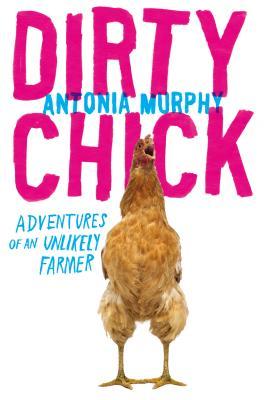
Dirty Chick: Adventures of an Unlikely Farmer, by Antonia Murphy *****

dirty chickWriting humor is risky business. If one writes mainstream fiction or nonfiction and the book is not well reviewed, of course it hurts–writing is always personal, at some level–but few things are as painful as the I-thought-this-was-going-to-be-funny review. In writing about her own family and friends, albeit with a few small changes to protect the privacy of the individuals concerned, Antonia Murphy takes her bleeding heart in her own two hands and offers it up to the public for consumption.

Personally, I have never laughed so hard in my life, or at least not recently. My thanks go to her and to the Goodreads first reads program for the ARC.

If my earlier reference to Murphy and the bleeding heart made you wince, you won’t want to read her book, either, because it has lots of gooey, graphic, gross stuff in it. It is edgy humor out there on the edge of wild, like the hinterlands of New Zealand where she has made her home. Well, see for yourself. This is from the prologue, so it doesn’t ruin the book for you:

“As I watched my goat eat her placenta, I was mostly impressed…Pearl had always been a strict vegan, so her sudden craving for raw meat showed a real taste for adventure…The placenta draped gracefully from her hindquarters, a translucent pink train enclosing a network of blue veins. There was a dark red, ropy thing inside, heavy with blood and the color of liver. It was this that Pearl tucked into first, craning her neck to nibble and swallow…”

As I read, I tried to analyze what it was that made her humor work. Part of it was her sense of remove, the dry commentary of the detached observer even when she is right in the middle of everything. But every now and again, something will happen in her personal life that shatters the entire I’m-just-watching thing. For one thing, she has two children, and when one meets with a really dangerous misadventure, Murphy is nearly consumed with the fear, the stress, the confusion that every mother on this planet, save for a frightening few misfits, would feel at such a time. So we laugh at all the icky stuff and her reactions to same, but now and again we remember that she is vulnerable to the same nightmares that we are. It gives us a stake in what comes next, and between the hilarity (most of the book) and the pain (deftly meted in small doses), there is no putting this book down once you reach a certain point.

Here’s how it shook out at our house: I would read a passage to myself, then burst out laughing. I would hustle straight past my husband, a man of delicate sensibilities with regard to animals and biological detail. I knew he did not want to hear it, or read it, or even be reminded of it. Instead, I made for the younger daughter’s room. She is a teenager with a great lust for gore, so of course she loved it. And I know that if I had headed for the adult-son-who-sometimes-lives-here, he would have chortled merrily also.

The narrative of this amateur adventure at farming just sat on my giggle button. Murphy, rather than wanting to control and fix every little (and large) thing that occurs, has this brilliantly mellow approach. Wow, the goats keep attacking the cars. A neighbor observes that eventually, they will break her windshield. Huh. Well…she loves those goats, so she isn’t going to “dead” them (her daughter Miranda’s word). She doesn’t want to sell them, and after all, who would want them? And fences are very expensive. She is, after all, just a renter.

Occasional visions of the landlords returning to find their property trashed would wink into my head, then wink away.

Every time I think Murphy and her husband are in over their heads and everything is completely out of control, she takes on an additional project. When all is falling apart, why not find something more to add to it?

So there’s Jabberwocky, the rapist rooster. They might have to dead him. Everyone likes baby chicks, and the hens can’t get preggers without him, but the thing is, he’s psychotic. Eventually she comes to understand that this is how it is with roosters. They start bad and get worse, and sooner or later, one generally HAS to dead them.

Good god. See what she’s done to me?

I have four more outstanding quotes, but they are too close to the end of the book. and it would ruin it for you. And the fact is, almost every single page has at least one quote that is fucking brilliant. I think I mostly marked the pages that showed transitions occurring in the plot, and that’s all well and good for academics, but this is not an essay, this is a review, and therein lies the distinction.

Because you, dear reader, don’t want to know how the book ends, and you are capable of analyzing all its nuances yourself, should you choose to do so. On the other hand, you could also just get the book, have an outstanding weekend curled up in your favorite reading spot, and then be done with it.

For those not grossed out by the references in this review, this is a sure fire hit. Pick it up when you have the blues, and I guarantee that in minutes your worries will be smaller.

When you look at it that way, ordering a copy of this book is really the sensible thing to do.

Cat Out of Hell, by Lynne Truss*****

catoutofhell2A cat that is possessed by the devil? You can’t be serious!

Actually, no.

This hilariously satirical take on black cats kept me amused for two days, even when there were other things I ought to be doing. Many thanks to the people at Edelweiss Books, Above the Treeline, and Cornerstone Digital for the ARC. I can’t remember how long it’s been since something I read made me laugh this hard.

The humor here is pretty dark at times; think of Monty Python, the Onion, and Dave Chapelle. (Well okay…maybe not like Dave Chapelle, because no one else can be.) Things get strange once Roger arrives and starts to tell his story, and then…well, they get stranger.

For one thing, there is the great Cat Master, who explains:

“It’s a different world nowadays, Beelzebub. It’s not as respectful as it used to be. People on mobile phones; people cycling on the pavement; people cycling across pedestrian crossings even when the lights are against them.”

But without the context, the quote doesn’t do the story justice. The best Halloween present you can get yourself—or even think of it as a mental health boost, if you like; studies these days show that those of us who laugh live longer—is this ridiculous book.

You may never look at a black cat in quite the same way again.

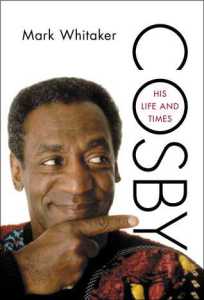
Cosby: His Life and Times, by Mark Whitaker *****

Now that it’s on the shelves where you can buy a copy, I thought I’d post this one more time.

seattlebookmama's avatarSeattle Book Mama

In the lateCosby twentieth century, Americans trusted “God, Walter Cronkite, and Bill Cosby”. Cosby is an icon, and Mark Whitaker is his biographer, author of the first comprehensive biography of the great comedian, actor, author and humanist. I have admired Bill Cosby my entire life, and it was an honor to be able to advance-read this well written, thoroughly documented biography. Kudos to Whitaker for a job well done.
Cosby grew up really poor, the child of a man his friends later described as a “wino” and a hard-working, ambitious mother who valued education. His teachers could tell he was very bright, but he had no interest in school work during his formative years, enjoying sports, friends, and jazz music more than academia. He would later change his mind. His college degree and graduate work were done legitimately; he respected education too much to ever accept an honorary degree anywhere…

View original post 907 more words

The Bum’s Rush, by GM Ford *****

thebumsrushI have read every speck of fiction written by the man who calls himself GM Ford. Part of it is that he sets a good deal of his work in Seattle, and I was stunned to find him (in one or another of the Leo Waterman books) chasing a villain into my neighborhood, down my street, and when he turned and I read the description of the house in which the body was found, I thought…MY STARS! I KNOW WHICH HOUSE HE MEANS!

Okay. That won’t happen for most of you. But if you can track down the old Leo Waterman books (Ford’s earliest series), they are both riveting in their own right, and absolutely hysterical in places. I have always liked books that feature working class heroes. Some of Waterman’s friends are homeless men, and when he gets money, he takes them things. It’s sort of sweet, at the same time that the mystery is compelling, at the same time that it is, in a wry, clever way, very VERY funny!

I was heartbroken when he ended this series, and overjoyed to see him come back with Chump Change, his most recent release (see review). Consider this a generic endorsement of all of the Waterman books. His other series, with Frank Corso as protagonist, is well written, but not meant to be funny. It was good too, but ultimately, my heart belongs to Leo.

Droll, witty, and brilliantly written. If you can, get them all and read them in order!

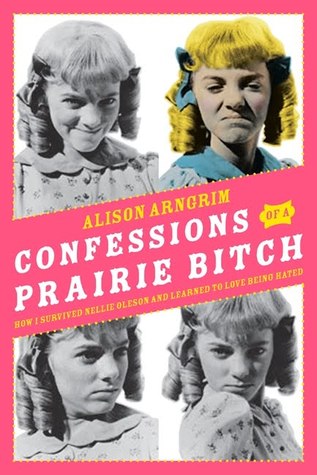
Confessions of a Prairie Bitch, by Alison Arngrim *****

confessionsofaprairiebitchThey say actors tend to have high IQs. This book is one more piece of evidence. Arngrim is super smart, and she can really write. And she is very, very funny.

Like a lot of comedians (which is what she did after being a child actor,at least for a time), her unerring comic instinct developed as a survival skill. Terrible families come in a wide range of dysfunction, but if domestic atrocities were a contest (and thank goodness they aren’t), Christina Crawford (Mommie Dearest) would be left eating Arngrim’s dust. The enormous temper tantrums and other vile forms of acting out inherent in the character she played were a recipe for mental health. How many other people get to go out and scream at other people for a living? And trust me, she needed all the help she could get. For the specifics, get this book and read it. It is worth the cover price.

Public reaction to Arngrim ranges from the hysterically funny to the almost unbelievable. She and her Prairie mom went to a fair as part of a publicity effort, to sign autographs etc, but they were attacked by an angry mob and had to slide out of there quietly. On a French television program, she was asked to explain her bad behavior, and she explained, as if she were her character, that she had been raised by a dreadful mother and was jealous of Laura. The studio audience and talk show hosts all understood entirely. It’s just too hilarious!

In real life, she has been close friends with Melissa Gilbert since their early days together on the set, and she spoke so well of Gilbert that I think I may read her memoir, too…and I was not even remotely interested in doing so before this! She also has some interesting things (I am dying to divulge, but won’t…READ THE BOOK!) about Michael Landon. Wowzers.

Not-so-funny is her experience losing a good friend to AIDS. I lost an old high school chum in the late 80’s, when a whole generation (or more) of gay men were unknowingly exposed to a deadly virus that at the time had no useful treatment. I applaud the years she has served as an advocate for HIV awareness and treatment. She has gone to bat for abused children, too. Again, you have to get the book! You just have to read it!

I always have 4-6 books on a string at a time, and I float more or less freely from one to the next. The only time I put this one down for another was at bedtime, because for awhile it was rollicking enough not only to keep me awake, but to keep me awake and laughing, or shaking the mattress with suppressed gales.

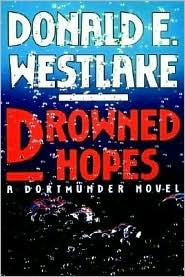
Drowned Hopes, by Donald Westlake *****

drownedhopesA guy gets out of prison, and he goes to get the loot where he buried it. Unfortunately, he’s been gone quite awhile. A dam has been built and the water for a whole town is on top of it now. In order to get to it, he just may have to drown the whole town.

The protagonist is the guy he goes to see about it. Our protagonist, of course, is not a big-time hoodlum with a heart of flint. Westlake doesn’t write that way. No, our guy is callous, certainly; selfish, no doubt. But he does not have anywhere CLOSE to the hard-heartedness required to drown a whole town. And so it devolves upon him to find a way to get the loot, but not kill the town.

Good luck with that.

Funny as hell, but of course, in a slightly dark way, like all of Westlake’s comic capers.

I confess that when a really amazing writer dies, I feel the impulse to review their work to reduce the possibility that it will fade into obscurity. I discovered Westlake’s work about a year after he died. He wrote for fifty years; his Dortmunder series, of which this novel is the seventh, is where most of his funniest stories are found. This title is my favorite among them…and yes. I hunted down every one of them, and when I could not buy them second hand, I asked for them as Christmas and birthday gifts until I had sucked the entire series dry.

I hope you’ll enjoy them as much as I have.

Fried Green Tomatoes at the Whistle Stop Cafe, by Fannie Flagg *****

friedgreentomatoesIf I had to whittle several decades of reading down to thirty favorite books, this one would make the cut. It is wonderful on so many levels. Flagg has published a number of glorious, whimsical yet not shallow novels, always set in the deep South. This one is the jewel in her literary crown.

Have you seen the movie? If you have, this book may be easier for you to read. I read it, and absolutely (as you can see) loved it. The issue for other readers I’ve talked to is that the book hops back and forth in terms of setting, including time period, and it doesn’t provide an obvious heads-up that this is what is happening.

There are two stories being told, one that of a contemporary woman who is unhappy with her life, menopausal and fearful that she is losing her husband’s attention, bored and feeling worthless. She is spending part of her weekend at a nursing home where her husband’s wife resides, but the woman hates her and won’t let her in the room. It is in the lobby where she is faithfully stationed, downing the candy stash from her purse for comfort, that she meets one of the home’s residents, who tells her pieces of her life story, a little more each visit. But in the book, we are taken back in time in other ways. Suddenly we are reading a small town newspaper, and if you are a person who skips chapter headings, you’re likely to find yourself entirely confused.

I won’t give away more of the plot, but for the time in which it was written, this novel bravely took up one progressive (IMHO) cause about which not much was being written. It’s very subtle. Other parts of the story will leave you laughing so hard that you either can’t catch your breath, or if you are old enough, you may not hang onto…something else.

Highly recommended.

A Small Place, by Jamaica Kinkaid *****

Before I retired, I tried to take one nice vacation each year, and I often structured these around two things: my kids and their needs, and the fact that I was vacationing in the summer (teacher) and HATE hot, humid climates. I also really didn’t want to go to a place where the poor rely on tourist dollars to eat dinner. In short, I didn’t want to become the Ugly American Tourist.

I shared this information with a colleague who is African-American, and we were talking tourist meccas where the locals are mostly dark, the visitors mostly pale. He let out a roar of laughter and said, “Have I got a book for you.” He referred me to this slender volume. In it, Kincaid unleashes a scathing attack upon the well-fed, entitled-feeling tourist and gives the reader a glimpse of just how the residents feel about those who stream through, self-obsessed and often immensely insensitive.

I was glad my spouse and I had decided to take the children to Yellowstone.

Kincaid is one fine writer, and her vitriol is well placed. If you are not familiar with Antigua and the surrounding area, and if your feelings are not too easily hurt, give it a shot. It’s a real eye opener!

The Yiddish Policeman’s Union, by Michael Chabon *****

They say all stories have been told in one way or another, but to reduce Chabon’s The Yiddish Policemen’s Union to a “whodunit” is a travesty.

When I saw that a fellow reviewer had laughed at the notion of Chabon smiling and patting himself on the back as he wrote, I thought she was being ungracious. This was until after I had completed the book, which another reviewer accurately described as “hyper literate”. Now I can see him doing just that.

Oh yes, this is good writing at its finest, with a plot that pulls together with breathtaking attention to detail (LOTS of detail), incredibly lush descriptions, and droll humor, all of which no doubt account for the myriad honors and awards heaped upon the writer. He earned them all, but in reading, one feels the envy that a wallflower feels in the presence of the homecoming queen, or the 98 pound weakling feels when a muscular Adonis struts his stuff at the beach.

If you want a nutshell version of a review, it’s “Who killed the Yid?” But if you want a nutshell of anything, this book will be too much for you. It is not a tome to be skimmed or looked over while you hold a conversation or watch television. It demands full and complete attention. At first, I didn’t understand this, and had to restart twice when I took the book into my hands right before falling asleep and didn’t remember any of what I had read the next morning. It is better to begin it with full, wide awake attention!

Others have done a fine job of covering the setting, both place and time. There are a lot of characters to shuffle; Chabon does so deftly, but it is the job of the reader to keep up with him. Landsman is the detective and protagonist, but there are so many more, and some people are not what they seem to be. The story is rife with surprises, and I won’t spoil it for you by giving them away.

One thing worth noting as you go into it, especially if, like me, you are reading on an e-reader: the end, though this is not a short book, may feel abrupt because there is a glossary of Yiddish terms at the end, along with a teaser for the next book. Therefore, although all signs pointed to the story’s being nearly wrapped up, I thought Chabon was about to toss one more spanner into the works to fill up about 75 more e-pages. I was startled when the book ended , saying, “Wait. That’s it?” This is unlikely to be a problem if you have the physical book in hand, though.

Over and over again I found myself highlighting passages that were, I thought, the most magnificent figurative language I had ever seen. Eventually I was foolishly highlighting whole pages, and you don’t want them all here. Just know that Chabon has created a strange and miraculous world that features an underworld rebbe (rabbi) and a host of goons as the obstacle, but ultimately the Moriarty to the Yiddish Holmes is a surprise, to say the least.

I conclude with just one bit of philosophical musing dropped in toward the end, which I find irresistible. It does not provide a spoiler, though, because the answer to the puzzle is not revealed here. It’s just a little sample of the marvelous word-smithery wrought by our champion of writers, as Landsman reflects that in the future, “any kind of wonder seems likely. That the Jews will pick up and set sail for the promised land to feast on giant grapes and toss their beards in the desert wind. That the Temple will be rebuilt, speedily and in our day, War will cease, ease and plenty and righteousness will be universal…and every suit will come with two pair of pants.”

Between, Georgia by Joshilyn Jackson *****

Jackson’s folksy, humorous love story is more complex than it appears at first glimpse; its entertainment value is instantly obvious. She has taken the town of Between, Georgia, which exists midway twixt Athens and Atlanta, and used it to create a fictional haven for a plethora of characters drawn so deftly that they all but materialize in front of the reader.

Nonny, our protagonist, is between many things. In fact, the deeper one looks at this supposedly light romance, the more “betweens” there are in the story, in setting, in plot, and above all, in character. The teacher in me wants to assign an essay question about it. You are excused from the essay, but you ought to read the book, even if, like me, you generally pass on romances. And for goodness sake, pay attention!

In some ways, this is a story that could have been set in just about any Between in just about any English-speaking setting as long as it was in a small town (and anyone who sniffs at the story as failing to accurately represent Georgia and Georgians completely misses the fact that this is not really a story about Georgia at all). How many of us have dealt with the question of nature versus nurture? How many of us have alcoholics, anxious individuals who are prone to harming themselves, yet keeping “four baby steps” out of the psych ward, neat freaks, slobs, and feuding relatives in our lives? Are you nodding yet? And how many of us have a small person in the family we suspect is being raised by the wrong relative? Then there are those of us who are between relationships, and the world that exists between the hearing and the deaf, the blind and those whose visual acuity is dandy. I am only scratching the surface here. There is so much of life jammed into this one work of fiction that it leaves me breathless.

It is the commonness and humanity in this tale that ultimately makes it so empathetic and readable, but the writing is brilliant. The prose are so fresh and original that they make me question several of the five star ratings I have given to other writers.

Jackson has written a real gem. Sometimes I conclude my reviews by saying that a book is worth reading if you can get it free or cheap. Not this story, not this time. Open a window and order it, or get in the car and go get it. You have to read this book. Whether for depth of literary analysis or pure fuzzy joy, you’ll be richer for doing so!