Coffin Moon, by Keith Rosson*****

“One thing you can be certain of, boy. Things change. Even for those such as us.”

In 2018, I read a book by a promising local author titled Smoke City. It was complex and kept me on my toes, and all told, it was a good novel. Since I enjoyed it, the small publisher he was working with sent me another of his books, The Mercy of the Tide. I liked it, too.

Fast forward. I received a galley this year by the same author, but he was no longer working with the itty-bitty press. No, he was published by Random House. This made me sit up and take notice! My thanks go to NetGalley and Random House for the invitation to read and review Coffin Moon, the scariest straight-up horror novel you’re likely to find on the shelves this year. It will be available to the public September 9, 2025.

The premise is this: our protagonist, Duane Minor, is back from Vietnam. The year is 1975; the place, Portland, Oregon. His wife Heidi is living in an apartment over the bar her parents own, and Duane goes to work for them. Heidi’s 13-year-old niece, Julia, comes to join them as well after her mother is sent to prison. Duane is a bit shaky, following his tour of duty, but he’s sober, has pulled himself together, and things are going pretty well. That is, until the vampire takes over the bar.

That’s all you need to know of the plot to get started. In fact, I don’t even recommend reading the promotional blurb, because it’s better if you come to it on your own. What I will say is that this is not just any horror novel. There is more depth to it than you typically see, philosophical questions inextricably wound into the decisions that Duane and his niece must make. There’s also far more character development than I generally see in this genre. Finally, the word smithery Rosson brings to it makes this book grittier, more heart-rending, and far more thought provoking than other books of its ilk. Mr. Rosson was a good author before, but the brilliance of his prose has surged since his early work.

As I get older, I find I only have enough fortitude to read one or two horror novels each year; the rest of the time, I reach for other genres. If you are also an infrequent reader of horror, I strongly urge you to make this story a priority. It’s the sort of novel that stays with you long after the last page is turned.

But the sun is coming up; I must leave you.

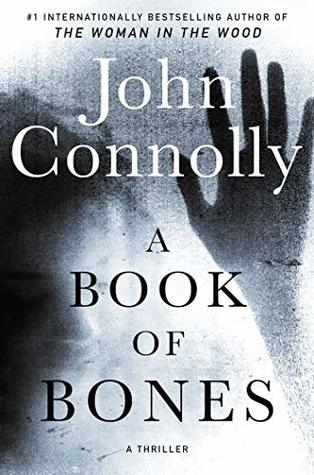
The Children of Eve, by John Connolly*****

If Stephen King and James Lee Burke had a baby—an unnatural one, of course—it would probably look a lot like John Connolly. Connolly has a genius for creating tales that take place on Earth, and are in most regards realistic, while adding elements of the supernatural that go well beyond magical realism. There’s the mystery, and there’s the horror, and if we’re reading a Charlie Parker mystery, we cannot have one without the other, nor should we.

My tremendous thanks go to NetGalley and Atria Books for the review copy of The Children of Eve, the 22nd Charlie Parker mystery. This book is for sale now.

The story commences when Charlie is contracted to find and protect a man named Wyatt Riggins, who has disappeared. Riggins has thrown in his lot with some baddies, and may have bitten off more than he can chew. As Charlie—and we—pursue Riggins, we learn of some seriously nasty skullduggery that’s afoot involving international art thieves. Added to the mix are four missing children, believed to have been kidnapped. There’s not a single slow moment as Charlie tracks Riggins, and we see, through the third person omnipotent, the manner in which these thieves have fallen out, and the trail of bodies that are left in their wake. This is grisly business, and not for the squeamish, although I will say that some horror and hardcore detective novels do go places that I can’t, but Parker novels always manage to stay just inside my own boundaries.

Recurring characters Angel and Louis, perennial favorites, return briefly. At one point, Parker has been roughed up and is in the hospital. Angel and Louis have been listed as his next of kin, and they seem unlikely nurturers. While guarding Parker’s room, for instance, Louis amuses himself by making those that pass by him nervous. And when he is discharged on the condition that he not be alone for the next 24 hours, Angel and Louis make the doctor uneasy as well. She asks Parker whether he has “any other friends? Any at all?” I would have loved to see more of these two, but perhaps Connolly is keeping them in the shadows, lest they grow stale. That’s hard to imagine, but no other reason makes sense. I also enjoyed the brief glimpse of the Fulci Brothers, hired (but not brilliant) muscle men that resemble “bears in green leisure suits.”

Perhaps the most disquieting aspect of this novel—scratch that, not “perhaps”—is the development of Connolly’s dead daughter, Jennifer, who has come to him periodically and watches over him. I won’t say anymore about that, but I finished this book 2 days ago, have been reading several other books, and yet I can’t get Jennifer out of my head. For those that love gritty detective novels, and for those that are drawn to things that go bump in the night, this book, and this series is strongly recommended.

Night and Day, by John Connolly****

“Surely, once a book is out in the world, and being read, the world is altered, for better or worse.”

John Connolly is one of my favorite authors, and because of this, I automatically snap up any book that appears with his name on it. But this one is unlike the others I’ve read, and that might be good news for some, but not for others. One way or the other, my thanks go to NetGalley and Atria Books for the review copy. This book is for sale now.

Night and Day is an odd one. The first half is dedicated to nine outstanding short stories, all in the horror genre; the second half is a nonfiction discussion of a film titled Horror Express. This is such a strange thing that I don’t believe it at first, and I read the first half of the film critique expecting the characters to come bursting onto a busy freeway, or commence kidnapping and eating employees at the film studio. Once I discover that this is truly the world’s longest film review, and of a film I haven’t seen, I am annoyed. The author says that one needn’t necessarily have seen the film to find interest in his article, but I must respectfully disagree. On the other hand, I am not much of a film buff.

Now let’s talk about the first half, where I have much nicer things to say. When Connolly writes fiction, he is incomparable. All of these short stories are of stellar quality, and hugely memorable. The last, titled “Our Friend Carlton,” is my favorite; it’s about a friend that really, really overstays his welcome. The first story, “The Pilgrim’s Progress: A Tale of the Caxton Private Lending Library and Book Depository,” is about a most unusual library. Here’s an excerpt that describes it:

“On a basic level, the operation of the Caxton was easily explained. When a novel achieved a singular status with the reading public (generally after the death of its author), a first edition of the book in question, wrapped in brown paper and tied with string, would appear on the Caxton’s doorstep, soon to be followed by the fictional character or characters responsible for its popularity.”

As you might have guessed, characters from The Canterbury Tales are squabbling in the back yard, and that’s just the beginning. It’s hilarious, despite the fact that I barely remember the Chaucer I studied in high school. Trust me, you don’t need a lot of backstory to enjoy it.

The above two stories are my favorites, but all of them are excellent.

Now comes the question of how to rate the book as a whole. Obviously, if you love brilliant horror short stories and have seen the movie discussed in the book’s second half, this is a five star book. My own sense is that the short stories are so wonderful that even if you stop reading after the first half, the book is worth having. But that’s easy for me to say; I read it free. Had I paid full cover price plus tax, and done so believing I was getting an entire book of the usual Connolly fare, I might be churlish enough to crank it down to three stars. Some readers will obtain the book for free via other means, such as libraries, subscription services and the like. And so, I will split the difference and rate it four stars; as for you, now you know what you’re getting, and you can decide accordingly.

The Stepford Wives, by Ira Levin*****

Ira Levin, legendary novelist and playwright, published The Stepford Wives in 1972, a time when feminist ideas were at a fever pitch for many, and a frightening development for others. Women’s rights were at the forefront in a way that they had not been since the suffragists had won the right for women to vote over 50 years earlier. Now the book is re-released in audio format, at a time when the advances won during that time have been rolled back in some places, and appear to be under attack everywhere. So although I was already familiar with this book, I jumped at the chance to listen to it and promote it; I wish Levin was still alive today, because we can use men like him.

Version 1.0.0

My thanks go to NetGalley and Blackstone Audio for the review copy. This book is for sale now.

Stepford, Connecticut appears to be idyllic; beautiful homes; rolling lawns; good schools. There’s no crime to speak of in Stepford, and Joanna and Walter jump at the chance to move their young family away from the city and into a lovely new home. The children make friends almost immediately, but for Joanna, it’s a little harder. All the women are stay home mothers—not unusual in 1972—but they are insular, preferring housework and beauty regimens over any outside interests, including other women. She finds two women that are friendly, and that have moved here fairly recently themselves, and she turns to them for solidarity. But then one of them begins to change, and Joanna has become suspicious. Is it something in the water? Why are Stepford women such docile, ornamental drudges?

This is a brief book, more of a novella than a novel, and that’s part of what makes it so effective. Levin uses spare prose and doesn’t let anything clutter his central message. In doing so, he creates a more spine chilling effect than a more description laden, dialogue rich novel could have done. And once you read it, you’ll never forget it.

I highly recommend this classic work of horror for women and those that care about them.

Instrument of Darkness, by Charlie Parker*****

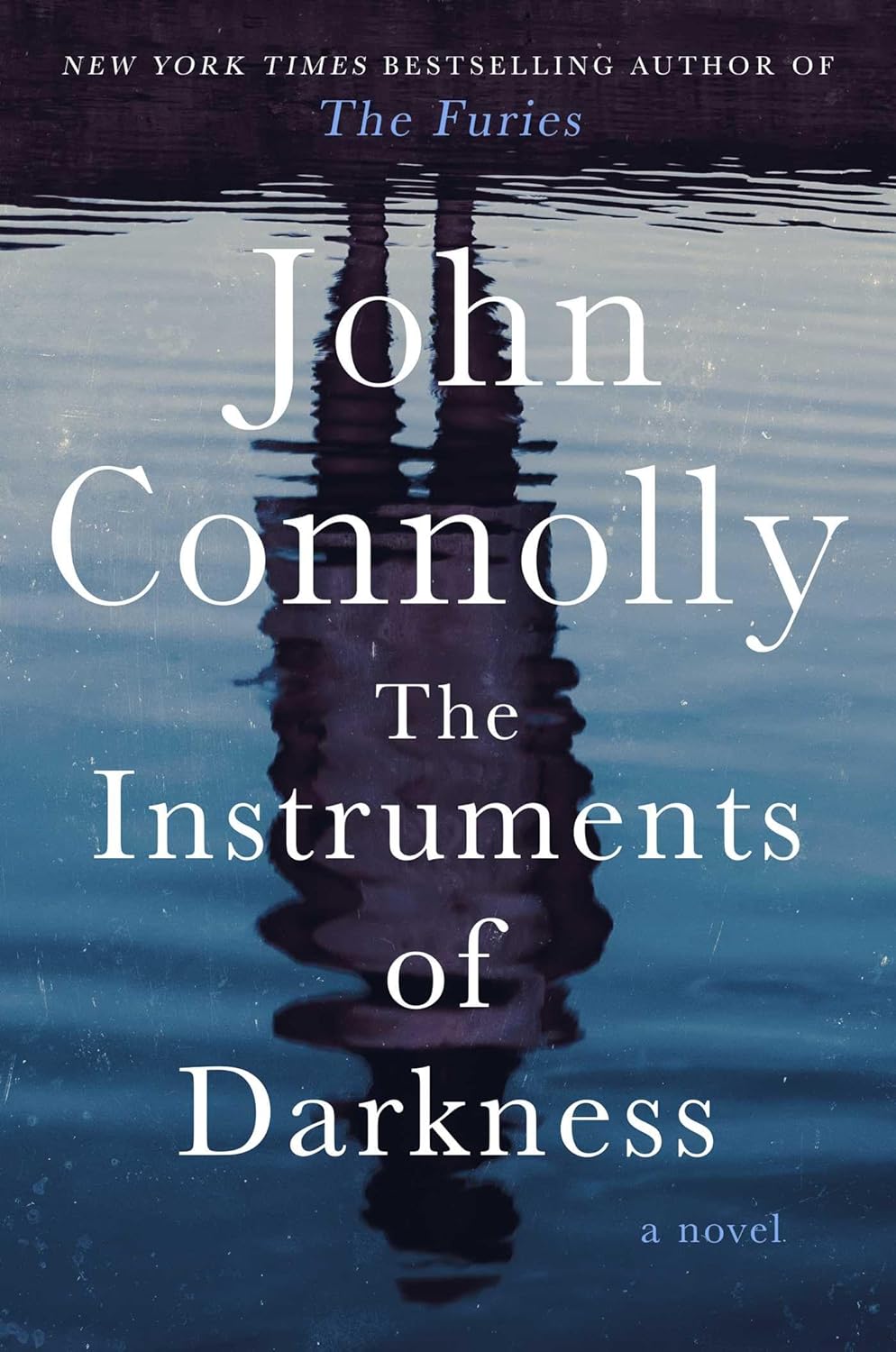
It’s a funny thing about long running series, how some of them become stale after a time while others just keep building. The Charlie Parker series by John Connolly is one of the latter, and with every addition to it I am more riveted, more amused, and more engaged than I was before. The Instruments of Darkness is the 21st in the series. My thanks go to NetGalley and Atria/Emily Bestler for the review copy; that said, this is one of the rare times that I would have laid out full jacket price if that was the only way I could obtain a copy.

This book is for sale now.

Charlie Parker is a former cop turned private detective with a terrible past. He stepped out to buy a newspaper one morning and returned to find his wife and small daughter savagely butchered; the guilt at not being home to defend them was overwhelming, if irrational. He dedicated himself to finding the person that had done it, and making certain they never did it again. Since then, he’s served as a professional snoop on behalf of other wronged persons. Because he often upsets people with money, power, and twisted morals, he often brings along his own muscle when he works, or in some cases, contracts with them to bodyguard his clients during the process. So it is this time.

The job has to do with a young mother whose baby has been kidnapped from its crib during the night. Colleen woke from the first sound sleep she’d had in forever only to find the nursery window open, and Henry gone from his bed. Later her husband Stephen finds a blanket in the trunk of her car, soaked in blood, which, when analyzed by law enforcement, turns out to be the boy’s blood. Stephen tells the police that he is sure she must have done it, and he leaves her.

But she didn’t. Of course not.

In his last few Charlie Parker novels, Connolly has added touches of horror and magical realism, and it’s only made his stories better. In particular, he is adept at sentient houses or other buildings. Sometimes it really is the structure; at other times there’s some sort of being that lives there, unseen. In this case it’s an old house built from a Sears Roebuck kit over a century ago, and so he names it “Kit No. 174,” and after it appears a time or two in the story, generally as the opening of a new chapter, I get the shivers just seeing the name. The narration tells us, “No one had ever spent long in it—or no one had ever lived in it for long, which is not the same thing. No, not the same thing at all.” There are some minor references to other houses that have appeared in the series, and these will delight the faithful readers that remember them; it did me. However, newbies that are just starting this series will be fine.

The recurring characters shine brightly here. The attorney that often hires Parker, Moxie Castin, opens the book, and we get a resonant character sketch:

“Moxie Castin was easy to underestimate, but only on first impression. He was overweight by the equivalent of a small child, didn’t use one word in public when five others were loitering nearby with nothing better to do, and had a taste for ties reminiscent of the markings of poisonous insects or the nightmares of LSD survivors…He lost cases, but not many, and his friends far outnumbered his enemies.”

Other recurring characters are the Fulci brothers, and when I see their names, I smile. They’re described as “two wrecking balls in human form.” Another is Sabine, a shy, tortured psychic that just wants the dead to go away and leave her alone, and best of all, Angel and Louis, a lawless couple of friends—the word “couple” applies in two different ways here—that Parker hires when things get spicy. If I smile when we are joined by the Fulcis, I beam when I see Angel and Louis. And in a nod to series regulars, there’s a point when Parker simply tells someone, “They’re coming,” and he doesn’t say who, but of course, we know exactly who. (Later he explains them for the uninitiated.) There’s a favorite passage of mine in which Parker is concluding an interview, done in a restaurant, and when he and the other person emerge, she sees them and asks,

“Are they with you?’

“They’re my associates.’

“They don’t look like private detectives. Don’t take this the wrong way, but they look like criminals. If they came into the store, I’d lie down on the floor with my hands behind my head.’

“Sometimes that’s precisely the effect we seek.’”

Oh, there’s so much more, but you need to find these things for yourself. The story is on the gritty side, but not nearly as much so as some of the others in the series. In fact, I generally have a policy of not reading this series at bedtime, lest it enter my dreams. I violated that policy once, and I did indeed have a dreadful night afterward. And so I behaved myself until I hit the last twenty percent, and at that point, I knew I would read it until it was done, regardless of the time or proximity to lights out, because I had to see the resolution. I had guessed, long before, whodunit, but that felt beside the point. So I stayed up and saw it through…and I’m not a bit sorry.

Highly recommended to those that love the genre, and especially to Charlie Parker buffs.

The Land of Lost Things, by John Connolly*****

“We must be careful of our fancies and wary of our dreams, lest the worst of them should be heard or witnessed, and something should choose to act upon them.”

Are you up for a partly sweet, partly sinister bedtime story? If so, John Connolly is your man, and this is your book. My thanks go to Net Galley and Atria Books for the review copy. This book was published in September, 2023, and I am disgracefully late, but this is largely due to my realization that I could not read the second in a two book set and review it effectively without first ferreting out the first book, The Book of Lost Things. Now that I’ve read them both, I can recommend both to you unreservedly. At the same time, I will caution you that—what with the titles of this and its predecessor—this is emphatically not a children’s book! When I saw the title, I wondered if, like so many authors of late, Connolly had decided he should write a book for tiny tots. This is not that! Don’t hand this book to your child, or anyone else’s, unless they are already both old and mature enough to enjoy the works of Stephen King—or for that matter, other books by Mr. Connolly.

In the first book, a boy named David, who is mourning the death of his beloved mother and increasingly alienated from his father, stepmother, and tiny baby (half) brother, begins to notice strange things about the books in his bedroom, which came with the house. Events lead him to a place near his house, where he is sucked into an alternate world in an alternate wood, and it is there that nearly all of the narrative takes place.

Now, in this story, we have one of David’s descendants, a young mother named Ceres, whose little daughter, Phoebe, lies comatose in a hospital. Because of the place’s location, she decides to stay in a family home that is not being used currently, what with being rundown, but which is convenient to the place where Phoebe is. And yes of course, it’s that house, and those woods are still there.

Nearly twenty years separate the publication of the first book and the second, and I can see the difference immediately. Whereas The Book of Lost Things is well written and quite memorable, The Land of Lost Things is even better. The pages turn themselves, and the words pop off the pages. The fairy tales that Connolly implants into the first half of the book are cleverly altered, and I laugh out loud more than once as I read them. And then, as things darken and become tenser, the dangers more palpable, it’s hard for me to look away. I learned years ago not to read Connolly’s work too close to bedtime, and that habit stands me in good stead here.

Part of the charm inherent in everything Connolly writes is his impatience with pretentious attitudes and behaviors, and his deep respect for women. Add to this his tight, resonant dialogue and his dark, crackling wit, and the result is a large, loyal fan base, of which I am obviously one.

For those that love satire and are drawn to things that go bump in the dark, this magical book—and its predecessor—are highly recommended.

In the Pacific Northwest, October evenings are a great time to stay home. Of course, some people put on their hunting jackets, grab their gear, and head out into the woods; some are party animals seeking a good Halloween bash; and some are charitable souls that organize haunted houses and other seasonal attractions, with the proceeds going to good causes. But a fun fact is that a majority of us do exactly what I plan to do: curl up at home with my beagle, my book, a cup of hot apple cider and a bunch of Halloween candy that trick or treaters never show up to claim. Can’t let all that chocolate go to waste, now can we. If my plan looks good to you, check out these scary reads that I’ve collected over the years. A note of apology: ten years with Word Press isn’t enough, apparently, for me to adequately intuit all of the layout options. I have tried mightily to post each of these choices in a reasonable arrangement with links, but there are gremlins involved. Once again, then, I must ask that if you wish to read my review of one or more of these goosebump-worthy selections, please enter the title in the search bar. All of them are waiting for you!

Lone Women, by Victor LaValle*****

“Queer folk, the Henrys.”

Adelaide Henry is “profoundly lonely,” growing up without siblings, with older parents that spurned the world around them. They had their reasons. And yet, in the opening chapter, as I see Adelaide pour kerosene over both of their lifeless forms and burn them, along with their house, I wonder…were they bad enough to deserve this?

But nothing is as it seems, and this is part of the magical spell that Victor LaValle weaves into this kickass novel, Lone Women. By the time I understand the why and the who and the what, I feel an intimate connection to Adelaide, as if I may be the only one trusted with her secrets.

My thanks go to Net Galley and Random House for the review copy. This is one of the finest novels to be published in 2023, and you should get it and read it.

Adelaide flees the California farm where she’s lived all of her life, and buys a homestead in Montana. Almost everything about her life changes; from the warmth of California to the frigid winters of the Northern Rockies, from life with her parents to one lived alone, and from an all-Black community to one that is almost entirely Caucasian. She brings very little with her, only what she can carry, but she is curiously possessive of her extremely heavy trunk, and though I initially assume that she keeps something of great monetary value inside it, I soon realize that isn’t it. My early notes ask the same thing over and again: “What is in that trunk?”

From there, our story unfolds and I can’t stop turning the pages. I’ve never read a novel of any genre that’s like this one, and I’m guessing that you haven’t, either.

Do yourself a favor. Don’t read the synopsis. Go into it blind. It’s a lot more fun if you learn of the characters and events at the times the author intends.

There’s a powerful message in play, but the story is so adroitly delivered that it never feels like a polemic.

I won’t say more, because I don’t want to ruin it for you, but believe me, the next time LaValle publishes a novel, I will be first in line to read it. Highly recommended, especially to feminists.

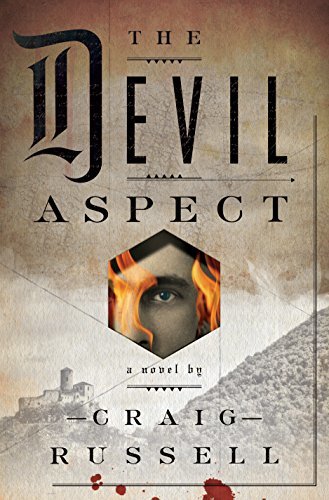
The Devil Aspect, by Craig Russell

3.5 stars, rounded upward. I read this creepy tale during the last half of October, and it is indeed a good way to get into the Halloween spirit. I am disgracefully late with my review—3.5 years late, as it happens—but I do thank Net Galley and Doubleday for the review copy. This book is, of course, for sale now.

Here is what drew me in. This is horror of the old school variety, with gothic towers and half a dozen criminally insane inmates. It’s set in Czechoslovakia, which I seldom see. The flavor, overall, is similar to the stories we told as children around campfires or late at night during slumber parties. Of course, it has a more adult approach, but even so, this is classic horror.

Our protagonists are Viktor Kusarek, a Jungian psychiatrist who comes to the asylum to conduct experiments on the patients, or inmates, in order to prove a theory, and police chief Lukas Smolak, who is pursuing a serial killer that is running amok in Prague.

This is a story that is more about the journey than the destination, though perhaps not intentionally so. Hearing about each of the six savage killers as Viktor interviews them is vastly entertaining. There’s one spot about a third of the way in, where a patient, partially sedated, is explaining that he is innocent, and also that a guest sorely provoked him. Always so critical! He was determined to impress her with his cooking, and indeed, the longer he worked at the stove, the more reasonable she became. Viktor points out that the guest had stopped complaining because he had her head in the skillet. I laughed out loud! The middle of this novel is unmissable.

There are three things I would change. First, the book is a little overlong, and could bear some tightening. Second, the whole Nazi menace has nothing to do with the problem or its resolution. It seems more like window dressing than anything else, but it doesn’t add a thing to the story. If I were the editor, I would cut that part of it out and voila, some of the tightening would be achieved. And third, the ending is so, so predictable. I stuck with the story until around the 85 percent mark, at which point I figured all hope of an ending other than what I expected was pretty much gone. At that point I skipped to the end. Yup. There it was. I would have liked a less formulaic ending.

Still and all, fans of old fashioned horror could do a lot worse. If this sounds like your kind of book after everything I have said, then go for it. I am old and cranky, and what seems obvious to me might seem new and clever to those that haven’t read many books of this ilk. And one way or the other, getting there is a lot of fun.

Patricia Wants to Cuddle: The Audio Version, by Samantha Allen and a host of excellent narrators

Note: after hearing the audio version, I changed my rating to 5 stars. 5 stars shouldn’t be reserved for Shakespeare, for Toni Morrison, for Elizabeth Strout. 5 stars means the book is among the very best in its genre; Patricia Wants to Cuddle is among the best humorous novels being published this century.

A further note: this is the first time I can recall an audio book making a narrative easier to follow rather than harder. The presence of multiple, very skilled readers (Cindy Kay, Justis Bolding, Laura Knight Keating, Susan Bennett, and Jasmin Walker) makes it easier to tell the Catch contestants apart.

It is great to encounter my favorite parts a second time; within the last twenty percent of the book, the figurative language involving a weathervane and a turkey absolutely slay me.

Below is my original review.
________________________________________

“You have to watch out for the quiet ones.”

I had an ugly upper respiratory flu, and this excellent novel was exactly what the doctor ordered. My thanks go to Net Galley, Recorded Books, and Zando Publishing for the review copy. Patricia Wants to Cuddle will be available to the public Tuesday, June 28.

As the story begins, we are midway through filming “The Catch,” which is a reality television show similar to “The Bachelor.” Our cast includes the four lucky women to have made it this far; producer Casey; a handful of crew members; and oh dear, Jeremy, a scuzz bucket if ever there was one. Jeremy is this season’s catch. We also have a handful of locals, since we are filming on location; included is a bashful cryptid in the woods, a lonely creature that reacts very badly to stressful situations. As you may guess, Patricia is that cryptid.

These people are on Otter Island, a fictional addition to the San Juan Islands off the coast of Washington State. Think deep woods, rain, and glamping. And…what the hell was that, just now? Too big to be a bear. And why are the sheep so agitated?

Baaaaa.

The contestants are mostly not interested in love; they are interested in publicity, for various reasons of their own. The shooting schedule leaves them sleep deprived on an almost permanent basis, and so given the premise of the show—competition, not cooperation—it doesn’t take long for the women to turn on one another.

Samantha Allen is new to me, but she’s on my radar now. This story is snicker-worthy at the outset, and by the time we reach the climax, I am howling with laughter. Part of the joy comes from the plot and pacing, but the biggest laughs for me are those that combine these outrageous events with some of the funniest figurative language I have ever read. In fact, were I to rate this story solely on its humor, without rating the more traditional elements such as character development, this would be a five star read.

This book will appeal most to those that lean to the left.

Recommended to those that love darkly hilarious fiction.