The Worst Hard Time: The Untold Story of Those Who Survived The Great American Dust Bowl, by Timothy Egan ****

I should probably give this book the fifth star it really deserves, but I was so demoralized at the end, I couldn’t bring myself to do it.

What makes it worth going there, just when you know already your heart will be broken, is that this is a chunk of US history that rarely gets covered in K-12 education, and like most, I came away not knowing much about it. In fact, I was qualified to TEACH history before I knew much about it. Curiosity was the only thing that got me to go there, between those pages.

It’s a story with no heroes and no real survivors. It’s a grinding, miserable nightmare of a story. The environmental message is its raison d’etre, but of course, very little grassland in America is allowed to lie fallow, save perhaps that inside national park boundaries.

Why would ground so hospitable to grass, not accept wheat? That’s the question I went in with (being no kind of scientist) and I came out with an answer. As we look for ways to mend the annihilation humans and corporations have wrought on this earth, this particular ecological (and very human) story is one that has to be told. I read it, because I just had to know. I recommend you do the same.

The American Sisterhood: Writings of the Feminist Movement from Colonial Times to the Present, by Wendy Martin*****

Please note that this resource is copyright dated 1972. You’ll have to consider the word “present” in the title with a grain of salt. It would be great to see an updated version published, but right now, the word “feminist” carries such strangely negative connotations that no new edition may be printed…at least, until the pendulum swings back where it belongs. This, like most political assertions, is a matter of perspective. Now you have mine.

This out-of-print, unpretentious-looking volume is a treasure trove of speeches and letters from feminist luminaries, from Sojourner Truth and Elizabeth Cady Stanton, on up through Emma Goldman and Charlotte Perkins Gilman, to the so-called radical feminists of the 1960’s, such as Gloria Steinem and Robin Morgan. If you are interested in American history, the history of women’s rights, or in need of primary sources regarding same, snap up a copy of this if you can lay your hands on it. Mine is in woeful condition, and the ISBN page fell out; I had to get it from Amazon’s website! A scholarly edition I am so glad to have kept over many years, many moves, and the occasional furtive looting of my shelves by children no longer at home. A must-have for students of the history of women.

Battle Cry of Freedom, by James McPherson *****

If you only choose to read one (challenging and sizable) resource on the American Civil War, this is the one. It won the Pulitzer, and although it is a large, serious piece of work, it is immensely readable. It begins with the Mexican-American War because that is where much of the Civil War’s military leadership is forged. It also makes it much more interesting to see whose fortunes rise, and whose fall (although these are, naturally, secondary to the issue of the war itself).

This is unquestionably the most thorough and accurate volume about America’s last righteous war. It requires a high level of literacy, but with that caveat, it is a surprisingly accessible narrative, from a man who documents everything and knows what he’s talking about.

One other thing: I find that in discussions about the Civil War (still referred to in much of the South as “the war between the states”), though it is long past, in some ways it isn’t over. Feelings are sometimes still surprisingly heated. And indeed, anyone who writes history is subjective, even if it is only by the facts they include (and which are emphasized); what sections or titles are named; and which generals are given the most air time. So though nobody is entirely objective, I think McPherson is the most reliable, knowledgeable, yet objective writer I’ve found yet.

Rebel Streets, by Tom Malloy *****

This is the first novel I have read about what are referred to in Belfast as “The Troubles”. The protagonist, Jimmy Fitzgerald,is a Catholic youth and a member of the IRA. Virtually all the young men in the Catholic (i.e., working class)neighborhood there belong. And in the opening scene, Jimmy is being tortured. He is being treated in ways that the Geneva Convention was created to prevent, yet it doesn’t. He is a “terrorist”, and so he can be treated any way they like, proof or no proof. The scene goes so far as to have him placed in a helicopter after the beating is over and he has regained consciousness. They drop him from the helicopter…and he goes only ten feet before he hits the ground. He is broken. After spitting in their faces, after beating after beating in which he will only swear at his interrogators or say “I love Ireland”, he is broken. He only wants to live, and to be gone, and we might hope that the information he gives them is false…but it isn’t. He gives up safe houses. He gives up friends. He does it with the condition that his closest friend since boyhood, Louis Duffy, will be spared.

When it’s over, he is assigned to be an informant.He must meet with Detective Ian McDonald, whose perspective we also gain later in the book. He is outwardly an ordinary man, a man who can look himself in the mirror and like what he sees every morning, one who is responsible for enforcing the law, upholding order, and stopping the Irish attacks on the British troops that make their lives hell. He has a wife and a little boy he loves, and he thinks that he is a good person. Some might see him as merely cynical. I went into this book with a bias, and I see a monster there. I hope that others who read this book will think so, too.

Catholics are considered a lower class, Finian dirt on the floor of Belfast. We learn early on of a job Jimmy and his “Da” were given cleaning out the coal cellar of a Protestant family. The family, clearly enjoying a much higher standard of living, is converting to gas central heat, but they warn Jimmy and his Da that they have inventoried and expect everything to be there when they are done. Jimmy and his father are horrified and seething at the suggestion that they might walk off with their one-day-employer’s coal in their pockets. This kind of rage beats in the hearts of most native Irish (as opposed to the Orangemen imported generations ago by the Brits to give some credence to the lie that Belfast is majority Protestant).

Later, much later in the story, after British cops have kicked in doors all over the neighborhood looking for IRA members, after the family furniture in one residence (and we can infer, many others) has been shredded, mirrors broken, the family’s only television set smashed, an Irish mother turns to her small son and asks, “Who was it put your Grandpa in prison?”
The lad replies,”The Brits”.
“Who?”
“The Brits.”
“Aye…Who wants to get your Da and lock him away?”
“The Brits.”
“Who?”
……..
“Why did they do this to ye?”
“Because I’m Irish.”
“An’ who is it that hates the Irish, who is it robs the Irish, who is it murders the Irish?”
“The Brits.”
(first person, quoting author here)”She took his head in both her hands to whisper, “An’ who will protect yer mother from the Brits when he’s a strong young man?”
“I will.”
“Why?”
“Because I’m Irish.”
The mother calls her son a “wee man” and a “brave Belfast boy”.

This novel spoke to me deeply. I was a supporter of Sinn Fein during the hunger strikes of the 80’s, and I, along with many other Irish Americans of whatever generation, gave money for humanitarian aid. Two-thirds of the funds that paid for Irish independence came from Irish American pockets. The same has held true for the cause of making Ireland free and united once more.

Not everyone will appreciate this novel as I did. The IRA has had press that likens them to serial killers when “The Troubles” took place, and very few rejoinders sent to large newspapers ever saw the light of day.

But if your heart beats for one united Ireland, or if you enjoy one helluva ride and you are neutral or undecided on the Irish Question, then buy this book. Read it. You haven’t read anything like it lately, I promise.

The Warmth of Other Suns: The Epic Story of America’s Great Migration, by Isabel Wilkerson *****

thewarmthofothersunsIf you have any interest whatsoever in African-American history; American history in general; or Black Studies, this book should already be on your shelf. It is one of the most important volumes to have been written in decades, a comprehensive yet readable and enjoyable look at a migration that dwarfs the smaller California Gold Rush and Dust Bowl migrations in size and scope. Black folks started to leave the south as Jim Crow became entrenched. They did so often at their peril; Caucasians who wanted that cheap and servile day labor were so violently opposed that Blacks planned their departure, in many cases, with the utmost secrecy, buying the train ticket from their own backwater hamlet to a nearby town so no one would suspect they really meant to go to Chicago, Milwaukee, Washington DC, New York City, or any of a number of places in the north and west where there was no official Jim Crow.
Though they still faced a disappointing amount of racism, from segregated neighborhoods to hotels that magically became “full” just long enough for the Black traveler to get back into the car, things were much less tense in their newly found homes. Like immigrants who come to the US from Third World countries, they found that although they did not yet possess the things the White man had, regardless of their own professional qualifications, they did enjoy a better standard of living and lived under less fear than they had back in Mississippi, Texas, or any other part of the Jim Crow south. Some grew homesick and went back where they’d come from, but most did not.

Wilkerson received a Guggenheim fellowship to help support the vast amount of research-related travel and time it took to compile this masterly piece of research, for which she used over 1,200 interviews. Her scholarship is meticulous. Every speck of information provided by a primary source is backed up. She won the Pulitzer for this book, and that is not surprising.

In my own reading of this work, in which she follows the stories of three individuals, interlacing their stories with her more journalistic reporting of the facts on the ground, I found it helpful to skip to the section in which she explains her methodology, before I read further. Thus, I read the introduction, then skipped to the methodology (since I had initially wondered what good 1,200 interviews did if we were going to just follow three, but she cleared that up quite nicely), then the main body of writing, start to finish.

It’s a large tome, and I usually restrict my reading of physically large works to a small portion of each day due to my own issues with arthritis and pain. That went out the window while I read this. It is anything but dry; I could not put it aside. It was as riveting as the most unforgettable biography or memoir, and I kept reaching for sticky notes to mark passages I found particularly compelling.

Sometimes I end my reviews by suggesting a particular book is worth reading, but only if you can get it free or cheaply. Not this time. This is a book the serious reader will want on his or her bookshelves. It is one to refer back to again and again after having read it. If you don’t own it yet, go out and buy it. I hope that in the near future, it will become one of those books that every scholar will be expected to have read in order to be taken seriously. It’s that important…and how lucky we are that it is also fun to read!

Before the Mayflower: A History of Black America, by Lerone Bennett, Jr. *****

When I was working on my MA with the goal to teach history in the upper grades, I expressed my frustration to my professor. I asked where I could find the actual history of Africa. Everywhere I looked (in conventional sources, such as the university library and trade journals) it said, “See Europe”. I didn’t WANT to read about the colonizers. But of course, when conquerors succeed in occupying another land militarily and politically, the next thing to be done is to eradicate the culture as it exists, and to pretend there WAS no history before the conqueror arrived (aside, perhaps, from a brief reference to how bad it used to be).

Mr. Bennett gives voice to Black Americans, and to the cultures they brought with them. Through impeccable research, he has uncovered history and culture that was not readily available those many years ago. This book was published and available at almost the same time I finished my degree. I found it later when I had the luxury of being able to read what I wanted, rather than that which was assigned, and have used it to some degree in home schooling my son (though it is too difficult for most high school students). Highly readable and enormously enlightening.

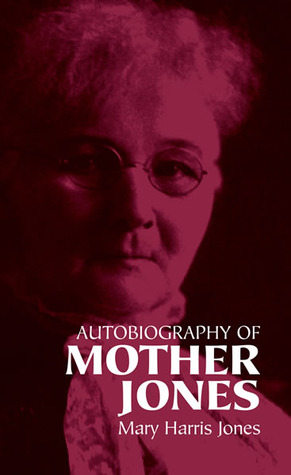
The Autobiography of Mother Jones, by Mary Harris Jones, Mary Field Parton (ed), Clarence Darrow (intro) *****

autobiomotherjonesMother Jones has been called “the most dangerous woman in America”. Some refer to her as an anarchist, but in her autobiography, she denounces anarchism, though allows that these folks have their hearts in the right place. She has been called a syndicalist (which is probably closer to the truth), but the fact is that she was motivated by what she saw right there on the ground in front of her. When the Russian Revolution unfolded, she was by her own account past 90, and by the account of another biographer, in her mid-80’s, so either way, she was very, very elderly, yet she championed its achievement at the Pan-American labor conference held in Mexico:

“…a new day, a day when workers of the world would know no other boundaries than those between the exploiter and the exploited. Soviet Russia, I said, had dared to challenge the old order, had handed the earth over to those who toiled upon it, and the capitalists were quaking in their scab-made shoes.”

Jones’ career as a political organizer began shortly after she turned 30. She was a married woman, her husband an iron worker, and she stayed home with their four small children. “Yellow fever” (which I think is malaria) came and killed her whole family, and then as if that wasn’t enough, the great Chicago fire swept away her home and all her possessions.

Some would have turned to suicide. Some would have gone looking for an elderly widower to marry. Some would have gone off to find distant relatives and live with them as little more than domestic servants.

Jones reinvented herself and gave the next fifty-plus years of her life to making the world a better place.

Still clad in a widow’s black garments, she put her hair up in a chaste bun and left Mary Harris Jones behind. From this time forward, she would be “Mother Jones”. Think of it! The cinders from the American Civil War were barely cold, and women had no position in American political life, including the labor unions. Yet by becoming a mother to workers everywhere, including the women and small children laboring in mines and textile mills, she became a force to be reckoned with. It was a brilliant piece of theater, entirely sincere in its intention and in many cases successful. She was one of the most ardent champions of the 8 hour day:

“The person who believed in an eight-hour working day was an enemy of his country,a traitor, an anarchist…Feeling was bitter. The city [Chicago] was divided into two angry camps. The working people on one side–hungry, cold, jobless, fighting gunmen and policemen with their bare hands. On the other side the employers, knowing neither hunger or cold, supported by the newspapers, by the police, by all the power of the great state itself.”

When Mother speaks, people feel they should listen, and if she speaks in their better interests, they listen harder. And in the early days, at least, the boss’s goons and the local law thought twice about putting a hand on Mother. It wasn’t nice!

Later, as her impact on their wallets hardened their resolve, they would deal with her less gently. She didn’t care. She spent nights in jail when she could have left town instead. Sometimes she traveled into a coal mining enclave where every bit of property besides the public roads was owned by the mine owners. Even homes that had been rented to miners were closed to her, as was made clear enough to break almost anyone’s heart. She describes a mining family that held a union meeting at which she was present in the coal fields of Arnot, Pennsylvania. The following day the company fires and evicts the family, and “they gathered up all their earthly belongings, which weren’t much…and the sight of that wagon with the holy pictures and the sticks of furniture and the children” made the local miners so angry that they decided to strike and refuse to go back to work till their union was recognized.

The quote most well known that shows up on tee shirts, posters, and coffee mugs among the liberal and radical milieu today is knocked clean out of context, in my view. “Pray for the dead and fight like hell for the living” was delivered in order to get working men out of the local church, where the priest was trying to cool down the heat and persuade the coal miners to wait for a reward in heaven. “Your organization is not a praying institution,” she reminded them, “It’s a fighting institution!” She tells them to leave the church and meet in the local school, which their own tax dollars had bought. And she later tells other miners that striking is done to provide “a little bit of heaven before you die.”

From Chicago to the coal fields of West Virginia, from New Mexico to Pennsylvania, she was found among railroad men and their families, machinists, textile workers, and above all, miners. She had no use at all for union officialdom, and though she occasionally praised a senator or governor who saw the light of day and called off the hounds of vengeance so that unions could be organized and the workers represented, more often than not she saw them as perfidious and untrustworthy.

When Eugene Debs became a candidate for U.S. president, she embraced his campaign, though she stayed among the workers, which I think was the correct thing to do. But when Debs comes to speak to coal miners and the union officialdom wants to meet his train quietly with a few representatives, Jones proposes all the union members go to greet him. They stampede down to the train, leap over the railings, and lift Debs onto their shoulders, she says, shouting, “Debs is here! Debs is here!”

I could have been finished with this slender volume quite quickly if I hadn’t been making notes (most of which, as usual, I cannot fit into my review, but then I should leave you some choice tidbits to find for yourself, and there are still many of them!) The chapters are brief, and so the book can be read just a few minutes at a time. And the introduction is written by one no less auspicious than Clarence Darrow himself.

You may look at the price and wonder whether you should pay that price for this slender little volume. The answer is, oh hell yes. Please remember that the words of the woman herself are worth twice as many from some armchair hack who wants to pick it apart and wonder whether she was really 83 or 85 at such-and-such moment? Spare yourself the blather and go straight to the primary source. It’s worth double the cover price!

Malcolm X: The Last Speeches by Malcolm X, Bruce Perry (ed.) *****

malcolmxlastspeechesIf you read The Autobiography of Malcolm X, the most widely-read of the books about Malcolm, you will get an idea of the general development of his self-education in prison, and of his attraction to, and eventual prominence in, the Nation of Islam. This volume, in contrast, shows the speeches he made when he broke with the Nation of Islam and decided that the struggle for racial equality was tied to class struggles, and that this meant that people who were not Black could still be part of the fight that he believed was necessary. It shows his attraction to socialist ideas, and these are speeches that were not published until recently, when his widow found them buried amongst a lot of other things in storage, and called the publisher she wanted to distribute these ideas.

For example, for awhile there were posters and tee shirts available for sale showing Malcolm X and Dr. King standing together. The implication inherent in overemphasizing this photograph is that the two were comrades and brothers in struggle. I can’t believe the number of young people I taught believed that Malcolm “wanted peace”. Whereas this is true in the long run, it isn’t what he talked about. When middle class Caucasians were interviewed on TV and they pontificated that it was important for those Black demonstrators walking across the South, being confronted with tear gas, firehoses, police dogs, and arrest, to remain nonviolent, Malcolm responded, “I will be nonviolent when the White man is nonviolent.” In contrast to the ideas of Dr. King, Malcolm was ready to fight for his rights. It was in the last year of his life that he realized that the material interests of the entire working class dovetailed, and he targeted the ruling rich as his oppressors, (correctly so in my view), rather than blaming all members of any ethnicity or race. This was an enormous change from the belief system he had espoused while he was with the Nation of Islam. These speeches serve as the clearest documentation of this change.

These speeches are important, though their context was quite different from today’s, because they break up the myth that mainstream media and US government sources have built up surrounding Malcolm X.  If you can’t stamp out someone’s speeches and memory, what do you do instead? You co-opt them, sanitize them, find a way to make more in tune with what you wish they’d been. And that’s what has been done to Malcolm X’s legacy, by and large.

For those who are seeing a big difference between his earlier speeches and the ones published here, it is not hypocrisy, it is development. It takes a lot of integrity for someone who is famous and controversial to admit he has been in error, and explain what his new viewpoint is, and why he has changed his way of thinking. If you don’t read this book, you will not know the whole evolution of the ideas and political program embraced by Malcolm X over the span of his life.

All of this has more relevance than ever now that we are in the midst of a second, perhaps even more vital civil rights movement. Malcolm’s philosophy and political perspective should be widely read. He’s been gone for a long time, but nothing can kill his ideas, and we need them now.

King Leopold’s Ghost: A Story of Greed, Terror and Heroism in Colonial Africa, by Adam Hochchild *****

Just as Europeans once looked upon the Americas as land that was unclaimed and waiting to be discovered, explored, and claimed by Caucasian Christian civilizations, so too was Africa, referred to as “The Dark Continent”, ripe for exploitation when the Europeans arrived.

Initially, through their own caste system, tribal chiefs were absolutely delighted to trade away the Africans they themselves kept in bondage for the wonderful new munitions, cloth, and other goods that were offered. But their satisfaction turned to horror when they learned that where Black folks are concerned, Europeans just don’t play by the rules. King Affonso of the Congo sat down and wrote a letter to the ruler of Portugal, explaining that he had sent his son to Europe to attend school, and he was never heard from again. Now he has learned that his own family members were being rounded up by slave traders! There must surely be some sort of mistake.

African missionary, explorer, and British emissary Dr. David Livingstone traveled to Africa and was the first known (at the time) European to cross Africa from coast to coast. He returned to England to be feted and celebrated, and then plunged back into Africa…and stayed there. He was happy. Why go home?

Henry Morton Stanley was a journalist of uncertain origins (see the book) who went in search of Livingstone and found him, uttering the famous quote, “Dr. Livingstone, I presume?”

Meanwhile, a royal in Belgium grew restless. Leopold had delusions of grandeur, and why not? If France, England, and Spain could enjoy colonialism, why not Belgium as well? Leopold thirsted for power. He wanted to become a king. As African territory was snapped up piecemeal, he leapt in and grabbed a slice through the middle, in what would for a time be known as the “Belgian Congo”.

By now, slavery had been declared illegal in Britain, and so Leopold strode in to civilize and Christianize dark-skinned people whom he was certain could not do so for themselves. A great road was built there…and it went straight in from the ocean, and straight back out again. Leopold had learned of the ivory to be obtained through the wholesale slaughter of elephants. He offered prizes to locals who brought these forward, and assured them they would be protected from the aggression of any other European powers. What a deal. Leopold sponsored Stanley and gave him the royal seal of approval when he went in to further explore the area. In the end, Leopold claimed all of the Congo, an area, says the author, the size of the United States east of the Mississippi River. Many different tribes and cultures, some peaceful, some not, were brought under his ruthless leadership.

Leopold himself was almost a perfect villain, obsessed with power and obnoxious even to other Europeans of his time and station. When Prince Albert visited the new palace Leopold was having built, he believed he was complimenting the man when he said it would be like “a little Versailles”. Leopold took offense instead. “Little?”

But as amusing as anecdotes like this one are, the brutal fact is that tens of millions of Africans were killed under European colonialism. When Belgium was more or less forced to grant sovereignty to the people of the Congo, he sabotaged the new government of Patrice Lumumba, a popularly elected leader, by refusing to let go of the mines where the remaining mineral riches of the nation were located. The United States helped him crucify this man and was party to the manipulation of tribal rivals. Wholesale slaughter of unimaginable cruelty ensued. Multinational corporations were “also in on the take”.

Though this is a painstakingly written and riveting account, and the research undeniably fastidious, well documented, and scholarly, I would differ with the lame conclusions drawn at the end, namely that the United Nations should have sent in a peacekeeping force during the transition. Who is in the United Nations? Britain and the US, for starters? What a pitiful conclusion to an otherwise brilliant book. I know that if Malcolm X were here, he’d say this was “like leaving the fox to guard the hen house.” For this reason, I considered giving four stars. It’s just too well done otherwise to deny it all five, with this caveat: those final two pages of conclusions should cause any reader who makes it this far down in my review to understand I really mean, four and a half stars.

I say the only way the Congo or any other African nation can rule itself is for colonial powers to get out. Go home. There is nothing there that they own anymore; it’s over. Africans can rule Africa, as long as colonialists let go of the entire pie.

All Standing: The Remarkable Story of the Jeanie Johnson, the Legendary Irish Famine Ship, by Kathryn Miles *****

The Irish potato famine is at its worst. Blight kills all of the potatoes–my god, even the ones that had been harvested and stored away in root cellars where the families thought they could access them!–and the potato was nearly the only crop that the Irish had. Millions depended on charity (nearly nonexistent) or the government, and unspeakable numbers died, while the grain that had grown was shipped abroad as an export for sale. Local farmers who had a surviving patch of turnips or even a single cabbage had to post a guard overnight, or someone else would steal it. Unfathomable.

I was sent a free copy of All Standing as part of the Goodreads First Reads program. My gratitude goes to Goodreads and the publisher for the book, and to Miles for ferreting out the facts to tell this story properly. Research is such tedious work, and here she has done so much to tell an important story.

The first seventy pages of this story are bleak, miserable, horrible, terrible. Miles does not let us go gently. The documentation is well done, and the statistics and examples lend a special sort of dread to that which was macabre to start with. There is no way to Disney-fy a story like the famine and still have it be real history. And those who buy a place on the “coffin ships” for the small chance that they may survive the trip to the new world die in droves, primarily of typhus, though a small number are fortunate and survive.

An innovative ship builder, an experienced and humane captain, and a doctor who was ahead of his time combined to make the Jeanie Johnston exceptional. It is for this part of the story, as well as the righteous anger that serves as the transition from utter misery to success, that those who love Ireland, history, or better still, both should read this book. It is a beacon that is welcome in times such as ours, one that reminds us that one person, or two, or three who have the courage of their convictions really can make a difference to others.