Elisa Shua Dusapin is the author of The Old Fire. My thanks go to NetGalley and Simon and Schuster for the invitation to read and review. This book is for sale now.
The promotional materials describe this brief work of literary fiction as the author’s “most personal and moving novel yet.” If that is truly the case, I don’t think I want to read her earlier work. It’s not a terrible novel necessarily, but given the hype, I am a little surprised. Someone else praised it as “subtle,” and I can vouch for its subtlety; but for me, it is a story in which I keep waiting for something to happen, and in the end, I’m still waiting.
In broad contours, it is a story in which our protagonist, Agathe, must return to the tiny hamlet in France in which she was raised following the death of her father. Her sister Vera is still there, but they haven’t seen one another in a long time. Her mother is alive, but the parents split up when she and Vera were children, and they don’t see her. She and Vera must deal with the estate, hence the title.
As Agathe returns to the house where she was raised, there are all sorts of issues hovering in the background. She is pregnant, deciding what to do about it; her sister Vera, who is mute due to some physical but unexplained cause, resents her for moving to New York when they were both still fairly young; Agathe has a partner back in New York that wants a commitment, but she holds him at arm’s length. She used to have a crush on a neighbor in their French village; does she still?
As the book ends, none of these things is addressed much. Agathe and Vera sort through their father’s effects and make decisions, not always agreeing; there’s a great deal of inner monologue; and when Agathe leaves to return to New York, nothing much has changed or been decided about anything. And I am left with questions and more questions. What’s with Vera’s mutism? Why don’t they and their mother talk? Agathe comes to France, and not even a phone call…? What does Agathe even think of the man back in New York that’s waiting for her?
I’m inclined to recommend this book to insomniacs as a sure cure, but it’s probably not that simple. I note that it was a huge hit in France, and has been translated into dozens of languages, yet most English-speaking readers seem as underwhelmed as I am, and so I have a hunch that my lack of enthusiasm may be cultural. But I can only report my own impressions, and my impressions say that this book is a snooze fest.
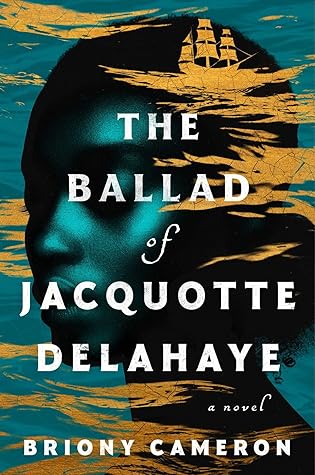
The Ballad of Jacquotte Delahaye marks Briony Cameron’s authorial debut. She is a talented wordsmith, and my thanks go to Atria Books and NetGalley for the invitation to read and review. While I enjoyed several exciting passages—I do adore a good pirate tale—in the end there were issues with credibility that got in my way.
This story of a pirate woman’s derring do is for sale now.
When I read that Jacquotte Delahaye was a real person and that the book is based on true events, I was all in. However, there are passages that made me raise an eyebrow, and since there didn’t seem to be any notes that would indicate what is true and what is the author’s invention, I took to Google to find out more. This is where I learned that actually, she may have been a real person, or she may be only legend. The stories surrounding her life and exploits are also legend. There’s virtually no verified historical information on this character.
I love good historical fiction, which is where actual, documented facts are given warmth and life by an author that adds dialogue and perhaps fleshes out a few areas where the record is sketchy. Then, if the author is sharp and professional, there will be end notes that explain what is a matter of historical record, and what has been invented. That’s my happy place. Even better is when sources are provided for interested readers. Of course, a writer of any kind of fiction isn’t required to provide footnotes or other documentation, but when they do, it’s the cherry on the sundae, and it makes me love them all the more.
Because this story is not nearly as closely aligned to historical record as the promotional materials would have me believe, I nearly dropped my rating to two stars. I felt, and still feel, that the synopsis provided is misleading. I don’t like feeling as if I’ve been played. However, I realize that the author probably is not in charge of her own promotional blurb, and I can’t see penalizing her for what the publicist has chosen to do.
Do I recommend this story? Not so much. Had it been written in such a skillful way that I felt no need to do research of my own, I might not know that this is pure fiction based on little more than speculation. That’s not the case, though. It doesn’t ring true in a number of places, and that’s partly because it isn’t. However, should the reader decide to pursue it, I would advise that you get this book free or cheap, unless your resources are endless ones. Don’t pay full cover price.
This charming cozy mystery, set in Paris during the postwar years, had me at hello. Tabitha is an American expat, and her best friend, Julia Child, is teaching her how to cook. But one evening, during one of the Childs’s many soirees, a woman is murdered…and the knife in question came from Julia’s kitchen! To make matters even worse, the victim was carrying a card with Tabitha’s name and address on it when she was found. For some young women, this would be a wakeup call, and the morning would see them on the next available plane to Detroit; but Tabitha is made of sterner and more curious stuff, and so she begins snooping.
My thanks go to Net Galley and Kensington Books for the review copy; this book is for sale now.
To cope with the horror of the previous night’s events, Julia is roasting a ham. “I just had to take my mind off everything. Can you even believe it, Tabs? Someone murdered a woman in this building—with my knife! That means they had to have been in my kitchen! This kitchen!”
Like many an amateur sleuth in other mysteries, Tabitha begins poking around. Sometimes she has smart ideas, and at other times she is breathtakingly dense, but there is never a time that I am thinking about the author rather than the protagonist, and that means that I believe the character. There are some familiar tropes and the occasional cliche: “She knew too much!” But it never becomes a problem, possibly because this is a novel that doesn’t take itself too seriously. Now and then the author breaks down the fifth wall, or nearly so. For example, Tabitha tells us that she knows what to do because she has read plenty of Nancy Drew mysteries.
The solution to this whodunit is fairly transparent, and I am able to predict the solution, along with the conclusion of the additional thread of incipient romance early in the book, but the whole thing is so adorable that I never become annoyed. “Just like an Agatha Christie novel—all the questions answered at the end, and the villain is caught, and everyone else is happy.”
Because I had fallen behind, I supplemented my review copy with the audio version, obtained from Seattle Bibliocommons, and narrator Polly Lee does a brilliant imitation of Julia Child! In fact, all of the passages involving Julia are brilliant, and that is my favorite aspect of this story.
Sometimes an author manages to step on multiple pet peeves of mine, and yet I emerge pleasantly entertained anyway, and that’s what has happened here. This is light reading, but it isn’t insipid. I look forward to reading the next in this lovely new series. Recommended to cozy readers.
The Things We Do To Our Friends is a debut thriller by newbie Heather Darwent. Our protagonist is Clare, a young woman who’s studying art history at a university in Edinboro. She’s new and knows no one, but is soon swept up in a small, elite group of students she meets in one of her classes. Before she knows it, they are her main curriculum, and her classes become secondary.
My thanks go to Net Galley and Random House Ballantine for the invitation to review. This book is for sale now.
At the outset it’s easy to relate to Clare, who tells us her story using the first person limited. She has never lived here before, and she doesn’t have a lot of resources. She gets a job at a nearby bar, and the everyman proprietor, Finn, punctuates the story now and then with an objective take on Clare’s life and her new friends. She is soon invited to join a clique of students that are flashier, louder, and more confident than most of her classmates, and she wants desperately to become one of them. Tabitha is the ringleader, and it is she that Clare most wants to please.
The opening chapters here make me wonder if we are about to rehash Ruth Ware’s most recent mystery, The It Girl. The elements are certainly there. But there’s an undertone that builds here, teasingly referencing Clare’s unfortunate past. We don’t know much except that she’s estranged from her parents, who don’t want to hear from her.
That can’t be good.
The clique goes to Tabitha’s family home in France over the winter break, and Clare is thrilled to be included. But while they are there, she is pressured to join with them on a moneymaking venture that isn’t entirely legal. They let her know they are aware of her past, so she’d better cooperate.
Here is where the book starts to lose me. Clare is essentially being extorted, and yet her emotional attachment to the group only intensifies. At one point, she tells us that she sometimes forgets whose skin is whose, so tightly bonded are they, and in particular, she and Tabitha. But this makes no sense. Tabitha has threatened to harm her, as have the others. Why does she love them all the more for it?
More and more tidbits from Clare’s past are revealed, and yet Clare herself isn’t developed much. Neither is anybody else. We are told a lot, but shown only a little. I love books that are about character, and if there’s not much plot, I’m fine with that, but these characters are all static. At the 50 percent mark, I become impatient and skip to 62 percent; from there, I read to 72 percent, which is where things should begin to feel urgent, but they don’t. I skip again to 90 percent and read the ending. I seldom skip anything when reading, and on the occasions when I have done so, I sometimes find things when I skim the last half that convince me to go back and read it completely. That didn’t happen here. There are loose threads dangling, and plot elements that appear to have no purpose. Worst of all—and to be fair, this is probably not the author’s doing, but it rankles, nevertheless—is that this weak tale of warped humanity is billed as a “feminist page-turner,” which is what drew my interest initially, and as a lifelong, card-carrying feminist, I can assure you that this is absolutely not that.
“Once you lift a sword, it is hard to put down again.”
I’ve been curious about Joan of Arc for a long time. I love military history, and as a feminist, I also love that Joan was responsible for leading French victories centuries before women were permitted to serve in the military of any major power. When I saw that Katherine J. Chen had written a “secular reimagining of the epic life of Joan of Arc…a feminist celebration of one remarkable—and remarkably real—woman who left an indelible mark on history,” I was all in.
My thanks go to Net Galley and Random House for the invitation to read and review. This book is for sale now.
In her end notes, Chen tells us that Joan’s biographers tend to leave out her difficult home life, with a violent, angry father that hates Joan from the moment she draws breath; he has wagered heavily on her being male, and she’s failed him. Chen sees it as a major factor in Joan’s development as a warrior.
When Joan leaves home, after her beloved uncle leaves and her elder sister, her one true friend within the family, commits suicide after she is raped by English soldiers, she expects to labor for her bread, which is nothing new to her. But ultimately, she wants to get word to the Dauphin, the heir to the throne, who is in hiding: she knows how to win this war.
I absolutely love the version of Joan that Chen develops, and my only frustration is in not knowing what aspects of Joan’s life she has had to invent, and which are historically accepted as truth. She tells us that Joan’s biographers would have her praying constantly, and that they depict Joan as little more than a totem that they carry to battle, a sort of human version of a lucky rabbit’s foot. And then I wonder even more: what facts are undisputed? Of course the Church would depict Joan as hugely religious, given that she has been beautified as a saint. Did she actually influence the battle plans? This part is frustrating to me. Had more information been provided, this would be a five star review.
In any case, the battle scenes are riveting, and Joan’s character is unforgettable. I look forward to seeing what Chen writes next.
My thanks go to Net Galley and Public Affairs for the review copy. This book is for sale now.
I am initially drawn to this title when I see the subtitle—an opportunity to make an early peace that went unanswered—and I also want to read more about World War I. I love military history, and am sick to death of World War II material, so this felt like it might be a breath of fresh air.
Or not.
There is no doubt that Zelikow knows his field, and his research is above reproach. Students and researchers may find this book useful, albeit with a careful eye toward a very conservative point of view that affects his analysis. However, for those of us just in it for the joy of learning, I must caution that this is a slog. I read the first half in the digital format I was given, and after publication, I also availed myself of the audio version available at Seattle Bibliocommons, and it’s difficult to focus on either for long at a time, because it’s just Zzzzzzzz
Oh, I’m sorry! Was that me? Let me try again. The research is splendid; the analysis is reactionary; the presentation is a little zzzzzzzzzzzzzzzzzzzzzzz
I might have spared myself some frustration had I researched the author. Once I was able to focus long enough to get a feel for his political leanings, I ran a brief Google search, and discovered he’d been with the U.S. State Department under the Reagan and Bush administrations.
Oh.
At this point, you know enough to decide whether you want to read this thing. If you have a strong interest in the topic and aren’t squeamish about drawing information from the far right, then this is your book. Not mine, though.
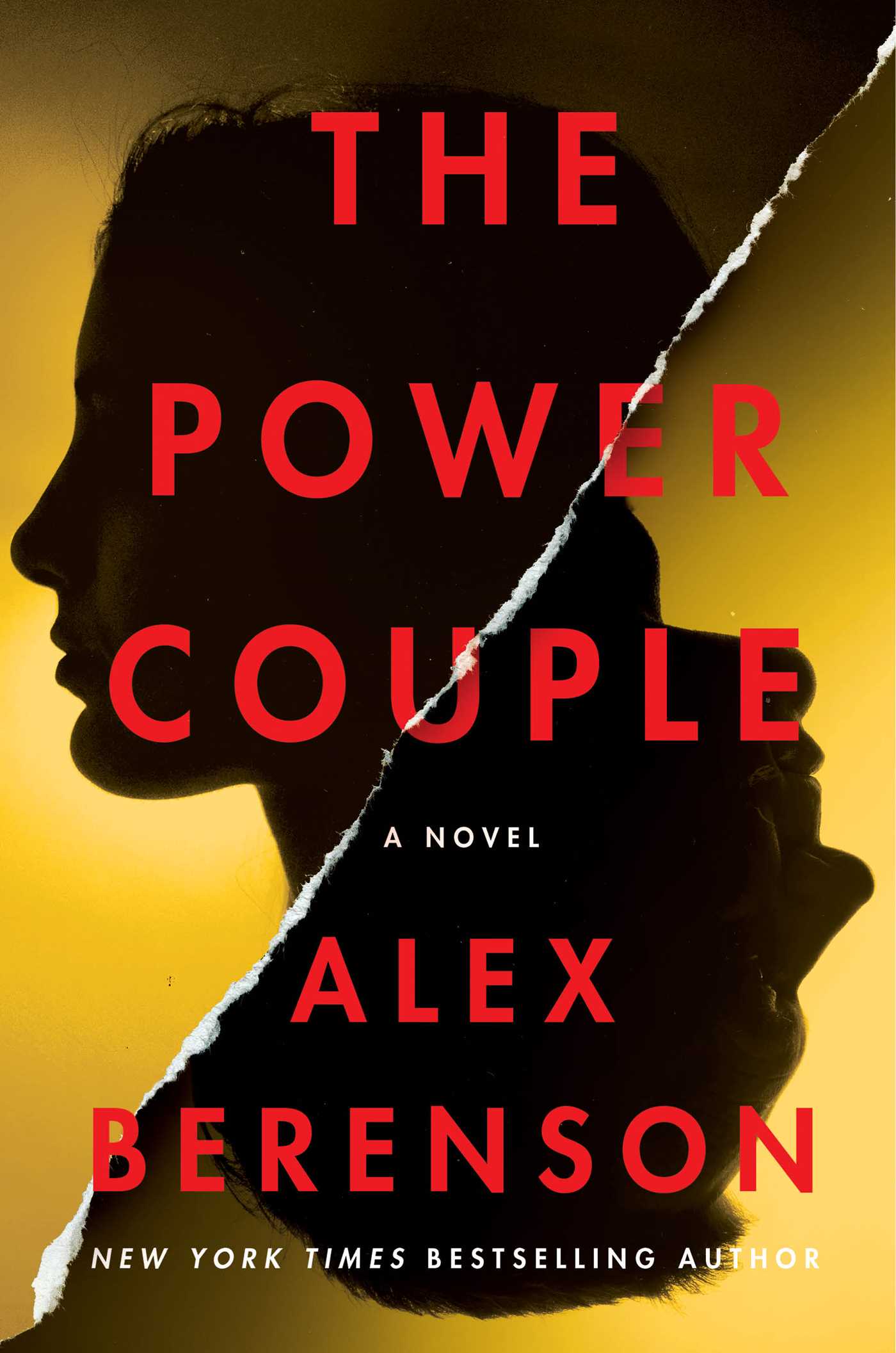
Alex Berenson has done it again! I first read his work when I found a galley for The Prisoner, the eleventh in his John Wells series. When I saw that this stand alone thriller was available, I jumped on it. My thanks go to Net Galley and Simon and Schuster for the review copy. The Power Couple is a fast read and a fun one, and I recommend it to you.
Rebecca (call her Becks) and Brian Unsworth are type A achievers, and both work for the federal government; she is a spy, and he is a hacker. But like so many couples, the similarities that brought them together are getting in their way now. With their children, Kira, who is nineteen, and Tony, who is younger, they take off for Europe to let off steam and spend quality time together. Maybe.
Early in the story, Kira is abducted, and from there forward, the pacing is perfect. Now and then Berenson pulls us back a bit as he shares sketches from their pasts that lead up to this event, but each reminiscence is brief, and the shift between points of view and time periods adds to the suspense. We see their lives through the perspectives of all except Tony, who is a minor character. In the end, Kira is the one we like best. (Trust me.) There’s not a lot of character development, but this isn’t that kind of novel.
I don’t want to give more away, because if I kill any surprises, you won’t enjoy the story as much; what I will say is that even if your own marriage is less than perfect, it is a shining beacon of integrity and affection when contrasted with that of the Unsworths.
This book is for sale now, and just right to take on vacation with you.
I reviewed this excellent novel in January, based on a true story of American women that travel to France to help civilians during World War I. If you haven’t checked it out, have a look by clicking the link below the picture.
Lauren Willig is an established author, but she is new to me. Band of Sisters, her newest release, has made me a fan. I read it free and early, and my thanks go to Net Galley, William Morrow, and Harper Audio for the review copies. It will be available to the public March 2, 2021.
A group of Smith College alumni sail to France on a mission to help civilians suffering extreme deprivation during World War I. “They carry money, supplies, and good intentions—all of which immediately go astray,” says the promotional blurb, and that’s what happens. It’s hard to make plans when you don’t know which way the battle may turn or where bombs may fall, but these are plucky women, two doctors among them, and several of them are members of wealthy, influential American families as well. The story is based on actual women and events, and the teacher in me wishes I were still in the classroom and able to order sets of this excellent novel to share with honors students, girls especially, who need to see more of themselves in the study of American history.
Our two protagonists are Kate and Emmie, best friends and roommates a decade ago, united in this adventure. Kate is the only woman among the “Smithies” that doesn’t come from money and that doesn’t pay her own way; she is led to believe no one else paid their own way, either, but it isn’t true. And this is a chewy, inviting historical truth that we don’t see often in fiction. Though social class divisions are every bit as present and sharp today, assumptions made by most Americans have become more generous. During the early years of the twentieth century, there was a widely held belief that rich people were better in other ways as well, whether they had earned their fortunes or inherited them. They considered themselves to be God’s own chosen ones, and their wealth was one more sign that the Almighty loved them a bit more than others. Poverty was considered shameful, a thing to be concealed; there were no government funds of any kind to help the poor, and if there had been, women like Kate would have just about died before accepting them. Taking charitable contributions was a sign of personal failure and possibly dishonesty to most people back then. And the truth is, Kate isn’t impoverished, and she surely hasn’t failed at anything, but she has to work to earn her living, a thing most Caucasian women in the U.S. didn’t do in 1917. She is horrified when, midway through our narrative, she learns the truth about her travel expenses, and this creates one of the crises within the story.
Willig is a fine novelist. The pace never flags, and there’s never a moment of revisionism that makes me blink. She is true to the time period and the characters. Emmie’s character is a harder sell, to my way of thinking, because she comes from tremendous wealth, but her family has made her feel unworthy because of her physical appearance, and by the end of the book, I love Emmie as much as I do Kate.
I’ve plucked a sample for you, a scene in which Kate and Emmie are evacuating an area which is being overrun by the Germans:
[Kate] wanted Mrs. Barrett; she wanted Dr. Stringfellow; she wanted anyone who could tell them what to do and where to go. Grecourt looked different already, the anemones churned up by the tread of two hundred soldiers, tents dotted around the lawn, Maybe, if she closed her eyes and wished hard enough, she could make it a week ago; the ground bright with flowers; slipping into story time and holding Zelie on her lap while Nell read to the basse-cour children in French about little Red Riding Hood and the Big Bad Wolf, joking with the unit around the supper table about their amazing ability differentiate between types of guns.
But it wasn’t a week ago. The Big Bad Wolf was here, he was on the march, with his big, big teeth and big, big guns, and maybe she wasn’t the best the Unit could have, but she was what they had right now.
By the time we reach this part of the story, I could not stop reading if I wanted to. It would have been impossible.
The hardest characters for many writers are the children, and although we have no child protagonists, there are numerous scenes in which children play a part. How does a child act when he is traumatized by war? Willig is in perfect form here as well.
I received both the digital review copy and the audio, and I used them both. At the beginning there are so many women introduced to us at once that I felt lost with just the audio, and so I listened and read along to keep track. The narrator, Julia Whelan, does a superb job with a challenging manuscript, changing her tone and point of view to let us know which woman’s point of view we are hearing. My only concern regarding the audio version—which is much easier to follow once you have learned the most important characters—is that the story begins with a lengthy list of the women that participated, and it’s not great to listen to. I recommend you fast forward the audio to somewhere between five and seven percent, and then dive in.
I requested this galley because a number of Goodreads friends whose opinions I respect recommended it to me, and all of them were absolutely right. This book is a gem, and I highly recommend it.
Anna isn’t eating, and she’s so weak that she faints from time to time. Her husband, Matthias is afraid for her; this isn’t the life they envisioned when they moved from France to the States. She is admitted to a facility for women with eating disorders, and it is that address that gives the book its title. Big thanks go to Net Galley and St. Martin’s Press for the review copy, and my deepest apologies for being so late with my feedback.
I never would have expected to want to read a novel about an anorexic protagonist. In real life, Anna would have offered me her fries and her dessert, and I would have cheerfully accepted them. She in turn would inwardly shudder, my stocky grandma body providing her with a cautionary example of what happens to those that eat such things.
When I was a sweet young thing growing up in the 1970s, there were rumors that some of the girls at school kept their figures slender by throwing up after they’d eaten; a friend and I commiserated over our own lack of self-discipline. We had scarfed down our Halloween candy and not even considered ralphing it back up in the bathroom. Now we could barely fasten our jeans, while those classmates were smaller than we were.
We thought that some girls have all the luck.
It wasn’t until the death of singer Karen Carpenter that anorexia became well known, and even then, it took us awhile to clue in on the details. Because it’s about body image, and yet it isn’t. And Zgheib does a wonderful job of educating the reader using that approachable medium, fiction.
In Paris, Anna was a dancer. When she and Matthias married, she planned to go on dancing professionally, at least until they had children. But when he was presented with a prestigious promotion that required him to relocate to the United States, they packed their things; Anna had expected to continue her career in America, but she was never chosen.
The in-patient facility where she is treated has strict, clear rules about every aspect of daily life, and most of the privileges hinge around timely consumption of the food that’s provided. Anna’s struggle is profound, and her story is moving. Because it’s about food, but not really. She has buried a trauma involving the deaths of her brother and her mother, and she’s channeled her self-hatred into this eating disorder. We catch glimpses of this as she expertly dodges questions raised in therapy. One of the most moving moments, strangely, has to do with a bagel and cream cheese. She’s supposed to eat it, and she throws a pluperfect hissy. She never eats dairy, she says. She wants the vegan option! No dice, honey. But as time moves forward and this difficulty continues, she finally reveals that actually, this might have once been her favorite food. It was so delicious, and it took her such iron self-control to forget its taste. All that work, she thinks, and now it’s ruined. And she is genuinely shattered by this.
Only one sufferer in three recovers from anorexia.
Due to a backlog of galleys, I checked out the audio version of this book from Seattle Bibliocommons, and the voice actor that reads it is perfect.





 Seattle Book Mama