
 I received an advance copy in return for this honest review, thanks to Net Galley and G.P. Putnam. I expected to absolutely love it; I came of age when the South African revolution against the Apartheid state was in full flower and before anything about it showed on mainstream media, which was all we really had then apart from underground films shown in the basements of coffee houses near campus. I loved Mandela’s Long Walk to Freedom, and had attended dozens of talks given by members of the African National Congress that were forced into exile. So when I saw that this novel was set in revolutionary South Africa, I was pumped. Popular fiction about one of the greatest political events to occur in my lifetime? Oh yes indeed. Count me in!
As it turns out, not so much.
The novel has its strengths, to be sure, and those that have read nothing about the South African revolution may find this story more approachable than plunging into Mandela’s work, which requires hefty amounts of time and stamina as well as strong literary skills. Marais’s book showcases the inequalities that existed, a Jim Crow that was every bit as brazen as that in the southern USA during the early and mid-twentieth century. It highlights the institutionalized racism that forbade people of color from even entering white enclaves where the best of everything existed, unless the bearer was carrying a pass issued by a Caucasian employer. There are a lot of people out there, especially young ones, for whom this will be a worthy introduction. And it starts out strong, with convicts on the Parchman work farm in a setting so stark and immediate that it made me thirsty.
That said, it also has its limitations.
Our two protagonists are Robin Conrad and Beauty Mbali, in that order. Robin is a Caucasian child whose parents are killed in the struggle against Apartheid. Beauty is a Xhosa woman that is hired to care for Robin. Beauty’s own daughter took part in the Soweto Uprising and is missing.
My disappointment with this book springs from the fact that Robin is given greater development, and in terms of physical space, nearly double the number of pages as Beauty (known to Robin as “Mabel”). A puzzling component is Robin’s invisible friend, whom she refers to as her sister. The invisible friend gets as much attention here as Beauty does, and for the life of me I cannot understand why. I don’t see the imaginary sister adding anything to the story. Given the setting, it’s also hard to understand why we need so much information about Afrikaaner culture.
It feels a lot as if the author is saying that “All Lives Matter”.
I know this book has a lot of happy readers, but I can only promote it in a limited sense. With the above caveats, this book—which is for sale now—is recommended for younger readers that have at least eighth grade literacy skills.
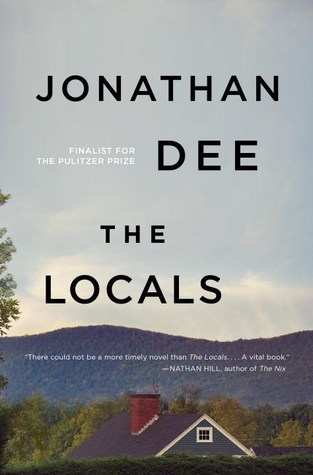 Dee’s new novel has created a lot of buzz. Despite impressive list of publications and accomplishments, he had slid under my radar until now; thanks to Net Galley and Random House, I read this free and early in exchange for this honest review. It is available to the public Tuesday, August 8, and those that love strong, purposeful fiction should get it and read it.
 Crime Scene is the first in the Clay Edison series, written by a father and son team. Big thanks to Random House Ballantine for the DRC, which I received in exchange for this honest review. I rate this mystery 3.5 stars.
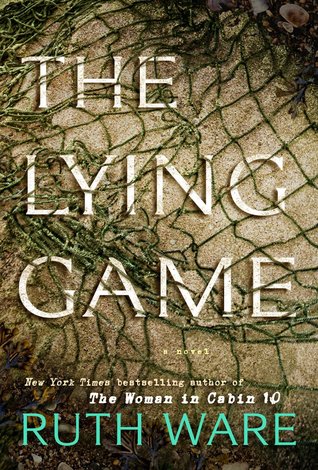 Isabel, Fatima, and Leah receive a text from Kate saying that she needs them. It’s been 17 years, and yet they answer in the only possible way:
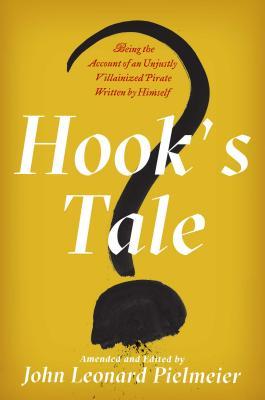 Pielmeier’s debut novel gives poor, maligned Captain Hook an opportunity to share his side of the story. The teaser promises a “rollicking” story, and at first it seems to be exactly that, but it runs out of steam early on. Nevertheless, thank you, Net Galley and Scribner, for the opportunity to read and review.
 This is volume 10 of a complete collection of the writings of Clifford D. Simak, who won 3 Nebula awards, 1 Hugo Award, and was the third Grand Master of the Science Fiction and Fantasy Writers of America in 1977. It’s my sixth volume of Simak’s stories, and it’s my favorite so far, which is saying a good deal. Thanks go to Net Galley, Open Road Media, and David W. Wixon, whose brief, useful notes set context for each of these stories. Wixon and Open Road have republished Simak’s work digitally for new generations to enjoy; I received a DRC in exchange for this honest review.
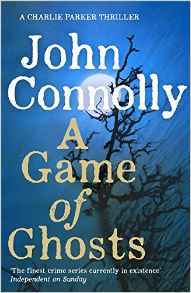 John Connolly writes two kinds of books. Some of them are good; some are damned good. This is one of the latter. It’s the fifteenth in the Charlie Parker series, and it marks a turning point; previously a thriller series with mystic overtones, it’s now a stew combining multiple genres. Connelly heats his cauldron and pours in a healthy dose of suspense, mixes in some detective fiction, and blends in horror and fantasy as well, along with a pinch of humor. The overall result is deliciously creepy, the kind of story that stays with me after I’ve read a dozen other less memorable books. Big thanks go to Net Galley and Atria for the DRC, which I read free and early in exchange for this honest review. The book is for sale now.
 “…how can you ever really know the truth about another person? We all write our own narratives about the people we know and love…”


 I am a big fan of Laurie R. King’s contemporary thrillers, and this one is no exception. Thank you to Net Galley and Random House Ballantine for the DRC, which I read free and early in exchange for this honest review. It’s for sale today, so now everyone can read it.
 Seattle Book Mama