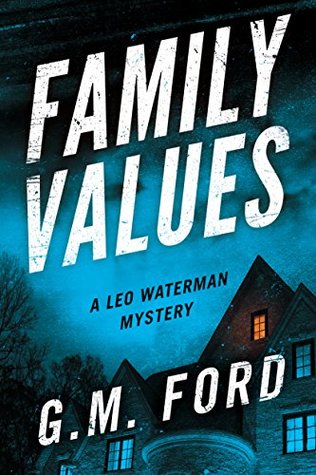
Family Values, by GM Ford*****

“They were standing inside the door when I came out of the bathroom. Two of them. Matching gray suits, milling around like the owned the joint. Something about carrying a gun in one pocket and the power of the state in the other changes the way a person relates to the universe. For as long as I could remember, that particular sense of privilege has always pissed me off.”

FamilyValues

Leo Waterman is a solid citizen now, no longer the scruffy Seattle PI that he was when our series began. But now that he has a lovely home and a good woman—well, sometimes anyway—he also has more to defend, and is less fettered by economic constraints. Those that have loved this series from the get-go should go go go to their nearest book seller or favorite website and get get get this book. New readers can jump right in, but likely as not, you’ll want to go back and get the rest of the series once you’ve seen this one. Lucky me, I read it free thanks to Net Galley and Thomas and Mercer, but it’s worth the full jacket price. It is for sale now.


Leo returns from vacation to find Rebecca Duvall, the love of his life, on the bathroom floor with a needle in her arm. Her reputation has been damaged by a suggestion of corruption, but Leo knows this is no suicide attempt. Her job as medical examiner is on the line now, and so Leo enlists the help of his boisterous investigative squad to untangle the mystery of who wants Rebecca not only fired, but dead. Ford tells the story with the gut-busting edgy humor for which he is known. He takes a playful jab or two at gender fluidity; at times this part feels a little excessive, but that’s not where the story lingers. There are a million twists and turns as our impulsive PI goes where everyone tells him he should not:

“’ I went out to see Patricia Harrington today.’

“’Don’t fuck with those people, Leo.’”

There are some arrhythmia-worthy attack scenes, and the plot wholly original and free of formulaic gimmicks. The streets and alleys of Seattle and the hinterlands beyond are all rendered immediate and palpable. 

Ultimately the heart of the tale is revealed by Leo’s regard for Seattle’s homeless men and women, some of whom were once friends of his late father. It is them he turns to for extra eyes in a difficult situation:


They were great for stakeouts, as long as it was somewhere downtown. They could hang around all day and nobody paid them any mind because society has trained itself not to see the poor and the destitute. That way, we don’t have to think about how the richest society on earth allows so many of its citizens to live in the streets like stray dogs.


The snappy banter between Waterman and Seattle cops is always delightful.  It’s even better once we add a pair of fake UPS guys, some thugs known as the Delaney brothers, local ruling scions, and poor Rebecca as the straight character representing all that is sane and normal: “Oh Jesus…what now? Locusts?”  The narrative is fresh, funny, and entirely original, avoiding all of the formulaic foolishness that makes old lady schoolteachers like this reviewer peevish.

The ending will make you want to sing.

Altogether, this novel is an unmissable treat.

The Unquiet Grave, by Sharyn McCrumb*****

theunquietgraveVoice, voice, voice; nobody writes like Sharyn McCrumb. Here her dry, dark humor combines with her expertise in Appalachian culture and above all, her deep respect for the working poor, and the result is a masterpiece of an historical mystery. Thanks to Net galley for the DRC, and to Atria for sending a hard copy galley and a finished copy of this excellent novel. However, had I paid full freight, I’d have come away happy. This book will be available to the public September 12, 2017.

Based upon the legend of the Greenbrier Ghost, our story is set in West Virginia in 1897. Zola Heaster is swept away by the handsome young blacksmith that comes to her tiny Appalachian farming community. Her story is told to us primarily in a first person narrative by her mother, Mary Jane. Magnetic physical attraction overwhelms any common sense Zona may possess—which isn’t much—so when the handsome stranger comes along, Zona tumbles:

“Zona was well nigh smirking at him—cat-in-the-cream-jug smug, she was. Well, Mr. Shue—the name fits the trade, I see—I am Miss Zona Heaster, a visitor to my cousin’s house, here. How do…Well before Edward ‘Call me Trout’ Shue came ambling along, with his possum grin and his storybook profile, we’d had trouble with Zona.”

Before we can draw breath, Zona is pregnant. It isn’t the first time, either, though the first was kept quiet, settled out of the area. As her mother wonders whether Trout will want to marry her, Zona brags,

“’He’d be lucky to have me.’ 
“’Well, Zona, it seems that he already has.’”

Mary Jane doesn’t like her daughter’s suitor, and a number of small but troubling things make her reluctant to see this wedding take place, even given the shotgun-wedding circumstances. We are disquieted, not by huge monstrous overt acts by Shue, but by the small hints that provide a deeper suspicion, a sense of foreboding. Part of McCrumb’s genius is in knowing when less is more.

Ultimately, Zona marries and moves away, and is little heard from. Too little. And here is the mother’s dilemma that most of us will recognize: how much should a mother pry? Will it make things better to follow our nose to the source of trouble; can we help? Or will our efforts only antagonize one or both of the newlyweds? And I love Zona’s father, the laconic Jacob who tells his wife that Zona has made the choice to marry, and she’s made the choice to stay there, so “Let her go, Mary Jane.”

But it’s a terrible mistake.

A secondary thread alternates with this one. The year is 1930; attorney James P.D. Gardner is consigned to a segregated insane asylum following a suicide attempt. His doctor is the young James Boozer, who has decided to try the new technique that involves talking to one’s patients. This device works wonderfully here because it provides Gardner the opportunity to discuss a particularly interesting case he tried many years prior, one that involved defending a white man accused of murdering his wife. The conversation flows organically, rather than as a monologue shoehorned into the prose. I am surprised at first to see McCrumb write dialogue for African-American men; I don’t think she has done this before, although I can’t swear to this.( I have been reading her work since the 90s and may have forgotten a few things along the way.) The dialogue between Gardner and Boozer is dignified and natural, and this is a relief; those that have read my reviews know that there have been others that failed in this regard. And just as the discussion starts to drone—intentional, since one of the two men yawns just at the moment I do—everything wakes up, and we learn about the trial of Trout Shue from a different vantage point.

Every aspect of this novel is done with the authority and mastery of Appalachian fiction for which McCrumb is legendary. The dialect is so resonant that I find myself using it in writing, speech, and even thought—just tiny snippets here and there—and then laughing at myself. And I cannot help wondering how much of it stewed its way into McCrumb’s own conversations while she was writing. You may find it in yours.

The result here is spellbinding, and the use of Appalachian legend, herbal medicine, and folklore makes it all the more mesmerizing. Again, skill and experience tell here. How many novels have I read in which an author’s research is shoehorned in to such a degree that it hijacks the plot? Not so here. The cultural tidbits are an integral part of Mary Jane’s personality, and there’s no teasing them apart. Instead of distracting as it might in less capable hands, the folklore develops character and setting, and ultimately contributes to the plot, when Zona’s ghost returns to let Mary Jane know that she has been murdered.

This is no-can-miss fiction, strongly recommended to those with a solid command of the English language and a love of great literature.

Hum If You Don’t Know the Words, by Bianca Marais***

HumifyoudontknowI received an advance copy in return for this honest review, thanks to Net Galley and G.P. Putnam. I expected to absolutely love it; I came of age when the South African revolution against the Apartheid state was in full flower and before anything about it showed on mainstream media, which was all we really had then apart from underground films shown in the basements of coffee houses near campus. I loved Mandela’s Long Walk to Freedom, and had attended dozens of talks given by members of the African National Congress that were forced into exile. So when I saw that this novel was set in revolutionary South Africa, I was pumped. Popular fiction about one of the greatest political events to occur in my lifetime?  Oh yes indeed. Count me in!
As it turns out, not so much.

The novel has its strengths, to be sure, and those that have read nothing about the South African revolution may find this story more approachable than plunging into Mandela’s work, which requires hefty amounts of time and stamina as well as strong literary skills. Marais’s book showcases the inequalities that existed, a Jim Crow that was every bit as brazen as that in the southern USA during the early and mid-twentieth century.  It highlights the institutionalized racism that forbade people of color from even entering white enclaves where the best of everything existed, unless the bearer was carrying a pass issued by a Caucasian employer. There are a lot of people out there, especially young ones, for whom this will be a worthy introduction. And it starts out strong, with convicts on the Parchman work farm in a setting so stark and immediate that it made me thirsty.

That said, it also has its limitations.

Our two protagonists are Robin Conrad and Beauty Mbali, in that order. Robin is a Caucasian child whose parents are killed in the struggle against Apartheid. Beauty is a Xhosa woman that is hired to care for Robin. Beauty’s own daughter took part in the Soweto Uprising and is missing.

My disappointment with this book springs from the fact that Robin is given greater development, and in terms of physical space, nearly double the number of pages as Beauty (known to Robin as “Mabel”).  A puzzling component is Robin’s invisible friend, whom she refers to as her sister. The invisible friend gets as much attention here as Beauty does, and for the life of me I cannot understand why. I don’t see the imaginary sister adding anything to the story. Given the setting, it’s also hard to understand why we need so much information about Afrikaaner culture.

It feels a lot as if the author is saying that “All Lives Matter”.

I know this book has a lot of happy readers, but I can only promote it in a limited sense. With the above caveats, this book—which is for sale now—is recommended for younger readers that have at least eighth grade literacy skills.

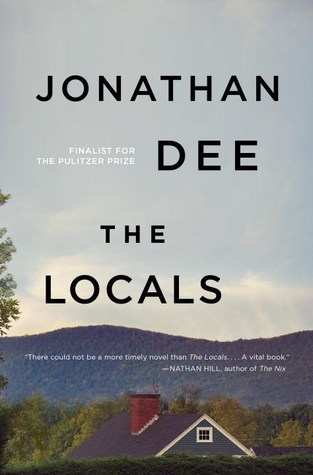
The Locals, by Jonathan Dee*****

theLocalsDee’s new novel has created a lot of buzz. Despite impressive list of publications and accomplishments, he had slid under my radar until now; thanks to Net Galley and Random House, I read this free and early in exchange for this honest review. It is available to the public Tuesday, August 8, and those that love strong, purposeful fiction should get it and read it.

The Locals is entertaining, and it also conveys a sharply driven message, one that is timely, as we see the middle classes wasting away in Western nations that were once strong and relatively democratic, the most affluent becoming richer, and tens of thousands of homeless living in cardboard shacks and tents beneath the freeways of otherwise-successful American cities.

The story starts with 9/11. Mark Firth is in Manhattan on business and is taken advantage of by a con artist. By contrast, Howland, the small (and fictional) town where he lives and in which our story is set, seems safer, and more benign. He breathes easier when he is home.

He isn’t the only one that feels that way.

Philip Hadi decides to leave the big city, and he hires Mark to fortify his summer home into a secure summer residence. From there things unfold, and Hadi takes on increasing amounts of responsibility and power in Howland.

The story is largely character driven, and I dare you to find a novel in which a large number of townspeople are better developed than these. At the outset, I think I know which are the better citizens of Howland and which are its pond scum, but as the story progresses—told in third person omniscient, with one noteworthy exception—the most lovable characters darken, while those that seem irredeemable at the outset show some vulnerability and decency. Even without the novel’s purpose, which is brainy and clever as hell, it would be a good read. I particularly credit male authors that can develop female characters with this kind of depth. You don’t see it often.

Ultimately, however, we are forced to examine, through the eyes of the people of Howland, the role of the super-rich. How much authority are we willing to cede in exchange for easy material benefit? Teachers that have questioned the authority given philanthropists that have a lot of dollars to throw around, but no background whatsoever in education, will particularly appreciate this story. Beyond all of this, it’s absorbing, entertaining, and in places it’s funny as hell.

Highly recommended to those that love strong fiction.

Crime Scene, by Jonathan Kellerman and Jesse Kellerman***-****

crimesceneCrime Scene is the first in the Clay Edison series, written by a father and son team. Big thanks to Random House Ballantine for the DRC, which I received in exchange for this honest review. I rate this mystery 3.5 stars.
Edison is a coroner’s investigator, and he finds himself drawn into an ugly, complicated murder, seduced by the lovely Tatiana, who I found myself disliking much earlier than the protagonist does. There’s the psychological component here that’s similar to the movies, where the audience yells, “Don’t go through that door” as the main character strolls obliviously forward; however, where the Kellermans take the story once Edison has wised up is interesting, original, and well played.

I enjoy the snappy banter that I associate with the elder Kellerman’s other novels, and there’s a hugely entertaining side character named Afton that I’d love to see again. The setting of the down-and-out neighborhood is resonant enough that I am convinced at least one of these men has actually spent time in such a place.

That said, the first half of the story is better paced than the second, and there’s a racial component that appears well-intentioned but awkward.

This promising series is now available to the public, and is recommended to Kellerman’s fans.

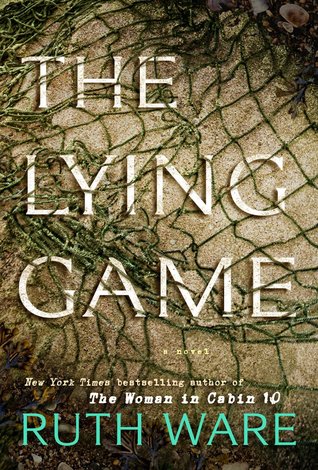
The Lying Game, by Ruth Ware****

TheLyingGameIsabel, Fatima, and Leah receive a text from Kate saying that she needs them. It’s been 17 years, and yet they answer in the only possible way:
“’I’m coming.’
“’I’m coming.’
“’I’m coming.’”

This one had me at hello. How many of us have a friend from childhood, adolescence, or the early years of our adulthood that could draw this response from us? I know I do, and although mine are from different times and places in my life, if I received that text I’d be on a plane, a train, or in the car. Thank you Net Galley and Gallery Books for the DRC, which I read free and early in exchange for this honest review. The book was published last week.

Our protagonist is Isa (“It’s to rhyme with nicer”), and as you might infer, this is British fiction. Isa leaves Owen, a good sport if ever there was one; grabs Freya the baby, who is breast-feeding; and hops on a train. And that baby will ramp up the stakes, mostly in subtle ways, over and over throughout the story.

Kate has called them because human bones have been found in the Reach. All of them immediately know what this means, although the reader does not.

We learn about the lying game played by the foursome during their years at school together. There are points given according to whether the lie is believed, whether the victim is new, and further byzantine details; but the big rule is that they must never lie to each other. The game revives itself at odd moments during their reunion, sometimes to lightened effect for the reader, but sometimes becoming sinister.

Throughout this well-crafted tale, Ware doles out bits and pieces of what is to come, and every time my experienced eye spots a sure-fire red herring, it turns out it isn’t. I read a lot of mysteries—probably too many—but this one is fresh and original conceptually, and it becomes more riveting as the characters are developed, adding layer after layer like papier-mâché. The ending completely surprises me, and yet is entirely consistent with the rest of the novel.

There are times when I am astounded at the risk-taking behaviors exhibited by the four as adults approaching middle age once they are together again; at times I step away and ask myself whether the doctor that Fatima is now would actually do this, and whether Isa, an attorney, wouldn’t show more caution. But the foursome persuades me—are there points for this, I wonder—and I am drawn back in before the curtain twitches. There’s never a time when I see that the Great and Powerful Oz is seen back there at the control panel; the magic holds. There are times I am astonished at the risks Isa takes with Freya, going for a swim in the Reach with her pals, leaving her defenseless baby alone, asleep, in that hideous, falling down shack, but it’s consistent with the girl she used to be, the girl that is awakened to a degree as she returns to the time and place in which she came of age.

The fifth star isn’t here because the foreshadowing is too heavy-handed at times, and threatens to become funny rather than scary, which is clearly not intended. But every time I see it veering toward the ridiculous, Ware pulls back again, and so the overdone moments are a blip on the radar.
Those that love Ruth Ware’s work, and those that love a good mystery—especially women—will want to read this book. You can get it now.

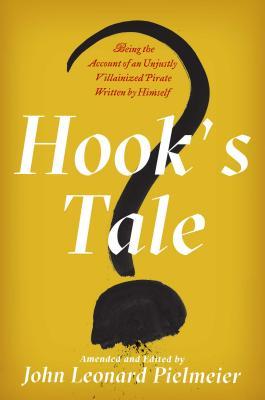
Hook’s Tale, by John Leonard Pielmeier***

HooksTalePielmeier’s debut novel gives poor, maligned Captain Hook an opportunity to share his side of the story. The teaser promises a “rollicking” story, and at first it seems to be exactly that, but it runs out of steam early on. Nevertheless, thank you, Net Galley and Scribner, for the opportunity to read and review.

At the outset, Captain James Cook (his name isn’t Hook!), named for the famous sea explorer, describes himself as looking nothing like the “unbearably pompous actor”, a clear reference to the hilarious Cyril Ritchard, who played Hook in the twentieth century complete with high heeled boots and a beauty mark; however, our pirate assures us, those periwinkle blue eyes do fit the bill. There is an assumption that the reader is well steeped in both the stage and cinematic depictions of the character, and it seems like a fair one. I love reading Hook’s fond and hugely original description of Smee, and our introduction to Hook’s pet crocodile.

“I named it Daisy, after my mother.”

Unfortunately, somewhere between the ten percent and twenty percent mark, the narrative founders, and the most frustrating part for this reviewer is that it’s hard to pinpoint exactly what goes wrong. The concept is strong, the voice clear, and yet my interest is gone before the quarter-mark is reached, and at that point I am reading for duty rather than pleasure. I came away with two considerations.

The first is the linear quality of the prose. The formal, old-school language is fun at the outset, but it might be more powerful if alternated with a present day narrative. Hook could have a grandson or other present-day relative that contributes; since Hook marries Tiger Lily, that might be a way to get there. Readers of the digital era may not have the patience to read the rather Victorian-sounding dialect all the way through. An alternating narrative would probably pick up the pace and make for a more compelling arc.

The second consideration is audience. There are two characteristics here that suggest completely different types of reader, and they don’t overlap very well, which may make for a small readership. We have the Boomers and those that came right after them, folks that may have seen the Cyril Ritchard version of Captain Hook on television. It was a childhood favorite of this reviewer, and you can watch the entire thing here:

https://www.youtube.com/watch?v=r6K2M…

The assumed knowledge and detailed descriptions jibe with this audience. But then there is the other sort of detail, the gore and guts that are more suited to a young reader, perhaps one in his early teens. Older readers may wince at the graphic gore here, decapitations and intestines and fountains of blood—I certainly did—but younger readers that are more likely to love it are unlikely to tolerate the formal prose style adopted. It’s hard to tell whether the writer had a particular audience in mind, but if so he shot wide of the mark.

Another possibility is that the story really is better as a visual medium. Reading about people flying is not as enjoyable as seeing them do it, and I say this as a person that prefers the printed word over film almost always. J.M. Barrie’s work itself is difficult to plow through, and also racist as hell; the story took wing on stage and screen. In addition, the stage version was the first time an actor had been hooked to cables and “flew” in front of a live audience; what seems like corny, ancient technology now, was new and exciting then.

All of this notwithstanding, you may love this book. It was released July 18, and is for sale now.

The Shipshape Miracle and Other Stories, by Clifford D. Simak*****

TheShipshapeMiracleThis is volume 10 of a complete collection of the writings of Clifford D. Simak, who won 3 Nebula awards, 1 Hugo Award, and was the third Grand Master of the Science Fiction and Fantasy Writers of America in 1977. It’s my sixth volume of Simak’s stories, and it’s my favorite so far, which is saying a good deal. Thanks go to Net Galley, Open Road Media, and David W. Wixon, whose brief, useful notes set context for each of these stories. Wixon and Open Road have republished Simak’s work digitally for new generations to enjoy; I received a DRC in exchange for this honest review.

For those new to Simak’s work, here’s a thumbnail sketch. He began writing in the 1930’s, submitting short stories to various magazines, and continued writing stories and novels into the early 1980’s. He wrote a few war stories during the mid-1940’s, then continued writing Westerns and science fiction. Both of these genres make it into this volume, and although when I began reading Simak, I questioned the choice to foist annoying cowboy stories on sci fi readers, I came to see that it’s not easy to tease them apart in every case. One of my favorite stories here, “Rim of the Deep”, is about a journalist named Grant who is given the dreaded assignment of chasing a story in an undersea city. Once he is down there, it becomes a tongue-in-cheek underwater cowboy story:

“‘You think there’s a gang of robbers down in that deep?’ asked Grant.
‘That’s the only place they could be,’ said Gus. ‘It’s bad country and hard to get around in. Lots of caves and a couple of canyons that run down to the Big Deep. Dozens of places where a gang could hide.’
Gus sipped gustily at the coffee. ‘It used to be right peaceable down here,’ he mourned. ‘A man could find him a bed of clams and post the place and know it was his. Nobody would touch it. Or you could stake out a radium workings and know that your stakes wouldn’t be pulled up…But it ain’t that way no more. There’s been a lot of claim jumping and clam beds have been robbed. We kind of figure we’ll have to put a stop to it.'”

The story is chock full of whimsy, and includes a pet octopus named Butch that bounds after them like a dog and occasionally does something heroic. I love it.

And this is the thing I love about old-school science fiction in general and Simak in particular: the reader doesn’t need a technical background to read and enjoy these stories. There are no jokes that only a programmer can understand; Simak writes fiction and writes it well, and so we liberal arts types can sit back and enjoy the stories.

In addition, the period in which the writing was done actually adds to the whimsy. For example, another favorite in this collection, “How-2”, is about a man that orders a kit to make himself a mechanical pet dog and inadvertently ends up with a very valuable robot instead. I won’t give the rest of the story away other than to tell you it’s hilarious, and I can’t imagine the author wrote it without laughing himself silly, but there’s also the unintentional hilarity of having a robot that can do almost anything imaginable, asking for a paper and pencil so that he can make a list of the things the protagonist desires. A pencil! I love it.

The collection contains 9 stories. One is a straight Western that I started and then gave myself permission to skip. That’s okay, though; the other 8 stories make this tasty collection worth the purchase price. (One story, “Paradise”, is a sequel to the story “Desertion”, which is included in an earlier collection, and if possible you should read it first.) I would not have named the collection for the story Wixon chose, but it’s also a strong story; it’s just a matter of taste. I happened to love at least 3 of these others more.

Finally, the reader should know two things: first, Simak was a creature of his time. Although he is more progressive than most writers of the mid-20th century, there are a couple of baldly sexist moments. This reviewer grew up watching reruns of television shows and movies produced in the 1950’s, and to hate Simak’s work, one would also have to hate every stinking one of those productions also. However, in the brief philosophical metaphors and other indirect allusions, Simak shows himself to have been unusually progressive where civil rights were concerned. Again, such references are oblique, since most of the featured characters aren’t actually even human.

The other thing the reader should know is that these collections are only available digitally. They’re ridiculously cheap, so those that love great old-school science fiction should order this collection and read it. Those that want it on paper will have to hunt up some used books most likely, and they will be either single stories or different groups within a given volume.

This collection is strongly recommended for all that love excellent science fiction.

A Game of Ghosts, by John Connolly*****

AGameOfGhostsJohn Connolly writes two kinds of books. Some of them are good; some are damned good. This is one of the latter. It’s the fifteenth in the Charlie Parker series, and it marks a turning point; previously a thriller series with mystic overtones, it’s now a stew combining multiple genres. Connelly heats his cauldron and pours in a healthy dose of suspense, mixes in some detective fiction, and blends in horror and fantasy as well, along with a pinch of humor. The overall result is deliciously creepy, the kind of story that stays with me after I’ve read a dozen other less memorable books. Big thanks go to Net Galley and Atria for the DRC, which I read free and early in exchange for this honest review. The book is for sale now.

Parker has a haunting past indeed; in the first book of this series, his wife and daughter Jennifer are murdered by a man that has come looking to kill Parker. Our hero sets out to find and kill the man that did it, and he succeeds; yet his thirst for stark, take-no-prisoners justice is not satisfied. Now the father of another daughter, Samantha, that lives with his ex, our current mystery finds Parker in a conversation with the girl’s uncle, who asks hard questions about Parker’s risky behavior. He wants to know why Parker keeps chasing bad guys now that his initial quest has been fulfilled. Why hunt down evil-doers when he might adopt a lifestyle more in line with the best interests of his still-living child? Parker responds,

“I do it because I’m afraid that if I don’t, nobody will. I do it because if I turn away, someone else might suffer the way I have. I do it because it’s an outlet for my anger. I do it for reasons that even I don’t understand. 
“But mostly,” said Parker, “I do it because I like it…
“We can’t leave these people to wander the world unchallenged.”

The premise here is that Parker is sent by FBI agent Ross, who he has agreed to work for under terms mostly his own, in search of Jaycob Ecklund, a man also employed by Ross who has vanished. Once Parker’s search for Ecklund commences we learn that the missing man was a ghostbuster of sorts, a man with a basement full of files on the paranormal. Many others are interested in Ecklund also, and the plot ramps up quickly and doesn’t relent until the last page is done.

The plot here is complex, and Connolly weaves in a host of characters, both living and dead. We have The Brethren, most of whom are alive yet already damned. We have Angel and Louis, a pair of characters that have appeared throughout the series that work with Parker; their darkly amusing banter helps lighten an otherwise almost unbearably intense plot. We have clairvoyants; we have The Brethren; the hollow men; we have a number of murder victims, before, during, and after their deaths; there is the Collector, who is tied to Parker like a falcon, and must always return to him.
And we have organized crime figures Phillip and his Mother, who abduct him in order to find out what Parker does and what he knows, in a civilized way, of course.

“There will be tea.”

Mother is the best villain this reviewer has seen in a long time.

The entire book is brilliantly conceived and flawlessly executed. And although Connolly’s series is worth reading from the get-go, those that hop in without having read earlier books from this series will be able to follow and enjoy this shapeshifting mindbender of a novel just fine, but those that genuinely believe in ghosts may not want to read it at night.

Highly recommended to those that love excellent novels of suspense.

Watch Me Disappear, by Janelle Brown*****

WatchMeDisappear“…how can you ever really know the truth about another person? We all write our own narratives about the people we know and love…”

Billie Flanagan is living the good life in Northern California. Her husband, Jonathan, has a lucrative career that permits her to stay home, even though Olive is now in middle school. But one day she heads out on one of her favorite hiking trails, the Pacific Crest Trail in Desolation Wilderness, and she never returns. Search and Rescue crews find a single hiking boot and a cell phone far below the trail with its screen smashed. Her bank cards and checking remain untouched. Jonathan and Olive are forced to face the truth: Billie is never coming home again. They hold the funeral, and a year later, Jonathan sits down to write a memoir of his life with Billie. It is here that we join the family.

Many thanks go to Net Galley and Random House for the invitation to read and review in exchange for this honest review. The book will be available to the public July 11, 2107.

This psychological thriller starts with daughter Olive, who is in middle school, seldom a proud or happy time for any of us. But one day Billie appears to Olive in the hallway and tells her that she should be looking harder; she isn’t trying. Olive is convinced that her mother is still alive and trying to reach her. Eventually Jonathan starts to wonder as well. Neither of them is able to move on effectively without knowing the truth, yet there it is: they have no body and they have no proof of anything. As their journeys unfold, both externally and internally, Brown develops the hell out of both of these characters and through the memories both evoke in word and thought, she develops Billie best of all. An interesting side character named Harmony rounds things out nicely.

As each layer of each character is revealed—I was planning to say it’s like having three sets of Russian nesting dolls, but that’s not right; each has many more layers than that, more like onions–the reader’s viewpoint is forced to shift from one point of view to another, and so we wonder at various times about alternate possibilities. Could Billie really be alive somewhere? Did she just up and fucking leave them? She’s done that before. She is a runner. She has been known to drop people with no warning at all, just ghost them. It was a long time ago, but it’s true.

Or is she dead at the hands of…hmm, the ex-boyfriend that surfaces at the funeral? And we wonder whether maybe Jonathan, whose memories of Billie are not all as rosy as the ones we hear at the outset, did something to harm her. And then we wonder about Billie’s friend Harmony, who moves into Jonathan’s life rapidly enough to disturb Olive considerably. She’s so needy, so hungry for his attention; would she have offed Billie in order to have a crack at him? Many of these ideas are merely hinted at rather than voiced by the narrative, and this is part of what makes it so tasty. At first, I think my idea is original because I am so smart, but then I look back, as a reviewer has to do, and I can see it’s not really about my being smart (darn), but rather about very subtle foreshadowing. Brown uses lights and mirrors to get our minds moving in different directions, and the disorientation is, in its own twisted way, part of the rush.

A last note goes to the tangential but rarely-seen moment when a character muses about why it’s so hard to find an abortion clinic when you need one. This is the reverse side of a pet peeve of mine, the commonly used notion that every accidental pregnancy necessarily must end in childbirth, as if the year were 1950 or 1960 rather than the 21st century. I wonder whether Brown had to fight to keep that reference in her novel? One way or the other, this was going to be a five star review, but when I found that courageous little nugget, I wanted to shout for joy!

As to the end…I can’t tell you what happens of course, but I will tell you that this doesn’t end ambiguously. By the conclusion, the reader knows what happened to Billie.

When all is said and done, this is fiction that every feminist can embrace. If there is a heaven, Charlotte Perkins Gilman is looking down, and she is cheering.