The Island Dwellers, by Jen Silverman*****

TheIslandDwellersJen Silverman is a playwright with a list of awards as long as your arm. With this impressive collection of short stories, she steps into the world of prose with guns a-blazing. Thanks go to Net Galley and Random House for the DRC, which I received free and early in exchange for this honest review. This book is now for sale.

Silverman’s contemporary fiction is themed, as the title suggests, around people that live on islands in various parts of the world. Everything here is edgy and a little bit dark. Her characters are melancholy, naïve, neurotic, bent, and at times laugh-out-loud funny; she doesn’t leave her endings—or her readers—hanging, and I didn’t successfully predict the way any of her stories would turn out. We have destructive relationships; relationships that are hellishly unequal; artists that aren’t really; strange, strange animals—oh, hell, that Japanese pit viper! But the thing that ties these tales together, apart from the theme, is deft, tight writing.

Anyone planning a vacation should pack this title, whether in paper or digitally. Short stories are terrific for bed time and when traveling, because the end of each story gives the reader a reasonable place to pause even when the prose is masterfully rendered, as it is here. This volume was released May 1, 2018 and is highly recommended.

Mr. Flood’s Last Resort, by Jess Kidd*****

MrFloodsLastWho do I enjoy reading more than Jess Kidd? Nobody.

Thanks go to Net Galley and Atria for the DRC, which I received in exchange for this honest review. The book, which was also published in UK as The Hoarder, is available today in the US.  And I have to tell you also that although her work is billed as similar to Fredrik Backman, I find it to be better—and that’s saying a good deal.

Maud Drennan is a caregiver, which in the USA would translate as a combination social worker and home health provider. She’s been sent to the large, rambling home of Cathal Flood, a tall, fierce old man who has driven his previous caregiver to a nervous breakdown. Speculation abounds: is he an innocuous old fellow in need of some organization, treatment, and TLC, or is he dangerous—perhaps a murderer, even? What about the missing girl that was last seen at this address?  It’s enough to make even Maud’s staunch heart tremble:

“In the musty depths of Cathal’s lair, one eye flicks open. Noise has pulled on the strings of his web, setting his long limbs twitching. He’ll be slinking out of his trapdoor and threading through the rubbish. Crawling up the staircase with a knife clampled between his dentures and a lasso of fuse wire in his hand, ready to garrot me and hack me to pieces.”

The suspense builds as Kidd moves our point of view from Maud’s by day, to her frightening, confused dreams at night, to those of the missing and the dead. Because Maud is gifted in her ability to see those that have gone before, particularly saints, she receives their cautions and advice in ways that are often truly hilarious. The result is a story so enjoyable that it became the dessert book that I held out to myself as a reward for having finished less enjoyable galleys. Had I no other obligations, I would have gobbled this deliciously dark tale up in a weekend.

As it is, I found myself going back and rereading passages twice, partly for fun and partly to try to pick apart what makes this writing so effective. But although I can point to several components—brilliant development of Maud, Cathal, and friend Renata; some of the finest figurative language in contemporary fiction; a hugely original voice and concept; a soaring climax in which the weight of Western society’s failure to care adequately for its elders comes crashing down before us—ultimately the book is much more than the sum of its parts, an alchemy that is spun magic with a few naughty bits of raunchy humor sprinkled in, and a social justice issue nailed to the wall where we cannot help seeing it.

Should you purchase this title for your magnificent, outrageous mother on her special day, for which there are just 12 remaining days to shop? Should you order a copy for your own fabulous, fierce father, whose day is about a month later? Well of course you can, and you should, assuming you aren’t going to try to force them into a home. But it isn’t nice to break the binding open, and so they’ll be able to tell if you have fudged a free read before gifting it. Better to get a copy for yourself as well, fair and square. You’ll want to read it more than once anyway.

Warm and clever, Mr. Flood’s Last Resort is the most entertaining novel of 2018 to date, hands down.

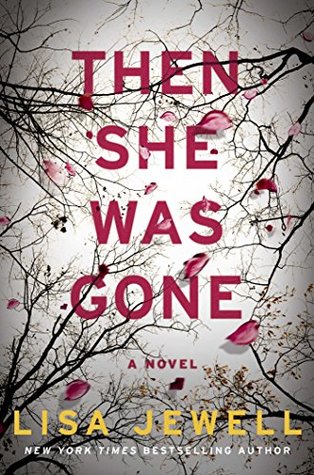
Then She Was Gone, by Lisa Jewell****

ThenSheWasGone3.5 rounded up. Thanks to Net Galley and Atria for the DRC. This book is now for sale.

This is my third title by this author, and she is consistently strong. Our protagonist is Laurel, who is struggling. Her daughter Ellie–her favorite child—is missing. She’s been missing for years, and it hasn’t really gotten any easier.  Her marriage is over because Paul could move on, while Laurel could not; she is no longer close to their other two children, because all her thoughts and feelings went to the child that was missing.

Then one day she meets Floyd. He is warm and delightful, and his daughter Poppy, who seems too good to be true, calls to her.

I have read other reviews that suggest that the mystery here is easily solved. That’s true. But it hardly matters, because I wasn’t in this thing for the mystery. I was in it for the character. There are so many observations, small tidbits of mom-philosophy, some of which I didn’t know anybody shared with me. I have notes in my reader, where I usually ask questions or point to technical aspects of a story, that simply say, “I know, right?”

All of the characters in this story are Caucasian, and so I suspect that the main target audience is white mothers in their forties and beyond. I recommend this story to everyone in that demographic that enjoys women’s fiction.

The Comedown, by Rebekah Frumkin***

thecomedownThanks go to Net Galley and Henry Holt for the review copy.  This debut tells me that Frumkin is an author to watch. This book is now available to the public.

The story begins with Leland, an addict with a suitcase, and Reggie, the dealer that hates him. There’s Melinda, the unhappy ex-wife, and a host of other characters, including Melinda’s daughter-in-law Jocelyn. The suitcase is the hook; everyone wants it, and so of course the reader must wonder what is in it and who has it now.

This novel grabbed me at the get-go, darkly funny and brutally frank. It struck me as angry fiction, and the energy behind it was fascinating. But ultimately, there are too many characters and too many social issues wrapped into this one story, and rather than making it complex and tight, it wanders in too many directions. There’s an overly lengthy narrative toward the end, and it’s followed by some regrettable dialogue. And there are too many characters named Leland.  The story is an ambitious one, but this should probably have been more than one story, or perhaps a series. The result is a lack of focus.

I would love to see the author write something else using Melinda as the central character, and fewer guys named Leland.

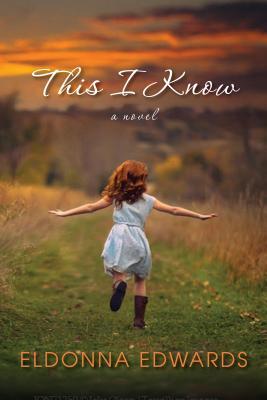
This I Know, by Eldonna Edwards*****

“Sometimes I wish I could catch Mama’s voice in a jar and keep it beside my bed at night, let each note light the darkness like a captured firefly.”

ThisIKnow Eldonna Edwards makes her debut with the best written child protagonist since Scout Finch appeared in To Kill a Mockingbird. Many thanks go to Net Galley and Kensington Books for the digital review copy.

Grace Carter is eleven years old, one of several daughters of a strict evangelical preacher.  Her mother has come undone, slowly unraveling from grief that began with the death of Grace’s twin brother, Isaac. Grace misses Isaac, too, but she has the comfort of his counsel; she hears and knows things that most other people do not. Her mother and Aunt Pearl call it “the knowing”, but her father calls it the work of the devil. Grace grows up understanding that she must keep her head down and avoid getting into trouble. It’s a treacherous path, and now and then things pop out, as they will with adolescents.

Edwards is a gifted writer, and she’s tackled an ambitious project in writing a first person narrative. It’s hard to voice a child in a way that is developmentally appropriate and consistent, and she’s nailed it spot on. Many writers would try to dodge this literary obligation by creating a precocious, academically gifted character, which is so common that it’s clichéd, and as I read this story and see that Grace is just an average kid, apart from her supernatural talent, I hold my breath to see if she can carry it off all the way through, and she does it masterfully. The way Edwards develops Grace, adding layers to her personality and melding it with the dead-accurate setting—the Midwest during the 1960s—makes her one of the most exciting new voices to emerge this generation.  The plot never slows, but with a character and setting this resonant, Edwards could send Grace to sit in her closet for the whole book and her readers would be captivated regardless.

I would have preferred a more nuanced ending, but it’s a small concern. Everyone that loves strong fiction will want this book. Order yours while you can get it on the first printing.

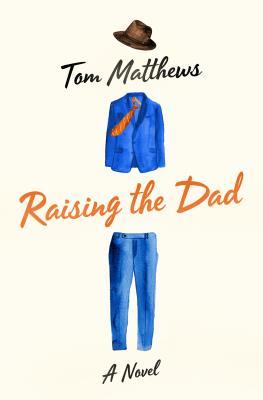
Raising the Dad, by Tom Matthews***

RaisingtheDad2.5 stars rounded up.  I was invited to read free and early by Net Galley and St. Martin’s Press, which is one of my favorite publishers.  It looked promising; original and, the teaser said, “brutally funny” in places.  I wanted to like it, but yet.

The title is a play on words (raising the dead, raising the dad, get it?)  I didn’t realize it at the outset or I might have dodged it. “Dad” was declared dead many years ago. He was not going to make it, and everyone agreed to turn off the machines and let him go in peace. The widow believes she is a widow, but the fact is, he’s still alive.

What happens when a patient is brain-dead and you turn off the machinery and the patient continues to live? What if he lives a long, long time?

The question provides a great premise—though the particulars here are far-fetched– but if it had been my choice, the pitch and the cover would have been different. This is a gritty, dramatic topic, and the cover shouts that this is going to be a light, fun read. Oh reader, it really isn’t. There are some funny moments, mostly involving the protagonist’s badly behaved brother, Mike, but they aren’t enough to keep the story from being a grim, miserable grind.

When my confidence in a galley flags, I go to Goodreads to see what other early reviewers have to say. At least one other reviewer argued convincingly that although most of the story is slow and unpleasant, the last 100 pages are brilliant and illuminate the reason for the rest of the story being as it is. Because of this, I soldiered my way through to the 70% mark, waiting for genius to reveal itself. But for me, that train never arrived at the station though I was well into the denouement, and with a mixture of relief and disappointment, I gave myself permission to abandon the journey.

This book is for sale now, but it is not a good choice for a Father’s Day gift. Trust me.

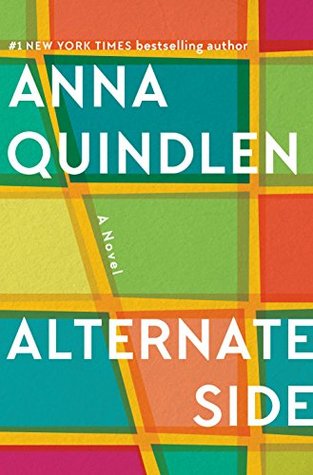
Alternate Side, by Anna Quindlen*****

alternateside“If nobody can tell the difference between real and fake, who cares if fake is what you’re showing?”

Score another one for Anna Quindlen. Often prodigious writers lapse into formulas, becoming predictable, but not Quindlen, who brings a snappy, original tale to the reader every time. She makes us think, and she makes us like it. Big thanks go to Random House and Net Galley for letting me read it free and early. This book is for sale now.

The story is built around a controversy that develops around that most prized acquisition among financially successful New Yorkers: a parking place. Local ordinances have a Byzantine set of rules involving parking on alternate sides of the street, and the neighborhood’s homeowners are sick to death of going out to move the car. A privately owned parking lot leases spaces, but there aren’t enough to go around, and a seniority system makes some residents intense; think of the rent-controlled apartments that get passed down like family heirlooms, and then you’ll have the general idea.

Ultimately, however, the parking place is metaphor, and perhaps allegory, for other aspects of life that go much deeper, and the way Quindlen unspools it is not only deft, but also funny as hell in places.

New Yorkers will appreciate this novel, but others will too. This reviewer is one of those visitors that Quindlen’s characters regard with scorn, the people that pop into town, gawk, buy things, and then leave again. But I’m telling you that despite the title, this is not just—or even mainly—a book for New Yorkers.

The audience that will love this book hardest is bound to be people like the main characters: white middle-class readers old enough to have grown children. But the take-down of petite bourgeois assumptions and attitudes is sly, incisive, and clever as hell.

At one point I began highlighting, for example, the many ways in which the phrases “you people” and “these people” are wielded.

Here is a final word of caution: if you are contemplating divorce, this may tip you over the brink. On the other hand, maybe that’s just what you need.

Highly recommended to those that love strong fiction and occasionally are visited by that “crazy liberal guilt thing.”

Bring Out the Dog, by Will Macklin****

bringthedogsWill Macklin can really write. His disquieting collection of short stories draws from his time as a special operations soldier in Iran and Afghanistan. Some soldiers come home and go crazy, if they aren’t already; this one came home to write. Thanks go to Random House and Net Galley for the DRC.

The skill level that is shown in these eleven stories, from setting, to pacing, to character, is tremendous. That said, I found it hard to read. Given the subject matter, I shouldn’t have been surprised, but it rattled my cage more than most; then too, the opening story involves deliberately blowing up the home of a teacher that one of the local allies disliked, and I suspect that other teachers are going to have a tough time with that one, too. I set the collection aside to shake off my dislike, and then plunged in again. To be fair, there isn’t one of these tales that is designed to be a feel-good read. They’re all intended to move readers out of their comfort zones, and the author succeeds richly for this reviewer.

I am not a fan of ambiguous endings, and all of these stories conclude that way, which is where the single star fell off my rating.

The most impressive addition is “Kattekoppen”, and after I noted this, I discovered that it was included in a best short story collection.

Macklin is a writer to watch. This collection is recommended to those that like war stories.

Limelight, by Amy Poeppel*****

Limelight“Welcome to Gotham, babe.”

Amy Poeppel is a star, and since I loved her debut novel, Small Admissions in 2016, requesting the galley of her second novel was a no-brainer for me. Thank you, thank you Net Galley and Atria Books. This book will be available to the public May 1, 2018.

Allison Brinkley is excited when her husband receives a promotion that takes them from suburban Dallas, Texas to New York City. The excitement! The opportunities! Most people consider themselves lucky if they are even able to visit Manhattan as tourists. She can hardly wait.

Once they arrive, however, reality sets in. There’s no room for anybody’s stuff, and the bedrooms are tiny. Her eldest child is sulking, and the youngest gets in trouble at school. The mothers at the prestigious private school where the children are enrolled snub Allison as if she were the new girl at middle school.  She loses her teaching position, and then she loses her tutoring job too. She wants to be a good family organizer, provider, and cheerleader; and yet.

On top of everything, she bangs into another vehicle right in front of the school; when she goes to settle up with her insurance details, she instead finds herself in the apartment of a badly behaved teenager that turns out to be a famous teen heartthrob. Allison is mesmerized, but not in the manner to which Carter Reid is accustomed; she wants to know how his apartment and his lifestyle has spun out of control so badly. Where is the boy’s mother?

Before she knows it, Allison is swept into the official Carter Reid entourage. He’s sick in bed, and half of his people have up and quit because he’s so insufferable. But Allison deals with adolescents for a living, both as a teacher and as a mother. She knows how to talk to kids, and she knows how to get them to take their medicine and show up to appointments.

But Carter has another problem nobody knows about. It’s not a problem to be proud of, and it’s getting in the way of his career.

Nobody writes like Amy Poeppel. The beginnings of her novels are bizarre and disorienting because the protagonist’s normal is not most people’s normal. My first impression is that one of us—Poeppel or me—must be crazy. But once I am properly hooked on the story, she pulls me in and lets me know what’s up with that. Before the halfway mark is reached, I want to be the gal pal that drops in on Allison, asks questions, maybe drags her into the kitchen for a conversation. I wonder, how much more of her own money is she going to spend on this wealthy brat before she asks for compensation? Has she forgotten she has kids of her own at home?  Has she completely taken leave of her senses?

I make one prediction after another, anticipating well-worn fictional formulas, but Poeppel doesn’t do formulas, she creates surprises. At the end I find myself walking with my head up and a spring to my step. I will bet you a dollar, reader, that you need some of that too.

Frosting on the cake is that rarest of all things, a positive abortion reference tucked in quietly toward the end. It makes my feminist heart sing.

I can’t wait to see what this writer brings to her next novel; will she bring Allison back with a sequel, or will she start from scratch? Whatever it is, I have to read it. Limelight is sharp, funny, and wicked smart. You have to get this book and read it.

Girls Burn Brighter, by Shobha Rao***

GirlsBurnBrighterThanks go to Net Galley and Flatiron Books for the review copy, which I read free and early in exchange for this review.  This book is for sale to the public now.

This story is billed as one of matchless friendship, and it is that, but the misery and despair are so stark and ever present as to destroy all hope, and this ambivalence is the reason for my slowness and frankly reluctance to review.

Our story is set in India, and our two protagonists are Poornima, whose struggling father runs a small textile factory that makes saris, and Savitha, one of his workers. They become friends and uphold one another through the desperate struggle for survival. Poornima’s mother is gone, and the daughter is not considered beautiful, which makes her dowry an even more essential aspect of her marriage than it would otherwise be. She herself has no desire to marry, particularly not to someone she has never met and that only plans to marry her for the income generated by the union, but her father is genuinely eager to be rid of her—one more mouth to feed—and she is hustled through the ordeal despite her misgivings.

Savitha has vowed to protect and defend her friend, but she is banished and must make a run for it.

The entire story is bleak, stark, and horrible. For those that are unaware of the fate of some women in some Asian countries, this may be worth reading for enlightenment, but for many feminists this is not news. Stories of Indian women being fatally burned or badly disfigured by accidentally-on-purpose kitchen accidents by angry in-laws that expect more of a dowry price than is actually paid have circulated since the 1980s at least. I would have found the story more compelling and less difficult to read if there was some small twinkle of hope somewhere. At the seventy percent mark I decided I couldn’t stand it, but when I skipped to the end, I discovered that at least one protagonist was still alive, which is better than I expected, and so I went back and read the rest of it. It proved to be a small reward for a great deal of horror.

Don’t get me wrong; if there was a way that even one woman in India could somehow be spared because I had read this novel, I’d be all in. But to read news that is both old and terrible to no end—because if the US government were ever to actively assert the rights of women anywhere, which it hasn’t, it sure as hell won’t be under the current administration—seems like a lot of grinding sorrow to no good purpose.

Recommended to readers with strong stomachs that have no knowledge of how women in India are treated, with the caveats above.