Daddy, by Emma Cline***

In 2016, Cline published the hugely successful novel, The Girls, which I read and enjoyed. When I was invited to read and review this collection of her short stories, I was sure I’d be in for a treat. Thanks go to Net Galley and Random House for the early read. This book is for sale now.

Sadly, I am not in love with this collection. First of all, I have seldom enjoyed an open ending, and whereas there are those who admire this style for its authenticity and subtlety, to me it feels as if I’ve eaten a nothing sandwich on a nothing bun. Give me a story with an ending every day of the week. So there’s that.

Then too, there’s the way she deals with sex. I’ve never used the word “tawdry” in a review before, but there’s a first time for everything. Sex, sexuality, and the human body don’t have to be a deal breaker for me, but if it’s written in such a way that I want to gargle after I’ve read it, then less is more. Of course, there are times and places when sex is ugly; in one story a working class girl is struggling and eventually finds she can subsidize her miserable wages by selling her used panties to skeevy men. Fair. It’s certainly memorable. But if we’re going there, then I’d like the next story to either avoid sex, or else have it be a positive experience. When a book gives me a sour gut without delivering a message, I’m out.

There are passages where Cline’s facility with words and her originality shine through. She is a fine writer when it comes to setting, and her character sketches are clear and believable. This is where the third star comes in.

It’s something, but it isn’t enough. If you decide to read these stories, I suggest you get the book free or cheap; don’t pony up full jacket price this time. Save your dollars for the next novel Cline writes, because likely as not, it will be terrific.

Africaville, by Jeffrey Colvin****

Narrated by Robin Miles

My thanks go to Net Galley and HarperCollins for the review copy; after publication, I used an audio book to finish it, thanks to Seattle Bibliocommons. It’s available to the public now.

There are two reasons I was drawn to this story. The first is the setting, which is primarily in Nova Scotia’s Black community. I have never read or heard a story set there, and so I was intrigued. There’s also a Civil Rights Movement tie-in, and for me, that sealed the deal.

The book starts out as a rough read, involving dead babies and “bad luck” babies that weren’t dead but needed killing. I was so horrified that I had to restart the book several times to get past it. Now that I have, I can assure you that once you’re past the introduction, that’s it. The dead babies are done. I’m not sure I would have lead off with this aspect, because I’m probably not the only reader to pick the book up and put it down fast. In fact, had I not owed a review, I would not have returned to it. I’m glad I did.

The story itself is ambitious, covering three generations of a family there. At the outset we have Kath Ella, who has ambition, but also a mischievous streak. I find this character interesting, but there are times when I don’t understand her motivation. The story is told in the third person and not all of her thoughts are shared with us, and so there are times when I’m left scratching my head. When the end of the book arrives, I’m still wondering.

Kath’s son and grandson comprise the second and third parts of the story; apparently the term used back then for passing as Caucasian was called “crowing,” and we see some of that. There are too-brief passages involving the Civil Rights Movement against Jim Crow in the Southern U.S., and I am disappointed not to see more about this or have the characters involved more deeply. What I do see of it is the surface information that most readers will already know.

Toward the end there’s a subplot involving getting an elderly relative out of prison, and I like this aspect of it, in particular the dialogue with the old woman.

The setting is resonantly described throughout.

All told, this is a solid work and a fine debut. I look forward to seeing whatever else Colvin has to offer. As to format, although Miles does a lovely job reading, something of the triptych is necessarily lost when we don’t see the sections unfold. For those that can go either way, I recommend the print version.

The Girls at 17 Swann Street, by Yara Zgheib*****

Anna isn’t eating, and she’s so weak that she faints from time to time. Her husband, Matthias is afraid for her; this isn’t the life they envisioned when they moved from France to the States. She is admitted to a facility for women with eating disorders, and it is that address that gives the book its title. Big thanks go to Net Galley and St. Martin’s Press for the review copy, and my deepest apologies for being so late with my feedback.

I never would have expected to want to read a novel about an anorexic protagonist. In real life, Anna would have offered me her fries and her dessert, and I would have cheerfully accepted them. She in turn would inwardly shudder, my stocky grandma body providing her with a cautionary example of what happens to those that eat such things.

When I was a sweet young thing growing up in the 1970s, there were rumors that some of the girls at school kept their figures slender by throwing up after they’d eaten; a friend and I commiserated over our own lack of self-discipline. We had scarfed down our Halloween candy and not even considered ralphing it back up in the bathroom. Now we could barely fasten our jeans, while those classmates were smaller than we were.

We thought that some girls have all the luck.

It wasn’t until the death of singer Karen Carpenter that anorexia became well known, and even then, it took us awhile to clue in on the details. Because it’s about body image, and yet it isn’t. And Zgheib does a wonderful job of educating the reader using that approachable medium, fiction.

In Paris, Anna was a dancer. When she and Matthias married, she planned to go on dancing professionally, at least until they had children. But when he was presented with a prestigious promotion that required him to relocate to the United States, they packed their things; Anna had expected to continue her career in America, but she was never chosen.

The in-patient facility where she is treated has strict, clear rules about every aspect of daily life, and most of the privileges hinge around timely consumption of the food that’s provided. Anna’s struggle is profound, and her story is moving. Because it’s about food, but not really. She has buried a trauma involving the deaths of her brother and her mother, and she’s channeled her self-hatred into this eating disorder. We catch glimpses of this as she expertly dodges questions raised in therapy. One of the most moving moments, strangely, has to do with a bagel and cream cheese. She’s supposed to eat it, and she throws a pluperfect hissy. She never eats dairy, she says. She wants the vegan option! No dice, honey. But as time moves forward and this difficulty continues, she finally reveals that actually, this might have once been her favorite food. It was so delicious, and it took her such iron self-control to forget its taste. All that work, she thinks, and now it’s ruined. And she is genuinely shattered by this.

Only one sufferer in three recovers from anorexia.

Due to a backlog of galleys, I checked out the audio version of this book from Seattle Bibliocommons, and the voice actor that reads it is perfect.

Highly recommended.

When These Mountains Burn, by David Joy*****

David Joy writes some of the best Grit Lit published in the U.S. of A, and if you haven’t read him yet, it’s time to get started. This soaring, wrenching tale of addiction, community dysfunction, and miserable unrelenting poverty delivers some hard truths about the distribution of wealth in this country, and about the uneven way that justice plays out. Lucky me, I read it free and early; my thanks go to Net Galley and Putnam Penguin for the review copy. It’s for sale today.

Ray Mathis is a big man with a big burden. His wife, Doris, has been dead for three years, but his grief hasn’t ebbed. A stoic man, he goes in and out of every day carrying out necessary tasks, but he feels as if his arm is missing, all the time. His companionship comes solely from his old hunting beagle, Tommy Two-Ton. His only child is Ricky, and although Ricky is in his forties, Ray still thinks of him as “the boy.” When the boy comes home, Ray is suffused with a sense of dread. Ricky is a hardcore addict, and all those stories you were told in junior high health class are true: a junkie has no loyalties and no shame great enough to override his need for the substance he’s come to crave. When he sees that Ricky is home for a visit, Ray’s first instinct is to check his few valuables that haven’t been stolen and pawned yet to see if they’ve vanished.

Is this all too familiar to some of you? Because it hit close to home for me.

Not long after he arrives, Ricky is gone again, and that’s not unusual; but later he gets a phone call from someone he doesn’t know. The caller says that Ricky has failed to meet a payment and will die if Ray doesn’t pay up. Because Ricky has no shame, he has told them exactly how much is in his father’s savings account. And though he understands that it’s only going to postpone the inevitable, Ray pays up, but he tells the men that collect that he will be back for them if they ever sell to his son again. And when Ricky is back on opiates before he has even recovered from the savage beating administered by the dealer’s goons, Ray tells him, “I’ve thrown you ropes till my arms is give out, and I ain’t got no more to throw.”                 `               “            

Meanwhile, our second protagonist, Denny Rattler, a Cherokee burglar, is arrested and offered treatment for his own addiction, but he declines. It turns out that the very purest heroin is sold on the Cherokee Reservation, and so jurisdictional issues complicate law enforcement. Still worse, there are dirty cops right on the other side of the state line. Denny finds himself in the middle of it all.

One of the nastiest villains in literature is Walter Freeman, who goes by “Watty.” “I ain’t calling you that,” Ray tells him. “That’s the stupidest fucking name I ever heard.” Ray confronts Watty after his son’s death to deliver some “backwoods justice,” but Watty is entirely unmoved. He doesn’t even remember Ricky. He leaves the individual users to the minions beneath him. He tells the bereaved father, “Your son is small potatoes. They’re all small potatoes. It’s too much of a headache, dealing with junkies.”

It’s forest fire season in the Appalachian Mountains, and as the conflict between Ray and Watty, between Watty and local law enforcement, and among the addicts, law enforcement and Watty build, a conflagration begins on the reservation, encompassing the “Outlet Mall,” where drugs are sold.  The entire ordeal rises to a fever pitch that leaves me sitting forward, as if the outcome is just beyond my physical reach. At one point I am sure everyone will die, and I tell myself I’ll be okay as long as nothing happens to Tommy Two-Ton.

What Joy does with the conclusion is tremendously satisfying. When I reviewed his last book, I felt as if he had wimped out on the ending, but this time it’s rock solid. It isn’t predictable, yet there are no new people or facts introduced at the last minute to prevent us from foreseeing the outcome, either.

In fact, this may be his best book yet.

I’ll offer a final word about genre. This book is billed as Crime Fiction, and that’s not how I see it. I consider this novel to be gritty Southern Fiction at its finest. The fact that it happens to involve crime as an integral part of the story is almost beside the point. But call it what you will, this book is one of the year’s best, and you should get it and read it.

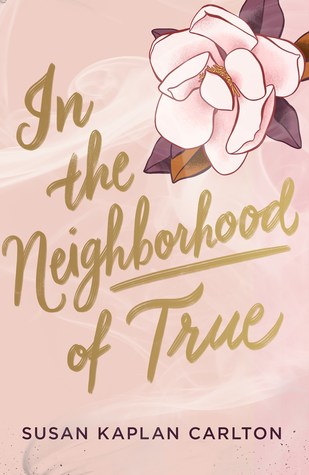
In the Neighborhood of True, by Susan Kaplan Carlton*****

“Shalom, y’all.”

Ruth Robb was born and raised in New York City, but following her father’s sudden death, she moves with her mother and sisters to Atlanta, where her mother’s family lives. The year is 1958. Almost immediately she is faced with a critical choice: should she quietly avoid mentioning her Jewish roots and allow her peers to make assumptions based on her grandparents’ standing in their Protestant church, or should she risk her newfound popularity with candor? My thanks go to Algonquin Books and Net Galley for inviting me to read and review. This book is for sale now.

The family has barely begun to grieve their loss. Everything is tossed into boxes and they leave New York, soon to be embraced by Ruth’s loving grandparents. Their new home, however, is almost too good to be true:  the house is large and luxurious, with a pool; her grandparents are generous and solicitous; their deep roots in the community make for nearly instant acceptance among the girls’ peers. But Ruth’s grandmother, called “Fontaine” within the family, has plans for Ruth and her younger sister, Nattie. They are enrolled in an elite Christian school, and Ruth is sent to private lessons for a “pre-debutante.” There’s a little pink book that serves as a grooming and etiquette guide, and it is specific and proscribed.

What isn’t in the pink book is the synagogue. Fontaine immediately informs the girls that they are, after all, “Half Christian,” but their mother quickly reminds her mother that she is a convert, and the girls are Jewish, period.

The characters are so resonant and believable that I find myself reflecting on the amount of stress that the girls, Ruth in particular, are experiencing. First, they must leave all of their friends, and the culture in which they’ve been raised, behind; their father is gone forever; and now there’s this tension between their loving grandmother, who provides them with everything, and their mother. This is not a dramatic conflict; but it shimmers under the surface constantly. They are a loving family, and they’re civilized. Yet Ruth is torn. But her nearly instant popularity galvanizes her, and she decides not to decide, by skating around questions of church and religion. After awhile her evasions become deception. Her mother is a discreet but unmovable force, with a sort of Jiminy Cricket demeanor: don’t forget who you are, Ruth. When are you going to tell your friends? What do they think you are doing on the weekend? The ante is upped when Ruth falls in love with Davis, who’s a big man on campus.

Things come to a head when the local synagogue is vandalized.

Carlton’s author blurb says that she had a similar experience, although she wasn’t the teenager, she was the mom. No doubt this is responsible for some of the story’s authenticity, but much of the compelling narrative has to be chalked up to excellent writing. There’s never a stereotype, and I never felt I was being lectured. Instead I am absorbed. What the heck is Ruth going to do? And though I am unfamiliar with Atlanta, there are several times when colloquial expressions that have fallen out of use pop into the story, expressions I recall from my early childhood in the 1960s. But the author never leans on pop cultural references; rather, they drop in naturally. It’s smooth as glass.

Sexual references tend toward the general; there is sex included, but not much detail. I include this information for teachers and parents considering including it in their libraries. If in doubt, read it before you present it to the young people in your life.

Since retiring from teaching language arts to adolescents, I have generally avoided reading young adult novels. I’ve been there and done that. But there’s an exception to everything, and I am glad I was given the chance to read this one. Highly recommended.

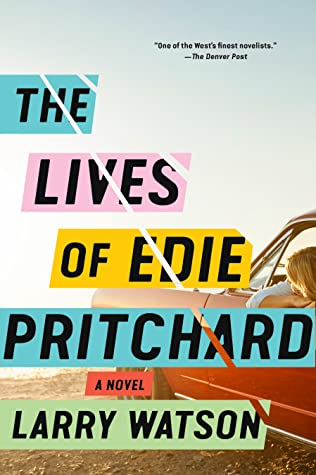
The Lives of Edie Pritchard, by Larry Watson****-*****

It’s not often that a male writer gets it the way that Larry Watson does. My thanks go to Net Galley and Algonquin for the invitation to read and review, as well as the gorgeous hardcover copy. This book will be available to the public tomorrow, July 21, 2020.

Edie’s story is divided into three periods. When we first meet her, she is a young adult, married to Dean. Twenty years later, we find her in a different marriage. The last third finds her a senior citizen. When I saw how the first and second parts were structured, I thought I spotted a formula and that I knew more or less what the last third would look like. I’m delighted to say I was incorrect.

The style in which it’s written is unusual. There’s almost no inner monologue; everything is either action or dialogue. There’s no shifting point of view, either. It’s straight forward and linear. The author takes his time establishing character and setting, and so for a long time, there’s no noticeable plot curve. At about the point where I begin to be nervous, that perhaps I’ve agreed to read and review a book that isn’t very good, it wakes up. I’m not generally a fan of spare prose writing, but this is different.

Edie has married Dean Linderman, whom she dated in high school. He’s a nice guy, but his twin brother Roy is a player. Where Dean is introverted and reflective, Roy is extroverted and aggressive; and one of the ways Roy shows aggression is in trying to seduce his brother’s wife. It never stops. Every single time they are alone together, even for a few minutes, he starts in on her. And every stinking time, she tells him no. Stop it, Roy, I am married to your brother. I love Dean, not you. But getting the guy out of her hair is like trying to herd mosquitoes. And yet, a couple of times I see Edie do or say something that, while not openly encouraging, sends mixed signals, and I think, Aha. Maybe that’s why Roy keeps trying.

 Watson uses nuance and subtlety in a way not many authors do. It makes Edie come alive, because I don’t know what she’s thinking, and Watson isn’t going to take it apart in front of me. I am left to wonder…now why the heck would Edie do such a thing? And while I read, I wonder. And when I am no longer reading, I’m still wondering.

Twenty years later, we find Edie Dunn. She’s married to someone else, and she has a teenaged daughter. Like Dean before him, Gary doesn’t spend a lot of time worrying about what Edie wants. Edie is his wife, and she should do what he wants her to do. And I won’t give any more of this bit away, but once more, Edie surprises me.

Within the last section, Edie’s teenage granddaughter is going to move in with her. Edie’s companion who’s in the car with her asks if she isn’t out of practice with teenagers. Edie says, “It’s like riding a bicycle. Once you’ve fucked up as a parent, you never forget how to fuck up again.” I love this.

When I am sent a physical book to review, as opposed to digital or audio, the book goes into the bathroom. I know that I am hooked if the book comes back out of the bathroom with me at some point. Edie came out at about the sixty percent mark, and after that she didn’t get left alone unless I had to sleep.

The thing about this story that may get in the way of good reviews here is exactly the thing that makes it so good. The way that Roy—and later, other men—follow Edie around and pester her, trying to control her and later, her granddaughter, is repetitious and maddening, and that. Is. The. Point. Though it’s conveyed subtly, we know that Edie is very attractive. And again—I love that we don’t hear constantly about her clothes, her figure, and so on; rather, we know she’s gorgeous by what others say about her, and how they respond to her. And not one living male takes her seriously. They see her, and then they want her, not because they care about her or even know her, but because it would stoke the fires of their self-esteem. And all along, Edie tries, initially, to explain what she wants instead, and not a damn one of them will listen to her. But she does what she has to do, and by the end of the book, I like Edie a great deal.

Those that enjoy strong feminist fiction should get this book and read it.

The Bright Side Sanctuary for Animals, by Becky Mandelbaum*****

Becky Mandelbaum is the real deal. In 2016 she published a short story collection, Bad Kansas, which I read and loved. ( You can find my review of it here: https://seattlebookmamablog.org/2017/09/15/bad-kansas-by-becky-mandelbaum/) And so when I found this debut novel on Net Galley, I leapt at the chance to read and review it. Big thanks to Net Galley, and to Simon and Schuster. This book will be available to the public August 4, 2020.

Ariel and her mother, Mona have been estranged for six years. But when she finds a news item about her mother’s sanctuary having been torched, Ariel knows it’s time to go home, to see what has been lost and what can be saved.

The story is told from the third person omniscient, and we hear from three characters mostly. We start with Mona, whose stress levels have become nearly unbearable. She’s getting too old to do so much work, and she never has enough money. She has just one employee, working on site primarily for room and board. Perhaps this is part of what possesses her when she leaps in her truck in the dead of night to steal the neighbor’s Make America Great Again sign. She wrestles the great big thing into the bed of her pickup, and by now we can see that she is a tightly wound person whose impulse control is just a tiny fraction of what it should be.

Meanwhile, Ariel is concerned, not only about the fire, the sanctuary, and her mother, but also about her relationship. Her boyfriend, Dex—the third of the characters we hear from most– proposes just as she has begun to fantasize about ending the relationship. As the story progresses, we can see that Ariel is the sort of person that runs from her problems, sometimes literally. She accepts the ring and then says she has to go home for the weekend, and no, he shouldn’t come with her. After all, she’ll be right back. Probably.

Mandelbaum does a brilliant job of building believable, nuanced characters and complicated relationships. Five percent of the way into my galley, my notes say, “This one is going to be a thinker.” And it is, in the best sense of the word. It isn’t a pretentious piece of writing by a long shot, and it isn’t full of florid descriptions or challenging vocabulary. Instead, we have characters that are dealing with thorny personal issues that have no obvious solutions. And my favorite aspect of it is the way the mother-daughter relationship, which is the heart of the novel, is framed. Mona has made a lot of mistakes in parenting Ariel, but she loves her daughter and is a good person. Ariel is still learning how to solve problems herself. There’s a trend in fiction writing right now to draw villainous mothers as the sources of protagonists’ problems. It’s close to becoming a cliché. Mandelbaum has steered clear of this canard and created something much deeper and more interesting. In fact, there are at least half a dozen stereotypes that she has dodged expertly. The fact that she has done this in her debut novel suggests that a great career is ahead of her.

I love the way she ends this story.

Don’t deprive yourself of this glorious novel. Highly recommended.

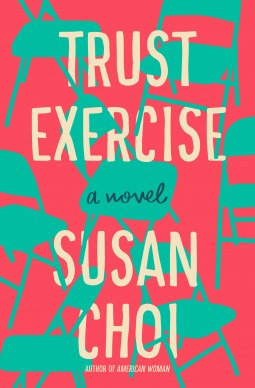
Trust Exercise, by Susan Choi**

Ah geez. I had such hopes for this one, but in the end I was relieved when I finished it. Thanks go to Net Galley and Henry Holt for the review copy, and to Seattle Bibliocommons for the audio book that helped me push through to the end.

Conceptually, it sounds like a winner. (And to be fair, it did win the National Book Award.) Students enrolled in a citywide magnet school live in a cloistered bubble, isolated from the city—and the world—around them. The time is the 1980s. The drama teacher, Mr. Kingsley, has an oversized role and influence in their lives, not only academically but emotionally. Boundaries, not so much. And when Sarah and David fall for each other, and then un-fall, Mr. Kingsley serves as a sort of puppet master, telling them what to do. The same applies to friendships turned sour.

The premise is believable. This reviewer recalls a respected public school with a strong performing arts program that operated in real life in the late 1970s. Some of the teachers didn’t seem to know about boundaries, and the students—of which I was one—never complained, because it made us feel like respected adults. A student and teacher had an affair while I was there, and they married after she graduated. They remain so. And so when I saw the teaser for this book, I was ready to jump right in, because it spoke to me.

Sadly, it stopped speaking to me by the twenty-five percent mark. I tried restarting a couple of times, but I hit a wall. Finally, determined not to miss out on an award-winning novel, I ordered the audio version from the library and listened to it while I sewed my family’s first set of COVID masks. Both were grim tasks.

While there must be art present here for Choi to win such a prestigious award, the plot is convoluted and difficult to follow, and the characters, which are the heart and soul of this novel, never come alive. In the last half it becomes clear that we’ve had an unreliable narrator all along, but if anything, it makes the story muddier.

This might be a one star read for me, but I still say the premise is meaty, and for that I tack on the second star.

Overall, I can’t recommend this book.  

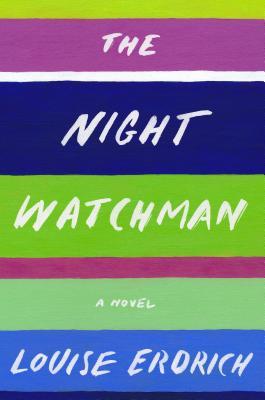
The Night Watchman, by Louise Erdrich*****

I cannot believe it has taken me this long to read the legendary novelist, Louise Erdrich. I had my reasons—wrong ones, as it turns out—and I am grateful to Net Galley and HarperCollins for the review copy, and thus helping me pull my head out of…the place where it was. This excellent novel is for sale now.

Let me explain, first off. Many years ago, I enrolled in an alternative graduate program that emphasized respect for all cultures and races, and which required, as a graduation requirement, attendance at a full day seminar listening to a locally famous Native storyteller.  The story was delivered in a monotone, with a good deal of repetition and no effort at summarization. So, after dutifully suffering through 6 hours of it on one of the hottest days of summer, I pledged to myself that I’d never go through that again.

Twice, good friends have urged me to read Erdrich’s novels, but I was also told she was an American Indian storyteller whose heritage formed a central theme in her writing. My eyes glazed over, and I vowed to give it a miss. When The Night Watchman drew early raves, I realized that my assumptions about Erdrich might be in error, and I hustled back to Net Galley to see if I might still score a galley. It’s a lesson well learned.

The year is 1953, and the place is the Turtle Mountain reservation in North Dakota. Patrice Paranteau has finished school, but she doesn’t want to get married. She has seen her friends do so and turn into old women overnight, shivering as they hang the wash to freeze dry in winter, and collecting snow to melt so that their children can take a bath. No thanks. Instead,

I cannot believe it has taken me this long to read the legendary novelist, Louise Erdrich. I had my reasons—wrong ones, as it turns out—and I am grateful to Net Galley and HarperCollins for the review copy, and thus helping me pull my head out of…the place where it was. This excellent novel is for sale now.

Let me explain, first off. Many years ago, I enrolled in an alternative graduate program that emphasized respect for all cultures and races, and which required, as a graduation requirement, attendance at a full day seminar listening to a locally famous Native storyteller.  The story was delivered in a monotone, with a good deal of repetition and no effort at summarization. So, after dutifully suffering through 6 hours of it on one of the hottest days of summer, I pledged to myself that I’d never go through that again.

Twice, good friends have urged me to read Erdrich’s novels, but I was also told she was an American Indian storyteller whose heritage formed a central theme in her writing. My eyes glazed over, and I vowed to give it a miss. When The Night Watchman drew early raves, I realized that my assumptions about Erdrich might be in error, and I hustled back to Net Galley to see if I might still score a galley. It’s a lesson well learned.

The year is 1953, and the place is the Turtle Mountain reservation in North Dakota. Patrice Paranteau has finished school, but she doesn’t want to get married. She has seen her friends do so and turn into old women overnight, shivering as they hang the wash to freeze dry in winter, and collecting snow to melt so that her children can take a bath. No thanks. Instead,

“She was the first person in the family to have a job. Not a trapping, hunting, or berry-gathering job, but a white people job. In the next town. Her mother said nothing but implied that she was grateful. Pokey had this year’s school shoes. Vera had a plaid dress, a Toni home permanent, white anklets, for her trip to Minneapolis. And Patrice was putting a bit of every paycheck away in order to follow Vera, who had maybe disappeared.”

The point of view shifts between Patrice; a local boy turned boxer, Wood Mountain; Haystack Barnes, the white math teacher and boxing coach; and Thomas, Patrice’s uncle, who is the night watchman at the jewel bearing plant. Thomas is modeled after Erdrich’s grandfather, and the author’s notes at the end mention that his struggle to save the Chippewa land made writing this book an emotional experience.  

As the story opens, Patrice is preparing to track down her sister, who is rumored to have had a baby in Minneapolis, and Thomas is organizing a group of Chippewa to attend the hearings in Washington, D.C. The Feds have sent a letter to the tribe suggesting that since they were clearly successful, they would surely no longer require government aid or protection. Their land would be absorbed by the U.S. government and then sold to private buyers; its current residents would be relocated to cities where they could get work. And it’s a measure of exactly how clueless the average American was about the Chippewas’ plight that Barnes, who lived and worked among them, said, “I don’t understand why it’s so bad. It sounds like you get to be regular Americans.”

There are other points of view as well; the most memorable are the Mormon missionaries that have drawn the short straw and been sent to minister to the “Lamanites.” This religion holds that the inferiority of American Indians is revealed holy truth; only by converting can they be salvaged, and when that happens, the new converts will slowly become whiter. Our two missionaries dislike each other profoundly, which is unfortunate since they may only separate from one another to use the toilet. When the main story becomes intense and at times, very sad, in will pop the missionaries and before I know it, I am laughing out loud.  In addition, I admire the way the strong female characters are developed.

There are three primary threads to follow: what Patrice decides to do with her future; whether Vera will be found; and whether the Chippewa of Turtle Mountain will lose their land. All are handled with the mastery one might expect from an iconic author.

Don’t be the idiot that I was. Get this book and read it now.

Credible Threat, by J.A. Jance****

Jance is a prolific novelist, with three long-running series to her name. Credible Threat is the fifteenth in the Ali Reynolds series. Thanks go to Net Galley and Gallery Books for the review copy; this book is for sale now.

The star rating is a tricky thing sometimes. In this case, I wonder whether, had I never read anything by this author, I might tack on that fifth star. It’s the curse of the brilliant, being measured against oneself, but ultimately, I couldn’t help comparing this mystery to The A List, which came before it.

What I like—a good deal, in fact—is the trajectory Jance has taken with this series, making all of the important characters women. In addition to protagonist Reynolds, we have the villain, Rachel Higgins; a third long-running character is the AI named Frigg, who identifies as female. Two key assistants are female, and Sister Anselm, a nun friend of Reynolds, also plays a key role. There are men here, of course. There’s the victim, Father Andrew, who doesn’t last long, and the intended victim, Father Gillespie, who has the meatiest male role in this installment. Ali’s spouse is the co-owner of High Noon, the security firm through which Ali is drawn into one mystery after another, but he is conveniently called out of the country early in the game.

The story begins with a call from Archbishop Gillespie, a friend of B, Ali’s husband. He’s been getting a whole string of threatening notes placed in offertory collections all over the Phoenix area. The police have brushed him off already, and he’d like the matter handled discreetly. He is concerned about his would-be killer’s soul.

Our killer, meanwhile—whom we know right up front, so I’m not giving anything away here—is grieving, embittered, and unhinged. She has recently discovered clues in her late son’s memorabilia collection that suggest his addiction and suicide were the outcome of his molestation at the hands of the swimming coach at the Catholic high school he attended. The coach has died of AIDS, and Higgins still wants somebody to pay for her son’s death; an eye for an eye. Since it’s clear to everyone that the Roman Catholic Church stonewalled and swept abuses under the rug for generations, it makes sense, she decides, to go right to the top. But clearly, even if she were up for international travel, it would be absurd to attempt killing the Pope. Who’s in charge locally, then? Archbishop Gillespie. And so Rachel commences to plan Gillespie’s murder, sending the missives in advance so everyone will know why he had to go. She finds a fall guy to frame for her crime and is off and running.

My first impression is that this story is substantially similar to the last Reynolds mystery, in which a mother planned to commit murders to avenge her son. I’m surprised a pro like Jance would slip like this. But that’s my sole complaint.

I love the way Jance battles stereotypes, and in this case, it’s the Catholic clergy—the good ones—that benefit. Though the layers of abusers, sexual and otherwise, are deep and wide, I bristle at the cracks that are made by comics and the general public almost reflexively about all priests. I have known some wonderful men that abused nothing and nobody, who gave up marriage and family in order to spend their entire lives in the service of others, via the Church. Not all nuns are frustrated savages looking to beat children with rulers; not all priests are pedophiles. The way Jance takes that apart makes me want to stand up and cheer.  

The clever loophole that Ali finds and that Gillespie widens with regard to Frigg’s extralegal snooping is terrific.

Whether we call it four stars or five, this is a solid mystery and a good deal of fun.  I recommend it to you wholeheartedly.