Clete, by James Lee Burke*****

Mortality is mortality. It comes to you when it’s ready. We don’t set the clock.

The Dave Robicheaux series by James Lee Burke is one of the finest ever written. As the faithful know, Clete Purcel is Dave’s partner in whatever he does. Once they were cops that called themselves “The Bobbsey Twins from Homicide.” (You probably need to be a boomer to get the reference.) Now they are on their own, but they are still like family to one another. This is the 24th in the series, and it’s the first to be told from Clete’s point of view. It’s a brilliant idea for two reasons: first, because Clete is a well written and wildly popular character, and also because it gives us a chance to see Dave through someone else’s eyes, someone that loves him, but isn’t him.

My thanks go to NetGalley and Grove Atlantic for the invitation to read and review, along with my profound apology for being so very late. This book is for sale now.

In this installment, a new drug ring has come to Louisiana, and it’s creating still more violence, more death, and more crime in general. Clete, who is now a private detective, is hired by a woman named Clara Bow. (If the name rings bells, it’s because the real Clara Bow was a famous movie star from the silent film era.) The Clara that hires Clete wants him to look into the activities of her skeevy ex-husband. Once he begins, we hardly have enough time to breathe. Clete hits the ground running, and there are no slow passages till the book concludes.

My favorite passages are the ones in which a woman named Chen, whom Clete rescues, then falls for, tells him how he appears to her. Here’s one: “You always gentleman, Mr. Clete. Your cats sleep on your face and you no mind. The world kill men like you because you brave and you kind.”

Later, Chen promises him that she won’t go back to taking drugs. “That because I go to a meeting every day with the Work the Steps or Die Motherfucker group. The Motherfuckers are very nice.” He advises her not to use that term in public. Don’t you love it?

Like every book in the series, this one moves seamlessly from scenes with quirky characters and dark humor, to glorious literary passages that I have to read more than once just to admire the writing, to passages that are gritty and violent and occasionally terrifying. Let me put it this way: you will never be bored.

Can you dive in mid-series? I did; then I became so enamored that I went back and read all the rest of them.

Highly recommended.

The Autumn Springs Retirement Home Massacre, by Philip Fracassi*****

It’s not just every day that I run across a five-star slasher novel, but author Philip Fracassi hasn’t written just any slasher novel, either. The Autumn Springs Retirement Home Massacre is one of this autumn’s most agreeable surprises. My thanks go to NetGalley, Macmillan Audio, and Tor for the review copies; this book will be available to the public September 30, 2025.

When a friend recommended it, she said it was funny and also different from her expectations. I agree on both counts. I was anticipating a book with plenty of old-folks barbs, sort of like the satirical carol, “Grandma Got Run Over by a Reindeer.” I considered whether I was up for it, given that I am a grandma myself, and decided my sense of humor hadn’t aged out. Sure, let’s give it a go.

Instead, though the book is indeed darkly funny in places, it also has aspects I didn’t anticipate. How many humorous slasher stories have character development, for instance? How many have genuinely poignant moments? And finally, on a more traditional yardstick, I find myself completely surprised by the solution.

Our protagonist is Rose Dubois, a 70-year-old retired school teacher. She buys a unit in the retirement community, not because she’s too decrepit to remember her medications or because she needs constant monitoring, but because she is ready to live in a smaller home near other people her own age. Her daughter has been urging her to come live with her instead, but Rose has friends here. She likes her little place, and she values her independence. She doesn’t want to go anywhere else.

Then her pals begin dying. The first is her bestie, and it stings, but also raises questions. The death—without giving anything away—seems out of character. But surprises happen, and they’re not all nice ones, so she and Angela’s other friends grumble, but move on.

But as the title suggests, there’s another. And another. Where will it stop? Rose and her remaining friends vow to stop it themselves, since the local cops and the home’s administrators don’t seem terribly concerned.

The story also raises the issue, a very real one, of the public’s lack of concern for the elderly. Hey, old people die. That’s what we do! And moreover, before we go, older folks become nearly invisible. The author’s moving note in the afterword explains why he took the approach he did.

Not long after I began reading, I was given access to the audio version, narrated by one of my favorites, January LaVoy. Although the print version is delightful, I give a slight edge to the audio because its format, which is mostly linear, lends itself well to this medium, and also because LaVoy always brings something extra to her narration.

Highly recommended to all that enjoy mysteries and a little gallows humor.

Apostle’s Cove, by William Kent Krueger****-*****

Apostle’s Cove is the 20th novel in the Cork O’Connor mystery series by William Kent Krueger. The series takes place in a fictional town of Aurora, Minnesota near an Indian Reservation. Most of the characters are all or partly Ojibwe (also known as Chippewa, or Shinnob). Apostle’s Cove is an area with spectacular views, and it is home to the malign widow of an enormously wealthy man, who built a mansion there.

My thanks go to NetGalley and Atria Books for the review copy. This book is available to the public now.

This story commences with Cork receiving a call from his son, Stephen, who’s working with The Great North Innocence Project, an organization that helps people that have been wrongly convicted. Cork is a restauranteur and private detective now, but Stephen tells him that during his time as sheriff, Cork sent an innocent man to prison. For 25 years, Axel Boshey has been serving out a lifetime term for a murder he didn’t commit. He confessed to it in order to shield the person he thought to be the actual killer. Now Stephen wants Cork to go back, untangle the mess, and get Axel out of lockup.

The story—and the series—is helped considerably by its appealing recurring characters. The two most compelling ones are the very oldest—Henry Meloux, an ancient wise man that lives in the forest and counsels those that seek his help—and the very youngest, the seven-year-old grandson affectionately known as Waaboo, a child with supernatural powers to whom the spirits speak.

Halloween is fast approaching, and there is great excitement as the small community prepares for it. Waaboo is excited, yet also troubled. The Windigo, a cannibalistic spirit, is nearby, and it’s hungry. It isn’t here for Waaboo, but nevertheless, he is disturbed by it.

The story is complex and, in most regards, believable. I read multiple books at a time, but while I read this one, the others became sidelined much of the time. This series is reliably well written and entertaining, and so it is with Apostle’s Cove.

Can you jump in mid-series? I did. I began reading it with the 18th in the series. Whereas it’s more fun once you recognize the characters, there’s nothing that will confuse a new reader.

Highly recommended to those that enjoy the genre.

Coffin Moon, by Keith Rosson*****

“One thing you can be certain of, boy. Things change. Even for those such as us.”

In 2018, I read a book by a promising local author titled Smoke City. It was complex and kept me on my toes, and all told, it was a good novel. Since I enjoyed it, the small publisher he was working with sent me another of his books, The Mercy of the Tide. I liked it, too.

Fast forward. I received a galley this year by the same author, but he was no longer working with the itty-bitty press. No, he was published by Random House. This made me sit up and take notice! My thanks go to NetGalley and Random House for the invitation to read and review Coffin Moon, the scariest straight-up horror novel you’re likely to find on the shelves this year. It will be available to the public September 9, 2025.

The premise is this: our protagonist, Duane Minor, is back from Vietnam. The year is 1975; the place, Portland, Oregon. His wife Heidi is living in an apartment over the bar her parents own, and Duane goes to work for them. Heidi’s 13-year-old niece, Julia, comes to join them as well after her mother is sent to prison. Duane is a bit shaky, following his tour of duty, but he’s sober, has pulled himself together, and things are going pretty well. That is, until the vampire takes over the bar.

That’s all you need to know of the plot to get started. In fact, I don’t even recommend reading the promotional blurb, because it’s better if you come to it on your own. What I will say is that this is not just any horror novel. There is more depth to it than you typically see, philosophical questions inextricably wound into the decisions that Duane and his niece must make. There’s also far more character development than I generally see in this genre. Finally, the word smithery Rosson brings to it makes this book grittier, more heart-rending, and far more thought provoking than other books of its ilk. Mr. Rosson was a good author before, but the brilliance of his prose has surged since his early work.

As I get older, I find I only have enough fortitude to read one or two horror novels each year; the rest of the time, I reach for other genres. If you are also an infrequent reader of horror, I strongly urge you to make this story a priority. It’s the sort of novel that stays with you long after the last page is turned.

But the sun is coming up; I must leave you.

Something to Look Forward to, by Fannie Flagg****

Nobody should ever say that Fannie Flagg doesn’t give us our money’s worth! There are over 30 short stories in this nifty collection, and I enjoyed it thoroughly. My thanks go to NetGalley and Random House for the invitation to read and review; had it been necessary, I would have paid hard cold cash for this collection, and I seldom say that.

This book is available to the public now.

Flagg has always been known for her feminist swagger and perceptive humor. Here she crosses into several genres, beginning with science fiction—a first for this author? —and continuing on more familiar ground with historical fiction, Southern fiction, contemporary fiction, LGTBQ, and of course, humor. There are a handful that start early and reemerge later, but most are just simple short stories, easy to read and for the most part, filled with the feel-good vibes that we all need right now.

My favorite of them all is “Darla Womble,” a story set in Pot Luck, Arkansas in 2004. Here’s how it begins:

“At 9:18 A.M., in and around Pot Luck, Arkansas, thirty-eight relatives of Darla Ann Womble received a frantic email, which read:

            ‘DARLA’S NOT DEAD, AND SHE’S MAD AS HELL!’

After seeing the email, two people threw up, one fainted, and another decided he would run for his life. This news came as quite a shock to all, especially since all thirty-eight had recently attended the reading of Darla’s ‘Last Will and Testament.’

It only gets better from there, and it was a near thing since I was eating lunch; I narrowly escaped spraying my cheese enchiladas all over my kitchen! Other favorites are “Beware of Weathermen” and “Don’t Mess with Texas,” both near the beginning of the collection, and “A Thinking Man,” which is near the conclusion.

As with her other works, these stories are primarily from female points of view and will appeal more to women than men; yet I suspect there are a good number of men that will enjoy them as well. I recommend this collection to Flagg’s faithful readers, and to anyone that needs to feel a little better than they do right now.

The Dilemmas of Working Women, by Fumio Yamamoto**

I haven’t been this disappointed in a book in quite some time. The Dilemmas of Working Women is Fumio Yamamoto’s collection of five stories about women that work (or that should but don’t,) and it is immensely successful and highly regarded in her native Japan. As I read, I kept looking for the greatness, a bit like scrounging for coins lost under sofa cushions, but it has completely eluded me, and my rating and review can only be based on my own experience and reaction.

I thank NetGalley, Blackstone Audio, and HarperCollins for the review copy. This book is for sale now.

As suggested in the title, each of the five stories focuses on a woman that has a problem. None of them makes a serious effort to do one damn thing about it. Lazy, neurotic, or…? Who can say. I sure can’t. One might expect a book that’s written by a woman and that has exclusively female protagonists to have a little feminist swagger, but this feels like the opposite. I found it hard to root for any of them, because they were all so useless.

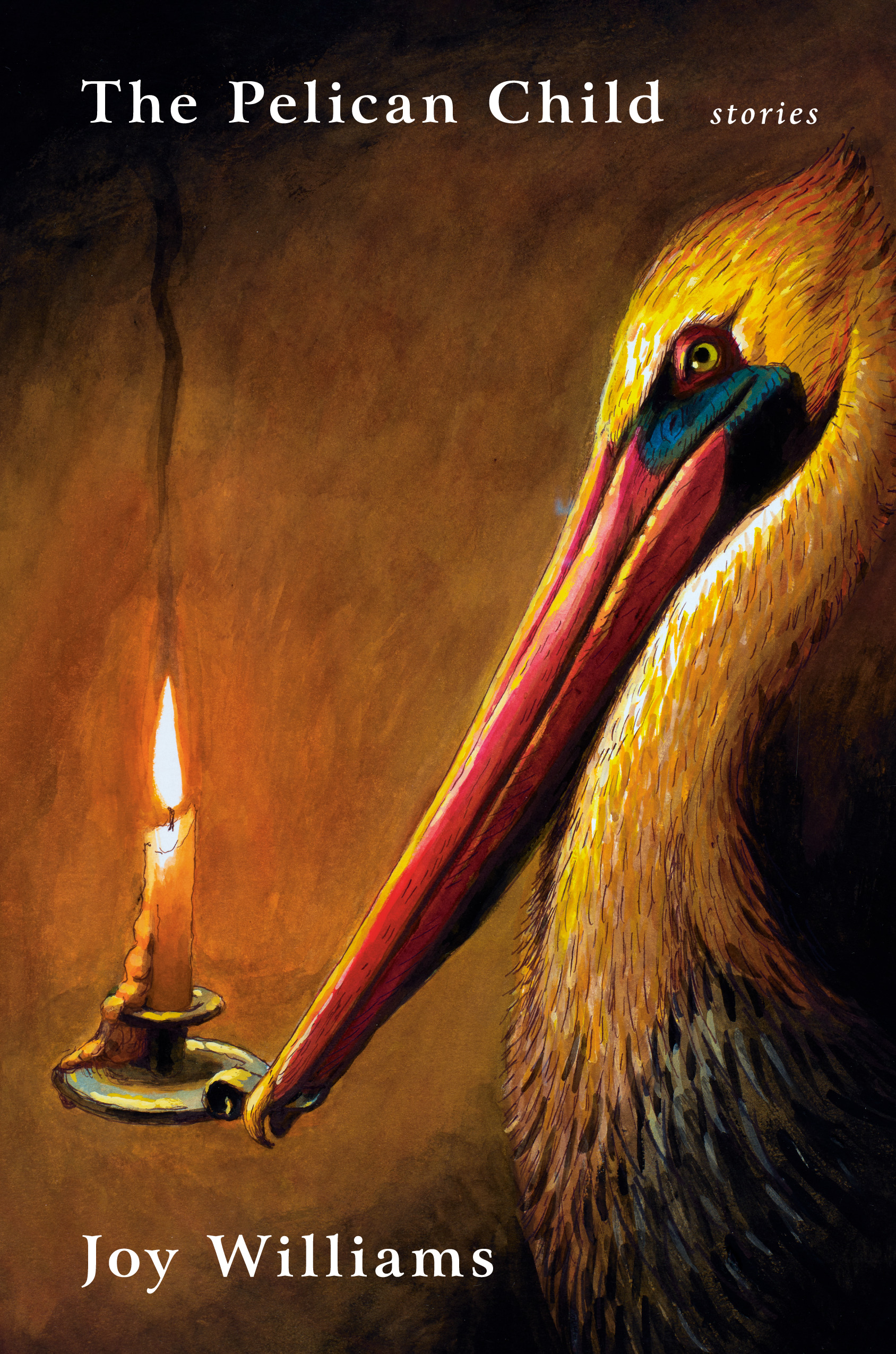
When I took the galley, I expected there to be some humor. Look at the cover! It’s been years since I was taken in by a hilarious book cover that masked a crummy read, and I won’t do it again anytime soon.

I was given access to both the digital galley and the audio. The reader, Yuriri Naka, does as good a job as possible with this collection.

Not recommended.

My Friends, by Fredrik Backman***-****

“Being human is to grieve, constantly.”

Well now. Fredrik Backman’s many fans ought to brace themselves for his latest novel. The feel-good stories he’s written, and written brilliantly, in years gone by are nowhere in evidence here; those of us that look to this author to bolster our sense of optimism and to remember that human beings are innately good are not going to find it. This book is far darker than anything he’s written to date, and I have no idea what is behind this sorrow and misery sandwich, but I am sorry it’s come to this.

My thanks go to NetGalley and Atria Books for the review copy. This book is for sale now.

Our premise is that a homeless teen artist, grieving the death of her best friend, befriends an older, dying street artist who turns out to be someone famous and revered in the art world. The artist senses in her a kindred spirit, and so his last act is to have his friend and business agent sell everything that the artist owns in order to purchase back one of his most iconic paintings and give it to her after he dies, because “She’s one of us.”

Okay. It’s a stretch, but it’s fiction, and after all, Backman generally delivers, so I’ll suspend disbelief and roll with it.

Nearly the entire remainder of the book consists of the friend, whose name is Ted, spilling his and the artist’s past to the girl, whose name is Louisa. He’s traveling by train, and so he takes her with him. We hear all about their childhoods together, along with the two other friends that made up their tightly knit friend group. At one point she runs off, and at another, they lose the painting and the artist’s ashes, but these constitute minor breaks in the otherwise unending conversation, which is nearly a monologue.

It didn’t take me long to be heartily sorry I had ever taken the galley; I finally bonded with the narrative at about the 60% mark, and from that point until just past the 80% mark, I was reading because I wanted to know what would happen next, or be said next, rather than from a sense of duty. For most of the final 20%, I was watching the page numbers and wondering if this thing was going to end, ever.

It’s hard to rate a book like this, because so much of my disappointment stems from my earlier admiration of Backman’s works. If this was written by someone with whom I was unfamiliar, would I rate it a little higher? But then, if the author wasn’t known to me, I likely wouldn’t have picked it up in the first place. The stark shift in the author’s world view is shocking, and I am still not entirely over it. I can only recommend this book to you if you need a grief book, because anyone in need of a good ugly-cry will surely find it here.

The Fisherman’s Gift, by Julia R. Kelly*****

“Why is it, she asks herself, that we only ever remember the things we did wrong?”

Julia R. Kelly’s novel The Fisherman’s Gift tells a luminous tale of long ago, and it is one of the year’s best. My thanks go to NetGalley and Simon and Schuster for the invitation to read and review. This book is for sale now.

Dorothy lives alone in Skerry, a tiny Scottish fishing village, in the year 1900. She is an outsider, having moved here to teach the children; she marries and has a child, but when the child is tragically drowned, her husband leaves her, and now her life is one of solitude and regret.  Then a little boy washes up, a shipwreck victim, and Joseph, a fisherman that shares a past with Dorothy, brings him to the village; it is Dorothy that takes care of him, and every day, he seems more like her own lost boy. She wonders from time to time whether God has sent him back to her.

This is a beautifully written novel, glorious not only for what is said, but for what isn’t. Kelly crafts every character in the story with nuance, and so there are no bad people, and also no perfect ones. The entire book is written in third person omniscient, so we get a peek into one character’s thoughts, and then another’s. Sometimes this can be frustrating, because I want to climb onto the page and explain to one of them or another that what they’re thinking is wrong, and can’t they see that they have misunderstood a person, or an event? But when I yearn to do this, it’s because I believe every single word about every single character.

It’s a bittersweet tale to be sure, but readers can rest assured that Kelly won’t burn everything to the ground.

To those that love historical fiction, and to those that enjoy a good love story, I highly recommend this sweet story.

The Strange Case of Jane O, by Karen Thompson Walker***-****

When I saw that the author of The Dreamers, had a new novel, I jumped at the chance to read it. While The Strange Case of Jane O isn’t of the same caliber as her previous effort, it’s a solid read.

My thanks go to NetGalley and Random House for the invitation to read and review. This book is available to the public now.

We have two main characters, Dr. Henry Byrd, a psychiatrist, and Jane O., his patient. Nobody else in the story matters very much; it all hangs on these two. Most of the narrative is told in the first person limited by Henry, in the form of clinical notes, as behooves his profession.

Jane is found unconscious in a public park, and when she awakens, she remembers almost nothing. She gives Henry’s name as her doctor, although he only saw her once, and on that occasion, she had walked out without sharing anything, saying the whole thing must have been a mistake. Nevertheless, she gives the hospital his name, and he goes. And so it begins.

Jane has strange gifts. She is able to remember every minute of every day; she invites him to give her random dates from the past, and each time, she can tell him verifiable things that happened that day, and at what time they occurred. But she also gives the names of people that have died…except they haven’t. It’s an unusual case, to say the least.

Henry himself has recently had his license yanked, and we learn very little about that. I guess he doesn’t like talking about it, but I still think the author should have made him do so. He is also raising a child alone, grieving the loss of his wife.

I won’t spoil the plot by telling more, but this is a fun read, one that held my attention from the start and didn’t let up. It’s well paced and full of surprises, until the ending, which I didn’t expect, only because I figured that Walker was too skilled an author to reach for something so banal. The pat, almost formulaic ending took the entire thing down a notch for me.

Many others liked it fine. My advice is that if you enjoy science fiction, go ahead and read it, but don’t pay full cover price unless your pockets are deep ones.

Through an Open Window, by Pamela Terry*****

“When you’re the last one with memories it’s like trying to hold on to hot sand.”

Author Pamela Terry never misses. Her debut, The Sweet Taste of Muscadines, forged such an emotional connection in me that if someone had told me they didn’t like it, I might not have cared for them as much as before. The same held true for her next work, When the Moon Turns Blue, which was every bit as good if not better. And now, with her new novel, Through an Open Window, I know that I will follow this author anywhere.

My thanks go to NetGalley and Ballantine Books for the invitation to read and review. This book will be for sale August 19, 2025. If you are female and have a beating heart, you should get it and read it.

We open with a scene from 1956. The local sheriff rescues two small children from a scene of horrific carnage; the baby girl is surrendered to the social worker before they find the little boy. The sheriff and his wife have been unable to have children, and want them so badly that instead of reporting the boy also, he takes him home and they keep him.

Cut forward now to the fictional town of Wesleyan, Georgia. A family is grieving the loss of its patriarch, Lawrence Elliot. His widow, Margaret is the first to receive a visitation—not from Lawrence, but from Great-Aunt Edith, who has been dead for years. Aunt Edith wants her to know something. And in fact, other family members will also see her at various times, in various places, but it’s not the sort of thing one shares with others. But Edith isn’t leaving until her message is received and understood.

As we see Margaret and her three adult children cope in different ways, we also see the interplay of their relationships to each other. This story is loaded with character development, and I believe each and every one, even Jubal, the rescued Clumber Spaniel that comes to live with Margaret. (I had never heard of this breed before, and now I kind of want one. Someone stop me!)

Events roll forward, and slowly we learn what it is that Edith is trying to convey, as the family does, and we find the tie-in to the prelude. It’s done brilliantly! Along the way, the author’s voice comes through in undeniable word smithery that forces me to highlight way, way too many passages to quote here. I experience the entire gamut of emotion, and when I near the ending, I am torn, wanting to read more slowly so that the book won’t end, but also needing desperately to know what is coming next.

The only possible improvement would be if Terry could write, and write up to the standard she has established, as fast as I can read, because I cannot wait for her next novel! She has become a favorite author, one I’d pay to read if I couldn’t do it free of charge. Highly recommended.