City on Fire, by Garth Risk Hallberg*****

cityonfireLuminous, epic, and brilliantly scribed, City on Fire is the buzz book of the year. I would be hard pressed to find a story of greater genius published this century. Those that love literature have to read this book. It will be available to the public for purchase October 13.

I received my copy early from Knopf Doubleday Publishers and Net Galley in exchange for an honest review. In doing so, I feel as if I struck oil.

The story, some 992 pages of it, is a complex story, and like an onion, the reader can decide how many layers of interpretation they wish to uncover. What the reader cannot do, however, is skim, or make the story make sense without reading it in its entirety. It is the thing that makes this story great that makes it complicated, and so those that lack the stamina for a book this length will probably not find it fulfilling. A college-ready literacy level is required in order to understand it.

First, the reader will want to know who committed the act of violence that sets so many things into motion, and how the planned escalation by her friends will unfold. But ultimately, the story is a much broader one, and its genius is in the way each character, even its most peripheral ones, is developed, usually within the same space that the setting is described, and how both of these things drive the plot forward rather than slowing it down. This reviewer came away with hundreds of flagged pages, eloquent quotes, and fifty notes to myself, most of which say exactly that; in fact, eventually I was too engrossed in the story to write a full note anymore, and began using “ch dev, setting” as a shorthand that meant, look! He’s done it again! And by the 80 percent mark, the author had so consistently developed so many characters that I began to ask myself who had not yet been included. Those I watched for were also developed by the conclusion.

In looking for a writer’s purpose, it’s easy to choose one part or another of a storyline and home in on that, and it’s particularly dangerous when the writer touches upon one’s own particular fond subject, or one’s own pet peeve.

In her memoir, Amy Tan remarks upon having stumbled upon a set of Cliff Notes for her own first novel, and discovering that she had intended as metaphor or message passages that actually, she had included for the sake of telling a good story. It’s a cautionary reminder here. If we want to know the author’s purpose and we aren’t sure, we should probably just ask him.

Yet the emphasis on the city, and the development of the characters, seems to point to one thing above all else: “I see you”. For though the author includes the diverse races, genders, ethnicities, and classes that make up a great cosmopolitan city, the story isn’t really about race, and it isn’t really about being gay or straight, and it isn’t really about the entitlement that comes of great wealth and capitalism unfettered, or anarchy and cataclysmic change, or cops, or the disabled, or addiction, or any of the story’s other facets. Rather, each is a foil to show the common humanity of all.

And at a time such as this one, with our social fabric strained and our political ideas polarized, it isn’t such a bad thing, I think, to have an author come forward and say, in a way far more compelling than anyone else has managed to do for decades, that we are all of us just people, after all. All of us will grow old or sick or both, and eventually die. All of us will grieve. Most of us will be injured, and we will forgive it to the extent that we are able. And if any of that sounds trite, it is only my own failing in this review rather than the author’s work, which is breathtaking in its scope and mesmerizing in its capacity to weave so many threads and perspectives into one intricate, flawless story.
If you read one great book this year, let this be it.

Glory Road, by Bruce Catton*****

gloryroadBruce Catton was known as a popular historian when he first published books about the American Civil War, because of his narrative nonfiction format. All of the books being released digitally now are ones previously published in a non-digital age. This reviewer hunted down Catton’s three volume Centennial History of the Civil War at a used bookstore some time back, and although they were among the best I have ever read by anyone on this topic, I was convinced that anything he had published earlier on the subject was probably repackaged in this trilogy, and so I stopped reading Catton, thinking I was done. Thank goodness Net Galley and Open Road Integrated Media posted the galley for this second volume of Catton’s Army of the Potomac trilogy. Now that I am disabused, I will have to find the first and third volumes also, because Catton is so eloquent that he can spin ordinarily dry-sounding military history into as good a read as the most compelling fiction.

Although his Civil War books are not written in academic format, there is no denying Catton’s research or his credentials. He was one of the founders of American Heritage Magazine, and served as its senior editor until his death. During World War II, he was the US government’s Director of Information for the War Production Board, then later worked in a similar capacity for the Department of the Interior and Department of Commerce.

Frankly, in order to spin the story of the three battles that comprise most of this volume out in such a conversational manner, dropping anecdotes in at just the right moments and then carrying on so as to make us feel as if he is a journalist traveling with the Union forces and we are concealed cleverly in his knapsack, bespeaks a remarkable amount of research. Only after reading the whole thing, spellbound, did it occur to me that for every vignette he included to make the telling more personal and more interesting, he must have edited out ten or twenty. The result is a masterpiece.

I came to this work as a former instructor in the field, and wished I had read his work in time to make use of it in the classroom. At the same time, it is sufficiently accessible that someone with no prior knowledge of the Civil War should be able to keep up just fine as long as they are able to read at the level of a high school senior or community college student. There is a definite bias toward the Union, which frankly is a requisite to my enjoyment of Civil War history. (Those that feel otherwise can go find Shelby Foote’s work.)

I never in a thousand years thought I would even consider rereading some of this war’s most painful battles—the battle of Fredericksburg being perhaps the most prominent in this regard—but Catton has some little-told things to say about these battles, and in particular about Burnside and that Tammany Hall political general, Sickles, that I hadn’t seen before. I had viewed Burnside as a failure from start to finish, but he makes a case that a lot of the mishandling of this situation was due to an ungainly Federal bureaucracy that wasn’t good at receiving information and passing it along in a prompt, useful manner. It gave me pause, and reminded me that we should never assume we know enough about something to call ourselves experts.

The Battle of Chancellorsville is likewise told in a manner fresh and readable, but the bulk of the text deals with that decisive, costly three day fight at Gettysburg. He gives an even-handed assessment of both Hooker and Meade, and again I learned some things I didn’t know before.

Catton’s writing is so engaging that it is destined to live for a long, long time after he is gone, educating subsequent generations. I found myself resolved, at the end of this volume, to look for other galleys of his work to read and review, and when there are no more left, to track down those still missing on my next pilgrimage to Powell’s City of Books.

For you, however, it is fortunate that Open Road is releasing this work digitally, so you won’t have to turn out the shelves of every used bookstore in the US in order to locate it. It will be available for purchase November 3, 2015 for your phone, computer, or e-reader, and is highly recommended to anyone with even a passing interest in the American Civil War.

Simply brilliant.

The Scholar Denied: W. E. B. Du Bois and the Birth of Modern Sociology, by Aldon Morris*****

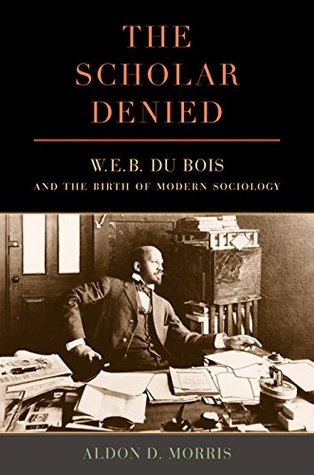
thescholardeniedMorris considers DuBois the father of American sociology, and Morris is right. This is, of course, not the first time a Black man was robbed of credit for an accomplishment that was instead credited to a Caucasian American. It happens all the time. But until I ran across this scholarly study, I hadn’t thought about DuBois and sociology because I had never studied the latter. As an admirer of DuBois’ historical and political role, I was drawn to this book when I found it on Net Galley. Thank you to that excellent site as well as University of California Press for the DRC, which I was given in exchange for an honest review.
It is available for purchase now.

DuBois was a venerable intellectual, an academic light years ahead of most Americans of any racial or ethnic background. He was the first Black man to graduate from Harvard University, and in addition to his graduate work there, he also studied in Berlin under such luminaries as Max Weber and others. In Europe, he was treated as an equal by those he studied with, and I found myself wondering a trifle sadly—for him, not for us in the USA—why he chose to return here. And the answer is so poignant, so sweetly naïve, that I wanted to sit down and cry when I found it. Because once he had the empirical facts with which to debunk the whole US-Negro-inferiority mis-school of mis-thought, he genuinely believed he would be able to elevate African-Americans to a state of equality in the USA by laying out the facts. The racists that created Jim Crow laws in the south and an unofficial state of cold racism that let Black folk in the Northern states know where they were welcome and where they were not, would surely roll away, he thought, if he could reasonably haul out his charts, his graphs, his statistics, and demonstrate flawlessly, once and for all, that discrimination against Black people was based on incorrect information.

See what I mean? I could just cry for him.

So although DuBois was the first American to go to Europe, study sociology, and return with more and better credentials than any American academic, he could not persuade anyone with authority to bring about change, was not even allowed to present his findings to anybody except Black people in traditional Black colleges, because another school of sociologists, the Chicago school, were busy promoting armchair theories based on little data, or bogus data, all showing that Black people simply were not smart enough to become professionals or take on anything above and beyond manual labor, and of course, he was Black, so he must not be that smart, right?

Pause to allow your primal scream. It’s galling stuff.

Caucasian professors in Chicago had done a bit of reading, and with regard to Black people, decided that their craniums were too small to hold enough brain-iums. And just as there is one reactionary in every crowd that the newspapers will flock to in order to show that there is across-the-board agreement, so did Booker T Washington stand before any crowd that would listen to him (and the white academics just loved him), in order to say that it was the truth, that it was going to be a long time before the Negro was “ready” to do the difficult tasks involving critical thinking that had been so long denied him. Tiny steps; patience; tiny steps. Meanwhile, he extolled his fellow Black Americans to enroll their sons and daughters in programs teaching “industrial education”, so that they would be ready to do manual labor and put food on their families’ tables.

All of the studies that backed this line of thinking were deductive, starting with the answer (inferior beings, manual labor) and then finding the questions to fit that answer. DuBois had done inductive research because he was searching for information rather than looking for a rational-sounding way to keep a group of people entrenched in an economic underclass.

DuBois made the connection between the socialist theory he had studied and the material evidence before him: there were people getting rich off the backs of dark-skinned people, and they had a vested interest in maintaining Black folk as an underclass. Ultimately, he turned to political struggle, and that is how I knew about him, not as a sociologist, but as a Marxist. He also became the father of the interdisciplinary field of African-American studies. He helped found the NAACP.

This scholarly work, like just about anything produced by a university press, is not light reading. Rather, the author presents his thesis and synopsis, and then carefully, brick by brick, starts back at the beginning to build his case. His documentation is flawless, and his sources are diverse and strong. There is some repetition in the text, but that is appropriate in this type of writing. He is not there to entertain the reader, but to provide an authentic piece of research that will stand the test of time, so there is a little bit of a house-that-jack-built quality to the prose.

For serious admirers of DuBois’s work, this will be an excellent addition to your library. For those interested in sociology as a field, this is for you, too. And to those with a literacy level that permits you to access college-level material and who have a strong interest in African-American history and/or civil rights, this is a must-read.

For these readers, I recommend, in addition, The Souls of Black Folk, which I had not regarded as sociology-based material until now, though I have read it twice; and a collection of speeches by DuBois, which I have been intending to review for some time, and which will soon grace this page of my blog.

Morris has done outstanding work, and I like to think that if DuBois were here, he would be proud to see it.

A People’s History of the Civil War, by David Williams***

With an introduction scribed by the late great Howard Zinn (and the book edited by same), I figured I just had to add this book to my collection. It bills itself as a history of the marginalized groups of this era, those seldom represented in traditional history. I found it at my favorite local used bookstore, Magus Books, which is near University of Washington, and I scooped it immediately.

The tome sat in the upstairs powder room for months, but we didn’t look at it all that often. I had trouble climbing on board. Eventually I realized there were two things bothering me here. One is that it treats both Union and Confederate governments, along with the powerful moneyed interests backing the two sides of the conflict, as equally wrong and equally culpable. With this I sharply disagree. Whereas no doubt plenty of war profiteers made a great deal of money, and no doubt working people on both sides deserved better pay and greater prosperity, this was not an equally-wrong war. In fact, the first Marxist to live in the USA came here from Europe to fight for the Union, because that was the way to move history forward. So in a sense I disagreed with the premise of the whole book.

That much done, I noted that the overall tone was more cynical than I consider warranted. For me, the American Civil War was the last truly heroic conflict in which US forces fought. It also distinguished itself by producing an unusually high number of casualties where high ranking officers were concerned. You didn’t see American generals get dead in these proportions in either of the world wars, nor Korea, Vietnam, or any of the conflicts in the Middle East. So the snarky manner in which Williams refers to the disparity between Union brass and foot soldiers is not well placed. I found it abrasive.

In addition, if we’re talking about marginalized peoples, excuse me Mr. Williams, but where are the Black folk? The author seems to have mislaid some four million former slaves. I kept flipping through this volume trying to find some, but they are underrepresented quite badly; one might even say the author has marginalized them.

The one worthwhile thing here, the thing that kept that third star in its place, is the extensive attention paid to Native peoples during this time. I was aware of the role of the Cherokees and that was the sole extent of my knowledge of which way American Indians chose to side, when they chose a side at all. I got something for my money other than frustration and regret; I really had to look hard to find it, though.

Consequently, those doing specific research having to do with the role of Native Americans during the American Civil War should get this book. I recommend it for that niche audience only.

The Last Good Place, by Robin Burcell****

thelastgoodplaceWhat a treat! They say all stories have already been told once, but I’m telling you, this one hasn’t. Oh, trust me! And my thanks go to Net Galley and Brash Books for a wonderful DRC. This one will be up for sale November 3.

Some may recall the TV series “The Streets of San Francisco”; the show was based on a set of police procedurals by Carolyn Weston. Characters Casey Kellog and Al Krug became TV characters Steve Keller and Mike Stone. In bringing the series back to us in the twenty-first century, new co-author Robin Burcell was asked to update it, since some of the over-the-top methods used originally could get a cop fired these days, and the old methods would not resonate with the public. Burcell has a lengthy background in law enforcement, and now I know that she is also a capable novelist. The pages flew by, and I enjoyed her improvement of the old series.

As the story commences, there have been a series of murders at famous landmarks in San Francisco, and it has been inferred by the media that tourists are at risk. While sometimes life may be cheap, the tourist industry is key to the local economy, and there’s heavy political pressure set to find someone and solve this crime, preferably accurately, but if not…just get someone, haul them in, and charge them.

So when Marcie’s neighbor and good friend Trudy turns up dead, there is speculation. Has she been a victim of this killer, or is it a copycat killing?

We find out right at the get go that Marcie knows a thing or two. For example, she knows that Trudy and her husband are getting a divorce; they are no longer in love. And Marcie also knows that her buddy has been spending some private time with Marcie’s husband. And so while Trudy and her soon-to-be-ex are going to sell their house as part of dividing the spoils of a marriage gone bad, Marcie won’t sell her house. Because it is her house, along with the eucalyptus grove out in the backyard. Her grandfather left her the house, and he left her the trees. He used to tell her that this humble, quiet spot out back was “the last good place”, and Marcie won’t part with it. Not ever. Not even to increase the property’s value—for herself and also for friend Trudy—by making their homes bay view property. Her grandfather preferred the trees to the water view, and so does Marcie.

It’s time to go jogging with Trudy, but Marcie hangs back and hides for a bit. We aren’t quite sure why, apart from the fact that she is suspicious that things are not what they seem to be. Trudy’s been a little strange toward her lately. And what do you know…Trudy dies on the morning jog before Marcie catches up to her.

This is a really accessible story, and I thought I ought to be able to solve the mystery. Goodness knows I read enough of them! And yet, I really didn’t get it. The author doesn’t pull the rug from beneath the reader by introducing a lot of new information at the end, or any of the other unfair devices writers occasionally use in order to make their story’s ending a certain surprise; I had a reasonable shot at it, but I didn’t get it. And I loved the ending!

The characters—the experienced, fatherly, crafty interrogator Al Krug, and his ambitious partner, Casey Kellog, are well developed and personable, but their personal lives don’t distract from the problems at hand. There are a couple of red herrings, but the plot is essentially linear and easy to follow.

All told, this one is a humdinger, and you should read it!

The Strasbourg Legacy, by William Craig *

ThestrausburglegacyWhoa now! The times, they have a-changed, and isn’t that a great thing? Thus this once-socially-acceptable novel, a spy thriller steeped in the Cold War politics of the mid-20th century, no longer works. But thank you for the invitation to review, friends at Net Galley and Open Road Integrated Media; I know you meant well.

The author presents a situation in which escaped Nazis are developing plans to foment a second fascist government, developed abroad till the time is right. The ones we visit are sequestered in Egypt. At the same time, Israel’s equivalent of the CIA is out hunting for escaped Nazis, who will die quietly and unofficially so as to avoid international incidents. The writer knows his craft well, and shows considerable skill in building suspense by jumping us from one group to the other at critical, cliff-hanging moments.

One single sentence caused me to climb off Craig’s bus, so to speak:

“It was the brandy that triggered them to drag the girl off the streets and rape her for two days.”

Had this been the perspective of a deranged psychopath, a mindset clearly different from that of the good guys, I would have been more generous with my rating and review, but this guy is supposed to be the marshmallow among his set, the old softy who gets himself into trouble by trying to save the suffering damsels.

Give me a fucking break.

For this novel: no, no, and one more time: no!

Nirvana, by J.R. Stewart****

NirvanaNew rating and review based on updated DRC:

Larissa Kenders is a musician living in a post-apocalyptic world; her lover Andrew is missing. This newly revised young adult novel is a winner, and it will be published  November 10. Thank you to Blue Moon Press, Net Galley, and Adam Mawer at DigiWriting Book Marketing Agency for including me on the second spin. It was time well spent.

The problem on Earth began when the bees began to die. How can anyone grow food, flowers, or anything else if pollen can’t be transferred? And indeed, how does pollen get from one plant to another without the bees? Corporate giant Hexagon has created an alternate world, and humans are dependent upon the company for their sustenance. Nirvana is a virtual world that workers can visit, for a hefty price, on their days off. The question Larissa has, then, is whether the Andrew she sees in Nirvana is the virtual Andrew of her memories, or whether he may in fact still be living, hiding out from those that may wish him gone.

Various topics are explored, from alienation and the question of whom to trust—one that will resonate with teenage readers—as well as environmental issues such as GMOs, and more futuristic philosophical questions. Edward Snowden comes up, and why should he not, in a story in which many researchers have uploaded their brains to the Cloud so that their work will remain once they are gone?

I was one of a handful of reviewers that read the first draft of this book. I reported that it was dreadful because it lacked character development. This new and vastly improved version creates a Larissa Kenders that is believable, a character to whom we can bond. The remaining stereotypes, such as the jealous female that is our main villain, along with the preponderance of males rather than the usual fifty percent of the population, are problems that are so rife within the genres of science fiction and fantasy that it’s hard to hang the whole problem on this one writer, who has created a truly original and interesting plot .

Teachers considering its classroom use should be forewarned that there are a couple of sexual situations; the porn industry, a pet project of one of the villains, also gets multiple mentions. I should emphasize that this reviewer sees no problem with today’s teenagers reading the book, since most of them have seen far more explicit material on their own. But those that teach in school districts so conservative that the villagers bring everything but flaming torches to the school board meeting may want the information ahead of time prior to going out of pocket for a classroom set.

In revising his story, Stewart has plucked victory from the ashes; a job well done.


For the Dignified Dead, by Michael Genelin****

forthedignifieddeadThere’s a murderer on the loose, one that has killed across international boundaries. The weapon of choice? An ice pick. Happily, the case is assigned to total bad-ass Commander Jana Matinova, the best new female detective I’ve seen in emerge in crime fiction in decades. Thank you to Net Galley and Brash Books for the DRC. This title will be available for purchase November 3.

Part of what initially attracted me to this novel was the setting. Though Matinova finds herself crossing into various parts of central Europe, she is based in Slovakia, a country not even on my personal radar. By way of apology, I will point out that for most of my life, a giant swath of Europe and Asia was designated as USSR, and the satellite states lined up like faithful guardians around its perimeter included Yugoslavia and Czechoslovakia, both of which have been carved into different nations since the Stalinist realm crumbled. So I thought I’d learn a little bit about the contemporary contours of central Europe in the most enjoyable way possible—through fiction.

Genelin doesn’t disappoint. Along with Matinova, we have a collection of other cops, some of whom garnered truly fetching descriptions, such as this one: “With his thinning hair and lopsided smile he looked like a harmless, slightly unkempt beagle without its long ears.”

In addition we have the sinister Koba, a master criminal that Matinova considers akin, perhaps, to Holmes’s Moriarty. Koba’s role in Genelin’s story is complex and fascinating.

But most of all, I appreciated the development of Jana Matinova, both for her silver-bullet speed and cleverness, and also for that which is not included. We never hear about her hair, makeup, or her figure; we don’t need to know anything about her love life, and if she experiences any ambivalence about her lack of a domestic life, we don’t hear about it. In fact, Genelin treats his protagonist just as he would a male protagonist.

Now isn’t that a breath of fresh air?

The fifth star, which I would have loved to be able to add to this engaging story, is denied because of problematic passages that popped up often enough to warrant ten different notations in my kindle: “Too wordy! Tighten it up!” It seemed either as if there were two writers, one more capable than the other, co-writing the novel, or as if someone whose mother tongue is not English was struggling to say what needed saying. I noticed this was most frequent during passages of narrative, and less likely to occur during dialogue. Whatever it is, it could benefit greatly from either some rewritten passages or strong editing. But every time I found my eyes jerking through one of these verbose areas in the text, sooner or later we would come out slick as a whistle, and everything would commence to flow again. I don’t think a published text has ever confused me so much in this regard.

That being said, I would cheerfully read other books in this series given the opportunity. Because when push comes to shove, Commander Jana Matinova is a champ!

The Suicide Murders, by Howard Engel****

thesuicidemurdersThe cops said Chester killed himself. The gun was there, and he had powder burns on his head, powder on his hand. Everything tested out right. But he’d ordered himself a brand new bicycle just two hours earlier. Does a suicide do that? And then there was the very lovely wife that had been to see Cooperman, our detective protagonist, just before the unfortunate event, concerned that her man had perhaps been unfaithful. She’s caught him lying to her, and that makes a lady suspicious.

These things leave a guy like Cooperman with questions. True, he’s not a cop: “Me? I’m just a peeper. Divorce is my meat and potatoes.” But when something stinks, it’s in Cooperman’s nature to go find the source of the smell and air it out. And when others die after Chester, it makes Cooperman, who’s nobody’s fool, ask even more questions.

I received the DRC for this vintage novel, now available digitally, from Net Galley and Open Road Integrated Media. It became available for sale August 24, so you can get it now.

Engel is an experienced writer, and as he plays the thread out, with murder upon murder integrated deftly into the everyday life of Benny Cooperman, he strikes an excellent balance, building suspense and driving the plot forward with the occasional humorous reflection to keep things from becoming too ugly to be fun for the reader. And his character descriptions are particularly memorable, as with this local politician:

“He was a big man by anybody’s scale. His face looked like a roast beef dinner with all the trimmings, with a huge portion of nose in the middle. “

There were a couple of moments when the predictable occurred, but it wasn’t so dead obvious—excuse the pun—as to be an eye-roller. Rather, I experienced the satisfaction of having seen it coming and been right. And to me, as long as there isn’t too much of it, and there wasn’t, that is a sign that the writer has been fair to his audience. There are no sudden introductions of new characters during the last ten percent of the novel that change the solution in a way impossible to predict, and a lot of us like working the puzzle as we read. There are a couple of sexist references—“the kind of girl”, “bimbo”—that were commonly used in 1980 when this was first published that I didn’t care for, but they were infrequent enough that I was able to make a note to myself, and then continue to read and enjoy the story. In the end, the wry humor and up-tempo plot line makes this one a winner.

Although there are vague sexual references and infidelity is part of the plot, there is no graphic sex that should prevent a parent of a precocious adolescent mystery maven from handing the book down once they have finished it themselves. It’s hard to call any story that contains multiple murders a cozy mystery, but this one is in or near that ballpark.

Altogether a satisfying read.

Soldier Girls: the Battles of Three Women at Home and at War, by Helen Thorpe*****

soldiergirlsNow that this title has created some buzz, I thought I’d reblog this!

seattlebookmama's avatarSeattle Book Mama

I was able to read this before its publication date, courtesy of NetGalley.com. Thanks, guys!

I am usually good for half a dozen books at a time, but I have to admit that this one story has dominated my reading hours for the past week or so. I had so many preconceptions (and yes, stereotypes) that I didn’t even realize I’d developed until I read about these brave souls who have gone to Afghanistan and in some cases, Iraq.

What kind of woman leaves the home she knows and signs up for the National Guard? Sometimes (often!) it is someone who needs money quick. Sometimes it’s a woman who is desperate to get out of her current living situation. And once in awhile, it is something done, at first, when one is dead drunk and out of control; the Guard will fix that quickly!

I’ve been a Marxist my whole…

View original post 115 more words