
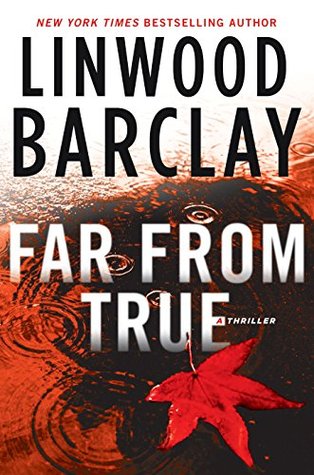
 Barclay is an established writer, with a number of best sellers to his credit, but he was new to me. My thanks go to Net Galley and Berkley Publishing Group for providing me with a DRC in exchange for an honest review.
And indeed, it does take a pro to weave such an intricate plot so adroitly. But let’s take it from the top and go from there.
The story is set in Promise Falls, an ironically named town that contains more trouble than you can imagine. The initial crisis takes place at the drive-in movie theater, the last showing before the place closes up and the property is sold. But then the unthinkable happens.
Like most disasters, this one triggers a flurry of other emergencies erupt related to the victims of the theater tragedy. There are greedy relatives, heartsick loved ones, and other events and individuals that are just bizarre. And then there are more bodies, and the number “23” appears over and over again, a grim warning.
Some mystery novels are great for the classroom. This one isn’t. In fact, if I were a school librarian I wouldn’t buy it either. Leave this one for consenting adults.
For us, there is more flexibility. There are some parts that are more sexually explicit than your average detective novel, and readers know whether or not they find this appealing. If you have read Barclay’s other mysteries, perhaps you already have some notion of what is in store. But if, like me, you come to this title without having read the first book in the Promise Falls series, you can dive in as if it were a stand-alone mystery. There is no prior knowledge assumed.
I liked the story in spite of the kinky stuff that reached beyond my own perception of what is tasteful. The suspense was so palpable, and the many subplots so well woven throughout the text that I expected to rate this title five stars. I read several books at a time, and for awhile this was my “dessert” mystery, the book I reached for after I had dispatched my obligation to the publisher for a title I had not enjoyed as much. While there were a couple of situations that confused me sometimes—we have two new couples that are starting a relationship while all this unfolds, and I tended to mix them up, and which kid was whose again?—most of the characters were distinct and developed sufficiently that I knew who they were and what they were like when the story bounced back to their point of view. Frequent changes in setting, character, and point of view heightened the suspense.
I was eternally grateful not to have a protagonist agonizing over whether or not to stop at the bar, whether or not to have just one beer. Heaven save me from any more agonized alcoholic main characters. And so this was a relief.
Ultimately though, the ending left me feeling cheated, and that is where the final star fell off my rating. To be sure it was a surprise ending, but it felt dissonant and tacked on. I often can’t tell how much I like a good story until I see the ending, and that was surely true here.
Nevertheless, it’s a solid piece of fiction, and worth your time and dime. Unless you have deep, deep pockets, I don’t think I would go full hard jacket price for this one, but if you can obtain it at a discount, digitally, or in paperback, it’s a fun read for a chilly late winter weekend.
This title will be available for purchase March 8.
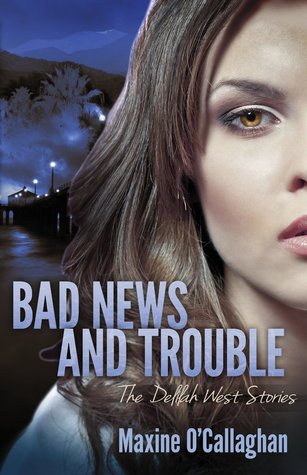 I am always on the lookout for a new, well written female detective series. There are some Grand Masters out there that I adore, but the problem is that I can read faster than they can write. So when I was given the opportunity to check out Delilah West, a sleuth whose stories originated during the latter half of the 20th century, I jumped on it, and I am so glad I did. Thank you, Brash Books Priority Reviewers Circle, for the free DRC. This book is available for sale now.
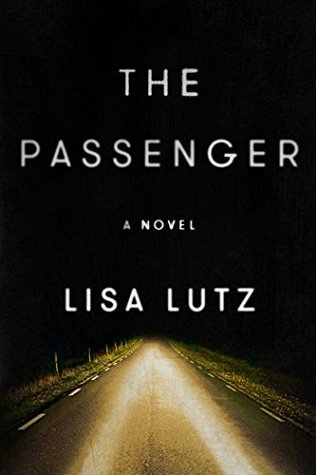 Lisa Lutz is best known for her series, The Spellman Files, which I confess I have not read or watched on television. I came to this stand-alone story brand new, and can tell you that it’s fresh and original, a real kick in the pants. Thank you Simon and Schuster, and thank you too, Net Galley, for the DRC. I picked this thing up and then hardly put it down, but my review had to wait awhile in order to be within the courtesy-window of no more than three months from publication. And it gave me some time to think.
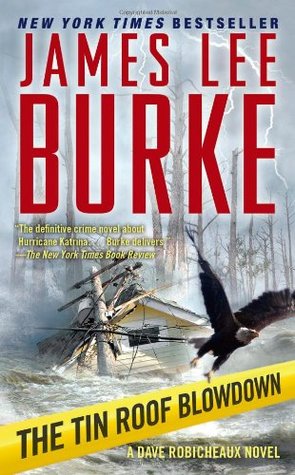 Sometimes people say they “ran across” a book, and that is close to how I came to read James Lee Burke for the first time. I had been tidying up for company, and my daughter had selected this book from the “free” pile at school, then decided she didn’t want it. She is a teenager, so instead of finding our charity box and putting it there, she dropped it on the upstairs banister. I scooped it up in irritation..then looked at it again. Flipped it over…read the blurb about the writer. This man is a rare winner of TWO Edgars. Really? I examined the title again; I hadn’t read any novels based on Hurricane Katrina, so why not give it a shot?
 The Man Who Cried I Am was originally published during the turmoil of the late 1960’s, in the throes of the Civil Rights and antiwar movements, and following the assassinations of President Kennedy, his brother Bobby, Martin Luther King Junior, and Malcolm X. Now we find ourselves in the midst of a long-overdue second civil rights movement, and this title is published again. We can read it digitally thanks to Open Road Integrated Media. I was invited to read it by them and the fine people at Net Galley. I read it free in exchange for an honest review. It is available for purchase now.
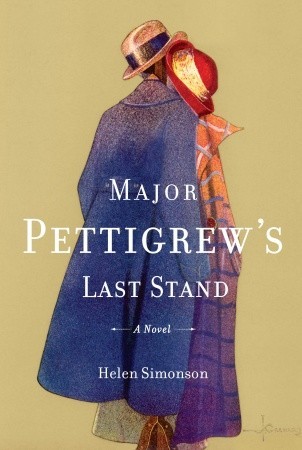 Had this story not received such wide acclaim and been made into a movie (which I’ve yet to see, but I watched the Oscars), I would probably never have gone near it. I like working class protagonists, and I don’t read many romances, because often as not, they are corny, soft porn, or both. But I saw it at the library and decided to give it a try, and I quickly remembered, upon reading it, that some rules are made to be broken. So even if you usually don’t read romances, and even if a retired British pensioner is not your idea of an interesting protagonist, this should be the exception to the rule.
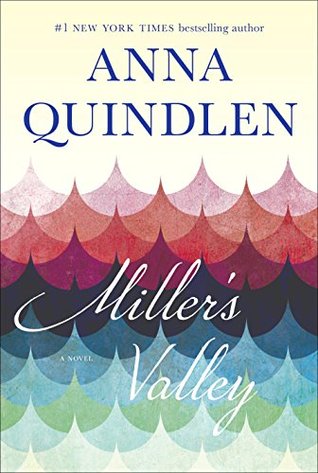 Miller’s Valley is an intimate, poignant story so personal that it is hard to remember that it’s fiction rather than a memoir. Thanks to Net Galley and Random House for the DRC. Though I usually read several DRC’s at a time, this was the one I saved for the end of the day, for that time when the phone stops ringing, the dogs quit barking, the family doesn’t need my attention, and there’s nobody at the front door. During those deep, silent hours I immersed myself into the life of Mimi Miller, hypnotized as if my best friend were perched on the bed spilling out her secrets.
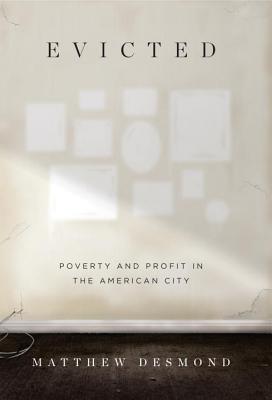 I was cruising for something new to read, something that wasn’t yet another mystery or thriller. I ran across this title and requested it from Net Galley, then asked myself what I had been thinking! Who wants to read an entire book about eviction? What a grim prospect. I was even more surprised, then, when I opened it and couldn’t put it down. Desmond approaches his subject in a way that makes it not only readable but compelling. Thanks go to the people at Crown Publishing and Penguin Random House for approving my request for a DRC. This book is available to the public March 1.
 In 2015, I reviewed Storme Front, the second of four books in the Wyatt Storme series. I loved it and rated it 5 stars. Given the opportunity to read and review this first in the series, thanks to Brash Books Priority Reviewers Circle, I didn’t have to think twice. Thank you to Brash for the DRC, which I read free in exchange for this review.
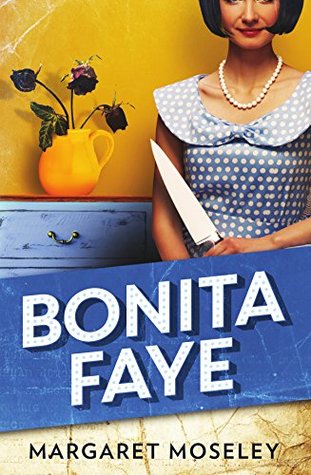 Brash Books has a new release, and it’s exactly the kind of novel you’d want to take to a warm sandy beach, or perhaps just to curl up with while the snow falls. I was permitted an advance glimpse, courtesy of Brash Books Priority Reviewers Circle. It was originally published in 1997, but due to be released again February 23, 2016. You’re in for a good time with this one.
