
Hail Storme, by W.L. Ripley**-***

HailStormeIn 2015, I reviewed Storme Front, the second of four books in the Wyatt Storme series. I loved it and rated it 5 stars. Given the opportunity to read and review this first in the series, thanks to Brash Books Priority Reviewers Circle, I didn’t have to think twice. Thank you to Brash for the DRC, which I read free in exchange for this review.

In this first installment, Storme, a retired football hero and Vietnam veteran, goes bow hunting for deer in Missouri and runs into trouble. Tracking deer, he literally walks into a field of marijuana; before he can decide what if anything to do about it, a snarling Doberman charges him, and he has to kill it. From there, the action unspools, taking him into town and leading the reader to a series of conversations and confrontations Storme has with the local law, the local goons, and of course, women.

The local law can’t quite decide what to make of him:
“’You a wiseass, Storme?’ McKinley asked.
“I shrugged. ‘It’s a gift.’”

Of particular interest is Willie Boy Roberts, a local businessman that has full time body guards, here in this tiny town. So right away, we know there’s trouble a-brewing that extends far beyond a simple field o’ weed.

Storme also meets Chick Easton, who will become his wisecracking, crime-fighting partner continuing on into the series. Easton has been a green beret, has killed people for the CIA, and is also a Vietnam vet. He has considerable regret about the life he has led, but he’s a great guy to have in your corner. He also provides the perfect counterpart for all of the genuinely funny snappy patter in the book.

I also genuinely appreciated, as I did with the second Storme book, having a protagonist that drinks coffee rather than whiskey or beer, but doesn’t constantly agonize over his alcoholism. It seems like two out of three works of fiction these days feature alcoholic protagonists or important secondary characters, and I have had my fill. Just pour the coffee and shut up already! A welcome change.

This first novel started out a little bit uneven, but hit its stride well before the halfway mark. I really thought it would be a four star read till I got to the last ten percent. There, it gets ugly. There’s a steady stream of anti-gay venom. Easton discusses a suspect with Storme, and he deliberately lisps—gee, I’m not laughing—and does the whole limp-wristed thing when he speaks of the character’s possible motivation. I won’t say more here lest I spoil a (small) part of the whole who-dunnit, but there is so much ugliness toward gay men, not just the offensive jokes, but some plot moves that left me feeling as if I’d eaten spoiled food, packed into this last portion of the book that it’s impossible to disregard it and move on.

I checked the copyright date, longing for something that would permit me to give this otherwise really good story the four stars it deserved up to then. It was originally published in the 90’s. No, no, no. Not okay.

Because of this factor, I rate this novel 2.5 stars and round it up with a fair amount of ambivalence.

The writer makes a point, subtle yet distinct, that Storme is a Christian. Fine with me. But if the anti-gay aspect of this novel is tied to dearly held principles Ripley possesses, I can’t become a constant reader. If it was simply a failure of the writer to update his work to reflect a more widely held social view—and here I am thinking of the occasional novel that gets written, sits on someone’s desk for several years, and then sees publication much later—then he and Brash might want to have a conversation about editing. Don’t get me wrong; I support the First Amendment right to express one’s ideas freely. But when those ideas brim over into hate speech and homophobia, I also can’t give a positive review, or consider myself a potential customer of the work presented me.

If you are homophobic and love mysteries, this one is your book, and it’s available for purchase now. Otherwise, consider moving on to Storme Front. You don’t have to have read the first in the series to enjoy the second.

Am I game to read #3 and #4, knowing that #2 is free of these challenging issues? If I can get the DRC’s for them, I’ll dive right in. Everyone is entitled to make a mistake early in their career. But right now, I wouldn’t lay my money down
Bonita Faye, by Margaret Moseley****

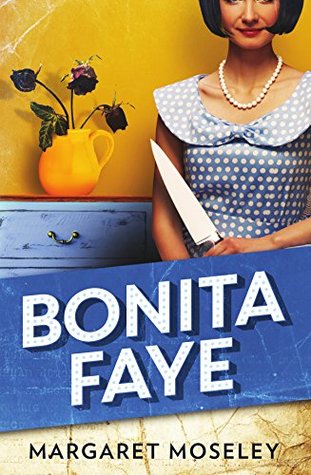
bonitafayeBrash Books has a new release, and it’s exactly the kind of novel you’d want to take to a warm sandy beach, or perhaps just to curl up with while the snow falls. I was permitted an advance glimpse, courtesy of Brash Books Priority Reviewers Circle. It was originally published in 1997, but due to be released again February 23, 2016. You’re in for a good time with this one.

Bonita Faye is our protagonist, of course, and although her story has been compared to Fannie Farmer’s work, I found her to be more of a female, less extreme version of Forrest Gump. The narrative begins in a dialect that is semi-literate; the setting is partly in Poteau, Oklahoma and partly elsewhere. Bonita Faye is born poor and without any real source of support, but rises above it through means that are both ingenious and at times, very funny. Although the story is ostensibly a mystery, we don’t need to know who-dunnit, because Bonita Faye did it. All of it.

Because some of us don’t need a knight to ride to our rescue. Some of us can take care of ourselves.

Although I found the protagonist to be engaging, I think the novel would actually be strengthened by pulling back a bit on the cornpone dialect. There is also a point at which her education is improved and her English becomes more eloquent, but then for no discernible reason, she falls back into the same aw-shucks dialect she had initially.

There are multiple characters that are developed besides Bonita Faye. I liked Claude (“Oink oink!”) and also Simone. I had trouble buying into the second half of the thread involving Michel. I also found the thread with Elly to be problematic, although I loved the final resolution of the problem that develops toward the end.

When push comes to shove, Margaret Moseley is a force to be reckoned with, and I look forward to seeing more of her work in the future. Those looking for a fun, accessible vacation read should order this book.

Dragon’s Teeth, by Upton Sinclair*****

dragonsteethDragon’s Teeth is the third in the Pulitzer-winning Lanny Budd series. Set in 1942—the present, at the time it was written—it provides the reader with a fascinating, well-informed, hyper-literate view of Europe during the years before and during Hitler’s ascent to power. While it requires a fair amount of prior knowledge in order for the reader to keep up with the story, history lovers, political philosophers, and especially those fascinated by the period in question will find it riveting. Thank you Open Road Integrated Media and Net Galley for allowing me a DRC. This title is available for purchase digitally now.
Sinclair, himself a socialist of the Utopian variety, shows us the ideas of the “reds and pinks” that were plentiful and active—yet in the end, not active enough to prevent a Fascist takeover—during this period. Budd is the heir to a munitions-maker’s fortune, and so his is the life of the idle rich. He amuses himself by hosting salons, popular at the time, which were group discussions regarding alternative political ideas. His wife Irma is heir to an even greater fortune, and is uncomfortable hosting these odd people that speak of redistributing wealth, but in time she relaxes, understanding that this is just one of Lanny’s hobbies and is unlikely to ever affect her personal comfort level. And indeed, Lanny is never going to sully his hands by taking to the streets with working class militants; in fact, apart from buying and reselling artwork, he’s never going to even hold down a job, reasoning that it would be wrong of him to take a job he does not need when someone else really does need it. He is amused and comfortable in his role as armchair socialist and angel financier to a leftwing newspaper. Yet the idea of actually taking power…hmmm.

“It seemed to have begun with the Russian Revolution, which had been such an impolite affair.”

Nobody writes setting like Sinclair. The story begins in Italy following the First World War; Mussolini has risen to power, and we can almost hear the hard heels striking the cobblestones. Budd is somewhat concerned for Hansi, his brother-in-law who is Jewish, but he also believes that money talks, and any unpleasantness can probably be squared away with a donation here and a greased palm there. As long as the seas are safe, the family considers simply waiting out all the unpleasantness on the family yacht, hoping that things will be settled down by the time they want to dock somewhere.

Hitler is out and agitating, but no one really thinks he will take over the world; if he were going to do that, he surely wouldn’t stand in the streets and scream about it, now would he? And we feel, through Lanny and his family, the stark startled horror when his power increases and his Storm Troopers become an official government organization rather than simply a pack of street thugs. At the same time, we also experience his and others’ perplexity at the name chosen by the NSDAP, because it invokes the name of Socialism for a system that is actually far-flung from it, and it calls out to the working class even as it pounds their unions to dust and sends their leaders to concentration camps.

While the working class of Europe starves or stands on line at a soup kitchen, the Budd family has the traditional six meals daily; when they are not at home, they do the charitable thing, and instruct the servants to find some “worthy poor” to consume the unused meals. Well…not in the house, of course. Somewhere else.

At times, the tone is satirical, and in a few places made me laugh out loud, mostly in the beginning. Later the tone changes and is sharper, angrier. I found it deeply satisfying.

Particularly fascinating is the statement that “He who could get and hold the radio became God.” In one form or another, this has been true since the radio was introduced into first-world homes nearly 100 years ago. Major media sources had the monopoly on information, apart from the printed press. The radio, then television…only recently have ordinary people had the means to record and disseminate information on the phone they carry with them everywhere. And it’s interesting to see the changes that result.

Perhaps your thoughts will travel in different directions than mine did in reading this interesting nugget, but it is bound to make you think. If you are looking for some escapist material to take to the beach or curl up with by the fire, this isn’t it. This is fuel for the brain, fierce material that came from a time when all of Europe had to decide which side they were on.

For those that love history, literary fiction, or political science—or all three—highly recommended!

Try Not to Breathe, by Holly Seddon*****

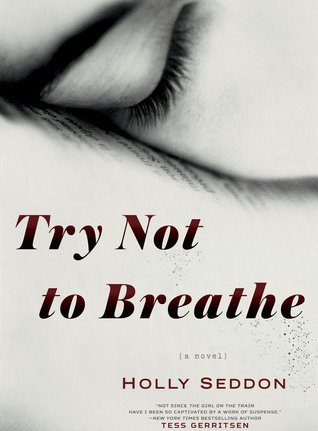
trynottobreatheTry Not to Breathe is the sort of book that steals into your senses and takes over your life until it is done.I was invited to read and review this title by Net Galley and Random House Ballantine. My thanks go to both.  I fed it to myself into intentionally small bites at first, because I read several hours before I go to sleep, and under no circumstances did I want this story anywhere in my dreams. On Friday I hit the halfway mark, and immediately realized that Seddon’s novel would occupy my Saturday, period.
It’s a story that will make you put the cereal in the fridge and the milk in a cupboard. But on the other hand, it’s a terrific book to be snowed-in with.

Our premise is that Amy, a fifteen year old girl that was savagely beaten by a party unknown, has been unconscious in the hospital for fifteen additional years. But she isn’t on a ventilator, and brain waves turn up on the MRI. She can’t communicate, but she is thinking part of the time.

She’s still in there.

Our two other chief protagonists are Jake and Alex. Jake was Amy’s girlfriend, and briefly was considered a suspect by police. He didn’t do it, and he still visits her now that her family is gone. Partly it is because it’s believed that she can hear what is said to her, and he hopes that he can provide some measure of comfort. And partly he visits the ward for the quiet. It’s his private time, when neither work nor his wife can claim his attention. But he doesn’t tell his wife, and the lies are building up, corroding his relationship with his very pregnant spouse.

Alex is a free lance reporter whose love affair with alcohol has displaced her career, ended her pregnancy, and destroyed her marriage. She is isolated, miserable, and needs someone to talk to. With the tantalizing promise that her nearly moribund career can be rekindled by uncovering new information in Amy’s case, she begins visiting Amy, and she begins digging. And as one revelation leads to another, the tension and suspense are nearly unbearable!

The ending leaves me slightly dissatisfied, a left curve thrown in order to surprise the reader, but the innovative way in which it is revealed is so clever that I can’t bring myself to lop even half a star off my rating. If like me you occasionally wallow in a good thriller or mystery, you’ll find this one is a cut above the rest.

Seddon, herself an accomplished journalist, makes her debut as a novelist with this title, and she is a writer to watch in the future. Her thriller is available to the public February 23, 2016. Highly recommended!

The Lion’s Mouth, by Anne Holt****

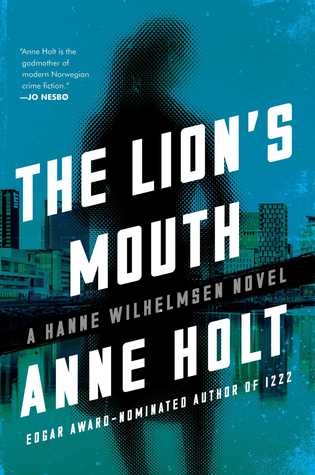
thelionsmouthWho killed Prime Minister Birgitte Volter? Was it the neo-Nazis? The Satanists? Was it a personal thing, perhaps an angry family member? The answer is cleverly built up to, so that the reader has a fair chance of figuring it out, and yet will most likely be surprised. I was.

Thank you, Net Galley and thank you also, Scribner for the DRC. Anne Holt is an established writer and it shows in the way she expertly crafts character and setting. I was at something of a disadvantage, never having been to Norway; the place names had no meaning to me, apart from the names of major cities, and I struggled with the governmental structure. When Parliament was mentioned I was fine, and likewise the Supreme Court made sense, but then we came to the President of the Supreme Court, a prominent figure—is that like a chief justice, or is it a very different construct from that of USA?—and also there is a President of Parliament. Americans should be prepared to either Google these items or accept a certain amount of ambiguity; I chose the latter, and it worked all right for me. I knew that there would be some new terrain when I began reading, and as part of my goal was to widen my own reading world a little bit, it was worth battling the unknown. A mystery is an accessible way to do this, and I enjoyed it.

The book was originally published in 1997; even so, I found a couple of stereotypes unsettling. The fat jokes seemed inappropriate and disturbing; Little Letvik started out a caricature, and even when she was developed a bit more at the end, it didn’t help much. Ruth-Dorthe is a “blonde bimbo” and “slightly worn Barbie doll”. There was also some slut-shaming that I could have done without.

On the other hand, the character for whom the series is named, Hanne Wilhelmsen, is a lesbian and is the hero of the story. She is sensible, even-tempered, (thin,) and very intelligent. Another character I really enjoy is Billy T, a boisterous, funny fellow who lightens the story considerably. In fact, there were a number of places that made me laugh out loud.

Although the book is part of a series—this novel being the fourth—I liked it just fine as a stand-alone.

All told, it’s a strong work of fiction and a good choice for the mystery lover to add to her collection. With the above reservations, I recommend it to you.

It is available for purchase February 9, 2016.

Wake Up and Die, by Jack Lynch****

wakeupanddieThis book is the fourth in the series featuring Peter Bragg; the series was nominated for the Edgar Award and twice for the Shamus Award. I’ve read three others in the series already, so imagine my delight when I located this book, formerly published as Sausalito, among the DRC’s offered by Brash Priority Readers Circle.

And apologies to my readers: I originally published this review under a different title. I use my Goodreads account to organize my shelves, a lazy, easy way to keep track of what I am reading (usually 6-8 books at a time); what is waiting to be read next; what I have, own, and intend to read later; and even what books I don’t have and hope to get. The weak link, as was proven here, is that when a book’s title changes, Goodreads’s new owner, Amazon, is very restrictive about accepting new titles. In years past, since I am a Goodreads volunteer librarian, all I had to do to personally add a title and book jacket was either scan it physically, or send a relevant link to the superlibrarians (the ones that get paid), and they would drop it into the website.

Not anymore.

Before I knew it I was confused, and since I knew I had two Bragg titles to read and had just finished one, I assumed it was that of the single book jacket on my Goodreads page. There is a cost to letting someone else’s system organize one’s reading, and this is it. So this review was originally published on this blog as The Dead Never Forget, which is the first Bragg title and which I have not yet read. My apologies again to my readers and to Brash Books.

Like most Peter Bragg mysteries, this one is set in the Bay Area. A huge development is about to built on the waterfront, complete with a convention center and any number of hotels and restaurants. The problem arises when the residents of area houseboats protest the likelihood that they will be shut out. Bragg is working a different case, one involving pornographic photos that have been sent to the subject’s father, when he finds himself on the waterfront near his home helping to get people and pets to safety after a suspicious fire breaks out. A murder is discovered and before you know it, all hell has broken loose.

The setting is the 1990’s, shortly before the internet changed all of our lives. It is actually a contemporary setting because this is when the mystery was written, but now as it is re-released, it feels like a noir setting, because all of the telephones are land lines and all files are on paper buried in metal cabinets. In this sense, I think the series actually benefits from the time lag.

The novel is ambitious, bouncing us from one setting to another and introducing a large number of characters. I had trouble keeping track of them all. I might have wondered whether my mind was getting old and rusty but for the fact that I was reading a different galley at the same time with even more characters, and the latter left me with no doubt whatsoever who each one was.

On the plus side is not only our opportunity to meet the detective in his first criminal investigation, but I also like the way issues of race and gender are treated; appropriate and at times quite zesty without ever appearing to be self-consciously PC or awkward. There is a moment toward the end that made me want to stand up and cheer! This moment took what was about to be a three star review and bounced it back up to four stars.

On the downside, in addition to the confusion engendered by too frequently hopping between undeveloped characters and situations, there’s an over-the-top moment that some readers will enjoy, but that I found was too much for me: too much vigilantism, too violent, and over the top on my personal ick-meter.

Those that are fans of Jack Lynch will want to read this newly-republished mystery in order to introduce themselves to a kick-ass series. Those that love good mysteries and/or fiction set in the San Francisco area should also get this book and read it.

Why not spend a weekend curled up with Peter Bragg?

Pawn’s Gambit and Other Stratagems, by Timothy Zahn*****

Just released today; reviewed in November and bringing it back to remind you, because this is science fiction/fantasy at its best.

seattlebookmama's avatarSeattle Book Mama

pawnsgambitPawn’s Gambit and Other Stratagems is a collection of kick-ass science fiction stories, including a novella, produced digitally for the first time. This is the cool thing about Open Road Integrated Media: the publishers find outstanding work from the pre-digital era and bring it to present-day readers anew so that it can be widely read and appreciated all over again. But though these stories were written earlier, many of them have never been published in book form before. I got to check out the collection free in exchange for an honest review, and I struck oil. I wondered why I hadn’t found this writer earlier, since I have been known to binge on sci fi now and then since the 1990’s. What Zahn is best known for is the Star Wars series, which I didn’t read. In passing it by, I nearly missed a fine writer, and I will watch…

View original post 266 more words

The Children’s Home, by Charles Lambert*****

Hot off the presses! I reviewed this just before Christmas, and it is available today. Fantastic read.

seattlebookmama's avatarSeattle Book Mama

thechildrenshomeLambert is a brilliant writer, and his absorbing new novel, The Children’s Home, is the best literary fiction I have read in some time. Thank you to Scribner and Net Galley for the DRC, which I received free in exchange for an honest review.

We start with Morgan, a bitter recluse rattling around in his immense family mansion, afraid to leave its walls for fear someone will see his face and ridicule him. His sister Rebecca runs the family business, and she hires Engel to serve as housekeeper and cook to him. Moira and David are two children that magically appear at his estate. Unlike normal children, they don’t leave messes lying around, whine, or need to be cleaned up; Morgan notices that whenever he wants to concentrate or not have the children around, they seem to vanish, appearing again when wanted.

Motherhood should be so sweet.

But back to…

View original post 366 more words

Breaker: A Windy City Dark Mystery, by Richard Thomas*****

Released today but reviewed a few weeks ago. This one is a don’t-miss-it!

seattlebookmama's avatarSeattle Book Mama

breakerawindycityRichard Thomas is a monstrously great writer. In Breaker, a Windy City Dark mystery, he presents us with Ray, a man of unusual and intimidating appearance; a sinister stranger in a white van who victimizes Chicago’s working class school girls; and Natalie, the girl that lives next door to Ray. Though this is the first Windy City Dark mystery I read, I fell in, only extricating myself close to bedtime, because this is not the kind of thing you want entering your dreams. This smashing thriller came to me free of charge from Net Galley and Random House Alibi.

The first thing I usually look for in fiction is strong character development. In excellent fiction, sometimes the setting drives the character; sometimes the setting and character drive the plot; sometimes the plot is driven by character. Breaker definitely falls into the last of these categories. Told primarily in Ray’s first…

View original post 383 more words

Blind Spot, by Tom Kakonis***-****

BlindspotThis one is 3.5 stars, rounded up. Thanks go to my friends at Brash Books for permitting me access to a DRC. The book is available for sale now.

Kakonis is a kick in the pants, and he builds suspense like nobody’s business. What could be scarier than having one’s youngster snatched by a stranger? The stakes build high, higher, and higher still. Into the bargain we are concerned for the hopeful yet still-grieving mother who believes she has lawfully adopted young Davie (formerly Jeff). Her own child, Sara, died tragically, and her husband has done everything, including the unthinkable, to bring home another child to make the family feel whole again.

Meanwhile, the Quinns search everywhere for their son. After the first 48 hours, the cops have clearly quit looking, so they print flyers to tack on every available public surface, and for good measure, they post an extra large one on their own car window. The “blind spot” occurs when a friend of the new parents passes the Quinns’ car in traffic. The friend’s husband is at the wheel, leaving her free to crane her neck and gawk at the poster, and Marshall Quinn’s pulse quickens as he sees the woman’s mouth form the words, “I know that kid.” Now the search is even more heated as Marshall searches for Della, the woman who knows who has their little boy.

Kakonis’s strength is in his spicy dialogue and strange dialects. In some ways his work is hyper-literate, delving into vocabulary most folks may not see often, but both the dialogue between characters and the internal dialogue as well are so riddled with offensive terms that it’s hard to enjoy. It’s true that Kakonis uses these terms to make plain who is a bad guy and who is not—not that it’s ever unclear, but it’s not the first time I’ve seen an author use the device to make us hate a character even more than we already do. But in such a case, less is more, and the whole first half of the story is studded with really ugly racist expressions, as well as slurs on women, the aged, and the gay. I can see where there would once have been a readership that would have casually flicked through these terms and excused them either because they were untroubled by them at all, or because it is the villain that generally says them. I know this work is seeing fresh publication after a hiatus. But to me, it feels like a lot of work to sift through the epithets to find the mystery under all that sludge.

I considered rating this tale, one with strong pacing and characterization but so many challenges, as 3 stars, but I enjoyed another of this author’s stories quite a lot, and some of the good will has carried over into this review. I’m not ready to give up on this writer’s work yet.

For those that like a fast-paced thriller or mystery and that can overlook the issues I have mentioned, this book is recommended.