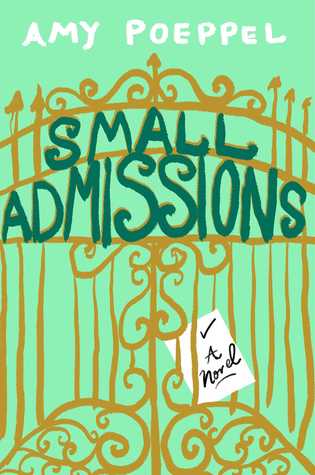
Small Admissions, by Amy Poeppel*****

Happy release day! The holidays are over and your humor may be running dry and a little snarky by now. If so, this book is just what the doctor ordered…and it’s for sale right now.

seattlebookmama's avatarSeattle Book Mama

smalladmissionsI received an advance reader’s copy of this darkly amusing novel from Net Galley and Atria Books. It’s funny as hell, and even more amusing to teachers, school counselors, and others that have dealt with high maintenance parents and the aura of entitlement they carry with them. I rate this title 4.5 stars and round upward.  It comes out December 27, 2016, just in time to chase away your post-holiday depression.

I sat on this book for more than three months, which is a rare thing for me.  I kept starting it, not liking it, and deciding to set it aside and look again with fresh eyes later. Finally November came, and I realized the book was not going to change; I’d given my word to the publisher I’d review it; it was time to suck it up and get the job done. And this is a little ironic all…

View original post 408 more words

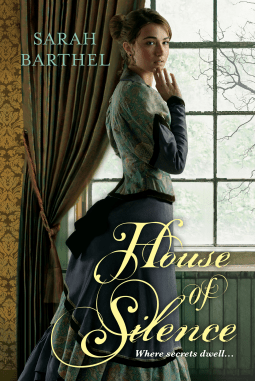
House of Silence, by Sarah Barthel**

houseofsilenceThe premise of this historical romance had me at the get-go: Isabelle Larkin is engaged to marry wealthy, powerful Gregory Gallagher, but she calls it off after she sees him commit murder. Her family doesn’t believe her, and embarrassed, they have her trucked off to a sanitarium, where she meets Mary Todd Lincoln. I thank Net Galley and Kensington Publishing for the invitation to read and review. This book becomes available for purchase December 27, 2016.

Barthel’s story has some nice moments. I love the bit where our protagonist ruminates about the impropriety of unlacing her boots in a place where they might be seen; let no one think her a loose woman!

However, there are also moments when the narrative hiccups in a way that startles me. Ultimately, this happens so frequently that the spell is broken, and instead of being transported to a different time and place in the way one is with strong literature, I am reminded all too often that this is a galley, and it’s one that needs a hands-on editor before it should see daylight.

Every writer of historical fiction has to make a choice. Are we going to use exactly the same forms of language and speech that were common to the time, or are we going to ease up just a little and use the book’s note to the reader to explain that this has been done intentionally for the purpose of creating a more accessible novel?  This of course doesn’t even include the extremely risky, though occasionally very successful choice to move an historical tale to the present setting; modern Romeo and Juliet stories immediately come to mind.

Barthel has chosen to play it straight and use the speech of the time, but every now and then, a phrase or sentence of twenty-first century casual speech flies in and lands mid-chapter, a bit like a flying saucer. Suddenly I see “As if I cared about sex at a time like this”, and “I hope you are all right with that.” There are a lot of these moments inserted into a page here or there of otherwise-Victorian prose, and they keep me from buying into the premise.

I hope that this story will be re-released somewhere up the road, and if so, I would be happy to reread it and possibly recommend it to the reader. It’s a shame to see such an excellent premise spoiled with what is essentially sloppy editing. But in its present form, I can’t recommend it to you.

Blind Ambition, by John Dean*****

blindambitionJohn Dean was counsel to the president during the Nixon administration, and was the first to testify against all of the Watergate conspirators, including Nixon and including himself, a bold but necessary decision that led to Nixon’s resignation—done to avoid imminent impeachment—and Dean’s imprisonment. Dean’s story is a real page turner, and Nixon-Watergate buffs as well as those that are curious about this time period should read this book. I read the hard copy version, for which I paid full jacket price, shortly after its release, and when I saw that my friends at Open Road Media and Net Galley were re-releasing it digitally, I climbed on board right away. This title is available for sale today, December 20, 2016.

Dean was a young lawyer whose career rose rapidly. When Nixon found out that men employed by the Committee to Re-Elect the President had been arrested for the burglary of the Democratic Party National Headquarters, which was housed in the Watergate Hotel, he quickly became enmeshed in a plan to bury the whole thing. Once he realized (belatedly) that he and his closest advisors had made themselves vulnerable to criminal charges, he had Haldeman, his right hand man, reach into the White House legal staff to find an attorney that could serve as an intermediary so that none of them would need to have illegal conversations with each other. Dean was sometimes called upon as a problem solver, but more often he was essentially the messenger between the president and his closest advisors. Nixon’s thinking here was that everything that passed through Dean would be covered by client-attorney privilege. When this turned out to have no legal basis and heads were going to roll, Dean learned that his own head would be among those served up on a platter by the administration in its effort to save itself. He chose to strike first by testifying against everyone involved in the conspiracy to obstruct justice, and eventually this included President Richard Nixon.


Those old enough to recall having watched Dean testify on television will be interested in the back story here. Dean has a phalanx of his own attorneys, but he decides to appear at the microphone without them; they are among the faces in the back on the TV footage. He also chose to speak in a dead monotone, because the information he was transmitting was itself very dramatic, and he had already been represented as a squealer in some media sources. Instead, he chose to portray himself as a small man, slightly balding, with his horn rimmed glasses and his notes, sitting alone in front of a microphone in order to bravely announce the truth to the Senate and the world.  And it’s effective. See what you think:


When I first read this book I was not long out of high school, and I met the text with snarky disapproval, based more on the very idea that a man as young as Dean could choose to affiliate himself with the Republican Party during the time the Vietnam War raged than on the skill with which the book was written. This time I come to it as an adult with a lot more experience related to writing, and my reaction is completely different.  Dean writes his story like a legal thriller. It’s fascinating and enormously compelling.  I find that what I think of Dean morally and politically is irrelevant when I rate this text; the writing is first rate. Most interesting of all is the way he is able to inject wry humor into the series of events that ended his legal career and sent him to jail. His sentence is not long, though, and much of it is spent in a relatively gentle confinement. He becomes a college professor and writer later in life, which he still is today.


Those that have real depth of interest will also be interested in a later book, The Nixon Defense, written once all the Nixon tapes were released to the public:


The Nixon Defense: What He Knew and When He Knew It, by John Dean *****


Both are riveting, and highly recommended.

Best of 2016: Historical Fiction

There weren’t a lot of outstanding historical novels this year, but those that are good are oh, so good. Every single one of these five titles owned me until the story was done; for awhile afterward; and a little bit still.

                          #1 thegirlfromv

The Girl from Venice, by Martin Cruz Smith*****

HONORABLE MENTION:

Best of 2016: Literary Fiction

I’ll bet you do it too! I’ve found myself postponing the most crowded or hotly contestable categories for last, and literary fiction has been strong this year. It’s a really tough call, but in the end, I went with consistency and charm to break what is almost a five way tie.

#1

MillersValey

HONORABLE MENTIONS:

thegirls

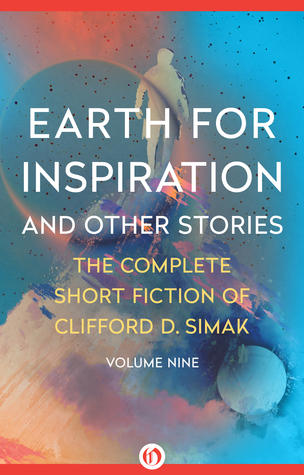
Earth for Inspiration and Other Stories, by Clifford D. Simak*****

earthforinspirationClifford D. Simak wrote for decades during the mid-twentieth century.  His close friend, David W. Wixon, has undertaken, with Simak’s approval in his declining years, to collect all of the stories that were published in various magazines and anthologies beginning in the 1930’s and ending before the digital age was off the ground. This one is volume 9, and it’s an interesting hodgepodge of the very best—which is most of it—and the very worst, which is just two stories. Needless to say, I thought a lot about how I should rate such a collection.

Finally, I decided that price would be the deciding factor. If it was going to set you back twenty or thirty bucks, then I’d have to cut it down the middle and call it three stars, which would be sad but fair. However, I logged onto the big A and found it’s sold digitally for six bucks. At this price, you’re paying a buck each for six absolutely stellar short stories; there are three more good ones thrown in; and you can afford to skip the two stinkers. Given that factor, I’m rating this 4.5 stars, with just half a star gone for the two missable stories, which I’ll talk about in a moment.

Thank you Net Galley and Open Road Media for the DRC, the fifth Simak collection I have received from them. I sat on this one for a long time because I’d been reading a lot of his work, and was beginning to get grumpy at the similarities among some of them. Just how many different characters can a writer name “Doc” and remain credible? But then I realized that when Simak submitted his stories to various periodicals, names were about the least important aspect of his work, because he wrote them never dreaming that his writing would be important enough to appear in an entire series, back to back. Who knew he would become so successful?

During the 1940s and 1950s, as Wixon points out, science fiction was barely off the ground—pun intended—and Westerns were massively in style. I guess you could say they were the zombie apocalypse of their time; if a writer wanted to pay his rent without having to work a day job, he had to write some westerns. And since Wixon is publishing all of Simak’s stories rather than the best-of, he has to insert the few losers somewhere also.

So let’s just get the bad stuff over with so I can tell you what’s great here. The bad ones are sandwiched midway through the collection and appropriately flanked by good writing before and after. “Hellhound of the Cosmos” is bad enough that Wixon’s preface—a brief paragraph appearing before each story—says he “…will not try to excuse this story’s failings” by pointing out that Simak wrote it in 1931, at the very get-go of his career. Fine; don’t. But it’s a really dumb story, and I’d hate to see you use it as a yardstick by which to measure this man, who would become a Grand Master of sci fi. Read it or skip it, but this is not the story I recommend.

Further along we have “Good Nesters Are Dead Nesters”. This one is actively offensive, and if it were written today, I might well shoot down the entire collection because of it. But I know from the things I heard during my childhood that the language used here, while truly offensive, was also commonplace back then. The US was a lot whiter; the interstate was a new thing; satellite communication wasn’t yet dreamed of. People lived in isolated areas and got stupid ideas about what other people were like, largely due to stereotypes promoted in the news, on radio, and on black and white television.

So although I—married to an Asian immigrant—am as pissed as anyone about the singsong caricature of the Chinese cook, I also know this was a widely accepted way to regard people from China and Japan. As if that’s not terrible enough, a disabled person is referred to as a helpless, “twisted cripple”. Ohhh, no thank you. As you can imagine, I quickly gave myself permission to make a note and then skim till I reached the next story.

However, the stories that flank the collection, starting with the title story and ending with “Full Cycle”, are outstanding.  The latter is written in the 1950s, and reflects both the reality of a pair of Atomic bombs having been dropped in Japan eleven years before it was written, as well as the anti-communist hysteria so prevalent in the news. The idea is that all cities are decentralized, because a bomb might be dropped on a large urban center, but the USA is a very big place, and so small, mobile communities, all of them having traded their houses for trailers, is now the way Americans live. It’s very cleverly put together conceptually, and Amby, the protagonist, is so well drawn that at times, I wanted to weep for him.

“Honorable Opponent” has to do with a US planetary colony that has just been defeated by another planet’s military. The result took me entirely by surprise, and I think I’ll remember this story after I’ve read other science fiction by other authors. The same is true of “Carbon Copy”, a fine tale combining  science fiction, ruthless capitalism, and brilliant imagination. “Desertion” is another stellar story. If you want to read science fiction that makes your dreams sweet, read this one at bedtime. “Golden Bugs” is equally clever.

So for the price you pay, there is too much good writing here to turn your back on. My records tell me that over time I have read over 100 short story collections, which is about 90 more than I ever expected to read, and yet this one is outstanding among them. For those that love old school science fiction, this one, with the caveats mentioned, is highly recommended, and it’s available now.
The Big Book of Christmas Mysteries, edited by Otto Penzler*****

TheBigBookofXmasNote to the reader: I originally posted this when my blog was just a few months old, and I was still struggling with basic issues, such as how to insert the book cover into the text. Now the holiday season is here again, and I am running my review–with some basic technical adjustments–one more time, because in the past two years, I haven’t found a Christmas book I like better than this one. It’s the only book I’ve found since I’ve been writing reviews that I found worth actually buying not just one but two copies at full price to give as gifts. For those that love Christmas stories and mysteries, this one’s for you!

I received this wonderful collection last year as an ARC from the “first read” program via the Goodreads.com giveaways. At the time, I didn’t have a blog; I reviewed it on Goodreads and because I liked it so well, I also reviewed it on Amazon. Then, while I was on the site, I bought two copies to give as gifts. I have never done that with an ARC before or since (so far), but it is so wonderful that I wanted others to have it, and I wasn’t willing to share mine.

Now the season is upon us. This blog will be punctuated by worthwhile Christmas books of a secular variety. I guess it is a typical retired-teacher behavior to decorate my home with brightly jacketed Christmas books when others are getting out their craft supplies and hot glue guns. At any rate, if you buy just one Christmas book for yourself or someone else, and if the reader enjoys mysteries, this is the best you will find.

The stories are organized according to category in a format and layout that is congenial all by itself. There are ten sections, starting with “A Traditional Christmas”, with the first entry being one by Agatha Christie; it is a story that has aged well, and I don’t remember having read it even though I thought I’d read everything by that writer. There are a few more, and range from just a few pages, double columns on each page, to 25 or 30 pp. Then we move on to “A Funny Little Christmas”. The first there is a story by the late great Donald Westlake, and I gobbled it up and then felt bad that I hadn’t saved that story for last, because I adore his work and he’s gone and can’t write anything more. But I perked up when I noted that yet another section, “A Modern Little Christmas”, has an unread (by me) story by Ed McBain. There are many others. The final section, “A Classic Little Christmas”, bookends the anthology neatly by finishing with Dame Agatha. All told there must be about sixty stories, maybe more.

The anthology, edited by the brilliant and acclaimed Otto Penzler, is billed as having a number of rare or never-published short stories, and I think it’s a true claim. There are many mystery writers I’ve read and enjoyed here, and others I had never even heard of, but found immensely entertaining. I haven’t skipped any yet, but even if I find something I don’t care to read, the book is worth owning. I know that already. It is also billed as an anthology to warm the heart of any grinch, and indeed, there has been at least one story with a satisfyingly creepy ending.

One of the charming things about anthologies is that one can read a single story in a sitting and not feel too bad when it’s time to put the bookmark in and go get something done. Then it waits there to greet us as we return from executing less pleasurable tasks, a reward that invites us to sit down, curl up with good cup of coffee or the dog or both and have a cozy read. It also makes the book a lovely thing to keep where guests can access it, because they can enjoy it even if they haven’t time to read more than a story or two in between other activities.

…but I’m keeping you. You could be reaching for your car keys, your bus pass, or even better, going to another window to find this book online and order it. Once you see it, you will most likely feel as I do…unwilling to part with your own copy, yet yearning to get at least one more for somebody else! Get the plastic out and do it right away.

Al Capone: His Life, Legacy, and Legend, by Dierdre Bair***

caponeWhat is it about mobsters that draws our attention?  National Book Award winner Deirdre Bair takes on America’s most famous mobster, Al Capone, and examines the myths and legends that have sprung up in the time since his death. I thank Net Galley and Doubleday for permitting me the use of a DRC, which I received free in exchange for this honest review. The book is available to purchase now.
Alphonse Capone was the first child in his large family to be born on American soil. His family was terribly poor. To steer him toward employment after he had left school, his father purchased a shoeshine kit for him so that he could begin his pursuit of the American dream; Al had other ideas, and his first racket was begun at age 16, shaking down other shoeshine boys as part of his very own protection racket. He was mentored by a man named Torrio, a mobster of the old school. Later Torrio would move his business to Chicago, and once New York became uncongenial, Al’s family sent him out there to join him.

The biography is intended to examine Capone’s life primarily from the vantage point of those near and dear to him; some of his grandchildren are still alive, and I gained the impression that the book was initiated by them. It is obvious from the start that the brutal killings—at the apex, Chicago saw a murder every day—and other vicious acts of retribution over what were sometimes small or even imaginary slights, are soft pedaled and his family life is emphasized.

I guess it’s all a matter of what you’re looking for.

Capone had an organizational genius, and since his entire empire was an unofficial one, he became the embodiment of capitalism unfettered. Bair tells us that the Harvard School of Business uses his business plan, or aspects of it, as part of the curriculum. And had the US Supreme Court not ruled in 1927 that income derived from illegal sources is still taxable income, chances are outstanding that Capone would never have gone to prison. He surely would not have found himself on Alcatraz Island without access to quality medical care; one wonders, however, whether having him live longer would truly have been desirable.

In fact, relatively speaking, I almost feel moved to thank the Bloods and the Crips for their restraint. Well, almost.

Capone was once called “The most shot at man in America,” and Bair examines the stories that are told or that have been written about him. For the diehard aficionado of all things Capone, hers is a must-read. For those with a more general interest looking to read just one book about him, I suspect that one of the many other biographers Bair quotes may be a better bet; it’s hard to say, though, because as Bair points out, after Capone’s death from pneumonia related to syphilis, his wife Mae burned all of his letters and other papers left behind, knowing that private business can quickly become public when one is sufficiently famous. And though Capone loved the limelight and even courted it, wearing flashy clothing and ostentatiously bestowing large gifts on total strangers at times, Mae was a private person. So there aren’t many primary sources to tap, when it comes down to it.

Nevertheless, I found myself highlighting in blue (which is the color I use when I see problems with a galley) the many times I saw the literary version of a flow chart drag down the pace:  “…according to rumors”, “…what may have happened”, and similar catch phrases, along with the menu of choices of what may have happened here, there, everywhere. I think that as a reader just looking for one definitive biography, I would have been happier to see the actual facts that are known. Many of them are riveting! For example, when it became clear that rivals sought to kill him, Capone had his home remodeled to accommodate a machine gun turret. His dining chair had a bullet proof back, as did the windows of his car. There are a lot of fascinating little details that are unquestioned in their veracity, and these are the places where my interest is piqued.

Second to Capone, by far the most interesting character is his wife Mae. Mae was lace curtain Irish, and intermarriage between the two still very distinct cultures was unusual. As I read of the things she has done to keep her family together and herself sane, particularly during Frank’s decline after his final illness began to affect his thinking and motor skills, I am truly impressed. The fact that ultimately it is she, and not a male family member or associate to whom Capone’s men come for business decisions once Frank can’t do it speaks volumes about her intelligence and talent.  I might like to read more about Mae Capone.

For those with an interest similar to mine, my recommendation would be to read this book if you can get it at your library or access it inexpensively, but barring deep pockets or strong interest, I wouldn’t pay full jacket price.

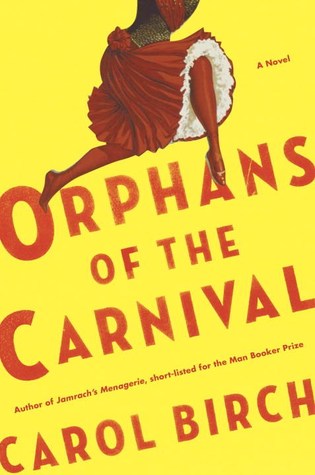
Orphans of the Carnival, by Carol Birch****

“Julia hated thinking about money. There’d always been enough. Other people provided, but she had to work. She could sweep and wash and light fires, or she could sing and dance and let them look. Singing and dancing won all, hands down.”  orphansofthecarnival

Thank you to Net Galley and Doubleday for the DRC, which I received in exchange for this honest review. The book comes out Tuesday, November 8.

Orphans of the Carnival is a fictionalized account of the life of Julia Pastrana, a Paiute woman born in Latin America in the nineteenth century, a time in history when people born with serious birth defects have no surgical alternatives, and are viewed by many as having been cursed by God; often they find themselves, as Julia does at one point, as traveling circus acts, with their physical difference providing them with a means of making a living, however degrading, during a time when there is no medical alternative and no government safety net.

Her early life is spent as a servant and nurse to an elderly relative after her mother abandons her. Given the chance to perform—and be stared at—for a wage with room, board, and transportation thrown in, she chucks her broom, chamber pot, and scrub brush and hits the road with a circus.

Part of the allure in Julia’s performance is that she begins it completely covered, with a dress, long sleeves, and a veil covering her face; she sings and dances, saving the  big moment when her veil is lifted for the end of the act. In order to make a living largely based on the need of the public to see what she looks like, she cannot go out in public or be seen outside of the show, which makes for a lonely existence. But over the course of time, her circumstances change once she places her career in the hands of a manager named Theo Lent.

There are few remaining records existing of Pastrana, and so when Birch tells this story, most of it is invented. On the one hand, she has little information to work with, but on the other hand, she is also not constricted in her storytelling by a long list of historical details to be attended to. I love the wry way in which she wraps the whole thing up, particularly with regard to Theo, who even the scant available data demonstrates was a real piece of work. I won’t give you any more than that, because there are twists and turns that I didn’t see coming, and I don’t want to ruin it for you.

There’s also an alternate narrative that takes place in the present, involving a woman named Rose, a hoarder with a mysterious background. I think the story would work just as well and perhaps better without Rose, but this is a minor aspect of the overall story, and it also doesn’t detract much if at all from the main plot.

About halfway through the book I run a Google search for an image of Pastrana, and of course, Wikipedia doesn’t let me down. I am shocked, not by how horrible she looks, but by how normal she appears. She does have more body hair than most women, but there’s skin showing through; the appellate of “bear woman” is a tremendous exaggeration. She is born with an overly extended jaw line and a second row of teeth, two separate disorders; in addition, there’s another disorder that causes the excess body hair. But the response of the crowds seems overwrought, though it is undoubtedly what happened at the time; if the public, or a part of it, didn’t see Pastrana as truly unusual, she wouldn’t have made this her livelihood, because the crowds would not have come.

Why read this book? I was initially drawn by the cover, and then again by the unusual topic. In this troubled election period, I am more than ready to escape to a completely different time and place, and to be sure, Julia’s problems make others seem miniscule.

What keeps me interested once I commence is Birch’s writing. She knows how to drive a plot forward, and when to step back from the midway craziness and insert something wry and understated to make us smile slyly. I find myself wondering where she plans to take this or that aspect of the tale, and she never disappoints.

To Kill and Kill Again, by John Coston****

The Terrifying True Story of Montana’s Baby-Faced Serial Sex Murderer

tokillandkillagain

They say you should do what you’re good at, and unfortunately, Wayne Nance was good at killing people. He enjoyed his work. This is the true story of the man dubbed “The Missoula Mauler”, who killed primarily based on opportunity, high in the rugged Rocky Mountains between 1974 and 1986. Thank you to Net Galley and Open Road Media, from whom I received a DRC in exchange for this honest review. The digital version of this true crime story was released October 18, and so you can buy yourself a horrifying Halloween present today. But turn all the lights on before you dive in. Lock your doors, and check your windows. If you have a basement, secure that as well. This isn’t a thing you want to read while you’re home alone at night.

I don’t read much true crime, because it’s dark stuff. To be honest, I wouldn’t have read this one, but an Open Road rep contacted me by email regarding another title I had read, and she was having a Monday moment; consequently, she asked me to review this title rather than the one I had read, and I figured I’d been invited to read it. I don’t turn down an invitation unless I know for sure I won’t like the book, so really, I read this one mostly due to a misunderstanding. By the time it was cleared up, I had downloaded it and was 20% of the way in, and I wanted to see how it came out.

The interesting thing about Nance is that he doesn’t seem to fit the serial killer stereotype. He was a quirky guy, true. But nobody said he kept to himself, or that he was quiet. He was sociable, and he was considerate, an apparently thoughtful young man that would run an errand, drop something off at your house while you were working, bring you your lunch…of course, there was always a chance he’d either forget to return your house keys or make a copy to keep, but that couldn’t hurt you if you didn’t know about it, right?

Well, actually it could. Sometimes it did.

I recently reviewed Open Road’s Fire Lover, a true crime story in which the killer seems drop-dead obvious. That isn’t the case here. At one point Nance came up as a suspect, but he had an alibi. I think when a person lives in a small Montana town and terrible things happen, it’s comforting to assume that the horrific, violent things that have been in the local news are done by an outsider, someone passing through. Maybe it’s a trucker that drives through from time to time, or some other outlier. Nobody wants to think it’s someone they work with, that they see every day.

I have to tell you, this story is not just scary, but it’s also tragic. There are children involved. The book’s blurb says there are photos, but these are not grisly photos of dead people; nevertheless, I found my stomach turning over a time or two. It’s dark, dark business, and you alone know whether you want to read something like this. The satisfying thing is that he is caught, and so other people didn’t die that undoubtedly would have. But as for me, I don’t want to read any more true-serial-killer tales for a good long while, if at all.

That said, Coston has to wade through a lot of data to tell this story, and he does so without getting bogged down in minutiae while setting an appropriate tone and pacing the story expertly. He tells us about the victims so that their own stories will not get lost while we learn the ugly deeds of Wayne Nance.

For fans of true crime that have strong stomachs, this may be the story for you. One thing’s for sure: all your own troubles will look smaller when you are done here.