
 Military history and World War II buffs will enjoy this well written third installment in Jackson’s Sergeant George Yeoman series. I hadn’t read any of the others in the series, but it didn’t matter; it serves just fine as a stand-alone novel. Thanks go to Net Galley and Endeavour Press for the DRC, which I received free of charge in exchange for this review.
Yeoman is a pilot; Jackson served as a pilot himself in the Royal Air Force Reserve and flew many different types of planes, so he has personal experience with his topic. The story centers around the battle for Northern Africa before the USA has entered the war.
And did you know how hot the desert is? Those that are considering reading this need to know this one thing: have some water beside you as you commence. I don’t think any novel has ever made me this thirsty!
Those that are not native English speakers may find this too challenging, and so will high school students. The vocabulary, as well as the military and geographic references, calls for a solid literacy level, and those with some knowledge of World War II and the Mediterranean region will be happier reading it than those that don’t. The four star designation is for this demographic; for general audiences unfamiliar with the Africa campaign, I’d take it down to three stars.
The book would really benefit from a couple of maps and some photographs of the many different types of weapons and especially aircraft that are mentioned here.
I am slightly touchy about the racist term that was used during this time period for Japanese; I understand they were adversaries, and yet the ugly racial terms–which went so far further than anything that was said about European members of the Axis forces–turn my stomach. Because of this, I veer away from fiction that has to do with the Pacific theater of this war, because I just know it’s going to be there, probably in liberal doses. The “J” word pops up here just once. On the one hand, it really doesn’t add anything to the plot and could have been left out, but on the other, at least it is in quotation marks, reflecting a character’s mindset rather than the overall tone of the narrative. Given the nature of the story, I felt the author did pretty well in this regard.
Recommended for those with a strong interest in World War II history, this book is more of a novella in length; just 142 pages. It is available for sale digitally now.
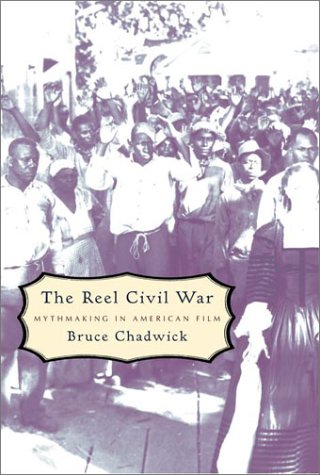 I found this gem at my favorite used bookstore in Seattle, Magus Books, which is just a block from the University of Washington. Its strength, as the title suggests, is in tracing the story of the American Civil War as told by the cinema. Those interested in the way in which movie impacts both culture and education in the USA would do well to find this book and read it.
 Alien Blues, the first in the David Silver series, was originally written in the 90’s, when I was busy returning to school, having my fourth child and raising the first three. I mention this only because I am dumbfounded that I missed this amazing series the first time around, and that’s the only possible reason; I was too busy trying to find a few minutes in which to sleep back then. Thank goodness Open Road Integrated Media has re-published it digitally. After reading and being really impressed by Flashpoint, another of Hightower’s terrific novels, I searched Net Galley for anything else she had written that was available to read and review, and I scored this little treasure. It’s a brave, bold genre cross of detective fiction and science fiction, and if I can read the others in the series, you had best believe I will.
 Chris Pavone is rapidly becoming a huge name in the psychological thriller genre. He is king when it comes to suspense; I was lucky enough to read the DRC for The Accident, his very successful mind-bender that came out in 2013. I was impressed enough by it that I also picked up his first novel, The Expats, on my annual pilgrimage to Powell’s City of Books in Portland. And so when I saw this little gem dangling on Net Galley, I wanted it right away, because Pavone had already shown me twice that he is a strong writer. Thank you Net Galley and Crown for the terrific read; I got this free in exchange for my review.
 Sandy Mulligan is a renowned author, but he’s hit a crisis. He’s left his wife and children for someone else, and it didn’t work out. Now he’s taken to the hinterlands to try to write the book he’s contracted to produce. Meanwhile, he runs across John Salteau, who claims to be an Ojibway storyteller, but it doesn’t ring quite true. Like Mulligan, Salteau is hiding from something. And if that isn’t enough, we have Kat Danhoff, herself a refugee of sorts, and she has landed in the same tiny burg, first to write about Salteau, and then to write about Mulligan interviewing Salteau. And before I can say more, I need to tell you that this clever satirical work was given me free of charge by Net Galley and Simon and Schuster in exchange for this honest review. It goes up for sale on February 9, 2016.
 What a terrific surprise! Shelley Costa is a contender. This is the first of her books that I have read, although she has won the Agatha Award with her first novel, You Cannoli Die Once, which I have to find and read now. For those that love a snarky, spirited female investigator, Practical Sins for Cold Climates is a must-read. Thank you to both Net Galley and Henery Press for the DRC. The title is available for purchase January 26.
 HE Bates wrote these stories during WWII; he served in the British Royal Air Force and received the unusual commission of author. His whole job was to write one short story after another. He was stationed with British pilots from 1941-1942, and he sat with them when they were between flights and listened with a sympathetic ear. He listened well, and the result is a collection of nearly 30 short stories, one of which is novella length, and they are strong, resonant fictional stories whose protagonists were inspired by actual pilots. Thank you twice to Net Galley and to Bloomsbury Publishers for the DRC. This collection is for sale now.
 Coal River is a work of historical fiction set in Coal River, Pennsylvania. A region by that name exists, and was the location of pitched battles between the United Mine Workers of America and local cops, strikebreakers, and company goons. Wiseman does a creditable job in her rendering of the setting in which it all unfolded. Thank you to Kensington Publications and Net Galley for the DRC, which I received in exchange for this honest review. It is now available for purchase.
 Chameleo is a twisted but true story of an addict who unwittingly becomes an experimental subject in a classified government research program, and the bizarre events that took place then and in the aftermath. My thanks go to the author, who provided me with a copy in exchange for an honest review.
 Since when do I read westerns? Since never…until a Goodreads friend recommended this title. He knew I liked history and historical fiction, and I couldn’t dismiss the recommendation, not only because this person has never steered me wrong, but because this book won the Pulitzer. That doesn’t guarantee I will like it either, of course, but it certainly enhances the likelihood. So on one of my increasingly-rare ventures to my favorite local used bookstore, I searched out the title. There it was, 857 pages bound in a beautiful hard cover, foliated-paged tome, for less than ten bucks. Sold!
 Seattle Book Mama