
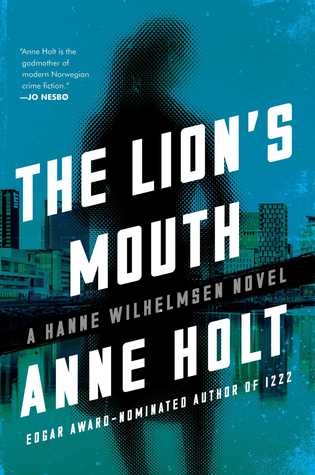
 Who killed Prime Minister Birgitte Volter? Was it the neo-Nazis? The Satanists? Was it a personal thing, perhaps an angry family member? The answer is cleverly built up to, so that the reader has a fair chance of figuring it out, and yet will most likely be surprised. I was.
Thank you, Net Galley and thank you also, Scribner for the DRC. Anne Holt is an established writer and it shows in the way she expertly crafts character and setting. I was at something of a disadvantage, never having been to Norway; the place names had no meaning to me, apart from the names of major cities, and I struggled with the governmental structure. When Parliament was mentioned I was fine, and likewise the Supreme Court made sense, but then we came to the President of the Supreme Court, a prominent figure—is that like a chief justice, or is it a very different construct from that of USA?—and also there is a President of Parliament. Americans should be prepared to either Google these items or accept a certain amount of ambiguity; I chose the latter, and it worked all right for me. I knew that there would be some new terrain when I began reading, and as part of my goal was to widen my own reading world a little bit, it was worth battling the unknown. A mystery is an accessible way to do this, and I enjoyed it.
The book was originally published in 1997; even so, I found a couple of stereotypes unsettling. The fat jokes seemed inappropriate and disturbing; Little Letvik started out a caricature, and even when she was developed a bit more at the end, it didn’t help much. Ruth-Dorthe is a “blonde bimbo” and “slightly worn Barbie doll”. There was also some slut-shaming that I could have done without.
On the other hand, the character for whom the series is named, Hanne Wilhelmsen, is a lesbian and is the hero of the story. She is sensible, even-tempered, (thin,) and very intelligent. Another character I really enjoy is Billy T, a boisterous, funny fellow who lightens the story considerably. In fact, there were a number of places that made me laugh out loud.
Although the book is part of a series—this novel being the fourth—I liked it just fine as a stand-alone.
All told, it’s a strong work of fiction and a good choice for the mystery lover to add to her collection. With the above reservations, I recommend it to you.
It is available for purchase February 9, 2016.
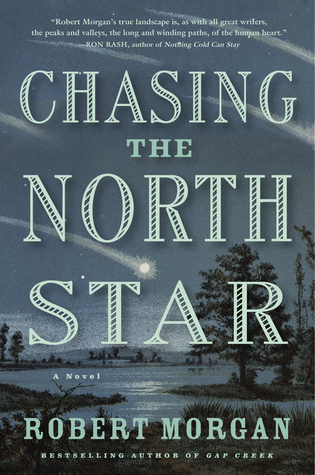 Chasing the North Star is a compelling narrative of two teenagers escaped from slavery on their flight toward the North. Thank you to Net Galley and Algonquin Books for the DRC, which I received in exchange for an honest review. This book becomes available to the public April 5, 2016.
 Sarah and Jack Quinlan are called to his family’s home in Penny Gate, Iowa when Jack’s aunt is in a serious accident. Julia is not just any aunt; she has been his surrogate mother following the death of both his parents in a car accident. At least, that’s what he tells Sarah. But as she soon finds out, she has been misled about Jack’s early life; in fact, she’s been lied to. What she has to find out on her own is where the lies end and the truth begins.
 I was invited to read and review this compendium of articles from long ago by my friends at Open Road Integrated Media and Net Galley. I appreciate the invitation. The articles in the collection were really published in a tabloid by the title above during the period after World War II ended, and they are presented here as a bit of humorous nostalgia, rather like the spirit of Punch or The Onion. These articles will tickle the funny-bone of some of its readers, but it wasn’t a good match for me.
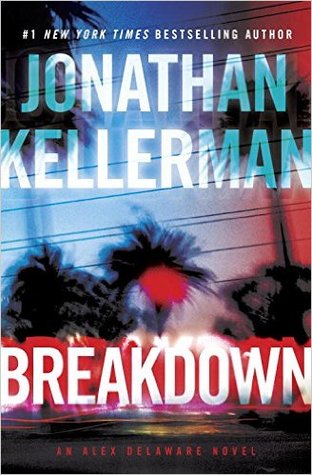 Breakdown is #31 in the Alex Delaware series, and Kellerman’s long-running series still has plenty of gas left in the tank. The premise this time is that six years ago, Delaware was called in to evaluate the parental fitness of a mother; custody issues have become his bread and butter, done on a case-by-case basis. The boy’s mother, Zelda, was an actress plagued by mental health issues, but seemed to be doing a competent job of raising Ovid. The actress’s psychiatrist wanted to be sure, so he called in Delaware to spend time with the child in question. Now things have gone downhill, and the psychologist that treated Zelda is dead. Zelda isn’t doing so well herself.
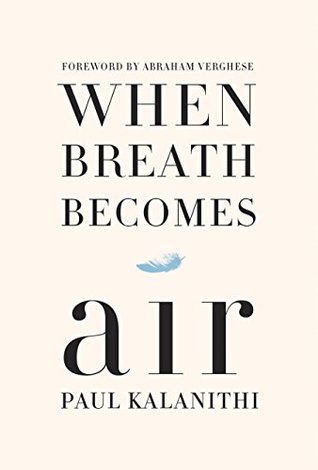 Paul Kalanithi was a promising young physician who had nearly finished completing ten years of training as a neurosurgeon when he was diagnosed with Stage IV lung cancer. His twin ambitions had been to become a neurosurgeon and to write. When he realized how little time was left of his too-brief life, he decided to spend his remaining time writing this book. Thank you, Net Galley and Random House Publishing House for the DRC. Dr. Kalanithi died in March 2015, but he left this luminous memoir behind as part of his legacy. It is available to the public January 19, 2016.
 If Fannie Flagg worries that she has no heir, she can relax; Richard Fifield is here. The Flood Girls is his brilliant debut, and you have to read it! Fifield will cut out your heart and feed it to you with a rusty spoon, and he’ll make you like it, too. Hell, he’ll even make you laugh through it. I got the DRC free via Net Galley and Gallery Books in exchange for an honest review, and I’m going to read it a second time before I archive it as I am supposed to. This is only the second time I have done so after hundreds of galleys have come my way; that should give you a measure of how impressed I am with this title.
 This book is the fourth in the series featuring Peter Bragg; the series was nominated for the Edgar Award and twice for the Shamus Award. I’ve read three others in the series already, so imagine my delight when I located this book, formerly published as Sausalito, among the DRC’s offered by Brash Priority Readers Circle.
 I was already a Barbara Neely fan when I received this DRC, courtesy of the Brash Priority Reviewers Circle, in exchange for an honest review. I’ve been reviewing books for Brash Books and others for the past couple of years, and had read three other Blanche White mysteries out of order, so when I saw that the first in the series—which I think was the only one I hadn’t read yet—was up for grabs, I nailed it right away. It’s available for purchase now.
