
Straying, by Molly McCloskey*****

StrayingThis title is the first fictional work McCloskey has published in the US, but surely it cannot be the last. This addictive novel came to me free and early, courtesy of Scribner and Net Galley in exchange for this honest review. It becomes available to the public February 20, 2018.

Alice has returned to Ireland. As a young woman of 24, she had gone there intending to visit, gain some perspective about what to do with her life, and then return to Portland, Oregon, but instead she met Eddie and married. “I was not sure how grown-up love was supposed to feel.” Now she is more mature and single again; she returns to Ireland and in a deeply intimate, gently philosophical narrative, tells us about what happened, and about the affair with Cauley that was instrumental in ending her marriage.

Here I must confess that I have old-fashioned ideas about cheating on a spouse. If your marriage is solid, you should respect it and be faithful. If your marriage is dying, get out before you start something new; don’t sneak around and tell lies. If your marriage is troubled and you aren’t sure what you want, address that first, but don’t poison the well with a fling. It’s unethical and unfair. Have some integrity, for goodness sake.

And so, why am I reading this novel, and more to the point, why am I loving it? It goes to show that a strong writer can make me want to read almost anything, whereas an indifferent one may start with a promising scenario that fizzles. McCloskey pulls me in and doesn’t let me go.

The cover art tells the reader right away that despite the title, this is not erotica. Those looking for a novel that will make them breathe hard will have to find something else. Straying gives us something far better, in my view. I feel as if Alice is my dear friend. I usually read several titles at once, drifting from one to another over the course of a day or evening. But Alice interrupts my literary smorgasbord because in a way, I feel disloyal for reading anything else. The narrative here, told in the first person, is so deeply personal that it’s as if she is sitting across from me at a coffee shop (or since we’re in Ireland, in a pub perhaps), and she’s spilling the beans, confessing everything that she did, and the consequences that followed. She isn’t beating herself up Anna Karenina-style, nor is she proud of her mistakes; rather, she is explaining what happened, what she’s learned from it, and what she still wonders about. It’s not prose you can walk away from until it’s over.

Those that love excellent fiction should buy this book and read it. If you can get it cheap, do that; if you have to pay full jacket price, do it anyway. You don’t want to miss this one.
Need to Know, by Karen Cleveland***

NeedtoKnow

“My God, Vivian, what’s it going to take for you to trust me?”

 Need to Know is an espionage thriller written by a former CIA analyst. I read it free and early thanks to Random House and Net Galley. This book will be available to the public on Tuesday, January 23, 2018.

Our story is told in the first person by Vivian Miller, a CIA analyst with a mortgage to meet and four small children. In the course of her research she comes across the identity of someone she knows and then the whole house starts to tumble, as she makes one bad decision after another, punctuated with the occasional wise choice to heighten suspense.  Around the sixty percentile I found myself reading it for giggles as it becomes increasingly clear that our protagonist is as dumb as a box of rocks.

With this in mind, I have devised a drinking game for rowdy book clubs that meet in real life. Here are some ideas:

  • Take a drink every time Vivian refers to Matt as her “rock”.
  • Take two drinks every time she refers to Matt as their children’s “rock”.
  • Take a drink every time you run across the word “ringleader”.
  • Spin around three times and take a drink for every rhetorical question you find in the narrative.
  • Take a drink for every stereotype you see.


Spoiler alert (*snerk*): you may want to clear your calendar the day after your book club meets, because it’s going to be a rough one.

Now I understand that there may be abstainers in your drinking book club, patient souls that either really like the people in your club, or that can’t find a book club made up of tea-totters. For those people I have special instructions:

  • Take a drink when you find a well developed character.
  • Take a drink when you find a positive female role model .


Another spoiler alert: provide this second group of people with water, because otherwise they are going home thirsty.

I can also recommend this title to women that are newly divorced, mad as hell, and looking for something to throw. For these ladies, I recommend obtaining a hard copy, because you won’t want to ruin your expensive electronic devices. Before commencing with this title, remove pictures, monitors, and china from the wall where you’ll be reading. Broken glass is nobody’s idea of a fun Tuesday night.

“They’re good, the Russians.”

Newly divorced, mad-as-hell, book-throwing women that have recently divorced a Russian man may even want to pre-order a copy. I’d do that right now if I were you.

Купить книгу.

The Immortalists, by Chloe Benjamin****

TheImmortalistsFour adolescent siblings growing up in New York City learn that a traveling psychic has hit town, a woman that can tell each person the date that he or she will die. Against the wishes of their parents, they sneak out to find her. I received my copy free and early in exchange for this honest review, thanks to Net Galley and G.P. Putnam’s Sons. This book is now available to the public.
The book is divided approximately into fourths, a quarter for each of the Gold children and across five decades. To my own way of thinking the first half of the story is far more resonant than the second half. Simon, the “golden boy”, dies of AIDS before the disease has been named, but before he is gone, the San Francisco of that time period is set out in such meticulous, immediate detail that I feel as if I am back there, back then. The portion of the book devoted to Klara, who becomes a magician, is nearly tangible in different ways, and older women that have worked in unconventional professions—before the year 2000, that meant just about all of them—will recognize themselves when they see how she is dismissed, harassed, and stigmatized.

Then I read a review by someone that felt exactly the opposite, claiming that the story didn’t really wake up until the second half. And so I suspect that the age and background of the reader will inform which part of the book stands out best.

However, once I have seen Simon and Klara die, I have other reasons for reading more slowly. If both of them die during the first and second quarters of the book, I have a pretty good idea what is about to happen to Daniel and Varya in the third and fourth quarters.  These characters, a Naval physician and a primate researcher, don’t reach me the way that Simon and Klara do. With Simon and Klara, I am right there with them, and at times I am peeking out and seeing the world through their eyes. With Daniel and Varya, I am along for the ride, checking to see how many pages are left in this thing so I can go write my review and be done.

Benjamin’s  greatest gift is setting. There are aspects of each place and time that I remember, and others that I have nearly forgotten until she brings them back again. But for those expecting to see a fantasy plot, as this has been billed, or magical realism, it’s going to prove disappointing; really it is literary fiction, and some reviewers will be unhappy because of the genre issue.

Those that love good literary fiction are going to want to read this novel. There’s been a tremendous amount of buzz, and there’s nothing else like it.

Two Girls Down, by Louisa Luna*****

TwoGirlsDownThis is a quick read and a fun one. I received my copy free and early in exchange for this honest review courtesy of Net Galley and Doubleday. It becomes available to the public tomorrow, January 9, 2018.

A frazzled mother in a small Pennsylvania town pops into a big-box store one afternoon, leaving her two elementary-aged girls in the car. They’re old enough not to wander off with some weirdo, and she’s just going to be a minute. When she comes back, they’re gone.

Our protagonists in equal measure are Cap, a former cop who’s left the force in disgrace, and Vega, an out-of-state PI brought in by the girls’ relatives. Vega seeks Cap out after the local cop shop refuses to work with her; sparks fly.

If you take the story apart and look at its elements, it is all old material and should be stale. We have the missing children; a single grieving female detective, a vigilante type with little to lose; a slightly-older, single-dad, lonely older male detective, all of which leads to romance, because heaven forbid we should ever have a competent female private eye without a sizzling chemical frisson to keep readers from feeling threatened by her competence. We have the single dad’s (also-competent) teenage daughter left alone for long periods of time, vulnerable to the forces of evil. And of course our female detective has to be diminutive, a tiny-firecracker type.  Even Vega’s love of firearms isn’t new; consider Kinsey Millhone and Stephanie Plum. And our female detective has to be a very light eater. God forbid she should chow down at dinner time; no, she pushes her food around and away.

The pieces of this thing have been done to death. And yet.

And yet, the whole of the story is so much more than the sum of its parts. A strong writer can take overdone elements and make them gleam, and that’s what Luna has done here.

The thing that makes it work is the element of surprise. When I am looking ahead, I can often see, in a broad sense, where we are going, but when I try to predict how we’ll get there, I see three possibilities, and Luna always comes up with a fourth at the most unexpected of times.  Vega’s “roofless rage” gives her a no-holds-barred, Dirty-Harry-Lite kind of approach; she’s never killed anyone, but if she’s always as off the wall as she is here, it’s a miracle. But the other miracle? The fact that I am wondering what she is like at other times demonstrates how well Luna has developed her characters. Cap is a well of timeworn chivalrous decency, but Vega wants to take the kind of people that would deliberately hurt a child and “put them in the fucking earth.”

Luna uses lots of crackling dialogue and a spare prose style that makes this book accessible to anyone that finished the eighth grade, and possibly some that didn’t. Although there’s no indication that this will become a series, one has to wonder if such a thing might happen.  My own preference would be to see Vega act independently of romantic entanglements, because she has the potential to be a feminist hero, and we need one of those right now.

One way or another, this is a read you won’t want to miss. Highly recommended.


Brass, by Xhenet Aliu*****

“I swear to Allah, you are the most beautiful girl I have ever seen.”

Brass Waterbury, Connecticut is the place to go for immigrants, the Brass Manufacturing Capital of the World; that’s true, anyway, until the plant closes. Elsie Kuzavinas waits tables at a Greek restaurant while her mother slaves over the assembly line at the Peter Paul Almond Joy Mounds factory nearby.
Elsie tells us that “My mother had warned me when I took the job to watch out for the Albanians that worked at the Ross, because she heard they treated their women like sacks and that their tempers ran hotter than the deep fryers in the kitchen.”  Nevertheless, she falls for the line cook, Bashkim hard and fast.  When he offers to take her home one night and then deliberately points his Pontiac Fiero the wrong way, she falls silently complicit, because even if he turns out to be a serial killer, she would be “happier to have died Bashkim’s victim than his nothing-at-all.”  Elsie knows that Bashkim had left a wife behind, but they don’t talk about it.

That’s just one of Bashkim’s rules. Nobody is allowed to talk about Bashkim’s wife.

In fact, Bashkim is a humdinger, and seeing Elsie’s slow transition from battered mistress to—not a crusader by any means, but a woman that has a bottom line involving basic safety and minimal security—is bound to make readers sit up straight and pay attention. And when an apologetic relative tells a bruised Elsie that Bashkim didn’t mean to hurt her, I want to cheer when Elsie says, “Of course he did. That’s what fists do.”

Elsie’s story is told alternately with that of the daughter she begets with Bashkim. Lulu is her mother’s daughter, a reckless girl who’s got little to lose. Their stories are presented in a bold, original second person narrative that is unforgettable.

By now I am supposed to have told you that I read this book free thanks to Net Galley and Random House in exchange for this honest review. But when a debut like this one comes along, the superlatives come first, the disclaimers second.  Aliu has positioned herself on the literary map, and I dare anyone to try to knock her aside.

Lulu didn’t get the college scholarship she had worked toward; all her hopes and dreams were riding on it. She needs more than an education, she needs to get out of the house. In desperation, Lulu sets out to meet her daddy, convinced that if he can actually see her, he will make everything right for her. Ahmet, a fickle, sweet boy that adores her, agrees to drive her to Texas. Lulu’s journeys, both outward and inward, kept me from thumbing off my reader when midnight came. The inward journey joining Lulu and Elsie is hypnotic.

This story is available to the public January 23, 2018. It’s badass working class fiction. Every feminist, every mother, every daughter, and everyone that loves excellent fiction should get a copy of this book and read it.

Because for all of us, it is better to be Aliu’s readers than her nothing-at-all.

Prairie Fires, by Caroline Fraser

prairiethe_Are the classic “Little House” books memoir or historical fiction, and were they written by Laura or by her daughter? If you’re confused, you’re not alone. In this epic, absorbing biography of her great-grandmother, Fraser tells us. Between her congenial narrative and careful, detailed documentation, this author has created a masterpiece. Lucky me, I read it free and early thanks to Net Galley and Henry Holt Publishers. This book is now for sale.
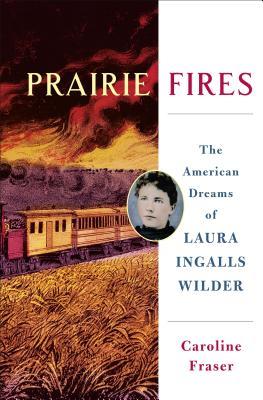
Laura’s early life was considerably harder than the sepia-toned, heartwarming stories with which she recounts it. Little children could not stand to hear the grueling poverty and crushing losses her family sustained.


“Her autobiographical novels were not only fictionalized but brilliantly edited, in a profound act of American myth-making and self-transformation. As unpublished manuscripts, letters, and documents have come to light, we have begun to apprehend the scope of her life, a story that needs to be told, in its historical context, as she lived it. That tale is different from the one she wrote. It is an adult story of poverty, struggle, and reinvention—a great American drama in three acts…Showing American children how to be poor without shame, she herself grew rich.”

Wilder was a legend unto herself, a fierce, strong woman that could survive anything, anything, and everything. Her story recounts not only personal hardships, but the wide sweeping history that she lived through, from the Westward movement and Manifest Destiny to the suffrage movement, the Dust Bowl, and the Great Depression, as well as the elephant in the room: Indian removal and genocide.

The book, some 600-plus pages, recounts not only Wilder’s story, but that of her daughter, Rose Ingalls Wilder, who was, frankly, a real piece of work. Their lives were so intensely intertwined that to do this any other way would render Wilder’s story incomplete.  And I appreciate the scholarly objectivity with which Fraser treats her subject; it’s not without warmth, but she is clearly not manipulating facts, as some authors do when writing about famous relatives. PrairieFires

And although I previously named a different title as the go-to biography of 2017, I have to recognize that Fraser’s book is a contender.  Highly recommended.

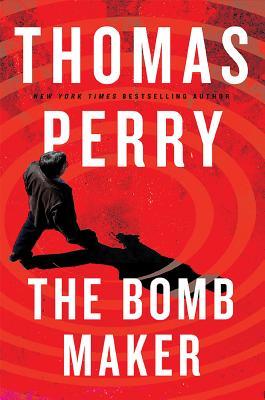
The Bomb Maker, by Thomas Perry****

TheBombMakerThomas Perry writes some of the most terrifyingly suspenseful novels of any writer alive, and he never has a dud. In this story, a retired bomb squad cop is asked to come back to work when half the current squad has been wiped out by someone that wants to kill bomb specialists. I was able to read it free and early thanks to Edelweiss and Mysterious Press. It will be available to the public January 2, 2018, just in time to start the new year with a bang.

Dick Stahl has just returned from carrying out a tricky job in Mexico. Retired from the bomb squad and police work, he owns a consulting firm and is ready for a rest. But someone out there—most likely not a terrorist, since nobody claims credit for the carnage—has taken out half of the bomb squad, and clearly the technicians themselves were targeted.  More attempts are made; there are numerous explosive devices planted in a given location. The guy that plants these things wants them to be found, and so there’s an obvious, textbook-type incendiary left in plain view. The bomber’s intention is for the technicians to relax, believing they have destroyed the threat, and it is then that the real bomb—or chain of bombs—is triggered in order to take out as many bomb techs in one blow as is possible. Stahl has his work cut out for him when he is called back to duty to foil this killer and aid his capture.

In addition to Stahl, we see the bomb maker’s thinking and what he is planning. Perry’s villain is a cold, calculating schemer, and there’s a chilling sense of remove in this part of the narrative. The pacing is tight, with minimal word-smithery to get in the way. Perry doesn’t paint anything; he just tells us what’s about to happen…maybe.

Side character Diane Hines, a member of the squad that becomes romantically involved with Stahl, is an interesting addition, a smart, savvy professional. Whereas I am sorry to see the only important female character used primarily as a sexual entanglement that complicates Stahl’s career, I give Perry retrospective credit for his Jane Whitefield series, which is legendary and features a strong female lead.

That said, the journey here is a lot more interesting than the destination. On the one hand, Perry doesn’t cheat the reader by throwing something out to left field and making the conclusion impossible to predict. Perry’s treatment here is respectful of his readership. On the other hand, I am sorry to have such a fascinating story unspool to such an anticlimactic ending.

It’s worth noting that although this writer has produced a lot of books, he never uses any obvious formula. No matter how many I read, I don’t walk away feeling as if I have read the same book packaged differently.

Recommended for Perry’s fans, but get it cheap or free unless your pockets are deep ones.


The Night Child, by Anna Quinn****

TheNightChildAnna Quinn is a brave writer. This wrenching debut novel occupies a place in literature that has lain dormant for decades; kudos to Quinn for bringing dark business out into the light of day for a good airing. I received my review copy free and early thanks to Net Galley and Blackstone Publishers. It will be available to the public January 30, 2018.

Nora is a high school teacher and the mother of a small child; her marriage is coming undone. Her mental health is a little on the shaky side, and she’s seeing a therapist to help her understand a terrifying vision that came to her in her classroom. A “wild numinous” face, the disembodied face of a child, floats over her students’ desks one day after school, and Nora panics. This face represents the core of Nora’s story, and once the layers of her outer self are peeled away, it makes for a deeply absorbing read.

Quinn takes some time to lay her groundwork. The first part of the story is unremarkable, and I briefly considered abandoning it. Character development seems limited to marital issues and time spent in therapy, and Nora lacks depth and originality until about the thirty percent mark. I tell you this lest you abandon the story yourself. It’s worth the wait, because once the story takes wing, it is hypnotic.

It’s tempting to say this novel is the twenty-first century’s answer to Sybil, but that doesn’t do it justice. Nora’s struggle to find the self that is held beneath layers and layers of emotional scar tissue, to heal herself so that she can be a good mother to Fiona, is one that we carry with us long after the book is over. Those that face serious mental health issues themselves will see vindication. Those that have family members or other loved ones working to unify a personality fragmented by trauma may see themselves as Paul, who’s juggling his own needs, those of his daughter, his love for Nora, and the crushing burnout that comes of living with a partner facing all-absorbing mental illness over a lengthy period of time.

Recommended to those interested in reading about mental health issues through the approachable medium of literary fiction.

The Spy Who Never Was, by Tom Savage*****

TheSpyWhoNeverI love Savage’s work, and this title is his best to date. I got my copy free and early thanks to Net Galley and Random House Alibi. You can get it January 9, 2018.
Nora Barton is our protagonist, and she is recruited by Edgar Cole as an unofficial CIA agent—she has been helpful to the Agency before—because of her physical resemblance to someone being targeted by the enemy, an enemy known as TSB.

“Edgar Cole was using her as bait: here, kitty, kitty. Now Nora was in Paris with TSB, and the two of them were playing an elaborate game of I-know-you-know-and-you-know-I-know, and Nora wondered what would happen next in their little charade.”

Nora isn’t allowed to tell her husband, who is an intelligence agent himself, but she tells him some of it anyway. I smile, knowing I would do the same. He tells her not to accept this assignment—absolutely not—but Nora doesn’t take orders from him, and she makes the decision to go.

Savage writes true thrillers. Like his other novels, this one grabs you by the hair on the first page and doesn’t let go. I am accustomed to the traditional story arc, rising toward a climax, but that’s not what we get here; instead, there’s a huge surprise around every corner. My pulse raced while I read this thing, and my blood pressure rose. There are several places in my notes throughout the book that say “Holy crap!” or, “My heart!”

Once in Paris, people start getting dead. That agent that was attacked because he was guarding her—wait a minute, was he guarding her? Nora isn’t sure who she can trust, but happily, she has a personal friend, an elderly fellow now retired from intelligence that lives in Paris. Her friend’s message to her is sobering indeed: “Go home, Mademoiselle.”

Every now and then Savage breaks up the tension for a split second with humor, and I love this. Her mentor in Paris prides himself on his English use, and he misuses idioms in ways that are charming and sometimes very funny, and this is done in a way that doesn’t mock the French or anyone else. Savage is a pro, handling this delicate characteristic deftly. The mentor tells Nora that a spy known as “Le Faulcon” is here to kill her; he is a “Russian hitting man”.

Whoa now. Frankly, I would be on the plane back to the States in a jiffy; but then, I would not have gone at all. Nora, on the other hand, is a badass.

This leads me to my very favorite aspect of Savage’s work, which is becoming a literary signature: women generally don’t get saved by men here. Women either save themselves, or they save others. But in this regard, Savage is the ultimate anti-noir author. There are no helpless women. Three cheers for Savage’s powerful feminist fiction.

Last, let’s look at the side characters. There are a host of them, and a number of them are known by multiple names, so this is not a beach read. I quickly learned not to read this story after I took my sleeping pill, because if I did, I would just have to read it again the next day. In addition to our colorful older French mentor, Savage introduces a new character named Fanny that I would love to see again.

Get it digitally or get it on paper, but if you love a well-crafted psychological thriller, you have to read this book.

Best of the Year: 2017

Gallery

This gallery contains 3 photos.

2017 has been a stellar year for literature, and when I sat down to rate my top ten, I found myself stymied. Working up to it by offering the best of each genre seems more approachable, although still daunting. Most … Continue reading