
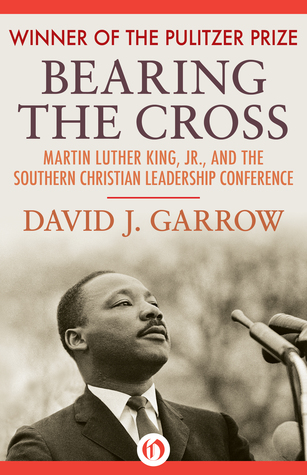
 This comprehensive, scholarly yet accessible biography of Dr. King has already won the Pulitzer. Neither Net Galley nor Open Road Integrated Media really needs a review from me. Yet, because it is only now being released digitally, I saw the opportunity to read it free, and I leapt up hungrily and grabbed it while I could. But if you have to pay to read it, I will tell you right now, you will get your money’s worth and more.
The crossing of that bridge in Selma, Alabama was 50 years ago. You don’t need me to tell you that racist cops are still a problem throughout the USA, but the institutionalized American apartheid that was Jim Crow throughout Dixie is dead and gone. Much remains to be done, but what was accomplished by Dr. King and hundreds of thousands of African-Americans, along with other people of color and a handful of progressive white folks, is very much worth celebrating.
For many years I have wanted to read more of Dr. King’s speeches. School children are sick to death of the Dream speech, however brilliant and visionary it was at the time. It’s been used so often that it’s almost like the Pledge of Allegiance, tired and recited without a lot of meaning or enthusiasm by those too young to recall how radical the Civil Rights activists were considered back then. Garrow draws heavily from King’s speeches and letters here, and I was once more electrified to see what an eloquent person he was.
As Garrow explains, Dr. King did not set out to be a leader of anything except a good-sized church. He saw his entry into the theological world as that of a social activist, certainly; he received his BA in sociology, not religion or philosophy. But he had initially perceived his leadership role as that of mentor and guide to the congregation of a Black church in the American south. That was all he expected to become. When Rosa Parks was arrested for failing to yield her seat at the back of the Birmingham bus, demonstrations began to burgeon, and E.D. Nixon, a leader in the struggle, called upon King to speak at a key rally. After that, events unfolded and he found himself at the helm of a movement that was larger than any one person, but it needed a leader, and he was that man.
He was just twenty-six years old.
King quickly learned that in order to effect change, he had to gain the sympathy and agreement of a large segment of the American public, and at the time, that public was overwhelmingly Caucasian. Black folks were less than fifteen percent of the population, so they would need allies. In order to gain allies, he needed the media, particularly the big-city newspapers and television stations of the north. And in order to grab those headlines, show up on the evening news, he had to expose ugly, brutal repression. Because attempting to gain integrated facilities in a southern locale where he and his fellow activists would merely be cold-shouldered was just not newsworthy. Smart southern sheriffs who adapted the strategy of not hauling away those who sat illegally at lunch counters or entered stores through the whites-only entrance, but merely telling the proprietors to leave them there but not serve them and eventually they’d go away, were wicked but smart. The media would leave, disappointed to have traveled all that way without bloodshed or arrests, and the practice of segregation would continue, legal or not.
So in order to get the national news coverage that the Civil Rights movement had to have in order to turn the tide of public opinion, King had to lead people right into the teeth of the buzz saw, over and over and over again. Where’s Bull Connor? Let’s go there! Where is the Klan the ugliest, nastiest, most brutal? Put that place at the top of the list! And over the course of time, Americans saw it on the evening news, on the front page, and they responded.
The death threats piled up. Were it not so horrifying, it would be funny to note the number of times a vehicle blew up, a building was hit by a Molotov cocktail, shots were fired just where a moment ago Dr. King had been sitting, standing, talking, sleeping. He spoke to his wife and associates often about death, because he knew he could not get out of this movement alive, nor could he abandon it.
He had never, ever led anything before, apart from being student body president at his small college. Now he was thrust into the ultimate position of leadership. The activists who were already involved in struggle needed a minister, because a minister was a peaceful person, above reproach morally. They needed someone handsome, someone inspirational, a man that could speak eloquently. And Martin King, as he was then known (his father being “Daddy King”) was their man.
Years later, exhausted, suffering from clinical depression, King considered looking for a successor. Surely one person should not remain at the helm indefinitely. Perhaps he could, after all, lead a normal life, go home to Coretta, who was pissed at him for always being gone and not including her in his activities, and become a full time pastor at his church once more.
Then he won the Nobel Peace Prize, and although he was overjoyed at the honor, in another way, it weighed heavily upon him, because it was clear that now, he was the symbol. He was in it for keeps. The eyes of the entire world had likened him to the struggle against racism.
There was a lot of money attached to that prize, too. King was determined to donate all of the proceeds to the movement. Coretta asked if they couldn’t just take a small piece off for the children’s college funds? Nope. He didn’t even want to own a house, didn’t want anyone to charge that he was living larger than the average Black man in the American South. He was determined to live in the same kind of house, in the same neighborhoods that everyone else lived in. Eventually he agreed to buy a small brick house in an African-American section of Atlanta, but he worried that even that was too much. Others saw it and were surprised by how small, how humble it was. But King was concerned lest he place himself above others in struggle.
Later, he would ignore the advice of others in the movement when they told him to back off his opposition to the Vietnam War. It was a principled stand, and it cost him his support from the Johnson administration. He saw it as a key part of antiracist work; the US war against the people of Vietnam, the constant bombing, was related to race, and he saw it and said so.
The biography, which is carefully documented and also has a complete index, chronicles his most glorious triumphs, and also his struggles. Depression laid him really low, and nobody had any Prozac back then. I found myself wondering whether “hospitalized due to exhaustion” simply meant that his depression had got the better of him, and he had gone to bed and was unable to get up. I’ve been close to depressive folks, and I have seen it happen. It’s almost as if they are weighted to the bed. And again I find myself thinking what a young age he was, so very inexperienced, to be saddled with this enormous task.
There were other struggles as well. The FBI wired everything, everywhere he went. They documented his affairs so that they could blackmail him with them. Oh minister who is above reproach, look what we’ve got on you! And back then, that was a real thing. It would have created a scandal. King told one of his closest associates that he lived out of a suitcase for 25-27 days out of the month, and that sex relieved tension. And in 2015, the public, even probably many churchgoers, would see it and nod. His marriage was very tense, but Coretta was careful to present a staunchly supportive front, because there had to be unity in order to keep the focus on ending institutionalized racism. But in 1965, a prominent minister with women-on-the-side might well have been shunned by his own people, no matter how many times he stood at the pulpit and proclaimed himself a sinner.
Politically he foundered at times as well. During the struggle to end Jim Crow, primarily from 1955-1963, the crowds were there, overwhelmingly African-American of course, and they were ready to do what it took. They would march with or without him, but to prevent agents provocateur from turning peaceful marches to riots, King’s staunchly nonviolent leadership was key.
But what if the courts told King he could not march? Should he go, or should he stay? He waffled. He wasn’t sure. What was at the root of racism? He was sure it was the profit motive, and repeatedly stated, later in his career, that there needed to be a radical restructuring of the country’s wealth. But to foment an armed revolution was beyond him, and he was stuck in the rut of calling for mass civil disobedience.
At this point in my review I will break away from King’s story for a moment and speak of my own experience as an activist for various causes. I organized a lot of marches, carried a lot of bullhorns, and I will tell you this one thing: masses of people will not usually commit civil disobedience. When the march is over, the marchers don’t need a police record. When it’s time to wake up and go to work, they can’t be in a jail cell. They may have people depending on them, or they may just not want to go through the prison system, and who can blame them? Frankly, I wouldn’t either. I sometimes worked with people that wanted to participate in civil disobedience, but that whole thing had to be kept clear and separate from the rest of the march. The crowd needed to know when it was time to go home if they didn’t want to face arrest. And Dr. King did not understand this. You can have mass marches and mass rallies if you build them and promote them well enough. Or you can have a few people commit civil disobedience. But the one thing he wanted, later in his career while trying to end racism in Chicago, in Cleveland, in Detroit, and that in most situations you just cannot have, is massive civil disobedience.
So toward the end of his career as well as the end of his life, King was trying to put together a march on Washington, DC in which the participants would put up tents on the lawns of the capitol, sit in the Attorney General’s office and refuse to leave, until…and there, the list of demands was ever-changing. This was never going to happen, and he was frustrated by the lack of support he received from others in the movement when it came down to this plan.
If you are unfamiliar with the various organizations and individuals within the Civil Rights movement, you may have difficulty keeping up with the names and the acronyms. I had no trouble, but I also came to the book with the basics under my belt. The most famous organization, the NAACP (National Association for the Advancement of Colored People) was fiercely jealous of King’s organization, the Southern Christian Leadership Conference (SCLC). They saw it as divisive to have more than one civil rights-based organization. They also saw it as a threat to their dues base. Everything possible was done to keep these backroom skirmishes out of the public eye and present a solid front, but sometimes word leaked out. The Student Nonviolent Coordinating Committee (SNCC) was the group that brought the lunch counter sitters and the Freedom Riders. They were bitter, and at times rightfully so, because they went out on a limb and did things that SCLC promised to reimburse and then failed to do so. When the big collection was taken at one march or another, they expected their gas money back, and money for car repairs. They’d gone into this with little other than the shirts on their backs, and when the money promised them never arrived, they were pissed. They also never forgave King for refusing to go on the Freedom Rides with them.
But when all is said and done, King did the very best, if not better, than any man in his circumstances could be expected to do. He knew it would cost him his life, and he did it anyway. Without his leadership, what would have happened? History always marches forward, never backward, but things might have played out very differently. A lot more people might’ve gotten dead trying to achieve the same objective.
For those seeking the definitive biography of Dr. Martin Luther King, look no further. This excellent, Pulitzer winning work deserves a place of pride in everyone’s library.
Tag Archives: black history
I Freed Myself: African-American Self-Emancipation in the Civil War Era, by David Williams *****
 Williams is smoking hot when it comes to the role of African-Americans in the American Civil War. The overstatement that Lincoln freed the slaves rubs many of us, and his thesis that not only did the slaves largely set themselves free, but were pivotal to the Union’s ultimate victory, is a strong one. Williams is smoking hot when it comes to the role of African-Americans in the American Civil War. The overstatement that Lincoln freed the slaves rubs many of us, and his thesis that not only did the slaves largely set themselves free, but were pivotal to the Union’s ultimate victory, is a strong one.
In Marxist organizations, there is an expression for a political over-correction. It’s called “bending the stick too far back”. The idea is that you want the stick to be straight up, but sometimes when something has been done wrong, and once the evidence piles up until the reader cannot believe that anyone was dumb enough to think otherwise, it can cause other mitigating facts to be obscured; thus, the stick is bent too far the other way. And although I really like the work Williams has done here, and am making my 4.5 rating round up to 5 lest anyone not read this scholarly, well documented work, I do think he has made an error or two by disregarding the dynamics of the war and the decision-making process. It’s easy to do. Actually, when I taught about this subject, I treated Lincoln and his role in it largely the way Williams does here, and that was a mistake. I used the same quotes Williams uses, and said that every American president basically does whatever he is pressured to do by those who hold the economy in their grip. I was mistaken, and Williams is too, in this one way. Lincoln was such a friend to the Black man, in fact, that his name did not even appear on Southern presidential ballots (according to Catton, who notes it in the first volume of his trilogy). It was exactly because of this known fact that South Carolina gave notice of its secession even before Lincoln was inaugurated. And when Lincoln was being smuggled from his home to Washington, DC, plans for what to do once in office were prefaced by the qualifier, “If you live…” Because, despite the things Lincoln had to do to set the wheels in motion and set the stage for Emancipation, he was going to see the slaves freed. The first thing Lincoln had to do, though, was protect the integrity of the Union. This was not a racist error; it’s hard to read about the things he said and did, but if the South were allowed to secede, or succeeded in its mission, it would become entirely dependent upon Britain for its manufactured goods, and largely so for its cotton market, and the slaves might well have remained in bondage much longer than they did. The most graphic way to see it is this way: take a very basic political map of North America. Draw a line where the states end and territory begins as of 1861. Color all of Canada, which was a protectorate of Britain, red. Now color all of the Confederate States red. Mark the Border States with red stripes. Draw red arrows toward the eastern coast of North America pointing toward the USA. And once you have done all of this, put some red question marks on all of the western territory, and color the remaining Union states blue. The result will be a very small piece of blue in the middle of all that red. If Britain were able to dominate North America so overwhelmingly, it would only be a matter of time before she began arming the borders, to the north, to the south, occupying harbors, and proceeding to take her “colonies” back. (Remember this had been attempted just 50 years before the Civil War during the War of 1812, when Britain burned the US Capitol to the ground.) So in many ways, this war started out being about maintaining national sovereignty, and could only be about freeing the slaves—which HAD to be done in order for Feudalism to die and capitalism to move forward, as history demands—once it was clear that the Union was safe. And the starting point there was keeping Maryland and Kentucky in the Union. (Color Maryland red and you will note that the entire Capitol city is now surrounded by the enemy; with the president and Congress on hostile soil, the war ends pretty quickly, and the slaves are still slaves, at least for the time being.) So I think that Williams is too harsh in his judgment of Lincoln at the outset of the war. It was like a chess game, in which everything had to be done in order. Had the South remained in the Union, slavery would still have had to end, and perhaps with less bloodshed. Most of Europe had ended slavery through government buy-out programs, and Lincoln quietly probed for this alternative several times, even after South Carolina had announced its secession. But the southern power brokers were having none of it. But this does not diminish (as US history texts do) the role of the slave, the role of the free Black man, the role of the former slave, in the victory of the Union. And I learned a lot from Williams, because written US history has largely suppressed slave revolts, noting only the Nat Turner rebellion, and of course, the one led by John Brown, the only Caucasian male for many, many years that would fight and die for Black people. Williams fills out this missing piece of the puzzle admirably, and to my knowledge, no one else has adequately done so. For the vast number of incidents documented here in one body for the first time that I am aware of, and done in such a methodical and scholarly fashion, all the while drumming away at Black empowerment and the role played by people of color, this book is worth your buck. If you have any interest whatsoever in the American Civil War; American history; or Black rights, this book should grace a place in your personal library. And oh teachers, if you don’t have a copy of this in your classrooms—never mind that there is some difficult vocabulary here; when something is important enough, students will access the material—you should definitely dip into your classroom supply kitty, or if you don’t have one, your own wallet if necessary. African-American students have such a hard time dealing with the humiliating details surrounding slavery and the Civil War. They need to see this. They need to see that those who came before them stood up. Black American leadership started during the American Civil War. Over 200,000 African-American men served as soldiers, and countless others did manual labor, served as spies and saboteurs, or simply walked away from the plantations. Others took ownership, literally, moving into the empty plantation houses and taking what they had already more than earned. (Would that the US government had enforced Reconstruction and kept it alive; but that is another story, a different book.) Get this book. Read it. If you can afford to do so, get two copies so you can highlight one and write in the margins, and keep the other copy clean for visitors or family members. Its place in American Civil War history is unquestionable. |
The Warmth of Other Suns: The Epic Story of America’s Great Migration, by Isabel Wilkerson *****
 If you have any interest whatsoever in African-American history; American history in general; or Black Studies, this book should already be on your shelf. It is one of the most important volumes to have been written in decades, a comprehensive yet readable and enjoyable look at a migration that dwarfs the smaller California Gold Rush and Dust Bowl migrations in size and scope. Black folks started to leave the south as Jim Crow became entrenched. They did so often at their peril; Caucasians who wanted that cheap and servile day labor were so violently opposed that Blacks planned their departure, in many cases, with the utmost secrecy, buying the train ticket from their own backwater hamlet to a nearby town so no one would suspect they really meant to go to Chicago, Milwaukee, Washington DC, New York City, or any of a number of places in the north and west where there was no official Jim Crow.
Though they still faced a disappointing amount of racism, from segregated neighborhoods to hotels that magically became “full” just long enough for the Black traveler to get back into the car, things were much less tense in their newly found homes. Like immigrants who come to the US from Third World countries, they found that although they did not yet possess the things the White man had, regardless of their own professional qualifications, they did enjoy a better standard of living and lived under less fear than they had back in Mississippi, Texas, or any other part of the Jim Crow south. Some grew homesick and went back where they’d come from, but most did not.
Wilkerson received a Guggenheim fellowship to help support the vast amount of research-related travel and time it took to compile this masterly piece of research, for which she used over 1,200 interviews. Her scholarship is meticulous. Every speck of information provided by a primary source is backed up. She won the Pulitzer for this book, and that is not surprising.
In my own reading of this work, in which she follows the stories of three individuals, interlacing their stories with her more journalistic reporting of the facts on the ground, I found it helpful to skip to the section in which she explains her methodology, before I read further. Thus, I read the introduction, then skipped to the methodology (since I had initially wondered what good 1,200 interviews did if we were going to just follow three, but she cleared that up quite nicely), then the main body of writing, start to finish.
It’s a large tome, and I usually restrict my reading of physically large works to a small portion of each day due to my own issues with arthritis and pain. That went out the window while I read this. It is anything but dry; I could not put it aside. It was as riveting as the most unforgettable biography or memoir, and I kept reaching for sticky notes to mark passages I found particularly compelling.
Sometimes I end my reviews by suggesting a particular book is worth reading, but only if you can get it free or cheaply. Not this time. This is a book the serious reader will want on his or her bookshelves. It is one to refer back to again and again after having read it. If you don’t own it yet, go out and buy it. I hope that in the near future, it will become one of those books that every scholar will be expected to have read in order to be taken seriously. It’s that important…and how lucky we are that it is also fun to read!
Before the Mayflower: A History of Black America, by Lerone Bennett, Jr. *****
When I was working on my MA with the goal to teach history in the upper grades, I expressed my frustration to my professor. I asked where I could find the actual history of Africa. Everywhere I looked (in conventional sources, such as the university library and trade journals) it said, “See Europe”. I didn’t WANT to read about the colonizers. But of course, when conquerors succeed in occupying another land militarily and politically, the next thing to be done is to eradicate the culture as it exists, and to pretend there WAS no history before the conqueror arrived (aside, perhaps, from a brief reference to how bad it used to be).
Mr. Bennett gives voice to Black Americans, and to the cultures they brought with them. Through impeccable research, he has uncovered history and culture that was not readily available those many years ago. This book was published and available at almost the same time I finished my degree. I found it later when I had the luxury of being able to read what I wanted, rather than that which was assigned, and have used it to some degree in home schooling my son (though it is too difficult for most high school students). Highly readable and enormously enlightening.
 Seattle Book Mama