Crook Manifesto, by Colson Whitehead*****

The Ray Carney mystery series is among the most exciting new series to emerge during the past decade, and that is hardly surprising, given that it’s written by Colson Whitehead, who has two Pulitzers and a host of other prestigious awards to his credit. The first in the series is Harlem Shuffle, which came out in 2021. Crook Manifesto is his second. I was unable to get the galley this time, but happily, my son bought it for me for Mother’s Day. I mention this because it’s rare that I pursue a book once I’ve been denied the galley. In this case, it was worth it!

Ray Carney, when we met him first, was a man who’d sometimes been known to bend the law in the past, but as a family man, it was important to him to lead a straight, steady life now. Carney owns a furniture store, financed by money his father had socked away before he died. Ray politely refused to deal with the sort of merchandise that, you know, fell off a truck. That had been a big part of his father’s life, but it wasn’t his.

The place is, of course, Harlem, in New York City; the time is the 1970s.

Ray’s dad had lived on the wrong side of the law. Decent, above board jobs were hard for a Black man to come by in Harlem, so when something needed to exchange owners, or a decrepit building needed to be set ablaze, Mike Carney was your guy.

But not Ray.

I seldom read a book printed on paper anymore, so when I do, I put it in the bathroom. No novel that remains in the bathroom from start to finish can have five stars. In the case of Crook Manifesto, it emerged immediately, but after a few chapters, it went back in, and it managed to stay there until an electrifying moment at the 78% mark, when I sat bolt upright and dragged the book over to the bed.

It all starts out with a corrupt white cop who forces Carney to accompany him on a shakedown. There’s the carrot, and there’s the stick. On the one hand, he can give Carney tickets to see the Jackson 5 live in concert; Carney’s daughter has a birthday coming up, and would give a great deal to see that concert. Tickets are impossible to get, but the cop has some. And then there’s the stick; the cop can make Carney’s life very, very difficult. And so Carney has no real choice.

But among all of the wrongdoings occurring in Harlem, there’s an arson that nearly kills a boy, puts him in the hospital. Carney is obsessed with this. It’s over the line, and he wants to find out who did it and make them pay. And in the process, which involves side business and some interesting new characters, he is forced to reckon with exactly how his own father managed to support his family.

And so that whole middle section of the story, which is atmospheric but relatively low key, is the calm before the storm, but oh honey, that storm is coming. Believe it!

I cannot wait for the third book in the Ray Carney series to come out. When it does, I’ll be ready. If you love this genre, you should start with Harlem Shuffle, then advance to Crook Manifesto directly. Highly recommended.

The Book of Fire, by Christy Lefteri****

My thanks go to NetGalley and Random House Ballantine for the invitation to read and review. I found myself drawn to this novel because it’s different from everything else I have read. I’m fairly sure that I have never read a book set entirely in Greece; then there’s the fire, and the way that the forest interacts with the rural community living in and around it; many people have relied upon it, in one way or another, to make a living.  The Book of Fire is an interesting read, and it’s available to the public now.

Having said this, my first 25% or so of the story finds me with buyer’s remorse (or, reader’s remorse?) The thing is sorrow, grief, and more sorrow. I begin to think maybe I’ll abandon it, because eventually one disengages when there’s no hope of any kind for a brighter outcome. But just as these thoughts begin to crystalize, there is a subtle shift, and then the whole thing becomes more toothsome.

The story is told in alternating timeframes, with the current day being told to us in the first person, while the past is told as if it is a fairytale, and so in it, our protagonist, Irini, is referred to most of the time as “the mother,” her spouse is “the husband,” and their child is “the girl.” It took me a long time to figure out the protagonist’s name, but then there is dialogue, and that helps.

Initially, the protagonist confides to us what she has done. She found the arsonist in the burnt forest; he was on the ground beneath a tree with a rope around his neck. The branch above him is broken, so it’s either a botched lynching or a botched suicide, but not entirely botched, because he’s in bad shape. She begins to try to help him, but then she remembers what he has done, and she walks away from him. When she returns the next day, full of remorse, he’s dead. And so already we have this fact thrown in there along with the man’s own crime. We don’t know whether he did this or it was done to him until nearly the end.

In time more details emerge to muddy the waters of responsibility, so then she has a hundred little ethical questions to examine, and these are joined with a powerful environmental message. Because of this, I think this novel would be terrific for book clubs, and also for the high school classroom. There’s no sex in it, and the vocabulary is accessible. And despite my early fears, the entire book is not a portrait of grief and misery.

Recommended to those that enjoy literary fiction.

Bad, Bad Seymour Brown, by Susan Isaacs*****

Susan Isaacs has been writing bestsellers since the late 1970s, and she’s hilarious! I’ve been a fan since then. During that earlier time, a period of third wave feminism, her tales often featured rotten husbands and ex-husbands reaping what they’d sown. Her creativity and trademark snark have always kept me running back for more. Her new novel, Bad, Bad Seymour Brown is the second in the Corie Geller detective series, and it’s deeply satisfying. My thanks go to Net Galley and Grove Atlantic for the review copy. This book is for sale now.

Seymour Brown was an accountant for the Russian mob. “I’ve never heard of a violent accountant before,” my mom observed. “At worst, they’re a little pissy.” But by all accounts, Seymour was a rotten guy. “He made regular bad look good.” Bad to everyone, that is, except his five year old daughter April, his only child, for whom the sun rose and fell. But Seymour’s family was tucked away for the night when an unknown assailant came and burned the house to the ground with the Browns inside it. Happily, April made it out the window alive. The case was never solved.

Now April is an adult, a professor in film studies. She’s put her past behind her, and now, all of a sudden—someone is trying to kill her! She contacts the detective that was assigned to the murder investigation; he’s retired now, and he is Corie Geller’s father.

All of the things that I love about Isaacs’s work are here in abundance. The story is full of feminist moxie—Geller isn’t an assistant to her father, but rather retired from the FBI in order to raise her stepdaughter—she is his partner in this new investigation, and as it happens, in the new detective agency they’ve begun. But another thing I’ve always loved about Isaacs’s prose is her trademark snark, and I snickered and chortled all the way through this engaging novel. The pages flew by, and I found myself looking for extra reading time when I could sneak off to plunge in once more. Susan Isaacs writes the most creative figurative language I’ve seen anywhere. She’s funny as hell.

You can read this book as a stand-alone, but I’ll tell you right now, once you read the second, you’ll want to read the first one, Takes One to Know One also.

Highly recommended, particularly to feminist boomers.

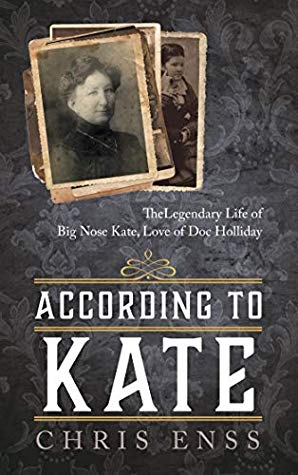
According to Kate, by Chris Enss***

Kate Elder, better known as Big Nose Kate, was a colorful character in the mercurial Wild West. Together with her paramour—possibly her husband—Doc Holliday, she shot, swindled and burned her way through Kansas, New Mexico, Texas and other parts of the American Southwest. My thanks go to Net Galley and Two Dot Publishing for the review copy. This book is for sale now.

Enss is a capable writer, and I enjoy seeing women about whom little has been written brought to the foreground. Enss amassed a fair amount of material on her subject, but some of it was contradictory, and the greatest contradictor of all was Kate herself, who decided to tell her own life story when she was too old to recall everything properly. Enss tells the reader in the title and introduction that she is telling Kate’s story from the subject’s point of view, and she adds numerous footnotes explaining  conflicting information throughout the narrative.

I read things I had never known before about this time and place, and general historical knowledge is where Enss shines best. For example, a ‘soiled dove’ was allowed to own real estate, whereas married women of the time were not. There were a number of financial advantages to owning a house of ill repute. Kate grew up in a middle class household and was not without choices, but she didn’t care to be married off in the way her family had proposed. In the end she was both a shrewd businesswoman and an adrenaline junkie, one that made a point of having at least one loaded gun handy when a situation called for it. I enjoyed reading about it.

Unfortunately there is a lot of conflicting information and the gaps in the story are numerous. Anytime I start seeing the words “might,” “must have, “ “likely” and so forth, I pull back from the narrative. I can’t get lost in a story when I have to mentally filter the things that are known to have happened from the things nobody knows for sure.  I think Enss has done as good a job as could be done with the documentation available, but Kate is a hard nut to crack.

What I would love to see is historical fiction written with Kate as the protagonist, viewed through the eyes of a feminist writer such as Enss. With historical fiction one can freely fill in the gaps, provide dialogue, and make notes at the end of the story letting the reader know what she has invented or changed.

Those with a special interest may want to read this biography, but I see it largely as a niche read.

2019 Best Book by a Pacific Northwest Author: Old Newgate Road, by Keith Scribner

Scribner held me in thrall with this one. I’m surprised it hasn’t turned up on more lists. This is the first of 20 best-of posts for this year; to keep track, check the Best Books page listed on my header.

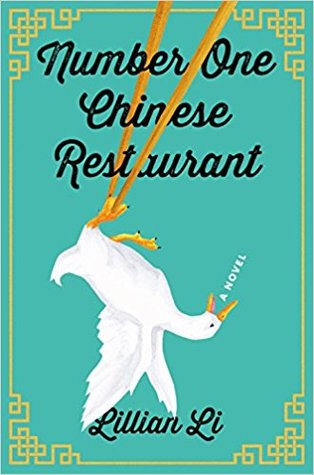
Number One Chinese Restaurant, by Lillian Li*****

NumberOneChineseLillian Li’s debut novel , a tale of intra-family rivalry, intrigue, and torn loyalties is a barn burner; it captured my attention at the beginning, made me laugh out loud in the first chapter, and it never flagged. Many thanks go to Net Galley and Henry Holt Company, from whom I received a review copy in exchange for this honest review.  Don’t let yourself miss this one. This book will be available to the public Tuesday, June 19, 2018.

The book opens with bitter scheming on the part of Jimmy, one of two brothers that fall heir to the family restaurant after their father passes away.  Jimmy has waited for the old man to die so that he could run the restaurant his own way. The Duck House serves greasy, cheap Chinese food, and he is sure he can do better. He craves elegance, a superior menu with superior ingredients. He wants renown, and he doesn’t want his brother Johnny to have one thing to do with it.

Johnny’s in China. Johnny runs the business end of the restaurant, and he takes care of the front of the house. He’ll come back to Maryland in a heartbeat, though, when the Duck House burns down.

Li does a masterful job of introducing a large cast of characters and developing several of them; although at the outset the story appears to be primarily about the brothers, the camera pans out and we meet a host of others involved in one way or another with the restaurant. There are the Honduran workers that are referred to by the Chinese restaurant owners and their children as ‘the amigos’, and we see the way they are dismissed by those higher up, even when it is they that pull Jimmy from a burning building. There’s a bittersweet love triangle involving Nan and Ah-Jack, who work in the restaurant, and Michelle, Ah-Jack’s estranged wife, but it’s handled deftly and with such swift pacing and sterling character development that it never becomes a soap opera. Meanwhile Nan’s unhappy teenage son, Pat, pulls at her loyalties, and she is torn between him and Ah-Jack in a way that has to look familiar to almost every mother that sees it in one way or another. But the most fascinating character by far, hidden in the recesses of her home, is the sons’ widowed mother, Feng Fui, who serves as a powerful reminder not to underestimate senior citizens.

Li is one of the most exciting, entertaining new voices in fiction since the Y2K, and I can’t wait to see what she writes next. Gan bei!

Fire Lover, by Joseph Wambaugh*****

fireloveratruestory John Orr was a fire fighter that wanted to become a cop. The psychological test weeded him out; his personality wasn’t stable enough for a guy that carries a gun for a living, and they turned him down. Over the years, however, he became not only a fire chief, but a highly respected arson investigator, and took tremendous pride in the fact that he was part of the law enforcement community. However, occasional snubs from that group made him livid, and he dealt with his rage in the most horrific manner imaginable: he became the most prolific arsonist in California history. Joseph Wambaugh captures this true crime story in electrifying detail. I received my copy from Open Road Media and Net Galley in exchange for an honest review, but you can get your copy Tuesday, October 18, 2016 when it is digitally released.

It starts with the Ole Hardware Store fire. Ole is a family owned business, but it is large in scale, the size of a big box store, and four people die there. Wambaugh provides personal, poignant details of those that perish, and I appreciate this. The white Volkswagen is particularly moving.

Orr doesn’t see it as poignant or tragic, however; he is enraged at the cops and insurance investigators for calling it an accident, and in order to achieve recognition for his twisted projects, he sets more fires. More. And still more. And as the fires increase, the budget, which had been going to be cut, isn’t cut after all, and Orr has all the work he can handle and more, because he is investigating his own crimes. Time and time again, he is seen at the sites of fires doing uncharacteristic things, or before an alarm has yet been sounded, but no one is ready to suggest that he is the party responsible until it is screamingly obvious.

The author is tremendously skilled at shifting the mood from the somber, to the ironic, to the occasional moment that is genuinely comical, without ever missing a beat, setting an inappropriate tone, or dropping his documentation, which is meticulous and must have taken a lot of years to compile. I usually am not fond of true crime stories because I know I may not like the ending; the author can’t choose how it comes out if his story is true. But this one drew me like a moth, and I had to get a closer look.

Wambaugh chronicles Orr’s life as well as the arsons, investigations, and then the trials that follow, and he does it brilliantly. He received an Edgar Award for Best Fact Crime, and it was an honor he earned.

Highly recommended.

Serpents Rising, by David A. Poulsen ****

serpents risingWhat fun to get in on the first mystery novel of a planned series! Poulsen is an experienced writer, and he knows how to set the hook to reel readers in. I was immediately engaged as I read the initial chapters.

Thank you, Net Galley and Dundurn Press, for the advance peek!

I’d classify this as a cozy mystery, and it’s the first such book I’ve read that was written by a man. I enjoy a limited number of this sub-genre. I dislike seeing everyday people (housewives, caterers, hoteliers) “outsmart” the professionals, and I avoid like the plague any cozy mystery with (*shudder!*) recipes! For those, I use a cookbook. And Poulsen doesn’t do either of those annoying things listed above; so far so good.

His reason for wanting to get to the bottom of his wife’s death by arson is a strong one, not all that new, (the cops suspected him for a long time, and he misses his wife), but old devices like these can still work if the writer is skillful enough to make them seem new. In the beginning, it worked for me.

Equally if not even more engaging is the help he provides his friend Cobb, a private detective being paid to search for a missing teenager with a history of drug abuse. The characters of Jay and Zoe were almost tangible. I used to teach kids of this age, and Poulsen made them so believable that I felt as if I knew them.

That said, the first half of the book is better than the second half. Some of the details in the resolution strained credibility, and the second half also saw a couple of seen-it-many-times plot devices that didn’t look new; they made me groan and mutter, “Oh come on, not that again!”

But you’ll note there are four stars there. It’s a good book, despite the occasional momentary mutter on my part. When the second Cullen and Cobb mystery comes out, it will be on my to-read list.

I was pleased that the author did not add a sickening amount of gore, or add elements that would leave me with a leaden gut for the next two days. Some authors feel that in order to gain the attention of an increasingly easily distracted audience, they have to dig up every horrible possibility and traumatize us. Not so here (or in anything I would label “cozy”). If your “ick” factor keeps you away from Stephen King, you can read this one.

For a fun, relatively quick read to curl up with over the weekend or take to the beach, get a copy of this book. If you are a mystery fan, I think you’ll like it!