Somewhere Toward Freedom, by Bennett Parten*****

Bennett Parten is a fine historical writer, and here he examines General William Sherman’s renowned march through Georgia during the American Civil War through the lens of the formerly enslaved people that followed him. It’s a job that needed doing, and I’m glad that Parten was the one to do it. My thanks go to Simon and Schuster and NetGalley for the review copy. This book is for sale now.

The Union’s approach to formerly enslaved people evolved considerably over the course of the war. (This is your reviewer talking, not Parten.) In the beginning, when both North and South thought the conflict would be a brief one—ending, of course, in their own victories—anyone that left a plantation without permission to follow the Union army was promptly returned to their owner. But this was problematic from the start, if only logistically, as such practices slowed the army’s pace and drained resources from it, all in service to the enemy. For a while, then, everything was unofficial, as gradually, the formerly enslaved were sometimes folded into the army as support staff, helping cook, set up camps, pave roads, and whatever other noncombat roles needed to be filled. Eventually the practice was codified, not because slaves were declared free—not yet—but as “contrabands” of war. The idea was that by taking the enemy’s property that one runs across, be it livestock, crops, or (wince!) human beings, one’s own forces were strengthened, the enemy’s weakened. And after the Emancipation Proclamation, the formerly enslaved could theoretically go wherever they chose, but since guns and dogs can render such a proclamation from a far away and often unrecognized authority, it seemed like a wise plan for the formerly enslaved to follow the Union army.

Prior to reading this book, I was unaware of the relative size of the crowd of followers as opposed to the army itself. As Sherman’s forces made their way through Georgia waging total war, razing fields and burning cities, the crowd behind it grew from hundreds, to thousands, to tens of thousands!

Sherman’s first obligation, as he saw it, was to win this war. The army had to be his focus. Yet, as enthusiastic followers swarmed, they needed food, shelter, and sometimes other assistance. Initially, the troops were instructed not to give food to anyone other than those followers tapped to serve the army, but it proved difficult to enforce. There were children there, and they might well starve if not fed. The army had, as an intentional strategy, denuded the farms and villages of food and other necessary resources, so telling the followers to go find their own food was disingenuous. The army had nearly all the food there was; unfortunately, it wasn’t enough for thousands of extra mouths. And at times, Sherman and his generals made an effort to prevent, or to at least not help, the followers from remaining with them.

The greatest scandal was the one at Ebenezer Creek. (Sherman himself was not physically present for this, but what happened was consistent with his policies.) Georgia was full of rivers, swamps, creeks, and bogs, and in order to cross them, sometimes the engineers constructed bridges, and then either burned them behind themselves to prevent the enemy from following, or retrieved them for later use. In this instance, the enemy was close at the rear, and the order was given to pull up the bridges just as soon as the last soldier was across. The result was horrifying: with the hounds baying behind them, the desperate followers used every possible means to try to stay with the army. Some drowned; others were captured and either returned to slavery or killed. Women and children perished in those muddy waters, and later, the Federals launched an investigation.

There were other less dramatic, yet still tragic, incidents of the same sort.

In order to solve this conundrum, Sherman ordered a series of abandoned plantations in Port Royal, an island in South Carolina, to be turned over for the use of the freedmen and women. The book goes into a fair amount of detail about how these were run, with a fierce competition between two sides for control. Despite an overly colonial administration, formerly enslaved people were able to farm for themselves, and in some cases were able to buy land with the money they earned. It was a sound, if flawed program that was ultimately destroyed when Lincoln was murdered and Andrew Johnson, a sympathizer of the South, became president and gave the plantations back to their original owners, making no provision whatsoever for the farmers that now worked them.

It is this aspect of which I knew nearly nothing. Part of this is because I am a coward; I have a dozen or more books about Reconstruction that I say I will read, but then I don’t, and that is because I know the ending will be heartbreaking. But there’s also this: conventional histories of the Civil War tend to follow one or another army, general, and so forth, and very few tell the story of what happens after the army marches onward. And so I learned a good deal from this portion of the book; and yes, my heart broke, but not as much as those of the people that were first assisted, and then abandoned by the U.S. government.

Finally, I want to comment on the notes and sources used here. They are beyond reproach, with many primary sources used, multiple sources per endnote in most cases, and well-integrated. I particularly appreciated the quotations of the followers themselves.

I highly recommend this book to all that are interested in the American Civil War, Reconstruction, and the many social and racial problems that have continued to weigh on American society ever since.

Let Us Descend, by Jesmyn Ward*****

Reading Jesmyn Ward always hurts so good. In Let Us Descend, she conveys the heartbreak and sense of betrayal a young girl, Annis, faces when she and her mother are sold separately by their owner—who is also her father–and the ways that she copes, and also the ways she is helped by the spirits of her ancestors.

My thanks go to Scribner and Net Galley for the invitation to read and review. I’m sorry to be so late here, and am grateful that the literary world has recognized this book for the masterpiece that it is.

You may have seen other reviews in which I complain and gnash my teeth over historical inaccuracies; sometimes I rant over an author’s failure to portray a child in a way that is developmentally inaccurate. There will be none of that here. Ward has taken the time and done the research, and so her well crafted characters aren’t compromised by sloppy background details. I had to take this story in small bites because it is excruciatingly sorrowful.  For part of it I listened to the audio version; this is a treat in itself, as Ward reads her own novel.

Some reviewers have taken issue with the amount of magical realism Ward employs. I disagree with them. How can any novelist portray such a story and such a character as Annis with any glimmer of hope, unless they employ these literary devices? Does anyone really want to read a book that is miserable at the outset, miserable in the middle, and miserable even at its bitter, wretched conclusion? Without hope, there’s not much incentive to keep reading, nor would it have been satisfying to write; but Ward will not and does not revise history simply to make her readers more comfortable. There was only one way to tell this story and be true to history and her characters, and Ward found it.

Yes, it’s a rough read, but it’s so well written that many readers must have smiled through their tears. Know that, of necessity, this story is absolutely loaded with triggers; assuming that you can navigate them without coming undone, I highly recommend this story to you.

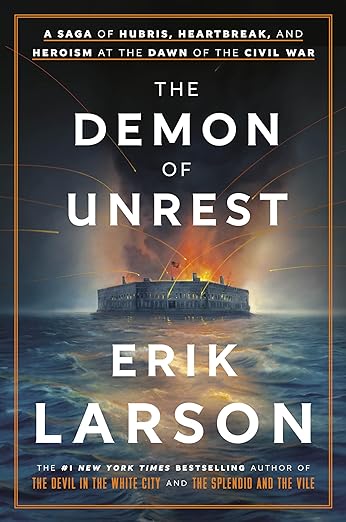
The Demon of Unrest, by Erik Larson*****

When it comes to history, it’s hard to conjure a more capable author than Erik Larson. I’ve thought this for some time, but his Churchill biography, The Splendid and the Vile (2020) cemented this impression.  I am therefore gushingly grateful to NetGalley and Crown Books for the review copy. I would have paid full cover price for this book if that was the only way that I could get it—or the only way that I could get it soon.

This book focuses on Fort Sumter, the Federal fort off the coast of South Carolina that became the catalyst for the opening guns of the American Civil War. The Southern states that seceded from the US, or that attempted to do so, believed themselves entitled to seize the forts, munitions, and indeed, every single ounce of American property located within the borders of their states—and although Fort Sumter and the lesser, partially constructed forts around it were on islands rather than inside the state’s boundaries, they expected to annex those, too.

Meanwhile, as most know, Major Robert Anderson was the fort’s commander, and he desperately wanted orders from Washington. The period following Lincoln’s election, up until he actually took office, was a critical one, but President Buchanan was determined to postpone any official acts until he could hand the responsibility to someone else. He didn’t want his legacy marred by the beginning of a civil war, or indeed, by any sort of noteworthy strife whatsoever, and so he mostly just hid from everyone. Representatives from South Carolina—would-be ambassadors that came to conduct international business—were turned away without official recognition, and that’s about the only worthwhile thing the guy did. And during this fraught period, Anderson and those he commanded waited tensely to learn whether they would be ordered to evacuate, or to defend the fort.

They waited a long damn time; too long.

This is a complex story and an interesting one, and so there are many historical characters discussed, but the primary three that take center stage are Major Anderson; Edmund Ruffin, a South Carolinian firebreather, stoking the fires of secession; and Mary Chesnut, the highly literate wife of a member of the ruling elite. Others of importance are, of course, President Lincoln; Allan Pinkerton, the head of the notorious Pinkerton Agency, which is tasked with keeping Lincoln alive; and a Southern power broker named Hammond, with whom the story begins.

In starting the narrative by discussing Hammond, Ruffin, and Chesnut, Larson gives us a fascinating window into the minds of the South Carolinian ruling elite, known among themselves as “the chivalry.” They style themselves as if they were characters from out of Arthurian legends, placing their own somewhat bizarre code of honor above every other possible principle, and beyond matters of simple practicality. I’ve always been fascinated by the way that leaders of morally bankrupt causes arrange their thoughts and rationales so that they can look at themselves in the mirror every morning and like what they see, and nobody can explain it quite the way Larson can. Everything is crystal clear and meticulously documented. I’m a stickler for documentation, and so although I feel a little silly doing so for someone of his stature, I pull two of his sources, Battle Cry of Freedom, by James McPherson, and Mary Chesnut’s Civil War, which is the diary she wrote leading up to and during the war, from my own shelves, and turn to the pages indicated in a couple of the notes. There they are, just where Larson said they’d be! This may not impress you, but it makes me ridiculously happy.

The story commences with Hammond, a wealthy planter with a highly elastic moral code. There’s a fair amount of trigger worthy material here—though the term had not been coined yet, he was a sexual predator of the highest order, and delighted in writing about the things he did to his nieces. Although this information, drawn from primary sources, does its job by letting us know exactly what kind of person helped shape the rebellion, it’s hard to stomach, and I advise readers that can’t stand it to either skim or skip these passages, because one can easily understand the majority of the text without them.

Once upon a time, this reviewer taught about the American Civil War to teens, and yet I learn a hefty amount of new information. In particular, I find the depiction of Anderson illuminating. I have never seen such a well rendered portrait of him before.

I could discuss this book all day, and very nearly have done so, but the reader will do far better to get the book itself. Highly recommended, this may well be the best nonfiction book of 2024.

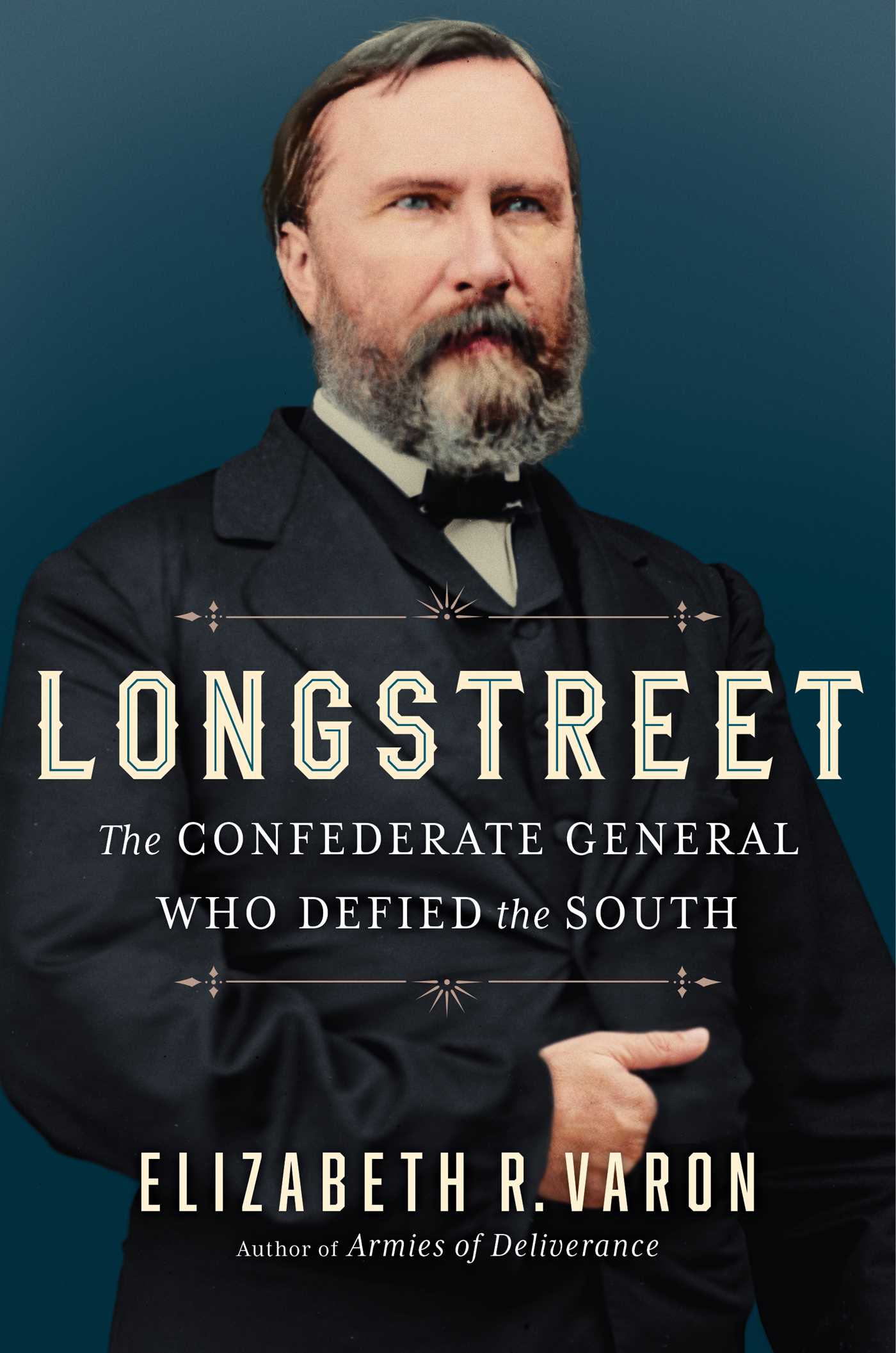
Longstreet, by Elizabeth Varon*****

Longstreet: The Confederate General Who Defied the South is a biography that focuses on Longstreet’s military service in the American Civil War, and his political life thereafter. It’s meticulously researched, and the documentation is among the best I’ve seen anywhere. Students, Civil War buffs, and other interested readers won’t want to miss it.

My thanks go to NetGalley and Simon and Schuster for the invitation to read and review. This book is for sale now.

James Longstreet was one of the most able and respected generals for the Confederacy, serving as General Robert E. Lee’s right hand officer. Lee called him “my old war horse.” However, a disagreement between them about strategy at Gettysburg has made Longstreet a convenient scapegoat for Lost Cause types that accuse him of treachery, of deliberately sabotaging the deadly three day fight, and thereby causing the rebels to lose a key battle. Varon sets the record straight, and then goes on to explain what he did following Lee’s surrender and the Confederacy’s failure.

When I saw the subscript in the title, I wondered whether Varon might be overstating Longstreet’s postwar behavior in order to draw readers. Having read it, I can say that she has not overstated one single thing. This is a fair and balanced account. In essence, Longstreet recognized that, while the Confederate Army fought long and hard, it had in fact lost, and there was no good to be gained from further destruction at a time when reconciliation was more important. He basically said that having lost the war, the best thing for the South to do is recognize that the war is done, and proceed to obey the laws of the United States and rebuild the ruined Southern states.

I was unaware, before reading this biography, how extensively defeated Caucasian Southerners were inclined to sabotage the U.S. government. Guerilla actions were common, along with the passage of local laws that directly conflicted with Federal ones. Acts of terror against African American former slaves, as well as free Black Southerners, were frequent whenever Federal troops or other peacekeepers were not present to see to their safety and their rights. And though I had not realized it, Longstreet hailed from Louisiana, which seems to have had the ugliest resistance of all, with the White League and the Knights of the White Camelia wreaking havoc against Blacks that occupied governmental posts, became too prosperous for the liking of local Whites, or that in any way displeased any White person of any social standing. Longstreet did his best to shut that down; he failed.

Varon discusses the role played by Longstreet’s personal friendship with U.S. Grant, one which predated the war; he was best man at Grant’s wedding to Julia. She suggests that although the friendship was important, Longstreet was also acting on principle.

Varon doesn’t overstate her case, and is measured and fair in her assessment. She points to the occasions when Longstreet folded and cooperated with the local racists in that well-traveled road of U.S. politicians: I have to do this terrible thing in order to get elected, or I can’t do any good for the former slaves or anything else. This habit, both past and present, sets my teeth on edge, but she doesn’t defend it. She also points out that had the Confederacy won the war, Longstreet would have remained a Dixie racist for the rest of his life, more likely than not.

Those looking at the length of this book—over 500 pages—should be aware that about the last twenty-five percent of it is endnotes, with documentation, bibliography, etc. And while it may be more than a general reader that simply enjoys a good biography might appreciate, those interested in the Civil War should get this book and read it.

Lexington, by Kim Wickens****

Kim Wickens’s book Lexington tells the story, not only of one immensely famous, popular race horse, but of horse racing in general during a bygone era in the U.S. My thanks go to Net Galley and Random House Ballantine for the review copy. This book is for sale now.

From 1780 to 1860, horse racing was the most popular spectator sport in the United States, and almost a religion in the South. Great fortunes rose and fell with the purchase, training, performing, and procreating of prize horses, and Lexington was the greatest of them all. Kim Wickens has done an astounding amount of research. This is probably the best documented work on equestrian history on the market today. If you love horses, and especially if you love horse racing, then this book is for you.

This reviewer knows little about either subject; I read it because it was different from most history books I’ve seen. My particular interest is the American Civil War; the synopsis mentioned General Grant and Abraham Lincoln, and I was all in. One of Lexington’s progenies was gifted to Grant by a supporter during the war, and he prized it greatly. The horse, Cincinnati, carried its new owner into at least three major battles. Grant allowed no one else to ride it, except, on a single occasion, President Abraham Lincoln.

Sadly for me, that’s about all we see of Lincoln, Grant, or the Union Army. It’s done in about four pages, which left me with 412 other pages. There are additional aspects here that are of interest to me, in particular the role of Lexington and his descendants in the crime spree by a bushwhacker named Sue Mundy, a name the man took on in order to throw lawmen off his trail. In fact, I found the second half of this meaty story to be much more interesting than the first half. Of course, although I like horses well enough from a distance, I have never been a rider or had any active interest in them. I am a city dweller, urban to my bones. For horse lovers, perhaps the first half will be as interesting or even more so.

One thing that I must mention has to do with the difficult material. This is nonfiction, and sometimes Lexington and other horses were mistreated by those responsible for their care. Whereas some race horse owners genuinely loved their steeds, ultimately they were investments. What to do with a horse, whether to race it or rest it, keep it or sell it, was governed mostly by the bottom line. Doubtless they would be appalled, were they alive today, to see the vast amount of coddling and spoiling we in the twenty-first century devote to our various fur babies. If you were to make a Venn diagram between us, about the only item that would occupy the shared bubble in the middle would be that we all own animals. That’s it. Whereas there is never any gratuitous description of the violence and other cruelties visited on the horses Wickens discusses, it’s in there, and if you can’t stand it, don’t read it.

I have rated Lexington four stars for a general readership, but for those with a strong, particular interest in horses, racing, and the history of both, this is most likely a five star read. Wickens is off and running!

Black Cloud Rising, by David Wright Falade*****

Black Cloud Rising, the historical novel that’s already been excerpted in The New Yorker, is the book I’ve always wished someone would write. Author David Wright Falade tells the story of the African Brigade, a unit of former slaves tasked with rooting out pockets of Confederate guerilla fighters in the Tidewater region of Virginia and in North Carolina’s Outer Banks. This outstanding work of historical fiction is one of the year’s best surprises, and it’s for sale now.

My thanks go to Net Galley and Grove Press for the review copy.

Sergeant Richard Etheridge is our protagonist; he is the son of a slave and her master. This is the only small criticism I have here; it seems like every time I see a fictional former slave that goes on to do momentous things, he’s the master’s progeny. However, Sergeant Etheridge did exist in real life; I have been unable to discover whether this aspect of his beginnings is fact or fiction. If it’s fact, then I withdraw my objection.

One way or the other, this is nevertheless a fantastic novel. In fact, since I taught the American Civil War for many years and have never heard if this sergeant, I wonder, initially, if his story is even true. But a little research shows Etheridge to be have been real. I had known about the existence of this brigade, but the only aspect of it I’d seen was–oh how embarrassing—from the movie, Glory, in which an all-Black military unit volunteers to lead the charge on Fort Wagner. But there, the story is told not from the viewpoint of infantrymen, but from the Caucasian officer chosen to lead them. It’s not as if I failed to do research; but during my years in the classroom, I couldn’t find a single thing that reflected the memories and experiences of the former slaves that fought for the Union. And although this book comes too late to help me teach the upcoming generation, it will be greatly useful to teachers that come after me.

At the outset of our story, Richard approaches his master at dinner, a thing that is generally not done, to tell him that he is going to enlist in the Union Army. Because he is the master’s son, he is able to get away with this, and this has also allowed him to learn to read and write, which in turn makes him officer material. Richard is a well developed character; it is wrenching to see his loyalty and devotion to his father, as well as to his half-brother Patrick, who is the legitimate heir to his father’s estate. Repeatedly the narrative points out that “the son will always seek out the father,” and it makes me ache for this young man. Nevertheless, he does go to war against his father’s wishes, and he demonstrates leadership and skill under pressure.

There is one visceral scene in which the Caucasian master of a plantation who is linked to the guerilla Confederates, is dragged to his own whipping post and beaten by his former slaves. I find it deeply satisfying. In the end and after much bloodshed, the unit is successful in its mission to clear the area of the guerillas that threaten the Union effort.

In many ways this is a coming of age story, but those that will love it most are those that enjoy military history and all things related to the American Civil War, as well as those interested in the Black struggle. It’s a great selection for Black History Month, but it will make excellent reading during the other eleven months as well. Highly recommended.

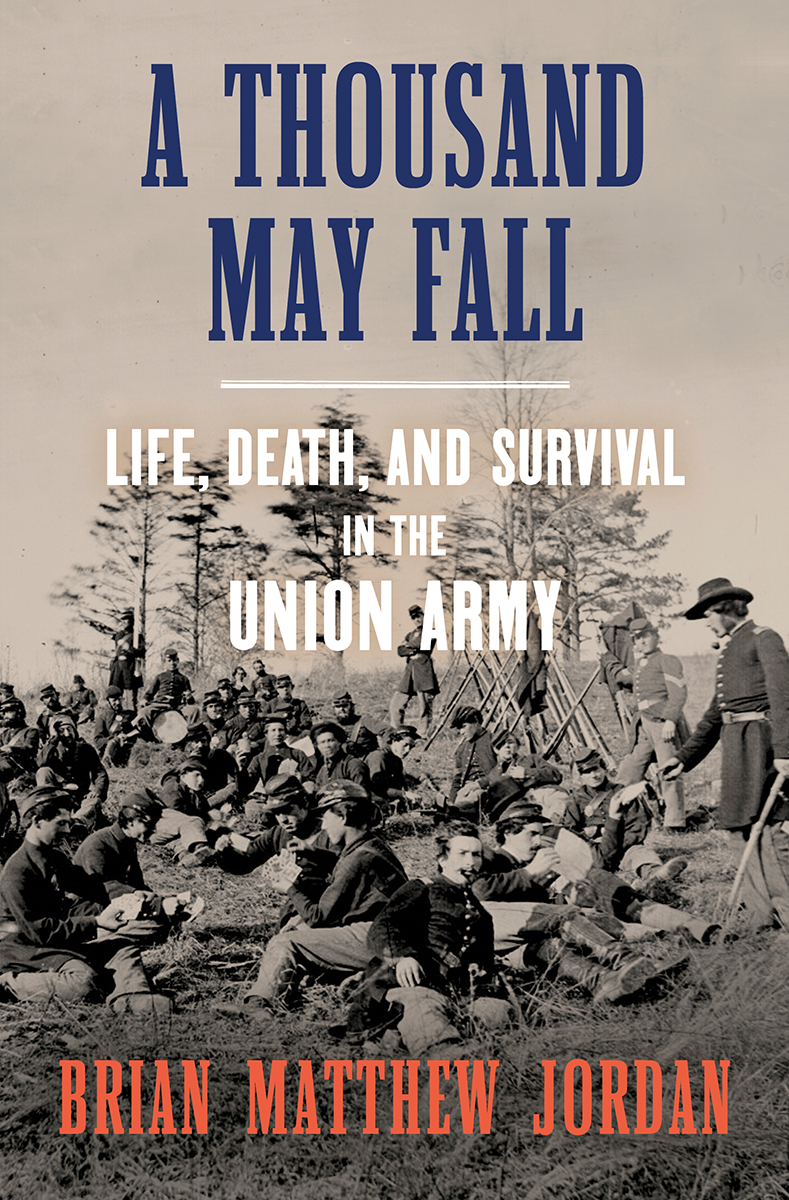
A Thousand May Fall, by Brian Matthew Jordan**

I had such great hopes for this book. Jordan was a Pulitzer finalist for his work on American Civil War veterans, which I have not read, and this new work focuses on the life of an everyday soldier in the 107th Ohio Volunteer Union Infantry, which includes a large number of immigrant troops. My thanks go to Net Galley and Liveright Books for the review copy. This book is for sale now.

I love a good history book, but I don’t love this one. For starters, we have no apparent thesis. After reading the first third of the narrative, my largest question was where the author wanted to take this thing. Is he demonstrating that the German immigrants weren’t as worthless in combat as their reputation suggests? If so, maybe we should focus on that, rather than on the 107th. Give me a thesis focusing on German Civil War soldiers, support it, make it interesting, and I’ll be a happy reviewer. Another possibility is to find an ordinary foot soldier with a fair amount of interesting correspondence or other material to hold my attention. I like seeing the rank and file recognized, and there’s such an abundance of documentation available for this conflict that this shouldn’t be a difficult project.

Sadly, this isn’t what I find. We have a linear story here, and that makes sense, but we go through training, through the nightmare of Chancellorsville, and then Gettysburg, and when we reach the end, I still can’t locate much purpose to Jordan’s endeavor. Once in a while a compelling nugget jumps out, such as the training march at the book’s outset, where men are driven forward without water, and in the end two men are dead; the march concludes, several hours later, just a mile from the starting point, and we see that brutal leadership and poor planning left some surviving men disillusioned. But in many places research appears to be thrown in for its own sake, and no matter how you dress it up, what that is, is filler. We see bits of letters sent home saying that war is pretty bad. Another writer says that he experienced a “hard, tedious march.” Actually, that one shows up in multiple forms, several times also. There’s another quote about passing “porches and verandas,” and another about arriving at an attractive location. (“Beauty and tranquility.”) I could go on, but since he’s done enough of that for the two of us, I won’t. All of it is meticulously—feverishly, even—documented, but so much of it is documenting material that shouldn’t be here in the first place that I can’t get too excited. A professor should know that you have to edit out the extraneous junk and tighten your writing.

There are a few bright spots. I didn’t know there were two different kinds of court martial, so I learned one thing here. Jordan seems to point toward the German infantryman being courageous and willing, but crippled by cowardly, incompetent leadership. I wish that he had used this as his central thesis and thrown away the extraneous crud. There would be a point to the book if he did that, and I could write the sort of glowing review that gets me out of bed in the morning.

As it is, I can’t recommend it.

Daughter of a Daughter of a Queen, by Sarah Bird*****

Cathy Williams was a real person, and Sarah Bird steps up to tell her story, marrying an engaging narrative with historical fact. Though I am mighty late, I received this book free and early. My thanks go to St. Martin’s Press and Net Galley for the review copy.

Cathy Williams was born a slave, though her mother told her to regard herself not as a slave, but as a captive, one of noble warrior blood whose destiny was freedom. The American Civil War led General Philip Sheridan to the tobacco farm in Missouri where Cathy and many others performed forced labor for “Old Mister.” Sheridan chooses her to work in the kitchen; she isn’t pretty, and he figures she will do what she’s supposed to, rather than being caught up in romance. She and other former slaves work in exchange for meals and protection against Rebel slave-hunters.

The American Civil War is my favorite historical period to read about, and I have a soft spot for Sheridan, so this makes the story all the sweeter for me. Before my retirement, I was a history teacher and the civil war was what I taught for one term every school year, yet I didn’t find any inaccuracies here. That’s a rare thing.

Usually, stories that are set during this period hit a climax when the war ends, and soon after that, the book is over. Bird doesn’t do that here; after all, this story isn’t about the war, it’s about Williams. Victory is declared, everyone whoops for joy, and we’re not even halfway in it yet. I like this, because it shows some continuity, and one must wonder, at times—so the war ends, and then what? The South is decimated. The army virtually dissolves. What becomes of those we have been reading about? Reconstruction starts and fails, we know this; yet one wonders about individual stories.

After the war, the army is still Cathy’s home. She is a big woman, and when a soldier friend is murdered, she takes his army coat and dresses herself up as a man, becoming Private Cathay, and she joins the Buffalo Soldiers. In real life, she is the only woman to do so.

I won’t even try to recount the many experiences Williams has; in some ways, it’s a less exaggerated version of Forrest Gump, or Little Big Man, but an African-American woman is the subject, and the story is true. Bird did some top-notch research for this thing, and between that and her considerable skill with character development, pacing, and dialogue, the result is pure gold.

It starts a little slow, but patience will reward you. There’s a fair amount of violence—how could there not be—and a number of ugly situations that might make this a bad fit for a classroom read-aloud, and that’s a shame, but the story had to be told this way. I recommend it for high school libraries, and Black History Month shelves; it might also make a fine gift for your precocious reader, depending on your comfort level and theirs. The very best thing to do, younger readers or no, is to read it yourself. I alternated my review copy with the audio version that I scooped from Seattle Bibliocommons, and the reader is a standout, so I recommend it in that form as well.

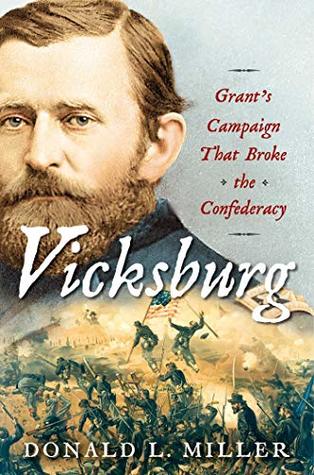
Vicksburg, by Donald L. Miller****

4 stars plus. Donald Miller’s treatment of Vicksburg is one of the best I’ve seen to date; it’s clear, easy to read, well documented, and in parts, vastly entertaining. Thanks go to Net Galley and Simon and Schuster for the review copy. This book is for sale now.

The siege and battle of Vicksburg was the single most significant event in the American Civil War. When the Union emerged victorious, it seized control of key arteries of commerce, food, and military supplies by capturing access and use of the Mississippi River as well as an important railroad that ran east to west. It liberated vast numbers of slaves, and it dealt a savage blow to the morale of diehard Southerners who believed the city and its fort unassailable. The fall of Vicksburg cut the Confederacy in two, and it made communication between the two halves slow and difficult. It also sealed President Lincoln’s election and provided him with a second term he might otherwise not have gained. I knew all of these things before I began reading Miller’s work, but I found a tremendous number of details I didn’t know about, and more importantly, I gained a much solider sense of context.

Many prominent works on Vicksburg are also Grant biographies, and that usually suits me fine, because Grant is one of my greatest heroes. However, those that read about Vicksburg solely within that framework lose out on the progress made—and sometimes lost again—by the Union Navy and others. Though I had read James McPherson’s work on the Union Navy, there is a lot more detail provided here by Miller. The rivers that surrounded Vicksburg are confusing as heck, and this played a big role in lengthening the fight, but at the same time, it can also confuse readers. It certainly did me. For example, when those traveling on rivers go “above” a certain point, what does that mean? I always assumed it meant north, but sometimes it doesn’t. I had never heard or read the term “Brown water navy,” (or if I did, I had thoroughly forgotten it), and this is a key aspect of the story. For the first time I have a solid grasp of the route used by the Union navy and army.

Readers should know that Miller is fond of including gore. I don’t know whether this is because college students are easily bored, and the consideration of Grant calmly conveying orders while spattered in brain matter is just more attention-getting than the same information without the gore, or whether Miller feels compelled to use these details to drive home the horror that heroes were forced to look beyond in order to be effective, but there it is, and so if you are inclined to take a book with you on your lunch break, you may want a different one then.

One of the aspects I appreciate most is the emphasis Miller places on the role of slaves during this critical time. If the waters were inscrutable, the land was little better in places, with thick, tropical foliage, snakes, leaches and other hazards. Those that lived nearby had an incalculable advantage, but local whites used this knowledge to confuse and obfuscate troops they considered to be enemies. Slaves, on the other hand, understood how important a Union victory would be, and they provided information that would have taken a lot longer to obtain without them. This is material that other writers often mention briefly but treat as a side issue. Miller goes into specifics, gives concrete examples, and shares the respect that Grant gained for his newly emancipated spies, guides, and soldiers.

The chapter titled “The Entering Wedge” is where good prose and information become solid gold. During this section of the book and the chapter after it, I did a lot of rereading for pleasure. There are excellent quotes throughout the book, and the author wisely focuses on those that are little seen in other books, providing a freshness and you-are-there quality at times that I haven’t seen for a long time.

At one point, during a passage discussing the caves that housed soldiers as well as local families affected by shelling, I realized that these must surely be part of the national park dedicated to this event, and I searched the web for images of them; sadly, because of the very soft earth in and around Vicksburg, (most likely the same soft earth that enabled the river to continuously change course,) those caves are all gone, washed away by hard rain. There’s a photo of a modern version based on the information available, but that’s not the same thing. Rats.

I nearly gave this book five stars, but there’s a surprisingly disturbing part toward the end that left me deflated and scratching my head. There are pages and more pages devoted to ugly rumors that seem to begin and end with Cadwallader. Although the author repeatedly reminds us that these statements are “unsubstantiated” and “controversial,” he nevertheless devotes a whole lot of time and space to them, and what’s more they are near the end, where the reader is most likely to recall them. Overall, he seems harder on Grant than most are, but up to this point he was fair, weighing his weaknesses while acknowledging his strengths. Why he would do a hatchet job on this iconic hero in closing is a mystery to me. Then the very end of the book is given to a Confederate.

Nevertheless, this is a strong work for those that know the basics and want the details. I don’t recommend it to those new to the American Civil War; if you are just getting your feet wet, read McPherson’s Battle Cry of Freedom, or explore the excellent historical fiction of Michael and Jeff Shaara, Shelby Foote, and E.L. Doctorow. But for those that are well-versed and in search of new information, I highly recommend this book.

Today We Go Home, by Kelli Estes**-***

I expected to love this book, and I wanted it to be great. The premise is terrific: Larkin, a wounded warrior home after falling apart while on tour in Afghanistan, finds the diary of Emily, a woman that fought in the American Civil War (albeit in drag.) It’s a cool idea, and between the feminist moxie and my enthusiasm for local writers, I was ready to be wowed. It didn’t work out that way, but my thanks still go to Net Galley and Sourcebooks Landmark for the review copy.

The contemporary component is the part I found strongest and most appealing. I haven’t seen a lot of novels featuring women in uniform (or freshly out of one,) whether in the Middle East or elsewhere, and the pain that Lark carries for her best friend, Sarah, is visceral and in places, haunting. Sarah served with Lark and died in an ambush that Lark believes she could have prevented. Lark sees her die, and then has flashbacks and nightmares that make my gut roil. Lark’s mama is dreadful, and I am heartily weary of seeing mothers take it on the chin in fiction, but I like the relationship between Lark and her grandmother and the way it is developed.

I had hopes for the second thread, the one about Emily fighting alongside her brother in the Civil War, but this part is unfortunately plagued by historical revisionism and too much convenient coincidence. For a woman to be as forward-thinking as the politically correct Emily—and this is the first time I have ever used this term in a negative way, leaning much farther to the left than your average American—would have been very unusual indeed, and for Emily to have slipped beneath the social radar in other regards would have been nearly impossible. Emily thinks at one point that her brother David is gay, for example, but she worries only for his safety, because she herself is sure that gay people are just made that way by God. And while this is a lovely sentiment, a researcher could turn under every historical rock and go through every collection of Civil War diaries and letters, and she would probably not find this sentiment in any of them. And in another case, Emily is sympathetic toward a runaway slave, not only in the sense that slavery is wrong or that the runaway is toast if his pursuers find him; she views him as her social equal. Aside from the late and admirable John Brown, and possibly his sons, it would be a hard thing indeed to find such a Caucasian person in the early 1860s, North or South. Many that fought against slavery assumed that former slaves would be deported to Africa; nearly nobody is on record during that period suggesting that Black folks were equal to whites, or that they could become friends and neighbors on equal footing.

I imagined Ta-Nehisi Coates reading this novel and howling with laughter at its naiveté.

To round it out, Emily virtually trips over another woman-disguised-as-a-male soldier, and given the vast numbers of men fighting in the Civil War, even the most generous estimate of women that served covertly makes this unlikely enough to be ludicrous.

I am not sure whether the pacing of the novel is also slow, apart from these inaccuracies and inconsistencies, or whether it was slowed by them, that sad moment akin to one in which Toto has pulled the curtain aside and revealed that Great and Powerful Oz is actually just a little dumpy bald guy talking into a microphone. All I know is that by the thirty percent mark, I was forcing myself to continue reading because I had a review copy and an obligation. I actually like having one galley with a sedate pace that I can read before I turn out the light, but my frustration with the issues noted above prevented me from reading it and then dropping off into peaceful slumber. At the sixty percent mark, I let myself off the hook. I took a quick look at the denouement to check for mitigating developments at the end, and then closed the book.

Estes is a talented writer, but I believe she has tried to do too much here. A simpler novel focusing exclusively on Lark would likely have been stronger. However, she is a writer to watch, and I believe she will do fine work in the future.

This book is for sale now.