Coming Around the Corner: October Reads to Be Reviewed Soon

I pride myself on timely reviews, but once in awhile life gets in the way. Over the past month, every household thing that could break has done so…almost, anyway. I don’t want to invite further calamity by suggesting it’s all happened already. And so, though nobody is dead or dying, I am behind. Here are the titles you can look forward to seeing reviewed soon, soon, soon:

fireloveratruestory      thebirthdayboys       theeducationofdixiedu  eventhewicked    fidelity missionjimmystewart thevanishingyear.png   doubtinthesecond  beingadog

murderindragon.png     thegirlfromv.png    americangothic

thegraveyardapar.png   silence.png    usgrantthecivilwary

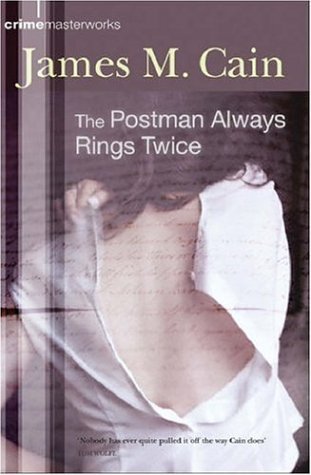
The Postman Always Rings Twice****

thepostmanalwaysringstwiceWell, they do say karma’s a bitch.

I fell heir to a first edition hard cover copy of this classic 1934 crime fiction. It’s too well worn to be a collector’s item, so instead of selling it, I decided to just enjoy holding a book in my hands that could have been held, hypothetically, by my great-grandparents. I think I enjoyed the crispy yellow pages and the old school print more than I enjoyed the story itself.  With wide margins and plenty of dialogue, it was a quick read, and before the weekend was over I’d finished it.

Our protagonist, Frank, is a drifter that does odd jobs and occasional crimes as he travels through Mexico and the Western USA; the story itself is set in California. He comes to an out-of-the-way place where a Greek immigrant and his wife run a small roadside restaurant. The owner is interested in expanding the business to include car repair, and hopes that a free meal and a bed for the night will lure Frank to stick around and work for him. Instead, Frank stays and finds a white-hot attraction to Cora, the owner’s wife. The two of them make love like cats in a pillowcase, snarling and biting and tearing at each other, and they like it so well that they decide to kill the Greek guy so they can do it together forever.

Those that don’t follow history may not know that at the time this story was published, U.S. xenophobia toward immigrants from Eastern and Southern Europe was at its pinnacle. Jim Crow and the Klan had silenced any open dissent from African-Americans with a reign of terror, but it was somewhat commonplace for Caucasians, who were by far the largest group in terms of population and certainly in terms of power and money, to make nasty assumptions and references about people from Greece, Turkey, Italy, and the surrounding area.

So it’s within that context that Cora declares that although her husband Nick loves her and treats her really well, he repulses her because he’s “a little soft greasy guy with kinky hair”. He wants her to have his baby, and she doesn’t want to touch him. She’d hate to go back to turning tricks, but she would far prefer to be with fair, blonde-haired Frank than Nick Papadakis.

The story arc here is flawless, and I can see how it became a classic, but it has many aspects that haven’t aged well. There are nasty remarks about Mexicans; Cora urgently wants Frank to know that she’s white, even though her hair is dark. She isn’t “Mex”. And although I understand that some people do like rough sex, I had to take a deep breath when Frank became aroused and showed it by blacking Cora’s eye for her.

Right. So you see what I mean.

The way the story is plotted is ingenious, and the characters are consistent all the way through; the ending is brilliantly conceived and executed.

For me, though, one reading is enough.

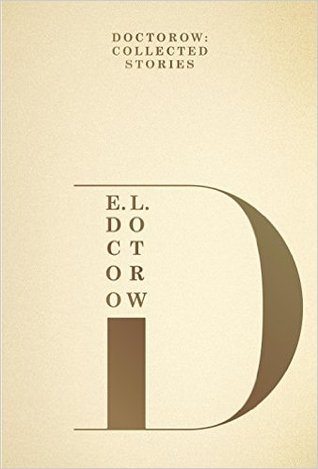
Doctorow: Collected Stories, by EL Doctorow*****

doctorowcollectedEL Doctorow died last year, and the literary world—well, at least the English-speaking part of it—mourned. I know I did. He was one of the finest writers ever to grace the planet, and so when I spotted this collection of stories, even though I understood that I had probably read most or all of them already I snapped it up. Thanks go to Net Galley and Random House for the DRC, which I received free in exchange for this honest review. The collection will be available to the public November 1.

I am bemused by “The Writer in the Family”; I had read it before, but it’s worth reading again. Families are complicated, and Doctorow deftly creates a deeply dysfunctional dynamic with this one. Check out the premise:

“In 1955 my father died with his ancient mother still alive in a nursing home. The old lady was ninety and hadn’t even known he was ill. Thinking the shock might kill her, my aunts told her that he had moved to Arizona for his bronchitis…And so it came about that as we mourned him in our stocking feet, my grandmother was bragging to her cronies about her son’s new life in the dry air of the desert.”

But Grandma can’t understand why her son isn’t writing to her; this will never do. Thus the aunts approach the protagonist. “You’re the writer in the family,” they open, and then present the obligation to him, that he must forge a letter to Grandma from his late father. The aunts will go to the nursing home and read it aloud to her; all he has to do is write something. And of course one letter isn’t enough; there must be more, more, more, and so even as he is grieving his father’s loss, our protagonist, the good son, nephew, grandson that doesn’t make waves, is required to plagiarize one letter after another in his father’s name, until a shift alters the equation.

Because Doctorow wasn’t just any writer, I visited his Wikipedia page before writing this review, and I learned that his first name was Edgar and that he was named for Edgar Allan Poe; he was expected to become a writer. I trust his parents were satisfied. At the same time, I found myself wondering how many times he had been told that since he was the writer in the family, it was up to him to do this, that, the other. All speculation, of course, but they say to write what you know, and perhaps to some extent, he did.

On my actual bookshelves, the ones made with wood and that have books made of cardboard, cloth, and paper on them, I have half a shelf devoted to this writer’s work, and so when I downloaded this DRC, I went and retrieved the collection of his short stories that I already owned (and paid for), All the Time in the World, which was published in 2011. I wanted to see what difference there was. I found that this new collection has two stories I hadn’t read before, and so that was where my focus began. For those that also already have this author’s complete works up to now, the new short stories are “Baby Wilson” and “Child, Dead, in the Rose Garden”. The other difference is that the short story on which his outstanding novel The Waterworks is based is presented here. That one is short indeed, and it’s strong enough that it’s easy to see why he selected it to expand into novel form (which I highly recommend).

Ordinarily I would say that I’d have been annoyed had I paid full jacket price for this one, with a dozen reprinted short stories I already own; the premise for a novel I already own; and two lonely stories that are new to me. But this is Doctorow, and so my rules are different. Were I not a book blogger and able to get a DRC, I would probably wait for this one to turn up in used bookstores so that I could buy it on the cheap, but one way or another, I would have to have it. And to be sure, both stories—though maybe not good choices for the pregnant reader, given that they involve a dead child and an abducted newborn—are absolutely brilliant. Baby Wilson in particular builds irresistibly and is a masterpiece, but the voice in the Rose Garden story is guaranteed to produce chills.

I also reread my old favorites, among them “Walter John Harmond”. Whoa.

As always, Doctorow’s writing is hyper-literate. If you try to read this while doing something else, you will be lost, and I don’t recommend it to anyone for whom English is not the mother tongue unless the reader is so steeped in the language as to be comfortable with heavy literary fiction.

Don’t try to skim; savor it.

Highly recommended to the fluent reader that loves great literary fiction.

Combustion, by Martin J Smith*****

combustionPaul Dwyer is dead, a floater that has only been found because his construction business diverted the water from the place where his body is dumped, and it dries up in the Southwestern desert heat, leaving his body exposed to the world.  I was lucky to be able to read this book early, thanks to an invitation from Net Galley and Diversion Publishing, in exchange for this honest review.  I am overjoyed to rate it five stars. I knew nothing at all about either Smith or Diversion, but it turned out to be a risk that worked out in my favor and the author’s.
Our detective is Ron Starke, a single man whose father has Alzheimer’s. The reader cannot help but warm to him as we see him appear in his father’s room, hamburgers in a paper bag, prepared to patiently have the same conversation with his dad that he had with him several times yesterday and most likely will have tomorrow too.

Shelby Dwyer, the victim’s widow, is a very wealthy woman now. She isn’t sorry that he’s gone, and neither is their teenage daughter Chloe. Dwyer was a violent, ugly man in private, regardless of the shine he demonstrated publicly. Naturally, Shelby is the chief suspect, a thing made more difficult by the fact that she was Starke’s girlfriend a decade ago, when they were in high school.  But it’s a small town, a tiny exurb of Los Angeles, and everyone really does know everyone, aside from Starke’s supervisor, Kerrigan, a recent transplant from the big city. To make matters even more awkward, Starke had been considered a shoo-in for the job Kerrigan now occupies, and Kerrigan knows it.

He has a feeling that his new boss is gunning for him.

The story is told from alternate points of view, and Smith creates whiplash tension by shifting between them at key points.  Character development is solid, and it makes me wonder about the possibility of a series emerging from this debut.

Shelby may be rich now, but she is in tremendous personal jeopardy. All of the lonely nights spent holed up in the study, cruising online for connections she can’t find at home, have led her to expose herself in a horrifying way. And as she is forced to confess to Chloe about the unwise things she has said to another visitor in a chat room, a person using the handle LoveSick, and despite the horror of the moment I had to smile, as the traditional tables are turned and 17 year old Chloe has to tell her mother that you should never, never provide a stranger with personal details.

Smith’s debut is hot as the desert sun, a page turner that will live in your head after the last page has turned. Those that know me are aware I finish an average of three titles weekly for review, and so months or even weeks later if I am contacted by the writer’s publicist, I sometimes have to flip back through my records to remind myself…wait, this what which book again? And this is especially true of mysteries, which no matter how unique, tend to share a certain sameness. But in this case, that didn’t happen. The settings are so resonant, the characters so well sculpted that I felt as if I were an unseen guest among them.

It’s for sale today, and I highly recommend that you read it.

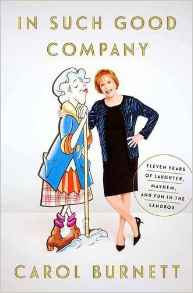
In Such Good Company: Eleven Years of Laughter, Mayhem, and Fun in the Sandbox, by Carol Burnett****

suchgoodcompany  When I saw that Burnett had published a memoir of her years as America’s favorite comedic performer on The Carol Burnett Show, which ran from 1967 through 1978, my first thought was, what, another memoir? She’s already published at least three others, one of which I have read and reviewed. But the fact is, she hadn’t used up all her juice yet. Each of her memoirs focuses on some particular aspect of her life, and so this book is new, it’s original, and it’s probably the stuff you were hoping she’d talk about in her other memoirs. Lucky me, I read it free thanks to Net Galley and Crown Archetype. It was published September 13 and I am sorry to be on the late side, but I scored my own copy just prior to publication; I had no idea it was available till Crown put a promotion up on Facebook and it showed up on my home page.  I genuinely held my breath as I logged onto Net Galley to see if I was too late, and happily, the Literature Fairy smiled on me.

As the memoir begins, I am at first a trifle disappointed, because it appears as if she is just going to list every single person that’s ever appeared on her show and gush about how nice they were.  But she’s just warming up, and it gets more interesting. She describes how she made her way into show business, and though she skims over the early years, knowing that the reader wants to get to the show, it sounds very much as if she was the overnight success that aspiring actors only dream of becoming.  She was on a show that I wasn’t around yet to watch called “The Garry Moore Show”, and she must have made not only a tremendous impression, but also a lot of friends, because she was offered her own variety show—think of it!—and then was able to bring a head writer, a choreographer, a bunch of dancers and some other people west with her from New York to Los Angeles.

This show was a fixture in my childhood and adolescence. One of Burnett’s regular satirical sketches lampooned soap operas, and it was called “As the Stomach Turns”. It was one of the few things that made my parents and me laugh out loud at the same time. My friends and I spent ridiculous, late night hours creating our own satire of a satire, which we dubbed “As the Stomach Churns”, and which featured imaginary illicit relationships among our own teachers along with the administration, janitorial staff, and especially our librarian, a book hoarder that chased away all potential clientele from her sacred gates.  So when I saw that Burnett was writing about the show, I had to see what she’d written, because she had been an intrinsic part of my own development.

All comers that want to read this should do it near an internet source if at all possible, because the comedic sketches can be viewed on television and now also on YouTube. This is fairly new: I tried to view them a couple of years ago and they weren’t there yet, so this is exciting all by itself.

And if you have never seen any of her work and wonder what I am carrying on about, check it:


and with Robin Williams:


The life that she led sounds like something most actors could only dream of. She got up, got her kids off to school, started work on the show mid-morning Monday-Friday, with a single run-through on Thursday followed by a live show before a studio audience Friday, and then they were done at three o’clock and she was done by the time her kids were out of school. It came down to disciplined behavior on the part of the cast and crew, and to the unusually respectful atmosphere in which the show was done. Once a guest misbehaved and when he threatened to storm off the set, she let him go and said good riddance; they did the show without him.  (She won’t give us a name, but he was short. I have been speculating ever since.)


She does tell the many spoofs that were done on movies of the past, and which actors called to say they just loved what the show had done with their film, and which either called up and were angry or sent indirect messages that they were not amused. And she  offers a retrospective look at the way women in show business were expected to behave back then; she was sometimes a doormat, and exultantly recounts how Edie Gourmet, on a guest visit, gave some of it back to those that bullied Carol.


Some of the funniest bits of writing are included, and some of the regular cast’s best onstage moments are recounted, along with those of favorite guest stars. A complete list of every show and which guests were featured is at the back of the book for those that want to look up particular entertainers, or  peruse it for fun.


But the bottom line is that this is pure gold for those that love Burnett and the show, and that can follow along some of the high performance points online. If you aren’t interested in her work, then the memoir won’t mean much to you.


Recommended to Burnett’s many fans.


The Big Change: America Transitions Itself 1900-1950, by Frederick Lewis Allen***

thebigchangeamericatr2.5 rounded up. The Big Change was a National Book Award finalist back in the day as well as a New York Times bestseller. I was invited to read and review it now that it’s being released in digital form; thanks go to Net Galley and Open Road Integrated Media. I’ve read and reviewed more than 50 titles for this publisher, and they’ve been wonderfully tolerant when I have written less than glowing praise for a book such as this, whose shelf life is well and truly over. This title is available for purchase now.

Allen’s book is written as a popular history. For a lot of people that makes it more accessible than a more scholarly approach would. As for me, I appreciate a citation, and I read those notes to see where the author gets his information. If he’s citing other secondary sources, the obvious thing to do is go read the secondary sources instead. If he’s done some real work, puttering from one obscure regional library to another in order to peruse their rare books, original diaries of heroes long gone, and so forth then I know I have found a researcher who can do me some good.

But for those delving into this period for the first time, this is in most regards a sound overview of the period in question, kind of like a contemporary history 101 for white men. Allen covers the turn of the century, when capitalism was unchecked and unashamed; The Progressive Era and World Wars I and II; the Depression, and the postwar boom. He devotes some of his space to the huge labor struggles and mentions the IWW (International Workers of the World, or ‘Wobblies’). The uses a friendly, readable tone and if there had been any women or people of color anywhere, anywhere, anywhere (other than a quick nod to suffrage) I might have found another star. Or half a star.

Having said that, I should also point out that Allen was not especially conservative or reactionary in comparison to other historical writers during the 1950’s, which is when he wrote and published this. In fact, anyone that did include women in a more than passing manner, or that included people of color, was considered a radical by many. Most academics would have laughed at them. So it’s all about context; some best sellers of the past, such as the Pulitzer winning Bearing the Cross, David J Garrow’s biography of Dr. Martin Luther King, just get better with time; others, like this title, have a more limited shelf life.

I’d recommend this title to those with a special interest in the time period, but only as supplementary material.

A Killer’s Guide to Good Works, by Shelley Costa*****

Happy release day to one of my favorite mystery authors! This book is available today, and if you haven’t ordered it yet, now’s the time to do it.

seattlebookmama's avatarSeattle Book Mama

akillersguidetogoodShelley Costa is a writer to remember. Her dazzlingly dark humor and her ability to spin a tight original story that builds irresistibly caught my eye with her first Val Cameron mystery, Practical Sins for Cold Climates. I began checking in with Henery Press regularly when I logged onto Net Galley, and my stalking paid off big time. Thanks go to Henery and also to Net Galley, from whom I received a DRC in exchange for an honest review.

In this second Val Cameron mystery, our protagonist is back in the big city where she belongs. She is looking forward to lunch with her best friend Adrian, who promises to show her something rare and wonderful, but when she reaches Adrian’s office, her friend has been murdered and the artifact is gone. Val’s loss is our gain, as Costa unfurls another outstanding mystery. This title is available to the…

View original post 166 more words

All the Good Parts, by Loretta Nyhan*****

allthegoodpartsThere are times when a novel is more than the sum of its parts, and this is one of those times. Loretta Nyhan combines strong character development, our changing social mores, and sassy, kick-ass word smithery and this is the result. Thank you Net Galley and you too, Lake Union Publishing, for the DRC, which I received free in exchange for this honest review. The title is available today, hot off the presses.

Leona is 39 years old, taking online classes, working part time as a home health aide, and living in her sister and brother-in-law’s basement. She is unchallenged by any real ambition until her doctor—an old school friend—tells her that if she wants to have a baby, she’d better get to it before her eggs are dead. So now Leona—‘Lee’ to her family—is ready to get preggers and pop out a child. Let’s do it!

Leona is the woman I want to grab by the elbow and drag into the kitchen so I can tell her some hard truths. Instead, her sister Carly does it for me. Everything Carly says makes complete sense. She points out to Leona that she is so passive that even the baby idea is not her own; it was her doctor’s. Leona drifts through life letting people tell her what to do, and is that any way to raise a kid?

In addition, since Leona is not dating, she needs a sperm donor. The sperm bank and intro fertilization is crazy-expensive; she really only knows four possible donors. There’s an elderly patient growing accustomed to his status as a double amputee, but although he offers, it would be so unprofessional to take him up on it! There’s an online study-buddy that she hasn’t even met in the flesh; there’s her niece’s tutor, a very bright, handsome homeless man who’s actually even more passive than Leona; and there’s Paul, the son of the patient who dislikes her and fires her.

My, my, my.

This dandy little book is full of interesting philosophical questions and home truths that pop in and out of the narrative and dialogue like fireflies, blinking here and there without slowing anything down or stopping too long in any one place. And in some places, it’s drop-dead funny.  Nyhan uses deft, clever prose to move both the story and the protagonist forward, and in doing so she creates a very visceral, tangible protagonist. I don’t always like Leona, but I do always believe her.

I’ve never liked the category “chick lit”, because women read books featuring men—sometimes men only—and there’s no special category for that, so in the best world, men should want to read this book too. But in the world we have now, this will sell primarily to women. But whoever you are, you should get this book and read it. I have seldom enjoyed a DRC so much; it was my go-to book when I didn’t feel like reading another mystery or delving into George Washington’s past.  I would read something else out of duty, and then turn to this one as my reward. And I was sorry when it ended.

Recommended without reservation to anyone with a pulse.

George Washington’s Secret Spy War: the Making of America’s First Spy Master, by John A. Nagy***-****

georgewashingtonssecretspyNagy does a more than serviceable job in documenting Washington’s intelligence methods. Thank you for the DRC, which I received free in exchange for an honest review from Net Galley and St. Martin’s Press. This title is for sale today.

Washington first learned spy craft when he was fighting for the British Crown during the French and Indian war, a nasty conflict that puts the American Revolution in the shade in terms of lives lost and financial expense.  Later he would take the education he had gained as a member of His Majesty’s forces and use it to lead the American colonists to victory as citizens of an independent nation.

Nagy conscientiously documents his case that it was this knowledge of spy craft that won the Revolution. He cites everything, and he uses primary documents that you and I would never ferret out in order to do so. Students of the American Revolution, the French and Indian War, or the history of American intelligence-gathering should consider this book an indispensible addition to your research material.

In the tradition that continues to this day, Washington found there were only two possible outcomes once a spy was apprehended. The first and most usual thing to do was hang them. Once in awhile one could turn them. And he had absolutely no scruples about torturing them first and hanging them later.

As a popular read, I rate this title three stars, and it’s really not due to any shortcoming of the author’s. He quotes extensively from primary documents such as Washington’s diary, and he didn’t use the same expressions and syntax that are used now, nearly two and a half centuries later. The accepted speech mannerisms for that time are unwieldy to us, and make for some difficult, hyper-literate reading that is not always enjoyable.

But for those that need the information, there are not a lot of places to go, and I think you need this one. As research material this is easily a four star book, and depending upon one’s area of study, it might even be more.

Recommended to researchers and students in this realm.

Small Great Things, by Jodi Picoult*****

smallgreatthings“Is it worth being able to say what you need to say, if it means you land in prison?”

Small Great Things is a courageous novel, one that will excite a fair amount of controversy, and it’s one that needed to be written; it’s the most important novel released this year. Thanks go to Net Galley and Random House Ballantine for the DRC, which I received free of charge in exchange for my honest review. This book will be available to the public October 11, and you should read it.

Picoult’s readers will recognize the familiar format presented here, the alternating points of view of the novel’s main characters. Foremost is Ruth Jefferson, a middle aged labor and delivery nurse at Mercy Hospital in New Haven, Connecticut. Ruth is African-American. She’s making the rounds, doing a fairly perfunctory newborn check when Turk, the father of little Davis Bauer orders her out of the room. He wants to see her supervisor; he wants a note on his son’s chart that no Black person may touch his child. Turk is a white supremacist; he has the Confederate flag tattooed on his arm. The chart is flagged to indicate that no Black medical personnel—which in this hospital and on this ward means Ruth, since she’s the only African-American there—may touch or care for Davis Bauer.

She is told it’s for her own protection too.

But an emergency unfolds, and just as in real life, the hospital is understaffed. There are a limited number of nurses that can take care of emergencies, and when the rotation is full, the only person to keep an eye on Davis following his circumcision is Ruth. The nurse that had been attending him swears she’ll be back in just a few minutes. After all, what could go wrong?

What could go wrong does go wrong, as bad as it gets: Davis dies, and Ruth is blamed. She is suspended not only from the hospital but from nursing, and ultimately, when the hospital hears from the Bauers’ attorney, the administration decides to toss Ruth under the bus. She is arrested and charged with murder.

I have to say here that those that have big ugly reactions to triggers may not be able to read this thing. The language is harsh. There are dead babies in multiple places; if you or someone close to you has lost a baby, decide whether you can go here. There are lots of vicious racist and sexist terms tossed about, not carelessly or as a shortcut to establishing that someone is a bad guy, but because there’s no authentic way to voice a white supremacist character without using them. And I am frankly uncomfortable hearing Turk’s voice, and even more so with the amount of care Picoult uses to develop this character. It makes the book much more powerful, and those that wonder just what in hell makes someone turn out this way can watch it unfold. Is her depiction realistic? I have no clue. However, I can say I believe she has done due diligence with research, and it can’t have been easy.

Until now we have heard alternating voices, those of Ruth and Turk.Once Ruth is in trouble, we add a third character, that of Kennedy McQuarrie, the clueless attorney who sits down with Ruth and explains to her that she doesn’t see race. And ultimately the struggle isn’t about getting Ruth out of jeopardy and back to her job; it’s about how to do that.

Because Ruth, who has been more than tolerant around well intentioned Caucasian people that say offensive things without any idea how terrible they sound, has had enough. She went through Cornell University, but first she had to endure the hallway whispers that she only got in because she was Black. She speaks Standard English, and is fed up to here with being told she is too White. And she was paying close attention when Trayvon’s murderer walked away free; she doesn’t want her son to be the next young man in a hoody sweatshirt shot by cops terrified not of weapons or behavior, but of skin color.

So Ruth wants to go to court and she wants to talk about race. But Kennedy tells her that this is a losing strategy; only by sticking closely to the procedural aspects of the case will Ruth be able to reclaim her life. And Ruth is having none of it.

The people that really need to read this book are those that really think “all lives matter” is an encompassing slogan. I fear many of them will be too afraid of this story to go there. Likely those of us that understand that this slogan is a veiled way to say that only White lives matter are the ones that will be drawn into this story.

The ending felt contrived to me, but the rest of this novel is so well done that I’m not going to split hairs here.

I was somewhat taken aback by the author’s note suggesting that Caucasian readers should take the message back to “other White people”, in our “own” communities. And I do understand that much of the USA is still segregated, but I have been the only Caucasian in my house for a lot of years, and I wasn’t sure quite what to do with her assumption, particularly given that the theme of this story could very well be that nobody has the right to assume things about a person based on that person’s race or ethnicity. But I can live with it, because the story itself is much more powerful than the notes at the end, and I understand that her ultimate message to White folks is that we must not try to be “white knights” that rush in and take over the struggle, but rather allies that follow and support.

I wish it could be required reading for everyone…especially for those that say they don’t see race.