
 The Impossible Fortress has been generating a lot of buzz since last summer when the review copies came out, and rightfully so. It’s hard to believe this is a debut novel, because it’s smoothly designed and hugely original. It’s written with a deftly woven plot that never misses a step; engaging characters that are nearly corporeal, they are so well sculpted; and an utterly captivating voice that unspools the narrative. Best of all, it’s hilarious! I thank Net Galley and Simon and Schuster for my DRC, which I received in exchange for an honest review. This title comes out February 7, 2017.
When this reviewer retired from teaching, I buried myself in books I had long wanted to read, and I promised myself that I would never have to read another young adult novel. That promise to myself still holds true, but now and again I see a premise so tantalizing that I know I want to read it anyway; this was one of those times. It’s a book you can read in a weekend, and once you have it, you won’t want to put it down anyway.
First I’d like to reassure readers that are most comfortable in the liberal arts realm that the programming jokes here are very shallow, and you can easily read this without missing anything even if you aren’t a tech type. I wrinkled my brow at the chapter headings and called my spouse, a network engineer, in to see them. He told me it’s just the chapter numbers written in code. So for those of you that hyperventilate around complicated math and science, it’s okay. Breathe.
Moving on to the story itself, here’s the set-up: it’s 1987, and Vanna White, America’s girl next door who’s seen every weeknight on television’s Wheel of Fortune, has posed nude for Playboy, and no one under the age of 18 can buy that magazine. The only place it’s even for sale in our depressed rustbelt neighborhood is in Zelinsky’s shop, and the man is unhinged when it comes to kids in his store. He’s had problems with crime, and on top of that, he’s grieving his wife’s death, and right at this moment, he’s in the anger, anger, anger stage.
Our 15 year old protagonist is Billy, a ninth grader whose mother works long hours and can’t supervise him effectively. His two longtime friends are Alf and Clark. The threesome is determined to get that Playboy from Zelinsky’s store. Since they can’t buy it from him, and since it’s kept behind the counter which the owner watches feverishly during all store hours, they’re going to have to steal a copy when the store is closed. Sort of steal it. They’ll sneak in; leave money on the counter; then leave with their magazines. They’ll want three, of course, so that each can have his personal copy.
When his hormones aren’t in overdrive, Billy loves computers more than anything. He sneaks a programming manual inside his textbook during class time, because it’s what he wants to learn about. His mother is beside herself when she sees his grades—“You’re failing Rocks and Streams!”—but she has no idea what to do about it. The only thing she can take away that Billy really cares about is his computer, and she does it, telling him he can have it back once his grades are up.
As it happens, our store owner has a daughter that’s about the same age as Billy, and she has a computer too. Billy is better with computers than any of his public school classmates, but Mary, a student at St. Agatha, is brilliant. He talks to her initially as part of the scheme to get into the store at night and filch the magazine, but once he sees what she can do online, he is transfixed, and he spends more and more time in the back of Zelinsky’s store watching what Mary can do on her computer. He notes that his own technical finesse next to Mary’s is “like finger painting next to Picasso.” As the friendship between them develops, Billy is torn between Mary and computers, versus Alf, Clark, and the magazine. He tries to back out of the plan they’ve agreed upon because he doesn’t want to hurt Mary’s feelings, but complications emerge.
Although Rekulak does a fine job developing Billy, the best developed character in this story is unquestionably Mr. Zelinsky. As to setting, I am impressed with how much minutiae is absolutely accurate here. But it’s not the character development, setting, or plot that drives this novel; it’s the voice, which is as authentic in adolescent reasoning , planning, and oh dear heaven, in its impulsiveness as anything I have ever seen.
Whether you are a teen, a parent, a teacher, or a reader that’s just looking for a good laugh, you’ll find it here. Highly recommended.
 I’ve been a big fan of the Stephanie Plum series since Evanovich launched it over twenty years ago.Twenty? Whoa now, that hardly seems possible. But the first book in the series landed a host of great-first-book awards in 1995, the year before my youngest child was born. I haven’t missed a single book nor even read any of them out of sequence.
 I received this book free from Net Galley, courtesy of Doubleday, in exchange for an honest review. It looked like a fascinating read, but I am disturbed by the sources chosen, which sent up all sorts of red flags right from the get-go and before I had even focused on the references themselves, a due diligence that has to be done before any nonfiction work can be recommended. Once I examined the references, I concluded that so many of them are so questionable that nobody, including the writer, can demonstrate anything beyond the premise of the book itself to be true. The killings happened; that’s about it.
 A teenage boy named Billy Barnes dies on Halloween night; everyone knows that he was trouble, and no one is too surprised to see him come to a bad end. But police chief John Rafferty has a job to do, and he sets out to discover who the killer is. The setting is Salem, Massachusetts, the location of the Salem Witch Trials centuries ago and now the Mecca of Wiccans and others that practice witchcraft of various types, not to mention throngs of tourists that show up every autumn. Chief Rafferty wonders what the connection is between this murder and those of 25 years earlier, dubbed “The Goddess Murders”.
 The first week or two after Christmas is a sumptuous period for me as a reader. Nearly every book I read these days, fiction or non-, is a DRC, or Direct Reader’s Copy sent to me digitally by publishers via Net Galley in exchange for an honest review. However, each year there are invariably half a dozen titles, sometimes more, that I really want to read and haven’t been able to obtain free of charge. Sometimes I discover a book after it’s already been published some time ago, and sometimes it’s a book that I couldn’t get as a DRC. These books land on my wish list, and my family is faithful in purchasing them and placing them, clad in pretty paper and ribbon, beneath our Christmas tree. By Christmas night, I’m snuggled deep beneath a pile of fluffy covers, my spouse and hound dog snoring sonorously while I immerse myself in the books I am just about guaranteed to love, bathed in a soft yellow bedside light. This ritual is as significant to me as the more widespread traditions of feasting, wrapping gifts, and hanging stockings. I can’t recall a Christmas without it.
 The place is Mill Valley, California, the most affluent community in the USA, and yet there’s serious trouble in paradise. Although this title is being marketed as a novel for young adult readers, a lot of adults will want to read it. It’s thought provoking and a real page-turner. Thank you to Net Galley and Random House for the DRC, which I read free in exchange for this honest review. I actually finished this book some time ago, but often I find that the most interesting, complex books are ones I will want to give considerable thought to before I review them; everything I have read and thought has to gel. So I apologize to the publishers for my tardiness, but it’s not a matter of not caring; maybe it’s a matter of caring too much.
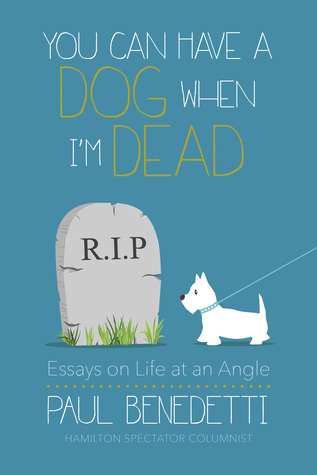 This is a collection of funny stories and brief essays. It’s geared for the Boomer generation, and is billed basically as bathroom reading. Thank you to Net Galley and Dundurn Press for the DRC, which I received in exchange for this honest review. I rate this book with 3.5 stars and round it upward; it will be available to the Canadian public –and presumably anyone anywhere that wants to buy it digitally—February 17, 2017.
 There are good writers, excellent writers, and of course, indifferent writers, but once in a rare while there’s a writer that makes me sit up straight and take notice, someone with that special spark of genius that no money can buy nor school can teach. Krivak’s work is exquisite, the product of both power and restraint. If you love historical fiction, you have to read this book, which comes out January 24, 2107.
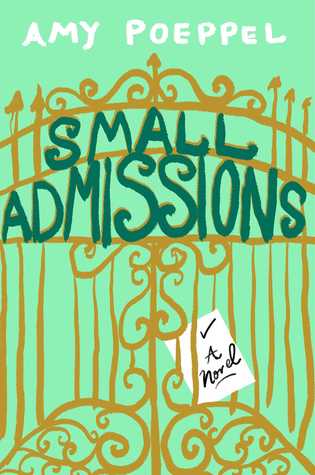 I received an advance reader’s copy of this darkly amusing novel from Net Galley and Atria Books. It’s funny as hell, and even more amusing to teachers, school counselors, and others that have dealt with high maintenance parents and the aura of entitlement they carry with them. I rate this title 4.5 stars and round upward. It comes out December 27, 2016, just in time to chase away your post-holiday depression.
 Seattle Book Mama