Autobiography of My Mother, by Jamaica Kincaid *****

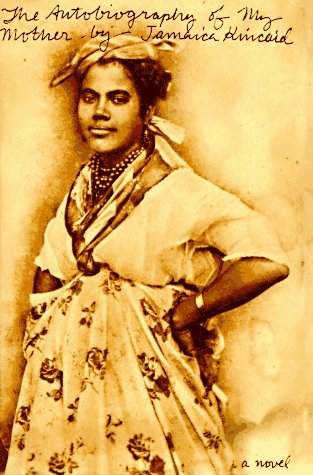
autobiography of my motherJamaica Kincaid is one of the best writers in the world, and of those who have gained a reputation for excellence, she is surely the angriest. In this fictional memoir, she unravels a tale of neocolonialism within a family, a hierarchy in which the child has the status of a servant. I was two-thirds of the way through it before I realized she had spun the entire story exclusively out of narrative, never flagging or losing momentum despite the complete lack of dialogue. Most of the action is within the protagonist’s mind rather than physical, though there more than one vivid depiction of abortion, and some really sensual sexual passages. In other words, it is outstanding, but not something to hand to an adolescent without due consideration.

Kincaid uses poetic devices, particularly repetition, in a way that is rare in prose, and she uses it deftly. Her narrator and protagonist is a woman whose mother dies in childbirth. Her mother is of African descent; her father is European. She describes the funeral for her half-brother, the favored one, and in doing so peels her father’s religion right down to its barest nub:

“And so again, what makes the world turn? Most of the people in that church would want to know. They were singing a hymn. The words were: ‘ Oh Jesus, I have promised/To serve Thee to the end:/Be Thou for ever near me, /My Master and my friend.’ I wanted to knock on the church door then. I wanted to say, Let me in, let me in. I wanted to say, Let me tell you something: This Master and friend business, it is not possible; a master is one thing and a friend is something else altogether, something completely different; a master cannot be a friend…Yes, but what really makes the world turn? And his mouth, grim with scorn for himself, will say the words: Connive, deceive, murder.”

The nostalgia the colonizers feel for England and for all things English, which are completely at odds with the tropical climate and Third World population of Jamaica, make for searing commentary. What else can I tell you, than that this book and this writer should be on your list? Whether for the social commentary that is part and parcel of everything this author sends out to the world, or whether for the outstanding craftsmanship that is so valuable to anyone who loves to read or wants to write, this book is highly recommended.

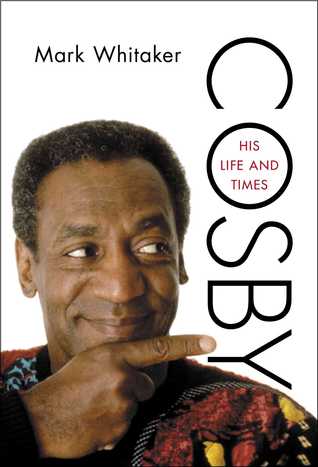
Cosby: His Life and Times, by Mark Whitaker *****

In the lateCosby twentieth century, Americans trusted “God, Walter Cronkite, and Bill Cosby”. Cosby is an icon, and Mark Whitaker is his biographer, author of the first comprehensive biography of the great comedian, actor, author and humanist. I have admired Bill Cosby my entire life, and it was an honor to be able to advance-read this well written, thoroughly documented biography. Kudos to Whitaker for a job well done, and thank you to Net Galley and Simon & Schuster.
Cosby grew up really poor, the child of a man his friends later described as a “wino” and a hard-working, ambitious mother who valued education. His teachers could tell he was very bright, but he had no interest in school work during his formative years, enjoying sports, friends, and jazz music more than academia. He would later change his mind. His college degree and graduate work were done legitimately; he respected education too much to ever accept an honorary degree anywhere. He was ready to show up to class after having become famous, but he was swarmed when he turned up on campus, and so an alternate method was devised. A string of children’s television shows shown on Public Broadcasting including Sesame Street and The Electric Company were created as a part of his doctoral program, and his studies determined that they made a difference in the educational success of the children for whom they were created.
Race is in the news more than ever as I write this; earlier this week Times Square was filled with people demanding an end to police violence as yet another unarmed African-American man was gunned down by police. It is a telling indictment of the US government and its police—and this is my own take, not Cosby’s—that Camille Cosby told their son Ennis not to drive her green Mercedes when he was visiting Los Angeles partly because she feared police would see a Black man driving an expensive vehicle and pull him over on account of it. From the day he was killed till this moment, nothing has changed. I’m telling you, it needs to stop.
But back to Bill Cosby. For those who don’t know, Cosby started out trying to break into the music business, but he was very funny, and made extra money here and there by sitting on a bar stool and making people laugh for a few minutes. Of course it grew. His early inspirations were the stories his mother read to him by Mark Twain; comedians Dick Gregory and Jonathan Winters; and his grandfather, who read to him from the Bible, creating the voices of Noah, God, and various others.
Ultimately, it was a combination of comedic talent, a sterling work ethic, and unusually strong social skills that created a successful career. Cosby made a point, once he was in a position to do so, of hiring as many talented African-American professionals as he was able. His generosity in the form of scholarships, endowments to his alma maters and well as the nation’s historic Black universities is legendary. Less well known is the world-class art collection he and his wife have collected. They have quietly accumulated art work by the finest Black artists, sending other representatives to bid for them at Sotheby’s and other auctions where items of interest were available.
Bill Cosby is known for shining his light upon the common humanity between races, enabling Caucasians who had been afraid of Black folks to understand that every one of us is a person. His goal, though, in creating the Cosby family on television in the late 1980’s (which was so closely modeled after his own that he occasionally stumbled during script discussions, referring to “Cliff Huxtable” as “Bill”) was to show African-Americans a positive example of their own culture. It is telling that while white journalists constantly asked whether the Huxtable family, which featured a doctor and a lawyer as parents, was ‘realistic’, African-Americans surveyed found it entirely believable. Cosby’s wife, Camille, deserves credit for encouraging him to avoid the stereotype of the Black working man, and Cosby created a whole new art form in creating a sitcom based around family stories, rather than one-line jokes and put-down humor.
Long a champion of the solid Black family, Cosby wants young men of color to help raise their children. His remarks at the ceremony where he received the National Medal of Freedom were taken out of context and upset some folks who thought he was making fun of Black youth. He says this wasn’t his intention, and I believe it. The book that followed, Come On, People, addresses the issue. I have a copy on my shelves; it’s a wonderful book. I got it partially because of its author and partially because my family is racially blended and it is relevant to me; consider acquiring it after you get Cosby’s biography, which will be released mid-September.
I have seen enough tragedy that I no longer tear up easily, but reading of the loss of Ennis, something I already had known about but which Whitaker made whole and present to me, made my eyes well up. The horror of losing a child is not something anyone gets over readily, and the casual way the robber disposed of “a n*****r” was appalling. When Cosby performs stand up now, he always has a sweatshirt that says, “Hello, friend!” because that was Ennis’s greeting, for which he was known in his New England community. After the loss of their son, the Cosbys found refuge in South Africa with Nelson Mandela, who gave them some time and private space in which to recover. This, too, was moving.
Perhaps you believe this review was so long that you no longer need the book. Trust me; I have barely scratched the surface. I made 157 notations in my e-reader, edited it down to 125, and still, this is a mere outline. This book is destined to become a classic, a story of success gained against the odds, success gained with talent, a work ethic that still hasn’t stopped, and a tremendous amount of heart.
Sometimes I tell readers that a book is worth reading if they can get it at the library or get it cheaply; not so for this one. If you can’t afford it, request it as a Christmas or birthday gift. You won’t be sorry. It’s one in a million!

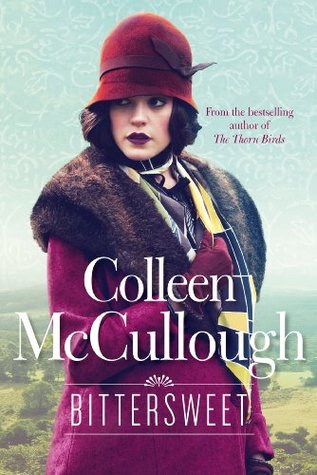
Bittersweet, by Colleen McCullough ***-****

bittersweetIf you’re looking for a light beach read to keep you company during what remains of summer, you could do worse than this frilly piece of historical fiction by Colleen McCullough.

You could also do better.

The story follows the lives of four sisters, two sets of twins who share the same father but have different mothers, one of whom is deceased. It takes them from their teens into their adult lives, skimming the surface of each without fully developing any of them.

At first I thought perhaps I was too harsh in my judgment; after all, McCullough wrote The Thornbirds, and not every book can be that strong. But consistently throughout the story she tells us what each woman is thinking, repeatedly tells us in what ways they are different, and because she does this with narrative rather than showing us these things through the story, it renders the whole effort slightly clunky. There are small changes in the way each of them regards the world, so each is slightly dynamic. Yet the thing that was missing for me was that connection that makes me want to talk to a character, or that makes me care deeply about how their story ends. In really good fiction—and my blog has plenty of examples, including love stories—the protagonist becomes so real that they are nearly tangible. I find myself daydreaming about what the character would think of this thing or that. It didn’t happen here.

Still, at bedtime I found myself reaching for this book rather than the others I am reading. It’s good mind candy when you don’t want to think too hard. It’s linear in the telling so there aren’t a lot of changes to keep straight.

Unconscionable, especially for historical fiction where the setting is primarily a background and the story devolves so heavily upon its fictional characters, is the use of the term “tar brush” to suggest that one of the sisters may have African ancestry somewhere in her genes. To bring out a term like that, there had better be a really strong reason related to the plot calling for such a nasty term, however common among white folk during this period, and McCullough doesn’t have one.

Bright spots are the early development of Charles Burnham, and the way Edda’s situation is resolved.

Read it for free or for cheap, but don’t spring for a hard copy.

Moon Walk, by Michael Jackson ****

1062902Moonwalk was written at the height of Jackson’s fame, in the wake of Thriller and the 25th anniversary Motown TV special. It is a fascinating read, and was the #1 New York Times bestseller at the time. I give it only 4 stars because there is a ghost writer here. It’s understandable; Jackson had his finger in so many pies at the time, and also was somewhat reluctant to breach his own privacy by speaking candidly about his own life. Ultimately, though, the writer-behind-the-writer says that Jackson decided it was time to set the record straight about some things. He still nearly pulled the plug at the dead last minute, after editing and approving the final copy, leaving his ghost writer with an immense amount of time and effort that nearly came to nothing. I’m glad he decided to follow through.

At the time this was written, Jackson had no children. His name is associated with more than one book, and I may see if I can get a copy of a later one.

I am not much of a pop music fan, but the sheer enormity of Jackson’s accomplishments and his role in music history makes his a must-read for a memoir reader like me.

I came out of this convinced that though (through the lack of a normal childhood) Jackson’s social skills were sometimes off a notch and his judgment not always sharp, he was not a pedophile. I believe him when he says that children are the only people he can talk to who don’t seem to have ulterior motives (beyond a particular circle of family members and close friends), and that he enjoys making them happy. I really do think he was naive enough to think that a child would find it fun to sleep in the host’s big bed rather than be all alone in a room he wasn’t familiar with (and assume that the oh-so-grateful parent would remain such). Beyond that, I think that at some level, his involvement with children had to do with his own lack of a childhood that involved the fun and freedom usually associated with that time. My best guess is that he brought kids home, or went to their homes and hospitals, and spoiled them rotten, and enjoyed the experience vicariously.

Jackson’s own upbringing, though he loved the music and turned out to have a genius for it, was grueling. He is diplomatic in the things he says about his father, and gives him credit for finding the resources to bring not only musical instruments but microphones into their 3 room home in Gary, Indiana, so that his talented tribe would understand how to handle them and move with them by the time they were on stage. They began with talent shows that had cash prizes, and worked their way up to auditions. They played in some really raunchy clubs at an age where most first-graders would not even be watching R rated movies. But Jackson took to the life, and grew close to his brothers. Motown signed them, and they were off to California.

Jackson was instantly enthralled by all things Californian. The trees had oranges, he says, and there was the ocean, and Disneyland! Welcomed to the “Motown family” by singing legend Diana Ross and by the vice-president of Motown, who lived just down the street, they were house guests until they were settled and established, and ran freely between the two fabulous homes. Ross was like a second mother to Jackson,and she introduced him to the art world, which would later become not only a love of his, but a source of smart investments also.

In Gary, he and his family had all been practicing Jehovah’s Witnesses, and he mentions this only briefly, to show that some of the corruption and profanity that young performers take on was not going to be part of his own life, because that was not how he was raised. He doesn’t mention the religion again after his move to California. This left me curious. Could a man like Jackson have truly believed that only a certain number of people are allowed to go to heaven?

He writes about his break with Motown,which he and some of his family precipitate when Motown is not receptive to having him write music, and about his lengthy, fond collaboration with Quincy Jones. He is able to get in on the ground floor once MTV breaks loose, and spends his own money in order to create music videos of the highest caliber. (“Bad” used real gang members from South Central LA; the massive security was loosened a bit once they found that since the gang members pretty much just wanted recognition, respect, and lunch and were getting all three, they were courteous and cooperative. I’ll admit I really liked this part, having taught young people with similar issues.)

His hair and skull catch fire due to negligent fireworks use while making a commercial for Pepsi. He knows he could have sued them and won big, but he chose not to.

Without a trace of irony or hubris, he states that he is thankful he never got involved using any sort of drugs, since he had seen what this does to others. (To be fair, he specifically refers to street drugs like marijuana and cocaine; I suspect that some of the drugs that would later plague him were due, in part, to the pain he experiences after accidents on the job such as the Pepsi adventure.)

A star like Jackson could have used his life story as a vehicle for payback, but he goes out of his way to avoid any semblance of that, and when he has to talk about people who did rotten things, such as a management-level person who stole from him, he does not name names. I thought this was really nice. He briefly mentions his father and the belt, but also gives the man credit for the early start he and his brothers had, and the fact that they were the first big family act to enter the pop scene.

Later he simply mentions that his father was no longer representing him at a point in the story. He makes no reference to the marital discord between his parents.

The one place we can almost see the hair rise on the back of his neck is when he speaks about the controversy regarding the changes in his facial structure. He owns that he had a nose job and a chin cleft added, and points out that entertainers all over Hollywood do exactly the same thing, and he asks why this is such a big deal, when after all, he is a musician. The man has a point. On the one hand, those with the most fame get the most scrutiny, but on the other, it also (though he never says it) sure seems as if a black man who makes it big gets more scrutiny than others. He adopts a vegetarian diet, and of course, as we grow older, our faces lengthen anyway, thus the harder planes to his face and loss of baby fat. And in thinking about some of the bizarre things printed in tabloids…who is really going to have the bones in his face broken and reset? Even if vain enough for something of that nature, it would be extremely risky, and involve a huge amount of time away from work.

I believe that Jackson is telling the truth; a nose job, a chin cleft, terrible acne as a teen that started the habit of hiding his face at times, and then later (not in this book), the skin disease. I think this is true, though it doesn’t make as good copy for selling sensationalistic news rags.

The one really unsettling note was that Jackson seemed to think it was a hilarious practical joke to surprise people who were afraid of snakes with Muscles, his boa constrictor, and chase them around the room. I have the same phobia, and once had (honestly) a science teacher who chased me around his 7th grade classroom with a big snake, ordering me to “touch it.” I did not, and I had nightmares for weeks. But it’s too late to tell Jackson that this particular thing is not funny.

Jackson’s songwriting partnership and friendship with Paul McCartney led the latter to recommend that he consider investing some of his money in song rights. This had not occurred to Jackson before, and turned out to be a strong move financially, as most of us now know. And he says that although he knows others in the business discourage their own children from performing, if he ever has children, he will tell them to follow their dreams, and if they want to perform, they should go for it.

The artist, with all his eccentricities and extraordinary talent, can’t talk to us anymore. For those who enjoy memoirs and autobiographies of musicians who have made historical strides in their field, this is highly recommended.

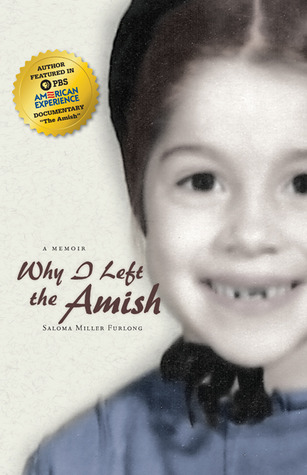
Why I Left the Amish, by Saloma Miller Furlong ****

why i left the amishThis is not just a curiosity piece, like Wagler’s Growing Up Amish. This woman can really write, and piece by piece, she puts together a very hard look at the way Amish treat the disabled, deal with issues of domestic abuse and incest, and the way that intellectualism is stamped out hard, the way you would a dish towel that lands flaming on the kitchen floor.

Before reading this book, I felt a certain…is sympathy too strong a word? Maybe it is…for the Amish. I had read in various places that more and more of their youth were leaving, and I had the impression that one more esoteric group that had struggled to maintain a cultural identity, was being left behind in the relentless march of history. Not so, and now I’m not sure it would be a bad thing if it were true.

Furlong writes really well. She tells us at the outset that she is the one person to receive a free ride at Smith College that year, and that this fulfills a lifelong dream she has had to continue her education. The Amish require their children to leave school after grade 8 in order to work, and the work done by the teenagers is all given (or supposed to be given) to the household fund. Furlong recalls her own longing, as she segues neatly from present to past and back again, as she watched her younger brothers and sisters leave for the school house she had loved, and how completely delighted her overworked, ill-tempered mother had been to have her there for domestic chores.

In the beginning, as I saw the Miller family’s role as an outcast, or nearly outcast, member of their Amish community, I wondered whether Furlong might have remained,as she says most Amish youth do, as a church member of her Amish community, if her family had been a functional one. “If only I didn’t have to live in this family situation, I could be as good an Amish person as anyone”. A friendly member of the community who has a good heart for children, Olin Clara, becomes a mentor and rescuer of sorts, occasionally bringing her over under the guise of needing “help with the little ones”, but when adolescent Saloma arrives, she is greeted by the smell of fresh-baked cookies, and Clara talks to her about her life. Finally it dawns upon Saloma that the real reason Clara has invited her over, again and again, is to show her how a normal Amish household is supposed to function. for awhile, she harbors the hope that Clara will take her in and rescue her from the cruelty visited upon her by the men in the family, and by her mother’s complicity by blaming the victim when she complains.

Saloma’s father was mentally ill and barely bright enough to maintain a home at all, and most of what is done is done by her mother, who is forced to do the backbreaking work of an Amish housewife, as well as the farm chores that are traditionally male. Ultimately, the mother makes a Mestophilian bargain of sorts: her eldest son is permitted to perform monstrous acts of cruelty upon the girls in the family, and the animals (not an easy read, and don’t hand this to your kiddies). In return, he takes on the role of the head of household in all but the most basic decisions, and exercises horrible power over all of them until,to Furlong’s immense relief, he marries and moves to a home of his own.

Here come some spoilers, so if you want to read this and be surprised, stop right here.

Still with me? Okay. Furlong is a thinker (even as a child). She has many questions about the Amish faith and the practices that are largely hinged upon those beliefs. She is not sure she wants to join the church formally, because once she does, she will be an outcast, shunned, and damned to flames of hell should she leave. However, as she passes the traditional age to join, too many questions are asked. She realizes a year later that if she doesn’t join, she will be an outcast anyway, because people really don’t just stick around at that age and NOT join.

She wants to ask questions to help her decide whether to leave or join. “I wanted to walk a spiritual path” that would permit her to ask “fundamental questions”. Since those who join always have a period when they leave the room with the Bishop and other church leaders during the Sunday service, it occurs to her that only by agreeing to join, will she get to go to those sessions and ask her questions. However, it doesn’t turn out that way. The church elders just preach at the upcoming members. “There wasn’t going to be any question and answer session”, she realizes. And this is the real beginning of the end. Every time Saloma persistently inquires about some aspect of faith, she is shushed, as though she has committed a breach of manners. The message is that she should just shut up and DO it, and the metaphor of a grain of wheat being crushed in order to make it part of the flour that can make a loaf of bread–the Amish community–weighs heavily on her. She sees herself as a grain that has escaped the pestle and remained whole, and unwilling to be crushed.

The end left me with some real questions. We are told how she makes her escape, yet 27 years pass that are all but left out. We know that she marries someone who is involved with the place that takes her in, but she has a teenage son as she writes, and yet is staying in a dormitory at Smith, hoping not to become one of the many she has heard of whose marriage dissolves because she can’t bear to leave the college when she is done.

Furlong correctly keeps her story true to the title, and the point of the book is to tell us about her path that lead to her leaving the Amish. She also gives the reader much more information about Amish life in general (including a really interesting system of dating!) than Wagler, who appears self-absorbed as he writes and tells only of his own experiences in a less detailed way, than Furlong, but the ending feels a bit abrupt. I read my copy on an e-reader, which to my frustration cuts off the author page; maybe I would have found some more scraps of how her story turns out there, or maybe she is still at Smith, hanging onto a tenuous marriage, and doesn’t know yet how things will work out.

In any case, if you have any curiosity about the Amish, there is far more in her book than I have written here. I wanted to cheer for her, and for the few who assisted her in her courageous journey. I highly recommend this book (and if you have read my other reviews, you know that I am very stingy with that fifth star).

Bitterroot, by James Lee Burke ****

bitterootThis was a pretty good book. I suppose in giving it four stars, I am unfairly comparing Burke to himself rather than to other writers, at least to a degree.

Here’s the issue: most writers who keep a series going have trouble adding another and keeping it distinct; the only two situations where I’ve seen writers do this concurrently without blurring their characters are Ed McBain’s 87th precinct (in which he had multiple protagonists, but also had another series going), and JA Jance, whose Allie Reynolds and Joanna Brady, both crime-solving females in Arizona, tend to blur, but both of which are distinct from her Seattle character, JP Beaumont. And indeed, I find that Billy Bob has much more in common with Dave Robicheaux, Burke’s more successful protagonist, than is distinct. The writer’s voice and moral code are strong, which is great, but he would do better to stick with the Robicheaux series. (I have not yet read the third series, what there is of it).

That said, his pacing is fine here, his word-smithery strong, and his romantic thread very sweet, albeit subordinate to and inseparable from the main story line, as he intends. Having been on something of a Burke jag lately, I will also say that I have seen way more fishing information (literally fishing) than I ever need to see again. I don’t CARE what kind of lure he uses, what type of rod, or where the best fish are found. I share his environmental passion and as far as I’m concerned, he can talk about that just as much as he likes. I also enjoy his class perspective, and his realistic view of exactly how much help ordinary people can expect from cops as a general rule.

I read a lot of mystery/crime/detective novels, and I was nonplussed when I found last winter that not only was this writer out there for decades completely undetected by me, but he was also a double Edgar winner. Just how did I miss that?

The cover of this one tells me EXACTLY how I missed him: a cowboy hat and a fish hook! Not going to grab my eye, because it suggests a Western novel.

If you can read this one cheaply or free, or if you have already read everything else Burke writes, go ahead. Why not? But if you have money for just one paperback book, I would usher you first toward the Dave Robicheaux series that starts with The Neon Rain.(less)

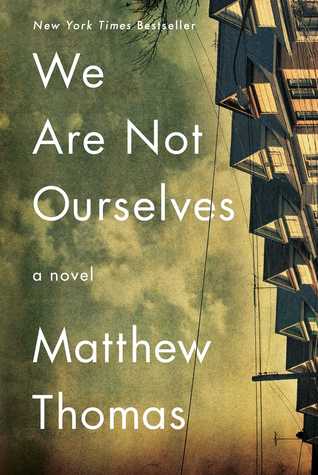
We Are Not Ourselves, by Matthew Thomas *****

wearenotourselvesThis is one of my favorites of all the books I have previewed. I just finished reading a book that I didn’t like well enough to post here, and since this book will be released August 19, I thought I would post it again for you. Really strong literature!

seattlebookmama's avatarSeattle Book Mama

A haunting, epic story that stays with the reader long after the final page has been turned; Thomas has created a masterpiece.

When I saw that some goodreads reviewers had marked this book at three stars, at first I wanted to grab those people, shake them by the shoulders and ask, “What is wrong with you?”

But eventually, I came to understand, or at least I believe I do, what it was that bothered them. Our protagonist is not always a lovable one. She’s deeply flawed and hard to bond with. Those who equate a lovable character with a well written book may indeed be disappointed, not only by this story, but by many of the Great Books.

As for me, I am impressed. My measure of extraordinary literature is that I am still thinking of, or even wishing I could have a conversation with the main characters after I…

View original post 642 more words

Mamaw: A Novel of an Outlaw Mother, by Susan Dodd ****

By now you have figured out that while I usually review books that have just been published or are about to be, once in awhile I pull out an old favorite, or review something I have just found, though it was published awhile back. This one was originally published in 1999, but used copies can still be had by those who are interested.
mamaw diary of
I was riveted by the title. I didn’t know anyone else out there had even had a “Mamaw”, let alone the James brothers! Now that I’ve done a little checking, I know better, but when I was growing up, I believed that my grandparents were the only “Mamaw” and “Papaw” anyone had, a completely unique pair of nicknames.

Turns out it is a product of the wild west, which makes absolute sense, both for the James brothers’ mother, and for my father’s parents, who bore him in a clapboard shack on a dusty patch in eastern Wyoming and raised him in a mining town in South Dakota.

The narrative here is good work. It isn’t brilliant, but it held my attention. If you are interested in historical fiction, outlaws, or the James brothers specifically, consider reading this book.

Fierce Patriot: The Tangled Lives of William Tecumseh Sherman, by Robert L. O’Connell*****

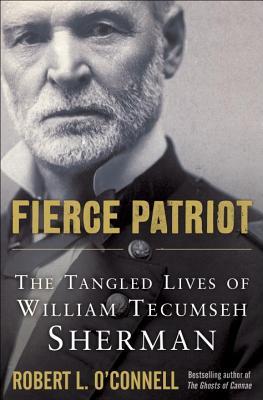
fiercepatriotThis wonderful biography has just hit the shelves, so I am reprinting my review. I did finish reading it, and the rest of it was just as excellent as the first 25 percent. Highly recommended!

seattlebookmama's avatarSeattle Book Mama

 I was able to read this in advance of its publication, thanks to Net Galley. If you can’t find it, I am sure you can pre-order it. And you should!

This is a brilliant analysis of American history’s most controversial, complicated, and I would add, heroic general. In writing it now, rather than waiting till I am finished reading the book, I break one of my own rules; I am an academic, and I pour over prose; sticky note pages (or mark them electronically); make little notes; and only then, when I have thoroughly analyzed every single page, do I set down my review. To do so when I am only 25 percent finished, as I am doing now, means that the book is worth having if you pay the full cover price and read only a quarter of it (though I plan to finish at my happy leisure…

View original post 605 more words

The War That Ended Peace: the Road to 1914, by Margaret MacMillan ****

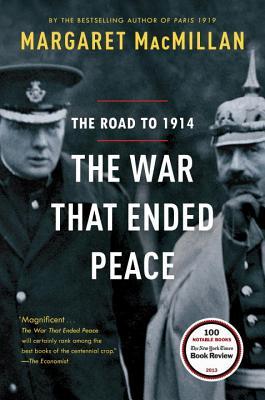
the war that ended peaceMacMillan’s hefty, well-researched tome has been nominated for prestigious awards and received rave reviews from the New York Times Book Review and the Christian Science Monitor. It is the most scholarly and thorough a treatment of the period from 1900 to 1914 of any I have seen. Thank you to the first reads program at Goodreads and to the publisher for a chance to read it and review it free of cost.
If I were planning to teach a college seminar on the causes of the first world war, I would absolutely include this book in my assigned reading. It is made more interesting and approachable with occasional photographs—primary documents—as well as political cartoons to abbreviate the text. (I believe this time period is also the starting gun for the use of political cartoons in journalism.) I suspect that in the future it will be regarded as the go-to source for this topic and time period. MacMillan’s organization and documentation are spot-on.
That said, I was a little disappointed to see this subject addressed so singularly and steadfastly from the top down. Of course, while discussing tension among the ruling classes of the most powerful imperial nations, along with those who are up-and-coming, like Japan and the USA, one must discuss the interests of those who hold the most wealth and power, since it is they who will call on the workers and peasants of the world to go fight in their interests. That said, it would have been interesting to see more of these popular sentiments included also. After all, wars have been won and also lost by how badly the working classes did or didn’t want victory. Every soldier has the opportunity to lag behind or forge ahead at some point.
That being said, MacMillan does a fine job explaining the configuration of the nation states that existed before the war, and the numerous tensions that were near the breaking point before the assassination of the archduke. For those who have scratched their heads and wondered at exactly why such a monstrous conflagration should arise over the murder of Ferdinand, MacMillan sets context and perspective expertly.
If you are researching a subject that overlaps or includes this time period, this is a great source, and the index will help you find the information you need without attempting to tackle the whole volume. And though other reviewers have referred to a novel-like narrative, I did not find it that absorbing; my sense is that this is better used as a research source.
A job well done.