Duma Key, by Stephen King *****

dumakeyThis is half horror story, half love story. For every young person who wants to scream because they think King has lost his edge and doesn’t write as brutally as he did when he was younger, there is a woman out here like me, a member of the boomer generation who likes it this way. The song lyrics and the nostalgia resonate for me like no other writer anywhere. The love that binds members of a family together seem so near and so precious in his hands.

No matter what King writes, it gets placed in the Horror section of bookstores. He says so himself. It’s a given. But the stories he writes, while they almost always (maybe always; I haven’t read everything he has written yet) invoke the supernatural, are not always geared toward horror. Sometimes the supernatural is almost secondary. And in this story, I’d call it fifty-fifty.

To be sure, the climax is one that ought to satisfy any diehard horror fan. But there’s something more, too. And you may never look at the waves of the sea in quite the same way again.

Far As the Eye Can See: A Novel, by Robert Bausch ****

farastheeyeSharply evocative of time and place, Bausch’s novel Far As the Eye Can See is a treat and in some ways an education as well. Bausch’s fictional tale, set during the Grant Administration in the USA around the time of Custer’s last stand, draws on considerable research with regard to the Crow, Cheyenne, Nez Perce and other American Indian tribes. He uses story to drive home his message, which is that neither Caucasian nor indigenous people were either entirely good or entirely in the right, and that the conflict between the two was inevitable.

I only agree with part of that last bit, but I really enjoyed his story. Thank you to Net Galley and Bloomsbury Publishing for allowing me an advance glimpse via an ARC.

Bobby Hale is a deserter from the US army some seven times over. During the latter part of the American Civil War, he took the cash bounty for signing on, went to fight, and left the first chance he got. By using a wide variety of names he was able to do so repeatedly, but he was nevertheless roped into participating in some terrible battle. Were he real, and were he alive today, we’d say he has PTSD.

And there you have it! I always know an author has done a strong job developing their character when I find myself giving out diagnoses. It’s just as well that the character is indeed fictional, since my medical credentials don’t exist either.

Hale is headed west, away from cities and civilization. The idea of holding down a job and answering to a supervisor is anathema to him. The classic (but not stereotypical) mountain man, he is willing to sleep in freezing temperatures out of doors when necessary, climb steep cliffs and slog through ravines, all in the name of independence. But even out west, he inevitably runs into other humans from time to time, and not being completely antisocial, he makes friends, makes enemies, and falls in love. Twice. He finds himself having to make difficult choices a number of times. At other times, he is forced into action before he can really examine his options.

Here we check in with what I call the “ick meter”. Every reader has an independent threshold for bloodshed, human body parts, and other gore. Given that this is a soldier’s story, renegade or not, we would expect to find some of it here. I would not have cared to see Bausch add any more of it than he did; however, my own sense is that there was nothing added that was gratuitous or overdrawn. If you can’t stand reading war stories, you probably already know that by now, in which case, I wonder why you are still with me here.

Another noteworthy detail has to do with his use of place. When he describes the approach to the Rocky Mountains from the eastern part of the USA, I can see those blue mountains and all that sky, because I have driven across the USA a few times, and I have vacationed in Montana and Wyoming. Bobby Hale covers a tremendous amount of ground. If you are somewhat familiar with location in regard to the Black Hills, the Northern (inside the US) Rockies, and the Great Plains, you will probably enjoy the book more than if you don’t have a clue. I think if I were starting from scratch, I might have become confused, because he puts on a lot of miles without pausing to lay out which state lines he is crossing. Actually having been to at least one of these places, even if only to drive through it and notice the difference in elevation, climate, etc. will increase your appreciation and understanding.

As for me, I found it very satisfying. It’s a great read to have ready to hand beside a snug bedside. When Hale froze in the mountains and froze again on the plains, I burrowed deeper into the blankets and found myself even more content than when I began.

A great story for late fall and winter reading in a toasty nest.

The Opposite of Fate, by Amy Tan *****

theoppositeoffateThough book stores and book clubs bill this as a memoir, it is really a collection of essays and speeches originally published for other purposes. Though I would love to read an actual autobiography written by Tan, this is an excellent anthology, and I cannot deny it the five stars it deserves.

Tan writes about a wide range of experiences, from contracting Lyme disease to writing the screen play of The Joy Luck Club for Disney. It was nice to see somebody say something positive about Disney for once.

But if there is one really urgent entreaty nestled amongst the wide variety of topics addressed here, it is this: Tan would like to be released from her pigeon hole. Though the large number of her books sold is both profitable and gratifying, she feels both awkward and a trifle outraged as well at having been labeled by the press, by school districts who require that her stories be read, and by any number of other sources as an Asian-American writer, or a writer of color. What, she asks, is required just to be called an American writer? She was born in the USA. It’s accurate to say that she has written a lot of stories, both fictional and true, about her mother, who was born in China. But Tan takes exception to being held up as the one person who is supposed to represent all Asian-American writers.

One might imagine other Asian American writers would take even greater exception, if they could be heard.

I confess that I am at least partially among the guilty, having created an Asian studies label on my own bookshelves. Actually, since I am married to a Japanese citizen, the titles written by and about Asian Americans are crowded by vastly more titles written in Japanese, which take a number of bookcases all by themselves. This is not something that happens in most American homes. But yes, I have also regarded Tan as an Asian-American writer, and she is right in saying that regardless of pigmentation or ethnic background, her prose has won her a place on our shelves. Marketing be damned.

I reflected a bit here. My youngest daughter is half Japanese, half Caucasian. We named her for her Japanese grandmother, and we started attempting to teach her Japanese when she was quite young. She has been to Japan and met relatives there. Yet she would rather be regarded as an American rather than an Asian-American. She pointed out to me that my own side of her counts too; does anyone call her an Irish-American because one parent is of Irish descent?

The score stands at parents 0, offspring 1.

But Tan also reminds us that our lives are not about what has happened to us—and she certainly does a fine job of recounting her own varied, sometimes bizarre experiences—but about whether we take charge of them. In the final essay, “The Opposite of Fate”, she contracts Lime disease and it continues to ravage her health and interfere with her writing until she does a comprehensive web-crawl and diagnoses it herself. Leaving the mystery for physicians to unravel hasn’t helped, and so she does what needs doing. That having been done, the official, medical diagnosis and treatment are fairly straight-forward. The cure isn’t easy or quick, but progress is made steadily. She took ownership of her problem, advocated for herself, and received treatment.

Though the message inherent in the title seems obvious, I find it powerful. Most of us know someone—perhaps even in the family—who seems to ride through life helpless and riddled with excuses for everything. There is nothing for these folks that can’t wait another day, and sometimes another and yet another. They don’t “do” things; things “happen”.

I confess it makes me crazy.

Thus I found Tan’s essays keenly satisfying. She tells hilarious stories sometimes, while others are poignant, but all of them involve decisions at some level, though not always up front and pointed. She doesn’t preach, but she also doesn’t duck and cover. When life presents challenges, she rises to meet them.

One could, of course, say that in publishing these stories, she has created a powerful example for Asian-American girls. But one really shouldn’t.

Because the fact is, she has presented a strong, positive example for everybody.

Landscape Turned Red: The Battle of Antietam, by Stephen Sears*****

landscapeturnedredHow familiar are you with the American Civil War? Can you tell McClernand from McClellan from McPherson? Did you know there was a General Ewell of importance for both the Union and Confederacy? One more miniquiz question: in what states would one find Shiloh, Corinth, and Fredericksburg?

What I am trying to say is that this tome, which is either the definitive work on the battle at Antietam or a strong contender, is written for those of us who are pretty well versed in the basics. It won’t explain the essentials as it moves along; there is an assumption inherent in about 400 pages regarding the approach to this battle (about the first 100 pp), the battle itself, and the consequences regarding same. Sears writes with precision and authority, but he does not write for beginners.

As you can see from the rating, I loved it.

Sears isn’t on a mission to merely recount, blow by blow, what happened when. If he were set on hundreds of pages of injury and carnage, I don’t know that anyone but a masochist would care for that many pages of horrifying detail.

Instead, he sets out to prove that General McClellan, who essentially held the Union Army hostage for the duration of his tenure as commanding general, systematically and deliberately prevented the Army of the Potomac from crushing the Confederate forces. He proves the point. Beyond any question, McClellan chose not to send his soldiers to fight because he was sympathetic toward the slaveocracy and wanted the Confederacy to achieve its goal.

He contemplated participating in a coup d’etat,unseating Lincoln and tossing out the Constitution, but the vast groundswell of demand for such a thing,which he believed existed and might carry him to power, never unfolded. Though he had carved out a base of support for himself and his views within the Army of the Potomac sufficient to cripple its use for the duration of the war, there were also soldiers in this army who were sick of not fighting for their country, and who were pleased to see him leave.

I have read other histories of the Battle of Antietam, and they served the purpose of explaining who fought where, and how much blood was shed. What no one else has done is to lay the blame where it rightfully belongs. This battle should have been an open-and-shut deal, and the Confederate forces should have been disabled and the war brought close to a conclusion. Instead, through his reluctance to fight at all and then only because it was clear that to do otherwise would cost him his job, McClellan managed to make the whole thing a bloodbath that was almost a stalemate.

Technically, it was a Union victory, and that was what Lincoln had to have to declare Emancipation and prevent Europe from recognizing the Confederacy. McClellan opposed (of course) the Emancipation, but he was already about to be fired. The question was a political one; no one wanted him to leave before the elections, lest he make a mess of them. Once Congress was once more filled with majority Republican forces on both sides, it was safe to cut the connection and send him packing.

The manner in which he was fired was done with careful attention to military procedure so that he could not contest it without clearly committing a crime.

I had long felt that too much was going unsaid about General McClellan, but I couldn’t tell what it was. I had a hunch it would not do him credit. It was a little bit like childhood, when the grown-ups around you use coded phrases designed to protect you from the terrible truth, and the longer you are aware that you can’t be told something, the worse that something appears to be. And so it was with McClellan. I don’t know whether he has a bunch of really proud ancestors that other writers feared to offend or why he hasn’t been held suitably accountable before this. Perhaps the evidence was buried too deep.

One thing is certain: Sears has built his case as solid as the Rock of Gibraltar. Once the book is done, there can be no doubt whatsoever. For the serious American Civil War scholar, this outstanding volume provides information that is generally not in circulation, and that is key to understanding Antietam, as well as much of what took place before it.

Ulysses S. Grant: Triumph over Adversity 1822-1865, by Brooks D. Simpson *****

ulyssessgrantEveryone needs heroes, and Grant has long been one of mine. This outstanding biography by Brooks D. Simpson is engrossing, and Simpson’s storytelling is well documented. I read several books at a go, but I found myself turning to this one oftener than my others. It is well organized and provides a balanced, meticulously researched look at Grant’s life through the end of the American Civil War. (Another volume that will deal with his presidency through the end of his life is planned, and I look forward to it also.) Thank you, thank you to Edelweiss Books, Above The Treeline, and Zenith Press for the ARC. I rated this book 4.5 stars and rounded it up.

Generally, I have a bias toward autobiographies and memoirs, because in most cases, the person can tell their own story in their own voice much better than some outside person. Exceptions are those who would over-inflate their own glory, sometimes unnecessarily (think Patton); really bad guys, like Goebbels; dead folks who went without writing a memoir, also like Goebbels; and a fourth group that I hadn’t even considered till I read this biography: people who are so modest that they understate their own achievements. Grant was just such a modest man, and he only wrote his autobiography because he was dying and in debt, and was told that the book would provide enough income to keep his wife Julia housed, fed, and reasonably happy until she followed him in death. He passed over many opportunities to point out his own remarkable qualities because his nature was unpretentious and unassuming, and so those of us who love history and biographies can’t ask for much better than what Simpson has offered here.

My second-favorite general (the first being Sherman) was born Hiram Ulysses Grant. The regional accent made his first name into a single syllable that sounded like “harm”. His father Jesse was overcome with pride in his young son, who could ride standing up on the back of a horse by the time he was five years old. “My Ullys” was bragged about constantly, to where people grew tired of hearing about it. In later years, his horsemanship would stand him in good stead, both in the war with Mexico and the American Civil War. If the reader considers that a horse back then was militarily a lot like a jeep of today, but animate and so more subject to performance based on its treatment by the rider, this takes on greater importance still.

Simpson characterizes Grant’s father Jesse as a braggart and windbag, but I could not help thinking that all children ought to have at least one parent who is so absolutely convinced they will grow up to do marvelous things.

Some parents who dream big and dream early about their offspring are deflated when the child reaches the age of majority without turning rocks into bread or parting the nearest sea to walk through it. So it was with Jesse Grant. His son didn’t do well at farming or in business, and Jesse made it clear to his son that he hadn’t lived up to expectations. At least, not yet. Although it meant having to go hat in hand to an old friend with whom he had quarreled, Jesse asked that his son be given one of his state’s positions as a student at West Point. It wasn’t about being in the military; it was about getting a college education free. And it was there that “Sam” Grant (nicknamed by Sherman, who was an upperclassman when Grant arrived) found the key to his future. Grant excelled at mathematics, and had war not come, he would most likely have followed through on his ambition to become a professor of mathematics. Fate crossed his path, and between the events that unfolded and Grant’s superior qualities, his life impacted the world in ways that are impossible to measure.

Simpson fills in all sorts of gaps in my own knowledge of Grant. He speaks frankly about Grant and alcohol, and sets the record as clear as it is likely to get given the time elapsed. He talks about his leadership qualities, and also points out what he sees as the errors in judgment Grant made (although I occasionally quibbled with him, as if he were in a chair across the room and could hear me; seemed to me in some cases, Grant could have been criticized no matter which way he went.) But our writer champions Grant’s greatest qualities, among which were his absolutely even temperament, and the fact that he never became frightened or agitated during battle, as well as his unstoppable determination and work ethic. He was a man of high principles, and he also knew how to back off from a power struggle even when he carried the authority to smack someone down. Humanity could use a few more folks like that.

Grant was unafraid to promote the use of Black soldiers, and pushed to include them even when the generals he commanded weren’t all that happy about doing so. He treated them with more decency and dignity, perhaps, than any other general (all of whom were Caucasian). He refused to participate in prisoner-of-war exchanges with the Confederates for as long as they killed or mistreated Black soldiers rather than regarding them as military prisoners. That’s integrity.

Most of all, the writer demonstrates that the greatest historical criticism of Grant’s generalship, that he used men up needlessly and was heedless of lives lost, is unfair and incorrect. In fact, had the Union had fewer generals like McClellan and more like Grant earlier in the war, it might have been done and over a whole lot sooner.

I flagged a lot of quotes and have not included all of my notes in this review, but common sense dictates that I end this here. By now surely you can see that if the American Civil War and General Ulysses S. Grant are topics that interest you—or that might do so—then this approachable yet scholarly volume is surely worth your time and money.

Saturday’s Child: A Memoir, by Robin Morgan *****

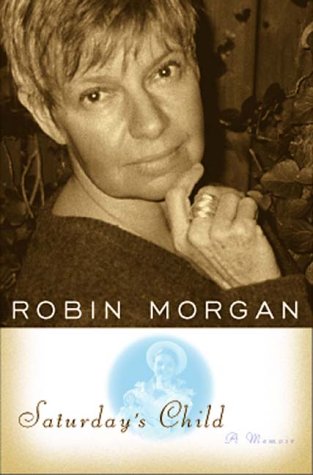
saturdayschildRobin Morgan is one of the mothers of contemporary feminism. She has charted history, together with other women and those who support them, in more ways than I can even keep track of. Although she was once famous for her performances as a child actor, it is for her feminism that I know her, and for that reason I was eager to read her memoir. Huge thanks to Net Galley and Open Road Integrated Media for the ARC.

Now a social warrior of advanced age, she is still undoubtedly one of the most articulate individuals alive. However the heat that came from her discussion of her childhood all but singed my eyebrows. Some of us grow mellower with age and learn to let go of things that happened when we were small, but I suppose for some, outrage and sorrow compound faster than interest on a credit card.

You see, Morgan was raised as a child celebrity. From the age of two years her life was a constant swirl of organdy dresses, auditions, and performances. She rode in parades and promoted a doll that resembled her, though she was not permitted to play with one. She wasn’t allowed to nurture friendships, and would not have had time for them in any case. Work, education, and rehearsal took up all of her time, and special arrangements had to be made in order for her education to be completed because of her exhausting schedule. She was a highly capable student and is clearly extremely literate, but her formal education ended with high school; her mother, who lived off of Morgan’s pay from Morgan’s toddlerhood until her death (including investments that lived on after Morgan retired from show business), told her that college was out of the question. She deals articulately and extensively with issues surrounding the exploitation of child actors by adults during this period, as well as the surprise revelation that came about when she tracked down the father she had never known.

I found my long dead and slightly famous great-uncle buried in her text; Sherman Billingsley, owner of The Stork Club, named a drink for her, similar to a Shirley Temple, but with a chunk of pineapple. Funny stuff, though Morgan’s childhood experiences were mostly grim.

The rest of the book gave me what I came for. Morgan came of age during the antiwar era of the late 1960’s and early 1970’s. The era of protest surrounding the US war against the people of Vietnam radicalized the youth who participated in it; the women who had been side-lined during this time period by their male counterparts began to realize that they should be taking part in the decision-making process instead of rustling up sandwiches and coffee while the men talked politics.

“Free love” really meant group sex, and Morgan learned quickly that it was not liberating for her, but rather it was traumatic. From Eldridge Cleaver to Abbie Hoffman, one radical male after another showed himself to be a member of the old boys’ club where women were concerned. It gave her and several other women pause, and soon led to a number of publications, including Sisterhood is Powerful, an anthology I treasure to this day. Morgan’s energy and achievements appear to have been boundless.

The urban myth in which feminists all burn their bras appears to have originated with Morgan and other feminists’ boycott and picket of the Miss America Pageant in 1968. At this event a certain amount of street theater took place to draw attention to the objectification and trivialization of women in US society. One of these involved whirling bras, symbol of the restriction and shaming of women, in the air and then dramatically dropping them in trash cans. (No fire.)

Morgan’s achievements are too many to enumerate here, but her history, and that of other feminists, from Betty Friedan, bell hooks and Bella Abzug to Gloria Steinem, founder of Ms. Magazine, should be part of every general course in American history, and here the author weighs in once more. She is absolutely correct in reminding us all that the history of women does not belong isolated in a women’s studies department, but is a part of history in general. Pick up a textbook and list the names; how many are male, and how many are female, even for the relatively recent period since World War II? Nor is this problem limited to the USA; in fact, it appears to extend all over the world. There can be no post-feminist era until women enjoy social, political, and economic equality. It hasn’t happened yet.

In fact, Morgan’s internationalism, which has been a large part of her career since the first publication of Sisterhood is Global, is where she shines brightest.

After reading Saturday’s Child, I have found myself once more becoming conscious of the imbalance in the world around me. I have noted that if I mention in one instance or another that women are under-represented, even my own children give me a look that says I am bringing up trivial, petty matters that I should have let pass. And then I hear Morgan, reminding me that trivializing women is part of the problem.

If you are a woman, or if you love one, reading Saturday’s Child may leave you feeling dissatisfied and in need of social change. And until the world becomes equal for everyone, that is as it should be. If Morgan’s legacy is that more women raise hell for their reproductive freedom and economic equality until both are gained, then what better thing could she have done for the world?

Cat Out of Hell, by Lynne Truss*****

catoutofhell2A cat that is possessed by the devil? You can’t be serious!

Actually, no.

This hilariously satirical take on black cats kept me amused for two days, even when there were other things I ought to be doing. Many thanks to the people at Edelweiss Books, Above the Treeline, and Cornerstone Digital for the ARC. I can’t remember how long it’s been since something I read made me laugh this hard.

The humor here is pretty dark at times; think of Monty Python, the Onion, and Dave Chapelle. (Well okay…maybe not like Dave Chapelle, because no one else can be.) Things get strange once Roger arrives and starts to tell his story, and then…well, they get stranger.

For one thing, there is the great Cat Master, who explains:

“It’s a different world nowadays, Beelzebub. It’s not as respectful as it used to be. People on mobile phones; people cycling on the pavement; people cycling across pedestrian crossings even when the lights are against them.”

But without the context, the quote doesn’t do the story justice. The best Halloween present you can get yourself—or even think of it as a mental health boost, if you like; studies these days show that those of us who laugh live longer—is this ridiculous book.

You may never look at a black cat in quite the same way again.

Nora Bonesteel’s Christmas Past, by Sharyn McCrumb*****

norabonesteel I‘m a long-time fan of Sharyn McCrumb. Her ballad novels (and now a novella) are sure fire hits. This one is no exception.

We have parallel stories, and the setting is Christmas, of course. The story lines, one of Christmas present, which features Sheriff Arrowroot being ordered to drag an elderly man to jail on Christmas Eve, appears to have a dead-sure predictable ending, except that it doesn’t. That’s all I’m giving away in this case.

The more flavorful thread is Nora Bonesteel’s. The Bonesteel women have “the sight”. Those who have followed McCrumb’s novels already know that, but a reminder doesn’t hurt. Nora is asked out to solve a haunted manse issue for some new-comers. I found this part vastly amusing.

The setting, for those unfamiliar with McCrumb’s work, is in the Appalachian Mountains. It was one of her novels that taught me how to pronounce the word correctly (all soft “a”s). Her love of place comes through on the page, and as much as I love the Pacific Northwest where I have lived for most of my life, while I read this, a part of me positively yearned for the Smoky Mountains, which I only visited once as a (oh the shame) tourist. It’s a rare kind of engagement. You can say she casts a spell over the reader, if you wish.

Ah. But that leads us to the descriptor I read in Net Galley, the fine folks who connected me with her publisher so that I could read her work in advance. It is described there as a “Christian” novella. I confess it gave me pause. There are Christian novels, and there are Christian novels. Some are so heavy handed that they make terrible literature, from a critical viewpoint: we’re racing along, plot-wise, when someone announces that they should go to the Lord with their problem. A page and a half of long-winded prayer follows. Lather, rinse, repeat. I didn’t want to find myself stuck with a book like that, but a strong writer builds a bond of trust with her readers, and my sense was that McCrumb was unlikely to trash her own work in such a manner. I was correct, and the story is great. The single religious reference is central to the plot and is entirely consistent with the setting. Also, sometimes “Christian” is a sort of code to let the reader know there will be no profanity or sweaty sex scenes, and frankly, I was just as glad to be spared those.

To sum up, McCrumb is a master writer, a mystery champ, and a brilliant novelist whose work with Appalachian setting and tradition stands alone in an otherwise crowded field. Pick up a copy in November. You can enjoy it and then pass it around for family and friends to enjoy. The quirky humor and redolent, traditional setting are sure to please anyone who loves Christmas and a good read.

Saltwater Cowboys, by Dayle Furlong *****

SaltwatercowboysDayle Furlong’s writing is brilliant. This haunting story, visceral and evocative, is wholly original, but if it reminds me of any one other author, it is Russell Banks. My immense appreciation goes to Net Galley and Dundurn Group publishing house for the ARC. The first couple of pages wobbled and I waited to see whether the writing would settle in and be a good read, or whether the writer would struggle. By page three I was no longer watching the writing, because I was hooked on the story, and I needed to know what would happen next.

Jack McCarthy is a miner, and he’s just been laid off. Newfoundland has been home to his family for generations, but there’s just no work there. The place was already depressed before the layoffs, with high numbers of unemployed workers. Now he is just one more of them. What is he going to do? Angela is at home with their three little girls, and good heavens, she’s pregnant again. The pressure is on!

Leave it to his best buddy, Pete, to find the answer. Pete has found a mine that is hiring in Foxville. True, it’s clear across Canada, closer to the Pacific than to the Atlantic, and way far north. It’s near the Athabascan River. But they’ll take Jack, and they’ll have their friends nearby. It seems to be the obvious solution.

My quick Google search helped me find Foxville. Imagine driving all that way to look for work! When the McCarthys arrive, they find that the local workers consider them hicks. A migration has steadily occurred as unemployed miners from Newfoundland make the exodus in search of steady jobs. Their mannerisms are mimicked, and their women are sneered at. It’s humiliating.

If you were looking for something to pick your spirits up, this isn’t your book. It’s a dark story, but it’s one that speaks to the time in which we live. So many are jobless, displaced, and for those of us that are hanging on, sometimes the loss of one single paycheck is all that stands between us and disaster.

Furlong understands the working class. She knows the pride that takes hold of its families. A plastic bowl from a discount store is worth infinitely more than a beautiful old porcelain one from Goodwill or some other charity store, because it is new, and because it doesn’t smell of taking charity from others.

The longing to climb that social ladder, to actually buy an entire house and hold your head high, reaches out from Furlong’s text, reaches into your lungs and sucks out some of the space there. I became so invested in this fictional family that at one point I had to put it down and go read something else in order to gain distance.

Regardless, the setting and characters are so palpable–I underlined several quotes, but then decided you should find them for yourself, because they are made even better by context–I sometimes flipped the pages back in order to re-read passages.

When I wasn’t at my reader, I thought about the McCarthy family. I argued with them. I was the unseen third adult in their vehicle when they were out driving around. Most of all, I wanted to advise Jack. But damn damn and double damn, I could not get through to him. And I had to remind myself to calm the hell down, because…

He’s fictional.

Furlong has the talent to break your heart and feed it to you with a spoon. If you loved The Prince of Tides, if you cried through The Thornbirds, you have to get this book. It comes out early in 2015, and I will run it a second time on my blog when it does.

Jack and Angela are waiting for you, too.

Raising My Rainbow: Adventures in Raising a Fabulous, Gender Creative Son, by Lori Duron*****

raisingmyrainbowThis ground-breaking memoir made me want to stand up and cheer. Many times, I was dumbfounded by the courage of the mother who wrote about her “gender creative” child. (The term was new to me, and raised questions, which were subsequently answered.) I had a couple of small disagreements with some of the things she said (and are there any two parents with identical viewpoints in all respects?) However, most of the time I could merely bow in awe.

That, and say thank you for the ARC! I got it in a Goodreads.com giveaway. But on with the story:

You see, her second son, who she calls “C.J.” in her book, prefers to dress like a girl, play with girl toys, and have his hair done like a girl’s.

What to do? How to protect her child from the pain the greater world might bring down upon him? What is the healthy thing to do? And also, how do they protect his older brother, a “true boy’s boy”, from the repercussions of having a brother like C.J.? It’s enough to make one’s head spin.

Fortunately for C.J., his mother is a stay-home mom, and they do not struggle greatly with financial issues. They’d rather have their medical insurance pay for a therapist, but if it came to a choice between good therapy and free therapy, they had the capacity to elect for the former.

In the beginning, an agreement was reached among the adults, while C.J. was still a toddler (and before therapy), that “girl toys” such as his beloved Barbie should stay at home, or in the car, to “keep them from getting dirty or lost”. I would’ve done the same. The very thought of the cruel things that might be said to my vulnerable little boy would’ve made anything else unthinkable.

But the author’s mother, known as Nana Grab Bags because she always comes laden with sweets and toys, deliberately breaks the rule. The author is pissed. I would be, too. I’m not a grandma yet, but the rules are clear: you get to raise your own kids, and then the new parents are the boss. Sometimes this may be painful.

My own kids are grown, but I have steeled myself not to interfere or offer advice that is not wanted if and when I get grandchildren.

Various ruses are tried to get the very young CJ back on track. Once, while they are on vacation, a relative is dispatched to their home to disappear all the girl toys in the hope that C.J. will be satisfied with the “boy” toys. The effort failed, as did the trip from Santa that featured no girl toys. A sad, sad Christmas.

Breaking the news to Dad–who is a police officer–made me cringe. My own experiences with cops, and those I know of locally and in the news don’t appear to be really flexible guys. I expected abuse. But though Dad was about as leery as most fathers would be likely to be, there were no ugly scenes, only questions.

Anybody would have questions! The author begins blogging about her experience. I have never read blogs, though for awhile I wrote one. This sounds very cathartic, and a great idea.

As the child gets older and still wants to wear feminine clothing to school, I wince. It’s not going to be pretty for him…and it isn’t. At age 3, he finds a friend. He’s still basically a baby, and there isn’t much push-back. At age 4, it gets tougher. And when he goes to kindergarten, the shit hits the fan. Throughout all of it, the parents flounder and try so many different things, that the writer realizes that her son needs predictability, and their boundary is not staying put. They need a policy they can stick to, and they decide to let him be himself.

I thought back to my own experiences with gender-nonconforming children:

*When I was seven, my family moved from California to a suburb of Portland, Oregon. There were no children my own age on my block, and I was idly amusing myself on my backyard jungle gym when I heard singing.

On the back patio next door, a little boy was daintily sweeping the cement and singing the only 3 lines of a song from Cinderella that he remembered…over and over and over. He was a little younger than me, and apparently, to my own eyes in the 1960’s, a little stranger, too. But we chatted for awhile. His own play was not only limited to girl stuff, it was limited to Cinderella, and I gave up on him. I’d been there and done that, and was not interested. But I spoke to my parents about it; they were close to the child’s grandparents. They exchanged glances, and the next thing I knew, though the friendship with the next door neighbors remained intact, we had a six foot high fence between us.

It was to keep the dog in the yard, they said.

Next thing I heard, the boy’s little brother, who was not even in kindergarten yet, was invited on a hunting trip with his dad, uncles, and grandfather. My dad said, “I think they’re making sure lightening doesn’t strike twice,” and he winked at me.

I question the wisdom of hormonal and/or surgical treatment to alter the gender of any child who has not yet reached the age of consent. It is true that there are people born wishing they were biologically the opposite gender; I have also known personally at least one young man who changed his mind entirely, despite the support of family.

It would be a helluva thing to decide you wanted to be male after all, but your anatomy had been changed while you were younger.

I was shocked when the author started discussing whether to stop her son’s hormonal development on the word of a single individual who had had surgery and wished that she had started the process sooner so she would not have become so big and tall. I hope they give their son a chance to turn 21 and make that decision for himself; hormones not only build large bodies, but sometimes they mess with our minds. How many of us turned out exactly the way we thought we wanted to be at six, at twelve, at fifteen? Maybe he will; maybe he won’t.

The writer has already dealt with plenty of criticism, and she’s learned to handle it well. The fact that she writes well is also a plus. The story of raising both sons to where they were when she published her book is well paced, concise, and jammed with information. I have no doubt there are many, many mothers who thought they must be the only ones who were dealing with such a dilemma. Ladies (and fathers too), this book is for you. And for anyone who feels confused about what to do with such friends, should their children encounter them: it’s for you, too. And for those who support GLTBQ kids, here you go. For those who fear them: read this, and grow up a little.

I had some questions: what separates a transgendered person from a hermaphrodite, for example? Is someone who has male organs only and wears dresses but likes women just a cross-dresser? A transvestite? What if he likes men and does those things? My school once had a child who used only the nurse’s office for the potty and to change clothes. He was born with a penis, but his breasts developed like a girl. I say “he” but was told the child (who was not in my class) preferred to be known as “she”. Till then, I had assumed everyone who had some of each organ had gotten that way through surgery that had stopped mid-process. An eye-opener.

I felt a little impatient with the big-deal insistence on trying to find a Mrs. Santa for C.J. to sit with for Christmas. Most little girls just sit on Santa’s lap. Why not just say, “Santa this year? Or would you rather skip it?”

Mrs. Meyer was C.J.’s teacher and guardian angel, and when the author hoped Santa was good to Mrs. Meyer, I could not (as a retired teacher) help wondering what C.J. had brought her.

Here’s the very worst part, followed by the greatest triumph: apparently at the time, Orange County schools were not strong on protecting students who were victims of bullying. The older brother is severely and long-term harassed by another student, and although the kid who harasses him has to sit out recess and have a chat with adults at the school–a good first step–it is never taken beyond this point.

For shame! This should have been dealt with swiftly. I suspect the administration’s own discomfort with a gender creative student may have caused them to delay meting out the kind of justice called for. Why wasn’t this child sent home after two warnings, or at least written up and his parents notified? Why was there no time when the child being harassed was offered a supervised meeting when the harasser would be told by adults once more that this hurtful behavior must stop, and an apology is owed? If none was forthcoming, then a promise should have been required to stay away from the victimized child completely, and not to attempt to sabotage his other friendships through rumor-mongering. As a teacher, I have seen children moved to other schools when the parents took matters to their attorneys. A good no-contact order will do that, and it is a sign that the school has failed, when the law has to step in.

Every teacher in every school should have a copy of the bullying and harassment policy their district uses. Every parent should have a copy, too.

I was ecstatic when Mom called in the ACLU and did not warn the principal that the rep would be present at the meeting she had to push so hard to get. I was also pleased that the harasser, not the child who was harassed, was the one that had to change classes.

What does the future hold for this family, and in particular, for their gender-creative son? Hey, who knows? The most important thing is what the writer begins with and ends with: she will love him, no matter what