The “Colored Hero” of Harper’s Ferry: John Anthony Copeland and the War Against Slavery, by Steven Lubet **

thecoloredheroI was really looking forward to this biography, that of one of the Black men that fought alongside John Brown at Harper’s Ferry. It seems to have so many of my favorite elements tied together. There’s John Brown, one of my greatest heroes; the anti-slavery campaign that led up to the American Civil War, which is my field; and then, right as the Black Lives Matter movement has picked up speed, we see focus on one of the African-American fighters that was there. What’s not to love? And I had the chance to read it free, thanks to Net Galley and Cambridge University Press. I was pretty stoked.

But one of the ways in which people are disenfranchised is that their history is not recorded. Lubet has clearly given it his best shot, but there’s so much surmise (with the use of “perhaps”, “may have”, “would probably have”, and so forth) and guess work filling in the narrative, along with common information about the time and period that I already knew, that I finally just skimmed to the last chapters, which is where he seems to have some actual information as opposed to vague contours sustained largely by guesswork.

Whether it’s because of this or in addition to it, the pace is slow, slow, slow.

I can tack on a third star—and if you’ve read my reviews, you know I often do—if I can think of a niche audience that would enjoy the title I am reviewing or to whom it would be useful. Here, not so much, and in fact, at least one factual error leapt out and bit me, and I was not even fact-checking. W.E.B. DuBois claims in his biography of John Brown (which is listed in the works this writer includes in his end notes) that the only reason Harriet Tubman was not there was that she was desperately ill and unable to get out of bed. So this work is not only broader than its stated purpose and lacking in the anticipated focus, it is at least partially incorrect. If I can believe either DuBois or Lubet, I’ll roll with DuBois any day of the week. No third star.

One star reviews are few and far between. I reserve those for works that are either so badly edited and or illiterate (generally self-published works) that I just straight-up can’t read them, or else they are grossly offensive, enough so that I think the public will be offended more often than not.

Given the standards above, this work merits two stars. If you decide to read it, do free or at a deep discount unless you have really deep pockets and spend money fairly randomly. You can do that September 16.

Off and Running, by Philip Reed****

This little gem was released digitally today. Funnier than hell!

seattlebookmama's avatarSeattle Book Mama

offandrunningOff and Running is a comic caper set around Y2K. Jack is a writer looking for his lucky break; Walt is an old man, a beloved American icon who hasn’t published a memoir yet. Garrett is Walt’s ill-begotten, bad-tempered adult son, the worst celebrity brat imaginable. Reed tosses them all into his literary blender and what comes out is both hilarious and at times, genuinely suspenseful as well. Thank you once more to Brash Books and Net Galley for permitting me a sneak peek; this amusing tale will be for sale in August.

Jack has had one project after another not work out. His wife, Sarah, has had it with him, and wants him to go out and get a real job. Every day she schleps out to her full time job, coming home tired and ill tempered, and she doesn’t want to hear anymore about how Jack’s latest book…

View original post 389 more words

Brush Back, by Sara Paretsky *****

It’s out! In fact, it’s been out for a week. You can get it now, or you can wait for it to go to paperback, which of course it will. Such a riveting mystery deserves to be reblogged.

seattlebookmama's avatarSeattle Book Mama

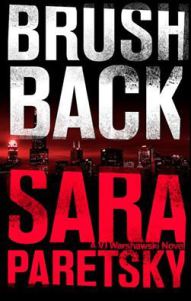
brushbackA good mystery writer engages the writer at the beginning, and gets the adrenaline pumping by the 75% point in the story arc. A great mystery writer grabs us by the shirt right from the get-go, ramps us up into overdrive during the first quarter of the story, and doesn’t let us go till we turn the last page, exhausted, feeling both satisfied and bereaved because the story is over. And Sara Paretsky is a great writer, every single time. She’s only gotten better with this 17th installment of the Vic Warshawski series. Thank you and thank you again (and again, and again) to Putnam-Penguin Publishers and Net Galley for the DRC. You can buy this book July 28 if you want to. And you know you do!

Vic is a working class hero, but she’s left the mean streets of the south part of Chicago behind, and when she…

View original post 592 more words

Our Man in Charleston, by Christopher Dickey *****

A host of really good books were released July 21, when I was in the midst of my book giveaway, and so I’m reblogging the best of the best on any day I don’t have a brand new review to post. If you could only read ten books on the American Civil War, I’d include this one.

seattlebookmama's avatarSeattle Book Mama

OurmanincharlestonThis is the most fascinating book I’ve read in a long time! Equal parts biography and American Civil War nonfiction, it details the experiences of Britain’s foremost spy, Robert Bunch, who was living in Charleston, South Carolina when the Civil War began and for its duration. I am truly grateful to Crown Publishers and Net Galley for permitting me to read the DRC in advance. And perhaps it is just as well, in a way, that my kindle fell in the potty when I was done and with it went hundreds (genuinely) of notations that I made as I wended my way through it; I had procrastinated writing this review because there was so much I wanted to say. Too much, in fact! Sometimes I have to remind myself I am writing a review for would-be readers who might want to discover a few things on their own. Part of…

View original post 1,810 more words

Black-Eyed Susans Giveaway; My Very First!

The giveaway is over, and we have a winner! Sherry Garboden will hear from me shortly, and the book will be sent directly from Random House-Ballantine. Thanks to those that entered.

seattlebookmama's avatarSeattle Book Mama

I am pumped about this! I was contacted by a rep from Net Galley and offered a copy of Ballantine’s hot new mystery for a blog giveaway, which I have not done before. I hope a lot of people will enter. If you’d like to be included in the drawing, which will occur at the end of this week in a totally random manner, please go down to the bottom of the page where it says “Leave a Reply”. Type in your name (or a pseudonym for now if you prefer) and an e-mail address where I can reach you. If you win, I will send a message to your e-mail, and at that point you need to give me a real name and snail mail address, which will be released only to the Net Galley rep.

I promise not to use your e-mail address for anything else. Actually, I…

View original post 803 more words

Trust No One, by Paul Cleave *****

trustnooneMany times my daughter has come upon me reading a book and asked, “How is it?” And almost every time I have said, “I don’t know. I haven’t read the end yet.” This is completely true for this one. And oh my my my, what an ending. No, stop worrying, I have no intention of giving away anything.

But I will thank Net Galley and Atria Books. I appreciate the opportunity to read a free DRC in exchange for this honest review.

You can purchase this book Tuesday, August 4, or you could save the hassle and order it now.

Above all…you don’t want to forget. If you forget this, you might be forgetting other things, too. That’s a slippery slope that nobody wants to slide down.

Jerry is just 49 years old, and he has Alzheimer’s. After the diagnosis, he starts a journal, partially with the idea of recording all the things he doesn’t want to forget so that he can come back and find them later. But fate has other ideas for our protagonist, and for his nom de plume, Henry Cutter–a cute play on the actual author’s name…or is it his pen name?

As we find ourselves gradually creeping down that long dark tunnel with poor Jerry, the journal becomes more and more confused. Is he a killer? If so, how many people has he killed? Why can’t he remember doing any of it?

But then, he can’t remember much of anything these days…

Trust No One is a brilliantly paced, tautly written piece of psychological fiction, and it is proof that, contrary to the old saying, not all stories have already been written. And the title answers his question, a very good question: who can he trust?

The problem here is that someone in Jerry’s position has to be able to trust someone. And as the plot moves further along, the reader can’t help wondering whether all of the characters in the story actually exist.

Those searching for an absorbing vacation read—or even one to curl up with at home, hunkered under the air conditioner or fan on a dog-hot day—can’t really ask for anything better than this. Cleave gives the reader every possible frisson in this impossibly complex, yet strangely accessible novel.

Highly recommended.

Being Nixon: A Man Divided, by Evan Thomas ****

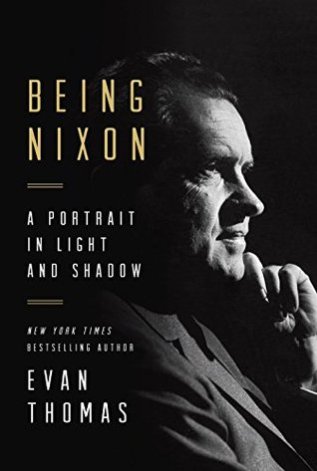
beingnixonSuddenly, everyone is writing Nixon biographies; it’s a Watergate junkie’s dream come true! Here Thomas does his best to take us inside Nixon’s skin and tell us what motivated some of the decidedly strange things he did. It makes for highly engaging reading. 3.75 stars get rounded up to 4, along with my thanks to Net Galley and Random House for the DRC. This book is available for sale now.

When I signed on for this galley, I imagined that perhaps Thomas had a background in psychology or psychiatry and was going to take a stab at diagnosing a mental illness that might explain what in the world Nixon was thinking when he did the things he did; if he’d had different meds, would things have shaken out differently? But that isn’t what this book is about. Instead, it is a glimpse at Nixon’s life, including his early childhood and adolescence, postulating that childhood experiences may have shaped the politician Nixon became.

To this, I will admit that I said, “Psssh. Right. Whatever.”

Because it’s a plain and simple fact that many presidents had lives that were scarred by events as bad or worse than what Nixon experienced, and most of them still managed to do their jobs without coming within a hair’s breadth of impeachment. So I don’t buy that theory.

Nevertheless, there are so many interesting tidbits and stories in this memoir that even if the reader doesn’t buy the overall thesis, it’s a compelling read. The conversational narrative kept me rolling along, and every time I found an opinion I thought was baloney, I made a note of it and kept going. I would have continued reading even if I didn’t have an obligation to the publisher, because it really is fascinating stuff.

Imagine, for instance, a solitary candidate with a love for classical music, sitting all by himself in his hotel suite, with the 1812 Overture blasting away, with his arms furiously directing an unseen orchestra. Just one aide saw this, and Thomas ferreted the incident out and presented it here. I doubt you’ll find these tidbits anywhere else!

In addition, few other biographers have managed any insights into what went on in the Nixon residence. I often wondered about Pat, Tricia, and Julie. When he showed up to home, did he storm in and turn the coffee table over? Get quietly drunk? Blame his family for all his ills? Drawing heavily on the memoirs written by family members that I am unlikely to ever read, Thomas gives us a little voyeuristic peek behind the curtains, and I found it intriguing indeed.

When it comes to Watergate, Thomas holds Nixon responsible for what he did, for the greater part, but I rolled my eyes at the repeated claim that if he hadn’t been too shy to socialize with the staff, with the Washington socialites who invited him to dinners, and so forth, maybe he would not have become so isolated…if his childhood hadn’t been so poor, and if his father hadn’t kept him home from his Yale scholarship because there was no money for dorm fees…if…if…if…

I felt much more certain that the author’s research, which is mostly done via secondary sources and the Nixon family’s memoirs, including heavy use of Nixon’s own (RN), was based on fact when he dealt directly with Nixon’s personal life. Although various quotes by the Watergate conspirators were interesting, some are more believable than others. I found one fact in this bio that directly conflicts with that of biographer Tim Weiner, and it has to do with the choice of Spiro Agnew as a running mate. Thomas cites reasons personal and political; Weiner documents that the choice was bought and paid for by Greek financial interests. Here, I believe Weiner. It’s just one directly conflicting fact, but when I found it, just as a humble reviewer rather than as a researcher, it called other things into question, which is where ¼ star fell off this review.

The author thanks a number of people in his after-notes. I always read those, because you can pick up little things lost elsewhere. He especially thanks the man that told him to beware the various items found in the prodigious memoirs by “that old thespian”, Richard Nixon, who was a student actor before he went into politics. It was strong advice.

In perusing this biography, I realized two things. The first is that the reason Nixon had so little domestic policy, and the reason the country moved so smoothly without him during the tortuous period prior to his departure, is because he didn’t have much of a tool kit to start with. The author notes that although Nixon has gained a sinister reputation as an evil, sneaking genius, in fact there were areas in which he really wasn’t all that smart, and this was one of them. He focused on three things: foreign policy, in which he was better equipped to carry out the wishes of the bourgeoisie than most presidents have been; running for office again and when that was done, honing his legacy, about which enough has been said; and of course, revenge, revenge, revenge.

The second thing I realized is that the reason he was virtually cast out of office in a situation in which other presidents might have been able to pull their chestnuts out of the fire, had to do with the fact that he believed himself, as US president, to be more powerful than the ruling bourgeoisie. He misjudged the relationship of power between himself and those that rule us quietly, usually in an unseen way. In attempting to yank the broadcasting license of CBS as part of a personal vendetta against the owner of the Washington Post, he took on a sector of the ruling rich, and he made of himself an object lesson.

By my count, this was my twelfth Nixon biography, though I may have read and forgot about some others. It’s neither the best nor the worst, but for those fascinated with Nixon’s rise and fall, and with Watergate, it should go on the to-read list. It’s just too good to miss!

The Eight, by Katherine Neville****

theeight Katherine Neville is one of those people that does everything well. She’s been a model, a computer wiz, a photographer, and she’s also an impressive author. I was lucky enough to read this first in the series since Open Road Integrated Media has just re- published it digitally. Thank you to them, and to Net Galley, for permitting me a free copy in exchange for my review. This book was released Tuesday, and is for sale now.

Our protagonist, Cat Velis, lives in New York; the time is 1970, at the height of the Vietnam War. Cat lives in New York City and works for Con Edison. Since she has refused to do something illegal for her boss, who is engaged in some sidelines back-scratching with a client, she is being shipped off to Algeria. Before she can pack, however, a fortune teller warns her that she is in great danger. She scoffs, but less than a week and two corpses later, her irritation has turned to fear. She calls in her mentor, a mysterious man that seems to travel Gandalf-like, practically appearing in thin air. He comes and talks to her in much the same way as the fortune teller did, but he also tells her that she has to go to Algeria and fulfill her destiny.

Transposed with this story is a tale that takes place around the time of the French Revolution. The Montglane Abbey is closing its doors because of the Bill of Seizure. Buried beneath its floor for centuries was a legendary chess set whose worth is beyond anyone’s wildest dreams. Composed of huge gems, gold, and silver, it is all the more valuable for a formula that its individual parts, when put together, have etched on their undersides. Is it a secret weapon? Is it a supernatural curse that is activated when the pieces are together? The Abbess only knows that she must separate the pieces and get them out of France, along with herself. She takes herself to Russia, to her closest friend, who is Catherine the Great. From there, the parallel story to Cat’s unfurls itself. Eventually the two part of the story come together.

Here’s a clip of the author discussing her novel, and the life experiences that shaped it:

This is ordinarily not the sort of historical fiction that attracts me; there are really well-developed, highly sympathetic royal characters, and then there are the savage, dirty masses. It grates. While it’s true that the French working class and peasantry really did tear royals from their splendid carriages and either kill them on the spot or take them off to the Jacobins to be killed later, Neville paints the royals in such an idealized fashion that the reader, if not already informed, might wonder indeed just why the masses would do such a thing? Unless, of course, it’s in their inferior DNA. I ground my teeth and read on.

Add a reference to the Freemasons and the number 666, and I was ready to hurl my kindle across the room! But I had an obligation to the publisher, and so I persevered, and I am glad I did, because what Neville does with the plot is quite cunning. If one were going to chart the book into a grid, it would correlate with the grid that is part of the story itself. And if this makes no sense whatsoever to you, all I can tell you is that you have to read the book and watch closely. Watch for the patterns; this is actually slick as hell! And so in the end, I was glad I had seen it through. Though maybe more famous people are worked into one novel than is natural, the elegance of the plot itself (and the chess detail), rather than historical veracity or character development, is what sustains this substantial work.

The reader’s understanding of this hyper-literate story will be aided by knowledge of chess. In fact, I found myself taking a few notes, though I haven’t played in years! Those unschooled in chess can also enjoy the book, but I do not recommend this book to anyone for whom English is not the mother tongue. The vocabulary and historical references will be so much work for you that you won’t enjoy it.

But I did.

Recommended to those that appreciate symmetry and precision in a novel.

Unholy Fury: Whitlam and Nixon at War, by James Curran ***-****

unholyfuryAll of a sudden, everybody is writing a book about or featuring Richard Nixon. Having grown up during the Watergate era, I voraciously attack anything and everything apart from the most blatant apologists’ work. This title, in which Nixon’s relationship with the government of Australia and in particular, Gough Whitlam, who became Australian prime minister during the Nixon administration, is examined, seemed like a good diversion from what I usually read. Like many Americans, I tend to focus too exclusively on matters having to do with the USA. It probably has to do with the size of the country and consequently, the sheer weight of available material on matters closest to home. But I knew next to nothing about Australia’s government, apart from their participation as an Allied force in World War II and their status as a friendly government to the US and Britain, so I dove in.

Thank you to Net Galley and Melbourne University Press for the galley, which I received free in exchange for an honest review.

Between the title’s subheading and the book’s cover, which shows Gough speaking and Nixon looking furious, one might almost conclude that the two nations were on the brink of a shooting war with one another. Not so, not so. Yet the antagonism that sprung up between the two nations during a time when both had outspoken and sometimes abrasive leaders is unquestionable. There were two primary realms of disagreement that went beyond mere personality issues. One was the role of Australia in relation to the USA, and the other was the future of Asia in relation to both countries and in general.

Before reading Curran’s biography, I had never thought of Australia as an Asian nation. I sort of considered them to be out there adrift, all by themselves, being kept company just by New Zealand the Pacific Islands. I am aware that they are on the opposite side of the equator from where I am, and so when it’s summer here, it’s winter there. That, cowboy boots, kangaroos, and an unfortunate record for treating indigenous people fairly, one which the US shares, about sum up my knowledge base.

I’m embarrassed to admit that I didn’t know the capital was Canberra.

Nixon was mostly not focused on Australia, and that, it seems, was a part of the problem. Menzies had preceded Whitlam as prime minister, and he too was an old hand who thought largely in Cold War terms. Nixon and Menzies had been fond of one another. But when elections were held and the beleaguered President Lyndon Johnson was due to leave Washington, he told Australia’s representatives, who were opposed to the US intervention in Vietnam, that they “might have one or two problems” with Mr. Nixon. It was a very droll understatement.

First, Nixon was outraged that a nation that looked to the US for security and aid would dare publicly criticize its role in Vietnam, and then—worse—in Cambodia. He regarded the Australians as a satellite that ought to be grateful and not bite the hand, etc.

Gough Whitlam took office with an eye toward creating a more independent Australia. He considered Australia very unlikely to be in danger of external attack for ten or fifteen years at least, and was aghast at Uncle Sam’s ugly doings in Indochina. He was looking for distance, and Nixon, under enough pressure from enemies without getting it from friends, erupted. Eventually Richard Nixon played a dangerous bluff on Moscow by recalling nuclear missiles from nearby Fiji, which involved the use of Australian terrain, without actually notifying the Australians. Visions of a mushroom cloud on home soil didn’t do much to endear President Nixon or the American government to Australians, needless to say.

Whereas Nixon was convinced that communist hoards would continue to advance across Asia unless Vietnam was forced to adopt a parliamentary democracy, Australia felt that it was time for the super powers to quit telling smaller nations what to do and abide by home rule in whatever form its citizens chose.

Though no actual shooting war was ever threatened or contemplated, the US did examine alternate places for its bases—a $5 billion dollar investment in 1970’s dollars—and at one point, Australian dock workers voted not to unload goods from US ships. In turn, US dock workers placed a moratorium on Australian trade, which left a good deal of beef rotting near the dock for days on end. And sometimes, with breathtaking rapidity, trade wars can in fact lead to shooting wars. It wasn’t going to happen this time, though; the USA already had its plate full.

It probably is telling of my own ethnocentrism that I had difficulty focusing on the lengthy passages leading up to the conflict. There’s a fair amount of detail regarding Australian politics that novices like me may find it hard to plow through. On the other hand, the author should have known that communists would never use the term “Vietcong”, which was a pejorative. Vietnamese freedom fighters are referred to as members of the National Liberation Force.

Even if the reader gives in and skims those bits of political nuance that will suit some interest levels but not others, there is a great deal of entertaining dialogue and detail in the meaty center of this work to make it worth reading.

Giveaway: Black-Eyed Susans, by Julia Heaberlin

BlackEyedSusansThis giveaway ends Friday, July 31 at midnight! Thank you to my sponsors for permitting me to extend the deadline. Hot new psychological thriller won’t go for sale until August 21, but thanks to Net Galley and Ballantine, you have a shot at your very own advance copy! If you live in the continental USA and have a snail mail address to give me if you should win, then you are eligible.

This is my first giveaway ever, and I began it on the review page, but so far only 5 people have expressed interest, and only one has left the contact information necessary for me to notify the winner. That means that by entering your contact info–which I will not use for any other purpose but to notify you that you’ve won and get your address to the sponsors–you have an outstanding chance of winning. Just a few days, people! Come on in!