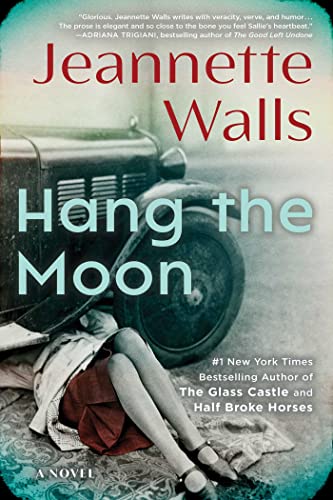
Hang the Moon, by Jeanette Walls*****

Jeanette Walls is the author of outstanding memoirs, most notably The Glass Castle. Her new novel, Hang the Moon, is brilliant, and you should read it. My thanks go to Net Galley and Scribner for the review copy. This book is for sale now.

Sallie Kinkaid is born and raised near the turn of the twentieth century in a tiny backwater in Virginia, daughter of its wealthy scion, “Duke” Kinkaid.  Her mother has died, and Duke has remarried, and now Sallie has a younger half-brother, Eddie. Sallie is a daredevil, given to occasional recklessness, whereas Eddie has a gentler, more introverted nature, with a love of learning and music. But one day, hoping to awaken some more adventurous aspect of his personality, Sallie takes Eddie out for a ride in her cart, and he is injured. Just like that, Sallie no longer lives with her father; she is cast out to live with an impoverished aunt, and there she remains for nearly a decade.

Sallie is a young woman when she returns, and now she must navigate the shoals of local politics, keeping clear of Duke’s sometimes unpredictable temper.  Duke owns nearly every property in the county, and he is deft at doling out favors and keeping the local peace, always in a way that works to his own advantage. Sallie has a hundred questions, some longstanding, and others that develop as she works for her father. However, questions are discouraged in the Kinkaid home. An aunt tells her, “Honey, there are some rocks you don’t want to look under.”

When the local economy is shaken by the unthinkable, Sallie must make some hard choices as she comes into her own. Moonshine has long been an unofficial, yet pivotal way that the local working class makes its living, and when feuds erupt and the government attempts to intervene, Sallie must choose sides. As she comes into her own, she discovers some hard truths about the family she thought she knew. Walls is at her best here, with a strong, resonant setting, a clear, credible plot, and unforgettable characters. This is the sort of book that one comes back to. Highly recommended.

Livid, by Patricia Cornwell*****

I really enjoyed this, the 26th entry into the Kay Scarpetta series. From time to time, people publish unhappy reviews, but for me, it never gets old. In this one, a terrorist attack is made locally, and it’s associated with an attempt on the life of the U.S. president, who is in town at the time it occurs. Kay is, of course, the chief coroner, and she’s forced to perform the autopsy on someone she knows.

The ending isn’t satisfying, and with any other author, I’d knock off the last star. But with Cornwell, I know from experience that when she does this, it’s because it isn’t really over. This will come up again, if not in the next book, then in another soon after it.

Because I couldn’t get the galley, I checked out the audio book at Seattle Bibliocommons. The audio is kind of a mixed bag. I like how the narrator voices the protagonist, and she also does recurring character Pete Marino well. I thought it was wrong to read the voice of Lucy, Kay’s badass adult niece, with a higher pitched voice than any of the other characters. She is a daredevil that doesn’t suffer fools, and if anything, her voice should be lower in pitch than Kay’s. I also thought she made the judge a bit too languid sounding, which is at odds with the things she says. In short, if you are a reader that enjoys both audiobooks and print ones, go with the print. If you like only audiobooks, then go ahead.

If you haven’t read this series, I do suggest you begin with the first and work your way up. I might not have enjoyed this one so much if I didn’t know the characters.

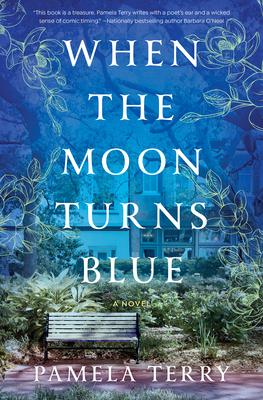
When the Moon Turns Blue, by Pamela Terry*****

Once in a while the odd thing happens,

Once in a while the dream comes true,

And the whole pattern of life is altered,

Once in a while the moon turns blue.

The tiny Georgia hamlet of Wesleyan is preparing to bury one of its own, and Mother Nature is preparing to cover the entire town in ice. But nobody—well, almost nobody—knows that a source of local tension is about to go nuclear, as someone is planning to topple and destroy the statue of a Confederate general in the park inside the boundaries of Old Man Griffin’s land. “The fight was just getting going good, and now somebody’s declawed the cat.”

This riveting, curiously charming and sometimes hilarious novel is the second by Pamela Terry, whose outstanding debut novel was The Sweet Taste of Muscadines. This one may be even better. My thanks go to Net Galley and Random House Ballantine for the invitation to read and review. This book is for sale now.

With the death of Harry Cline, we find ourselves at his funeral, a massively attended affair. But his wife, Marietta, develops a disabling, blinding migraine, and although they have been on the outs for years, Butter, her (former) best friend, comes to the rescue. By the time they’ve snuck out the side door of the church, we already know at least a little about both women, and now we want to know everything.

With just two novels published, Terry has already proven herself to be among the best authors when it comes to character development. Soon we’ll meet others—Marietta’s obnoxious brother, Macon and his beleaguered wife Glinda, who will have a large part in this story and is one of my favorite characters, as well as a host of others, who have smaller roles but are each so unmistakably established that it’s no work at all to keep track of them. But perhaps her finest achievement here is in creating a masterpiece that is ultimately a feel good book, despite the use of a red hot real world controversy within its pages.

I generally read several books at a time, and this one is the one that I saved for bedtime, because I wanted to be able to read it uninterrupted, and it is the one I wanted in my head when dreams came. It didn’t let me down.

This inspirational work of Southern fiction stands shoulder to shoulder with the finest classics, To Kill a Mockingbird and Fried Green Tomatoes. I wholeheartedly recommend it to you.

Earl, Honey, by D.S. Getson*****

“Ever since Pa hit him in the head with the two-by-four, Earl had lived with blinders.”

If you can read that opening line and not be curious about what comes after it, check your pulse, because there’s a good chance you are already dead. As for me, I was drawn to it immediately, and I thank Net Galley and Matador Publishing for the review copy. This book is for sale now.

When we meet Earl, the year is 1921 (although occasionally, we skip forward to 1970.) Earl is in the courthouse watching his father’s trial:

‘I di’nt fornicate with no donkey. Es ist eine dirty lie!’ From the back of the darkly paneled room, he feels his pa’s rage like a ground tremor rippling its way through the crowd the crowd to the spot where he sits, surrounded by family. Well, except for Rose. She’s up front in a special seat…

‘And what about the other charge, Mr. Hahn? Is it true your daughter, Rose, is carrying your child?’

Boom. So right in the first chapter, you can plainly see that if you are someone that needs to know about triggers before reading a novel, this may not be your book. And that’s a shame, because the quality of the writing is phenomenal, from the riveting opening line, all the way to the last.

Earl’s pa does, in fact, go to jail; even if he wasn’t guilty as sin (and of it,) which he clearly is, everyone in town hates him with an abiding passion, most of all his wife and ten children.

“There wasn’t a man within a hundred miles of Sampson County who would stand up for Reinhardt Hahn.”

It is unusual for me to include so many quotes in a review, but as you can see, the writing is so clear, strong, and resonant that I cannot do it justice any other way.

As the title and first line suggest, the story is Earl’s, and we follow him through the remainder of his childhood and adolescence. At its end, I am thunderstruck when I read the author’s note explaining that the whole story is based on the truth. Earl was her grandmother’s brother; Reinhardt Hahn, or “Pa,” was her great-grandfather.

Friends, this is easily one of the best novels to come out of 2022, and I am convinced that the only reason it isn’t parked on the New York Times bestseller list is because it was self-published, and therefore it didn’t receive the kind of publicity that a major publisher could have provided.

I won’t say more; to do that, I’d have to fish out some more quotes, and they are even better when read in context. Highly recommended; D.S. Getson is an author to watch.

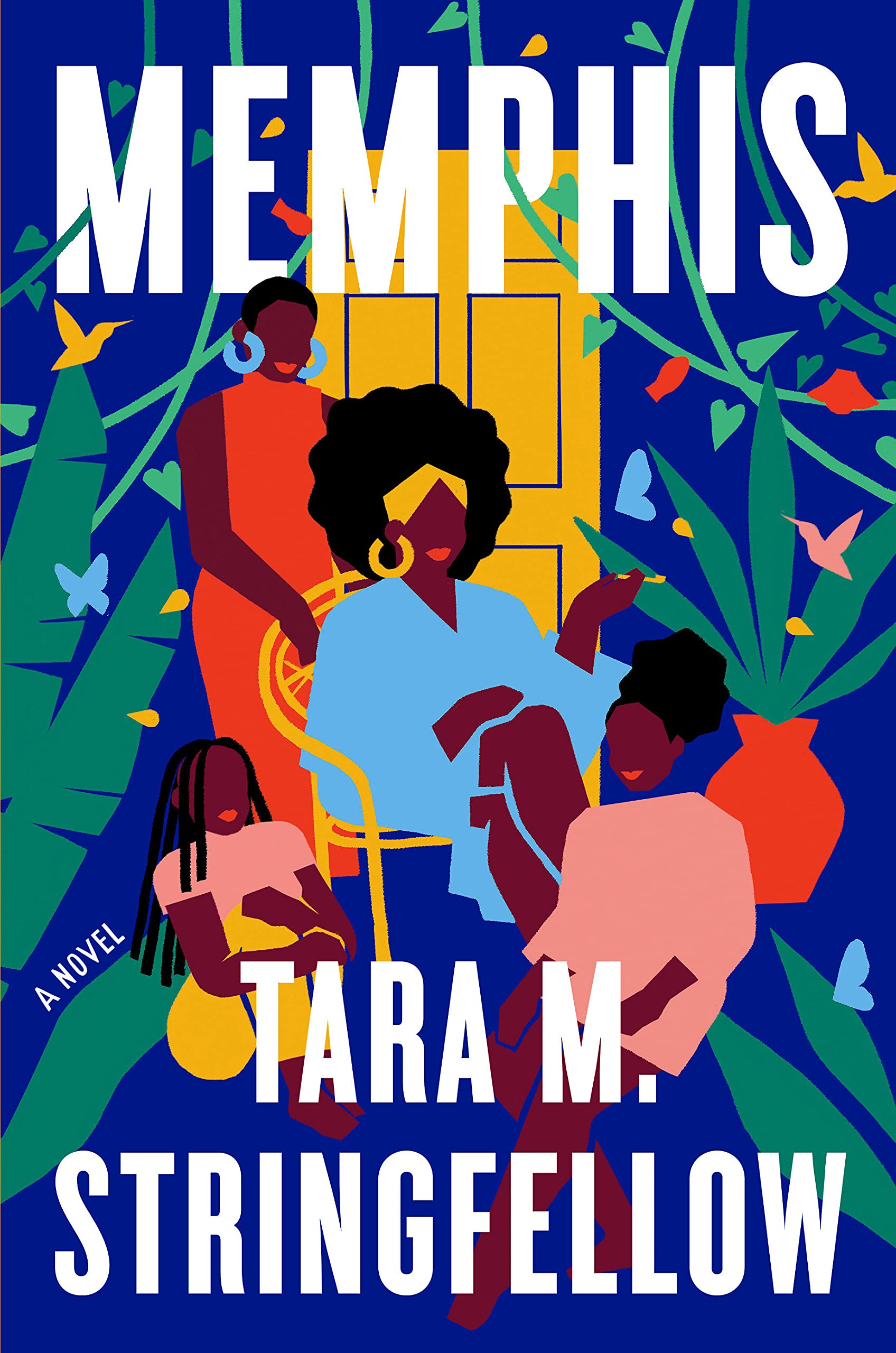
Memphis, by Tara M. Stringfellow****

Stringfellow’s debut novel, Memphis, has drawn accolades far and near. This is a family saga that features three generations of women, a story told with warmth and subtlety. My thanks go to Net Galley and Random House for the review copy. This book is for sale now.

The story commences with Miriam planning to leave her abusive husband. She gets a few things and herds her daughters, Joan and Mya, out of the house. They’re headed to live with Miriam’s sister, August, in Memphis.

The family’s story follows them across time and points of view, but always from the point of view of one of the women. About a third of the way through we find an additional point of view from a character we haven’t met yet, and since we’ve heard from Miriam and August as well as Miriam’s girls, I’m expecting Hazel to be the daughter of either Joan or Mya, granddaughter to Miriam, but that’s not the case. Hazel is Miriam and August’s mother, and the time is the 1930s, a dark time indeed for African-Americans. I like this little surprise. I also love that the narrative embraces only women, across three generations.

As with all good historical fiction, there’s a hidden history lesson here as we follow the Norths across time. On the one hand, I didn’t learn anything new, but I am a history teacher. What I appreciate is the lack of reliance on cheap pop cultural references, and also the lack of revisionism. Stringfellow writes about the past as it was, rather than as she wishes it was. The characters are resonant and believable; my favorite is August. I love the ending.

The story arc is a mighty shallow one, and I’d be hard-pressed to identify the climax. This is my only real criticism.

Because I was a bit behind, I checked out the audio version from Seattle Bibliocommons, and the narrators, Karen Murray and Adenrele Ojo, do a superb job.

Recommended to those that love historical fiction—especially surrounding Civil Rights—and to those that enjoy stories about multiple generations of families.

Black Cloud Rising, by David Wright Falade*****

Black Cloud Rising, the historical novel that’s already been excerpted in The New Yorker, is the book I’ve always wished someone would write. Author David Wright Falade tells the story of the African Brigade, a unit of former slaves tasked with rooting out pockets of Confederate guerilla fighters in the Tidewater region of Virginia and in North Carolina’s Outer Banks. This outstanding work of historical fiction is one of the year’s best surprises, and it’s for sale now.

My thanks go to Net Galley and Grove Press for the review copy.

Sergeant Richard Etheridge is our protagonist; he is the son of a slave and her master. This is the only small criticism I have here; it seems like every time I see a fictional former slave that goes on to do momentous things, he’s the master’s progeny. However, Sergeant Etheridge did exist in real life; I have been unable to discover whether this aspect of his beginnings is fact or fiction. If it’s fact, then I withdraw my objection.

One way or the other, this is nevertheless a fantastic novel. In fact, since I taught the American Civil War for many years and have never heard if this sergeant, I wonder, initially, if his story is even true. But a little research shows Etheridge to be have been real. I had known about the existence of this brigade, but the only aspect of it I’d seen was–oh how embarrassing—from the movie, Glory, in which an all-Black military unit volunteers to lead the charge on Fort Wagner. But there, the story is told not from the viewpoint of infantrymen, but from the Caucasian officer chosen to lead them. It’s not as if I failed to do research; but during my years in the classroom, I couldn’t find a single thing that reflected the memories and experiences of the former slaves that fought for the Union. And although this book comes too late to help me teach the upcoming generation, it will be greatly useful to teachers that come after me.

At the outset of our story, Richard approaches his master at dinner, a thing that is generally not done, to tell him that he is going to enlist in the Union Army. Because he is the master’s son, he is able to get away with this, and this has also allowed him to learn to read and write, which in turn makes him officer material. Richard is a well developed character; it is wrenching to see his loyalty and devotion to his father, as well as to his half-brother Patrick, who is the legitimate heir to his father’s estate. Repeatedly the narrative points out that “the son will always seek out the father,” and it makes me ache for this young man. Nevertheless, he does go to war against his father’s wishes, and he demonstrates leadership and skill under pressure.

There is one visceral scene in which the Caucasian master of a plantation who is linked to the guerilla Confederates, is dragged to his own whipping post and beaten by his former slaves. I find it deeply satisfying. In the end and after much bloodshed, the unit is successful in its mission to clear the area of the guerillas that threaten the Union effort.

In many ways this is a coming of age story, but those that will love it most are those that enjoy military history and all things related to the American Civil War, as well as those interested in the Black struggle. It’s a great selection for Black History Month, but it will make excellent reading during the other eleven months as well. Highly recommended.

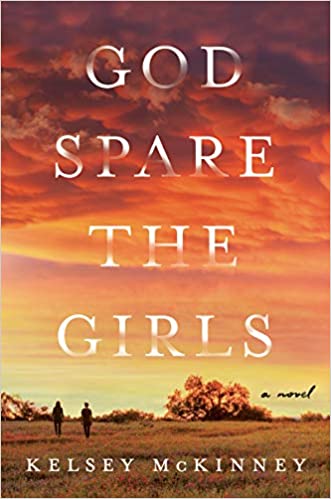
God Spare the Girls, by Kelsey McKinney*****

Journalist Kelsey McKinney makes her debut as a novelist with God Save the Girls, and I have a hunch we’ll be seeing a lot more of her work. Lucky me, I read it free and early; thanks go to Net Galley and William Morrow for the review copy. This book is for sale now.

Caroline and Abigail are the daughters of the charismatic head pastor at a megachurch in Hope, Texas. This opening paragraph had me at hello:

“For that whole brutal year, Caroline Nolan had begged God to make her life interesting. He sent a plague instead: grasshoppers emerged from the earth in late June, crawling across the dry grass, multiplying too quickly, staying long past their welcome. Now they carpeted the land she’d inherited with her sister, vibrated in the sun like a mirage. As Caroline drove the ranch’s half-mile driveway, she rolled over hundreds of them. She threw the car in park, stepped out into the yellowed grass beside the gravel drive, and crushed their leggy, squirming bodies beneath her sensible heels.”

Teenagers are people that are exploring their own identities, and there’s often some rebellion mixed into those years, but for Caroline and Abigail, there’s not a speck of wiggle room. They are constantly reminded that everything they do reflects upon their father. Forget profanity, street drugs, shoplifting, booze. These girls have even the most minute aspect of their appearances proscribed. Is that V-neck deep enough to show even a smidge of cleavage? Cover it up, or go change. How much leg? Why aren’t you wearing makeup? Not just your smile, but what kind of smile? How you sit. How you stand. And if these confines were not enough to drive any teen bonkers, they live in a fishbowl that every adult seems to own a key to. People come in and out of the family home all day and all evening, so showing up to watch television in your robe and fuzzy slippers in the family room is a risky prospect, too.

I’ll tell you right now, I couldn’t have. I really couldn’t.

But these are girls raised to believe that the Almighty is always watching, and always knows your heart, and so they do their best to shed petty resentments, whereas others must be buried deep. Buried, that is, until a shocking revelation is made about their father’s extracurricular activities.

The story is primarily told through Caroline’s point of view; Abby is the most important secondary character, and she’s interesting, but we see her through Caroline’s lens. I admire the way that McKinney develops both of them, but more than anything, I admire her restraint. In recent years, fundamentalist and evangelical Christian preachers have gone from being rather shocking, daring novelists’ subjects to low-hanging fruit. As I read, I waited for the rest of it. Which girl was Daddy molesting? What else has he done? Has he embezzled? Does he have a male lover on the side somewhere–or Lordy, a boy? But McKinney doesn’t go to any of those places. She keeps the story streamlined, and in doing so not only stands out from the crowd, but is able to go deeper into Caroline’s character.

At the end, when Abigail prepares to marry the dull, dependable boy her parents like, the scene is downright menacing; their mother, Ruthie, is helping her into her dress, and she “wielded a hook like a sword,” and as everyone takes their positions, the walkie-talkies “hiss.”

There’s a good deal more I could tell you, but none of it would be as satisfying for you as reading this book yourself. Your decision boils down to text versus audio, and I advocate for the audio, because Catherine Taber is a badass reader, lending a certain breathless quality to key parts of the narrative. But if you’re visually oriented, you can’t go wrong with the printed word here, either.

Highly recommended.

All the Little Hopes, by Leah Weiss*****

Recently, I read and reviewed Weiss’s debut novel, If the Creek Don’t Rise, which was delightful. This year’s novel, All the Little Hopes, is better still. My thanks go to Net Galley and Sourcebooks Landmark for the review copy.

Weiss’s story is of two girls born in different parts of North Carolina, both geographically and culturally, and of how they come together and ultimately, become each other’s family. The novels I love best provide a resonant setting, an original plot, and compelling character development; these three elements don’t compete for the reader’s attention, but rather, each of them serves to develop and reinforce the others. That’s what I find here.

Our story takes place in the 1940s, during World War II. The narrative comes to us in the first person, with the point of view alternating between the girls; we begin with Lucy. Her father is a farmer, and by far his biggest crop is honey. As the story opens, government men come to visit, and they want to buy all of his honey for the war effort. Lucy’s eldest sibling and brother-in-law have both gone to serve in the military, and there’s an emotional scene after the government men leave, because they’ve given permission for both sons to return home to help with the honey. Lucy’s mother pleads with her father to write to them and order them home at once; he stands firm, saying that the choice must be their own. Now we begin seeing how conflict plays out in this family, and how the various relationships work. But all of it is done through the plot, so that we aren’t slowed down by a bunch of emo for its own sake.

Bert, whose given name is Allie Bert, lives in the mountains, and her family has far fewer resources than Lucy’s. Her story unfolds with the death of her mother in childbirth, along with the baby. Her father sends her to live with his sister, Violet, who is expecting a baby of her own. He suggests that Violet will need household help, and Bert can provide it; he doesn’t know that Violet has gone stark, raving mad. When Bert arrives, Violet is behaving irrationally and at times, violently. She locks Bert out of the house in a storm, and the nearest house is that of the Brown family. And so it begins.

One of the most critical aspects of this book’s success is Weiss’s facility in drawing the girls, who are just beginning adolescence. At the outset, we learn that Lucy takes pride in her advanced vocabulary. I groan, because this is often a device that amateurs use to try to gloss over their lack of knowledge relating to adolescents’ development. Make the girl smart, they figure, and then they will have license to write her as if she were an adult. Not so here! These girls are girls. Though it’s not an essential part of the plot, one of my favorite moments is when the girls are locked in a bitter, long-lasting quarrel over whether Nancy Drew is a real person. Bert says she is not; Lucy is sure she is. This isn’t silly to them. It’s a bitter thing. Further into the book, Lucy realizes that it’s more important to be understood, than to use the most advanced word she can come up with. And so my estimation of Weiss rises even higher.

When someone comes from truly devastating poverty, the few things that they own take on great importance. Bert arrives with a treasure box, and in it, she keeps things that may seem inconsequential, but that mean the world to her. And Bert is also light-fingered. After meeting Lucy’s mother, who is one of the nicest people she’s met in her life, she pockets a loose button that Mama means to sew back onto a garment. Bert wants this button fiercely, because Mama has touched it. Later—much later—she confesses this to Lucy, and then to Mama, and is flabbergasted when there is no harsh punishment. She explains to a neighbor,

“Mama says sometimes stealing is necessary, but that don’t make a lick of sense. Stealing’s a crime. Back home, there ain’t two ways bout stealing. You get a whipping. You get sent to your room with no supper. No breakfast the next day neither. Stealing is a sin against the Lord Jesus, so salt gets put on the floor, and you get on your knees on that salt and stay there till you cry out and your knees bleed, till you fall over and Pa says that’s enough.”  

One feature of the story is when Nazi prisoners of war are housed nearby, and they become available as labor. At first locals fear them, but then they get to know some of them, and they discover that like themselves, the prisoners play marbles. Gradually, the rules about avoiding the prisoners relaxes to where the girls are allowed to play marbles with them sometimes. “We tread close to the sin of pride when it comes to marbles. I don’t think we can help ourselves.” And now I am veering toward an eyeroll, because (yes, I’ll say it again,) writers are awfully quick to find humanity in Caucasian enemies, whereas we know the story would have been very different had these prisoners been Japanese. BUT, as my eyes narrow and my frown lines deepen, another development occurs that reminds us that these men aren’t really our friends. Again, my admiration increases.

Weiss’s last book was a delight for the first eighty-percent, but it faltered at the end, and so I was eager to see whether this novel stands up all the way through. I love the ending!

You can get this book now, and if you love excellent historical fiction, excellent Southern fiction, or excellent literature in general, you should get it sooner rather than later. If you’re stone cold broke, get on the list at your local library. This is one of the year’s best, hands down.

The Vanishing Half, by Brit Bennett***-****

This book wasn’t on my radar until it hit the best seller lists. The premise is a provocative one, and so I hopped online and ordered a copy of the audio book from Seattle Bibliocommons. It held my attention all the way through, but when it concluded, I felt a little cheated.

The chief protagonists are two girls, twins, raised in a tiny (fictional) town deep in the American South. The whole town is Black, and everyone—everyone—is light skinned. Sisters Stella and Desiree become restless as they come of age, and they conspire to run away to the big city. They pack a few things, gather what money they can, and head for New Orleans. The time is the mid-1900s. They arrive, find a place to stay, and get jobs. One day Desiree comes home from work, but Stella doesn’t. She’s gone. Enough of her things are missing to suggest that she hasn’t met with foul play, yet Desiree is her twin, and she is undone by Stella’s unexpected departure. Not even a note!

Stella is in the North; Stella is passing for Caucasian. But to do so, she has to cut all family ties. Her new husband has no idea.

The story progresses, and Desiree does the opposite, marrying a man who is very dark. Their daughter is what might be called blue-black. Now neither twin can comfortably return to Mallard, with one too Black, and one not Black at all, as far as anyone can tell.

The story progresses through various life changes, and eventually the focus is on the twins’ daughters, one each. Of course, the reader must wonder whether the sisters will ever be reunited, and if so, what will happen then.

When the book is over, I feel as if I am leaving the table before I’m full. There were so many opportunities here, and the author squandered all of them. The protagonists never develop to the point where I bond with any of them, and I cannot tell what the author’s purpose is here.

This book is for sale, but don’t break the bank to get it. Read it free or cheap, or give it a miss.

The Incredible Winston Browne, by Sean Dietrich****-*****

4.5 rounded upward.

The time is the 1950s; the place is Moab, Florida, a tiny town where everyone knows everyone else. Winston Browne is the sheriff; Eleanor Hughes is a frustrated single woman that fears she is headed for spinsterhood; and a small girl, Jessie, is on the lam from a creepy cult that considers her to be “a little abomination.”

I read this book free, courtesy of Net Galley and Thomas Nelson Publishers. It’s for sale now.

The story begins with Winston in his doctor’s office. There’s bad news about his chronic cough. Tests show it’s not only malignant; it’s metastatic. In other words, Winston should put his affairs in order.

Winston is a friendly guy, but he’s also an introvert. He tells no one of his condition. He’s single, and there’s no family to warn, so he goes about his life about the same as before he learned his diagnosis.

Jessie is awakened in the middle of the night by one of the Sisters, who hustles her into a waiting vehicle. She’s being busted out of the Temple compound by softhearted women that know the girl is doomed if she remains. Jessie has an independent spirit, and so when she is dropped off at the train station with instructions of where to go and who to trust, she follows her instincts instead. Her instincts take her to Moab, Florida.

Eleanor—you can call her Ellie—is fed up with Jimmy. They’ve dated for year upon year, and she is so frustrated by his inaction that she can scarcely stand the sight of him. If he is so crazy about her, then why doesn’t he propose? She’ll never have a husband or a family, and it’s all his fault. But then Winston comes along, and the birds sing in the trees.

For the first half of this book, I thought it would be a four star read. It was a good enough tale, but I had my reservations. For starters, where are the Black people in Moab? If we’re meeting the townsfolk—and we surely are—how is it that all of them are Caucasian? A visit from Jackie Robinson is all well and good, but this is Florida, for heaven’s sake. Is Moab a sundowner town?

I run a quick search, knowing that the African-American population during this mid-1900s was much lower than it is now, and I am grudgingly convinced that there might well be a little town in the boondocks with only white residents. Back then, it could have happened, so…okay.

It is during the second half that everything falls together and I am swept away by the characters. No more consulting the Google oracle; the intimacy has become too strong for me to step back.

It’s difficult for me to find a feel-good book without schmaltz. Most books that are billed as heartwarming tend to make me roll my eyes or retch a little. Dietrich works magic, though, and although it takes a minute or two to reel me in, ultimately I am captivated. The droll, understated humor that drops in and out at just the right moments is a key element. The captions that appear regularly make me guffaw more than once; don’t skip over them! They’re terrific. The text is punctuated now and then by contributions from the Moab newsletter, whose minutiae underscores just what a dull place this town usually is.  

However, let me also say a quick word here about the audio version. I began reading this book close to the publication date, and so when I was partway into it, I checked out the audio book from Seattle Bibliocommons. By doing so, I could extend my reading sessions, switching over to the audio when I had to do something else with my eyes and hands. The author reads his own narrative, and he has a wonderful voice, warm with just the right amount of drawl. The best way to enjoy this book is to access both the print version and the audio; if you must choose one or the other, it’s a toss-up, perhaps with a slight edge toward the audio.

Some readers will be pleased to know that there is no off color language or sex involved. If a movie were made based on this book, it would most likely show a General Audiences rating.

Highly recommended to those that love a feel good story, historical fiction, or Southern fiction.