The Message, by Ta-Nehisi Coates****

Ta-Nehisi Coates is an eloquent writer, and I look forward to reading whatever he publishes. My thanks go to NetGalley and Random House for the invitation to read and review. This book is for sale now.

This book is brief, and it consists of four essays. The first and briefest is about returning to Howard University to teach writing. The second details his first trip to Africa, specifically Senegal; it’s surprising that it took him this long, he says, what with being raised in an Afrocentric home, the child of a Panther. But it’s expensive, it’s time consuming, and now, he can finally do it. As I read both of these, I admire the way he crafts an essay, but at the same time, I also feel as if I am not his intended audience; at times I feel almost as if I am listening in on someone else’s conversation. But I remind myself that I am reading this thing at the publisher’s invitation, so I push on, and it’s outstanding material.

The third essay is the one I enjoy the most, particularly because I had just finished reading a harrowing memoir about book banning. Coates attends a South Carolina school board meeting in which his own book, Between the World and Me, is being challenged. He’s invited by a teacher there that wants to continue using his book in her classroom, and he’s amazed at the assertions being made by some of the speakers in attendance, right in the shadow of George Floyd’s murder. And speaking of this, he says

“I understand the impulse to dismiss the import of the summer of 2020, to dismiss the ‘national conversations,’ the raft of TV specials and documentaries, even the protests themselves. Some of us see the lack of policy change and wonder if the movement itself was futile. But policy change is an end point, not an origin…and whereas white supremacy, like any other status quo, can default to the cliched claims and excuses for the world as it is—bad cops are rotten apples, American is guardian of the free world—we have the burden of crafting new language and stories that allow people to imagine that new policies are possible. And now, here in Chapin, some people, not most (it is hardly ever most), had, through the work of Black writers, begun that work of imagining.”

The final essay, which is also the lengthiest, is about his trip to the Middle East. At the outset he mentions his trip to the World Holocaust Remembrance Center, and seeing the vast Book of Names, which catalogs all of the nearly 5 million Jews killed in the Holocaust. But a few pages later he gets to the meat of the matter and decries the way that Israel is treating Hamas. No wait, that’s not the way he words it. He dislikes the treatment of the Palestinians that chose to be ruled by Hamas. Whatever. All I know is that when he states flatly that he isn’t interested in hearing the other side of this conflict, completely ignoring the pogrom that set this entire conflict in motion, he loses me. I skim the rest of the essay in case there’s a surprise for me somewhere in there, but of course, there isn’t. Bandwagons are easily joined, but I would have expected a writer of his caliber to think and write more critically.

So, should you read this book? There’s no denying that Coates is a skillful writer, and the essay regarding censorship is worth reading all by itself. And in that spirit, I won’t say that you shouldn’t read this because I happen to disagree with the last nearly fifty percent of the book; but when you do so, keep your brain engaged and don’t take everything he says at face value.

The Land of Lost Things, by John Connolly*****

“We must be careful of our fancies and wary of our dreams, lest the worst of them should be heard or witnessed, and something should choose to act upon them.”

Are you up for a partly sweet, partly sinister bedtime story? If so, John Connolly is your man, and this is your book. My thanks go to Net Galley and Atria Books for the review copy. This book was published in September, 2023, and I am disgracefully late, but this is largely due to my realization that I could not read the second in a two book set and review it effectively without first ferreting out the first book, The Book of Lost Things. Now that I’ve read them both, I can recommend both to you unreservedly. At the same time, I will caution you that—what with the titles of this and its predecessor—this is emphatically not a children’s book! When I saw the title, I wondered if, like so many authors of late, Connolly had decided he should write a book for tiny tots. This is not that! Don’t hand this book to your child, or anyone else’s, unless they are already both old and mature enough to enjoy the works of Stephen King—or for that matter, other books by Mr. Connolly.

In the first book, a boy named David, who is mourning the death of his beloved mother and increasingly alienated from his father, stepmother, and tiny baby (half) brother, begins to notice strange things about the books in his bedroom, which came with the house. Events lead him to a place near his house, where he is sucked into an alternate world in an alternate wood, and it is there that nearly all of the narrative takes place.

Now, in this story, we have one of David’s descendants, a young mother named Ceres, whose little daughter, Phoebe, lies comatose in a hospital. Because of the place’s location, she decides to stay in a family home that is not being used currently, what with being rundown, but which is convenient to the place where Phoebe is. And yes of course, it’s that house, and those woods are still there.

Nearly twenty years separate the publication of the first book and the second, and I can see the difference immediately. Whereas The Book of Lost Things is well written and quite memorable, The Land of Lost Things is even better. The pages turn themselves, and the words pop off the pages. The fairy tales that Connolly implants into the first half of the book are cleverly altered, and I laugh out loud more than once as I read them. And then, as things darken and become tenser, the dangers more palpable, it’s hard for me to look away. I learned years ago not to read Connolly’s work too close to bedtime, and that habit stands me in good stead here.

Part of the charm inherent in everything Connolly writes is his impatience with pretentious attitudes and behaviors, and his deep respect for women. Add to this his tight, resonant dialogue and his dark, crackling wit, and the result is a large, loyal fan base, of which I am obviously one.

For those that love satire and are drawn to things that go bump in the dark, this magical book—and its predecessor—are highly recommended.

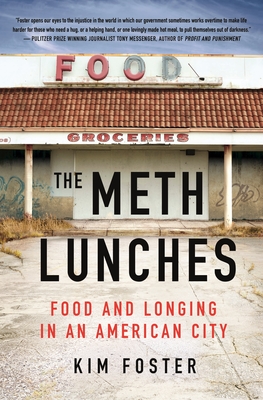
The Meth Lunches, by Kim Foster****

Kim Foster and her husband, David, create a food pantry in front of their house—and later, inside it—during the pandemic. It begins with the employment of one hungry handyman who’s also an addict, and from there, it mushrooms. This is her memoir of that time, and also a philosophical treatise on poverty and hunger in the United States.

My thanks go to Net Galley, RB Media, and St. Martin’s Press for the review copies. This book is for sale now.

When Foster’s family moves from New York to Las Vegas, one of the first thing she notices is the meth. It’s everywhere. Perhaps it is the milder weather; addicts in New York have to find a spot out of the weather during much of the year, but Vegas is in the desert, mild enough for the unhoused to sleep just about anywhere, warm enough that addicts don’t have to hide themselves away to get high.

The pandemic hits Vegas hard. So many people make their living from some aspect of the entertainment business, and for a while, it is a dead industry. And so, after hiring a man with an obvious dependency to do work on their property—work that he never completes—and hearing his story, the Fosters decide to convert the little free library in front of their home to a little free pantry. And from there, it mushrooms.

The pantry begins small, but Foster is a chef, and she can’t stand the notion of just putting out pre-packaged crap when she can cook food with fresh ingredients that will make others feel better. And as the book takes off, I momentarily regret taking this galley, because I generally hate stories that drop recipes into the middle of the plot. If I want cooking information, I’d rather go to a cookbook, or to a recipe website. And it was right there in the title, after all: The Meth Lunches. It’s pretty obvious from the get go that lunch is going to be juxtaposed with social issues.

But as the story continues, I don’t hate it after all. For one thing, this whole book is nonfiction. There’s no plot that is sidelined by a recipe. The whole point is that that Foster considers food, and the act of feeding others, to be a sort of therapy. She makes the point well.

Eventually, the scale of the operation becomes mind boggling. Multiple freezers to hold meat; trucks that deliver food. The pantry begins as an out-of-pocket gift from the Fosters to the down and out of Las Vegas, occasionally supplemented via Venmo from friends, when they are able to help. Inevitably, the pantry finds its way into the local media, and networks form with other food banks and nonprofits.

In between all of this, Foster develops relationships with some of the people that come by. She and her husband are foster parents—ironic, given their name, right? And we hear not only about what the children they house and love have experienced, but also about the children’s biological families. Because although it’s officially discouraged, Kim strongly feels that the children heal best if their biological parents are in their lives in whatever limited way is possible. So before we know it, she is deeply involved with some horribly dysfunctional adults as well. And it is the stories she tells about interacting with them and the children, two of whom she and David eventually adopt, that make this story so riveting.

At the outset, she intends for the pantry to be a resource for local families that have homes and kitchens, but whose finances have taken a huge hit due to the pandemic. The very poor already have resources, she reasons. But of course, the homeless find her, and she doesn’t turn them away.

And here is the rub, the only aspect of this book that I dislike. She tells us that one unhoused person in four is mentally ill, and she believes that this official figure is low, at least in Las Vegas. And then she talks about those with addiction issues.

But what she never gets around to discussing at all—unless she does it so briefly that I miss it—is the unhoused people that are not chemically dependent on anything, whose mental health is stable, but who don’t have a permanent residence because they straight-up ran out of money. To hear her tell it, you’d think they don’t exist, and you know that’s not so. So many American families live from paycheck to paycheck, even when the economy is said to be booming. And I feel that she has left these people without faces or voices. And that, in turn, perpetuates a stereotype, the one that suggests that everyone that is homeless is there because they’re either crazy or junkies or both. I use the offensive terms intentionally, because that’s how the stereotype works. 

And the stereotype in turn begets a lie, the insinuation that nobody has to be unhoused. Don’t use drugs. Get mental health care. Get over yourself. And whereas I can see that Foster doesn’t intend to promote such thinking, and in fact takes a hard line over poverty existing at all in such a wealthy nation, when she doesn’t give space to the many, many individuals and families that are out there because the wage earner was laid off, or because they were just squeaking by but then the rent increased, it does distort her overall picture. I don’t come away from this book thinking that most of the homeless are not using meth or any other dangerous, life-altering street drugs, even though it’s true.

Nevertheless, this is a poignant, stirring tale that won’t be told by anyone else, because it can’t be, and bearing in mind the caveats above, I recommend it to you, both as audio and print.

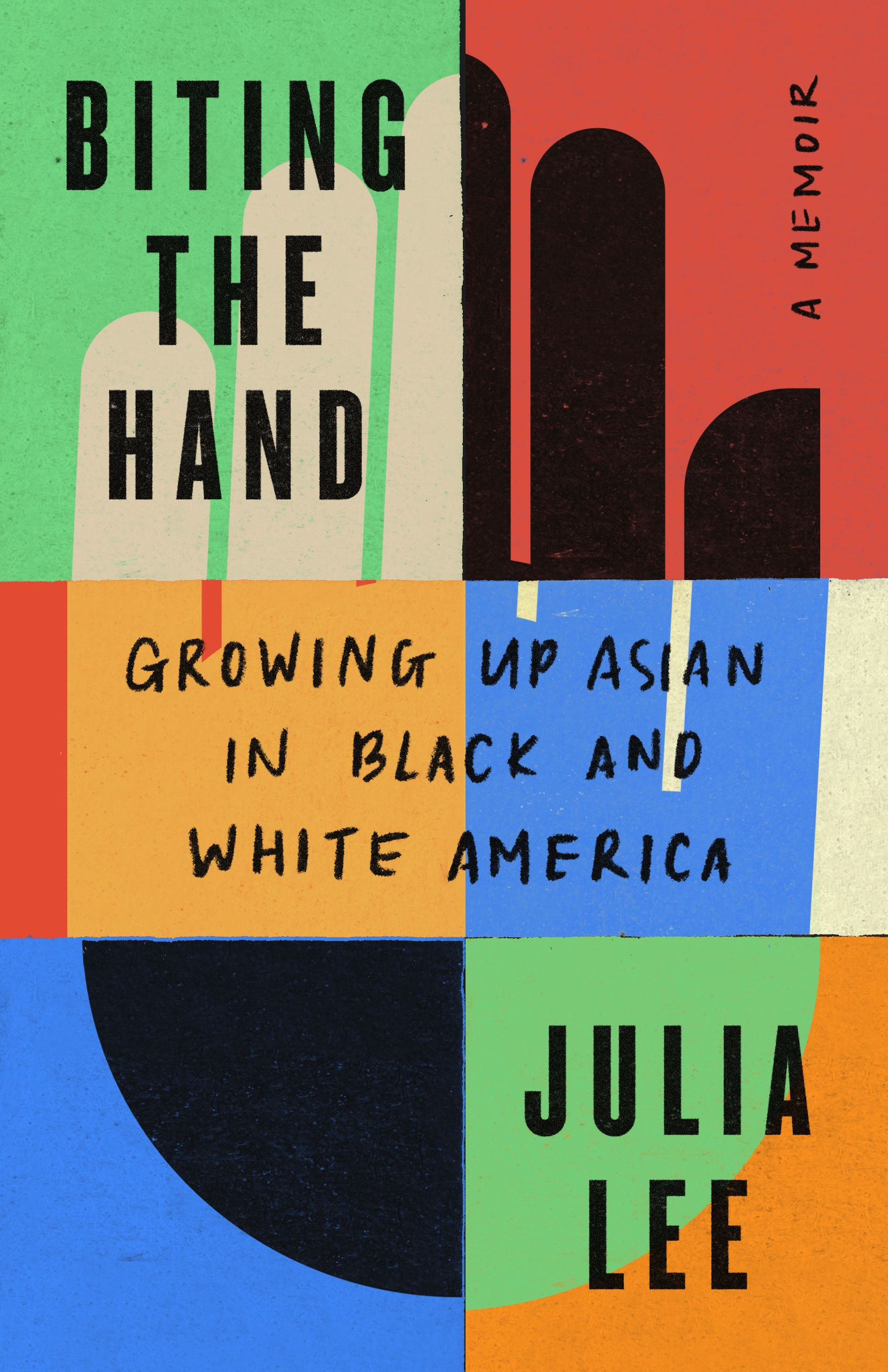
Biting the Hand, by Julia Lee****

Julia Lee is not amused, and she’s decided to say the things nobody else is saying. In this deeply analytical, provocative memoir, she tells us about her own experiences growing up, and the issues faced by Asian immigrants and Asian Americans in the United States, where “we are critical to the pyramid scheme of the American Dream.”

My thanks go to Net Galley, Henry Holt Publishers, and Macmillan Audio for the review copies. This book is for sale now.

In some ways, I feel as though I am reading someone else’s mail as I read this, because it is clearly intended for an audience of people of color. However, I did read it, and I’m going to review it.

When the discussion of race in the U.S. comes about, it is, as Lee states, almost always a conversation about Black people and Caucasians. Those that don’t fit into either group are sidelined. Perhaps more harmful is the way that people of Asian descent are presumed to be sympathetic to the status quo. Ever since a major news periodical dubbed Asians as “the model minority” back in the early 1960s, expectations and assumptions have leaned in that direction. And the roots of this division—Black versus Asian—make this a particularly thorny assumption to untangle. After all, a large percentage of African-Americans can trace their lineage to slavery; their ancestors weren’t born in the States, nor did they choose to come here, but were kidnapped and brought by force. Angry? You bet! But Asian immigrants came of their own accord, oftentimes fleeing untenable circumstances in their countries of origin. And so, their children, and those that have come after, have largely been indoctrinated to be appreciative. If things don’t go well, they tell them, then we must work harder!

This Caucasian reviewer comes to you without the Asian background, appearance, or experience that Lee speaks of; yet I live in a city that has one of the largest Asian populations in the U.S., and am married to an Asian immigrant, and parent to a child that is half-Japanese. So many of the stories—strangers that ask where you’re from, and won’t accept the truth of “California,” where Lee was born, or “Seattle,” my daughter’s hometown, are familiar ones.

Lee is fed up with the mainstream news stories that endeavor to pit Asian and Black people against each other. Her parents were small business owners in a mostly Black part of Los Angeles during the riots of 1992, and her experiences inform her conclusion, that there must be solidarity between all people of color in order to successfully fight for significant change.

The one bone I have to pick is the casual manner in which she dismisses the question of social class as a key factor. Her very brief note about this is that it’s a tomato and to-mah-to issue, not worth much discussion, because most people of color are working class. This is simply untrue, and it enforces a stereotype of Black people as being mostly poor and dispossessed, when in actuality, eighty percent of Black people in the US live above the poverty line. There are African-Americans that have far more money than I will ever see; some of the many Asian groups have a higher median income than Caucasians. So yes, social class is a huge factor here, one that Lee should examine more critically. There are working class Whites that can be allies; there are wealthy families of color that would shut down the struggle, given half a chance. The missing star in my rating reflects her failure to recognize this, and to offer concrete solutions to this problem.

The book’s title comes from Lee’s mentor at the otherwise very white-supremacist dominated Harvard—Jamaica Kinkaid. I actually gasped when I saw this. What a luminary she found to guide her!

Both the audio and print version of this book are equally readable, so go with whatever you usually prefer.

This is a fine resource for those seeking to examine Asian and Asian-American racial dynamics. Read it critically, but do read it. There’s a lot here that has needed to be said for a long, long time.

Liberating Lomie, by Saloma Miller Furlong*****

Saloma Miller Furlong is the author of two memoirs that focus on her decision to leave the Amish faith and community; this is her third. I received a copy for review purposes from the author; this book is for sale now.

Furlong hasn’t had the typical Amish childhood. In her earlier works, she explains that her father was unable to function normally; given to sudden, inexplicable rages, he was a frightening man when he was angry, and he was angry often. Sometimes his rages occurred at predictable times; other times, they came from nowhere. He was unable to do the necessary work to support the family, as is usual in Amish households, and Saloma’s mother, siblings, and Saloma herself had to scramble to pick up the slack. These things are described in Why I Left the Amish and Bonnet Strings. Her experience is also featured in two PBS Experience films, “The Amish,” and “The Amish Shunned.” These documentaries are available free of cost online.

None of Saloma’s books provides light reading; her experience is a brutal one, her childhood traumatic. She is assaulted numerous times, and some of these involve sexual assaults. She tells her mother, who does nothing to protect her. And so, if you are looking for a book that details the typical Amish life, its cultural and religious practices, what technology is acceptable and what is forbidden, and so forth, this is probably not the book you’re looking for, although the two documentaries mentioned above will provide a good overview. Instead, her books demonstrate what happens when an Amish household or some of its members are in crisis.

The extremity of her trauma is glaringly obvious by the fact that her first two memoirs completely overlook her mother’s own brutality towards Saloma, as well as her complicity in assaults by Saloma’s father and older brother. For more than fifty years, this author buried this part of her own trauma, the betrayal she experienced by the person most responsible for her protection as a child. Only recently has she permitted herself to acknowledge it within her own mind, let alone write about it. In the email she sent me requesting that I read and review this new memoir, she told me that she wishes there were a way to recall every single copy of that first memoir, because it omits so much. But I believe one can also read it, and for that matter, all three of these books, with the understanding that we learn as much by what is not said, as by what is.

Saloma’s decision to leave home, to abandon the culture that is all she’s ever known, is driven by two factors. The first and greatest, of course, is self-preservation, the need to find physical safety. But another strong motivator is intellectual inquiry. Amish girls do not attend school after grade 8. This isn’t a general rule; it’s an absolute one. In rare cases an exception may be made for a young man, if his course of study will ultimately benefit the community, but at the end of eighth grade, girls are done. Informal study and reading are also nearly impossible. Amish homes contain the Bible and essential Amish teachings; novels, art books, even resource materials have no place there. An Amish family member that is curled up with a book or newspaper is a slacker at best, using time that could instead be used to benefit the family. At worst, it is a sign of moral corruption, reading worldly content that is not necessary and may even be regarded as evil. No, Saloma couldn’t get away with such things; she once purchased a magazine subscription of the tamest variety, and that was allowed, though it was seen as strange.

Sometimes we know a book is good because of the thinking it inspires after we finish the final page. So it is for me here. I find myself wondering why there aren’t more Amish youngsters that are unable to turn away from the written word. Surely there are other bright, intellectually curious boys and girls that chafe at being forcibly wrenched from their education? Initially I assumed, as many non-Amish do, that most Amish youth might slip through the open door represented by Rumspringa, hit the road, and never look back, but I learned that this isn’t true. The overwhelming majority of Amish teens remain Amish all of their lives, and the majority that do leave, return home later and stay put. And so I wonder; have they simply bred for passivity? It’s a conundrum.

I am initially surprised by Furlong’s decision to use the same book cover here that she used on her first, but I believe it may have been done with an eye toward replacing the old memoir with this new one.

As for the writing quality here, I like the quality of her analysis, and so for those that enjoy a memoir with depth, I recommend this book to you.

Dirtbag, Massachusetts: A Confessional, by Isaac Fitzgerald***-****

I enjoy a good memoir, and so I was all in when I saw this singular work; my thanks go to Bloomsbury and Net Galley for the review copy. It’s by “the beloved founding editor of Buzzfeed Books,” but somehow, I either missed that part or forgot about it, so I read it and assessed it as if he were just some random guy, and ultimately, that’s probably the fairest way to do so anyway. This book is for sale now.

Fitzgerald has seen and done just about everything. His family life growing up is dreadful, and he is delighted to bail out of the screaming, wretched mess called home in order to attend boarding school. He is the scholarship kid, but he benefits plenty from the largesse of his classmates. Post education, he takes himself to San Francisco, with an entire continent stretching between himself and his family. Upon arrival, he continues his favorite pastime, drinking, which he began doing with his older brother when he was just twelve. His parents didn’t do it, so he figured it might be a good choice.

The promotional blurb says that this is the story of the author’s “search for a more expansive vision of masculinity.” Perhaps this is why I find it so hard to relate to. There are moments, though. A huge chunk of the first half in particular describes his affinity for bars, which he identifies as his safe spaces. My notes from the start of this segment say “Oh boy, I always wanted to read yet another alcoholic memoir.” Soon afterward, though, he says, as if reading my mind, that if we expect him to discuss the way he quit drinking, we’ll be in for a long wait, because he still drinks, though not nearly as much. That much was good for a chuckle. Then there’s another segment about his period with the porn industry. I confess I straight-up skimmed some of that, although again, there’s a moment, when he talks about the importance of consent, and how the porn industry, in his experience, is more careful and respectful of this boundary than anyone else he’s encountered.

The book is billed as being humorous, but this is a massive overstatement. Most of the content is dead serious. But then again—yes, you guessed it. There are moments.

What takes me by surprise, and happily so, is the message that he’s spent the whole book building toward, and I never see it coming until we’re there. I highlighted it in case I wanted to use it as a quote here, but that would be an epic spoiler. You didn’t know that memoirs can have spoilers? Oh yes. They can. And when I see this one, my disgruntlement fades and I am once again a perfectly gruntled reader and reviewer.

One aspect that I appreciate, and particularly appreciated during the rougher patches, is that the brief essays that, strung together, make up the memoir, make very short chapters, and they’re clearly marked. This is a terrific bedtime book, because I am able to find a reasonable stopping place when I need to turn out the light (or, as it happens, turn off my Kindle.)

If you’ve read this review and are interested, then I recommend it to you. I anticipate that men will enjoy it more than women.

Happy Release Day!

I reviewed this outstanding collection earlier, but today it is available to the public. Hill won awards for the first collection, and this is, if anything, even better.

https://wordpress.com/view/seattlebookmamablog.org

Hell of a Book, by Jason Mott*****

It really is.

This book is a standout in more ways than one. First the obvious: look at that cover! Then again, how many novels have a nameless protagonist all the way through the book? Get into it deeper, and the distinctions become more complex. The buzz around it is wholly justified. My thanks go to Net Galley and Random House for the review copy. This book is for sale now.

Our author is on an odyssey that takes the form of a book tour, and it lands him, in the end, back where he grew up. He doesn’t tour alone; apart from the various organizers he meets in various locations, he is accompanied by a small Black child he refers to as “The Kid.” Alternately, we also see the story of a young Black boy, a very Black boy, nicknamed “Soot,” who grows up in the American South.

As I read, I am always on the back foot, understanding most of what it being said, yet developing questions as I go. Our author says (often) that he has a condition, and that this is probably why he can see The Kid when others cannot. My notes ask whether his condition is dissociative, and is The Kid just part of himself? Or is The Kid Soot? Are Soot and The Kid both part of the author? Every time I come up with a plausible theory, something else happens to undercut it. Yet one other thing becomes clearer all the way through: to be born an African-American boy in the United States is to be perpetually on the back foot; perpetually having to guess how best to proceed; to perpetually guess at one’s welcome or lack of same, at the quality of one’s relationships with Caucasians, to perpetually guard one’s own safety. And to be very Black—“Nigga, I bet when you get out of the car your daddy’s oil light come on”—is to invite not only the suspicion and hostility of Caucasians, but to draw the enmity of lighter Black people, too.

The synopsis of this story that initially drew me billed it as humor, and in places, it is not only funny, but laugh-out-loud funny. But the further we get in, the darker it becomes.

There are a number of sardonic references to the publishing world; editors, agents, and other promoters have told the author that while it’s fine to write about Black characters, He must not write about being Black:

“The last thing people really want to hear about is being Black. Being Black’s a curse—no offense—and nobody wants to feel cursed when they read something they just finished paying $24.95 for…The future of this country is all about patriotic, unity-inducing language. Post-Racial. Trans-Jim Crow. Epi-Traumatic. Alt-Reparational. Omni-Restitutional. Jingoistic Body-Positive. Sociocultural-Transcendental. Indigenous-Ripostic. Treat of Fort Laramie-Perpendicular. Meta-Exculpatory. Pan-Political. Uber-Intermutual. MOK-Adjacent. Demi-Arcadian Bucolic. Write about love. Love and Disney endings…”

Later, an interviewer asks if the past doesn’t still matter, and the author says, “It does. Not just three-fifths of it, but all of it.”

So, my friend, you can see why this book should be called a love story. Race? Oh, no no no. Fear? Injustice? Police brutality? Of course not. After all, this is a hell of a book!

Highly recommended; one of the year’s finest.

The Soul of a Woman, by Isabel Allende*****

Isabel Allende has long been a guiding light for women, immigrants, and social justice activists. She is an old woman now, and her wisdom and word smithery have only grown deeper and wider. Thanks go to Net Galley and Random House Ballantine for the review copy. This book is for sale now.

There are four sections to this compact memoir, and overall, it is a memoir of Allende’s feminist philosophy and experiences. She also describes the trajectory of the feminist movement and the gains that have been made.  One of Allende’s most agreeable attributes is her candor, and she discusses her relationships with the men she has married with disarming frankness and humor. Her voice is like nobody else’s.

Generally speaking, I find it annoying when an author uses space in the book they’ve sold us to advertise a product or beg for funds, nonprofit or not; however, this time I wanted to stand up and cheer! Allende’s foundation exists to support women’s reproductive choices, and that includes abortion. Out of all the years I’ve blogged, over one thousand reviews I’ve scribed, and I have never seen abortion rights advocated so forcefully. I bow in admiration.

If I could have something more from this iconic writer, it would be an overall autobiography. She has written numerous memoirs, but all of them focus fairly narrowly on one particular aspect or time period. I would love to have her whole story in her own words.

Highly recommended.

Bright Precious Thing, by Gail Caldwell*****

My thanks go to Net Galley and Random House for the invitation to read and review. This book is for sale now.

Gail Caldwell was the chief book reviewer for The Boston Globe, and she won the Pulitzer for Criticism. Once I began reading this luminous memoir, I could see that level of quality in her prose. She writes about her childhood in Texas, and about her travels and experiences growing up in the mid-twentieth century. More than anything, this is a feminist memoir, a chance to see how far we have come through a personal lens.

I missed the publication day here, and so I hunted down the audio version to supplement my reading. The author narrates her own work, and so it conveys the feeling that I am sitting by the fire with a dear friend, hearing about the challenges she’s faced as a single woman. Female readers will recognize the sensation: you start talking with a woman that you don’t really know, and before you know it you are talking and listening as if you’ve known one another for ages. That’s the essence of this book. In fact, I listened to it in the evening while preparing dinner, because I knew I’d be left alone during that time, and frankly, I didn’t want anybody to come barreling into the middle of my time with Gail. There’s a sense of intimacy that makes me feel a bit protective when I listen to it. Later, I go over what I’ve read and nod. Yes. Oh, yes, I remember that.

The title works in a number of ways. The darling little neighbor girl that becomes part of the family Gail chooses, bookends the memoir, coming in at the start as a very young person and ending it as an adolescent. But there’s more to it than that; life is a bright precious thing, and though she never says it overtly, I recognize that each woman is a bright precious thing as well.

I am a grandmother myself, but Gail is about the age to be my older sister. Women like Gail gave women like me a guiding light during our coming-of-age years. Our mothers were often resigned to their status as second class citizens, and ready to accept that there were things that women should probably not even try to do, and they couldn’t help transmitting their fears and reticence to us. It is women like Marge Piercy, Gloria Steinem, Wilma Mankiller, and yes, Gail Caldwell that provided us with a beacon, a way forward through the ocean of “no” to the bright shores of “yes,” that gave us courage to be insistent, even when we knew some would label us pushy broads, or worse. We needed role models badly, and they stepped up. They’re still doing it.

The calm, warm tone that came through this audio book, right during the turbulent period after the November election, was an absolute balm.   Sometimes I would be shaken by the things I saw in the national news, and then I would head for my kitchen (perhaps an ironic place to receive a feminist memoir, but it worked for me,) and once I had had my time with Gail, I knew I’d be all right.

Highly recommended to women, and to those that love us.