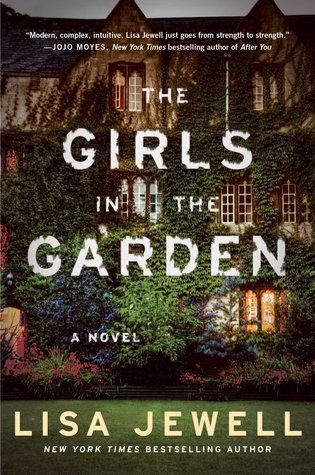
 Lisa Jewell is an experienced author, but she is new to me. The Girls in the Garden, published in the UK last summer and soon to be in bookstores in the USA, is good strong fiction, and you should read it. I was fortunate and obtained an advance copy thanks to Net Galley and Atria Books for the purpose of a review. One night I stayed up late, unable to put it down until it was done.
Clare and Adele both have daughters, and both live in mixed-use residences that enclose a very large private garden. It’s been a great place to raise children for generations; in fact, some of the adults raising families here were also here as children. And there are so many children, introduced so quickly! I can usually juggle a hefty cast of characters just fine while also reading other books on the side, but in this case, the combination of all these characters and a surprising amount of culture shock—I am not as well informed with regard to British culture as I thought I was—left me staggering during the first ten percent of the book. My e-reader has notes that say, “Wait! Who?” and “Whose kid is this now?” and twice, “The fuck??” “What is a onesie, other than baby clothing?” Context wasn’t helping, so I did a web crawl. Okay, now I know. And isn’t tea usually mid-afternoon, with cookies or cake, and isn’t high tea formal and later? Do they have tea instead of lunch, instead of dinner, or are there four meals here?
And when I ran across spaghetti and peas for tea at 5 PM, again I wrote, “THE FUCK?” Who eats peas in their spaghetti?
If a reader has to be confused, it’s better to have it be at the beginning and then catch up, than at the end, where one may walk away feeling stung and bewildered. Although I never did fully feel I had placed all of the characters, by the twenty percent mark I had a good feel for the primary ones and most of the others, and that was enough to make this an enjoyable read once I was oriented.
The story builds up to, and then centers around a party at the end of which adolescent Grace is found bloody and half-dressed, lying in the bushes. What has been done to her, and who has done it?
Ordinarily I would consider this a spoiler, but it’s provided on the book’s blurb and jacket, so readers are told right away this is our central problem. But there are layers that delve deeper, and these are what make this such an interesting read.
When is a parent over-protective, and when are they not careful enough? What makes someone a good parent? How much do we hold tight to keep our children safe, and when is it right to let things go; not only to trust our kids, but also to trust the world with our children?
There are no easy answers, but I found myself making small clucking noises when one parent or another makes what appears to me to be an error in judgment. Likely you’ll do the same, though perhaps not in the same places. The ambiguity makes it delicious.
The narrative point of view shifts from that of Pip, who is twelve, to that of Adele, one of the mothers. This is effective. Pip writes letters to her father, and they assume a portion of her narrative, adding a first person perspective, and at first I thought this device was too cutesy, but I changed my mind by the halfway point. It adds something that would be hard to inject as effectively any other way.
As to what has happened to Grace, there are so many possible villains, so many motivations and opportunities, but when the solution is finally reached, I feel as though the author has played us fairly. Sometimes a mystery writer will reach clear into left field for a solution. Perhaps they may discover a secret twin during the last ten percent of the story, or perhaps the villain is someone everyone had believed long dead. And that doesn’t happen here.
Ultimately I don’t think the story is really about Grace. The story is about trust within adult relationships. Misplaced trust can be dangerous; too much suspicion is toxic. And so the dance women do—and perhaps everyone does—is in trying to find the balance. It isn’t easy, especially when we are young parents, still learning the ropes ourselves.
Despite the tumble of characters at the beginning that I suspect will challenge many readers as it did me, I recommend that you read this book. It offers us something I haven’t seen anywhere lately.
The Girls in the Garden becomes available to readers in the USA Tuesday June 7, 2016.

 Shelley Costa is a writer to remember. Her dazzlingly dark humor and her ability to spin a tight original story that builds irresistibly caught my eye with her first Val Cameron mystery, Practical Sins for Cold Climates. I began checking in with Henery Press regularly when I logged onto Net Galley, and my stalking paid off big time. Thanks go to Henery and also to Net Galley, from whom I received a DRC in exchange for an honest review.
 I had never read anything by John Connolly before, but this eerie thriller has made a forever-fan of me. Thanks go to Net Galley and Atria books for the invitation to read and review. Connolly cooks together a hair-raising thriller with a handful of horror, a smidge of fantasy and a dash of magical realism; the resulting brew is one that nobody else could possibly cook up. For those that write, reading this dark redemption tale is likely to produce both admiration and despair, because this novel is born of a talent that no creative writing workshop will ever be able to produce. You may write, and I may write, but nobody else will ever, ever be able to write like Connolly.
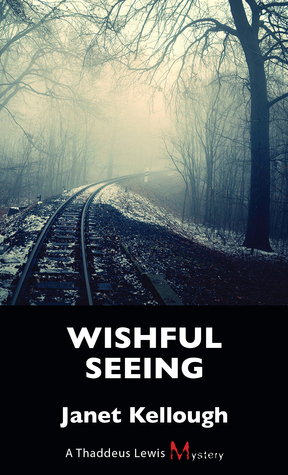 Thaddeus Lewis, the traveling preacher sleuth, is back on the road again. He’s headed to speak at a gathering of Methodist Episcopalians when he finds himself involved, once more, in a murder case. This cozy mystery is my second in an endearing series by Janet Kellough. I snapped up the DRC when I saw that Dundurn had made it available on Net Galley, so I read it free in exchange for an honest review. This title will be available to the public this Saturday, July 30.
 Ford is the rightful heir to the late great Donald Westlake, a writer of monstrously amusing mysteries full of quirky sidekicks and kick-ass, zesty dialogue. There’s nobody like him in Seattle or anywhere else. I gobbled up the DRC when it became available via Net Galley and publishers Thomas and Mercer, so I read this free in exchange for an honest review. But I’ll tell you a secret: if I’d had to, I’d have paid for this one had it been necessary. And so should you. It’s for sale today, and you can get it digitally at a bargain rate.
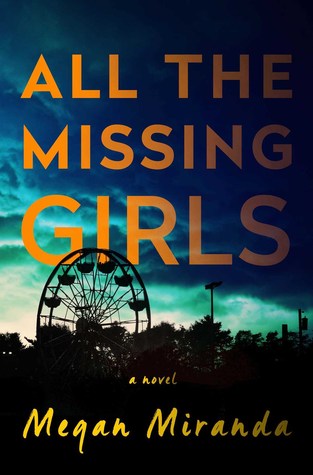 I was invited to read by Net Galley and Simon and Schuster in exchange for an honest review, and I am so glad I did. It’s a juicy read that kept me transfixed through most of my Memorial Day weekend. You can order your copy now and have it when it comes out June 28.
 This title appeared to be a sure fire winner, a thriller that would also spotlight domestic violence and even more so, campus rape. I was pleased when Net Galley and Touchstone Publishers green-lighted my request for a DRC, which I received free of charge in exchange for this review. And without the social issues, which are a mixed bag but still partially useful, this would be a 1.5 star review, because as a mystery, as a thriller, as any kind of fiction, it doesn’t stand up.
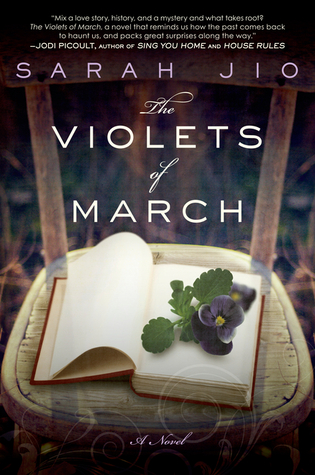 The Violets of March is a crossover title, part cozy mystery, and partly—maybe mostly—romance. I purchased it for myself years ago, back when I was teaching, not advance-reading, and buying all my own reading material. It’s not a bad book, but given that I had paid full jacket price for the trade paperback version after reading some rave reviews, I felt let down. It’s a pleasant read, but it didn’t live up to its hype.
 The place is Hollywood, California; the time is 1980. Terry Traven is a private detective specializing in finding the runaway children of the wealthy. He is offered a job that appears to be more of the same; a local mogul’s son has disappeared, and Dad wants him found. But then the disappearance turns out to be a kidnapping, and the kidnapping turns out to be a murder, at which point all hell breaks loose. This story is fast-paced and though it’s set a generation or two ago, the issues with police brutality—otherwise known as “the black glove”—make it more socially relevant than your average piece of crime fiction. There are other components that will sit well with those with an eye for social justice, too. Thank you Brash Books Priority Reviewer’s Circle for the DRC, which I received in exchange for a fair and honest review. This book is available for sale right now.
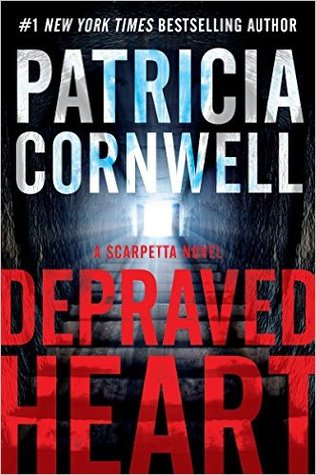 I’ve been reading Cornwell for over a decade. Her Scarpetta series is curiously addictive, a bit like curling up in my favorite chair with a furtive pint of gelato and maybe a ridiculous TV show or YouTube clip. But in thinking that way, I sell Cornwell short. She started out strong; floundered just for a short time; and now she is better than ever. And perhaps you are waiting for a disclaimer saying that I read it free, but in fact I did not. I’ve yet to see Cornwell’s work on Net Galley. The kindle version popped up as the deal-of-the-day for four bucks, and I grabbed it while I could.
 Seattle Book Mama