
 I rate this novel 2.5 stars and round it upward. Thank you to Kensington Books and Net Galley for allowing me to read this book free and in advance in exchange for an honest review. Here it is.
Howells is a word smith, and I suspect that if she had adopted a simpler format, she might have had a more appealing result. In places her settings are resonant and well turned. It’s character development and a badly disjointed plot that burden this story and prevent it from taking off.
This story is full of dead babies, but neither the horror nor the pathos ordinarily associated with such a thing can save it. It merely makes the misery worse.
Here are the broad contours. Noah Calaway is a former attorney living in the English countryside. His inheritance has provided him enough to get by on and he spends his time writing, or more often, not writing. His secret sorrow is the one that got away. When he learns that April, the woman he loved and that left him just before their wedding is lying in a coma and suspected of committing a terrible murder, he signs on to defend her and clear her name.
Most of the narrative is Noah’s, but from time to time another narrative, one distinguished by being written in italics, interrupts the flow, and we have no idea what the young woman speaking there has to do with any of Noah’s story. Ella is troubled and is seeing a psychologist, but the author goes to such pains to keep her link to Noah’s story a mystery that we might as well be reading two separate stories for most of the book. Instead of wanting to know what the connection was, I found myself annoyed whenever Ella popped in to prevent me from getting to the end of Noah’s story.
Howells takes such pains to keep us in the dark that she doesn’t develop her characters. We see a few shattered glimpses of what may have motivated April, who has no role to play in the present, but both Noah and Ella remain two dimensional, their personalities left static by withholding too much information. The result is that after some earnest effort to engage with the text, since that’s what I do, I eventually found I didn’t care what the connection between them was. I guessed it eventually, but there was none of the joy of discovery that usually accompanies that sort of revelation.
Staggered narratives are very trendy, and in the right hands they still can be magical. But here, it just doesn’t take. I was frustrated and wanted to abandon the novel, which seemed as if it might never end, but I forced myself to finish reading it because I had an obligation to the publisher.
That doesn’t have to happen to you.
 I had never read anything by John Connolly before, but this eerie thriller has made a forever-fan of me. Thanks go to Net Galley and Atria books for the invitation to read and review. Connolly cooks together a hair-raising thriller with a handful of horror, a smidge of fantasy and a dash of magical realism; the resulting brew is one that nobody else could possibly cook up. For those that write, reading this dark redemption tale is likely to produce both admiration and despair, because this novel is born of a talent that no creative writing workshop will ever be able to produce. You may write, and I may write, but nobody else will ever, ever be able to write like Connolly.
 Thaddeus Lewis, the traveling preacher sleuth, is back on the road again. He’s headed to speak at a gathering of Methodist Episcopalians when he finds himself involved, once more, in a murder case. This cozy mystery is my second in an endearing series by Janet Kellough. I snapped up the DRC when I saw that Dundurn had made it available on Net Galley, so I read it free in exchange for an honest review. This title will be available to the public this Saturday, July 30.
 It’s seldom that I find myself so ambivalent about a galley; I read this free thanks to Net Galley and Endeavor Press in exchange for an honest review. The writing skill is probably closer to a five; the respect level for women, people of color, and anyone that isn’t oriented straight as a bullet’s path is closer to a one. So those that are constantly inveighing about how tired they are of trying to be PC, here. This is for you. For those of us that have moved along, I am not so sure. This book was released digitally in January, 2016 and is now for sale.
 Ford is the rightful heir to the late great Donald Westlake, a writer of monstrously amusing mysteries full of quirky sidekicks and kick-ass, zesty dialogue. There’s nobody like him in Seattle or anywhere else. I gobbled up the DRC when it became available via Net Galley and publishers Thomas and Mercer, so I read this free in exchange for an honest review. But I’ll tell you a secret: if I’d had to, I’d have paid for this one had it been necessary. And so should you. It’s for sale today, and you can get it digitally at a bargain rate.
 I was invited to read by Net Galley and Simon and Schuster in exchange for an honest review, and I am so glad I did. It’s a juicy read that kept me transfixed through most of my Memorial Day weekend. You can order your copy now and have it when it comes out June 28.
 Lisa Jewell is an experienced author, but she is new to me. The Girls in the Garden, published in the UK last summer and soon to be in bookstores in the USA, is good strong fiction, and you should read it. I was fortunate and obtained an advance copy thanks to Net Galley and Atria Books for the purpose of a review. One night I stayed up late, unable to put it down until it was done.
 The place is Hollywood, California; the time is 1980. Terry Traven is a private detective specializing in finding the runaway children of the wealthy. He is offered a job that appears to be more of the same; a local mogul’s son has disappeared, and Dad wants him found. But then the disappearance turns out to be a kidnapping, and the kidnapping turns out to be a murder, at which point all hell breaks loose. This story is fast-paced and though it’s set a generation or two ago, the issues with police brutality—otherwise known as “the black glove”—make it more socially relevant than your average piece of crime fiction. There are other components that will sit well with those with an eye for social justice, too. Thank you Brash Books Priority Reviewer’s Circle for the DRC, which I received in exchange for a fair and honest review. This book is available for sale right now.
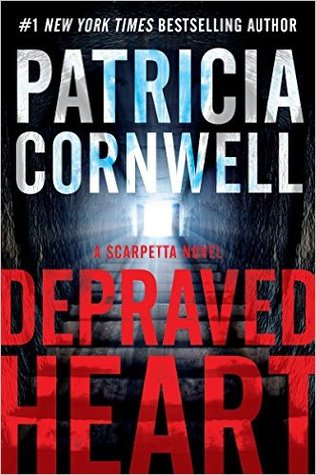 I’ve been reading Cornwell for over a decade. Her Scarpetta series is curiously addictive, a bit like curling up in my favorite chair with a furtive pint of gelato and maybe a ridiculous TV show or YouTube clip. But in thinking that way, I sell Cornwell short. She started out strong; floundered just for a short time; and now she is better than ever. And perhaps you are waiting for a disclaimer saying that I read it free, but in fact I did not. I’ve yet to see Cornwell’s work on Net Galley. The kindle version popped up as the deal-of-the-day for four bucks, and I grabbed it while I could.
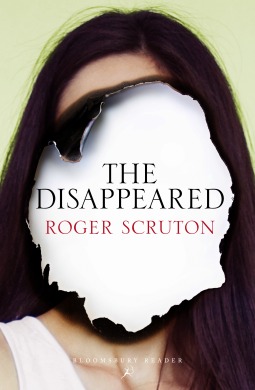 The Disappeared was published in UK, and is now available to readers in the USA. Scruton shines a spot light on victims of domestic violence, trafficking, and rape. It’s a timely issue, and no one can read his story and walk away unmoved. Thanks go to Bloomsbury Reader for inviting me to read and review the DRC free in exchange for an honest review. This book is available to the public tomorrow, February 26.
