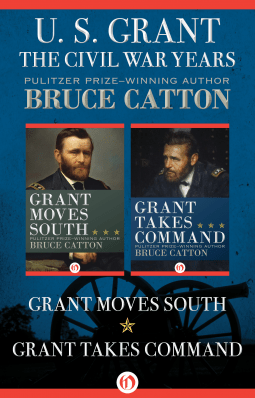
 I was fortunate to receive a DRC of this two volume biography of America’s greatest general, US Grant. Thanks go to Open Road Media and Net Galley for providing it in exchange for this honest review. This is the sixth Grant biography I’ve read, and aside possibly from Grant’s own memoirs, which are valuable in a different way than this set, I have to say this is hands-down the best I have seen. Catton won the Pulitzer for one of his civil war trilogies, and this outstanding biography is in the same league. Those with a serious interest in the American Civil War or military history in general should get it. It’s available for purchase now.
When I had read a couple of US Grant biographies, I told myself that enough was enough, and that I should push away from this one subject in favor of others. I am glad I ignored my own advice, because I have come away from this prodigious, in-depth study with a deeper understanding than anything else has provided. It’s over 1100 pages long, and over 800 pages once one discounts the end notes and index, but it is as great a pleasure to read at the end as at the start, if not more so.
Is this a good choice for someone new to the American Civil War? Generally speaking (if you’ll pardon the pun) I’d say no, but for someone otherwise well versed in military history or with a tremendous interest level, time, and stamina, it could be. Because Catton is known as an expert in this field, I especially enjoy not having to review his citations. I know his sources will be strong, and one brief overview convinces me this is true.
The first volume starts with his less than glorious entry into the war. As many know, he had been a member of the regular US army during the conflict with Mexico, and had fallen apart and had to go home. Now he is back, but only after a string or two has been pulled by a family friend, and even then, his task is a daunting one. Volunteer soldiers don’t take orders or submit to discipline as a West Point soldiers do, and when he arrives, it seems the lunatics are running the asylum. One of the things that I am impressed with anew every time I read about Grant is his unerring judgment, the social radar that is an indisputable part of his talent. By knowing where to go easy on his men and how to bring them into conformity where it’s most important, he creates a solid force to move South with.
The battles of Belmont, Fort Henry, Fort Donelson, and the tragic but technically successful battle of Shiloh open up the Mississippi River for the Union and divide the South. Catton uses a number of anecdotes that are new to me, and his congenial tone, occasionally caustic wit, and spot-on analysis leave me both energized and contented at the same time.
The second volume, however, is where I learn the most. Until I read this biography, I haven’t understood exactly how great a risk Lincoln takes when he orders that the US military forces should be given the ballot, an unprecedented move, as he himself runs once more for the highest office. His opponent, McClellan, is a former Union general that at the war’s outset, was at the top of the chain of command. He didn’t go home a happy man, and now he is running as a Copperhead, the moniker given those in the North that want to end the war and let the South leave the Union, slaves and all. And though I know it is often the case that soldiers and sailors choose to support their Commander in Chief at the ballot box, I haven’t fully recognized how badly this may go for Lincoln. Doesn’t every soldier want to go home? This is the Democratic ticket’s promise; end it now and send them home.
On top of all that, Lincoln and Grant, who think a lot alike, clamp their teeth together and endure the white knuckled ride that they know they’ll be facing when they decide against further prisoner exchanges with the South. There are two strong reasons for this decision: first, the South refuses to recognize Black men in uniform as soldiers, and won’t exchange them, assuming that all of them must be escaped slaves, including those with Northern accents. Grant declares that no prisoners will be swapped until the South is willing to parole every Northern soldier, and he means it.
In addition, both Lincoln and Grant realize that the South is running low on manpower. There are thousands of their soldiers sitting in military prisons; to trade them out and risk seeing them back in uniform is to turn a military contest into a war of annihilation. With prisoner exchanges, the war will last longer, and there will be more death. In a peculiar way, refusing to exchange prisoners is the more humane policy.
In an election year, this is a tough sell. There are families up North that have been notified that their son, brother, father, is a prisoner of the enemy, and word has by now been spread as to what kind of conditions those poor men face. How much harder is it to vote for Lincoln and the fight for the reunification of the republic when to do so is to prolong the time their loved one sits behind bars, slowly starving? Lincoln and Grant could temporarily resume prisoner exchanges until after the election, but they stand on principle, and it pays off.
Another thing that I don’t really grasp until I read the second volume is Grant’s relationship with the Army of the Potomac, a collection of men that to some extent have been poisoned with McClellanism. It’s a real tightrope walk, and he is deft in his dealing with it. I can’t tell you everything he does here; that’s the point of the book, after all. But I came away with a renewed respect for General Sheridan, and an interest in reading biographies of that general also.
How much of Sherman’s march through Georgia and then to the sea is Grant’s idea, and how much of it is Sherman’s? I come away understanding this better than before as well, although I have read both Grant’s and Sherman’s memoirs. Catton has a way of crystallizing events without oversimplifying them.
And I nod with solemn satisfaction at the cold fury Grant experiences when he learns of the assassination of President Lincoln and the attempts on the lives of others, including himself.
I still shiver with pleasure when I reread the denouement, in which Grant sends General Weitzel and his troops, some of whom are Black, into Richmond when the Confederate capitol falls. I want to cheer as the throngs form for the military review in Washington DC after the war has been won; all those thousands of soldiers, all those citizens and international visitors in the stands and on the sidewalks, singing “John Brown’s Body”. Think of it!
I promised myself to be brief, and I haven’t really done that, but this is the least I can bring myself to say about this excellent biography. If my review is too long to hold your attention, then this two book series—even while allowing for the fact that Catton is a far better writer than I—will also be more of a meal than you are prepared for.
But for those with a sufficiently great interest level and stamina, I cannot imagine a better memoir of Grant for you to buy and enjoy. Enthusiastically recommended!

 Hannibal was the first general to defeat the forces of Rome, and Hunt is the man qualified to tell us about it. I read my copy free and early thanks to Net Galley and Simon and Schuster. This book becomes available to the public July 11, 2017.
 “’All right. They’re on our left. They’re on our right. They’re in front of us, they’re behind us. They can’t get away this time’.”


 The American Civil War is part of the curriculum I used to teach, and in retirement I still enjoy reading about it. When I saw that Open Road Media had listed this title on Net Galley to be republished digitally this summer, I swooped in and grabbed a copy for myself. I was so eager to read it that I bumped it ahead of some other DRCs I already had, and I really wanted to like it. Unfortunately, this is a shallow effort and it shows. Don’t buy it for yourself, and for heaven’s sake don’t advise your students to read it.
 I want to give a shout-out to Open Road Media for the way they value the First Amendment. Every now and then I review something they’ve given me and rate it with one or two stars, and each time I wonder whether my outspoken criticism will get me knocked off their list of auto-approved readers. It’s never happened. It gives me a little extra joy, therefore, when I’m asked to read and review a book that is straight-up excellent, because everyone will know my five star rating is the real deal. Thanks, Open Road…and happy holidays to you, and to my faithful readers, too.
 In Mission: Jimmy Stewart and the Fight for Europe, Robert Matzen provides an engaging, compelling memoir that focuses primarily on Stewart’s time as an aviator during World War II. Thanks go to Net Galley and to Goodknight Books for the DRC, which I read free in exchange for this honest review.
 Nagy does a more than serviceable job in documenting Washington’s intelligence methods. Thank you for the DRC, which I received free in exchange for an honest review from Net Galley and St. Martin’s Press. This title is for sale today.
 Bryan was a journalist and author during the mid-twentieth century, and Friendly Fire, which originally began as a story for the New Yorker and grew into something more, tells the story of the Mullen family and their response to the death of Michael, a clean-cut young man that answered his draft notice, dutifully served and was killed by friendly fire not long after he was sent to Vietnam. Thanks goes to Open Road Integrated Media and to Net Galley for the invitation to read and review. This is right up my alley and I found it compelling. It was published digitally May 10, 2016 and is now available for purchase.
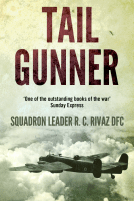 Tail Gunner is the memoir of a member of the Royal Air Force during World War II. I was fortunate to receive a copy free in advance from Net Galley and Endeavor Press in exchange for an honest review. It’s both compelling and informative.
 Seattle Book Mama