
Always, by Sarah Jio****

alwayssarahjioAlways, Sarah Jio’s much anticipated new release, takes on the homelessness epidemic using the powerful medium of fiction. I received my copy in advance in exchange for an honest review; thank you Net Galley and Random House Ballantine for the DRC. This title is available to the public today, and if you have enjoyed Jio’s other novels, I am confident you’ll like this one too.

Kailey Crane is a journalist living in Seattle during the 1990s, and she has the whole package: a great job, a wonderful city, and a wealthy, handsome fiancée. It’s the life other little girls dreamed of but didn’t get.  Then one night as she and Ryan are leaving a restaurant, she literally bumps into a long lost love. Cade McAllister is the man Kailey had been going to marry until he disappeared. He practically vaporized. Stunned and humiliated, she picked herself up and rebuilt her life, and now here he is, a half-crazed homeless man living downtown on the streets.

What the heck happened?

Kailey wants to marry Ryan, but she also wants to help Cade find housing, medical care, and food. Ryan makes it easier by agreeing that she should do the right thing. Quickly she learns that it isn’t as simple as it seems. There’s a whole safety net in place for people like Cade, except that it doesn’t work. In fact, without her own ready access to Ryan’s money, she can do virtually nothing for Cade. But it’s all right, because Ryan is on the side of the angels; he sees that this cause is a just one, and he’s a generous guy. He’s in love, and he’s feeling expansive.

The problems begin when Kailey starts missing key wedding events because she’s off helping Cade, or trying to. She becomes so involved with one thing and another that before she knows it, she’s over an hour late. There are out of town relatives that are present, but where’s the bride? And before we know it, she’s telling lies, and sometimes they don’t even seem necessary. I want to reach through the pages of the book, yank Kailey into the kitchen and talk to her.

What  are you doing, girl?

Fissures in her relationship with Ryan turn into fractures as he senses the level of her obsession, and he doesn’t see things as she does anymore. His material interest is involved, since a project his development corporation is about to undertake conflicts with an already established homeless shelter in Pioneer Square, a historic part of Seattle’s downtown. He questions why so many resources are required for the homeless; aren’t these mostly drug addicts and crazy people? There ought to be a simple way to dispatch the problem.

A strong story overall is somewhat tarnished by what feels like a glib ending. I recall a favorite episode of the Muppets when Miss Piggy is working a jigsaw puzzle, and she hates to be wrong, so she slams a piece into a hole where it doesn’t belong and howls, “I’ll make it fit!” The ending of this story brought the episode back to me, because Jio seems to be doing more or less the same thing.

Recommended to fans of this successful romance writer.
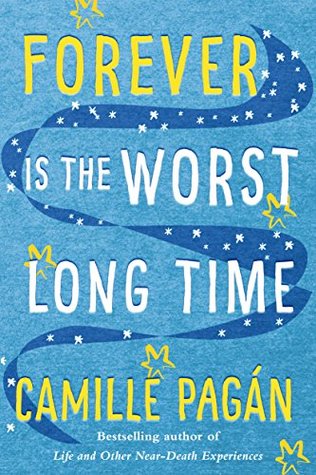
Forever is the Worst Long Time, by Camille Pagan****

 “Each story is different. Every story ends with loss.”

foreveristheworstCamille Pagan is the author Life and Other Near Death Experiences. Thank you Net Galley and Lake Union Publishing for the DRC, which I received in exchange for an honest review. This title is for sale February 7, 2017.

The story starts in the second person, with the narrator speaking to us intimately; he is James Hernandez, and soon we realize that he is speaking to a child about her mother and his memories of her. The narrative is therefore intimate in tone, but also carefully measured and paced, beginning in 1998 when James meets Lou and unspooling toward the present.  I have read oh so many novels in which alternating viewpoints are used to keep the reader’s attention from wandering, and this fresh approach had me at hello.

James is Rob’s best friend; James’s own childhood home was dysfunctional and bleak, and so Rob’s family included him on family vacations and other family-only events. They weren’t just close friends growing up; they were almost brothers. And so when James falls head over heels in love and decides to marry, the first thing he does is send for his BFF. They are introduced and James is asked to be best man at the wedding.  But in one of those blind random moments of fate, James himself falls madly in love with Lou the minute he sees her.

What would you do in a similar circumstance? Get over it and do it fast, of course. It’s just not possible. But years later, when the marriage founders and Lou walks, James can’t help himself.

There is foreshadowing in plenitude here, and the voice at the outset and at the end are what keeps those pages turning. Of course, there’s also mystery, because the speaker is telling us some things, but clearly withholding others.

If you have to like a protagonist in order to enjoy a novel, then this may not be your book. James isn’t merely flawed; in the book’s middle, he’s whiny.  I check my notes and find that in one place I wonder if Woody Allen will option the rights, and in another, I curse and request a violin. Seriously, I want to smack James upside the head and say sure, you shouldn’t have, but you did and it’s done, so man up and get over it already. But around the three-quarters mark, the whole thing takes another turn, one entirely consistent with what has gone before, and once again, it is a book I don’t want to put down till the last page is turned.

Those that enjoy fresh new fiction should consider this book even if romance is not generally a favorite genre. Pagan is an interesting writer, and now that I’ve read this, I want to go back and read the other things she’s written.  She’s already gained a lot of buzz—and a movie deal—with her first title, and I suspect she will be someone to watch in the future.

Don’t get left out.

Point of No Return, by Martha Gellhorn*****

pointofnoreturn.jpgI want to give a shout-out to Open Road Media for the way they value the First Amendment. Every now and then I review something they’ve given me and rate it with one or two stars, and each time I wonder whether my outspoken criticism will get me knocked off their list of auto-approved readers. It’s never happened. It gives me a little extra joy, therefore, when I’m asked to read and review a book that is straight-up excellent, because everyone will know my five star rating is the real deal. Thanks, Open Road…and happy holidays to you, and to my faithful readers, too.

This exceptionally strong World War II story was a New York Times best seller when it was first published in 1948. Open Road Media has brought it back to us digitally, and I read it free in exchange for this honest review. I thank Open Road and Net Galley for inviting me to do so. Martha Gellhorn was at Dachau a week after its liberation, and her experience frames part of the narrative, the fictional tale of Jacob Levy, US soldier in Europe. This excellent war story is available to the public Tuesday, December 20, 2016.

It’s hard to miss the irony: Levy answers the call to duty, but his commanding officer is unhappy to discover that a member of his personal staff, his driver, is Jewish. He’s never had a Jew in his outfit before and doesn’t want one now; still, there’s nothing much he can do about it, so he forges grimly onward.

Levy, on the other hand, has heard stories and eventually sees situations in which nearly nobody gets out of a wildly dangerous situation alive except for his boss. He decides—as soldiers sometimes do—that his commander is lucky, and therefore the closer to that officer a man is, the likelier he is to share in that luck. He serves so faithfully and dependably that his commander eventually changes his mind and decides he likes Levy, without Levy ever learning that he’d been unwanted.

Our story starts when Levy joins the army in the United States, but quickly shifts to Europe. The most poignant scenes are those in Luxembourg, where the shell-shocked troops are astonished to find a semblance of normal life. There are houses that have people in them, food cooking, and glass in the windows. It is here that Jacob meets Kathe, and although there is no common language spoken between them, they fall in love anyway. For the rest of his part of this war, he will hold dear to the notion of a little home in the Smoky Mountains where he and Kathe can raise a family together.

I had sworn off Holocaust stories, telling myself that I already know about it; I no longer have students to whom to impart the information; from now on, I will only read what I want to read. But I appear to have landed on a list of reviewers that read this sort of book, and once I was invited, I decided I could read just one more. And I am so glad that I did.

The reader should know that the Holocaust is nothing more than rumor for 80 percent of the book. We aren’t looking at 300 pages of horror. There are battle scenes that are vivid and raw; Jacob participates in the Battle of the Bulge. People die; nobody can write about World War II accurately without imparting the fear, the grief, and the alienation that its participants and witnesses endured. But most of it is about Jacob as a person, what he thinks and feels. In other words, this is more the story of one soldier’s life than it is military history.

Technically this story isn’t historical fiction, because it wasn’t written 50 years or more after the events it describes. However, it will impact the reader as if it is, because the World War II was a very long time ago. So I recommend this book to those that love first rate historical fiction; that like to read about the European theater of World War II; or that like a good romance.

The Girl from Venice, by Martin Cruz Smith*****

thegirlfromvMartin Cruz Smith is the best-selling author of Gorky Park and the Arkady Renko series. His new stand alone novel, The Girl from Venice, shows he hasn’t lost his magic, and it quickly became my favorite DRC once I began reading it. Thanks go to Simon and Schuster and Net Galley, from whom I received an advance copy in exchange for an honest review. You can get this book today.
Cenzo Vianello is a fisherman from the tiny village of Pellestrina, an ancient place steeped in tradition. He once had two brothers, but now has only one; Hugo died in Mussolini’s Africa campaign, and his remaining brother Giorgio is a movie star as well as an influential member of the Fascist government. Cenzo detests him for his politics, but even more for having stolen his wife Gina, who died when a bomb fell on the movie set to which Giorgio had escorted her.

All of this is background, complex and deliciously ambiguous in many aspects. It is within this context that Cenzo finds the girl, Giulia, floating like a corpse in the lagoon. To his surprise, he finds she is alive. She is Jewish, from a wealthy family and on the run. She figures that if the poet Byron could cross that lagoon, then so can she. Cenzo hates to spoil her dream, but he tells her this is a dangerous plan, and for many reasons. He develops a plan for her rescue, but later finds he is ambivalent about having turned her over to someone else. Is she safe? Does she remember him? Who can he trust, and who not?

One must, after all, be careful who one embraces.

“The trouble was the war. It should be over. Instead, the Americans were taking forever while Mussolini ruled a puppet state and the Germans, like decapitated ants, went on fighting.”

 When one fears defeat, one may become desperate; in some ways, the Fascists now have little to lose, and so their behavior becomes more extreme. There are partisans that oppose the Fascists, but it’s difficult to be sure who is sincere, and who is a double agent.

Part of the suspense inherent in successful spy novels is the feeling of looking over your shoulder, wary of everyone all the time. The relationship between Cenzo and Giorgio is particularly well developed and is intertwined with this aspect of the story; we never know whether one of them is going to kill the other, and when Giorgio says he will help Cenzo, we wonder whether he is helping lead him into a trap.

Although Giulia provides us with a premise and a scaffold for the story, not to mention a really beautiful book jacket, hers is not the character we see developed. The characters that are meaty and interesting are the brothers.

That being said, Smith should get credit for including an interesting female side character in Maria, the wife of the consul of Argentina, a woman with shadowy business and motive. Maria isn’t there to seduce anyone, not really; she’s also not a victim. In a field riddled with endemic sexism, I was happy to see this progressive element, and was fascinated by the brief, spectral appearance of her husband from his sickbed.

This story is a page-turner, an unmissable tale that will keep your light burning late and distract you from your daily pursuits until it’s over.  Don’t miss this one.

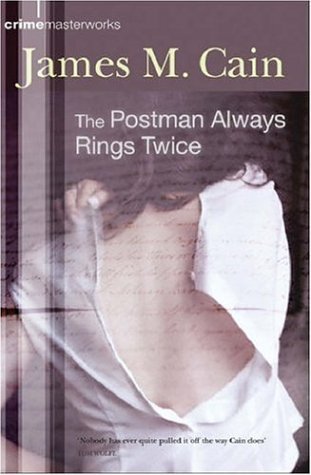
The Postman Always Rings Twice****

thepostmanalwaysringstwiceWell, they do say karma’s a bitch.

I fell heir to a first edition hard cover copy of this classic 1934 crime fiction. It’s too well worn to be a collector’s item, so instead of selling it, I decided to just enjoy holding a book in my hands that could have been held, hypothetically, by my great-grandparents. I think I enjoyed the crispy yellow pages and the old school print more than I enjoyed the story itself.  With wide margins and plenty of dialogue, it was a quick read, and before the weekend was over I’d finished it.

Our protagonist, Frank, is a drifter that does odd jobs and occasional crimes as he travels through Mexico and the Western USA; the story itself is set in California. He comes to an out-of-the-way place where a Greek immigrant and his wife run a small roadside restaurant. The owner is interested in expanding the business to include car repair, and hopes that a free meal and a bed for the night will lure Frank to stick around and work for him. Instead, Frank stays and finds a white-hot attraction to Cora, the owner’s wife. The two of them make love like cats in a pillowcase, snarling and biting and tearing at each other, and they like it so well that they decide to kill the Greek guy so they can do it together forever.

Those that don’t follow history may not know that at the time this story was published, U.S. xenophobia toward immigrants from Eastern and Southern Europe was at its pinnacle. Jim Crow and the Klan had silenced any open dissent from African-Americans with a reign of terror, but it was somewhat commonplace for Caucasians, who were by far the largest group in terms of population and certainly in terms of power and money, to make nasty assumptions and references about people from Greece, Turkey, Italy, and the surrounding area.

So it’s within that context that Cora declares that although her husband Nick loves her and treats her really well, he repulses her because he’s “a little soft greasy guy with kinky hair”. He wants her to have his baby, and she doesn’t want to touch him. She’d hate to go back to turning tricks, but she would far prefer to be with fair, blonde-haired Frank than Nick Papadakis.

The story arc here is flawless, and I can see how it became a classic, but it has many aspects that haven’t aged well. There are nasty remarks about Mexicans; Cora urgently wants Frank to know that she’s white, even though her hair is dark. She isn’t “Mex”. And although I understand that some people do like rough sex, I had to take a deep breath when Frank became aroused and showed it by blacking Cora’s eye for her.

Right. So you see what I mean.

The way the story is plotted is ingenious, and the characters are consistent all the way through; the ending is brilliantly conceived and executed.

For me, though, one reading is enough.

The Tea Planter’s Wife, by Dinah Jeffries****

theteaplanterswifeGwendolyn is 19 years old when she marries Laurence Hooper, the owner of a tea plantation in Ceylon, an island nation south of India now named Sri Lanka. Jeffries provides a compelling, sometimes painful glimpse of the mores and assumptions of the heirs of the UK Empire at the outset of the peasants’ rebellion led by Ghandi. Though a few small glitches occasionally distract, this is a strong piece of fiction that fulfilled the writer’s mission admirably. Thank you to Net Galley and Random House-Crown Publishing for the DRC, which I received free in return for an honest review. The book is on sale today.
The protagonist is not a sympathetic one, and those that need a main character they can love should stop even considering this book right now. But some of literature’s most interesting characters are flawed ones, and the development of this one within the constraints of what Caucasians in the UK expected their lives to resemble at this time, and within the even greater constraints of material self-interest, is fascinating. I found myself wanting to haul this character out to the cheese room and tell her that all other women are not her enemies. She has almost nothing required of her by the easy life into which she has married, and as a local gossip points out, Gwen has “never had to fight for anything”.

Gwen has a passel of problems, however, some real, some imagined. She sees her sister-in-law as a rival not only for her husband’s affections and loyalty, but also for his fortune. She sees his wealthy former girlfriend and business associate, Christina, trying to pull him back into a relationship. What about MacGregor, the surly foreman of the laborers? What about Savi Ravasinghe? By the time the book was halfway done, I found myself alternately scolding her for making enemies everywhere and then, a heartbeat later, screeching at her to beware.

Ultimately I didn’t think I was impressed by this story until I looked back on my notes. I had highlighted nearly every warning bell and red herring and made little notations like, “Noooo!” Obviously this story engaged me all the way through. At times I was frustrated, but that was the author’s intention. At no time was I bored. And given the level of suspense and a certain amount of mystery, I realized that one genre tag had gone missing. I added this title to my “mystery” shelf, because there is so much unknown information that will keep the reader up late as well as any whodunit.

The author makes a few missteps that break the spell of time and place momentarily. At one point there is an argument between two of the characters about Ravasinghe, and one accuses the other of race prejudice, while the other responds that it “has nothing to do with the color of his skin!” This is either ignorance or revisionism. In the 1920s and 1930s racism was at a fever pitch. Colonialists based their system of rule partially on paternalism, which overtly declared that the “lesser” races needed the great white fathers to look after them, employ them, house and feed them. In the USA, Jim Crow and the Klan were at their all time most powerful; African-Americans were afraid to walk on the same sidewalks in the South, and in the North they nevertheless kept to their own neighborhoods to the greatest degree possible. Biracial marriage was an invitation to ostracism or even death, and less than one percent of the Caucasian population in any English speaking nation would even pretend that such ostracism wasn’t about race.

In fact, US President William Howard Taft declared that the day would dawn when the United States flag would fly at “equidistant points” that would include North America, South America, and Central America in fact rather than merely economically, and he told the American people that God had willed this due to the moral and racial superiority of Americans—by which he meant Caucasian Americans. In the East, look what the peasantry went through just to get the vote!  No, no white folks in the British Empire or USA were going to defend themselves against charges of racism; racism was assumed to be the will of God.

There’s another “oopsie” moment when the roof of a large building catches fire and the fire is put out with a garden hose and pots of water. No.

But all of this is mitigated by the expert manner in which the author describes the setting, having had a family member that lived on such a plantation, or a similar one. Part of the reason I wanted to read this DRC is the fact that it was set in Ceylon, and here Jeffries does not disappoint.  I was afraid the ending would either be saccharine or unspeakably brutal, but she deftly avoids both extremes and comes up with a surprising and believable alternative.

So in the end, I recommend this book to you. It’s not always easy for some of us to look in the mirror, or at the mirror of one’s ancestors, but everyone comes from somewhere, and the playing field still isn’t level. Nobody can fix what’s wrong today without knowing where the trouble came from. The Tea Planter’s Wife is a historical treasure in this regard; Jeffries is to be congratulated.

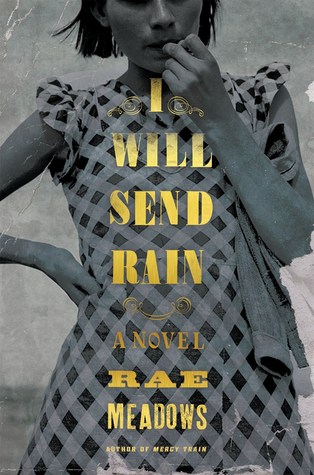
I Will Send Rain, by Rae Meadows****

Happy release day! I can’t wait to hear what you think of Meadows’ thunderous tale of redemption. It’s available today.

seattlebookmama's avatarSeattle Book Mama

iwillsendrainAnnie Bell could have chosen to marry a well-to-do member of the gentry in her home town, a man with fine china and a full time kitchen servant. Young and buoyant, she chooses love instead, and moves to Oklahoma with Samuel Bell to start a brand new life on the free land that’s been provided. What could go wrong when two young people are strong and dedicated to one another? Oh, it’s an old, old story in so many ways, but Meadows makes it brand new. Thanks to Net Galley and Henry Holt Publishers, I read it free and in advance in exchange for this honest review. It will be available to the public August 9, 2016.

When we join the Bells they are no longer newlyweds; a lot of water has gone under the bridge. They have Birdie, a teenager determined to find a way out of Mulehead, and…

View original post 512 more words

All the Ugly and Wonderful Things, by Bryn Greenwood****

Happy release day! August 9 is a momentous day in the publishing world, with lots of new titles becoming available to the public. Don’t miss out!

seattlebookmama's avatarSeattle Book Mama

alltheuglyandwonAnd you thought Fifty Shades of Gray was controversial.  Just remember that you heard it here first: if this novel has legs and gets around, it’s going to create a lot of noise.  I could almost smell the book-burning bonfires as I read the last half. And lucky me, I read it free thanks to Net Galley and St. Martin’s Press, from whom I received a DRC in exchange for this honest review.

Wavy grows up in the North American heartland, smack dab in the middle of nowhere. When you consider it for a moment, that’s obviously the place for a meth lab to be. No sophisticated, well funded cops will sniff around and shut down your operation; there’s plenty of cheap land for the various vehicles and outbuildings such a business might require.

It’s not as if guests are welcome to drop in.

Guests don’t drop in, in fact…

View original post 621 more words

I Will Send Rain, by Rae Meadows****

iwillsendrainAnnie Bell could have chosen to marry a well-to-do member of the gentry in her home town, a man with fine china and a full time kitchen servant. Young and buoyant, she chooses love instead, and moves to Oklahoma with Samuel Bell to start a brand new life on the free land that’s been provided. What could go wrong when two young people are strong and dedicated to one another? Oh, it’s an old, old story in so many ways, but Meadows makes it brand new. Thanks to Net Galley and Henry Holt Publishers, I read it free and in advance in exchange for this honest review. It will be available to the public August 9, 2016.

When we join the Bells they are no longer newlyweds; a lot of water has gone under the bridge. They have Birdie, a teenager determined to find a way out of Mulehead, and their younger child Fred, a child beset with heavy health issues. He’s sturdier, however, than the baby that didn’t make it. So Annie and Samuel have had success, some fine fertile years on their farm when the wheat was tall and the rain came when it was needed, but they’ve also endured some heartache. Regardless, every Sunday they gather at the only house of worship in town and send up their thanks and prayers for the blessings of nature, and perhaps to ward off its curses as well.

But then, things deteriorate in a horrifying way. Without the sturdy prairie grasses to hold down the topsoil, it is depleted and finally just blown away in the horrible wind storms that come in terrifying intensity, a veritable hurricane of dust instead of water. There is no insulation that withstands the fierce and immeasurable storms, ones that turn day dark as night and fill every crevice in every home, barn, and public building with a layer of grit. Dust isn’t just on the bed, it’s in it. Dust is everywhere, including inside the lungs of little children. And so it is that Fred is stricken with dust pneumonia, an ailment akin to Black Lung disease but without even a paycheck to show for it.

In the midst of it all, Samuel has a message from God: the rain will come, and Samuel must build a boat. And so as the wheat dies beneath the remorseless sun, as the water is rationed and the cattle grow thin, Samuel goes to the barn and commences planning and building the ark that will save his family from the flood.

Everyone in town is laughing at him, but that doesn’t matter to Samuel; he has heard from God.

Meadows is a clever wordsmith, and her capacity to spin setting and develop character are impressive. Young Birdie is in so many ways her mother all over again, and yet Annie is unable to breach the abyss that separates her from her teenage daughter. Annie has learned a lot and she’s learned it the hard way, through experience; Birdie wants nothing to do with any of it, or with Annie. At times I longed to grab that girl by the shoulders and send her into the kitchen for a chat with her mother, but if I could have done so, she wouldn’t have listened anyway. Hopefully this gives the reader a glimpse of how real these characters became to me.

Most of the way through this compelling novel I was sure it would merit five stars, yet the ending left me dissatisfied. Even if I could explain this without spoiling it for you, I’m not sure what the writer should have done instead, but the denouement felt contrived to me even though in many ways it seemed like a reasonable ending. Perhaps you will feel differently.

You may have read other historical fiction set in the Dust Bowl, but you haven’t read anything like this. Check it out and see what you think. I’d hate for you to miss it.

The Last Road Home, by Danny Johnson****

thelastroadhomeThe Last Road Home, bold and impressive new fiction by Pushcart Prize nominee Danny Johnson, came to me free thanks to Net Galley and Kensington Books in exchange for an honest review. It tells the story of Raeford “Junebug” Hurley and his friendship with neighboring twins, Fancy and Lightning Stroud. Junebug is Caucasian; the twins are African-American, politely referred to during that time as ‘colored’ or ‘Negro’. The story is set during the Civil Rights movement of the early 1960’s, but in rural North Carolina, the Klan stands tall and strong and absolutely nothing has changed in terms of race relations. Junebug finds himself riding on the fence rail from hell. This fascinating tale will be available to the public in late July. Those that love good historical fiction should read it.

The book begins with one horrible loss after another. At age 8, Junebug’s parents are both killed in a car wreck, and he goes to live with his grandparents.  His life is pleasant and stable, helping his grandpa run the farm, but then his grandpa dies too. And by the time his grandmother dies, I have decided that the theme of this story must be grief and loss, or given the number of religious references, perhaps there is some sort of Christian redemption theme here. And on both counts, I find I am mistaken. Johnson is a masterful storyteller, and there is nothing simplistic in how this novel unfurls.

For while Junebug has plenty of questions about the religious fervor that pervades small towns of the South during this era, by the time he buries his grandma, he has had it with religion. “The preacher said a prayer, asking the Lord to be with me in this time of grief. I’d had all of God’s shit I could take and didn’t need His sympathy. If he said it was ‘God’s Will’, I might choke him.”

I wanted to stand up and cheer.

At age 15, orphaned and the sole remaining member of his family, he is on his own. “Fifteen was considered adult in farm years.” Lightning leaves home suddenly, unhappy with the limitations placed on Black men in his part of the world. Fancy is left behind, and she is the only friend Junebug has within walking distance of home. As friendship turns to passion, both find themselves occupying a dangerous place in their community. Given that they are cold shouldered simply for appearing in town together to run an errand, the thought of letting their feelings for one another be known is terrifying.  He recalls his grandma’s admonition:

“’Junebug, you need to understand that cruelty and memory have been married together a long time in the South.’”

Johnson does an outstanding job of depicting white neighbors’ responses to the notion that our protagonist is linked romantically with Fancy. At first they are able to maintain the age-old fiction that she is his housekeeper, but she goes home at night, then sneaks back in darkest night to lay beside him. The muted references, little hints given by Caucasian elders nearby to guide the young white farmer away from a liaison that doesn’t fit local expectations, are rendered skillfully. There are a number of really vicious racial epithets tossed casually around by the local landowners, not always even in anger, sometimes in ugly jokes, as this writer knows from childhood experience is the way racists behave when a white supremacist perspective is not something being fought for as an outlier, but rather the dominant, even comfortable, norm. As the book continues, not only anti-Black pejoratives, but also nasty terms regarding Jews and Asians are tossed into the vernacular. None are gratuitous; they are an undeniable part of the setting, which would be revisionist without them.

Fancy and Junebug seem doomed. He tells her, “It feels like my life’s sprung a lot of leaks, and I’m running out of fingers.” She points out that she only has ten fingers too.

I was watching for the pat ending, the comfortable happy fiction that novelists are often drawn toward. Every time I thought I knew where the story was headed, it went somewhere else. Johnson is brilliant at breaking apart stereotypes, making setting real and immediate, and his character development is strong apart from some minor inconsistencies toward the end. And his framework is materialist by and large, showing that our surroundings and role in life shape us in ways we sometimes don’t expect.

Those interested in this period of history or that love excellent fiction should order this book. It will be available to the public July 26, 2016; strongly recommended.