
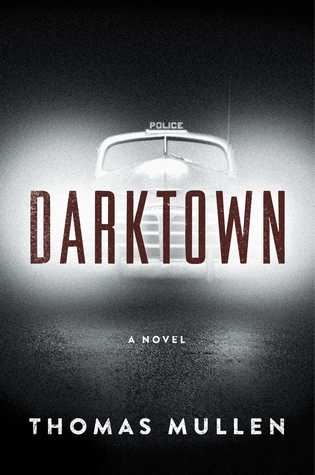
 I was originally turned down for a DRC of this novel when I requested it last spring, and I took the unusual step of following up with Atria, more or less begging for it. I’ve been reviewing titles for Net Galley for two years and have received nearly 300 DRCs, so it is a sign of my interest level that I went to this extreme to read this one in advance in exchange for an honest review, and it’s a sign of decency and responsiveness that a representative from Atria Books invited me to review it after all. Although I am grateful , this five star review is not about gratitude, but a measure of the importance I attach to the issues it addresses and the skill with which the story is told.
The story centers on the first African-American cops hired in Atlanta; the year is 1948. This is considered an experiment, and to say the least, it’s awkward. The basic plan is that a small number of Negro—which is the polite term at this time in history—officers will report to a Caucasian supervisor, and they are responsible for patrolling the Black section of Atlanta. There are just eight men in this force. They have no authority to make an arrest, so if someone has to go to jail, they must call for Caucasian police who are considered real police by higher-ups within the city administration.
To say the very least, it’s hard to take.
Mullen’s protagonists here are African-American officers Boggs and Smith, and the problem arises when they witness a crime, the assault of a woman by a Caucasian man in a car. The woman disappears, and no Caucasian cops are interested in hearing what these officers saw that night. The white cops that come in response to the report of a crime demean the Black officers, calling them “boy” and a variety of other horrible slurs. As the white cops leave the scene, “Boggs was still standing in the street. If his rage had been a physical thing, it would have split the car in two.”
Eventually one of the white cops, a man named Dunlow, goes too far in the eyes of his rookie partner, Rakestraw, and the latter finds himself in a tenuous, secret alliance with Boggs.
Light banter breaks up tension in places, but no mistake, this is a brutal story. If it wasn’t harsh, it wouldn’t be the truth. This is one of the rare instances when the frequent use of the N word and other racist, vulgar language is actually historically necessary; you’ve been forewarned. Though Darktown is a useful history lesson, its greater value comes from causing readers to think more deeply about the role police play in western society.
A question I found myself considering, and not for the first time, is how much good Black cops can do even today to combat racism and other ugly biases by the department that employs them. Clearly cop violence toward people of color remains ever present. If this book had been published ten years ago, I would have been concerned that in focusing on past racism, the story might have left us with the impression that racism was a problem only in the past, as if all that mess is over now.
But in 2016, we all know otherwise.
I hope you’ll read this painful but well crafted novel, and reflect some about how the dynamics of power have developed and why. Will a more diverse police presence be the key to equity for those that are so frequently crushed beneath the boot heel of what passes for a justice system in the United States, or is meaningful police reform impossible as long as cops are employed primarily to protect the property of the rich? Would ordinary people be better off if we can, in the words of the old folk song, “…raze the prisons to the ground”?
This book becomes available to the public September 6, 2016. Highly recommended.

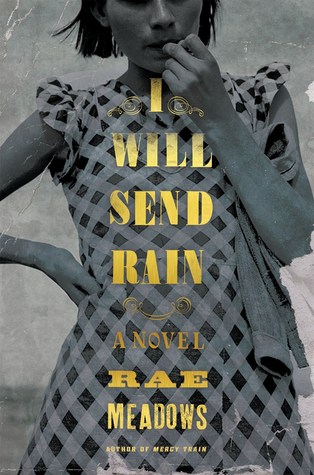 Annie Bell could have chosen to marry a well-to-do member of the gentry in her home town, a man with fine china and a full time kitchen servant. Young and buoyant, she chooses love instead, and moves to Oklahoma with Samuel Bell to start a brand new life on the free land that’s been provided. What could go wrong when two young people are strong and dedicated to one another? Oh, it’s an old, old story in so many ways, but Meadows makes it brand new. Thanks to Net Galley and Henry Holt Publishers, I read it free and in advance in exchange for this honest review. It will be available to the public August 9, 2016.
 And you thought Fifty Shades of Gray was controversial. Just remember that you heard it here first: if this novel has legs and gets around, it’s going to create a lot of noise. I could almost smell the book-burning bonfires as I read the last half. And lucky me, I read it free thanks to Net Galley and St. Martin’s Press, from whom I received a DRC in exchange for this honest review.
 And you thought Fifty Shades of Gray was controversial. Just remember that you heard it here first: if this novel has legs and gets around, it’s going to create a lot of noise. I could almost smell the book-burning bonfires as I read the last half. And lucky me, I read it free thanks to Net Galley and St. Martin’s Press, from whom I received a DRC in exchange for this honest review.
 Annie Bell could have chosen to marry a well-to-do member of the gentry in her home town, a man with fine china and a full time kitchen servant. Young and buoyant, she chooses love instead, and moves to Oklahoma with Samuel Bell to start a brand new life on the free land that’s been provided. What could go wrong when two young people are strong and dedicated to one another? Oh, it’s an old, old story in so many ways, but Meadows makes it brand new. Thanks to Net Galley and Henry Holt Publishers, I read it free and in advance in exchange for this honest review. It will be available to the public August 9, 2016.
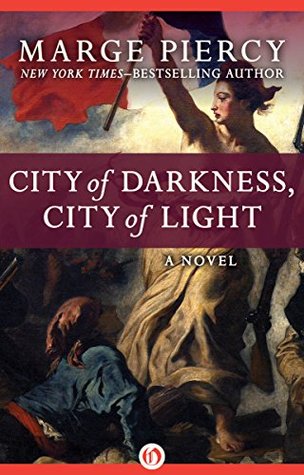 Piercy is a legend among feminists, and her writing was pivotal in my own development during the late 1970s and early 1980s as a newly-hatched adult. When this title, a novel based on the French Revolution, came out in 1996, I put it on my Christmas list and read it hungrily once I received it. When I noticed that it was released digitally this spring, I scored a digital copy from Open Road Integrated Media and Net Galley in exchange for this honest review. It’s a novel that is definitely worth reading twice.
 The Last Road Home, bold and impressive new fiction by Pushcart Prize nominee Danny Johnson, came to me free thanks to Net Galley and Kensington Books in exchange for an honest review. It tells the story of Raeford “Junebug” Hurley and his friendship with neighboring twins, Fancy and Lightning Stroud. Junebug is Caucasian; the twins are African-American, politely referred to during that time as ‘colored’ or ‘Negro’. The story is set during the Civil Rights movement of the early 1960’s, but in rural North Carolina, the Klan stands tall and strong and absolutely nothing has changed in terms of race relations. Junebug finds himself riding on the fence rail from hell. This fascinating tale will be available to the public in late July. Those that love good historical fiction should read it.
 Fearless women change history.
 I like short stories. My Goodreads library tells me I have munched my way through 89 collections and anthologies; yet I can tell you that there is nothing even remotely similar to what Hale offers here. Thanks go to Simon and Schuster and Net Galley for permitting me to view the DRC for the purpose of an honest review. You should get a copy May 17, 2016 when it is released, so that when it is immediately banned by various school boards you will know what they’re screaming about.
 Oh hey, today is Seattle Book Mama’s second birthday! Break open a bottle of sparkling water and toast my humble blog. I’ve done a lot of reading, and so much more is to come.
 Seattle Book Mama