Lucky Red, by Claudia Cravens*****

Larry McMurtry, eat your heart out. There’s a fine new word-slinger come to town, and her name is Claudia Cravens.
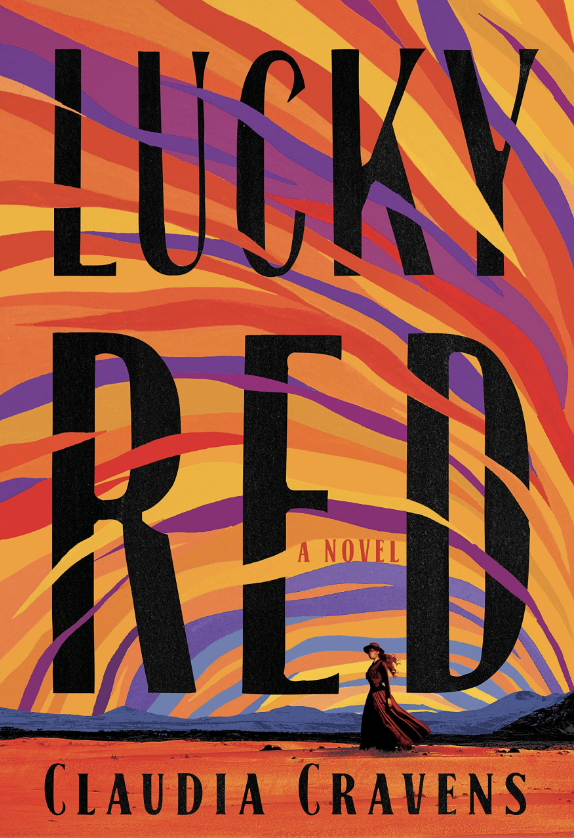
My thanks go to Random House and Net Galley for the invitation to read and review Lucky Red. This book is for sale now, and you should get it and read it.

Bridget lives a life of hardscrabble deprivation; her mother died in childbirth, and all she has is her pa. He loves her, but he’s worthless; when he finally gets a bit of money, he invariably drinks and gambles till it’s nearly gone. During one such episode, he gambles away their little house, and then buys a homestead, sight unseen and many miles away. What they find instead is a tar paper shack; there are no crops or tilled acreage, no tools or even a decent place to live. They crawl into the miserable hovel to get out of the elements, at least, and get some sleep; a rattler has the same notion, but when pa thrashes in his sleep, the rattler bites him in the neck, and then there is only teenage Bridget.

Bridget makes her way to Dodge City, and in no time, she is stone cold broke. She’s recruited to work in a brothel, the only one in town owned and run by women. She doesn’t mind the work and makes friends among the other “sporting women,” and is curiously removed from the process for which she is paid; slide prong A into slot V; moan a little, gush, and collect your pay. But later, she finds herself obsessed with a new sex worker; a lovely blonde woman named Sallie. Everyone around her understands the significance of this fascination, but Bridget herself doesn’t get it. She’s young, and she’s naïve. But when Spartan Lee, a female bounty hunter, comes to town and asks to hire Bridget, the sun shines and the angels sing.

This story is epic, and in many ways reminds me of Little Big Man, but with a female protagonist. And in many ways, what makes it so successful is its restraint. At the book’s outset, there’s a slimy man that wants to buy Bridget’s hand in marriage, which would give her father a nice chunk of change, but she hates the man, and her father doesn’t push it. A less capable writer would have done it the other way, but here, and in every instance where I predict what will happen because it’s so obvious, Cravens does something else. And the lesbian sex is brief and almost free of physical details—a sad thing for anyone looking for soft porn, but it serves to keep the story moving forward—with the emotion behind it carrying the internal narrative.

Although Bridget has no complaint about the work she does, and the management is more benign than in houses owned and run by men, Cravens keeps it real. One night, Sallie is attacked by a client, and Bridget bursts in to rescue her. It doesn’t go well. Sallie berates her for her naivete:

“You don’t see the first thing about this, though, do you. They all have a knife, Bridget. They all have a gun, and they were all born with two fists on the ends of their arms. You think you’ve got this all figured out, but any single one of ‘em could take a swipe at you some night and you’d be dead before you hit the ground.”

To tell you more would be to spoil it for you, so I’ll leave you with this: Lucky Red is the best debut novel of 2023, and one of the best books I’ve seen this year, period. Don’t miss it.

When Women Were Dragons, by Kelly Barnhill*****

I read Kelly Barnhill’s The Ogress and the Orphans, and I loved everything about it, so I was pumped when I saw she’d published another book last fall. I was disappointed not to get the galley, but I pulled my socks up and got in line at Seattle Bibliocommons. I was able to get the audio version, and narrators Kimberly Farr and Mark Bramhall do an outstanding job, so perhaps it was for the best. This book is for sale now, and it is a true delight.

The story is set in the American Midwest during the 1950s, a time known for its stifling repression of women. Some women can take it; others turn into dragons. It’s not always by conscious choice; when you’ve had enough, you’ve had enough.

The tale centers on one family, with a mother, father, daughter Alex, and the devoted Aunt Marla, who visits frequently with her adorable baby, Beatrice. Marla is a physically strong and imposing woman, and she raises eyebrows by sometimes showing up in overalls instead of a dress or skirt. The most important person in her life is her sister, a gifted mathematician whose talents are withering away while she focuses on making the perfect pot roast, getting tough stains out of the laundry, and creating endless patterns in her knitting.

Alex is the narrator for most of the story, with the occasional change to the points of view of various bewildered men that live locally. It is the characters here that make this an outstanding story rather than a manifesto. Alex has so many questions as a child, and as she grows up, she struggles to absorb the predominant values of the time, which seem unfair to her. She wants to be a good daughter and play by the rules, but so many of them baffle her, and we feel that struggle with her. For reasons that I won’t share, little Bea comes to live with Alex’s family, and we see Alex try to help raise Bea to be responsible and obey all of the requirements of the time, whether written or unwritten, but Bea struggles with them even more than Alex has, and because of this, Alex is forced to think critically about the things she’s been sweeping under the rug in order to get along. And ultimately, Alex learns the lesson that all parents and older siblings face to some degree, that to help a child grow, we must let go.

Teachers and librarians must especially love this book.

I have read a few unfriendly reviews that insist that this message has already been conveyed by The Stepford Wives. I loved the Stepford Wives, too, but seriously, are we saying that once a novelist drives home a point, that’s it, and nobody else can have a go at it? If it comes down to it, I’d take this novel over the other anyway, for nuance and character development. My favorite grumpy review asks why a dragon needs a purse! I ask you, would you be the one to take that dragon’s purse from her?

I love this book with all my fiery heart, and I highly recommend it to feminists, and to those that love us.

Mastering the Art of French Cooking, by Colleen Cambridge****

This charming cozy mystery, set in Paris during the postwar years, had me at hello. Tabitha is an American expat, and her best friend, Julia Child, is teaching her how to cook. But one evening, during one of the Childs’s many soirees, a woman is murdered…and the knife in question came from Julia’s kitchen!  To make matters even worse, the victim was carrying a card with Tabitha’s name and address on it when she was found. For some young women, this would be a wakeup call, and the morning would see them on the next available plane to Detroit; but Tabitha is made of sterner and more curious stuff, and so she begins snooping.  

My thanks go to Net Galley and Kensington Books for the review copy; this book is for sale now.

To cope with the horror of the previous night’s events, Julia is roasting a ham.  “I just had to take my mind off everything. Can you even believe it, Tabs? Someone murdered a woman in this building—with my knife! That means they had to have been in my kitchen! This kitchen!”

Like many an amateur sleuth in other mysteries, Tabitha begins poking around. Sometimes she has smart ideas, and at other times she is breathtakingly dense, but there is never a time that I am thinking about the author rather than the protagonist, and that means that I believe the character. There are some familiar tropes and the occasional cliche: “She knew too much!” But it never becomes a problem, possibly because this is a novel that doesn’t take itself too seriously. Now and then the author breaks down the fifth wall, or nearly so. For example, Tabitha tells us that she knows what to do because she has read plenty of Nancy Drew mysteries.

The solution to this whodunit is fairly transparent, and I am able to predict the solution, along with the conclusion of the additional thread of incipient romance early in the book, but the whole thing is so adorable that I never become annoyed. “Just like an Agatha Christie novel—all the questions answered at the end, and the villain is caught, and everyone else is happy.”

Because I had fallen behind, I supplemented my review copy with the audio version, obtained from Seattle Bibliocommons, and narrator Polly Lee does a brilliant imitation of Julia Child! In fact, all of the passages involving Julia are brilliant, and that is my favorite aspect of this story.

Sometimes an author manages to step on multiple pet peeves of mine, and yet I emerge pleasantly entertained anyway, and that’s what has happened here. This is light reading, but it isn’t insipid. I look forward to reading the next in this lovely new series. Recommended to cozy readers.

Bad, Bad Seymour Brown, by Susan Isaacs*****

Susan Isaacs has been writing bestsellers since the late 1970s, and she’s hilarious! I’ve been a fan since then. During that earlier time, a period of third wave feminism, her tales often featured rotten husbands and ex-husbands reaping what they’d sown. Her creativity and trademark snark have always kept me running back for more. Her new novel, Bad, Bad Seymour Brown is the second in the Corie Geller detective series, and it’s deeply satisfying. My thanks go to Net Galley and Grove Atlantic for the review copy. This book is for sale now.

Seymour Brown was an accountant for the Russian mob. “I’ve never heard of a violent accountant before,” my mom observed. “At worst, they’re a little pissy.” But by all accounts, Seymour was a rotten guy. “He made regular bad look good.” Bad to everyone, that is, except his five year old daughter April, his only child, for whom the sun rose and fell. But Seymour’s family was tucked away for the night when an unknown assailant came and burned the house to the ground with the Browns inside it. Happily, April made it out the window alive. The case was never solved.

Now April is an adult, a professor in film studies. She’s put her past behind her, and now, all of a sudden—someone is trying to kill her! She contacts the detective that was assigned to the murder investigation; he’s retired now, and he is Corie Geller’s father.

All of the things that I love about Isaacs’s work are here in abundance. The story is full of feminist moxie—Geller isn’t an assistant to her father, but rather retired from the FBI in order to raise her stepdaughter—she is his partner in this new investigation, and as it happens, in the new detective agency they’ve begun. But another thing I’ve always loved about Isaacs’s prose is her trademark snark, and I snickered and chortled all the way through this engaging novel. The pages flew by, and I found myself looking for extra reading time when I could sneak off to plunge in once more. Susan Isaacs writes the most creative figurative language I’ve seen anywhere. She’s funny as hell.

You can read this book as a stand-alone, but I’ll tell you right now, once you read the second, you’ll want to read the first one, Takes One to Know One also.

Highly recommended, particularly to feminist boomers.

Lone Women, by Victor LaValle*****

“Queer folk, the Henrys.”

Adelaide Henry is “profoundly lonely,” growing up without siblings, with older parents that spurned the world around them. They had their reasons. And yet, in the opening chapter, as I see Adelaide pour kerosene over both of their lifeless forms and burn them, along with their house, I wonder…were they bad enough to deserve this?

But nothing is as it seems, and this is part of the magical spell that Victor LaValle weaves into this kickass novel, Lone Women. By the time I understand the why and the who and the what, I feel an intimate connection to Adelaide, as if I may be the only one trusted with her secrets.

My thanks go to Net Galley and Random House for the review copy. This is one of the finest novels to be published in 2023, and you should get it and read it.

Adelaide flees the California farm where she’s lived all of her life, and buys a homestead in Montana. Almost everything about her life changes; from the warmth of California to the frigid winters of the Northern Rockies, from life with her parents to one lived alone, and from an all-Black community to one that is almost entirely Caucasian. She brings very little with her, only what she can carry, but she is curiously possessive of her extremely heavy trunk, and though I initially assume that she keeps something of great monetary value inside it, I soon realize that isn’t it. My early notes ask the same thing over and again: “What is in that trunk?”

From there, our story unfolds and I can’t stop turning the pages. I’ve never read a novel of any genre that’s like this one, and I’m guessing that you haven’t, either.

Do yourself a favor. Don’t read the synopsis. Go into it blind. It’s a lot more fun if you learn of the characters and events at the times the author intends.

There’s a powerful message in play, but the story is so adroitly delivered that it never feels like a polemic.

I won’t say more, because I don’t want to ruin it for you, but believe me, the next time LaValle publishes a novel, I will be first in line to read it. Highly recommended, especially to feminists.

Unnatural History, by Jonathan Kellerman****

Unnatural History is the 38th entry in the wildly successful Alex Delaware series. I began reading it soon after the first volume was published; When the Bough Breaks came out in 1985, so the series has been going strong for close to forty years, and very well may continue for many more. My thanks go to Net Galley and Random House Ballantine for the review copy. This book is for sale now.

For the uninitiated, Delaware is a child psychologist; Kellerman is also a child psychologist, and his earlier books incorporated his area of expertise, placing him in a subgenre all his own. I’ve wished many a time that he would write more books along these lines, but he hasn’t done a lot of it lately, and in this book,  there are only glimpses of it. Nevertheless, the story held my attention.

I’m not giving you much of the plot, because there’s a synopsis for that, but in large strokes, the story is about the murder of the son of one of the world’s wealthiest men. He’s an odd duck, not terribly bright; his mother is dead, and his father is a hands-off parent, to say the very least. Our victim has unlimited access to money, and that’s about it. He makes a splash in the art world by photographing homeless people in costumes that reflect their deepest dreams. Find a derelict street person, and find out what they always wanted to be. A pilot? A surgeon? A ballerina? Offer them the chance to be photographed as if that’s what they are now, and give them a juicy wad of cash for their trouble; then send them back to the streets where they came from.

The family structure for this strange young artist is truly bizarre; the father marries, and he fathers a child. One child, no more. Then, a couple years later, he divorces his wife and does the same thing again. The children of these unions are never introduced to one another.

Thus, Milo has plenty of meaty material to work with, and with such strange circumstances, Alex is tapped to analyze the participants.

Delaware works part time as a kiddie shrink, often consulting when there is a court case involving insurance claims or divorce. However, he still has plenty of time to work for the Los Angeles Police Department, consulting on cases where a psychologist’s input is valuable. His BFF, Milo Sturgis, is a homicide detective, spurned by others in the department because of his sexual orientation. Often as not, Delaware ends up riding along as an unofficial partner.

This aspect of the series—the almost-a-cop—is usually where things start to slip a little, when anything does. I want to buy the premise, and so I can go along with it as long as it doesn’t become too obviously unrealistic. We all want to be entertained, right? So when Alex trots out to the patrol car and slides in beside Milo, I smile and nod, and I push away the little skeptic within me that says, “But really…?”

There have been a few Delaware books that have gone sideways for me for that reason, books where Delaware puts on his Kevlar vest and packs a revolver. I am happy to say that this isn’t one of them. In fact, the manner in which these details are dealt with is one of its strengths. First of all, there are times when Milo wants Alex to go with him, but Alex is busy. He has to be in court that morning. Thank you! Then later on, toward the climax, there’s a situation that (no spoilers) shakes out in a way I find the most believable of anything Kellerman has written. It’s satisfying, without sacrificing the fun of the story.

The whodunit at the end might be the nicest touch of all.

I recommend this mystery to Kellerman’s faithful readers, and to those that love the genre.

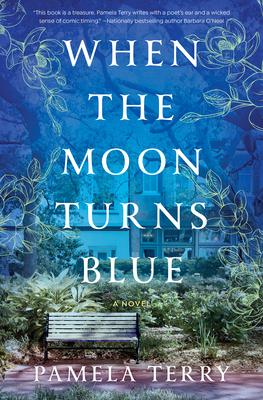
When the Moon Turns Blue, by Pamela Terry*****

Once in a while the odd thing happens,

Once in a while the dream comes true,

And the whole pattern of life is altered,

Once in a while the moon turns blue.

The tiny Georgia hamlet of Wesleyan is preparing to bury one of its own, and Mother Nature is preparing to cover the entire town in ice. But nobody—well, almost nobody—knows that a source of local tension is about to go nuclear, as someone is planning to topple and destroy the statue of a Confederate general in the park inside the boundaries of Old Man Griffin’s land. “The fight was just getting going good, and now somebody’s declawed the cat.”

This riveting, curiously charming and sometimes hilarious novel is the second by Pamela Terry, whose outstanding debut novel was The Sweet Taste of Muscadines. This one may be even better. My thanks go to Net Galley and Random House Ballantine for the invitation to read and review. This book is for sale now.

With the death of Harry Cline, we find ourselves at his funeral, a massively attended affair. But his wife, Marietta, develops a disabling, blinding migraine, and although they have been on the outs for years, Butter, her (former) best friend, comes to the rescue. By the time they’ve snuck out the side door of the church, we already know at least a little about both women, and now we want to know everything.

With just two novels published, Terry has already proven herself to be among the best authors when it comes to character development. Soon we’ll meet others—Marietta’s obnoxious brother, Macon and his beleaguered wife Glinda, who will have a large part in this story and is one of my favorite characters, as well as a host of others, who have smaller roles but are each so unmistakably established that it’s no work at all to keep track of them. But perhaps her finest achievement here is in creating a masterpiece that is ultimately a feel good book, despite the use of a red hot real world controversy within its pages.

I generally read several books at a time, and this one is the one that I saved for bedtime, because I wanted to be able to read it uninterrupted, and it is the one I wanted in my head when dreams came. It didn’t let me down.

This inspirational work of Southern fiction stands shoulder to shoulder with the finest classics, To Kill a Mockingbird and Fried Green Tomatoes. I wholeheartedly recommend it to you.

The Sweet Spot, by Amy Poeppel*****

“Brood parasites, like certain birds, intentionally lay their eggs in the nests of other birds.”

Amy Poeppel is fast becoming one of my favorite authors; she wrote Small Admissions, Limelight, and Musical Chairs, and I read and loved them all. Her new novel is The Sweet Spot, and it is destined to become one of the best books of 2023. My thanks go to Net Galley, Atria Books, and the author for the review copies.

One of the aspects of Poeppel’s writing that sets her apart is her ability to create female characters that are so dynamic, so well developed that I feel as if I know them. Here we have four that span a wide range of ages and income levels, yet somehow wind up forming an unlikely sorority. The first, Lauren Aston-Shaw is an artist, and she’s in the midst of moving into a brownstone in New York City’s famed Greenwich Village, along with her husband, children, and large dog, Bumper. The boxes are only partially unpacked when she receives a mostly-delightful surprise: a prominent businesswoman and influencer has decided to place a massive order of Lauren’s handmade porcelain for her boutiques. The house is already in a state of happy chaos, and it’s about to be more so.

During a conversation with Felicity—the retailer in question, who is pregnant—Lauren makes an offhand remark, which Felicity interprets as an engraved invitation to break up the decades-long marriage of the baby’s father, Russell. Miranda, the spurned wife, learns of Lauren’s role and decides, in a fit of grief and rage, to burn Lauren’s life to the ground. Miranda, then, is our second of the four women.

Olivia, our third main character is one of Felicity’s employees. She is in her twenties, low on the management chain, but she is ambitious, hardworking, and determined to climb; that is, until she becomes a casualty of Miranda’s rampage. Olivia is also the beloved daughter of Dan, who runs The Sweet Spot, a neighborhood bar located in the lower level of the brownstone currently occupied by the Shaw family. Dan is a lovable, level-headed sort, and through his eyes, we see the drama unfolding between Lauren, Miranda, and Felicity through a more objective lens.

The novel’s promotional blurb tells us that these are the women that the story is about, but I would add one more. Evelyn is Lauren’s mother; they have a complicated relationship. But under the strain of the sudden and unexpected increase in work, Lauren reaches out and begs her mother to come assist her with the children until she has things in hand. Evelyn can only stay for a weekend; she has so many social obligations back home. And yet, a weekend grows to a long weekend, and then to a week. Evelyn is far too interesting to be considered a side character; she is our fourth main character.

Despite her despair and fury, Miranda finds herself caring for Russell and Felicity’s baby; it is supposed to be for a couple of hours, but in the solipsistic way of the wealthy and entitled, both parents depart for the West Coast without making childcare arrangements, and Lauren and Olivia find themselves also assisting as hours turn to days, and then to weeks.

This story has everything I want in a novel, and when I got a go-to-bed-and-die flu virus, I curled up in bed and spent my waking time there reading it. I’ll tell you from experience that it’s good for what ails you. The plot is deftly managed, and that is no small feat given its complexity. The pacing never flags and no balls are dropped (except possibly Russell’s.) The dialogue sizzles. But the thing that turns a good novel to a great one is Poeppel’s insight into the human condition. Her level of perception is what makes the characters shine, and it’s also what makes the entire book drop-dead funny. Lastly, Amy Poeppel is one of a very few authors that can write a feel-good story that never insults the reader’s intelligence.

Admit it. You need this book! Happily, it will be available to the public January 31, 2023, and you can pre-order it now. Highly recommended.

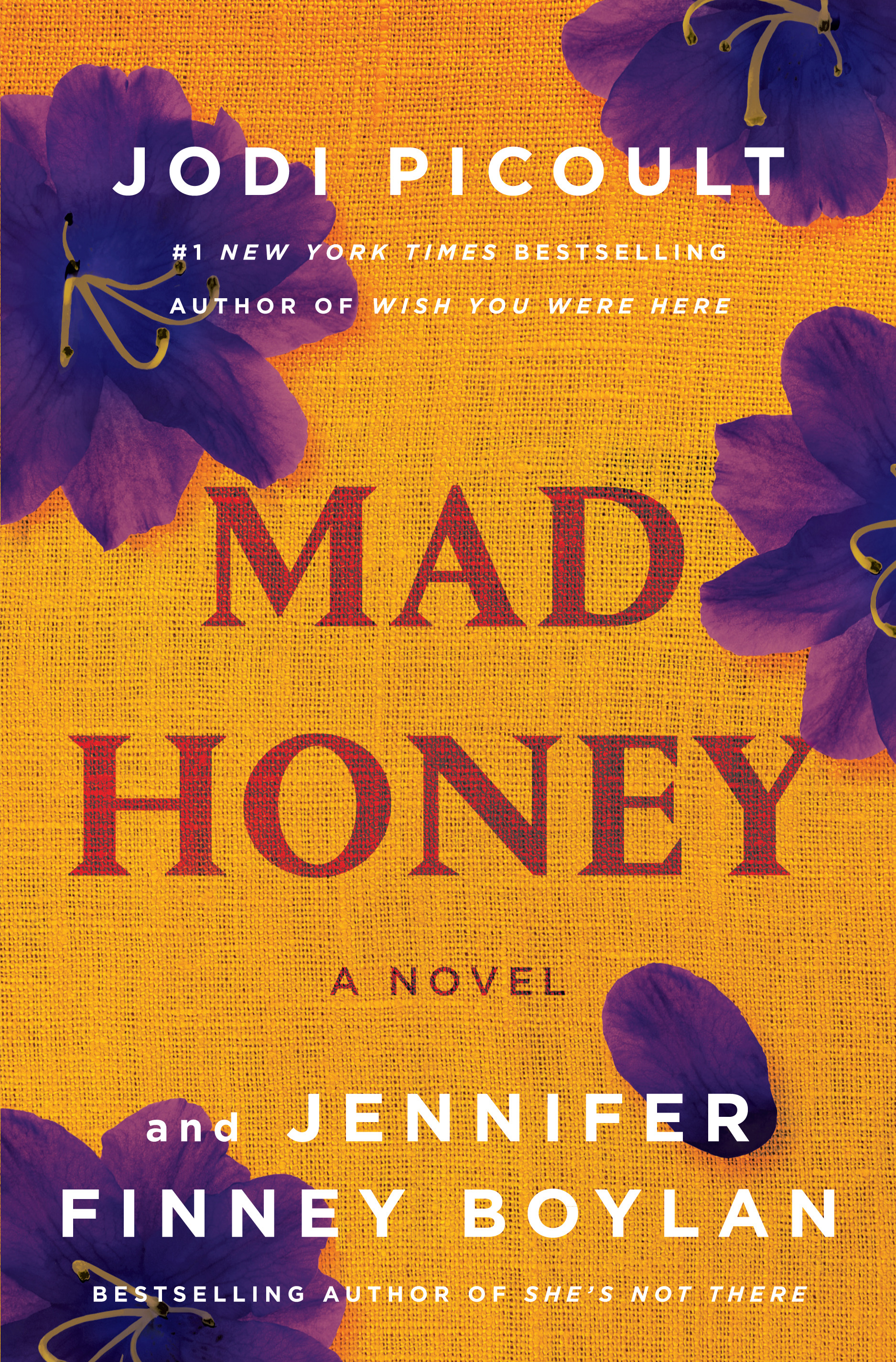
Mad Honey, by Jodi Picoult and Jennifer Finney Boylan*****

Mad Honey is the joint endeavor of bestselling author Jodi Picoult and Jennifer Finney Boylan. My thanks go to Net Galley and Random House Ballantine for the invitation to read and review.  This book is for sale now, and I recommend it to you.

The hallmarks of Picoult’s work are immediately evident. She frames her story around a particular area of interest, and so when one of our main characters, Olivia, is a bee keeper, I figure I am in for an education with regard to bees and honey; I am not wrong. Of late, Picoult has also used some of her fiction to promote social justice causes, and that’s here, too; I did a quick search on Boylan, her co-author, and learned that Boylan is one of the first transgendered Americans to write a bestseller, and this is the other focal part of Mad Honey, which features a trans character.

We have Olivia, then, the bee keeper, and her son, Asher, who is the light of her life. She took Asher and fled an abusive marriage, and enjoys her new life. She is close to Asher, and they talk openly and often; yet, there are things that Asher isn’t telling his mother, and she doesn’t see that.

Then there’s a new girl in town, Lily Campanello, a cellist, and Asher falls for her. Later, Lily is found dead, and suspicion falls on Asher. Olivia stands behind her son, and yet a corner of her mind has doubts. What if, when push comes to shove, Asher is his father’s son after all?

It’s tricky to write fiction that focuses on a controversial topic, and the critical ingredient is characterization. If the characters feel real to us, the story flows and the message becomes an integral part of their lives. We can’t reject the theme without rejecting the character. But it would take a true Grinch to step away from Olivia, Asher, and Lily. I want what’s best for the characters, and so I’m not focused on the authors and what they have chosen to discuss within this framework, but on the story. The writing flows like melted butter, smooth and inviting, and later, the suspense ratchets up almost unbearably, and I have to know what becomes of Olivia and Asher.

Because I am a bit behind, I check out the audio version of this novel at Seattle Bibliocommons.  There are multiple narrators, but the one that resonates most for me is the reader voicing Lily. I say this, despite the fact that she butchers the pronunciation of place names in the Pacific Northwest. Eugene, Oregon is not hard to say. Siuslaw and Willamette are trickier, but there’s only one pronunciation for each, and the reader should have done due diligence.

And now that I’ve said this, I can urge you to get this book and read it. For those unfamiliar with trans people, there’s some good information, and the story is a compelling one. There’s a twist at the end, and I would probably have left that out, as it doesn’t add much, although I can also see the reason it is included. Nevertheless, this is a story worth your time and money, whether as an audiobook or in print.

Back to the Garden, by Laurie R. King*****

Laurie R. King is best known for her Mary Russell and Sherlock Holmes historical detective novels, but I have long preferred her contemporary mysteries. Back to the Garden is her latest of these, and it is excellent. My thanks go to Net Galley and Random House Ballantine for the review copy. This book is for sale now.

Our protagonist is Raquel Liang, a detective based in San Francisco. When a long-dead body is found in the garden of the Gardener Estate—a famous mansion and grounds that sound faintly reminiscent of Hearst Castle—Liang, who is working on a task force to find and identify victims of serial killer Michael Johnston, becomes involved in the case.

Rob Gardener is the heir to the estate, and he had clashed often and bitterly with his grandfather before his demise in the 1970s. Upon learning of his windfall, Gardener turned the manse into a commune, with murals on the walls of what were once imposing, grandiose rooms and vegetable gardens where more formal floral ones previously stood. Now the place is being restored, and as gardeners work to clear a thicket of overgrown hedge, a huge statue topples over, exposing the bones of someone long interred there.

Meanwhile, in a hospital in the big city, convicted serial murderer Michael Johnston lies dying. During the same period that the commune reigned, Johnston was spiriting girls and young women off so that he could murder them. Improved technology has provided a number of leads, but the window in which the cops can extract information from the old bastard is rapidly closing. Liang suspects that the body found on the estate, which dates back to the same time that Johnston was slaying women in the area, may be one of his, and so she makes frequent visits to learn as much about the place and its residents, past and present, as possible.

The intriguing bit about this mystery is that the members of the commune, other than Rob himself, didn’t use their birth names, and it makes them tricky to trace. With names like Meadow, Pig, and Daisy, they could be just about anybody. Is one of them the body beneath the statue?

King does a fine job of segueing from past to present and back again, and of juggling a moderately large number of characters. As I read, I never have to flip back to be reminded of who someone is. The reader should know, however, that this is not a thriller. It isn’t written in a way to grab you by the hair and make your pulse pound. The pace is a bit more laid back, but for some of us, that is a pleasure. I never lost interest, and I could read this thing while eating my lunch without gagging.

There’s a good deal of period nostalgia, and so I suspect that the greatest appeal will be to Boomers.

Highly recommended.