The Best Mystery Stories of the Year 2025, by John Grisham and Otto Penzler*****

John Grisham and Otto Penzler have teamed up and compiled a delightful, high-quality collection of short mystery stories to entertain you. My thanks go to NetGalley, High Bridge Audio, and Penzler Publishers for the review copies. You can buy this book now.

All told, there are 20 stories that made the cut, plus a “bonus” story at the end. This mystifies me; why not just say there are 21 stories? Maybe there’s a tradition of only selecting 20. At any rate, I liked all of them except one, which I’ll explain in a moment. They are all well written, and they encompass a wide variety of subgenres. My favorites are “Home Game,” by Craig Faustus Buck; “Only a Story,” by Kai Lovelace; and “Effie’s Oasis,” by Casey Stegman. I had never even heard of any of these writers, so now I have three new authors to watch for. I was not as fond of “Dream Stuff,” by Lou Manfredo, but that’s because I dislike noir mysteries for the way that women are disrespected. Here’s an example: “Mary Lou, my previously noted overpaid secretary, poked her cute little head into my office…” and it goes on in that vein. I haven’t deducted anything from my rating, because I know that the aspects that I find problematic are part and parcel of noir mysteries, and so I can’t see penalizing this one author in the collection, or Grisham and Penzler, when I know that there are a considerable number of readers that love these stories, and not all of them are men.

One other minor irritation is that I was provided with both the digital and audio versions of the galley, but the stories aren’t in the same order in both books, which led to a fair amount of panicked flipping around my digital copy to try to match up with the story being read. If they’re going to edit the order in one format, I’d appreciate it if they would do it in both so that they match; hopefully this is straightened out in the finished copies.

 But while I’m talking about the audio version, I should also mention that the readers, Marnye Young and Jamie Renell, are top notch. There’s a great deal of dialogue in most of these stories, and they are both pitch perfect in reading the characters’ voices.

Whether you prefer a print or digital copy to read with your eyes, or an audio book that can follow you around while you do other things, you can’t go wrong with this collection. Highly recommended to all that enjoy the genre, and perfect for Halloween.

In the Time of Five Pumpkins, by Alexander McCall Smith*****

In the Time of Five Pumpkins is the 26th installment of the #1 Ladies’ Detective Agency mysteries by Alexander McCall Smith. This is hands down my favorite cozy series, and it may very well be my favorite series, period. Precious Ramotswe is our chief protagonist and owner of the business, and her easy-going manner with others and her capacity to smooth over a difficult situation are a breath of fresh air. Of course, Precious is fictional, but she feels real to me. I feel as if I have known her for decades, which in the literary sense, I have. My thanks go to NetGalley and Random House for the invitation to read and review. This book is for sale now.

As with all of my best loved, long-running mystery series, the joy of reading is only partly to do with the mystery. In fact, I almost think Smith could forget to include a mystery and I might take a good long while to notice; I enjoy greeting the continuing characters that I haven’t seen in some time. Mr. J.L.B. Matekoni, who is married to Precious and runs a garage in the same building where Precious has her office; Mma Potokwane, Precious’s “traditionally built” best friend, who runs an orphanage and always has fruitcake ready when Precious visits; Charlie, the formerly bumbling mechanic who is shaping up nicely as a part time detective trainee; and of course, Mma Makutsi:

Employees who leave it to their employers to promote them may have a long time to wait, but this was not the fate of Mma Makutsi. She had somehow managed to promote herself, first to the role of senior secretary, then without discussing the matter with Mma Ramotswe, to assistant detective, associate detective, associate director, co-director and so on, to the position she had most recently chosen for herself—executive president for development. This was a novel description and had rather puzzled Mma Ramotswe.

Passages such as this one leave me gasping! How many of us, in a similar situation, would allow someone that we had hired to give herself such exalted titles? It’s both bizarre and preposterous. But there’s never a question of salary; no matter what she calls herself, Mma Makutsi makes the same money as before, and no one here is making very much.

The stories usually have more than one thread, and so it is with this one. A woman arrives from the States to meet someone that turned up in her ancestry search, and the agency is hired to help her find them. At the same time, another case involving marital problems, though not the usual sort, is presented. And a third thread has to do with a shady character that has befriended Mr. J.L.B. Matekoni. Before all is said and done, Charlie has a “Clovis Anderson moment,” which has been a long time coming, and J.L.B. Matekoni saves his creepy new friend from a “government crocodile.”

This is a series that never gets old, and perhaps because the excitement is ramped up just a tick in this one—not too much, we do want to keep it cozy, after all—it may be my favorite so far. Highly recommended to all that love the genre.

The Autumn Springs Retirement Home Massacre, by Philip Fracassi*****

It’s not just every day that I run across a five-star slasher novel, but author Philip Fracassi hasn’t written just any slasher novel, either. The Autumn Springs Retirement Home Massacre is one of this autumn’s most agreeable surprises. My thanks go to NetGalley, Macmillan Audio, and Tor for the review copies; this book will be available to the public September 30, 2025.

When a friend recommended it, she said it was funny and also different from her expectations. I agree on both counts. I was anticipating a book with plenty of old-folks barbs, sort of like the satirical carol, “Grandma Got Run Over by a Reindeer.” I considered whether I was up for it, given that I am a grandma myself, and decided my sense of humor hadn’t aged out. Sure, let’s give it a go.

Instead, though the book is indeed darkly funny in places, it also has aspects I didn’t anticipate. How many humorous slasher stories have character development, for instance? How many have genuinely poignant moments? And finally, on a more traditional yardstick, I find myself completely surprised by the solution.

Our protagonist is Rose Dubois, a 70-year-old retired school teacher. She buys a unit in the retirement community, not because she’s too decrepit to remember her medications or because she needs constant monitoring, but because she is ready to live in a smaller home near other people her own age. Her daughter has been urging her to come live with her instead, but Rose has friends here. She likes her little place, and she values her independence. She doesn’t want to go anywhere else.

Then her pals begin dying. The first is her bestie, and it stings, but also raises questions. The death—without giving anything away—seems out of character. But surprises happen, and they’re not all nice ones, so she and Angela’s other friends grumble, but move on.

But as the title suggests, there’s another. And another. Where will it stop? Rose and her remaining friends vow to stop it themselves, since the local cops and the home’s administrators don’t seem terribly concerned.

The story also raises the issue, a very real one, of the public’s lack of concern for the elderly. Hey, old people die. That’s what we do! And moreover, before we go, older folks become nearly invisible. The author’s moving note in the afterword explains why he took the approach he did.

Not long after I began reading, I was given access to the audio version, narrated by one of my favorites, January LaVoy. Although the print version is delightful, I give a slight edge to the audio because its format, which is mostly linear, lends itself well to this medium, and also because LaVoy always brings something extra to her narration.

Highly recommended to all that enjoy mysteries and a little gallows humor.

Fever Beach, by Carl Hiaasen**-***

What happened? I used to absolutely love novels by Carl Hiaasen. In his most recent release, Fever Beach, we see a conflict between good—in the person of our main character, Viva Morales—and evil, played by a variety of Proud Boys wannabees and other undesirables. The good person is always good; the bad guys have no redeeming qualities. Only Viva’s ex-husband is a dynamic character.

Still, my thanks go to Doubleday and NetGalley for the review copy. This book is for sale now.

As I read, I keep reminding myself that this is not a book I’m supposed to take too seriously, to lighten up and just roll with it. I certainly used to do so when reading Hiaasen’s work. But perhaps because of the stereotyping and complete lack of nuance, what might otherwise have seemed droll and satirical, instead comes across like a whole lot of cheap shots fired off the bow.

Mind you, I am certainly not a fan of ultraright organizations, and the rising tide of bigotry, fascist ideology and anti-Semitism concerns me greatly. But in an already highly polarized nation and world, all I can think as I read is that this story isn’t helping. It is the snobbery and elitism of the highly educated that has driven a large number of folks into the arms of extreme right; some intelligently reject the elitism and cancel culture consciously, but they aren’t in this book. In real life, those that are poorly educated and/or intellectually handicapped, as the bad guys in this book are, would in most cases give their right arms to wake up “clever” like Viva.  It strikes me as counterproductive to write a book that makes fun of right-wing intolerance, while practicing intolerance from a different angle.

Back in the day, before anyone judged anyone else by the color of their hat, I used to roar with laughter at this author’s work. Did it change, or did I? I would like to think it is the former.

I rated this book 2.5 stars and have rounded it upward, more from a fondness of his early novels than anything else. I do recall reading another of his more recent books—not for review, but just because I felt like it—and saw some of the same problems, so I will tell you that this book will probably work for you if you enjoyed his last one. Apart from that, I cannot recommend it.

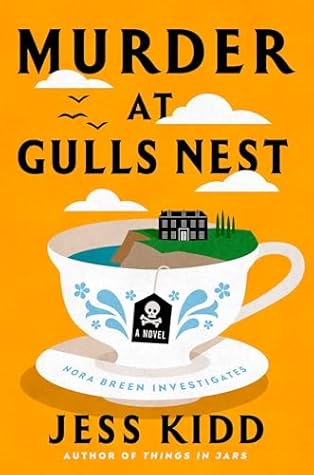
Murder at Gull’s Nest, by Jess Kidd*****

Nora Breen has sprung the coop, run away from her home of the past thirty years and come to Gull’s Nest, a rooming house near the sea. “Gull’s nest is that sort of place, isn’t it? Where the dreamers and schemers wash up.” And indeed, that’s our Nora. “A washed up nun…An abandoned friend. Flotsam and jetsam.”

Murder at Gull’s Nest is the first mystery in a series by one of my favorite novelists, Jess Kidd. I’m grateful to NetGalley and Atria Books for the review copy. This singular story will be available to buy in the U.S. April 8, 2025.

Nora is indeed a former nun; she’s shed her holy orders along with her tunic and scapular; she’s asked Christ for a divorce. Now she’s middle aged, and dressed in whatever castoffs were available when she departed. She has very little money, and is appalled at what inflation has done to prices between the time that she entered the monastery and the present day. Her first order of business now is clear, regardless: she must find her beloved friend Frieda, who left the order, came to live at Gull’s Nest, corresponded faithfully, then apparently dropped off the surface of the earth. If she’s alive, Nora will find her; if not, Nora will find her anyway.

She settles into the rooming house, and as she gets to know the other boarders, we get to know them along with her. The owner is a stickler for rules, and the cook and housekeeper—one person—is a tyrant. The food is dreadful! Nora resolves to float along beneath the radar for a bit, get the lay of the land before she does any obvious snooping about. However, since this is a murder mystery, someone dies while she’s still getting her bearings. And in time honored tradition, she irritates the very bejesus out of the local law man, Inspector Rideout, who is still deciding whether this death is due to murder at all.

“’I am not yet investigating a murder, Miss Breen.’

“’Are we not?’

“’No, I am not.’”

Don’t ask me to give away anything else about what happens here, because I won’t. I will tell you, however, that it crackles. Jess Kidd writes everything well: internal monologue? Check! Dialogue? Check! Denouement? Check, check, check!

Get this book and read it. You won’t be sorry.

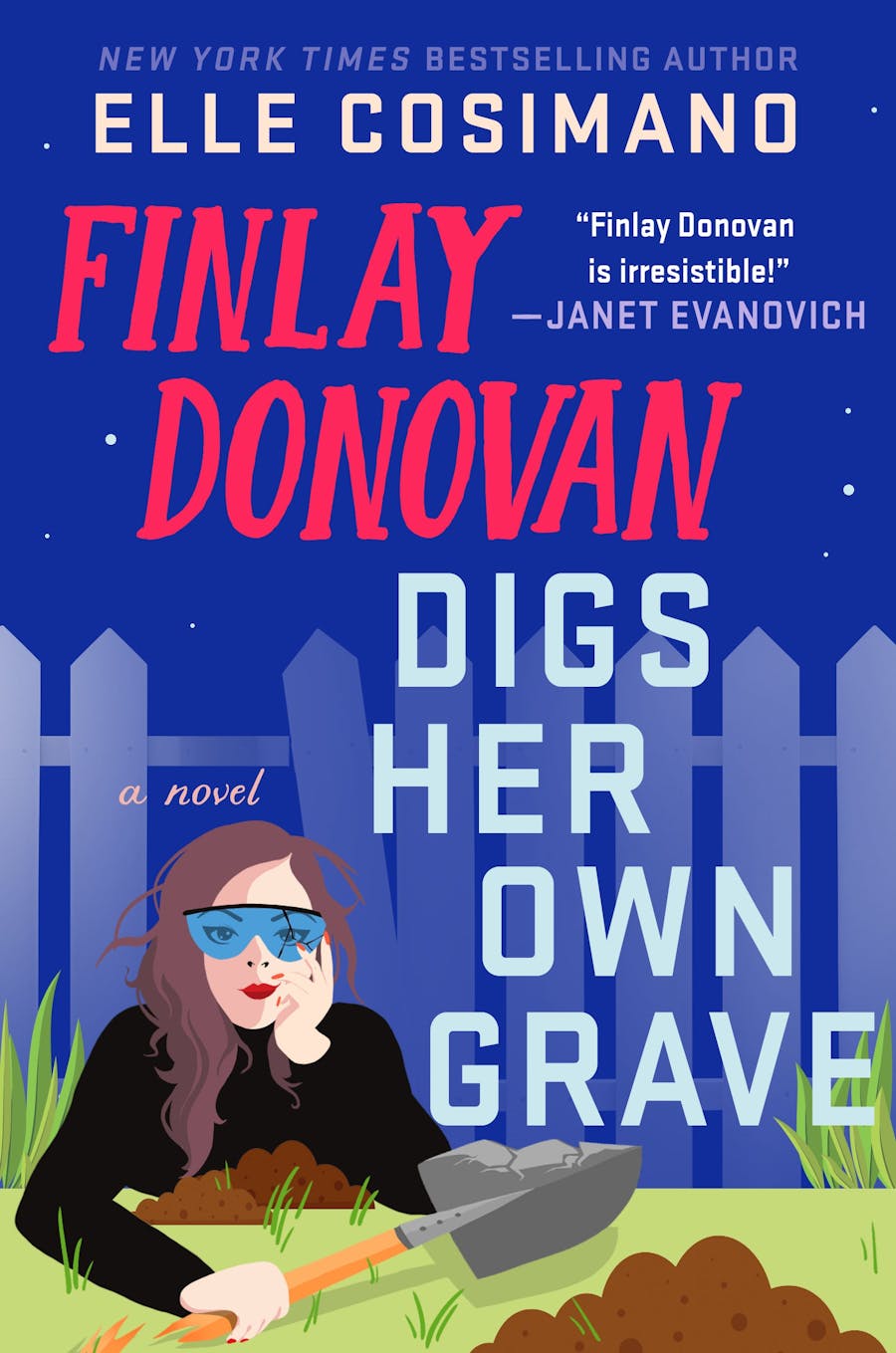
Finlay Donovan Digs Her Own Grave*****

Finlay Donovan is a full time mom who finds herself short on resources after her attorney husband leaves her for someone else. In the first episode, she finds herself with a corpse that she may or may not have killed; fearing the worst, she disposes of it, and the next thing she knows, her name is on some sort of dark web list of killers for hire. By the time she realizes she’s innocent, it’s too late to put the toothpaste back in the tube.

Other things have happened since then, of course, as we find ourselves now on the fifth installment. Present and accounted for is her nanny and close friend, Vero Ruiz, a woman with the kind of street smarts that can come in handy when the chips are down. In this episode there are several recurring characters, and the reader is strongly advised to go back and read the first Finlay before diving in. It’s not as if you can’t just start with this one, but you’ll be missing half of the jokes and jibes if you do.

My great thanks go to St. Martin’s Press Early Readers program and NetGalley for the review copy. This book will be available March 4, 2025.

Finlay’s nosy neighbor, Mrs. Haggerty, assumes a central role this time around when a body is exhumed from her backyard. Her home is declared a crime scene, and before Finlay even has time to react, the woman has installed herself in Finn’s guest room. A beat or two later, Stephen, Finlay’s ex, husband of her two children, is arrested for murdering the corpse that’s been found!

One of my favorite parts of this series is watching the dynamics between Finlay and her ex. On the one hand, the guy is philanderer, and he’s kind of a weasel. Yet, though Vero urges Fin to let justice take its course and stay out of it, Finlay has to defend him. Stephen is the father of her children, and they don’t need to grow up being told their daddy is a murderer. Also? The child support will dry up quick as a whistle if Stephen no longer makes money. And part of what I love about this, is that, in broad strokes, it outlines a dilemma that any number of women with children face. Life is full of nuance, and although this is not literary fiction, not intended to be known for its depth, it does honor the shades of gray faced by so many women. It makes the whole story more relatable.

Mrs. Haggerty also proves to be far more interesting than we previously believed, and that’s all I’m going to say about that. However, I do admire Cosimano’s capacity to juggle a million tiny, moving parts without creating inconsistencies. Once or twice I have seen what looks like an inconsistency, but then it turns out to have been written that way for a reason, usually to expose someone or something.

As the series progresses, I see more critics howling that the series isn’t what it was. Of course they’re right, in a way; when the series grows, the author has to make changes to prevent becoming a one trick pony. But I admire the way Cosimano handles the growth.

One small moan: yes, yes, yes. We can see that Finlay is hot for Nick, her cop boyfriend (the only trite element so far.) And yes, yes, yes, we can see that Vero is madly in love with her sweetheart, a fellow who she’s adored since her teens. We get it. Finlay and Vero are not a couple. We don’t need it hammered in any further, or at least, I don’t. For that matter, I wouldn’t be all that disturbed if they were. But the increased emphasis on their two romances bears just the tiniest whiff if hysteria. It’s not necessary. Finn’s love for Vero and vice versa, is not a lesbian love, but about the family we choose. So, let it rest already. Relax! The lesbian role is fulfilled by Finlay’s cop sister, Georgia, who stays firmly in the background where, apparently, some in the industry believe lesbian characters belong.

Sheesh!

That wee rant aside, I enjoyed this book very much. I heartily recommend it to you, and I cannot wait to read the next in the series.

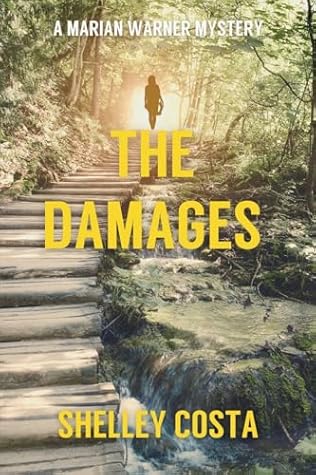
The Damages, by Shelley Costa****

Shelley Costa, one of my favorite cozy mystery and humor writers, gave us No Mistaking Death, a new series introducing amateur sleuth Marian Warner in 2023. Here she is back with the second in the series, The Damages. My thanks go to the author, NetGalley, and Level Best Books for the review copies. This book is for sale now.

Marian was confused and hurting when last we saw her; that’s what happens when a normal person shoots someone. She blew out of Carthage, Ohio like the devil was on her tail at the end of the first mystery, but now she’s back, answering the call of a kid who wants her to find his missing sister, Beth. Beth is a courier for a medical testing company, ferrying blood samples from point A to point B. She’s well liked, lives a stable existence, and has told nobody of travel plans, but despite the fact that Carthage is a dinky little town, nobody has seen her lately.

It doesn’t look good.

Marian’s investigation dovetails with a big trial that’s taking place. A local obstetrician is being sued for millions by a couple whose baby he delivered. She has Cerebral Palsy, will never walk, talk, or lead a normal life. The medical malpractice suit is a money grab, plain and simple; if it is successful, Dr. Barish won’t be able to practice anymore. His premiums are already killing him. Is he the reason that Courtney Clemm is in such dire condition? Because she certainly is. It’s hard to look away.

This is a complex tale with a lot of twists and turns, but it’s not the mystery that keeps me engaged, it’s the protagonist. Given that this is just book 2 of a series, Marian is unusually well developed and immensely engaging. Add to this Costa’s trademark wordsmithery, her wry observations and quirky figurative language, and the case is almost beside the point. I’m here for Marian. And that’s good, because—for reasons I cannot understand myself—the pacing here is a little slow in places, though it ramps up to an arresting climax and powerful ending.

All told, this is a well-crafted novel, and I look forward immensely to book 3 in the series. Recommended to all that love a good cozy.

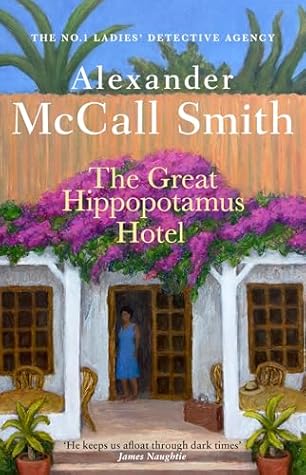
The Great Hippopotamus Hotel, by Alexander McCall Smith*****

The 25th book in the #1 Ladies Detective Agency series is not to be missed. My thanks go to NetGalley and Knopf/Doubleday for the review copy; this book is available to the public now.

When life becomes stressful, what do you do? Some swear by yoga, herbal tea, walking or running, therapy, mindfulness, journaling, or a number of other remedies. Some of us dive into the chocolate; the short-term benefit is mitigated by the long term weight gain, but when we’re upset enough, we don’t care. And for some of us, this series is just what the doctor ordered.

Precious Ramotswe is our detective protagonist, assisted, and occasionally encumbered, by her headstrong but goodhearted colleague, Grace Makutsi, part time apprentice detective, Charlie, and occasionally, by her bestie, Mma Potokwane, who runs the local orphan home.

Our mystery revolves, as the title suggests, around a case of possible sabotage at The Great Hippopotamus Hotel. There’s another thread, too—as there usually is—involving Precious’s husband, Mr. J.L.B Matekoni, owner of the garage and technically, Precious’s landlord.

Those looking for an action packed thriller will always be disappointed here, because that’s not what this series is. Instead, it’s closer to being a Miss Marple-ish cozy mystery. The problem is nearly always solved, not by DNA or murder weapons or questioning baddies until they break, but by an examination of the circumstances and characters of those involved. It is here that Precious is at her finest. In addition, she must tread carefully around the feelings of her staff, primarily that of Grace Makutsi, whose insecurities tend to make her prickly. Grace is a bit threatened by Mma Potokwane, and when Precious explains gently that they will be accompanied by the orphan farm matron on an investigation, Grace says, in a serious case of look-who’s-talking:

“Mma Potokwane—yes, she is observant, but…But Mma, if Mma Potokwane has any faults—and we all have faults Mma, myself included—if she has any faults, one of them is taking over. I am not saying that she is bossy—that is not a word that I would use for Mma Potokwane—I would not say that, Mma, and I am not saying it now. No. But there are some people, I think, who might say that.”

And so, in addition to her detective work, Mma Ramotswe must navigate the small minefields that exist between these two women, both of whom are dear to her.

In some ways, the mystery aspect of these stories is almost superfluous. Every story has to have a problem and a resolution, and so it’s convenient, perhaps, to use a mystery as scaffolding for whatever problem Precious must confront. It’s certainly served Smith well. But the real benefit I see in these series is that the solutions to these problems are always dealt with as gently and as kindly as is possible. Nobody is getting thrown face down on the ground and handcuffed in these stories; every effort is made to turn the problem around while allowing the perpetrator to retain as much dignity as possible. The lyrical prose is so soothing that I love reading these stories at bedtime.

And one more word, for regular readers: the recurring character of Violet, who is the closest we have to a villain, pops up here right away, and I rolled my eyes and said, “Not this again. Smith needs new material.” But the way the character is used this time is different, and if I had a hat, I would tip it in appreciation of the author’s cleverness. He always seems to know when it’s time to break a pattern.

Highly recommended.

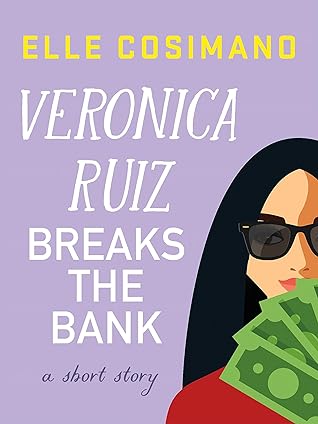
Veronica Ruiz Breaks the Bank, by Elle Cosimano****

Fans of Cosimano’s Finlay Donovan series will recognize her trusty sidekick and BFF, Vero. Over the course of the series, we’ve had many hints about Vero’s past, and Finlay sometimes wonders why Vero is so tightlipped about her personal history. This short story provides curious readers with some background, as well as some of the entertainment for which Cosimano is fast becoming legendary.

My thanks go to NetGalley and St. Martin’s Press for the review copy. This book is for sale now.

I generally avoid this sort of book, because often as not, the author returns to flesh it out into a full length novel, and as much as I enjoy reading it once, I don’t want to read it twice. But this was low hanging fruit, a shorty by an author I greatly enjoy, at a time when I couldn’t get up and move around much, and so I dove into it.

Vero is an honors student from a struggling family, and her academic career is short circuited when an envelope of money goes missing, and Vero is blamed by her sorority sisters. Vero makes a run for it; desperate for work, she takes a custodial job in a bank, and that’s where the fun begins.

This is an entertaining read, but it’s not up to the level of Cosimano’s novels. For a short story to work, a lot must be packed into it, with every single word pulling its own weight, and possibly that of its friends and family. Here, it feels like a chapter out of a book, one in which the author doesn’t want to give up any truly juicy information about the protagonist because she’s saving it for—you got it—a novel.

Of course, I cannot pretend to know what the author is thinking here; this is just an educated guess. But the product is the product, and whereas it was a fun read as a free galley, I might have felt a bit annoyed if I’d paid money for it.

Those looking for a quick, light read to take to the beach could do worse. Some people don’t have the time or stamina for a full length novel of any type; if that’s you, maybe this is your book. But as for me, I’ll hold out for the real deal in the future.

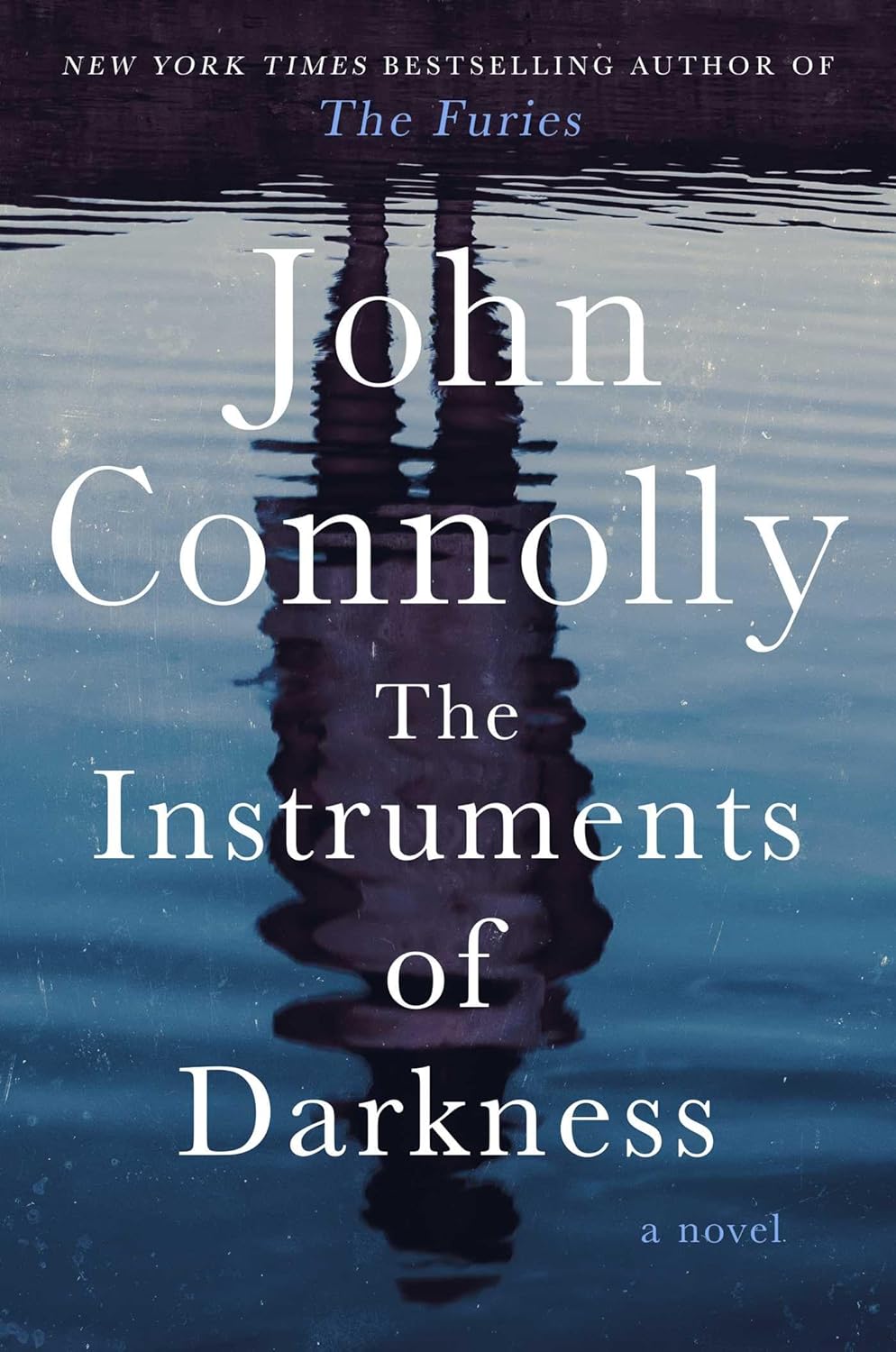
Instrument of Darkness, by Charlie Parker*****

It’s a funny thing about long running series, how some of them become stale after a time while others just keep building. The Charlie Parker series by John Connolly is one of the latter, and with every addition to it I am more riveted, more amused, and more engaged than I was before. The Instruments of Darkness is the 21st in the series. My thanks go to NetGalley and Atria/Emily Bestler for the review copy; that said, this is one of the rare times that I would have laid out full jacket price if that was the only way I could obtain a copy.

This book is for sale now.

Charlie Parker is a former cop turned private detective with a terrible past. He stepped out to buy a newspaper one morning and returned to find his wife and small daughter savagely butchered; the guilt at not being home to defend them was overwhelming, if irrational. He dedicated himself to finding the person that had done it, and making certain they never did it again. Since then, he’s served as a professional snoop on behalf of other wronged persons. Because he often upsets people with money, power, and twisted morals, he often brings along his own muscle when he works, or in some cases, contracts with them to bodyguard his clients during the process. So it is this time.

The job has to do with a young mother whose baby has been kidnapped from its crib during the night. Colleen woke from the first sound sleep she’d had in forever only to find the nursery window open, and Henry gone from his bed. Later her husband Stephen finds a blanket in the trunk of her car, soaked in blood, which, when analyzed by law enforcement, turns out to be the boy’s blood. Stephen tells the police that he is sure she must have done it, and he leaves her.

But she didn’t. Of course not.

In his last few Charlie Parker novels, Connolly has added touches of horror and magical realism, and it’s only made his stories better. In particular, he is adept at sentient houses or other buildings. Sometimes it really is the structure; at other times there’s some sort of being that lives there, unseen. In this case it’s an old house built from a Sears Roebuck kit over a century ago, and so he names it “Kit No. 174,” and after it appears a time or two in the story, generally as the opening of a new chapter, I get the shivers just seeing the name. The narration tells us, “No one had ever spent long in it—or no one had ever lived in it for long, which is not the same thing. No, not the same thing at all.” There are some minor references to other houses that have appeared in the series, and these will delight the faithful readers that remember them; it did me. However, newbies that are just starting this series will be fine.

The recurring characters shine brightly here. The attorney that often hires Parker, Moxie Castin, opens the book, and we get a resonant character sketch:

“Moxie Castin was easy to underestimate, but only on first impression. He was overweight by the equivalent of a small child, didn’t use one word in public when five others were loitering nearby with nothing better to do, and had a taste for ties reminiscent of the markings of poisonous insects or the nightmares of LSD survivors…He lost cases, but not many, and his friends far outnumbered his enemies.”

Other recurring characters are the Fulci brothers, and when I see their names, I smile. They’re described as “two wrecking balls in human form.” Another is Sabine, a shy, tortured psychic that just wants the dead to go away and leave her alone, and best of all, Angel and Louis, a lawless couple of friends—the word “couple” applies in two different ways here—that Parker hires when things get spicy. If I smile when we are joined by the Fulcis, I beam when I see Angel and Louis. And in a nod to series regulars, there’s a point when Parker simply tells someone, “They’re coming,” and he doesn’t say who, but of course, we know exactly who. (Later he explains them for the uninitiated.) There’s a favorite passage of mine in which Parker is concluding an interview, done in a restaurant, and when he and the other person emerge, she sees them and asks,

“Are they with you?’

“They’re my associates.’

“They don’t look like private detectives. Don’t take this the wrong way, but they look like criminals. If they came into the store, I’d lie down on the floor with my hands behind my head.’

“Sometimes that’s precisely the effect we seek.’”

Oh, there’s so much more, but you need to find these things for yourself. The story is on the gritty side, but not nearly as much so as some of the others in the series. In fact, I generally have a policy of not reading this series at bedtime, lest it enter my dreams. I violated that policy once, and I did indeed have a dreadful night afterward. And so I behaved myself until I hit the last twenty percent, and at that point, I knew I would read it until it was done, regardless of the time or proximity to lights out, because I had to see the resolution. I had guessed, long before, whodunit, but that felt beside the point. So I stayed up and saw it through…and I’m not a bit sorry.

Highly recommended to those that love the genre, and especially to Charlie Parker buffs.