
Memoirs of General William T. Sherman, by William T. Sherman *****

memoirsofgeneralwmtshermanIt’s important to admit bias up front, and I will tell you that I went into this with a strong sense of near-adulation. Sherman has long been my greatest hero among American generals (and it’s a short list). I have no use for Civil War literature that waxes nostalgic for the “lost cause” of wealthy Southern Caucasians, nor can I stomach the revisionist notion that the war was really just a sad, sad misunderstanding that might have been averted with a little more discussion. I don’t see it that way. I see it as an historic necessity with material roots. Marxist historian George Novak wrote that the opportunity to avoid war and let the Industrial Revolution march forward unfettered by slavery was lost when the slave owners firmly declined all offers to compensate them for “their” slaves and let them go free, so that progress and humanity might take a great leap forward. And so I am a great fan of Sherman’s. His march through Georgia was correct and righteous, and the anger his soldiers unleashed upon the state that began the whole process in a premeditated and aggressive manner, South Carolina, was well placed.

Now that all of that has been dealt with, I can talk about his written record.

Sherman’s memoir is remarkable. He was one of those rare beings, both a soldier and an incredible scholar (in the mold of Lewis and Clark, perhaps). He headed a military academy in Louisiana when the South seceded, and after giving a moving farewell speech to his students–the man gives a sense of being capable of really creating personal bonds, while at the same time knowing that if he has to say goodbye forever, he’ll do it–and went to Washington to seek orders.

Sherman is an outstanding writer, and his voice comes through loud and clear. I confess my affection for him is marred slightly by his horrific perspective (probably not unusual, but this guy never did anything halfway) toward the American Indian. I decided enough was enough, and skipped forward to the Civil War. My husband, whom I will call Mr. Computer, was also reading it, as we had accidentally procured two copies, and he did the same.

The opening years of the war are incredibly frustrating to study. McClellan had been a big-deal general during the war against Mexico, and he was initially placed in charge, while Grant and Sherman lingered in the background out west, each having left the military under a cloud, Grant for his drinking during the Mexican war, and Sherman as having been perceived as crazy. (Today I think a nice bottle of Xanax or Valium would’ve done wonders for the man in peace time years, but I believe he merely suffered from anxiety, and there’s a lot of that out there)!

By reading Sherman, one does not get an account of the whole Civil War; he can’t rightfully provide such a thing, because this is a memoir, so he writes about the places he went and the battles in which he took part. He is lavish in his praise of competent or even excellent officers, and takes pains to mention as many as possible by name, sending them down in history as heroes alongside himself.

His most famous contribution, the 3-campaigns-in-one march of some 425 miles, from the siege of Atlanta, to its invasion, and his willingness to tell the truth and avoid the senseless pussyfooting of his predecessors, who had stupidly believed that by firing over the heads of the Confederates, they could scare them into submission, is an inspiration. He understood that in order to win a war and have it be over, the gloves must come off, and ugly things had to be done. He limited his attacks to Confederate soldiers until the local population began to sabotage his efforts, at which point, without hesitation, he burnt local homes, measure for measure. Inside the city, he endeavored to destroy any and all infrastructure that would aid the enemy, since Confederate weapons, clothing, and food were nearly all warehoused in this city. He personally supervised the destruction of the railroads that would otherwise keep supplies moving between Atlanta and the field, and cut his own supply line, a gutsy move unheard of previously. He soon learned not to trust Cavalry to destroy the railroads, because they’d just tear the tracks off, and someone else would put them back on. Sherman supervised the heating of the rails till they were white-hot and pliable, and created a tool for bending them around the trunks of trees, or into knots when no trees were nearby, so that no one would ever use them again.

Sherman has an unfairly tainted reputation regarding the Black people of the South, perhaps because he discouraged newly-freed families from following his train. The issue was a logistical one; he had enough food for his soldiers, thanks to their resourcefulness in foraging, and he welcomed single Black men to assist in noncombatant ways in order to free up his soldiers. (He was not willing to arm his Black enlistees, and was pleasantly surprised when he found others had successfully done so later). But when someone from Washington came down and privately interviewed former slaves to see who they trusted and who they didn’t, they gave their unilateral trust to Sherman. This is the proof for me, that although he was later unsure they were ready for the ballot before they became literate (with which I disagreed), he treated them with kindness and they revered him, viewing him alongside President Lincoln, as their liberator.

Grant was so eager to have Sherman back to help him fight Lee across the Potomac that he nearly boarded him and all his men onto ships once he reached the sea. Sherman talked him out of it, saying that he must go THROUGH the Carolinas in order for those insulated in die-hard South Carolina to see the might of the American army, and understand that resistance truly was futile. The newspapers (and Sherman’s feelings toward the press were as plain as everything else; on the one hand, I do love a free press, but they were publishing his battle plans, which were supposed to be secret, and so I can understand his hostility toward them!) of the South printed lies, saying that the South was winning its quest for separation, and Sherman felt that personal experience was the only thing that would really convince those who had first seceded, who had fired on Fort Sumter, and perhaps since they started all this, it was appropriate that they not be spared the privations that the people of Georgia, who were much less enthusiastic toward the Confederacy, had experienced.

Grant was smart enough to listen to him, and let him follow what he considered the best course of action. Lincoln was a true friend and leader who knew when to stop delegating. Again and again, lies came to him about Grant, that he was drinking again, etc. and should be removed, and Lincoln, who was well and truly done with the likes of McClellan, Pope, and Burnside, said, “I can’t spare this man. He fights”. I mention this, not as a digression but because Grant and Sherman were hand in glove. This partnership, this blending of mind and purpose, is part of what made victory possible.

Sherman and his men fought their way through woods, swamps, over quicksand, through areas previously considered impenetrable, and unlike many high-ranking officers, he gave himself no perks that he did not share with his men (apart from the rare invitation to dinner with a Union family). At the very end of his memoir, he devotes perhaps 20 or 30 pages to what constitutes effective leadership, and one thing I was struck by is that he believes a commanding officer should ride up front, because the men leading it have pride in the fact that they are leading, and that disorder and bad behaviors are limited to the rear. In short, he is safer with the men in front, and he has to see what is ahead to draw the correct conclusions about what should be done next. He sleeps on the ground, just like his men. At one moving point, he and his men sought refuge from a storm by sleeping in a church, and some of the soldiers found carpets and made him a little bed up by the altar. Sherman told them to give that bed to their division leader, because he was used to sleeping hard. “Then I fell down on a pew and was instantly asleep”.

After Lincoln’s assassination by a Confederate sympathizer, and attempts upon the lives of Seward, Secretary of War, and others, newly-minted President Johnson suddenly knocked Sherman’s legs from beneath him. Without a hint or clue as to why, Sherman was suddenly vilified, and the orders to his subordinates NOT TO OBEY HIM were released to the press. Such lack of appreciation for a man who gave his all to the Union took my breath away. Apparently Secretary of War Stanton, who replaced Steward once he was injured, was filled with paranoia and behaved both irrationally and unfairly. This was primarily his doing, and Sherman knew it. He reported to Grant, and ONLY to Grant.

Upon reaching Washington DC, each leading general paraded with his army before a massive crowd, and Sherman had his rightful place on the review stand once he reached it. He passed down the line, shaking hands along the line of others who’d been seated there…until he reached Secretary Stanton. At this point, he states that he publicly brushed past the outstretched hand offered him, thus returning the public insult that had been dealt him in the press. He snubbed the guy in as public a manner as possible, and I once again wanted to cheer. Well done.

“War is war, and not popularity seeking”, he responded to someone who questioned his destruction of Georgia, and the sieges that left rebel cities on the brink of starvation. And he was right. It can’t be over until someone has the courage to wage real war. His frankness and his affection for his troops, even though he knew some of them would fall, or maybe even more so because of it, was deeply moving, and I came away feeling that I had read one of the best memoirs ever.

One more thing I’d add, for those who get the edition that I read: if you flip to the last page, it says 490. Hmmmm. The book appears to be longer, but then, there’s a lot of small print, where he documents everything meticulously, using primarily the telegrams and letters from himself to his superiors and vice-versa.

But there’s something more. This was originally a two volume set. It’s less expensive to buy just one book, but it remains two volumes under one cover. Once you reach the FIRST page 409, There is a page that says VOLUME II and then you start on page 1 again, so that you are actually reading over 800 pages.

Put together with Southern historian Shelby Foote’s less-apt and rabidly pro-Confederate trilogy, this was a meal, yet I don’t regret reading them together, since it provided two perspectives (and I am finishing Burke Davis’s book on Sherman’s march to the sea, a smaller volume with a third perspective that is closer to Sherman’s own).

But if you ask me who I believe when facts collide: I believe Sherman.

Post script: Shelby Foote’s Civil War trilogy is not reviewed on this blog, because I only give space to work I respect and have rated at four or five stars on a one-through-five star scale.

The Warmth of Other Suns: The Epic Story of America’s Great Migration, by Isabel Wilkerson *****

thewarmthofothersunsIf you have any interest whatsoever in African-American history; American history in general; or Black Studies, this book should already be on your shelf. It is one of the most important volumes to have been written in decades, a comprehensive yet readable and enjoyable look at a migration that dwarfs the smaller California Gold Rush and Dust Bowl migrations in size and scope. Black folks started to leave the south as Jim Crow became entrenched. They did so often at their peril; Caucasians who wanted that cheap and servile day labor were so violently opposed that Blacks planned their departure, in many cases, with the utmost secrecy, buying the train ticket from their own backwater hamlet to a nearby town so no one would suspect they really meant to go to Chicago, Milwaukee, Washington DC, New York City, or any of a number of places in the north and west where there was no official Jim Crow.
Though they still faced a disappointing amount of racism, from segregated neighborhoods to hotels that magically became “full” just long enough for the Black traveler to get back into the car, things were much less tense in their newly found homes. Like immigrants who come to the US from Third World countries, they found that although they did not yet possess the things the White man had, regardless of their own professional qualifications, they did enjoy a better standard of living and lived under less fear than they had back in Mississippi, Texas, or any other part of the Jim Crow south. Some grew homesick and went back where they’d come from, but most did not.

Wilkerson received a Guggenheim fellowship to help support the vast amount of research-related travel and time it took to compile this masterly piece of research, for which she used over 1,200 interviews. Her scholarship is meticulous. Every speck of information provided by a primary source is backed up. She won the Pulitzer for this book, and that is not surprising.

In my own reading of this work, in which she follows the stories of three individuals, interlacing their stories with her more journalistic reporting of the facts on the ground, I found it helpful to skip to the section in which she explains her methodology, before I read further. Thus, I read the introduction, then skipped to the methodology (since I had initially wondered what good 1,200 interviews did if we were going to just follow three, but she cleared that up quite nicely), then the main body of writing, start to finish.

It’s a large tome, and I usually restrict my reading of physically large works to a small portion of each day due to my own issues with arthritis and pain. That went out the window while I read this. It is anything but dry; I could not put it aside. It was as riveting as the most unforgettable biography or memoir, and I kept reaching for sticky notes to mark passages I found particularly compelling.

Sometimes I end my reviews by suggesting a particular book is worth reading, but only if you can get it free or cheaply. Not this time. This is a book the serious reader will want on his or her bookshelves. It is one to refer back to again and again after having read it. If you don’t own it yet, go out and buy it. I hope that in the near future, it will become one of those books that every scholar will be expected to have read in order to be taken seriously. It’s that important…and how lucky we are that it is also fun to read!

The Struggle Against Fascism in Germany, by Leon Trotsky et al *****

Trotsky wrote this while he was in exile. Lenin was dead, and Stalin had come to power in the Soviet Union, striking a death knell for world revolution as he moved to consolidate the gains that the working class had won and establish an elite, privileged power structure, corrupt and bureaucratic.

In Germany, the revolutionaries, courageous to the bitter end, were rounded up and for the most part, exterminated.

Trotsky offers a convincing argument regarding the causes of fascism. He does not see this as mass hysteria or a “quasi-religious” movement, to quote others on the topic, but one with a purely economic basis.

It is not light reading. It is an historical treasure and possibly instruction for what the future may hold if workers, farmers, students, and social activists who care about the world are not wary and careful. The best way to read it is with the television set off and some sticky notes or a highlighter in your hand.

I was stunned to see I had not reviewed this sooner, as I have read it multiple times. Alongside the work of Daniel Guerin, I consider this the best analysis of the causes of fascism ever written.

Before the Mayflower: A History of Black America, by Lerone Bennett, Jr. *****

When I was working on my MA with the goal to teach history in the upper grades, I expressed my frustration to my professor. I asked where I could find the actual history of Africa. Everywhere I looked (in conventional sources, such as the university library and trade journals) it said, “See Europe”. I didn’t WANT to read about the colonizers. But of course, when conquerors succeed in occupying another land militarily and politically, the next thing to be done is to eradicate the culture as it exists, and to pretend there WAS no history before the conqueror arrived (aside, perhaps, from a brief reference to how bad it used to be).

Mr. Bennett gives voice to Black Americans, and to the cultures they brought with them. Through impeccable research, he has uncovered history and culture that was not readily available those many years ago. This book was published and available at almost the same time I finished my degree. I found it later when I had the luxury of being able to read what I wanted, rather than that which was assigned, and have used it to some degree in home schooling my son (though it is too difficult for most high school students). Highly readable and enormously enlightening.

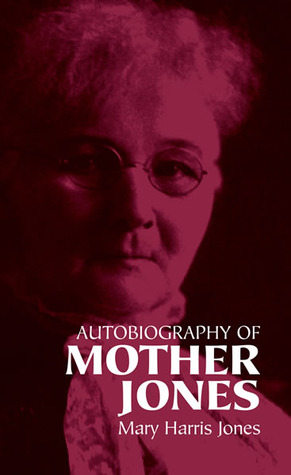
The Autobiography of Mother Jones, by Mary Harris Jones, Mary Field Parton (ed), Clarence Darrow (intro) *****

autobiomotherjonesMother Jones has been called “the most dangerous woman in America”. Some refer to her as an anarchist, but in her autobiography, she denounces anarchism, though allows that these folks have their hearts in the right place. She has been called a syndicalist (which is probably closer to the truth), but the fact is that she was motivated by what she saw right there on the ground in front of her. When the Russian Revolution unfolded, she was by her own account past 90, and by the account of another biographer, in her mid-80’s, so either way, she was very, very elderly, yet she championed its achievement at the Pan-American labor conference held in Mexico:

“…a new day, a day when workers of the world would know no other boundaries than those between the exploiter and the exploited. Soviet Russia, I said, had dared to challenge the old order, had handed the earth over to those who toiled upon it, and the capitalists were quaking in their scab-made shoes.”

Jones’ career as a political organizer began shortly after she turned 30. She was a married woman, her husband an iron worker, and she stayed home with their four small children. “Yellow fever” (which I think is malaria) came and killed her whole family, and then as if that wasn’t enough, the great Chicago fire swept away her home and all her possessions.

Some would have turned to suicide. Some would have gone looking for an elderly widower to marry. Some would have gone off to find distant relatives and live with them as little more than domestic servants.

Jones reinvented herself and gave the next fifty-plus years of her life to making the world a better place.

Still clad in a widow’s black garments, she put her hair up in a chaste bun and left Mary Harris Jones behind. From this time forward, she would be “Mother Jones”. Think of it! The cinders from the American Civil War were barely cold, and women had no position in American political life, including the labor unions. Yet by becoming a mother to workers everywhere, including the women and small children laboring in mines and textile mills, she became a force to be reckoned with. It was a brilliant piece of theater, entirely sincere in its intention and in many cases successful. She was one of the most ardent champions of the 8 hour day:

“The person who believed in an eight-hour working day was an enemy of his country,a traitor, an anarchist…Feeling was bitter. The city [Chicago] was divided into two angry camps. The working people on one side–hungry, cold, jobless, fighting gunmen and policemen with their bare hands. On the other side the employers, knowing neither hunger or cold, supported by the newspapers, by the police, by all the power of the great state itself.”

When Mother speaks, people feel they should listen, and if she speaks in their better interests, they listen harder. And in the early days, at least, the boss’s goons and the local law thought twice about putting a hand on Mother. It wasn’t nice!

Later, as her impact on their wallets hardened their resolve, they would deal with her less gently. She didn’t care. She spent nights in jail when she could have left town instead. Sometimes she traveled into a coal mining enclave where every bit of property besides the public roads was owned by the mine owners. Even homes that had been rented to miners were closed to her, as was made clear enough to break almost anyone’s heart. She describes a mining family that held a union meeting at which she was present in the coal fields of Arnot, Pennsylvania. The following day the company fires and evicts the family, and “they gathered up all their earthly belongings, which weren’t much…and the sight of that wagon with the holy pictures and the sticks of furniture and the children” made the local miners so angry that they decided to strike and refuse to go back to work till their union was recognized.

The quote most well known that shows up on tee shirts, posters, and coffee mugs among the liberal and radical milieu today is knocked clean out of context, in my view. “Pray for the dead and fight like hell for the living” was delivered in order to get working men out of the local church, where the priest was trying to cool down the heat and persuade the coal miners to wait for a reward in heaven. “Your organization is not a praying institution,” she reminded them, “It’s a fighting institution!” She tells them to leave the church and meet in the local school, which their own tax dollars had bought. And she later tells other miners that striking is done to provide “a little bit of heaven before you die.”

From Chicago to the coal fields of West Virginia, from New Mexico to Pennsylvania, she was found among railroad men and their families, machinists, textile workers, and above all, miners. She had no use at all for union officialdom, and though she occasionally praised a senator or governor who saw the light of day and called off the hounds of vengeance so that unions could be organized and the workers represented, more often than not she saw them as perfidious and untrustworthy.

When Eugene Debs became a candidate for U.S. president, she embraced his campaign, though she stayed among the workers, which I think was the correct thing to do. But when Debs comes to speak to coal miners and the union officialdom wants to meet his train quietly with a few representatives, Jones proposes all the union members go to greet him. They stampede down to the train, leap over the railings, and lift Debs onto their shoulders, she says, shouting, “Debs is here! Debs is here!”

I could have been finished with this slender volume quite quickly if I hadn’t been making notes (most of which, as usual, I cannot fit into my review, but then I should leave you some choice tidbits to find for yourself, and there are still many of them!) The chapters are brief, and so the book can be read just a few minutes at a time. And the introduction is written by one no less auspicious than Clarence Darrow himself.

You may look at the price and wonder whether you should pay that price for this slender little volume. The answer is, oh hell yes. Please remember that the words of the woman herself are worth twice as many from some armchair hack who wants to pick it apart and wonder whether she was really 83 or 85 at such-and-such moment? Spare yourself the blather and go straight to the primary source. It’s worth double the cover price!

King Leopold’s Ghost: A Story of Greed, Terror and Heroism in Colonial Africa, by Adam Hochchild *****

Just as Europeans once looked upon the Americas as land that was unclaimed and waiting to be discovered, explored, and claimed by Caucasian Christian civilizations, so too was Africa, referred to as “The Dark Continent”, ripe for exploitation when the Europeans arrived.

Initially, through their own caste system, tribal chiefs were absolutely delighted to trade away the Africans they themselves kept in bondage for the wonderful new munitions, cloth, and other goods that were offered. But their satisfaction turned to horror when they learned that where Black folks are concerned, Europeans just don’t play by the rules. King Affonso of the Congo sat down and wrote a letter to the ruler of Portugal, explaining that he had sent his son to Europe to attend school, and he was never heard from again. Now he has learned that his own family members were being rounded up by slave traders! There must surely be some sort of mistake.

African missionary, explorer, and British emissary Dr. David Livingstone traveled to Africa and was the first known (at the time) European to cross Africa from coast to coast. He returned to England to be feted and celebrated, and then plunged back into Africa…and stayed there. He was happy. Why go home?

Henry Morton Stanley was a journalist of uncertain origins (see the book) who went in search of Livingstone and found him, uttering the famous quote, “Dr. Livingstone, I presume?”

Meanwhile, a royal in Belgium grew restless. Leopold had delusions of grandeur, and why not? If France, England, and Spain could enjoy colonialism, why not Belgium as well? Leopold thirsted for power. He wanted to become a king. As African territory was snapped up piecemeal, he leapt in and grabbed a slice through the middle, in what would for a time be known as the “Belgian Congo”.

By now, slavery had been declared illegal in Britain, and so Leopold strode in to civilize and Christianize dark-skinned people whom he was certain could not do so for themselves. A great road was built there…and it went straight in from the ocean, and straight back out again. Leopold had learned of the ivory to be obtained through the wholesale slaughter of elephants. He offered prizes to locals who brought these forward, and assured them they would be protected from the aggression of any other European powers. What a deal. Leopold sponsored Stanley and gave him the royal seal of approval when he went in to further explore the area. In the end, Leopold claimed all of the Congo, an area, says the author, the size of the United States east of the Mississippi River. Many different tribes and cultures, some peaceful, some not, were brought under his ruthless leadership.

Leopold himself was almost a perfect villain, obsessed with power and obnoxious even to other Europeans of his time and station. When Prince Albert visited the new palace Leopold was having built, he believed he was complimenting the man when he said it would be like “a little Versailles”. Leopold took offense instead. “Little?”

But as amusing as anecdotes like this one are, the brutal fact is that tens of millions of Africans were killed under European colonialism. When Belgium was more or less forced to grant sovereignty to the people of the Congo, he sabotaged the new government of Patrice Lumumba, a popularly elected leader, by refusing to let go of the mines where the remaining mineral riches of the nation were located. The United States helped him crucify this man and was party to the manipulation of tribal rivals. Wholesale slaughter of unimaginable cruelty ensued. Multinational corporations were “also in on the take”.

Though this is a painstakingly written and riveting account, and the research undeniably fastidious, well documented, and scholarly, I would differ with the lame conclusions drawn at the end, namely that the United Nations should have sent in a peacekeeping force during the transition. Who is in the United Nations? Britain and the US, for starters? What a pitiful conclusion to an otherwise brilliant book. I know that if Malcolm X were here, he’d say this was “like leaving the fox to guard the hen house.” For this reason, I considered giving four stars. It’s just too well done otherwise to deny it all five, with this caveat: those final two pages of conclusions should cause any reader who makes it this far down in my review to understand I really mean, four and a half stars.

I say the only way the Congo or any other African nation can rule itself is for colonial powers to get out. Go home. There is nothing there that they own anymore; it’s over. Africans can rule Africa, as long as colonialists let go of the entire pie.

All Standing: The Remarkable Story of the Jeanie Johnson, the Legendary Irish Famine Ship, by Kathryn Miles *****

The Irish potato famine is at its worst. Blight kills all of the potatoes–my god, even the ones that had been harvested and stored away in root cellars where the families thought they could access them!–and the potato was nearly the only crop that the Irish had. Millions depended on charity (nearly nonexistent) or the government, and unspeakable numbers died, while the grain that had grown was shipped abroad as an export for sale. Local farmers who had a surviving patch of turnips or even a single cabbage had to post a guard overnight, or someone else would steal it. Unfathomable.

I was sent a free copy of All Standing as part of the Goodreads First Reads program. My gratitude goes to Goodreads and the publisher for the book, and to Miles for ferreting out the facts to tell this story properly. Research is such tedious work, and here she has done so much to tell an important story.

The first seventy pages of this story are bleak, miserable, horrible, terrible. Miles does not let us go gently. The documentation is well done, and the statistics and examples lend a special sort of dread to that which was macabre to start with. There is no way to Disney-fy a story like the famine and still have it be real history. And those who buy a place on the “coffin ships” for the small chance that they may survive the trip to the new world die in droves, primarily of typhus, though a small number are fortunate and survive.

An innovative ship builder, an experienced and humane captain, and a doctor who was ahead of his time combined to make the Jeanie Johnston exceptional. It is for this part of the story, as well as the righteous anger that serves as the transition from utter misery to success, that those who love Ireland, history, or better still, both should read this book. It is a beacon that is welcome in times such as ours, one that reminds us that one person, or two, or three who have the courage of their convictions really can make a difference to others.

A Blaze of Glory, by Jeff Shaara *****

ablazeofgloryI am a longstanding fan of Jeff Shaara’s. I see occasional criticism of his work that sometimes approaches hysteria, and frankly, I don’t get it. Like his Pulitzer-winning father before him, Shaara uses a combination of extensive knowledge of the war; a fertile imagination; and considerable writing skill to turn America’s most pivotal war into stories. Story, in turn, is a tremendously effective vehicle for teaching about history.

At this point, I should mention that I got my copy courtesy of the Goodreads First Reads program; my thanks go to the publisher. This copy will hold a place of pride in my personal library, alongside the other books of Shaara’s that were given me as gifts or purchased outright for full jacket price. Is it worth full price? I say yes, with this qualification. It’s worth it if you have a serious interest in the American Civil War, and if you are open to reading historical fiction. It’s so named because any time one takes the known facts and adds dialogue, or inner dialogue, presuming to know the thoughts of historical characters, then of course part of it is made up. If you can’t live with that, either stick to nonfiction or go away.

Interest in the Civil War is key here because nobody can turn the battle of Shiloh into a fun read. It isn’t a fun subject. It was tragic. So if you want a fluffy beach read, this book isn’t that.

I was somewhat surprised to note that my own Goodreads shelves had listed this book as read by me, and the rating as 4 stars. I think it may have been an error, because I usually write a review, even if the book wasn’t free to me. However, another possibility exists: if I read it on the e-reader I owned when this book was first published in 2012, a reader now moribund so I can’t go in and check, it might have negatively influenced my perspective. Don’t read this book on your e-reader! You need to be able to see the maps, which are pivotal to understanding the action as Shaara describes it. If you didn’t need it, the author and publishers would not have devoted the space to it. I flipped back a few times to give those maps a second and third glance as I was reading. I do love my (new) e-reader and I use it a lot, but when possible, I read military history and historical fiction on paper. It’s more effective.

When I taught American history, I always kept some of Shaara’s other work on my classroom shelves. Fiction is often more accessible to students who have come to believe that history is a meaningless list of names, places, and dates. When story is used, the reader comes to understand that what took place involved real human beings and sometimes, they even recognize that their lives today might be different from what they are if things had unfolded differently back then. And had I not read Michael Shaara’s The Killer Angels, I might not have decided to read The Battle Cry of Freedom, the Pulitzer winning nonfiction tome by McPherson. I found this was also true of my students, that fiction was often a necessary conduit that made them more willing to read nonfiction on the same topic. And once that bridge is crossed, it doesn’t matter that there was no actual soldier named Bauer who did the things Jeff Shaara’s foot soldier did.

This brings me to the last thing I want to say about this well researched, carefully crafted book. Is a writer of strong historical fiction bound to include only real players in the story he reels out before us? Of course not. It’s fiction; he can write anything he wants to.

Well then, if he invents a character and gives him as much breath and life as the others, who were real, is his writing unworthy of our time and attention? I stand by the writer in this case. There were so many fresh-faced young soldiers out there who won no permanent place in our nation’s history. The working class, the lowest on the totem pole, are often disenfranchised by the fact that their history goes unwritten. For Shaara to create a single character to show that these men are not forgotten is gutsy and laudable. While leadership was critical to winning the war, it’s very important not to forget all those unknown boys and men who marched, slept in the rain and the mud, and sometimes died of dysentery before the next day’s march began. Others can say what they wish, but I really appreciate what Shaara has done in helping us remember the common soldier.

The more good historical fiction I read, the more I am inspired to read more of McPherson, Sears, and Catton. The Shaaras inspired me to read the memoirs of Grant and Sherman; I have a biography of Stonewall Jackson as my next-in-line galley. But the more I read of these masters of nonfiction, the more credible Shaara’s work looks to me.

Again, is this worth your bookstore dollars, or is it something only to be read free or cheap? If you have a strong interest in both historical fiction and the battle of Shiloh, there’s nothing better. Buy the book and read it; if you have to pay the full cover price, do it. It’s a worthwhile investment, and maybe some young person in your life will be inspired to borrow it. What could be more important?

The Counter-Revolution of 1776: Slave Resistance and the Origins of the United States of America, by Gerald Horne *****


  Generally I don’t review a book till I have read every last word. I make an exception only when I find work so excellent that I am convinced that if the book ended right where I am, right now (about 75 percent through, and of course I checked the sources), it would still be worth the full cover price. I will read the rest, but you need to know about this book RIGHT NOW.

Reading this galley, courtesy of the publisher, New York University, via Net Galley, made me feel as if the American history I studied as an undergraduate and then taught for twenty years in the public school system was so incomplete as to be incorrect. If you care about American history; if you have ever wondered why Black anger still runs so deep, especially in certain parts of the USA; if you scratched your head over parts of American history as it has been presented and the ways it did not make sense, then you must read this book.

The fact is that America’s early Black population, as well as that of Blacks in the Caribbean, behaved with much more courage and savvy than they are given credit for in standard history texts. The role of Spain that Horne explains here, as well as that of the Catholic Church, and of the Cherokee people, is startling news.

And the fact is, what I read here makes me ask questions about all sorts of other events, such as the Louisiana Purchase (the significance of having included Florida in the deal is a monster once this new information is merged with what we knew before), to the Trail of Tears and banishment of the Cherokee Nation from Georgia, to the question I was never able to adequately answer for my own bright students: “Where did the free Blacks come from?” It’s here. It’s all here. America’s students have been robbed, up to this point. If you are a teacher, you have to get this book, even if it means buying it out of your own pocket. You can’t tell the truth without this book!

In reading this outstanding work, knowledge of basic place-name geography is critical. A lot of people these days have no idea, for example, where the Bahamas stand in relationship to North America, which US states are where, or even which European nations are closest to the Caribbean and the USA, and if you are fuzzy in this regard, you may need to pull out a map or grab a globe so that you can see how much that proximity matters. Those miles are important miles, and this information is massively different from what I was taught, and it is well enough documented that I am convinced it is true. And it makes so much sense.

I can’t hold this review until I have finished the book. I want all scholars who have been stuck in the dark through wrongful and errant selection of information in their own educations to know this book is available, and that what it imparts is huge. Black students deserve to know the truth; their history in the US is not one of pure terror and subjugation; their ancestors fought, and they thought, and they behaved politically. This knowledge is a basic right, not only for them, but for anyone who cares about the truth!

The Promise, by Ann Weisgarber *****

thepromise  Romance is not my genre, generally speaking. But for every generalization, there is an exception, and Ann Weisgarber’s The Promise is an exceptional novel. Set primarily in Galveston, Texas in 1900, it’s beautifully voiced. Other reviewers mentioned Willa Cather, and I could see some of that. My first thought was the similarity in tone to Helen Hooven Santmeyer’s epic And Ladies of the Club, one of my favorites.

Right about now I am required to tell you that I received this luscious hardcover novel absolutely free via the Goodreads.com first reads program. I hate doing that, because it implies that this is the source of my high rating and compliments. But if you check my first reads record (and I recently changed my privacy settings so that anyone can do that), you will see that I don’t routinely give high ratings or praise. If the cover letter asks me to write a review “if you like what you read here”, then I only review the book if my review will be a good one. If I am asked to review it no matter what, then that’s what I do. One of my ratings (over which the local newspaper here raved) was two stars, and another was so badly edited that I left the stars blank and documented the fact that the book needed extensive editing before it should be sold.

This touching story of a woman who is “ruined” and forced to leave town and marry down (an old expression and my own, not the writer’s) touched me in a way I can’t entirely understand. I generally carry a strong working class bias, and yet the first person story of this formerly pampered musician, a member of the intelligentsia during a time when such a thing was a rare luxury for women, really grabbed me from the start. Maybe it’s because it was so easy to imagine being that person. A different time period, a different set of rules, and hey…who knows?

The characters were all so tangible, so vivid, that I felt I could step into the pages and have a conversation with them. This is really strong writing.

So even if you aren’t one for romances generally, you might give this a try. The awards mentioned in the author’s blurb were what led me to take the chance. It’s what, back in the day, would have been called a three-hanky–story, because by the time you were finished sobbing, you’d have gone through three handkerchiefs. For you? Keep a box of facial tissues at the ready, and settle down by the fire, because once you’re more than halfway in, you’ll be there for the duration.(