
Second Daughter: the Story of a Slave Girl, by Mildred Pitts Walter**

seconddaughterstoryofaslavegirlSecond Daughter is historical fiction based on the true story of an enslaved woman that went to court and won her freedom in New England around the time of the American Revolution. I received this DRC free from Net Galley and Open Road Integrated Media in exchange for an honest review. And it’s just as well, because if I had paid any money at all for this brief but troubled book, I would be deeply unhappy.

First, let’s examine the positive aspects that allowed the second star to happen. Walter has nailed setting, and when Aissa, the girl that serves as our narrator, describes the kitchen of her master’s house, we are there and can see it all. Here she does an excellent job. Other settings are also well told.

Second, the length, just 119 pages, is accessible for young adult readers, many of whom find it difficult, in these technologically advanced times, to focus all the way through a full length novel.

Unfortunately, the problems outweigh the virtues. I have two issues that plant this story on my literary wall of shame. The first is technical, the second philosophical.

Technically I see this as a decent if unmemorable read, and were I to judge this strictly on the writer’s skill, I would call this a three star novel. Overlong passages of narrative, often unbroken by action or dialogue and in lengthy paragraphs, are likely to hit the average adolescent’s snooze button early on. The choice to tell everything in past tense as opposed to the more widely used literary present deadens the pace further. When we finally do get a passage of dialogue, it is so stiff and stilted that not even the most engaging teacher, when reading this out loud to her class, could possibly breathe life into it. One character is depicted as speaking with a Sambo-like dialect, all “dis” and “dat”. If one is going to use a dialect, make it respectful and readable.  This verges on mimicry, and any Black students in the room that haven’t tuned out or gone to sleep yet are going to be pissed, and rightly so.

I can see that Walters meant well in writing from the point of view of a Black slave girl and in depicting a victory gained by Black people on their own behalf, as opposed to the usual torture, death, and despair that represented those kidnapped and forced into slavery. But this is also where I have to step back and ask what the ultimate effect of this book will be on students that read it.

For the average or below average middle school student, reading all the way through even a fairly brief novel such as this one will likely be the only book they make it through during the term in which slavery is covered in the social studies, humanities, or language arts/social studies block. Part of the power of good literature—which this isn’t, and in some ways that may be for the better—is that it drives home a central message. I can envision students that pay attention to this book, perhaps because the teacher is particularly engaging and has driven home its importance, and then walking away from the term’s work convinced that all any slave in any part of the USA ever had to do to get out of his or her predicament was to find a good attorney, take the matter to court, and bang, that’s it, we’re free. Let’s party.

This novel addresses a relatively brief period in the northern states, where slavery had been legal but had not been as widespread as in the Southern states. King Cotton had not become the dominant economic mover it would become by 1850, when its grip on all of US governmental institutions would be absolute. By then, northerners made their money indirectly from the cotton industry in everything from shipping, boat building, rope making, and banking to growing crops for consumption by Southerners and in some cases, for their slaves.

If one is going to teach about slavery, far better to do so as part of an American Civil War unit. It’s a tender, sensitive, painful thing for children of color, but it’s not okay to deceive them, however unintentionally, with the misimpression that all slaves had options that they didn’t.  Better to use portions of Alex Haley’s Roots; teach about the vast but much-ignored free Black middle class in the north that was the primary moving force behind the Underground Railroad; or to show the movie “Glory” in class to emphasize the positive, powerful things that African-American people did during this revolutionary time, than to emphasize something as obscure, limited, and potentially misleading as what Walter provides here.

I am trying to think of instances in which this book might be part of a broader, more extensive curriculum such as the home-schooling of a voracious young reader, yet even then I find myself back at the technical aspect, which results in a book that is dull, dull, dull. Literature should engage a student and cause him or her to reach for more, rather than make students wonder if it will ever end.

In general I have resolved to read fewer YA titles than when I was teaching and treat myself to more advanced work during my retirement. I made an exception for this title because the focus appeared to be right in my wheelhouse, addressing US slavery and the civil rights of Black folk in America. I regret doing so now, but it doesn’t have to happen to you too.

Save yourself while there’s time. Read something else. And for heaven’s sake, don’t foist this book on kids.

Long Walk to Freedom, by Nelson Mandela*****

longwalktofreedomI read this memoir, one of the most important of our era, before I was writing reviews. I bought it in the hard cover edition, because I knew I would want it to last a long time and be available to my children and their children. It was worth every nickel. It’s lengthy and requires strong literacy skills and stamina, but if you care about social justice and are going to pull out all the stops for just one hefty volume in your lifetime, make it this one.
The first two or three chapters flow like molasses on a hot day. Mandela is laying his ground work, but it’s tedious at the start. Fight your way through it, because the story to follow–and we’re talking about the huge majority of the book here–is absolutely riveting, and in many ways is a tremendous lesson in struggle as well.

Mandela is gone, but he is still a luminary figure in world history. In writing his memoir, some of which he did in prison, he was not following any publishing house’s advice about grabbing the reader right at the get-go. He didn’t need to toss in the usual teasers or follow a blueprint, because he was Mandela. An immensely articulate individual, an attorney before he devoted his life purely to the downfall of Apartheid South Africa, he was capable of telling his story brilliantly in many languages, and he did it.

This autobiography chronicles Mandela’s life, first as the son of a tribal chief, then as an educated Black man under apartheid (a dangerous thing to be), then the journey, both outward and inward, from attorney to the leader of a revolution. You will read about his time on Riecher’s Island, the notorious prison, and the various experiences he had in the courtroom and in captivity. He tells of the cunning ways those who were jailed for political reasons created to communicate and to an extent, continue to lead from inside prison. And he breaks up the horror with an occasional vignette of a surprisingly kindly jailor or other authority figure who does small, decent things when no one is looking.

If you are interested in the history of South Africa and the defeat of Apartheid, this is a must-read. If you ever, as I did, had a “Free Nelson Mandela” poster in your living room…read this, and celebrate.

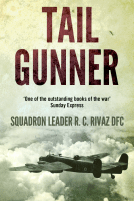
Tail Gunner, by RC Rivas****

tailgunnerTail Gunner is the memoir of a member of the Royal Air Force during World War II. I was fortunate to receive a copy free in advance from Net Galley and Endeavor Press in exchange for an honest review. It’s both compelling and informative.

Those accustomed to modern air travel may find it hard to imagine flight during this time period. There was no source of heat, and of course it’s far colder in the sky than on the ground.  Our author was a turret gunner, and it turns out that the turret and the nose are the two coldest parts of the plane. He stoically assures us there is no reason to be too cold up there if one dresses properly, and then lays out the multitudinous layers that must have made flyers look like old-fashioned versions of the Michelin man, but with head gear and a parachute. He describes the layers of ice that formed on the metal inside the turret, and how his oxygen mask freezes while it is on his face.

None of this is all that important once one is shot down, however.

My interest in military history is recent; I studied and taught history for a long time, but for most of those years, I preferred to study the causes of war, and so my primary interest was more political and theory-based. Maybe this is why it never occurred to me that the pilot is always the boss inside a military plane regardless of the ranks of various officers. Rivas points out that there really can’t be a discussion when the pilot says to jump; the point is well taken!

This novella-length memoir is recommended to those with an interest in World War II, particularly its aeronautic aspects, and also to academics and researchers, given that this is a primary document.  It was released to the public April 8, so you can buy a copy for yourself.

Lilac Girls, by Martha Hall Kelly***-****

lilacgirlsLilac Girls is the story of three women during World War II. I received a DRC for this book courtesy of Net Galley and Random House Ballantine in exchange for an honest review. I rate this novel 3.5 stars.

The story centers around Caroline Ferriday, an actress and New York socialite that volunteers at the Consulate organizing clothing and other essential items for French orphans; Kasia, a Polish teenager that is active in the resistance movement; and Herta Oberheuser, a doctor given one opportunity to practice medicine under the Nazi regime…at Ravensbruck. All of these are based on people that existed, though the story is a fictionalized account.

Kelly’s debut novel is strong in historical detail and setting. Here she describes Kasia’s home town in Poland:


Lublin rose beyond them in the distance, like a fairy-tale city, scattered with old

red-roofed pastel buildings as if a giant had shaken them in a cup and tossed

them on the rolling hills.


Whether it’s at Ravensbruck, which was a Nazi concentration camp, at an orphanage in France, or in a glittering nightclub, Kelly nails setting. I would like to see her rely less on crutches such as famous people of that time period that pop into the scene—this device signals a lack of confidence to me, and Kelly can get by without these props.

I also would have liked to see less brand name identification, which looks a lot like product placement. The whole advertising jingle for a particular brand of cookies, and a particular New York department store whose name may actually have appeared some thirty or forty times hindered the novel more than it helped; Kelly will do well to leave her advertising career behind when she sits down to write fiction. But this is her first  novel, and given what I see here, I think we can expect great things from her in the future; she is just getting warmed up.

In addition to crafting resonant settings, Kelly does the world a favor in telling about the experiments done on members of the Polish resistance, known as “the rabbits” because of the way they hop around rather than walking after their legs have been experimented on surgically, often done to them in ways that further medical knowledge in no way at all. Though it is critical to remember that what Hitler and the Nazi regime did to the Jews was real—and it’s more important than ever now that most World War II veterans have died and revisionists would like to rearrange the historical record and count the camps as an exaggeration of the facts—few know of the extent to which other groups were also sent away, often to die before the end of the war. The author makes an important contribution to historical literature by doing this.

That said, I have to confess that I am a little bit disappointed because I have wanted to read more about the resistance movement itself, and when I read the teaser for this story, I thought that one character’s life within the story would center on this aspect of the war. Instead, Kasia is arrested almost immediately, and once inside the camp, her story is in many ways like other Holocaust stories.  It’s horrific, and if you have not read any other stories set during the Holocaust, then you will certainly want to read it. I have read enough Holocaust stories, and this character never stops being fictional for me.  And the same is true for Caroline, who seems shallow and superficial despite her sacrifices and tireless effort.

The character that makes me sit up and take notice is Herta. I can’t recall having read a Holocaust story in which a Nazi speaks to us in the first person, and the gutsy depiction of this opportunistic woman mesmerizes me. The offhand remarks that Herta makes to rationalize her choices as she slides down that slippery slope ethically, letting her standards be eroded in order to further her career and increase her own standard of living, are chilling and immediate. I believe in this character. Kelly is deft in the way she depicts this ambitious but morally pliable, solipsistic individual. There are a hundred chances to make her into a caricature, but Kelly’s subtle finesse steps back every time this might occur, and the result will leave you breathless with horror.

Whether to invest the full jacket price of this novel depends on how deep your pockets are and whether you have read a lot of Holocaust literature. If you haven’t, you’ll want to add this title to your collection. And come what may, Kelly will be a writer to watch in the future.


The Girls, by Emma Cline*****

thegirlsThe Girls is a fictionalized account of the Manson Murders, a terrible killing spree that stunned the USA in the 1960s before any mass shootings had occurred, when Americans were still reeling from the assassinations of President Kennedy, his brother, Senator Robert Kennedy, and Dr. Martin Luther King. Manson, a career criminal with a penchant for violence yet possessed of a strange sort of charisma, attracted a number of young women and girls into a cult of his own founding. Later they would commit a series of grisly murders in the hills outside Berkeley, and it is this cult and these crimes on which Cline’s story is based. Great thanks to Net Galley and Random House for the DRC. This book will be published June 14, 2016.

Evie is an only child of the middle class; she is well provided for, but her parents have split up and her presence is getting in the way of her mother’s love life. Evie needs her mother’s attention now that she has entered her teens and so she pushes the limits in small ways, then in larger ones. When it becomes clear that her mother just doesn’t want her around, Evie looks elsewhere and finds herself drawn to a feral-looking young woman named Suzanne, who has unsuccessfully tried to shoplift something from a nearby store. Before long, Evie is sleeping on a mattress at the rural commune where Suzanne lives, eating from the communal kitchen and being used sexually by the group’s charismatic leader, and then by a man in the music industry that Russell, the founder, wants to please in the hope of having his music published.  Russell dispenses hallucinogenic drugs freely to make the girls more compliant.

We know immediately that this place, the commune, is not a good place. When we find that the babies  born to young women that live there—in this era before Roe versus Wade gave women the right to choose—are segregated from their young mothers and the pitiful way they regress and attempt to attach themselves to various females in search of a mother or mother figure, that’s a huge tell. But when Evie arrives she doesn’t want to know these things, at least not yet. All Evie wants is to be with Suzanne.

The story’s success isn’t anchored so much in the story line, a story that’s been tapped by previous writers, but in the dead-accuracy of setting, both the details of the time and in every other respect as well, from home furnishings, to slang, to clothing, to the way women were regarded by men. The women’s movement hadn’t taken root yet. This reviewer grew up during this time, and every now and then some small period bit of minutiae sparks a memory. In fact, the whole story seems almost as if a shoebox of snapshots from pre-digital days had been spilled onto the floor, then arranged in order.

The other key aspect that makes this story strong is the character development. Evie doesn’t have to live in poverty among bad people, but she feels both angry at her mother and hemmed in by the conventional expectations of her family and friends. Her boundary-testing costs her the loyalty of her best friend, really her only friend, and so she casts about for a new set of peers. Her mother prefers the fiction that she is still visiting Connie, the friend that has disowned her, and this lie provides Evie with a lot of wiggle room on evenings when her mother is with her boyfriend and finds it convenient for Evie not to be home.

As for Evie, what has started out to be an adventure, a bold experiment in branching out from the middle class suburban life she’s always known, gradually begins to darken. But the worse things get, the more important it is to her to prove her fealty to Suzanne, to not be rejected a second time as she was with Connie. Hints are dropped that probably she ought to just go back where she came from before it’s too late, but she is determined not to hear them.  I want to grab her by the sleeve and get her out of there; Evie won’t budge. Once she is in trouble at home for the things she had done on behalf of the group, her desire to avoid her home and stay with Suzanne grows even stronger, which leads her into more trouble yet. Clues are dropped that something big is going to happen, something that our protagonist maybe should avoid, but she plunges forward anyway with the bullheaded determination peculiar to adolescence.

All told, Evie’s future doesn’t look good.

Readers among the Boomer generation will love this book for its striking accuracy; those that are younger will feel as if they have traveled to a time and place they have never seen before. One way or another, Cline’s masterful storytelling weaves a powerful spell that doesn’t let go until the last page is turned. Riveting, and highly recommended.

Immunity: How Elie Metchnikoff Changed the Course of Modern Medicine, by Luba Vikhanski***-*****

immunityElie Metchnikoff is credited with several medical discoveries, some of which were found before Mother Russia was entirely ready to receive them. This interesting though technically challenging text is the story of his life, and especially of his scientific career and achievements. Thank you Net Galley and Chicago Review Press for the DRC, which I received in exchange for an honest review. This title will be available to the public April 1, 2016.

In the latter half of the nineteenth century, Russia still had a tsar—a royal ruler with power similar to that of an emperor—and it still had serfs, who legally could not leave the plots of land assigned to them to farm for the benefit of royal landowners. It was not an ideal climate for science or any other aspect of enlightened thinking, but Metchnikoff was not only gifted, he was immeasurably stubborn, and by such methods as posing as a college student in order to sneak into lectures, he achieved an excellent education and began to pave new inroads toward discovering how the human immune system works.

His theory that cells in the human body swarm around and dispose of microbes that enter the body in order to kill germs was true, but proving it to those with authority in Russia was not an easy thing to do. Only recently had germs been discovered to cause disease; not so long before, it was assumed that God smote certain people or their loved ones in retribution for their bad behavior or thoughts. Being a scientist in such a place was challenging, and eventually, after being snubbed repeatedly by the German academics he sought to win over, Metchnikoff found his way to Paris, and the Pasteur Institute, where he would spend the bulk of his career.

His refusal to participate in elitist cliques that feasted on 8 course gourmet meals while half of London starved warmed my heart, as did his refusal to be roped into other social pretensions. Really, in another time and place, this would be my kind of guy.

Here I must disclose the fact that the sciences are not my forte. Only since retirement from teaching in the humanities have I found the time and confidence to explore memoirs of famous scientists. Last autumn I read and reviewed the biography of Dr. Bennet Omalu, the man that discovered a brain disease that was the result of repeated blows to the head consistent with American football. Cheered by my success in understanding and reviewing that fascinating story, I decided to tackle this one…with less satisfactory results.

I have never been good at understanding science. It’s that simple.

So if science and in particular the history of immunology or disease is your wheelhouse, this may be a four or five star read for you. But although I am not scientifically minded, I do have a sturdier education than the average American, and so I think I’m being fair in saying that the average reader-on-the-street that picks this up due to general interest rather than exceptional training may find it to be a great deal of work.

I did check the endnotes; I always do. So unless the author has simply invented a lot of sources in other languages than English—which seems very unlikely indeed—then I can safely say that this author has relied primarily on sources that the average English-speaking reader will not be able to tap into. Strong documentation from a wide variety of sources.

Recommended to those with a higher than average facility for matters of science, and for those interested enough to wrestle with challenging material.

Tears in the Grass, by Lynda Archer***

tearsinthegrassTears in the Grass marks the debut of novelist Lynda Archer. It tells the story of three generations of Cree women, and in doing so also provides the reader with that tribe’s rich history and culture. Thank you to Net Galley and Dundurn for the DRC, which I received in exchange for an honest review. This book is available for purchase now.

Elinor is old. She is old enough to have been through the shameful period in North America in which Native children were forcibly wrenched from the arms of their parents and forced to attend boarding schools in order to become assimilated and indoctrinated into the dominant culture. Her traumatic memories are harsh reading, but it’s the only way that story can be shared with any degree of honesty. And there’s something she has held back from her daughter Louise and her granddaughter Alice: she has another daughter out there somewhere. She was raped by a Caucasian man, carried the baby to term, and then it was stolen from her. She knows that baby, now a woman, is out there somewhere, and she wants to meet her before she dies. She turns to Alice to get the job done:


“’Are you listening? I want you to find that child.’

‘ I don’t know what you’re talking about.’

‘Your mother’s sister. Your aunt. My daughter. I was raped in that damned school.’”


The point of view shifts throughout the narrative, with the dominant one being that of Elinor, but also including those of Louise, Alice, and a bison. It doesn’t always flow in a way that makes sense; sometimes we are rolling right along through one of the women’s narrative and suddenly the thoughts being voiced are clearly those of an animal, with no transition to mark the change. The first time, it is that of a taxidermied bison in a museum, and the effect strikes me as somewhat cartoonish rather than reverent. At other times, there is no possible way that the animal in question could be a bison, unless we allow for some magical realism.  Remember, however, that I read a DRC, and sometimes details that are going to be present in the finished work, such as lines that mark a change of setting or point of view, are missing.  Your copy may make these changes clearer.

A lot of social justice issues are worked into the flow of these three generational narratives. Louise recalls the Vietnam War, which makes her a senior citizen also. She remembers the slaying of Dr. King, and if these details are to be utilized to establish setting and develop the character, they might be more effective if included earlier in Louise’s narrative.

Alice seems the easiest for the reader to relate to, even though my own age is closer to that of Louise. Her contemporary spin and flexible thinking are more in line with what most young people of any age are likely to resemble. Her affection for her grandmother comes through the page, and although all three women are effectively developed, she seems the most tangible. Alice is lesbian, and so there is also this aspect of social justice as a subscript, though it stays primarily in the background.

But let’s go back to the grandmother for a moment. Along with the need to meet her stolen daughter, Elinor has one more key task on her bucket list: she wants to know what the secret is that Louise has been hiding from her all these years. And Louise doesn’t want to tell her or even think about it. It’s an interesting twist, and adds to the characters of both Elinor and Louise.

Though shaky in places, Tears in the Grass is a worthy debut, and the subscript, the history of the Cree people at the hands of European settlers, is a tough read but an essential one, a story often left out of the core curriculums currently taught. Kudos to Archer, who will be a writer to watch in the future.

Lincoln Reconsidered: Essays on the Civil War Era, by David Herbert Donald**

lincolnreconsideredI received this DRC free in exchange for an honest review. Thanks go to Net Galley and Open Road Integrated Media for letting me read it; Donald won the Pulitzer for his Lincoln biography, and I was sure this series of essays written for the purpose of dismantling myths surrounding the most revered president ever to occupy the White House would be hidden treasure rediscovered. What a crushing disappointment.

In the introduction, Herbert mentions that his section on abolitionists has drawn a great deal of criticism. Unfortunately, he appears not to have used such criticism as an opportunity to reevaluate the framework that limits his thinking in that section. More on that later;  I realized that since this is a collection of essays on various aspects of Lincoln, primarily as president, I needed to set aside the sharp distaste that overwhelmed me initially in reading this selection and see what I thought of the other entries.

I found Donald’s essay regarding Mary Todd Lincoln interesting. Another, which addressed the folklore surrounding Lincoln, part of which involved every possible religious denomination attempting to claim him as one of their own when in reality, he just wasn’t all that religious, was interesting; I could have done without the Rastus-style written dialect provided to the African-American source he quoted.

In fact, it is Donald’s writing—and lack of it—regarding African-Americans that put my hackles up. I realized part way into it that this problem is going to be a common one for any Caucasian American scholar whose main body of work around the Civil War was written before the Civil Rights movement. For a long time, the American intelligentsia was tremendously segregated, and those at almost entirely white institutions of learning would never have deigned to call upon professors at traditionally Black universities or utilize the publications of Black historians. (It’s also before the first wave of feminism of the 60’s and 70’s, and so no woman is considered a credible resource; but that is a secondary consideration to the grave matter of Donald’s easy dismissal of Black historians, due to the topic at hand.)

Anyone that has delved deeply into the study of abolition and the Underground Railroad has to know that the majority of abolitionists in the North were free Black people. They didn’t turn up in Caucasian newspapers, but they were certainly quoted in the Black press. In most cases they did not attend meetings hosted by Caucasians unless specifically invited, as happened sometimes in Quaker-sponsored gatherings. But if WEB DuBois could find this information, then David Pulitzer Donald could have found it, too. His supercilious, offhand treatment of Black people when they are mentioned at all tells us why he chose not to go there.

Had Donald done all the work, rather than choosing those that suited his personal biases, he would have known how extensive the line of support was for John Brown. But he would have had to access publications that featured the writing of Black journalists, because according to DuBois and other sources, Brown did not discuss his plan with any other Caucasian abolitionists except his sons. In short, African-Americans and the information they left behind could have better informed Donald’s essays, but in dismissing them, he came up with incorrect conclusions.

Any essay that touched on what should happen to Black slaves in the south, or that could have included what was being said and done by Black citizens in the north, shared this deficit of information and necessarily misinformed Donald’s conclusions.

The final essay, “A. Lincoln, Politician”, gave me an accurate and interesting tidbit: Lincoln had an understanding with Stanton, one that made its way into private correspondence and was thus documented, that when he came up with an idea that for reasons beyond his own knowledge was absolutely impossible to implement, Stanton was to denounce it, and then Lincoln would passively accept that his cranky Secretary of War had made the call. This makes a great deal of sense; in a way, Stanton was Lincoln’s version of Spiro Agnew—but without the corruption and financial scandal. Every president needs someone close by in their administration to play the role of bad cop in smothering popular but ill-advised initiatives, and for Lincoln, Stanton was that man.

Before reading this collection of essays, I was so impressed with Donald’s achievements that I had gone to my wish list and added his biography of Lincoln in the hope I might receive a copy—even a used one—for Mother’s Day. As soon as I reached the essays dealing with race in this collection, I went back to that list and removed the biography.

I’ve read enough by this guy.

‘Til Death Do Us Part, by Amanda Quick***-****

tildeathdousI was looking for good historical fiction and ran across this novel, which is also a mystery and romance. It’s a little different from much of what I read, and reminds me a bit of Victoria Holt, whose work I read voraciously as a teenager and younger woman. I received the DRC courtesy of Net Galley and Berkley Publishing Group in exchange for an honest review. This title will be available to the public April 19, 2016.

Calista Langley is a spinster, which is what unmarried women were called a century ago. She runs salons in her home for the purpose of intellectual discussion, a chance for men and women to get to know one another in a socially acceptable setting before they commence the courting ritual. But Langley has a stalker. A man has been using a long-disused dumbwaiter to hoist himself up to her bedroom, where he can watch her in the shadows. He leaves grim mementos mori—associated with death—on her pillow for her to find. Her initials are etched in them, a particularly chilling detail. We know fairly early who it is that is doing this, but Calista herself does not know.

“This is what it had come to—a life lived on the razor edge of fear. The sense of being watched all the time and the ghastly gifts were playing havoc with her nerves…Her intuition was screaming at her, warning her that whoever was sending her the gifts was growing more obsessed and more dangerous with each passing day. But how did one fight a demon that lurked in the shadows?”

At about the same time, Trent Hastings has come to see her, convinced that she is corrupting his sister Eudora, a client and frequent guest at the salons held in Calista’s home.

The overall tone of the story is a trifle melodramatic for my taste right now, but if you had given me this book thirty or thirty-five years ago, I would have worn it out re-reading it and then passed it on to my friends. The romantic scenes are steamy yet tasteful . Quick can raise our interest to a higher level just building up to a kiss than many of the writers of erotica are able to do with everyone’s clothes on the ground and explicit information left, right, and center.

In fact, though I often make a point of letting my readers know when a book will be objectionable to conservative Christian readers, in this case I feel confident in saying you should be fine here. The language never gets hotter than an occasional “damnation!”

One thing that was especially interesting to me was the minute detail given to Victorian funeral customs and the odd accessories that were popular then. It never occurred to me, for example, that anyone would spend good money on a tear-catcher, but some folks did. For the more practical purchasers, the coffin bell is a handy way to let everyone know that you’re not dead after all, and would like out of this box, please!

All told, this was a fun, accessible read. I rate it 4 stars as a YA novel, and 3.5 stars rounded up for general audiences.

Work Like Any Other, by Virginia Reeves****

worklikeanyotherReeves makes her debut here with a deeply moving, haunting tale of a man that tries to do the right thing and finds his entire life miserably, horribly gone wrong instead. Thank you to Net Galley and Scribner for the DRC; this book is available for purchase March 1, 2016.

Roscoe marries Marie, the woman of his dreams, a woman that speaks little but recognizes every bird call in the state of Alabama. When her father dies, he gives up being an electrician, work that he loves, in order to move to the farm they inherit. Unlike his father-in-law, Roscoe’s own father has always looked down on farming as a poor man’s last resort. Roscoe thinks he has found a compromise by bringing electricity, and with it mechanized farm tools, to Marie’s father’s farm; he won’t have to sweat in the fields, and he has found a way to continue doing the work her prefers. Pirating electricity from the lines out on the highway is against the law, but it’s nothing to make a man do hard time. If he is discovered, he’ll pay a fine and the electric company will install a meter. No harm, no foul.

That’s what he thinks, anyway.

Everything goes to hell in the blink of an eye when someone dies grabbing hold of a live wire located on his improvised set up. He is charged with manslaughter; with a halfway decent attorney, he should be able to get the sentence suspended or reduced, since no harm was intended, but Marie chooses not to hire anyone to represent him. She tells the state to give him a court appointed attorney, and instead she pays for an attorney for the man that has assisted him, knowing that the state of Alabama will come down harder on a Black man, a man that has worked for her family since she was a tiny child.

She can afford two attorneys, as we later learn. It isn’t about the money. It’s about blame. It’s about cold, hard vengeance.

We follow Roscoe as he makes his way through the trial, bewildered not to find Marie in the courtroom. We follow him through his years in prison, a system that tells the public it is there to correct bad habits and teach men skills they can use for the future. It’s a cruel, cold lie. And so although Roscoe’s experience is better in some ways than that of Wilson, who is sent to the end of the prison reserved for men of color, his sentence is much longer, with parole denied again and again as Marie fails to advocate for him.

Reeves is a genius with prose. Were I to rate this book solely on her skill as a writer, this would be a five star review, hands down. The kind of lyrical quality shown here is not a thing that can be taught; at some point, the word smithery put to use here is a matter of talent, and Reeves possesses enough for all Alabama.

My sole concern here is credibility. I don’t want to give too much away because you should read this novel, but I have to say that the way the last portion of the book plays out could never, never occur in the Jim Crow heart of Dixie. One could almost imagine some of it occurring in a different way, one closely guarded and unseen by the community, but to have things set up as they are when Roscoe finally gets out of prison and have the local storekeeper be aware of it, regard it as either normal or as private business that is no concern of his, strains credulity beyond the most magical prose. That house and farm would have been burned to the ground. It could never have happened.

Reeves has developed Roscoe’s character with depth and intimacy, and this is the greatest strength of her story; the first 75% of the plot is also well paced, with tension gently building as a story arc is meant to do. But the spell is broken during the last portion by the problem mentioned above.

Reeves is an author likely to go forward and do great things, and this is a strong debut. Apart from the one distraction mentioned, this book is highly recommended to those that love good fiction.