
The Education of Dixie Dupree, by Donna Everhart*****

theeducationofdixieduI rate this 4.5 stars and round it upward. Thanks go to Kensington Publishing and Net Galley for the DRC, which I received in exchange for this honest review. This courageous novel, one that takes place in the past but couldn’t be more timely, is going to create a lot of buzz. Get your marshmallows ready, because I think I smell hot tar and burning wood…or is it paper?

A note: there’s no way to review this without providing at least the basic elements of the story. If you want to avoid spoilers entirely, read the book, then come back and check my viewpoint against your own.

Although it’s billed as being a story about mothers and daughters, and about secrets that pass from one generation to the next, that wasn’t my take away from this one, I have to say. From where I sit, the story is about domestic abuse, and about domestic abuse, and about domestic abuse. I haven’t seen a solid YA novel take this on in such a straight forward manner, and I think there are a lot of children, girls in particular, that will benefit from reading it. Would I read it out loud to a class? No, I would not. Rather, it’s a story better saved for reflection and possibly for discussion in a small group or with a reading partner. It takes a lot of trust just to talk about this book. In some school districts, teachers may face the battery of parental approval and permission slips. Oh, good luck with that.

Dixie tells us her own story. She’s born in a tiny, impoverished hamlet in Alabama in the 1960’s. Her parents are having money problems, and their relationship isn’t going well. Evie, Dixie’s mother, is on the verge of a breakdown of some sort, and she takes out her frustration and rage on the child that looks just like her, and that of course is Dixie. In an effort to apologize, she sits down with her daughter later on and tells her that there are times she can’t control herself:

“’I can’t explain why I react like I do sometimes, you know? It’s done and I can’t take it back, although God knows, I wish I could.’

“I whispered, my voice hoarse, ‘God don’t hear us.’”

At one point a social worker shows up at the house and Dixie has to decide whether to spill it or sweep it under the rug. It’s interesting to see how it plays out.

Ultimately, Evie summons her family for help, and Uncle Ray comes all the way from New Hampshire to lend assistance. Unfortunately, Uncle Ray has a whole lot of demons of his own.  Dixie doesn’t like the way Ray stares at her as if she were his next meal; she doesn’t like the way he brushes up against her. But when she tries to tell her brother how she feels, he laughs at her and points out that she isn’t all that attractive, and her body hasn’t exactly grown boobs; why would a grown up man be interested in dumb old Dixie? And so Ray, who is the sole source of grocery and clothing money for this miserable clan, is left to do what he wants to do unchecked.

“Uncle Ray smelled different, not of Old Spice, but something else, something sharper.”

When Dixie threatens to expose him, Uncle Ray points out that it’s basically his word against hers, and would she prefer he close his checkbook and drive back to New Hampshire? By now Dixie knows what it’s like to be genuinely hungry for days on end. President Lyndon Johnson’s Great Society plan has not yet taken root; there isn’t any assistance available from the state. Sometimes a kid had to stay quiet or starve.

“I felt something break, something turned off like a light switch in the very center of me.”

It’s a hard, hard story to read, and yet I can’t help think of all the girls and women that will read this book and know that they aren’t so strange or terrible, and that this does happen to other girls in other families.

I’ve tried not to give away more than the broadest contours of the story so that you can find out the details for yourself. One thing that I would change if I had the power is the whole adoption thread, which is superfluous and In its own way, more harmful than helpful. It’s almost as if the author is afraid to acknowledge that blood relatives will do this thing to their very own children; yet they will. Hell yes, they will. Any teacher that’s been in the classroom for a few years can tell you that much.

As for me, I have my own story.  [Skip paragraph if you prefer to stick to the book itself.] There were some awkward guitar lessons I had when I was about twelve years old. My guitar instructor had recently decided to teach out of his home; he lived alone. One day after my private lesson, my father asked me, in the car, how that lesson had gone. I was a little afraid of being made fun of, but I told him anyway that my instructor made me feel uncomfortable. I felt as if I spent as much time walking my folding chair away from his as I did working out the chords on the neck of my instrument. I’d move over; he’d move over. His hand would land on my thigh while we were talking. I’d flinch, pull away, and move my chair. He’d move his chair. All of this within the framework of a perfectly normal guitar lesson, if you ignored all the strange furniture and hand-moving. My father, who died in 1978, heard what I said and told me we could get another guitar teacher. I asked if I would have to be the one to tell the man that I wasn’t returning, and he said no. Just consider that chapter over and done.

If only it could be so easy for everyone.

The book isn’t easy, but girls deserve the chance to read it if they want to, and likely there are some boys that could stand to read it, too. This book is for sale now; highly recommended.

The Whole Town’s Talking, by Fannie Flagg*****

 “Up on the hill, Lucille Beemer said, ‘Good morning, everybody.’

“Two hundred and three people just waking up answered, ‘Morning’.”

thewholetownstalking Fannie Flagg is legendary, and rightly so. In fact, at one point in my reading of this DRC, I reflected that someone with her power to move people has power indeed; how fortunate that she uses her gift to benefit the rest of us. I don’t know about you, but I am ready to read something that provides a level of reassurance that all has not gone sour in this world, and that everything passes, sooner or later.  I was  fortunate to read this free and in advance thanks to Random House and Net Galley, but it’s one of the very few books for which I’d have paid full freight if it came down to it. It hits the shelves November 29 and is available for pre-order right now.

Our story begins with the first residents of what will become Elmwood Springs. Lordor Nordstrom arrives from Sweden, and after months of searching, finds the perfect place for his dairy farm in a pleasant spot in Missouri. The year is 1889. He puts up a house, buys some cows, and then, as a founding father, he decides he will donate a piece of land, because every town needs one thing for sure…a cemetery.

“Lordor guessed that preparing a place to spend eternity and trying to figure out how many places to set aside for himself was what made him think about his future.”

I went back and reread that sentence a couple of times; it begins our second chapter. Oh my but Flagg is droll. If one were to read this gem with half a mind on other things, nuggets like this might be missed.

The years go on, and with brief, colorful chapters, Flagg develops the town, introducing new residents that move in or are born here, and at first it seems as if the story is cotton candy, all fluff and sugar. But just as the impression is formed, it is vanquished, because our author is just warming up. Moments that are poignant, bittersweet, and darkly funny are sprinkled in lightly as we start, because after all, we are new to Elmwood Springs.

But the longer we stay there, the more intimately we become acquainted with its denizens and their peccadilloes, and then the more emotional aspects of the story unfold, almost as they might within your own large family or tightly knit community. Flagg convinces me that these people are my people, and her characters are so brilliantly developed, so utterly convincing that even when one of them does something surprising, I understand how that has come to pass.  And every time I think I see where she is headed with one thread or another, she surprises me.

About a fourth of the way in, someone dies and we find them interred, of course, at Still Meadows. But there’s an engaging twist to this aspect of Flagg’s story: the first person to pass wakes up when someone new arrives and greets them. They may be six feet under, but they can see what’s happening at the cemetery, along with everything that can be seen from the cemetery, just fine. And so the discussions that took place in life continue after death, and the dead look on avidly and wait for word of the loved ones they left behind.

As the story develops and characters’ lives are more deeply explored—always remaining more light than dark, and without a single word anywhere that isn’t needed—it occurrs to me that she just may have done it again.

Some people like to take gadgets apart to see what makes them work; I enjoy doing that with literature. And so I find myself looking back at my highlights and notes, looking for what, apart from a dry, accurate wit, makes this writer’s work so special. Some of it is an alchemy whose elements can never be described perfectly, taking ordinary Americans and spinning them into gold. But part of it is undoubtedly her deep respect for working people, and her readiness to see redeemable qualities in characters that upon first glance seem abrasive and unlovable:

“Ida had always been different. At school, when all the kids used to play church and one would be the preacher, another the preacher’s wife, a deacon…Ida said she wanted to be God, because she was the only one who knew how to do it.”

But later, once she was grown, “Someone else remarked, ‘By God, if Ida had been a man, she would have made general by now.”

She also acknowledges that once in awhile, someone comes along that no matter what heroic effort is made on their behalf, will never do anything good for anyone. Hey, it happens.

The comments that are made by various characters reflect both the character’s outlook and usually, the prevailing attitude of the time period as she rolls the town steadily forward to 2016.

And this leads to one cautionary note: as with all of Flagg’s work, it is essential to read the chapter and section headings, which provide context. This reviewer once taught a group of teenage honors students that were unable to make heads nor tails of Fried Green Tomatoes, and I discovered it was because they weren’t reading the chapter headings, and so they didn’t know what the time period was or whose point of view they were reading. Don’t let that happen to you!

Finally, I want to thank the author for the kindly manner in which she draws teachers.  Fannie Flagg, every teacher I know that talks about books, loves your work. We need the encouragement sometimes, and your friendly regard means a great deal.

Highly recommended to everyone.

Mission: Jimmy Stewart and the Fight for Europe, by Robert Matzen****

missionjimmystewartIn Mission: Jimmy Stewart and the Fight for Europe, Robert Matzen provides an engaging, compelling memoir that focuses primarily on Stewart’s time as an aviator during World War II. Thanks go to Net Galley and to Goodknight Books for the DRC, which I read free in exchange for this honest review.

The book begins with Stewart’s childhood in a small Pennsylvania town. His is a close knit family with a strong military tradition. An outstanding student, he is educated at Princeton and falls in love with theater one summer. He hits the road for Hollywood to fulfill his dream.

Because of the title, I am taken aback at the amount of celebrity gossip that is included in the first portion of the biography. Matzen wants us to know that Stewart used his skinny-awkward-young-man routine as a sort of foreplay to work his way between the sheets with one well known actress after another; he lists many of them. I could have lived without this part, but maybe you’ll enjoy it. If like me you are really only interested in the military aspect of it, skip the Hollywood part at the start and pick it back up when he enlists. Eventually this is what I did.

Once there, the story is fascinating. Stewart resolutely straight-armed studio efforts to keep him in the USA or use him to entertain troops, as some actors that are drafted chose to do. He angers a studio head who actually tells him, “You’ll never work in this town again”. He decides he is going to do his part like any other man, apart from the fact that he had always wanted to fly and now has the money for a private plane and flying lessons. Once he is actually in uniform, he is able to become the aviator he has dreamed of being as a youngster.

As Martzen unspools Stewart’s story, which had to be difficult to research given Stewart’s resolute refusal to discuss that period, I am instantly engaged. I had known at one time that the planes were not heated back then, but hadn’t fully appreciated the dangers and challenges posed by the cold alone once in the air. A man could suffocate if he didn’t regularly break the ice off of his mask. Men could and did lose body parts to frostbite.

The stories of the men that would eventually serve under him as he rises in rank, not due to strings pulled by authorities but as he has wished, by merit and leadership capability, are also both interesting and poignant. Reading the way the pilots name and decorate their planes, how individual aircraft with idiosyncrasies that make them handle differently so that the pilots strongly prefer to fly their own ships, is interesting, and  reading the personal details and in some cases, the deaths of these men is wrenching in some places, poignant in others.

When Stewart has completed his military service, he looks at least ten years older than he is. He’s seen a lot. If he returns to Hollywood, there’s no chance he will play the same roles he used to do. He stalwartly refuses to exploit his time in the service by making World War II films, which are enormously popular, and for a long time, his phone doesn’t ring. He’s sleeping at his parents’ house in his old childhood bedroom, wondering what will happen. But in time he hears from Frank Capra, who has an idea for a picture “based on a story titled ‘The Greatest Gift,’ about a man from a small town who wishes he had never been born. Jim was the only actor in Hollywood whom Capra considered for the role.”

Despite the sense of alienation he experiences with his return to the other-worldly, glitzy city after his gritty, intense experience in the war, Stewart is glad to be back, and he plays what will become an iconic role, that of George Bailey in “It’s a Wonderful Life”. He credits Capra with saving his career, and is overjoyed to be back:

“He was engaged in something magical again, something to interest people in the art of living, rather than the art of dying.”

The book also discusses Stewart’s lifelong friendship with Henry Fonda, and his marriage. We get a brief overview of the peacetime lives of the surviving members of Stewart’s first crew.

If it were up to me, I would remove all of the somewhat jarring photos at the end of the book that show Stewart alongside one actress after another, and I’d replace them with photos and maybe diagrams of the planes we hear so much about. A map here and there wouldn’t hurt, since we follow his flight paths and it’s sometimes hard to visualize where these places are. I used Google, but would like to see these included as part of the published memoir, perhaps in the center, where they’re most relevant.

I recommend this biography to fans of Stewart’s, and I recommend most of this book to those with an interest in military history.  The book is available to the public today, October 24, 2016.

The Girl from Venice, by Martin Cruz Smith*****

thegirlfromvMartin Cruz Smith is the best-selling author of Gorky Park and the Arkady Renko series. His new stand alone novel, The Girl from Venice, shows he hasn’t lost his magic, and it quickly became my favorite DRC once I began reading it. Thanks go to Simon and Schuster and Net Galley, from whom I received an advance copy in exchange for an honest review. You can get this book today.

Cenzo Vianello is a fisherman from the tiny village of Pellestrina, an ancient place steeped in tradition. He once had two brothers, but now has only one; Hugo died in Mussolini’s Africa campaign, and his remaining brother Giorgio is a movie star as well as an influential member of the Fascist government. Cenzo detests him for his politics, but even more for having stolen his wife Gina, who died when a bomb fell on the movie set to which Giorgio had escorted her.

All of this is background, complex and deliciously ambiguous in many aspects. It is within this context that Cenzo finds the girl, Giulia, floating like a corpse in the lagoon. To his surprise, he finds she is alive. She is Jewish, from a wealthy family and on the run. She figures that if the poet Byron could cross that lagoon, then so can she. Cenzo hates to spoil her dream, but he tells her this is a dangerous plan, and for many reasons. He develops a plan for her rescue, but later finds he is ambivalent about having turned her over to someone else. Is she safe? Does she remember him? Who can he trust, and who not?

One must, after all, be careful who one embraces.

“The trouble was the war. It should be over. Instead, the Americans were taking forever while Mussolini ruled a puppet state and the Germans, like decapitated ants, went on fighting.”

 When one fears defeat, one may become desperate; in some ways, the Fascists now have little to lose, and so their behavior becomes more extreme. There are partisans that oppose the Fascists, but it’s difficult to be sure who is sincere, and who is a double agent.

Part of the suspense inherent in successful spy novels is the feeling of looking over your shoulder, wary of everyone all the time. The relationship between Cenzo and Giorgio is particularly well developed and is intertwined with this aspect of the story; we never know whether one of them is going to kill the other, and when Giorgio says he will help Cenzo, we wonder whether he is helping lead him into a trap.

Although Giulia provides us with a premise and a scaffold for the story, not to mention a really beautiful book jacket, hers is not the character we see developed. The characters that are meaty and interesting are the brothers.

That being said, Smith should get credit for including an interesting female side character in Maria, the wife of the consul of Argentina, a woman with shadowy business and motive. Maria isn’t there to seduce anyone, not really; she’s also not a victim. In a field riddled with endemic sexism, I was happy to see this progressive element, and was fascinated by the brief, spectral appearance of her husband from his sickbed.

This story is a page-turner, an unmissable tale that will keep your light burning late and distract you from your daily pursuits until it’s over.  Don’t miss this one.

American Gothic:The Story of America’s Legendary Theatrical Family—Junius, Edwin, and John Wilkes Booth, by Gene Smith***

americangothicI was invited to read and review this title by Open Road Media and Net Galley. Thanks to them for the DRC, which I received in exchange for an honest review. This title was released to the public October 4 and can be purchased any time you want it.
Although I love a good night at the theater as much as anyone else, I came to this bearing a love of history and a strong affinity for the American Civil War. I didn’t realize to what extent this would be purely a biography of this family of actors, and it was because of this that I became somewhat disillusioned.

Smith has carefully documented the lives of Junius, Edwin, and John Wilkes Booth. He talks about their predecessors, their early development, and their careers, and he documents everything he talks about. Those studying nineteenth century American actors will want this book, because these men were the most famous of their time period, tickets to see them perform much sought after.

My problem is with the elephant in the room.

It’s hard not to approach John Wilkes Booth without thinking about military history, and about his role in what was essentially an incipient CIA within the Confederacy. Other sources neatly document the fact that it was not a case of simple mental illness on the part of an assailant that made President Lincoln, the greatest president in the history of the USA, die. There was a great deal of planning involved, of research about where he would be and when he would be there. Contacts were made, and a plot was launched that was initially much more far reaching in scope, but with the surrender of Lee’s army, others within the cadre left town fast and didn’t look back. Booth was the one that decided he was going to follow through, one way or the other. How much of it was due to a longing for an historical spotlight, how much was due to emotional instability, and how much was a calculated effort to revive the Confederacy by assassinating Lincoln, we do not know, but what we do know, and what Smith doesn’t say, is that this was not a matter of simply yielding to impulse, of losing one’s sanity and suddenly deciding to kill a great leader. It was done in a calculated way, and I can’t respect this biography when this information is omitted. All we hear about are references to early signs of “madness”, as if this horrible deed can be swept to the side by the use of one well-placed word.

That being said, The New York Times loved this book. If the history of acting is your wheelhouse, you may want to read it. There’s nothing of method or technique that will help a developing actor, but it doesn’t pretend to be. It’s about the actors’ lives and careers, and that’s pretty much it.

Those that treasure history as a bigger picture, or that are looking for some tiny morsel to help them understand what made John Wilkes Booth carry out this monstrous, well-planned killing will remain as much in the dark when the book ends, as they are now.

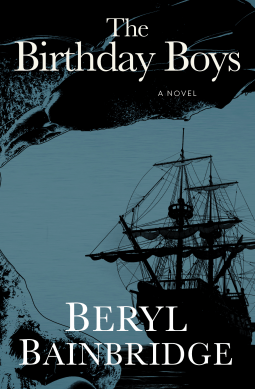
The Birthday Boys, by Beryl Bainbridge**

thebirthdayboysThe Birthday Boys is a fictionalized account of the Scott expedition’s travel to Antarctica in 1910. It’s told sequentially through the perspectives of five men that participate, each picking up where the last has left off and of course, also including some personal reflections and memories to make them more real to us. I was invited to read and review this novel based on my enjoyment of the book Ice Brothers, which was also a maritime tale (and is reviewed here: https://seattlebookmamablog.org/2015/01/03/ice-brothers-by-sloan-wilson/ ). Thank you to Net Galley and Open Road Media, but this isn’t my book. I pushed myself all the way through it hoping for some redeeming aspect of it to pop up at the end, but it only gets worse as it goes, at least from my perspective.

Our story begins in Cardiff, and the men and The Owner (always capitalized) are eager to get started before the Antarctic winter sets in, so they pass their whaler off as a yacht in order to prevent safety regulations from slowing them down. They understand they are sailing across the world in a leaky tub, but one of them is too unprincipled to care, and the others are so darn young. In fact, wouldn’t reaching the destination on one’s twenty-first birthday be the best gift ever? Hence the title.

At the outset, I struggled a bit with some of the technical terms, looking up “plimsol line” and a couple of others, but by the 15% mark I had my legs under me, so to speak, and felt more confident. Soon thereafter, however, the nasty references to gender and race came into it. I looked back at the copyright; since this author, highly respected in the UK and winner of awards, was born in 1932, might this be a digital release of a very old book? But not so much: the original copyright date was 1991. Perhaps Dame Bainbridge felt that ugly racist terms might provide some flavor here. Likewise, the women included here, generally wives of the men involved that were tucked safely away at the base camp, were carping or hysterical, squabbled with one another, and Mrs. Scott, the only woman with any character at all according to the narrative, kept insisting that she hated women.

Whoa.

The plot is rugged and gruesome. If not for the issues just mentioned, I might compare the writing to that of Jack London, fascinating for those that love the adrenaline rush of life-or-death adventures, but too grisly for me. There’s some good work with figurative language and at times the scenes are tremendously visceral. Yet at times the pace actually plods along rather slowly for a book of its kind, and so I find myself wondering how this writer managed to be recognized by the queen; that is true, at least, until I find the following passage:

“It’s difficult for a man to know where he fits in any more. All the things we were taught to believe in, love of country, of Empire, of devotion to duty, are being held up to ridicule. The validity of the class system, the motives of respectable, educated men are now as much under the scrutiny of the magnifying glass…”

Well, perish the thought!

If not for the racism and sexism I’d call this a three star read. If an Antarctic expedition thrills you and you have the stomach for the…never mind. I can’t finish that sentence without scrunching up my face and squinting, so let’s go with the bare truth: I don’t recommend this book to anybody.

The Big Change: America Transitions Itself 1900-1950, by Frederick Lewis Allen***

thebigchangeamericatr2.5 rounded up. The Big Change was a National Book Award finalist back in the day as well as a New York Times bestseller. I was invited to read and review it now that it’s being released in digital form; thanks go to Net Galley and Open Road Integrated Media. I’ve read and reviewed more than 50 titles for this publisher, and they’ve been wonderfully tolerant when I have written less than glowing praise for a book such as this, whose shelf life is well and truly over. This title is available for purchase now.

Allen’s book is written as a popular history. For a lot of people that makes it more accessible than a more scholarly approach would. As for me, I appreciate a citation, and I read those notes to see where the author gets his information. If he’s citing other secondary sources, the obvious thing to do is go read the secondary sources instead. If he’s done some real work, puttering from one obscure regional library to another in order to peruse their rare books, original diaries of heroes long gone, and so forth then I know I have found a researcher who can do me some good.

But for those delving into this period for the first time, this is in most regards a sound overview of the period in question, kind of like a contemporary history 101 for white men. Allen covers the turn of the century, when capitalism was unchecked and unashamed; The Progressive Era and World Wars I and II; the Depression, and the postwar boom. He devotes some of his space to the huge labor struggles and mentions the IWW (International Workers of the World, or ‘Wobblies’). The uses a friendly, readable tone and if there had been any women or people of color anywhere, anywhere, anywhere (other than a quick nod to suffrage) I might have found another star. Or half a star.

Having said that, I should also point out that Allen was not especially conservative or reactionary in comparison to other historical writers during the 1950’s, which is when he wrote and published this. In fact, anyone that did include women in a more than passing manner, or that included people of color, was considered a radical by many. Most academics would have laughed at them. So it’s all about context; some best sellers of the past, such as the Pulitzer winning Bearing the Cross, David J Garrow’s biography of Dr. Martin Luther King, just get better with time; others, like this title, have a more limited shelf life.

I’d recommend this title to those with a special interest in the time period, but only as supplementary material.

George Washington’s Secret Spy War: the Making of America’s First Spy Master, by John A. Nagy***-****

georgewashingtonssecretspyNagy does a more than serviceable job in documenting Washington’s intelligence methods. Thank you for the DRC, which I received free in exchange for an honest review from Net Galley and St. Martin’s Press. This title is for sale today.

Washington first learned spy craft when he was fighting for the British Crown during the French and Indian war, a nasty conflict that puts the American Revolution in the shade in terms of lives lost and financial expense.  Later he would take the education he had gained as a member of His Majesty’s forces and use it to lead the American colonists to victory as citizens of an independent nation.

Nagy conscientiously documents his case that it was this knowledge of spy craft that won the Revolution. He cites everything, and he uses primary documents that you and I would never ferret out in order to do so. Students of the American Revolution, the French and Indian War, or the history of American intelligence-gathering should consider this book an indispensible addition to your research material.

In the tradition that continues to this day, Washington found there were only two possible outcomes once a spy was apprehended. The first and most usual thing to do was hang them. Once in awhile one could turn them. And he had absolutely no scruples about torturing them first and hanging them later.

As a popular read, I rate this title three stars, and it’s really not due to any shortcoming of the author’s. He quotes extensively from primary documents such as Washington’s diary, and he didn’t use the same expressions and syntax that are used now, nearly two and a half centuries later. The accepted speech mannerisms for that time are unwieldy to us, and make for some difficult, hyper-literate reading that is not always enjoyable.

But for those that need the information, there are not a lot of places to go, and I think you need this one. As research material this is easily a four star book, and depending upon one’s area of study, it might even be more.

Recommended to researchers and students in this realm.

Cakewalk, by Rita Mae Brown***

Dear heaven.

cakewalkBrown has had a long and auspicious writing career, and right about now she can do whatever she pleases. I came to this title thinking that it was a stand-alone novel; thank you, Net Galley and Random House Ballantine for the DRC, which I received free in exchange for this honest review.  The book is available to the public October 18, 2016.

For awhile I wasn’t sure just what to make of it; there are some wonderfully wry moments, and then there are others. I’ve since learned that this is actually a continuation of a series that is chronologically placed, and so many readers will already be familiar with the characters and setting.  Fans of Brown’s Runnymede series will be delighted. For those that don’t know:

“In Runnymede everybody knew everybody. Nobody forgot a thing, not one blessed thing, especially if a whiff of scandal attended it.”

The time is 1920; the small town just mentioned straddles the Mason Dixon line, with the Southern half in Maryland and the Northern half in Pennsylvania.  Everyone that is important enough to make it into the story is Caucasian, and the wealthy, benevolent folk appear to outnumber the less fortunate, who work hard and are rewarded with grace and maternal affection by the local bourgeoisie.

This reviewer’s mother, long gone now, was born in the 1920’s in a different part of the American South, and I grew up hearing that welfare was simply not necessary, because in a small town, those with money always “took care of our poor”. Nobody starved, and nobody had money that came from the government, and everyone was fine, just fine. And after we’d heard this story a few dozen times, my sister, who was older than myself by many years and knew more about the small town in question than I did finally said gently, “No, Mother, you didn’t. I know that you did your best, but not all the poor were ‘taken care of’, and yes, some people there went hungry.” And I cannot help but wonder whether Brown has based her story on the same sort of flawed premise, of a benign but paternalistic system in which those in need receive from those that have extra to give, and nobody but nobody suffers.

You don’t want to know what remarks are tapped into my reader. Every time I realized that my inner snarky Marxist was taking over, I closed that particular book and went to read something else, and later came  back to read it afresh. And though I found some bright spots, I was never a gentle reader here.

I think I might have enjoyed this story more had I heeded the note at the story’s outset that this is not a plot driven book. I assumed that characters would be more important than the storyline, and in this I was correct, but I wasn’t prepared not to have a plot at all, apart from one thing that leads to another in a meandering sort of way. Brown has created an everyday life using the small town she has fictionally reconstructed based on stories told her by her older relatives, and so the reader needs to be ready to drop in, almost as if looking through someone else’s attic at the letters, photos and diaries of those that were once there.

To read this novel one would never make the association between this author and the one that wrote Rubyfruit Jungle, the bold, hilarious, fiery lesbian manifesto of the early 1980s. But there can only be one such book, and when I look back at various famous writers that published one smashing novel and then never published anything else, I realize that maybe this is why. When one has made a name for oneself by writing a novel that is legendary and can never be paralleled, the choice is to move on and write something else, or stop publishing fiction and take up a completely different occupation.

Feminists will find a few satisfying nuggets here, and other nuggets not as welcome. There is a doomed lesbian relationship, but oh how gently it goes into “that good night” (with my apologies to Dylan Thomas). The cheerier aspect of it is that most of the important characters are women—a breath of fresh air in a realm still dominated largely by men—and some of them wield significant power.

I was dismayed at an episode in which a teenage girl with large breasts is compared to a cow as part of a visual prank in a school-wide pageant, and the entire town laughs about it. To me, it looked an awful lot like body shaming, and I wondered what in the world it was doing there. What’s up with that, Rita Mae?

For me and for readers unfamiliar with the series, this really seems more like a 2.0 or 2.5, but faithful readers have been rating it about 4 stars, so I am shooting down the middle and calling it 3. For those that have read and enjoyed the other volumes in the Runnymede series, this book is recommended.

The Tea Planter’s Wife, by Dinah Jeffries****

theteaplanterswifeGwendolyn is 19 years old when she marries Laurence Hooper, the owner of a tea plantation in Ceylon, an island nation south of India now named Sri Lanka. Jeffries provides a compelling, sometimes painful glimpse of the mores and assumptions of the heirs of the UK Empire at the outset of the peasants’ rebellion led by Ghandi. Though a few small glitches occasionally distract, this is a strong piece of fiction that fulfilled the writer’s mission admirably. Thank you to Net Galley and Random House-Crown Publishing for the DRC, which I received free in return for an honest review. The book is on sale today.

The protagonist is not a sympathetic one, and those that need a main character they can love should stop even considering this book right now. But some of literature’s most interesting characters are flawed ones, and the development of this one within the constraints of what Caucasians in the UK expected their lives to resemble at this time, and within the even greater constraints of material self-interest, is fascinating. I found myself wanting to haul this character out to the cheese room and tell her that all other women are not her enemies. She has almost nothing required of her by the easy life into which she has married, and as a local gossip points out, Gwen has “never had to fight for anything”.

Gwen has a passel of problems, however, some real, some imagined. She sees her sister-in-law as a rival not only for her husband’s affections and loyalty, but also for his fortune. She sees his wealthy former girlfriend and business associate, Christina, trying to pull him back into a relationship. What about MacGregor, the surly foreman of the laborers? What about Savi Ravasinghe? By the time the book was halfway done, I found myself alternately scolding her for making enemies everywhere and then, a heartbeat later, screeching at her to beware.

Ultimately I didn’t think I was impressed by this story until I looked back on my notes. I had highlighted nearly every warning bell and red herring and made little notations like, “Noooo!” Obviously this story engaged me all the way through. At times I was frustrated, but that was the author’s intention. At no time was I bored. And given the level of suspense and a certain amount of mystery, I realized that one genre tag had gone missing. I added this title to my “mystery” shelf, because there is so much unknown information that will keep the reader up late as well as any whodunit.

The author makes a few missteps that break the spell of time and place momentarily. At one point there is an argument between two of the characters about Ravasinghe, and one accuses the other of race prejudice, while the other responds that it “has nothing to do with the color of his skin!” This is either ignorance or revisionism. In the 1920s and 1930s racism was at a fever pitch. Colonialists based their system of rule partially on paternalism, which overtly declared that the “lesser” races needed the great white fathers to look after them, employ them, house and feed them. In the USA, Jim Crow and the Klan were at their all time most powerful; African-Americans were afraid to walk on the same sidewalks in the South, and in the North they nevertheless kept to their own neighborhoods to the greatest degree possible. Biracial marriage was an invitation to ostracism or even death, and less than one percent of the Caucasian population in any English speaking nation would even pretend that such ostracism wasn’t about race.

In fact, US President William Howard Taft declared that the day would dawn when the United States flag would fly at “equidistant points” that would include North America, South America, and Central America in fact rather than merely economically, and he told the American people that God had willed this due to the moral and racial superiority of Americans—by which he meant Caucasian Americans. In the East, look what the peasantry went through just to get the vote!  No, no white folks in the British Empire or USA were going to defend themselves against charges of racism; racism was assumed to be the will of God.

There’s another “oopsie” moment when the roof of a large building catches fire and the fire is put out with a garden hose and pots of water. No.

But all of this is mitigated by the expert manner in which the author describes the setting, having had a family member that lived on such a plantation, or a similar one. Part of the reason I wanted to read this DRC is the fact that it was set in Ceylon, and here Jeffries does not disappoint.  I was afraid the ending would either be saccharine or unspeakably brutal, but she deftly avoids both extremes and comes up with a surprising and believable alternative.

So in the end, I recommend this book to you. It’s not always easy for some of us to look in the mirror, or at the mirror of one’s ancestors, but everyone comes from somewhere, and the playing field still isn’t level. Nobody can fix what’s wrong today without knowing where the trouble came from. The Tea Planter’s Wife is a historical treasure in this regard; Jeffries is to be congratulated.