The River We Remember, by William Kent Krueger*****

William Kent Krueger has been writing since the late 1990s, but he only came onto my radar in 2019, when he published This Tender Land. To read Krueger once is to want to read him again and again, as often as is possible, and that’s what I’ve been doing. The River We Remember is his most recent mystery, an achingly atmospheric novel set during the 1950s in rural Minnesota. My thanks go to Net Galley and Atria Books for the review copy. This book is for sale now.

The protagonist in this stand alone whodunit is the local sheriff, Brody Dern. Brody is a thoroughly believable character; there’s nothing of the TV sheriff about him. When the wealthy, universally hated Jimmy Quinn is found floating dead in the river, Dern does not lose sleep while vowing to find and reveal the entire truth. His first response is his own deep resentment that Quinn had to go and die in what had been, until now, Brody’s favorite spot to relax. How dare stupid, rotten Jimmy Quinn ruin this special place with his bloated corpse? And his second instinct is to minimize the damage to everyone else concerned. For example, the Quinns are Catholic, and if Jimmy committed suicide, they can’t bury him with the family. If not suicide, then perhaps a family member could stand it no more and shot him dead. Again, if so, no great loss, and let’s make sure the family is taken care of. And so, Brody’s first instinct is to wipe down Quinn’s truck so that, if other authorities should become involved in the case, none of these poor people will have to suffer for it.

Then, he goes to the evidence cabinet and removes some of the confiscated drugs so that he can get a decent night’s sleep.

Part of what fascinates me here is the culture of small town Minnesota during this time period. People don’t lock their doors most of the time. When a prisoner that Brody knows is almost certainly innocent requests a sharp knife in order to carve something, Brody gives it to him, right there in the cell. There are a number of interesting secondary threads, and all contribute to the steamy, smoldering ambience in which this story is set.

But oh lordy, the racism. And in this, I know there is no exaggeration. The culture among the Caucasian population of this tiny town, with regard to Native peoples and those of Japanese descent is not so very different from what I experienced as a child, growing up in the 1960s and even the 1970s in suburbs on the American West Coast. It’s bad. It’s really bad.

A feature of Krueger’s work—a signature aspect, in fact—is the inclusion of American Indian cultures and sociopolitical issues in Northern Minnesota. In other stories I’ve read, it’s been the Chippewa; this time, it’s a Dakota Sioux man named Noah Bluestone, and his Japanese wife, Kyoko. The author develops his characters well, with no stereotypes or hackneyed pop culture. This alone makes his work worth reading, but there’s so much more.

Over the course of just a few short years, Krueger has joined other luminaries on my list of authors whose work I read without question. I highly recommend this book to all that love the genre.

In the Pacific Northwest, October evenings are a great time to stay home. Of course, some people put on their hunting jackets, grab their gear, and head out into the woods; some are party animals seeking a good Halloween bash; and some are charitable souls that organize haunted houses and other seasonal attractions, with the proceeds going to good causes. But a fun fact is that a majority of us do exactly what I plan to do: curl up at home with my beagle, my book, a cup of hot apple cider and a bunch of Halloween candy that trick or treaters never show up to claim. Can’t let all that chocolate go to waste, now can we. If my plan looks good to you, check out these scary reads that I’ve collected over the years. A note of apology: ten years with Word Press isn’t enough, apparently, for me to adequately intuit all of the layout options. I have tried mightily to post each of these choices in a reasonable arrangement with links, but there are gremlins involved. Once again, then, I must ask that if you wish to read my review of one or more of these goosebump-worthy selections, please enter the title in the search bar. All of them are waiting for you!

The Golden Gate, by Amy Chua****-*****

“If I told a jury that Japs killed Santa Claus, I could prove it beyond a reasonable doubt. Everything changes, Sullivan, once you’ve got a different color defendant in the box. There isn’t a jury in this state that wouldn’t send a Jap to the gas chamber if they had a chance.”

4.5 stars, rounded upward.

‘The Golden Gate marks the authorial debut for Amy Chua, a badass author whose stories will be read for a long, long time. My thanks go to Net Galley, Macmillan Audio, and St. Martin’s Press for the review copies. This book is for sale now.

Our story is set during two time periods, 1930 and 1944, in Berkeley, California. Detective Al Sullivan is investigating a murder whose roots are inextricably tangled with those of another, in 1930. Our point of view shifts often, both in time period and narrator. Most of it is told in the first person, either by Sullivan or by the elderly Genevieve Bainbridge, grandmother of the victim in the 1930 murder, now ready, in full Mama Bear protective mode, to do whatever she must to protect what family she has left.

The narrative has a strong noir flavor, and I halfway expect to find Humphrey Bogart around the corner, smoking and looking pensive. However, there is something Chua brings to the story that Bogart never did: a frank look at the injustices of the period, from the immense disparity of wealth among the denizens of Northern California, to the shameless victimization of people of color, who were much fewer in number in this part of the world then, than now.

I put this information up front, because in the early portion of the novel it isn’t obvious that the racism isn’t being highlighted, rather than propagated. I nearly discontinued reading this book because the “J” word is a hot button for me, and I initially believed that it was being used as a lazy way to depict the culture of Anglo Caucasians during this time period. I’ve seen it done many times, the use of the racial slur against Japanese because the author believed it increased the story’s authenticity. In Chua’s case, it’s the opposite.

The solution provided at the end relies overmuch on the journal of Mrs. Bainbridge, and in places, the details of the murder, and the motivation for same, are a stretch. For that reason, I initially rated this fine novel four stars. In the end, though, I realized that the social justice component more than makes up for it.

I was fortunate enough to have both the audio and digital galleys. Although the readers do a creditable job, the complexity of the story, including frequent changes of place, time period, and point of view, make for a confusing listening experience. For that reason I recommend the print version over the audio, unless both are available together.

Highly recommended.

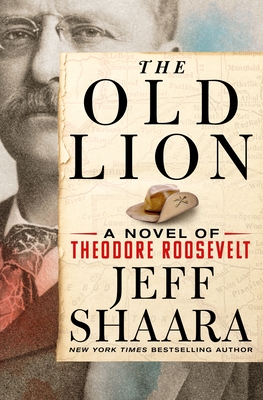
The Old Lion, by Jeff Shaara****

There are a good many books that have been written about President Theodore Roosevelt, and no two are exactly alike. That said, the two I’ve read—this one, and a biography by Clay Risen—could not be more different. In fact, you would never know they were writing about the same man.

My thanks go to Net Galley and St. Martin’s Press for the invitation to read and review. This book was published in May, but it took me some time to push my way through it.  I started out not knowing what tack Shaara would take here, and it is this introductory note that caused me to sit back a bit:

“Few, very few, would disagree that Theodore Roosevelt ranks high among the most revered, most respected, and most admired presidents in history.”

I guess it’s time for me to change my name to Few.

Because I had signed on for it—on the strength of my admiration for its author, whose books I always read without regard to topic—I hunted down the audio version at Seattle Bibliocommons. The voice actor that reads it is second to none, and does a remarkable TR impression. But I also have to say that the various thoughts and conversations which the historical fiction genre permits its author to create seem a bit on the rosy side. Where is the TR that not only organized volunteers, himself included, to fight in Cuba, but used vast amounts of his family’s connections and wealth to advocate for it? Where is the braggard that crowed to his friends about how much he enjoyed shooting an enemy soldier from just a few feet away “like a jackrabbit,” and called his 45 days of combat the ultimate hunting trip?

This is one more reminder that all history is political. Nobody will, or should, write a book about a public figure that uses every single fact available, but it is when the author chooses what to include, and what to leave out, that bias shows. There’s no way around it, even for the most objective of writers.

I cannot deny that there were positive aspects of TR’s tenure in the White House (which he named,) the birth of the nation’s park system, beginning with Yellowstone; he also gets points for having seen, ultimately, that these are not meant to be preserved as hunters’ playgrounds, but rather to preserve the natural life, including animals, that are native to the park. His attitude toward women and Black peoples’ suffrage is laudatory, compared with other politicians of his time, but Shaara doesn’t comment on the ugly racist attitude Roosevelt displayed toward other races and ethnicities, most notably those from Central and South America.

This is a four star read because no matter what he chooses to write about, Shaara spins a tremendously entertaining tale. If you choose to read this one, I recommend you obtain the audio version, and take the dialogue and in particular, Roosevelt’s innermost thoughts with a larger than usual grain of salt, and also read a second, nonfiction work for balance.

Flags on the Bayou, by James Lee Burke****

James Lee Burke is one of the finest prose stylists the U.S. has to offer. His brilliant, lush descriptions, quirky, resonant characters with interesting names, and his passion for the rights of the working class are the stuff of legends. My thanks go to Net Galley and Simon and Schuster for the invitation to read and review his latest novel, Flags on the Bayou. This book is for sale now.

Our protagonist is Hannah Laveau, a former slave who’s on the run from the law. With her is Florence Milton, an abolitionist from Massachusetts. Hannah is determined not to be caught, but also to retrieve her little boy, Samuel, a preschooler from whom she was separated at the battle of Shiloh. Her determination is singular. Along the way we have officers from both sides of the Civil War, corrupt rich guys, and bushwhackers. The story is complex, as are all of Burke’s novels, and the setting atmospheric.

All of these things being said—and I’ve said them many times before, since I began reading his work about a decade ago—there are some things that I would like to see done differently. Burke has always intertwined social and political messages within his novels, and so it’s the subtext in this book that jars me. In fact, it bothers me enough that I abandoned this story twice before I finally dug in, determined to finish it.

The first category here is the American Civil War, and the fallout we still deal with today. In past novels, Burke has told us that the slaveocracy was wrong, and that the war was indefensible. I feel as if he has retreated from that here. We have some ugly Confederate characters, to be sure, but we also have ugly Union officers, and General Sherman—one of this reviewer’s most beloved heroes—gets run through the mud multiple times. It’s as if Burke wants us to know that actually, both sides were bad, and that war itself is just plain awful. This is weak tea indeed.

The second is one I’ve been eyeing for the last few of Burke’s novels, and I have soft-pedaled it because of my great admiration for the body of his work, and for his ageing dignity, but I do have to say something here. His development of female characters needs work. Lots of it. All of his females are either Madonnas or whores (and sometimes, Madonnas that are forced to be whores, through no real fault of their own.) I would dearly love to see a female character in his books who is not there for her sexuality, and who is not either a victim or a potential victim. With Burke’s Dave Robicheaux detective novels, progress was made with a lesbian cop character, and I was thrilled. But she came and then went, and his experience creating her hasn’t overflowed into his other work.

More than any one thing, I want to see Mr. Burke write a book—just one, seriously—where there is no sexual assault, no threat of sexual assault, and no memory of sexual assault. It’s getting old, sir. You surely have the ability to provide female characters with other motivations. I want to see it.

I was nearly annoyed enough to rate this book three stars, but I liked the ending a lot, and so the fourth star remains.

So that’s my two cents, because as much as I love his work in general, this is getting in the way. There will doubtless be some blowback from his other devoted fans once I publish this review; bring it.

A final note: because I was struggling with this book, I checked out the audio version from Seattle Bibliocommons. The voice actors that perform it are world class. However, because the story is so complex, bouncing back and forth in point of view and setting, it is hard to follow in audio alone. The best way to read this is with both the printed word, whether on paper or digitally, accompanied by the audio.

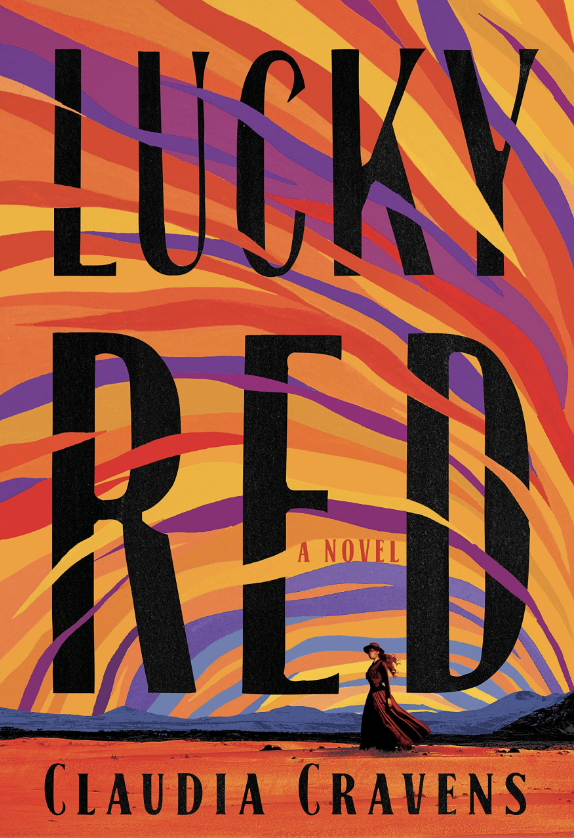
Lucky Red, by Claudia Cravens*****

Larry McMurtry, eat your heart out. There’s a fine new word-slinger come to town, and her name is Claudia Cravens.

My thanks go to Random House and Net Galley for the invitation to read and review Lucky Red. This book is for sale now, and you should get it and read it.

Bridget lives a life of hardscrabble deprivation; her mother died in childbirth, and all she has is her pa. He loves her, but he’s worthless; when he finally gets a bit of money, he invariably drinks and gambles till it’s nearly gone. During one such episode, he gambles away their little house, and then buys a homestead, sight unseen and many miles away. What they find instead is a tar paper shack; there are no crops or tilled acreage, no tools or even a decent place to live. They crawl into the miserable hovel to get out of the elements, at least, and get some sleep; a rattler has the same notion, but when pa thrashes in his sleep, the rattler bites him in the neck, and then there is only teenage Bridget.

Bridget makes her way to Dodge City, and in no time, she is stone cold broke. She’s recruited to work in a brothel, the only one in town owned and run by women. She doesn’t mind the work and makes friends among the other “sporting women,” and is curiously removed from the process for which she is paid; slide prong A into slot V; moan a little, gush, and collect your pay. But later, she finds herself obsessed with a new sex worker; a lovely blonde woman named Sallie. Everyone around her understands the significance of this fascination, but Bridget herself doesn’t get it. She’s young, and she’s naïve. But when Spartan Lee, a female bounty hunter, comes to town and asks to hire Bridget, the sun shines and the angels sing.

This story is epic, and in many ways reminds me of Little Big Man, but with a female protagonist. And in many ways, what makes it so successful is its restraint. At the book’s outset, there’s a slimy man that wants to buy Bridget’s hand in marriage, which would give her father a nice chunk of change, but she hates the man, and her father doesn’t push it. A less capable writer would have done it the other way, but here, and in every instance where I predict what will happen because it’s so obvious, Cravens does something else. And the lesbian sex is brief and almost free of physical details—a sad thing for anyone looking for soft porn, but it serves to keep the story moving forward—with the emotion behind it carrying the internal narrative.

Although Bridget has no complaint about the work she does, and the management is more benign than in houses owned and run by men, Cravens keeps it real. One night, Sallie is attacked by a client, and Bridget bursts in to rescue her. It doesn’t go well. Sallie berates her for her naivete:

“You don’t see the first thing about this, though, do you. They all have a knife, Bridget. They all have a gun, and they were all born with two fists on the ends of their arms. You think you’ve got this all figured out, but any single one of ‘em could take a swipe at you some night and you’d be dead before you hit the ground.”

To tell you more would be to spoil it for you, so I’ll leave you with this: Lucky Red is the best debut novel of 2023, and one of the best books I’ve seen this year, period. Don’t miss it.

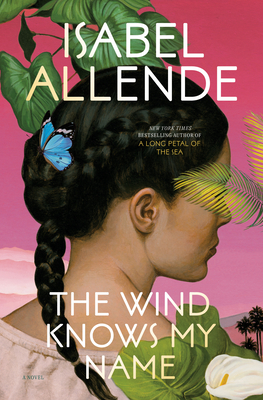
The Wind Knows My Name, by Isabel Allende****

Isabel Allende is a living legend, a literary genius and fierce defender of human rights, foremost of women and immigrants. The Wind Knows My Name is a novel that features the struggle of two generations of immigrants, those that came to the U.S. during the Holocaust, and those that are coming here now from Latin America. Allende moves us seamlessly from one set of characters to the next, and then back again.

My thanks go to Net Galley and Random House Ballantine for the review copy. This book is for sale now.

I have been reading Allende’s work for decades. To read her stories is to be transported. In this case, the protagonists include two small people designed to possess the human heart. Samuel is a Jewish violin prodigy, still quite small as this story unfolds; his parents send him to safety when the Nazi occupation of Vienna takes hold, thinking that they will square things away and join him later. Of course, they are never able to do that. Our present-day protagonist is Anita, a Guatemalan immigrant child that is nearly blind. She is separated from her family at the U.S. border, and does her best to stave off loneliness by talking to her sister, Claudia, who is dead.

On the one hand, Allende is, to my way of thinking, on the side of the angels here politically. She always is. But if this feels a bit lecture-like to me, a diehard fan, it seems unlikely that she will reach a lot of newer readers. Usually I bond with her characters and carry them around with me for some time after I have turned the last page, but this time I find I am watching the page numbers go by. The person I feel most affinity for is Samuel, the tiny child clinging to his precious violin, but he disappears quickly and when he returns, he is an old man. Another reviewer commented that too much is told here, and too little shown, and that sounds right to me. And as much as I love Samuel, I also am burned out on historical fiction set during World War II. I hope in her next project, the author will turn in another direction.

To Allende’s many devoted readers, this book is recommended with the above caveats.

The Bitter Past, by Bruce Borgos***

2.5 stars, generously rounded upward.

The Bitter Past is the first in the Porter Beck series by Bruce Borgos, and if I liked it, I’d be thrilled to read more. On balance, though, I don’t. Nevertheless, my thanks go to Net Galley and St. Martin’s Press for the invitation to read and review. This book is for sale now.

The setting is the hinterlands of Nevada; part of the story takes place in the 1950s, and part of it is in the present. I rate the historical threads as 3.5 stars, and the contemporary part as 1. The premise is that Porter Beck is the local sheriff who is called when a grisly murder is discovered; in addition, a sister-wife goes missing. Sana Locke is the woman that the Feds send in, uninvited. The premise for the other thread is that a Russian operative named Georgiy Dudko lands in Nevada, tasked with entering the nuclear test site and stealing a nuclear warhead. Toward the book’s conclusion, we see how the two stories are joined.

Before I am even twenty percent of the way into this story, my hackles are up. I haven’t seen an author write with such brazen disrespect for women in a very long time, and I hope not to see it again. You see, Beck is God’s gift to women, and it’s a good thing, too, because none of them prove smart enough to find their butts with both hands until he sails in and fixes everything. From the instant Agent Sana enters the narrative, introducing herself as FBI, Beck is the guy in charge, and Sana is his li’l buddy, his sidekick. Good thing he is here to educate her. It is Beck that finds a hidden room in a house they’re searching; it is Sana whose eyes “go big.” He has to dive quickly to save her from the bad guy with the gun. He tells her what to do, and she does it. Here are some quotes that set my teeth on edge:

“Before [Sana] can speak, I place a finger over her lips.”

“Sana appears confused.”
“I bring my finger under her chin. ‘Look up.’”

And no collection of sexist bilge is complete without the old saw about how women are unable to get along with other women: “[Sana’s] still miffed about Brinley, [Beck’s sister] and it’s clouding her judgment…I glare at Brin, a warning to her to retract her claws.”

Beck feels completely free to comment on Sana’s physical features, particularly her “exquisite ass,” but of course, Sana likes that in a guy. She’s in the sack with his middle-aged, um, butt in no time flat.

For a long time I hold out hope that things will turn around, and the author will prove to us that actually, Beck is about to get his just desserts, and Sana had been sent to take him down for some reason, but the only comeuppance she deals him at any point is when she pulls a jujitsu move on him, and that’s only once.

What else? Ah yes, the sister-wife. The girl’s husband is a good FLDS neighbor, Beck tells Sana. They don’t force anyone to marry. She’s seventeen years old, so it’s fine.

What the fuck. Seriously? Excuse me while I grab my blood pressure medication.

In addition to all of this, there is the constant use of the word “illegal” to describe a person that is in the U.S. without documentation. They don’t even call them illegal immigrants, or illegal residents. They don’t merit a full grammatical description.

The thread that takes place in the past is more palatable. Georgiy needs into the nuclear test site, and so he befriends a scientist that works there, and is introduced to Kitty, the scientist’s daughter, whom he courts and accidentally falls in love with. Kitty is not developed as a character any more than Sana is, but at the same time, during the 1950s in the U.S., marriage and motherhood were very nearly the only acceptable path for women, so within the context of time and place, this is believable. I like Georgiy much better than Beck, that’s for sure!

There’s a twist of sorts at the end, but it’s not all that impressive, and it mitigates nothing.

I was provided with the digital review copy and the audio as well, and so I listened and read at the same time. Narrator James Babson does a fine job portraying the characters as they are written, and he isn’t to blame for the way I feel as I read.

That’s it in a nutshell. If all of this sounds just fine to you, then go ahead and get this thing, and stay away from me. Does anyone have any matches I can use?

The Making of Another Major Motion Picture Masterpiece, by Tom Hanks*****

Tom Hanks has more than one talent, that’s for sure; or perhaps he is an artist that’s ridiculously talented at telling stories, whether they be on the page or screen. One thing I’ll tell you now: I am completely convinced that he did indeed write this book himself, and it’s damn good, too.

My thanks go to Net Galley and Alfred A. Knopf Publishing for the review copy. This book is for sale now.

The story begins with a child prodigy, an artist living in Lone Butte, California, who as he matures, becomes a comic book illustrator. Fast forward about thirty years, and that comic becomes a movie.

Our story doesn’t have just one protagonist, and it is intentional, or so it appears to this reviewer. We have the big boss, Bill Johnson, his assistant, Candace, and the assistant she recruits in Georgia, Allicia. We learn something of their backgrounds and their personalities, but mostly, we see how important they are to the success of the movie. When the movie is finished with Atlanta, Allicia, who now goes by Al, comes along and is eventually promoted; she then finds someone to take her place. We learn more about other people that are working the production, and I am amazed by the sheer number of people involved, and how much must be done to keep everyone on an even keel. Eventually we meet the two big stars of this action movie; one is hardworking, cooperative, and comes up with a host of useful ideas; the other is an egotist, a Do-You-Know-Who-I-Am type, and everybody walks on eggshells in an effort to make him happy, and to make him want to show up and do his job.

In the hands of a less talented writer, this whole thing might feel list-like, but Hanks sculpts these characters so that I feel I know them, and I care about what happens to them.

There’s more than a little wry humor in this tale, and the copious footnotes at the end of each chapter are a part of that. I read them all, because some of them are hilarious, but readers that lack the patience for it can breeze right on by them without missing anything critically important. And here’s a nugget that cracked me up:

“Of late, Bill had been using military-style call words rather than expletives. Fuck was Foxtrot. Asshole was Alpha Hotel. Cocksucker? Charlie Oscar Charlie Kilo Sierra.”

As a bonus, artist Robert Sikoryak has written the comics themselves, and they are included in the book. Those that love comics should probably get this book in hard cover, because a lot of the detail is hard to see in the digital version that I read. As for me, I don’t give one single poo about comics, and I skipped them.

Movie buffs will be fascinated with the vast amount of movie making minutiae here. I am not a big movie viewer, but I eat it all up, anyway, because I had no idea of the amount of time, personnel, and materials necessary to creating a major movie, masterpiece or otherwise.

Although he doesn’t beat the drum hard enough to distract from the overall story, Hanks’s message is crystal clear: everyone involved in creating a movie is important. If the crew doesn’t have enough restrooms, it affects the movie. If nobody brings lunch to the set, some people will be miserable and perform below par, whereas others will slip away in search of food and not be available when needed. And if just one person is a horse’s ass and drags his feet, or if he blabs things to the press that aren’t supposed to be released yet, he can add millions of dollars to the cost of the production. Here’s a perfect quote:

“What advice can you give us to make it in Hollywood?” She talked about the great divide between solving problems and causing them, and the importance of being on time.”

Through all of this, I keep wondering when we will see the young artist that made the comic again. If we started with him, it makes sense we will see him again at some point, right? Yes. This detail—along with every other—is done beautifully.

There’s not one thing about this book that I don’t love, and the feel-good ending is icing on the cake. Highly recommended to those that love movies as well as excellent fiction.

The House is On Fire, by Rachel Beanland***-****

Rachel Beanland wrote Florence Adler Swims Forever, an arresting debut that caught my attention along with that of a great many other readers. Her sophomore novel, The House is on Fire, is a good read, though not as compelling as her first. My thanks go to Net Galley and Simon and Schuster for the invitation to read and review. This book is for sale now.

The house in question is a theatre; the setting is Richmond, Virginia. The story is modeled after the massive fire of the Richmond Theater in December, 1811, which at the time was the greatest human calamity to have befallen the U.S. Scores of people were killed, and the disaster created headlines around the country, and even internationally. Beanland tells us in her author’s note that she chose to center the book around four real people that were affected by the fire; some she was able to learn a good deal about, whereas for others, she had to invent almost everything. The characters are Gilbert and Cecily, both of whom were slaves; Sally, a young Caucasian widow; and Jack, a Caucasian stagehand in charge of pyrotechnics during the performances, despite his being just fourteen years old.

Beanland nails the setting like a pro, recreating the technology, character, and landscape of the period, and doing so subtly, without relying on shortcuts or cheesy devices such as popular music and political figures. It’s a good thing, because setting is important to this story.

The characters are not as well developed. The one I feel I know best, by the end of the book, is Cecily, a young slave woman desperate to escape the predatory son of the man that owns her. However, Cecily’s story is the one that Beanland invented. I have mixed feelings about Cecily’s motivation. On the one hand, it’s a well-documented fact that young slave women were raped by masters and other whites as a matter of course, a horrifying fact that must never be forgotten. On the other hand, fear of a sexual predator is an easy device to employ, and I keep thinking about what actor-director Jodie Foster says about its overuse: if you don’t know what motivates a woman, writers and directors everywhere immediately reach for rape. I am thankful that Beanland doesn’t provide any prurient details or graphic descriptions. But apart from love of family and fear of sexual violence, I still know nothing of Cecily at the end of the story.

The other characters are still less defined. Gilbert’s last master permitted him to hire himself out as a blacksmith once his other chores were done, and he has been planning, once he has enough set aside, to purchase freedom for himself and his wife. We also see that he is a hero, helping to pull or catch a great many people that are stuck in the burning building. All of this is demonstrated at the outset, and not much changes for him.

Young Jack is consumed with fear and guilt due to his part in the fire. He had dreamed of becoming an actor, and now that seems unlikely. He wants to tell the truth, but others insist that he not. Again, that’s all known to us from the start, and Jack isn’t much different when it’s over.

Sally is the least defined, to the extent that I keep having to recheck to see who she is.

But then, not every book is character based. This one is more about plot and setting, and those that prefer a story with a lot of activity will likely be pleased.

Beanland is a fine writer, and I do look forward to seeing what she writes next.